Monuments of cardboard and wood planted in the streets, mascletás every midday and one night when everything burns. What it is, when, where to see it and how to survive it.
For a few days in June, Alicante fills with enormous monuments of cardboard and wood planted in the middle of the streets, with satirical figures that make fun of current affairs. And on the night of the 24th, the night of San Juan, they all burn at once. It is the city's great festival, the midsummer Hogueras de San Juan, declared of international tourist interest.
The heat is not a metaphor. In the cremà, having dozens of wooden monuments burning at the same time raises the temperature of the streets by several degrees, and the firefighters hose down the crowd. It is part of the rite.
What exactly is a hoguera
A hoguera is a large-format ephemeral monument, built of wood, papier-mâché and light materials, which is planted in the street and burned at the end of the festival. It can reach several storeys in height and is made up of figures called ninots.
What makes them interesting is that they are satire. Each ninot represents a person or a situation from current affairs — political, local, sporting, social — treated with humour and no small amount of mischief. It is a tradition of popular criticism with centuries of practice behind it.
The festival is organised by neighbourhood committees, with hogueras in different categories according to budget, and there is a competition. Each committee works all year on its monument, and the funding comes largely from the neighbourhood itself.
The obvious parallel is the Fallas of Valencia, with which they share technique, roughly the same calendar and social structure. The Hogueras of Alicante were institutionalised in 1928, considerably later, taking that model and adapting it to the summer solstice.
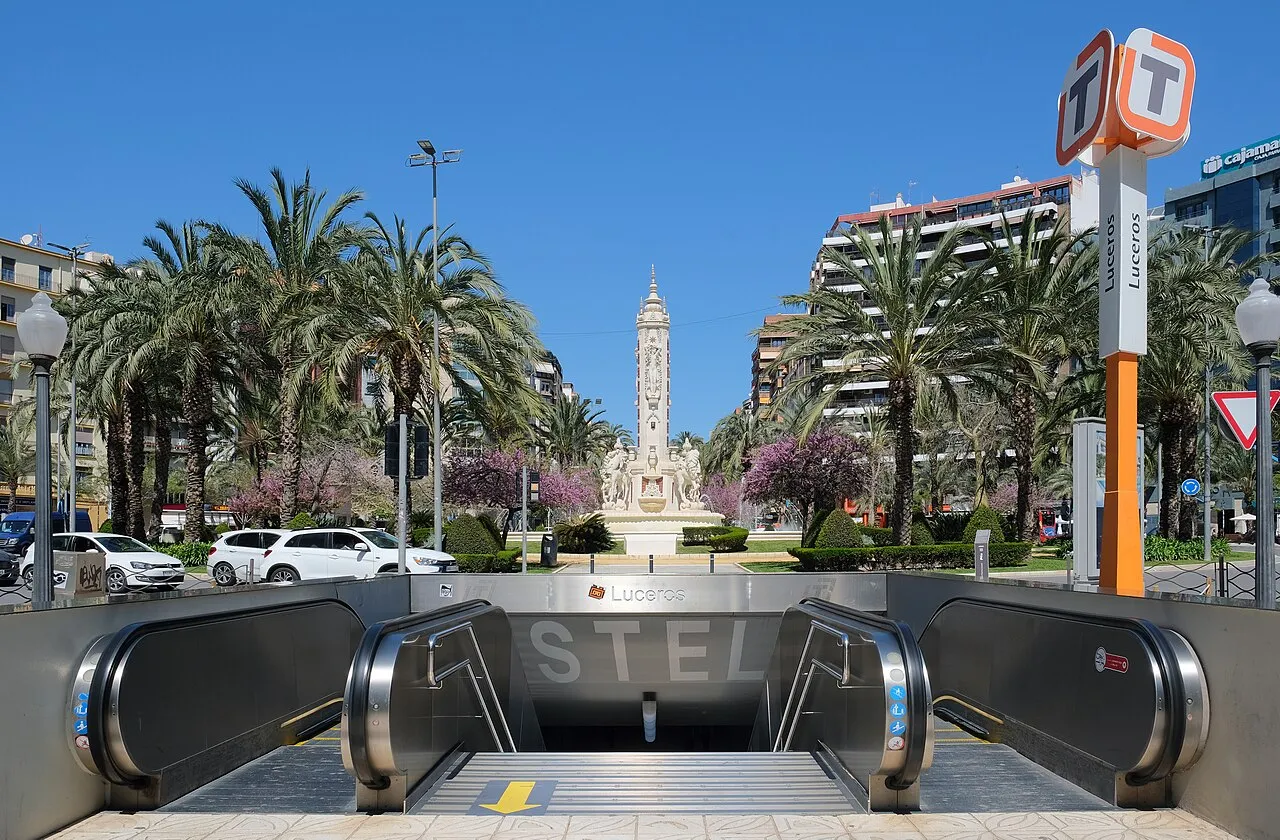
This is where the mascletás are fired every midday: a storm of gunpowder and rhythm that makes the ground shake under your feet and draws thousands of people packed around the fountain. It is the epicentre of the festival.
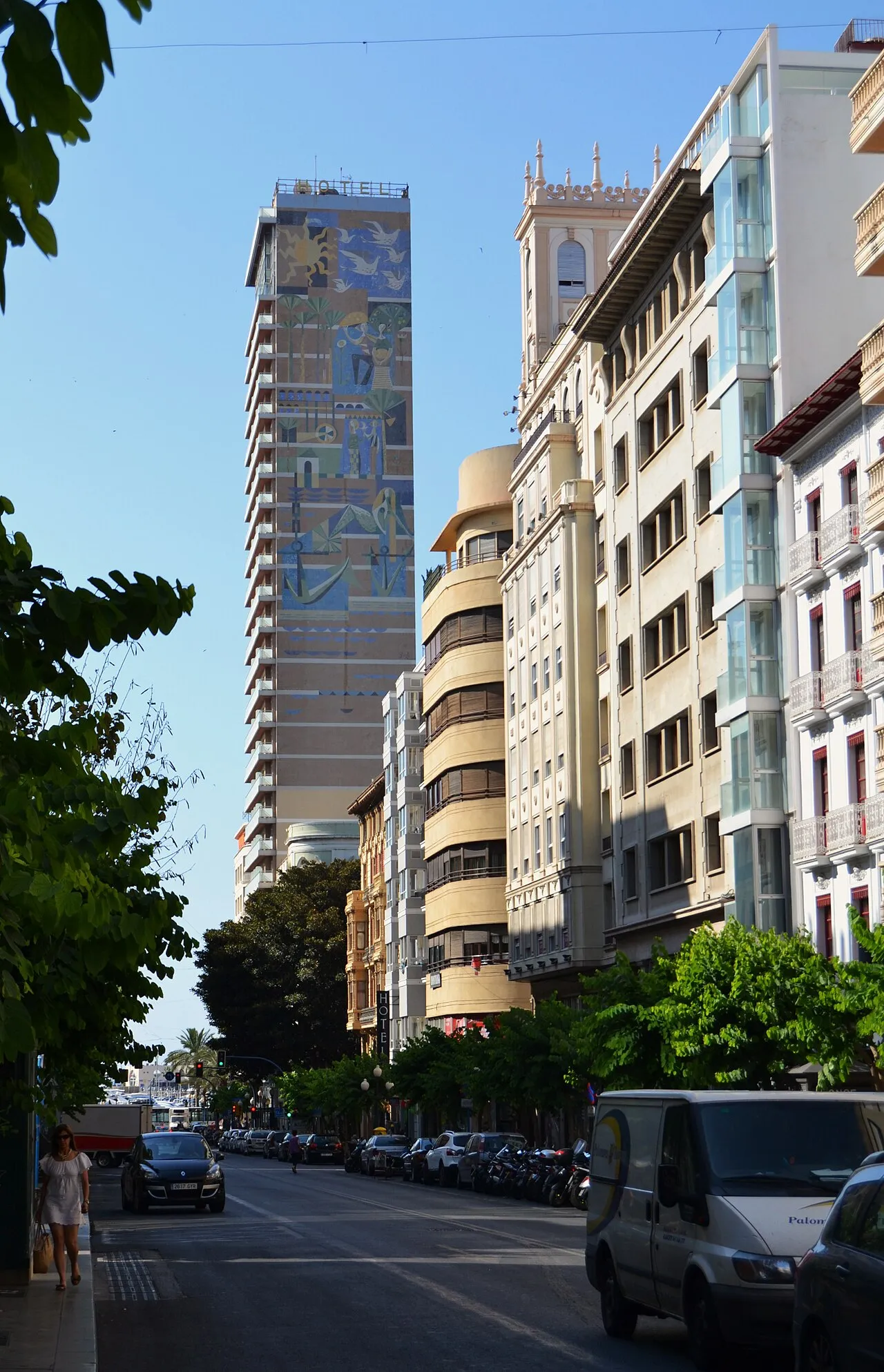
One of the central settings, with monuments planted on the avenue itself and the parades passing along it. It is Alicante's great urban stage and the street the city uses whenever it wants to celebrate something collectively.
Every midday of the festival a mascletá is fired in the plaza de los Luceros. It is not a visual spectacle but a sonic and physical one: a rhythmic composition of detonations that keeps growing until a final earthquake, with thousands of people packed around the fountain.
It is hard to explain to anyone who has not lived it and it is understood the moment it starts. You feel the shockwave in your chest, the ground vibrates and the noise is literally deafening. There are people who detest it and people who never miss one; nobody is left indifferent.
On the night of the 24th comes the cremà: all the monuments burn at once, each in its own neighbourhood, in a controlled fire watched over by the firefighters that turns the whole city into a succession of bonfires. It is the high point and the reason for the name.
The one ninot pardoned each year — the one saved by the popular vote — is kept in the Museo de Hogueras, along with historical material from the festival. It is the way of letting something survive a tradition based on destroying what has been built over months.
How to live them without suffering them
Book accommodation a long way in advance and expect high prices: it is the week of the year with the highest occupancy in the city. And be clear that sleeping will be difficult, because the noise does not stop all night for several days.
Hearing protection for the mascletás, above all with children. It is not an exaggerated recommendation: the sound levels are very high and unprotected exposure at close range is a real risk. Foam earplugs are enough.
To see the monuments, the best thing is to walk the neighbourhoods early in the morning, when there is not yet a crowd. Each committee has its own planted in its street, and seeing them at leisure is the most interesting part and the one people most often miss.
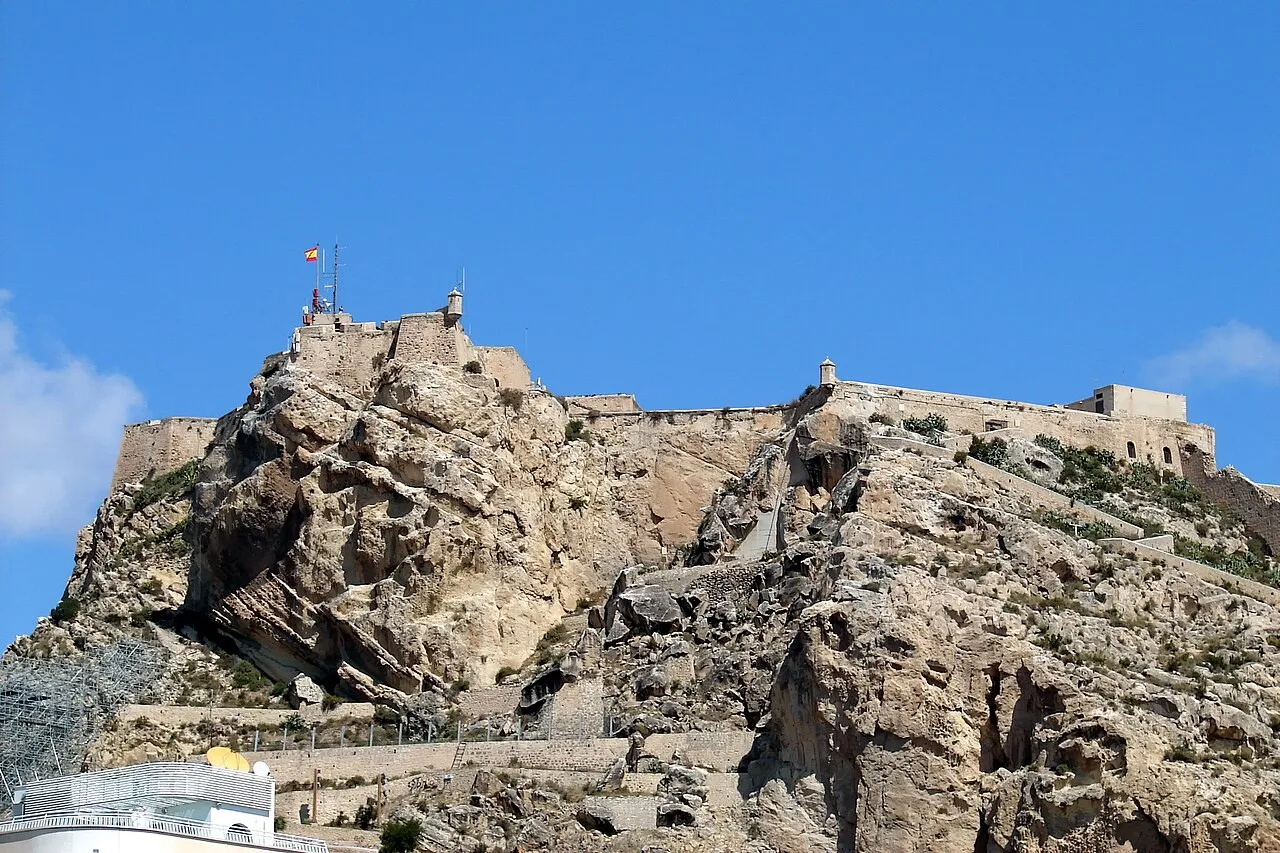
And bear in mind that the city runs in festival mode: shops with altered opening hours, streets closed, transport saturated. It is not the week for a conventional sightseeing visit to the castle or the museums, but for living something else.
In June these streets are decked out down to the last corner, and the contrast between the white lime, the flowerpots and the festival decoration is the most photogenic thing of the whole week. Also in May, with the Cruces, the May crosses.
In the days leading up to 24 June, with the cremà — the burning of all the monuments — on the night of San Juan. The exact dates of the plantà, when the monuments go up, and of the mascletás and the parades vary slightly each year, so it is worth checking the official programme before organising the trip.
What is a mascletá?
A rhythmic composition of gunpowder detonations that keeps growing until a final earthquake. It is not a visual spectacle but a sonic and physical one: you feel the shockwave in your chest and the ground vibrates. They are fired every midday of the festival in the plaza de los Luceros, with thousands of people around.
How do they differ from the Fallas of Valencia?
They share the technique, the social structure of neighbourhood committees and the final burning of the monuments. The Hogueras were institutionalised in 1928, considerably later than the Fallas, taking that model and adapting it to the summer solstice: the Fallas are in March, for San José, and the Hogueras in June, for San Juan.
What is a ninot?
Each of the satirical figures that make up a monument. They represent people or situations from current affairs — political, local, sporting, social — treated with humour and no small amount of mischief. Every year the popular vote pardons one, which is saved from the fire and kept in the Museo de Hogueras.
Can you visit Alicante normally on those days?
With difficulty. The city runs in festival mode: streets closed, altered shop hours, saturated transport and accommodation sold out at high prices. It is not the week for a conventional sightseeing visit to the castle or the museums, but it is the week to live something that is like nothing else.
Is the fire of the cremà dangerous?
It is very controlled: the firefighters watch over every monument and hose down the crowd, which is part of the rite. What you do have to bear in mind is that dozens of wooden monuments burning at once raise the temperature of the streets by several degrees, and that the noise is constant for several days.
Practical information
WhenThe days leading up to 24 June, with the cremà on the night of San Juan.
MascletásEvery midday in the plaza de los Luceros. Take hearing protection, above all with children.
Seeing the monumentsEarly in the morning, walking the neighbourhoods before the crowds.
BookingA long way in advance. It is the week of highest occupancy in the year and sleeping will be difficult.
The pardoned ninotThe one saved by the popular vote is kept in the Museo de Hogueras.
WarningIt is not the week for a conventional sightseeing visit. Streets closed and altered opening hours.
On the map
🎧 With Viavoy
Walk Alicante and listen at your own pace
Download Viavoy and walk Alicante offline, whenever you like.
from 2,99 €· one-off payment
City Pass · 9,99 €3 days, all the tours in Alicante