1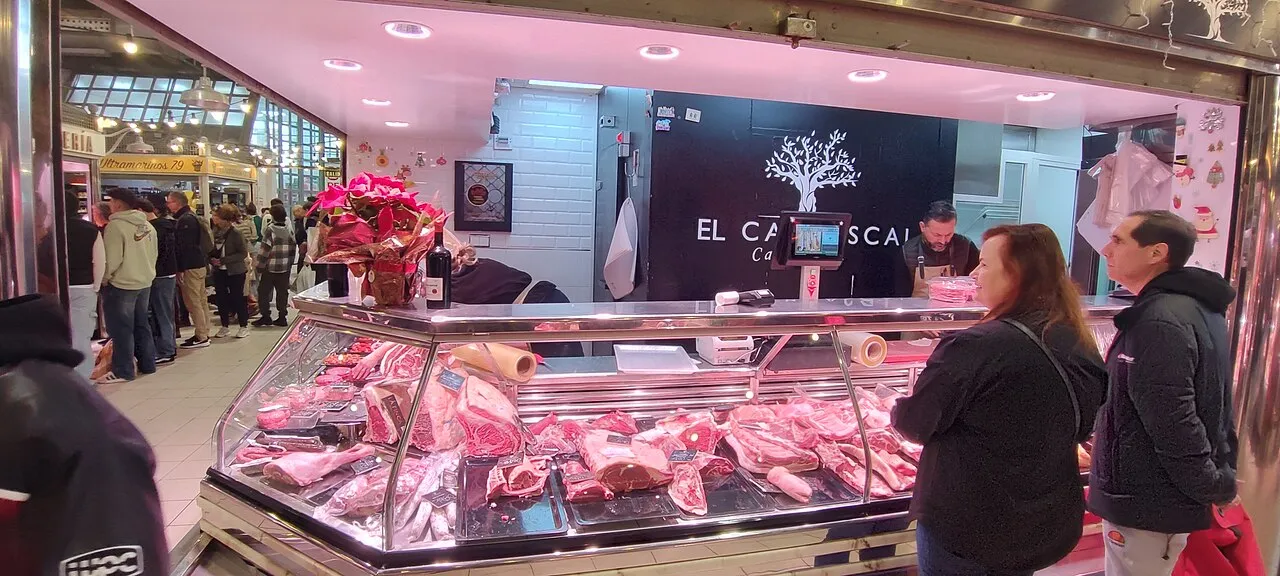
Central Market
📍 Next to the Rambla
The best place to see the produce: fish from the auction, salazones, ñoras, artichokes from the district and turrón. It is a morning market, with almost three hundred stalls, and it still has local customers.
A province with more than twenty different rice dishes, a salt-curing tradition inherited from the Phoenicians and the most famous turrón in Spain half an hour away. What to order without getting it wrong.
🎧 On the walk The Rambla, the Central Market and Los LucerosAlicante is rice country, and that does not mean paella. The province has an enormous repertoire of rice dishes, each with its own technique, its own vessel and its own occasion, and a good part of them are not found outside here. To that you add the salazones, the salt-cured fish that is the other pillar, and the market gardens and the sierra inland.
It is not all paella.
Arroz a banda is the emblematic one and the most misinterpreted. Rock fish is cooked to make a stock, that stock cooks the rice with sofrito, ñora and saffron, and the fish is served separately — a banda. The rice arrives with no pieces in it and with all the flavour of the sea. It is eaten with alioli.
Arroz con costra comes from the Bajo Vinalopó district and is like no other: rice with meat and cured sausage over which, at the end, a layer of beaten egg is set in the oven. That golden crust is the whole argument and it needs an earthenware dish.
The caldero comes from the southern coast, towards Santa Pola and the Mar Menor: a soupy rock-fish rice cooked in an iron caldero, with ñora and garlic, served in two vuelcos, two turns of the pot. And there are many more: black rice, rice with rabbit and snails, with lobster, meloso, baked in the oven.
The non-negotiable point is dry rice: loose grains, socarrat on the bottom of the pan and no stock left over. And you order it for the whole table and in advance, because it is made to order and takes between twenty and thirty minutes.
The best place to see the produce: fish from the auction, salazones, ñoras, artichokes from the district and turrón. It is a morning market, with almost three hundred stalls, and it still has local customers.
Download the app and discover Alicante offline, whenever you like. Take the walking tour The Rambla, the Central Market and Los Luceros with a local guide in your ear.
Find out more about Viavoy →Salt-curing is a very old tradition on this coast, inherited from the Phoenicians and the Romans, which turned fish into something that could be kept and carried. Here it is still alive and it is one of the most characteristic things to have before a meal.
The basics: mojama, which is tuna loin salted and air-dried, cut into fine slices and served with almonds and a thread of oil; tuna or ling roe, more intense; dried cod; and capellán, the little dried fish that is toasted for a moment and eaten with your fingers.
From the market gardens, the artichokes of the Vega Baja, excellent in season, and the ñoras, that small round pepper that is dried and gives colour and depth to half the cooking of Alicante. From inland, the sierra and its pot cooking, with gazpacho alicantino, which is a game stew on a flatbread.
And from the sea, besides the rice: red prawns from Denia, red mullet, cuttlefish, dried octopus and the white prawn of Santa Pola. The fish auction is a few kilometres away and you notice it on the menus.

The old town, around the co-cathedral and below Santa Cruz, concentrates the tapas of the centre: salazones, cured sausage and rice dishes on the menu. It is the area to eat at midday after coming down from the castle.
A dry rice cooked with the stock of rock fish, with sofrito, ñora and saffron. The fish is served separately, “a banda”, and the rice arrives with no pieces in it but with all the flavour of the sea. It is eaten with alioli. It is the most frequent misunderstanding on menus: it does not have fish in it, it has its flavour.
A rice from the Bajo Vinalopó district with meat and cured sausage over which, at the end of the cooking, a layer of beaten egg is set by putting it in the oven. That golden crust is the whole argument of the dish, and you need an earthenware dish to achieve it.
Mojama, tuna loin salted and air-dried, cut fine and served with almonds and oil; tuna or ling roe, more intense; dried cod; and capellán, the little dried fish that is toasted for a moment and eaten with your fingers. It is a tradition inherited from the Phoenicians and the Romans that is still alive here.
A small, round, thin-skinned pepper that is dried in the sun and used as the base of sofritos, stocks and sauces across the whole cooking of Alicante and Murcia. It brings colour and a very characteristic sweet depth, and it is one of the ingredients that distinguish these rice dishes from the Valencian ones.
In Jijona, half an hour from Alicante, and it has its own designation of origin. It is made with marcona almonds ground with honey: the soft version is turrón de Jijona proper, and the hard one, with the almond whole, is the one called de Alicante. The difference between one from an artisan workshop and an industrial one is considerable.
The old town, around the co-cathedral and below the barrio de Santa Cruz, for tapas at midday. The barrio de San Roque and the port area for the rice dishes. And the Mercado Central in the morning to see and buy produce. Bear in mind that rice dishes are midday food and many rice restaurants do not do dinner.
Turrón de Jijona is made half an hour from Alicante and has its own designation of origin: marcona almonds ground with honey, in the soft version — turrón de Jijona proper — and in the hard one, the so-called turrón de Alicante, with the almond whole. The difference between one from an artisan workshop and an industrial one is considerable.
In wine, the DO Alicante works above all with monastrell, which gives powerful, very fruity reds, and with moscatel in the Marina Alta area. And there is Fondillón, the sweet aged red that was exported to half of Europe, came close to disappearing with phylloxera and has been recovered. If you find it, try it.
On areas: the old town, around the co-cathedral and below Santa Cruz, for tapas at midday; the barrio de San Roque and the port area for the rice dishes; and the Central Market in the morning for the produce.
And one recommendation about timing: rice dishes are midday food and weekend food. Many of the good rice restaurants do not do dinner, or only do it on Saturdays, so the rice is planned for lunch.
Download Viavoy and walk Alicante offline, whenever you like.