Castillo de Santa Bárbara: how to get up, what to see and what it costs
A thousand years of fortification in three stepped enclosures on a hundred-and-sixty-metre crag. The three ways up, what to look at on each level and why it is free.
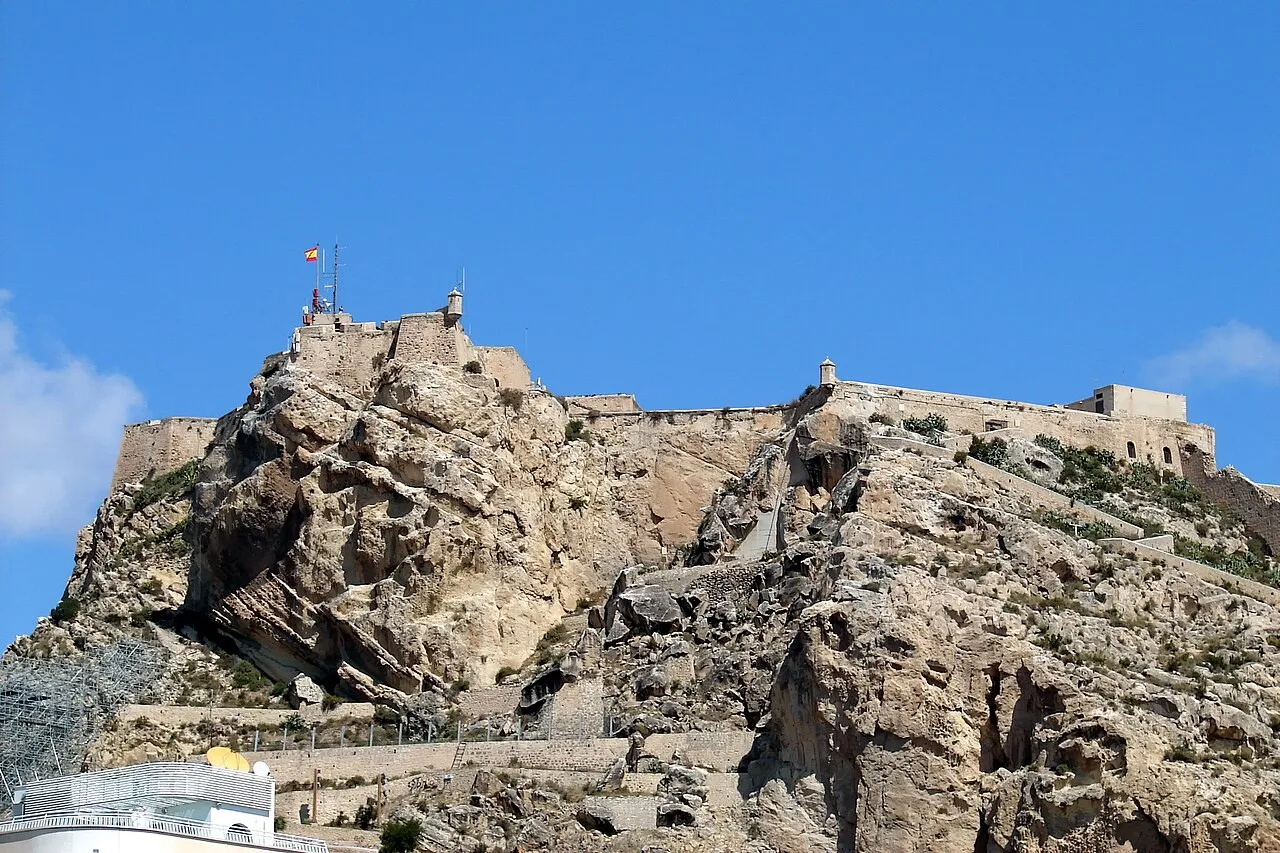
It is one of the largest medieval fortresses in Spain and it presides over the city from an isolated crag a hundred and sixty metres high. What almost nobody knows before going up is that entry is free, that there are three ways in with very different costs, and that the whole thing reads as three castles from three different centuries stacked on top of each other.
You do not pay for the castle. You only pay for the lift. Going up on foot or by car costs nothing, and in both cases the site is open just the same.
The three ways up
The comfortable one is the lift. There is an entrance cut into the rock of the hill, opposite Postiguet beach, with a horizontal tunnel leading to the lift shaft. It goes straight up to the middle enclosure and it is paid for, though cheap.
The second is by car or taxi along the hill road, which goes round the Benacantil and reaches a car park next to the enclosure. It is the option for anyone with reduced mobility or with small children, because it avoids the whole climb.
And the third is on foot, going up from the barrio de Santa Cruz or through the parque de la Ereta, a succession of landscaped terraces with viewpoints. It is demanding — there is a serious climb — but it is by far the prettiest, and it is free.
The combination that works best: go up by lift and walk down through the Ereta to Santa Cruz. You avoid the effort of the climb and enjoy the walk down, which also comes out in the old town.
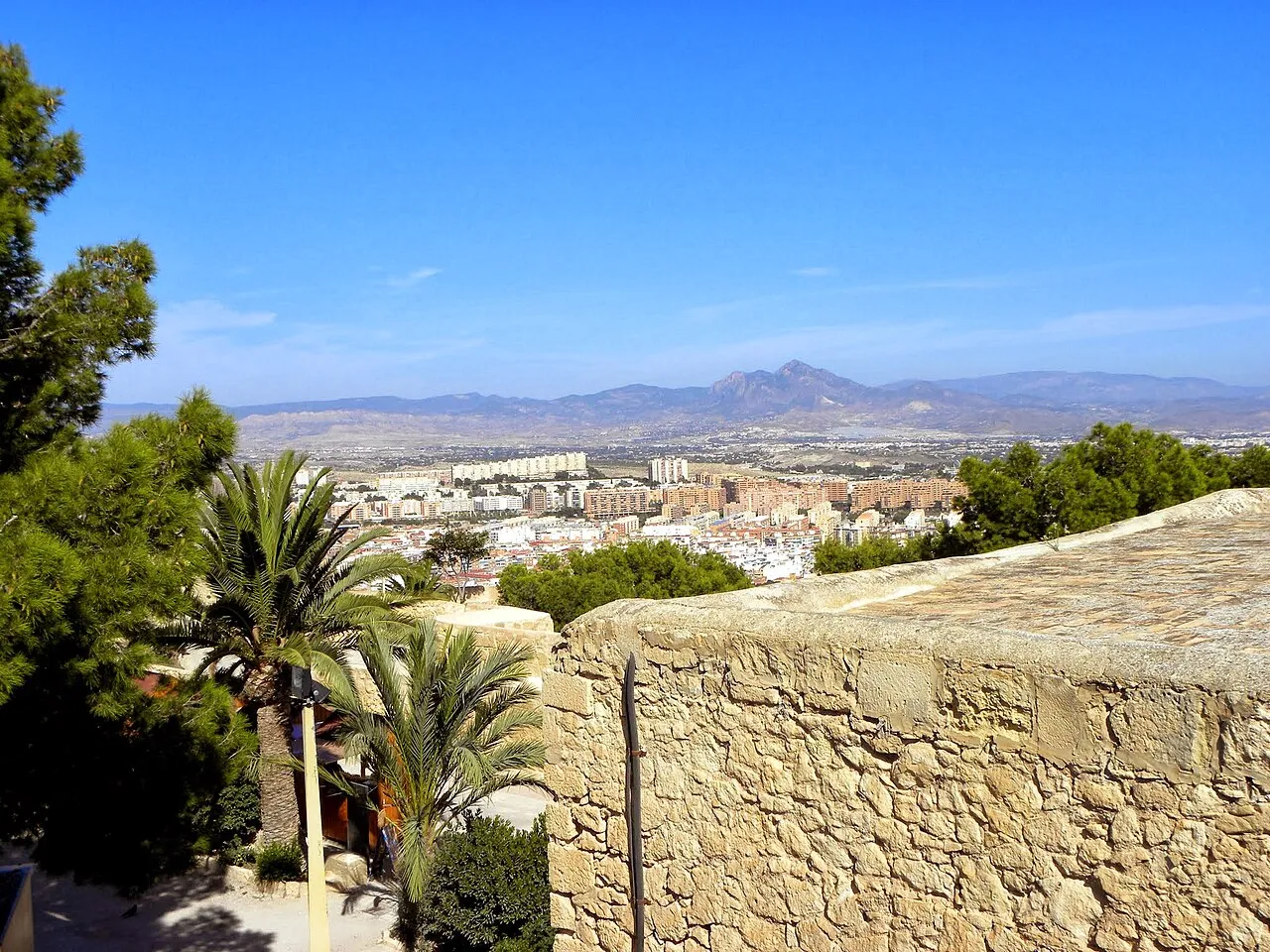
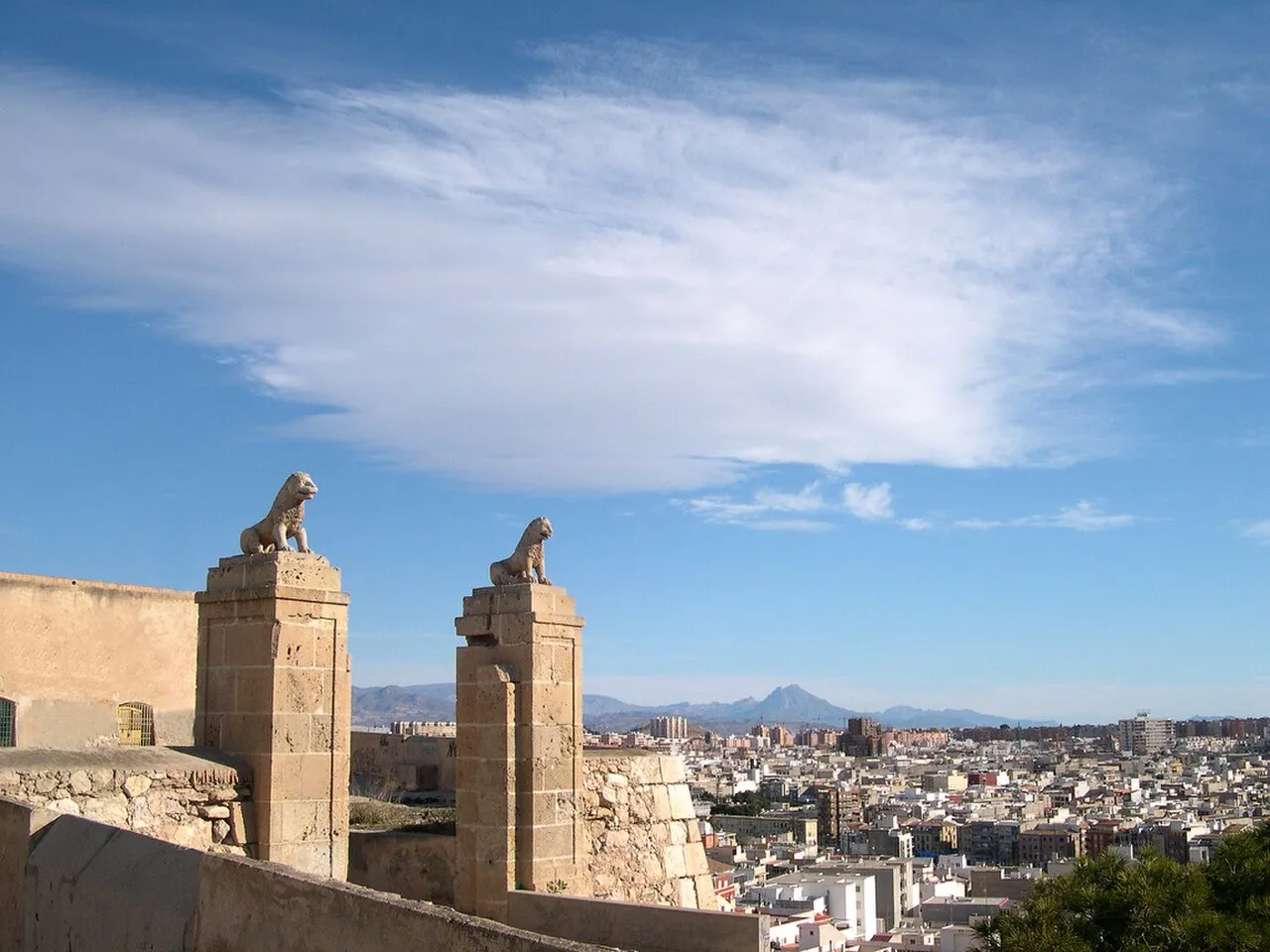
The summit and the oldest part: the Macho of the castle, its inner stronghold, with its keep. The most worn stone and the most irregular layout, because it adapted itself to the rock without correcting it. The 360-degree view is the best in the city.
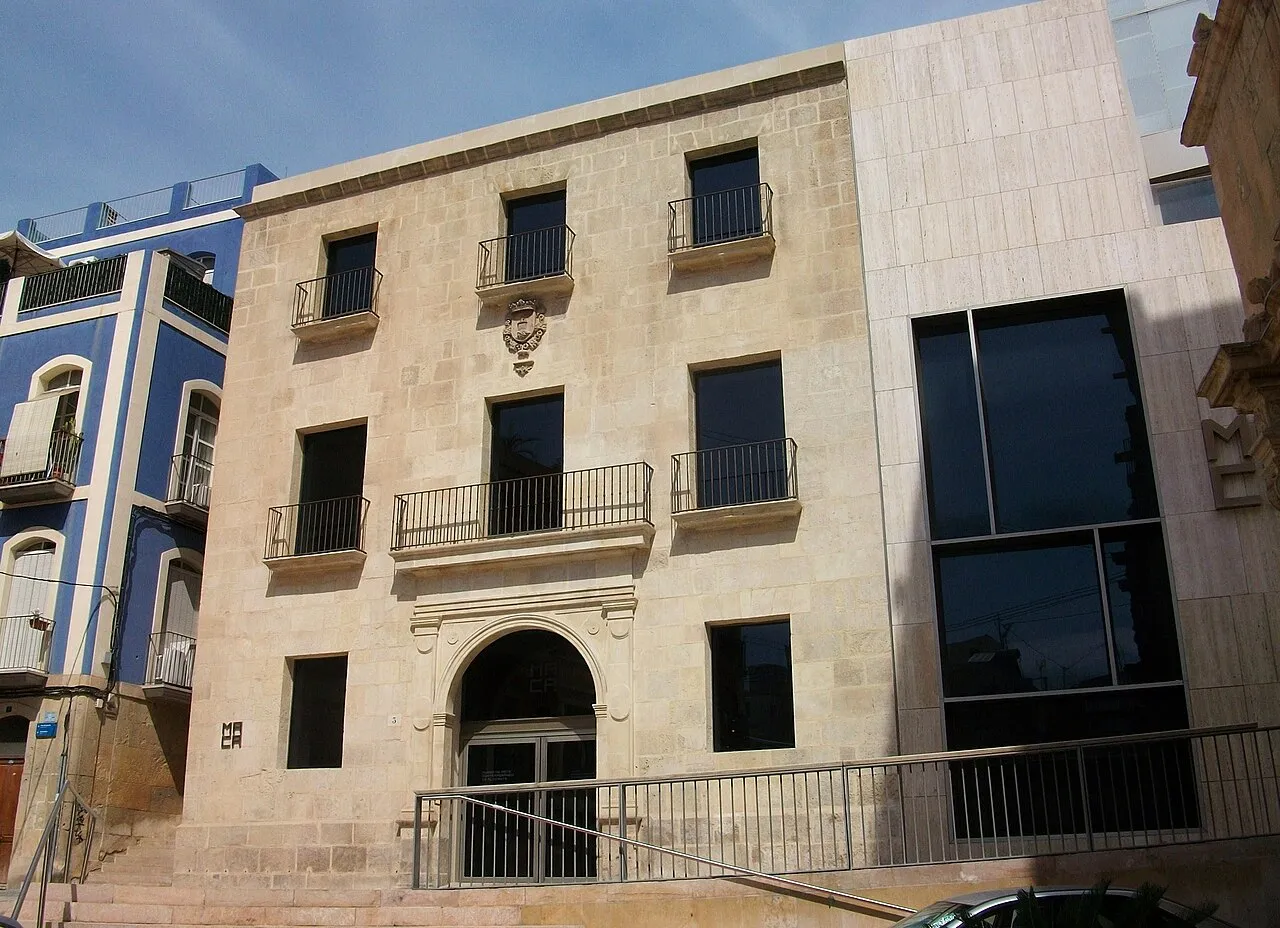
The military heart of the fortress, built under Philip II between 1562 and 1580. Low, thick, sloping walls to make cannonballs skid off: anti-cannon fortification. This is where the MUSA is, the city museum.
Download the app and discover Alicante offline, whenever you like. Take the walking tour Santa Bárbara Castle and the old town with a local guide in your ear.
The complex is organised on three stepped levels and each one was born at a different moment, which lets you read it as a history lesson in fortification in twenty minutes of walking.
At the top, the Torreta: this is the Muslim part, from the ninth century, with the oldest stone and the layout adapted to the shape of the rock. The Muslims saw the obvious — whoever controls this crag controls the city and the bay — and built the first fortress here, giving the hill its name, Benacantil.
In the middle, the enclosure of Philip II, rebuilt between 1562 and 1580 with Italian military engineers because the Barbary corsairs had the coast terrified. This is modern artillery: low, sloping walls instead of high, vertical ones, to absorb cannon fire.
And below, the third enclosure, the one almost nobody goes down to look at. It is a shame, because from there you appreciate the real scale of the complex, which is what makes it one of the largest surviving medieval fortresses in Spain.
What to know before you go
There is no shade at the top. The crag is bare rock and the midday sun in summer makes the visit frankly hard, so the sensible thing is to go first thing in the morning or late in the afternoon. Water and a hat are never a bad idea.
Allow two hours if you walk down, or a good hour if you do only the two upper enclosures. The MUSA, the city museum installed in the rooms of the middle enclosure, takes half an hour and puts the visit in order.
The name comes from a date: the fortress was taken on 4 December 1248, the feast day of Santa Bárbara, and the saint kept it. It is the same mechanism that made San Nicolás patron saint of the city, four years earlier.
And if you want the panorama without the people, there is a little-known alternative: the castillo de San Fernando, on the Monte Tossal, on the other side of the centre. It is open, free, with no opening hours and almost always empty.
The other castle, and the forgotten one: it was built in 1813 against the French and never fired a shot, because by the time it was ready the threat had passed. Free access, no opening hours, and there is practically never anyone there.
The castle is free. The only thing you pay for is the lift that goes up from the entrance cut into the rock opposite Postiguet beach. If you drive up the hill road or walk up from the barrio de Santa Cruz, the visit costs nothing.
What is the best way up?
The combination that works best is to go up by lift and walk down through the parque de la Ereta to the barrio de Santa Cruz. You avoid the effort of the climb and enjoy the walk down, which also comes out directly in the old town.
How much time do you need?
A good hour if you do only the two upper enclosures — the Torreta and the Patio de Armas with the MUSA — and about two hours if you walk down through the Ereta and Santa Cruz. The third enclosure, the lowest, adds another half hour and almost nobody does it.
Why is it called Santa Bárbara?
Because of a date. The troops of the infante Alfonso of Castile — the future Alfonso X the Wise — took the castle on 4 December 1248, the feast day of Santa Bárbara, and the saint kept the name. It is the same mechanism by which San Nicolás is patron saint of Alicante: the city was taken on his feast day, in 1244.
What is the difference between the three enclosures?
Each one is from a different century. The Torreta, at the top, is the Muslim part from the ninth century, with the oldest stone and the layout adapted to the rock. The middle one is from Philip II, rebuilt between 1562 and 1580 with sloping walls against artillery. The third, the lowest, is the one that gives the real scale of the complex and almost nobody visits.
Is there an alternative with fewer people?
Yes, the castillo de San Fernando, on the Monte Tossal, on the other side of the centre. It was built in 1813 against the French and never fired a single shot. Access is open, with no opening hours, it has no interior to visit and there is practically never anyone there. The panorama is excellent too.
Practical information
PriceThe castle is free. You only pay for the lift up from the Postiguet.
How to get upLift (comfortable), car along the hill road, or on foot through Santa Cruz and the Ereta.
What worksGo up by lift and walk down through the Ereta to the old town.
DurationA good hour for the two upper enclosures; two hours with the walk down.
WhenFirst thing or last thing: there is no shade at the top and the midday sun is brutal.
AlternativeThe castillo de San Fernando, on the Tossal: open, no opening hours and almost always empty.
On the map
🎧 With Viavoy
Walk Alicante and listen at your own pace
Download Viavoy and walk Alicante offline, whenever you like.
from 2,99 €· one-off payment
City Pass · 9,99 €3 days, all the tours in Alicante