Eating in Ávila: chuletón, judías del Barco and yemas
Two denominations of its own and a high-plateau cooking explained by the climate. What to order, how much a real chuletón weighs and why the yemas carry a saint's name.
Ávila stands at more than eleven hundred metres, it is the highest provincial capital in Spain and it has long winters with constant wind. Its cooking answers that without any subtlety: beef raised in the sierra, pulses grown at altitude and make-do dishes with fat and calories. It is not light food and it does not pretend to be.
A real chuletón de Ávila is around a kilo or more, and it is served to share between two. Ordering it as a single portion is the classic visitor's mistake.
The chuletón, and why it is different
The avileña breed and the sierra.
The beef of Ávila has a protected geographical indication and comes in good part from the avileña-negra ibérica breed, native to this sierra and raised on extensive grazing on high pastures. That system gives a slower-growing animal and meat with more marbling and more flavour.
The characteristic cut is the chuletón, a beef chop cut very thick — three or four fingers — and grilled over embers with coarse salt, seared on both sides, so that it comes out crusted outside and red inside. The piece is around a kilo and it is served to share between two people.
The local rule is not to order it well done. With a piece this thick, taking it further means drying out the inside for no gain, and in any serious grill house they will tell you so. It also tends to arrive already sliced on a hot plate, so that each of you can finish it to your own taste.
As well as the chuletón there is sirloin, entrecôte and, on the menu in many grill houses, kid and milk-fed lamb roasted with the Castilian wood-fired oven technique, the same one used in Segovia or Burgos.
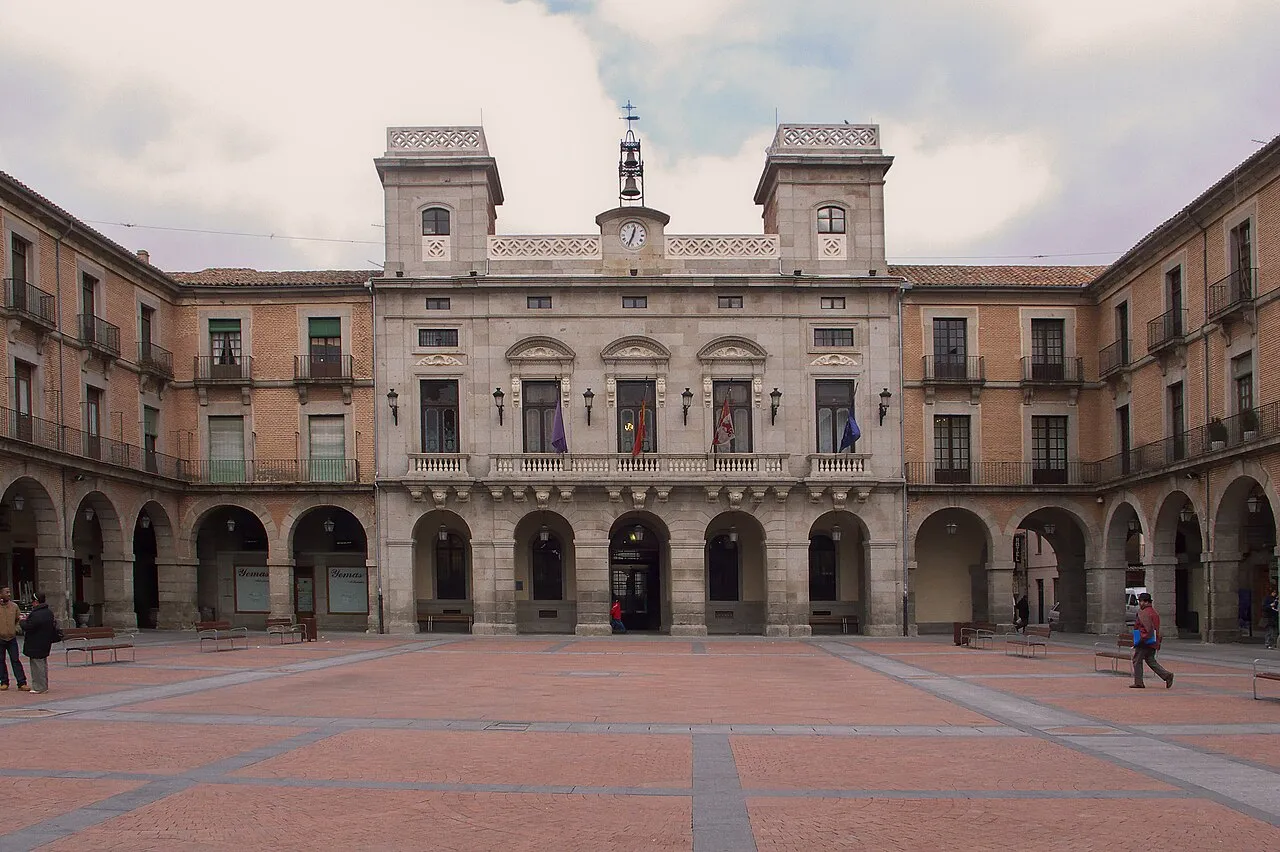
The city's drawing room, with arcades and terraces, and the best place to stop for lunch inside the walls. Much of the old town's eating and drinking is concentrated around it, and a market is still held here as it has been for two thousand years.
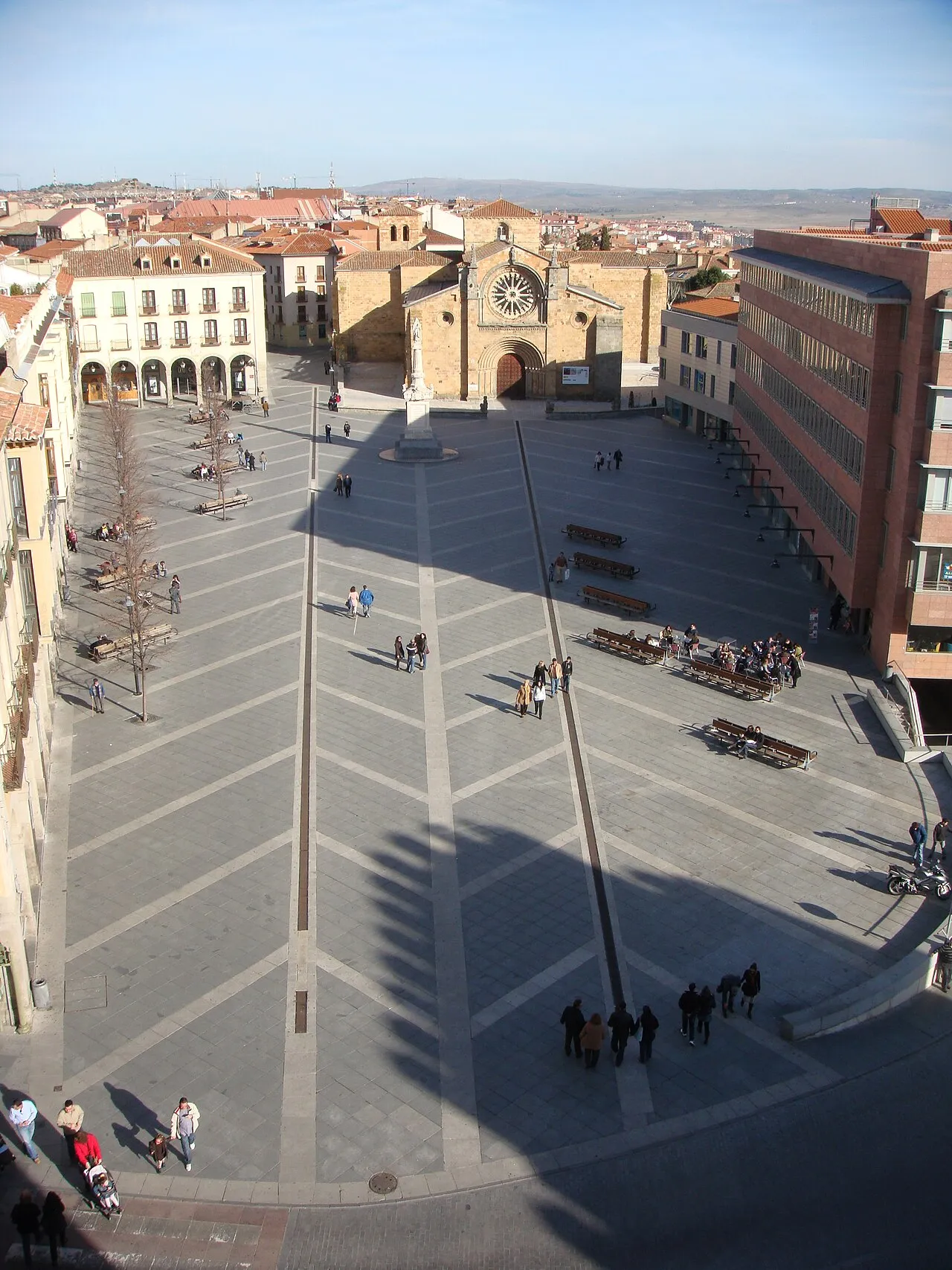
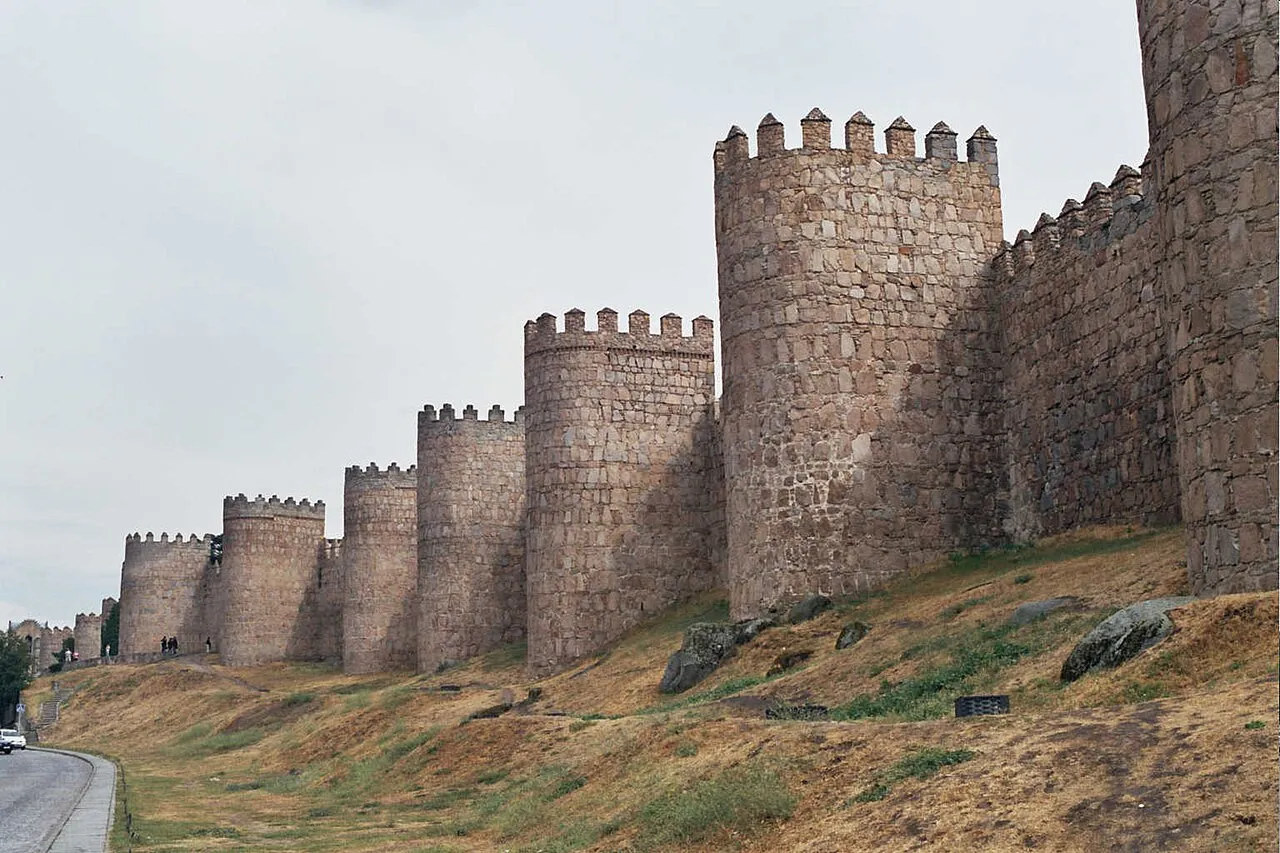
The other eating area is outside, in the Mercado Grande, the square that opens in front of this gate. It is wider, with terraces in the sun and the walls opposite, and it works very well for an aperitif before going into the enclosure.
The judías del Barco de Ávila are the other product with a denomination of its own, beans grown in the Tormes valley at considerable altitude. They are white, large and very thin-skinned, which makes them particularly creamy, and they are stewed with compango: chorizo, morcilla and pig's ear.
Patatas revolconas are the make-do dish par excellence: potato boiled and mashed with paprika, garlic and fat, served with crisp torreznos, pork crackling, on top. It is winter food, filling and very cheap at source, and today it appears on almost every menu in the province.
And there is more plateau cooking: garlic soup, cocido, morcilla and game in season, because the whole Sierra de Gredos is hunting country. Vegetables take second place for an obvious climatic reason, although there are green beans and peppers in a short season.
For drinking, there is no important denomination of its own, so the wine lists are dominated by Ribera del Duero, Rueda and Toro, all less than two hours away. A red from Ribera with a chuletón de Ávila is the local default combination.
The yemas, and where to eat
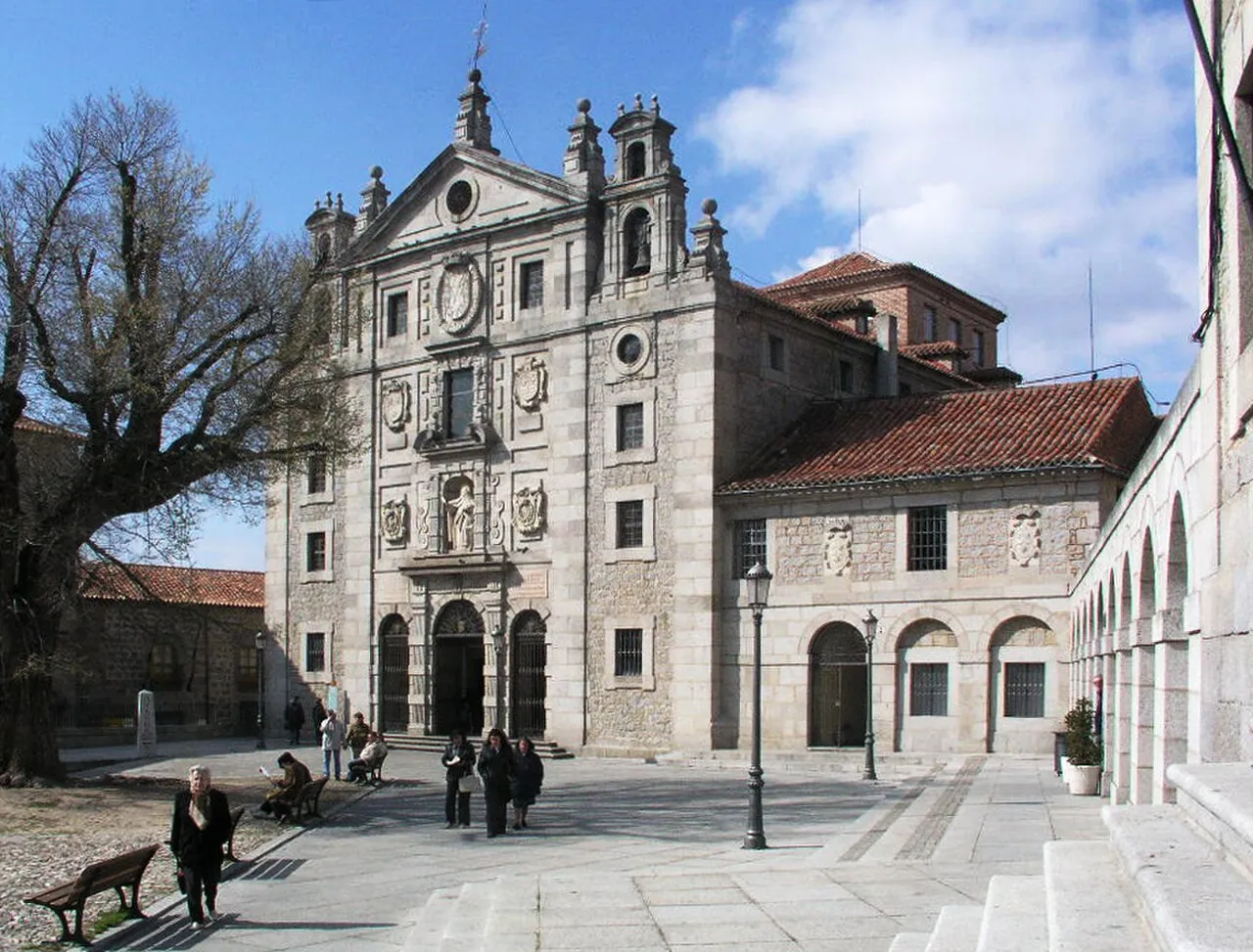
Yemas de Santa Teresa are the sweet of the city: egg yolk cooked with syrup, moulded into balls and rolled in sugar. Their origin lies in convent baking, like almost every Castilian sweet, and the association with the saint is commercial and later, from the nineteenth century.
That convent origin has a practical and rather unromantic explanation: the convents received enormous quantities of leftover yolks from the wineries, which used the whites to fine their wine. Those yolks had to go somewhere, and out of that came the yemas, the tocinos de cielo and half of Spanish baking.
They are sold in bakeries in the old town and also in the city's enclosed convents, and that second option is the interesting one: you buy through a torno, a revolving hatch, without seeing each other's faces, and the product never reaches the souvenir shops. It is worth asking at the tourist office which convents are selling.
On the areas: inside the enclosure, around the Plaza del Mercado Chico; outside, the Mercado Grande, in front of the Puerta del Alcázar, with terraces and the walls opposite. And it is worth booking at weekends, because Ávila gets a lot of day trips from Madrid.
The yemas carry her name because of a nineteenth-century commercial association, not because she invented them. But the city's convent baking really is old, and several enclosed convents still sell sweets through the torno, without them ever reaching the shops.
Around a kilo, and frequently more, because it is cut very thick, three or four fingers. It is served to share between two people, and ordering it as a single portion is the classic visitor's mistake. It usually arrives already sliced on a hot plate so that each of you can finish it to your own taste.
What is special about the beef of Ávila?
It has a protected geographical indication and comes in good part from the avileña-negra ibérica breed, native to this sierra and raised on extensive grazing on high pastures. That system gives a slower-growing animal, with more fat marbled through the muscle and therefore more flavour.
What are patatas revolconas?
Potato boiled and mashed with paprika, garlic and fat, served with crisp torreznos on top. It is the make-do dish par excellence of the province, winter food, filling and cheap at source. Today it appears on almost every menu in the area, sometimes as a tapa.
Why is the typical sweet made of egg yolks?
For a practical reason rooted in its convent origin: the wineries used egg whites to fine their wine and sent the convents enormous quantities of leftover yolks. Those yolks had to go somewhere, and out of that came the yemas, the tocinos de cielo and a good part of Castilian baking.
Did Saint Teresa invent the yemas?
No. The sweet belongs to convent tradition and the association with her name is commercial and much later, from the nineteenth century, when a confectioner in the city used it as a brand. That takes nothing away from the product, but it is worth knowing: it is a nineteenth-century marketing operation, not a recipe of the saint's.
Where is it best to eat?
Inside the enclosure, around the Plaza del Mercado Chico, under the arcades. Outside, in the Mercado Grande, the square in front of the Puerta del Alcázar, with terraces in the sun and the walls opposite. It is worth booking at weekends because the city gets a lot of day trips from Madrid.
Practical information
The dishChuletón de Ávila, avileña breed, cut very thick and grilled over embers. Around a kilo: it is for two.
The pulseJudías del Barco de Ávila, beans with their own denomination, stewed with compango.
Making doPatatas revolconas: mashed potato with paprika and torreznos on top.
The sweetYemas de Santa Teresa. Better from a bakery or from the torno of an enclosed convent.
AreasPlaza del Mercado Chico inside the enclosure; Mercado Grande outside, in front of the Puerta del Alcázar.
BookingAt weekends, because Ávila gets a lot of day trips from Madrid.
On the map
🎧 With Viavoy
Walk Avila and listen at your own pace
Download Viavoy and walk Avila offline, whenever you like.