The walls of Ávila: why they came down to us intact
Two thousand five hundred metres closed in a ring, eighty-seven towers and not a single breach. How it was built, why the towers are so close together and where you can see the whole ring.
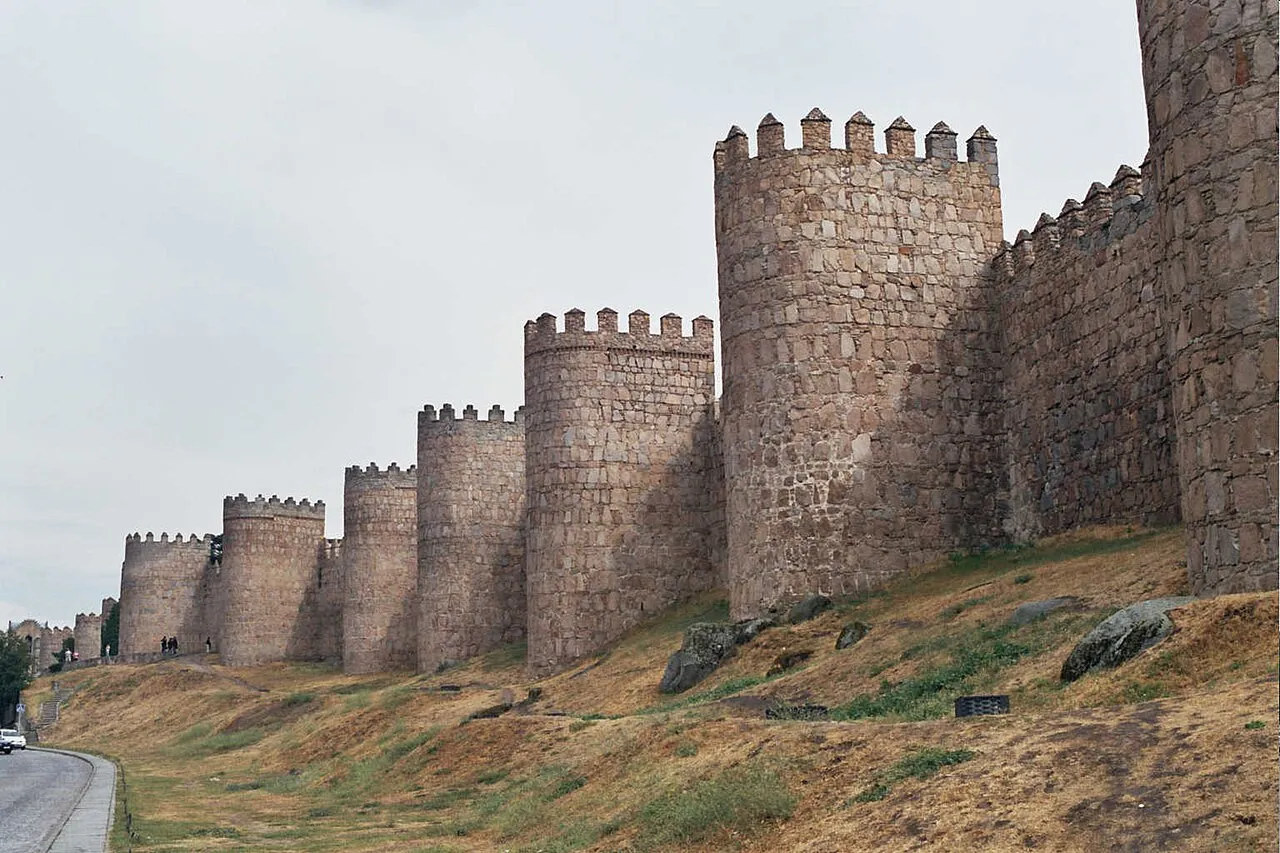
Most European city walls were pulled down between the eighteenth and nineteenth centuries because they got in the way of urban growth and no longer served any purpose. Ávila's were not. The whole ring survives, closed, with its eighty-seven towers and its two thousand five hundred merlons, and the reason is neither chance nor an early protection policy: it is that here there was never a good enough reason to knock them down.
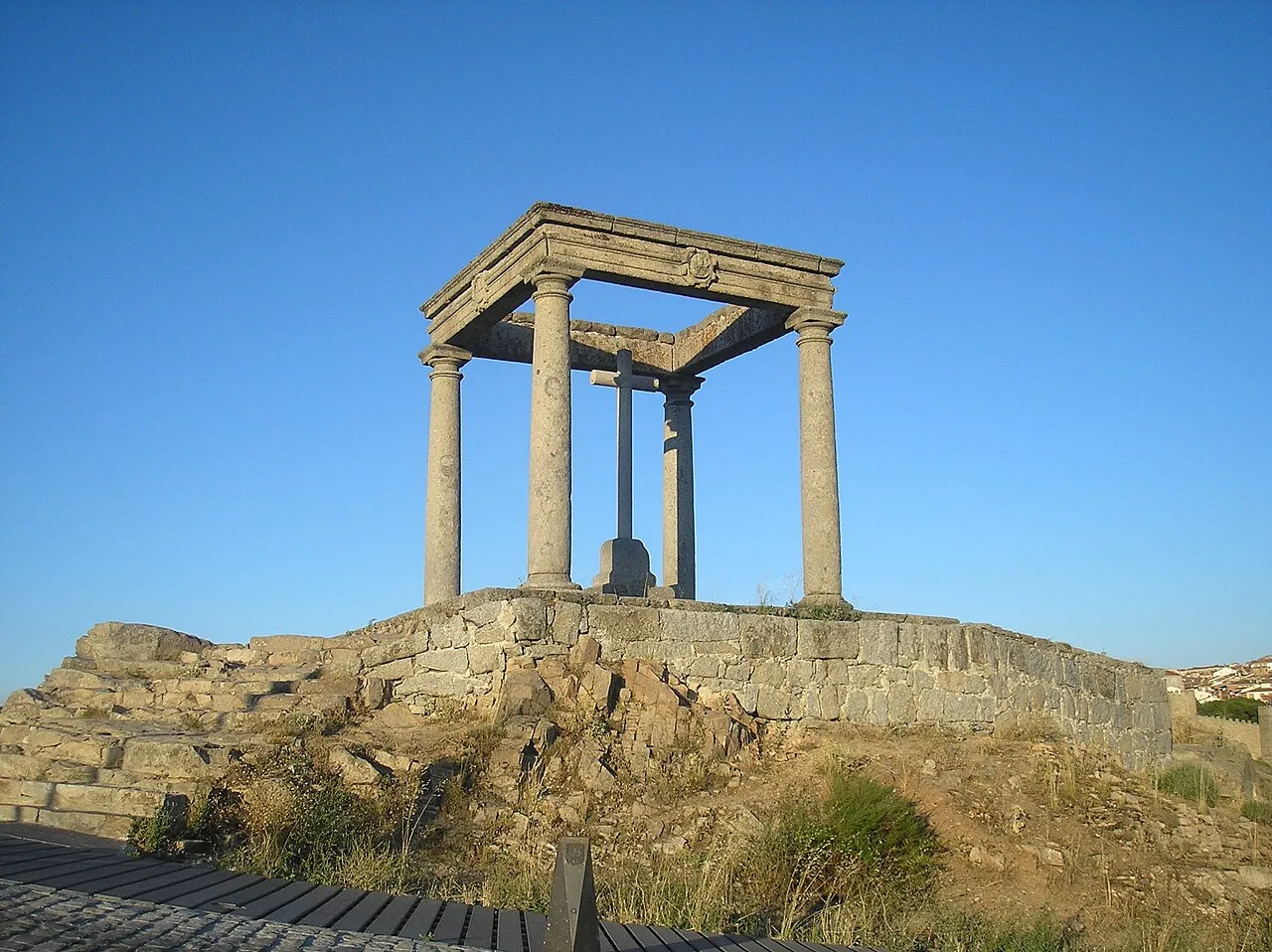
To see them whole you have to leave the enclosure and cross the river to Los Cuatro Postes, fifteen minutes on foot. From inside it is impossible to grasp them as a complete object.
A city in no man's land
Frontier, resettlement and granite.
When the Christian kingdoms pushed south onto this plateau, the area between the Duero and the Central System was left empty for decades, a no man's land between the north and al-Andalus. Ávila, perched on its hill at more than eleven hundred metres, was left right on the line.
Alfonso VI charged his son-in-law Raymond of Burgundy with resettling and defending it, and from the end of the eleventh century the whole hill was closed off in stone. The local chronicle says it was done in nine years with almost two thousand men under two masters with foreign names, Casandro and Florín de Pituenga.
Historians doubt that figure and believe the work went on far longer, with successive campaigns through the twelfth and thirteenth centuries. But the epic version is still told here, and that too is part of the monument.
The material is granite from the sierra, and a good part of the ashlars in the base course are reused: there are funerary slabs, stelae and fragments of Roman and Visigothic inscriptions wedged into the wall. The wall was built with the remains of the cities that came before.
Two thousand five hundred metres of perimeter, twelve metres high, three metres thick. The adarve is walked with a ticket at around 5 €, in stretches of different lengths with access at several points. A World Heritage Site since 1985 along with the churches outside the walls.
The point from which you see the whole ring, and from which the city has been looked at for centuries. It is a humilladero from 1566: a wayside structure where the traveller stopped to pray. Free access with no opening hours, best at sunset or at night.
It is the first thing that strikes you looking at the whole: the semicircular towers follow one another at very short intervals, much shorter than is usual in other medieval walls. It is not excessive zeal or display: it is ballistic calculation.
The defensive weaponry of the time was the bow and the crossbow, with a limited effective range and a flat trajectory. So that no stretch of curtain wall was left uncovered, the distance between towers had to be less than twice the effective range, so that any point on the wall could be swept from at least one of them.
The result is eighty-seven towers in two thousand five hundred metres, that is, one roughly every thirty metres. That density is what gives the whole its characteristic look and what explains why Ávila was never taken by assault.
Because that is the best proof that it worked. The most effective wall is not the one that resists the attack but the one that makes nobody even try, and with this profile visible from several kilometres away, attacking Ávila was an operation nobody wanted to take on.
Nine gates and an adarve
The enclosure has nine gates, plus the odd small postern, and they are not alike: they range from the monumentality of the Puerta del Alcázar to humble, almost hidden entrances. Each one faced a road and a function: the market gate, the tanners' gate, the one that opened onto the cathedral.
The Puerta del Alcázar is the most solemn: two enormous towers joined at the top by a stone bridge, with machicolations over the head of anyone coming in. That stretch of the enclosure is the highest, the thickest and the one with the towers closest together, because here the terrain gave no natural advantage.
The visit to make is the adarve, the walkway along the top of the wall, opened up in several stretches of different lengths. You walk between the merlons seeing the city inside and the countryside outside, exactly as a sentry did.
One warning: on the adarve there is no protection of any kind from the wind, and Ávila stands at more than eleven hundred metres with an almost constant dry wind. In winter the wind chill up there drops considerably, and that is worth bearing in mind when you dress.
The most solemn of the nine and one of the ways up onto the adarve. The name comes from the Arabic al-qasr, the fortress: there was a citadel here inside the enclosure, but it fell into ruin and was pulled down, and today the place name outlives the stone.
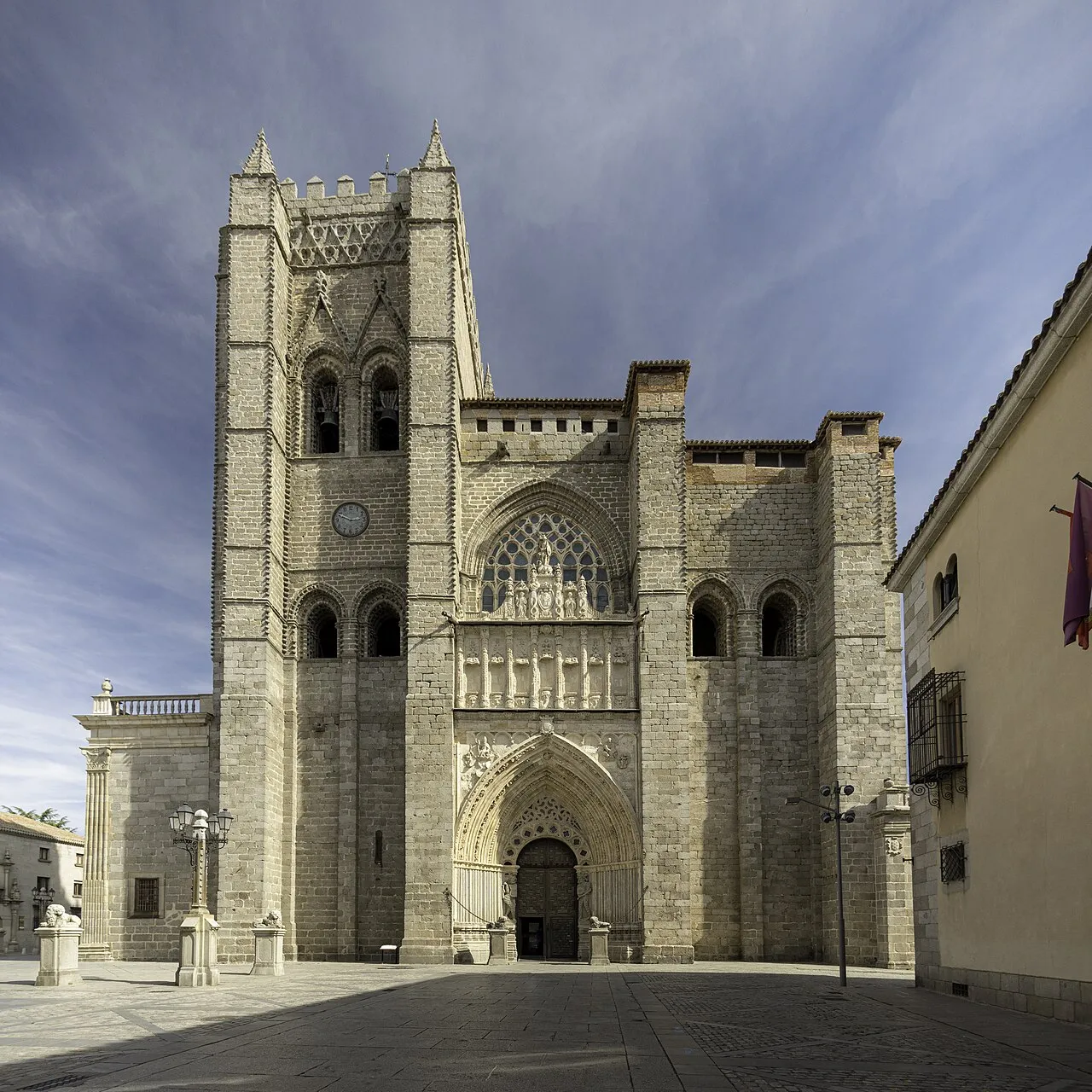
Its apse, the cimorro, is a tower of the enclosure itself: the cathedral is built into the defensive system. It is the only case in Spain of church and fortress in the same wall, and you have to walk round the building on the outside to see it.
Because there was never a good enough reason to pull them down. Most European city walls were knocked down between the eighteenth and nineteenth centuries for getting in the way of urban growth, but Ávila did not grow enough for the enclosure to become an obstacle, and that saved the whole ring.
Why are the towers so close together?
Ballistic calculation. The defensive weaponry was the bow and the crossbow, with a short effective range, so the distance between towers had to be less than twice that range so that no stretch of wall was left uncovered. There are 87 towers in 2,500 metres, one roughly every thirty metres.
Can you walk along the top?
Yes, along the adarve, opened up in several stretches of different lengths with access at various points of the enclosure, among them the Puerta del Alcázar. Entry is around five euros. It is the best way to see it, although it is worth wrapping up because there is no protection at all from the wind.
Is it true that it was built in nine years?
That is what the local chronicle says: nine years with almost two thousand men under two masters called Casandro and Florín de Pituenga. Historians cast doubt on it and believe the work went on far longer, with successive campaigns during the twelfth and thirteenth centuries. The epic version is still told here all the same.
What are the ashlars with inscriptions?
Reused material. A good part of the blocks in the base course are funerary slabs, stelae and fragments of Roman and Visigothic inscriptions wedged into the wall, some with the written face showing and others turned inwards. It was normal practice: new stone is expensive and the earlier ruins were right there.
Was it ever taken?
Never by assault, and that is the best proof that the design worked. The most effective wall is not the one that resists the attack but the one that stops it being attempted: with this profile visible from several kilometres away, attacking Ávila was an operation nobody wanted to take on.