The Romanesque of Ávila: the golden stone outside the walls
The churches outside the enclosure are part of the World Heritage listing and hardly anyone goes out to see them. Another stone, another colour and one of the finest Romanesque doorways in Spain.
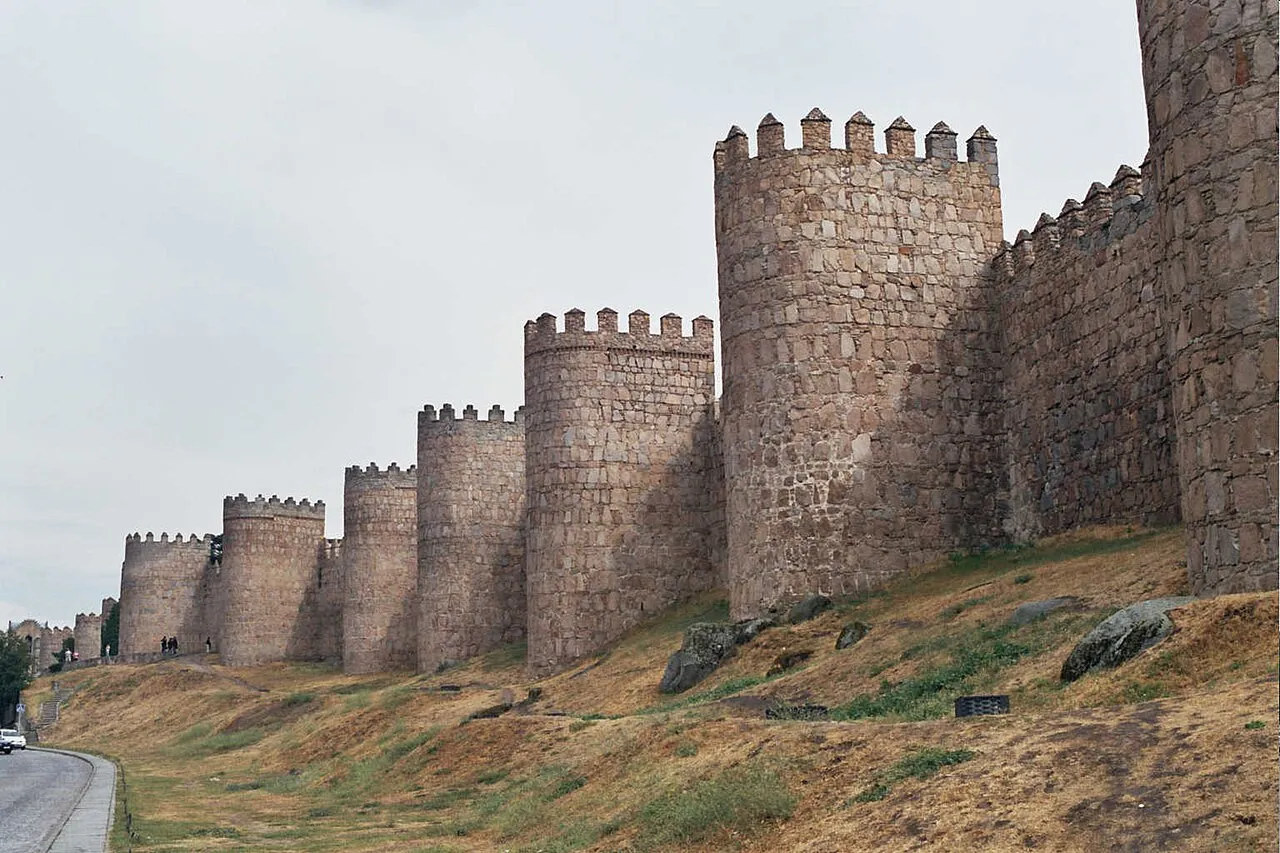
The World Heritage listing of 1985 does not cover only the wall: it expressly includes the churches outside it. And there lies the part of Ávila most people miss, because the walled enclosure exerts such a strong pull that very few people go out through the gates. The first thing that changes when you leave is the colour of the stone.
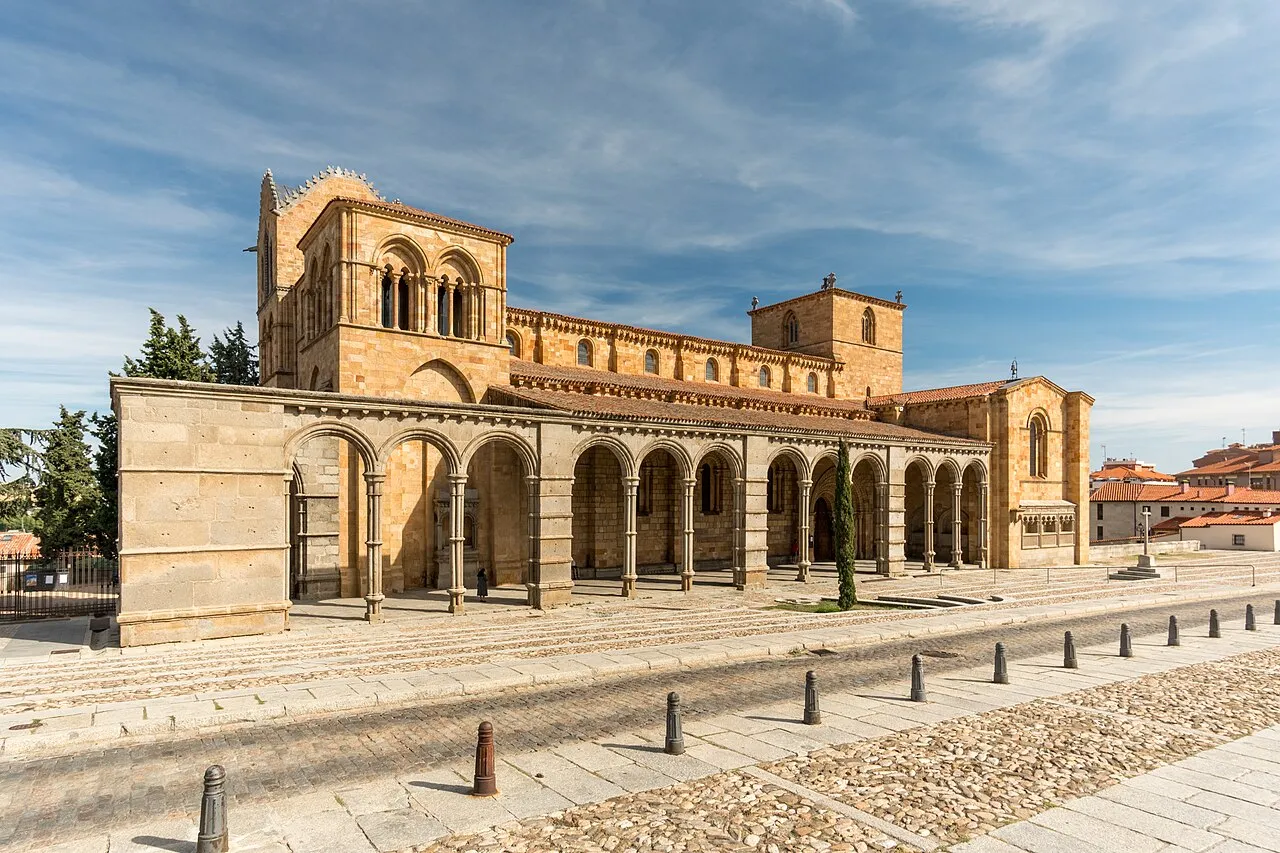
Inside the enclosure the stone is grey granite; outside, caleña sandstone, warm and golden, which catches fire in low light. That contrast is the best argument for leaving the walls.
San Vicente, the jewel
Begun around 1130, worked on for two centuries.
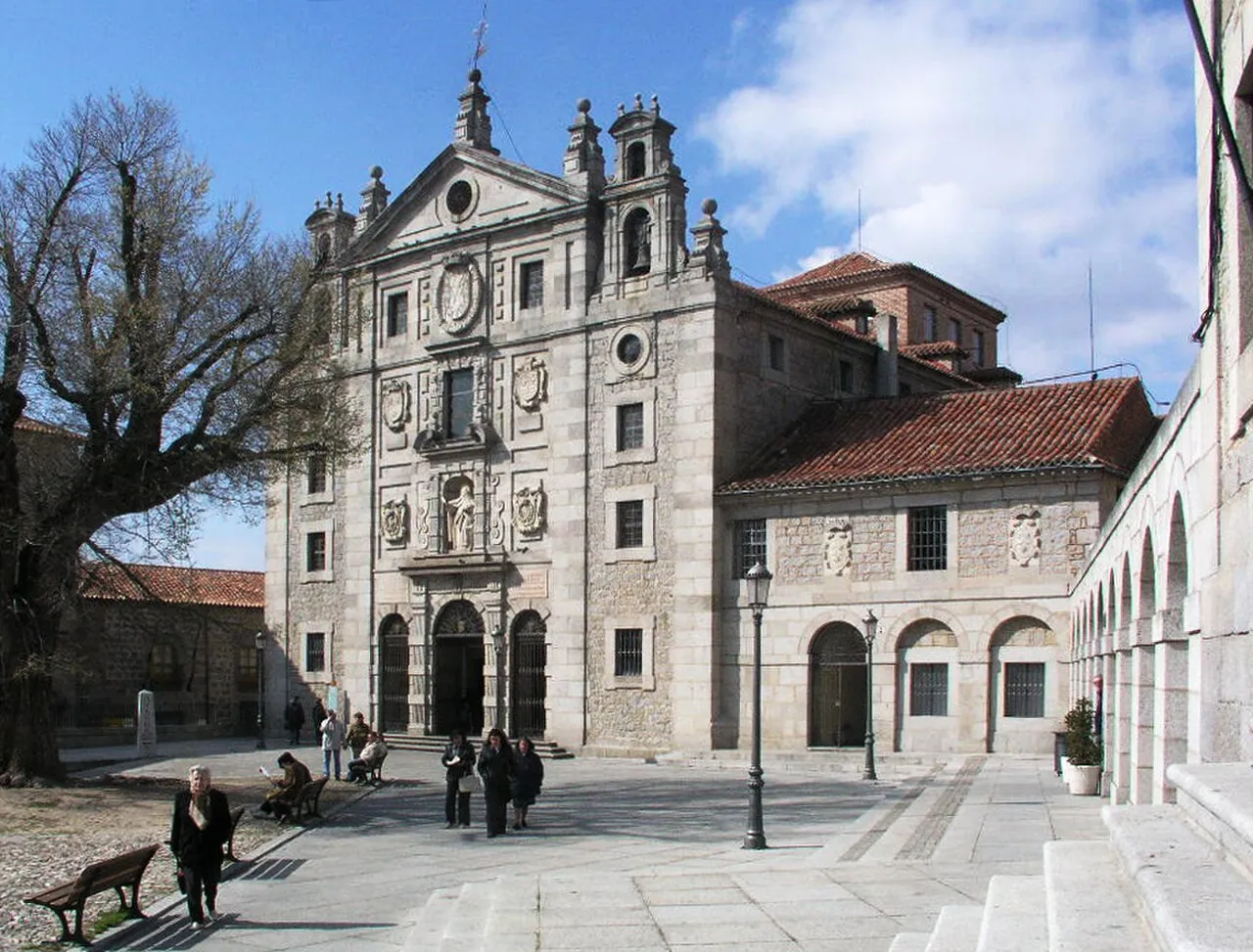
It is the greatest basilica of the Ávila Romanesque and it stands next to the gate of the same name, five minutes from the cathedral once you leave the enclosure. The first thing that strikes you is the western doorway, sheltered by a porch, with a group of apostles on the jambs of exceptional quality.
Those figures turn their bodies slightly, gesture, look at one another and have individual faces, with the folds of their tunics worked with real freedom. It is the Romanesque at the exact moment when sculpture begins to shake off its hieratic stiffness, and that is why it ranks among the peaks of the style in Spain.
Inside, the major piece is the cenotaph of the three martyrs beneath a Gothic baldachin: a monumental tomb of polychrome stone whose reliefs tell the martyrdom scene by scene, with a gift for storytelling rare in the twelfth century.
And there is a legend carved on the cenotaph itself: that of the Jew who mocked the martyrdom, was attacked by a serpent that came out of the rock, repented, converted and paid for the church. It is very explicit medieval proselytising and it is worth reading it as such, not as a picturesque anecdote.
📍 Outside the walls, next to the Puerta de San Vicente
It was built over almost two centuries, so you can read the passage from Romanesque to Gothic as you move from the east end to the west: round arches at the back, pointed arches and ribbed vaults in the later part. Entry around 3 € including the crypt.
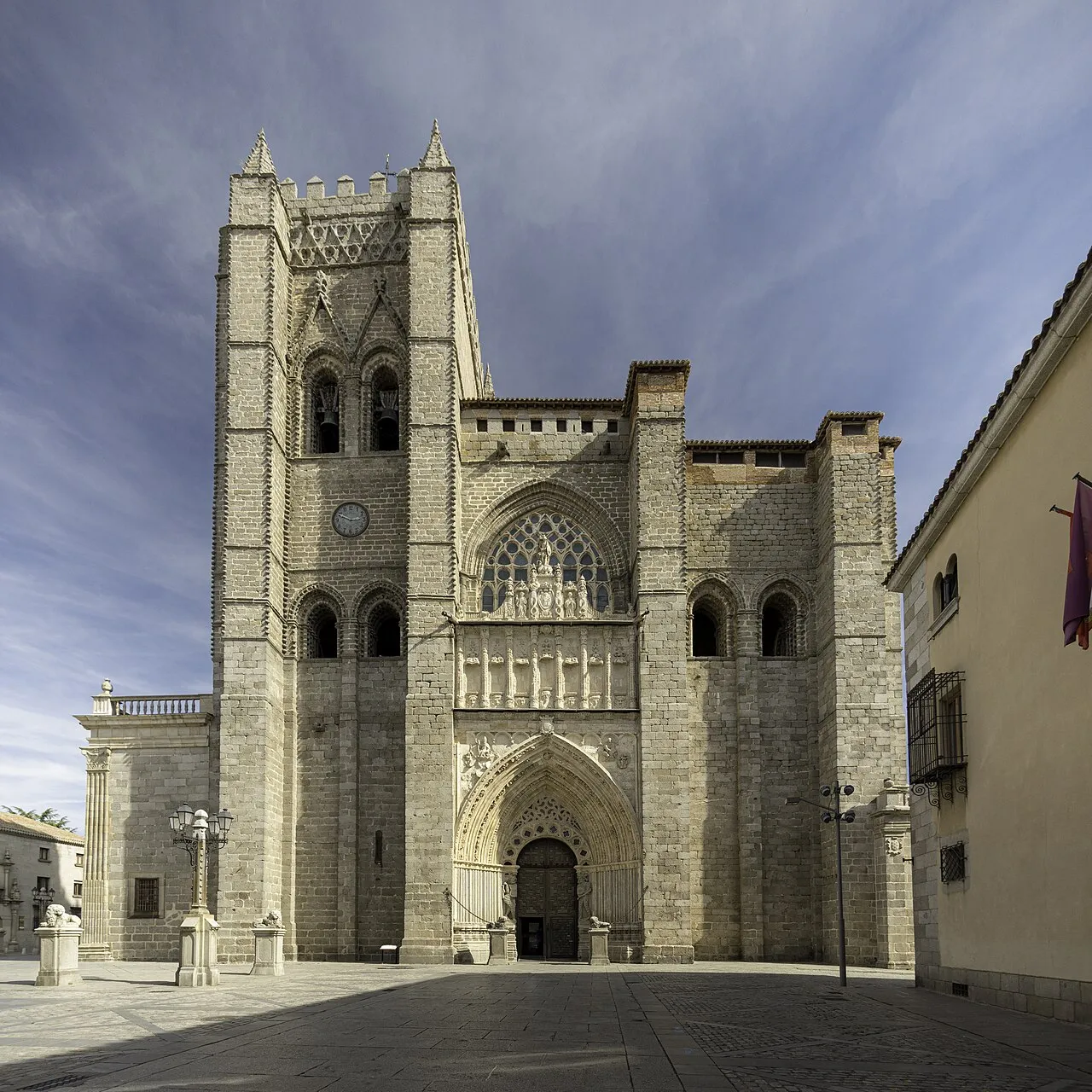
Inside the enclosure, the other end of the process: it is credited with being the first Gothic cathedral on the peninsula, with the first ambulatory in Spain, and its apse is literally a tower of the wall. Comparing its stone with that of San Vicente is the best lesson the city gives.
Inside the enclosure the grey granite of the sierra dominates: hard, difficult to carve and cold in colour. Outside, in the churches of the suburbs, caleña sandstone appears, a local stone with a warm tone that runs from ochre to reddish depending on the grain and that literally catches fire in raking light.
The difference is not aesthetic but practical. Granite was what lay to hand on the hill and what served to raise a wall that had to hold; sandstone, softer, allows a level of carving that granite does not admit, and that is why the most worked doorways are outside and not inside.
That is the reason all the good Romanesque sculpture in Ávila is outside the walls. It is not that the suburbs were richer: it is that they were working with a material that let them. The cathedral, in granite, resolves its power through volume and not through detail.
The drawback of sandstone is that it erodes, and in several of these churches it shows: there are doorways and capitals fairly worn by six or seven centuries of weather in a high-plateau climate with frequent frosts.
The other churches of the suburbs
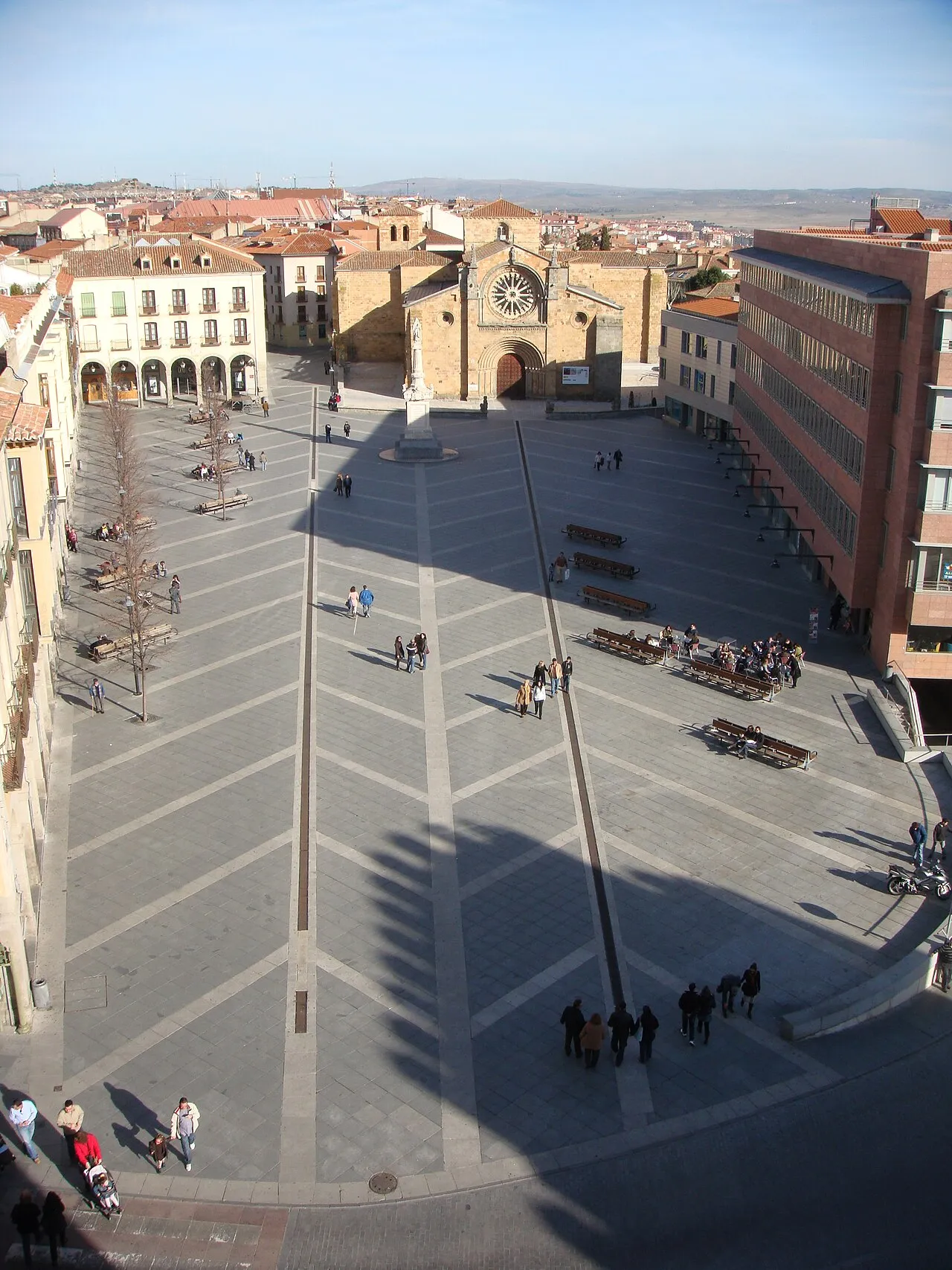
San Pedro, facing the Mercado Grande and the Puerta del Alcázar, is the second in importance: Romanesque from the end of the twelfth century, with a great rose window on the western front and a very well preserved east end of three semicircular apses. It presides over the square where the fairs were held for centuries.
San Andrés, to the north, is probably the oldest of the group and the most austere, with historiated capitals of great quality. It is quite out of the way and so hardly anyone reaches it, but for anyone interested in the Romanesque it is an obligatory stop.
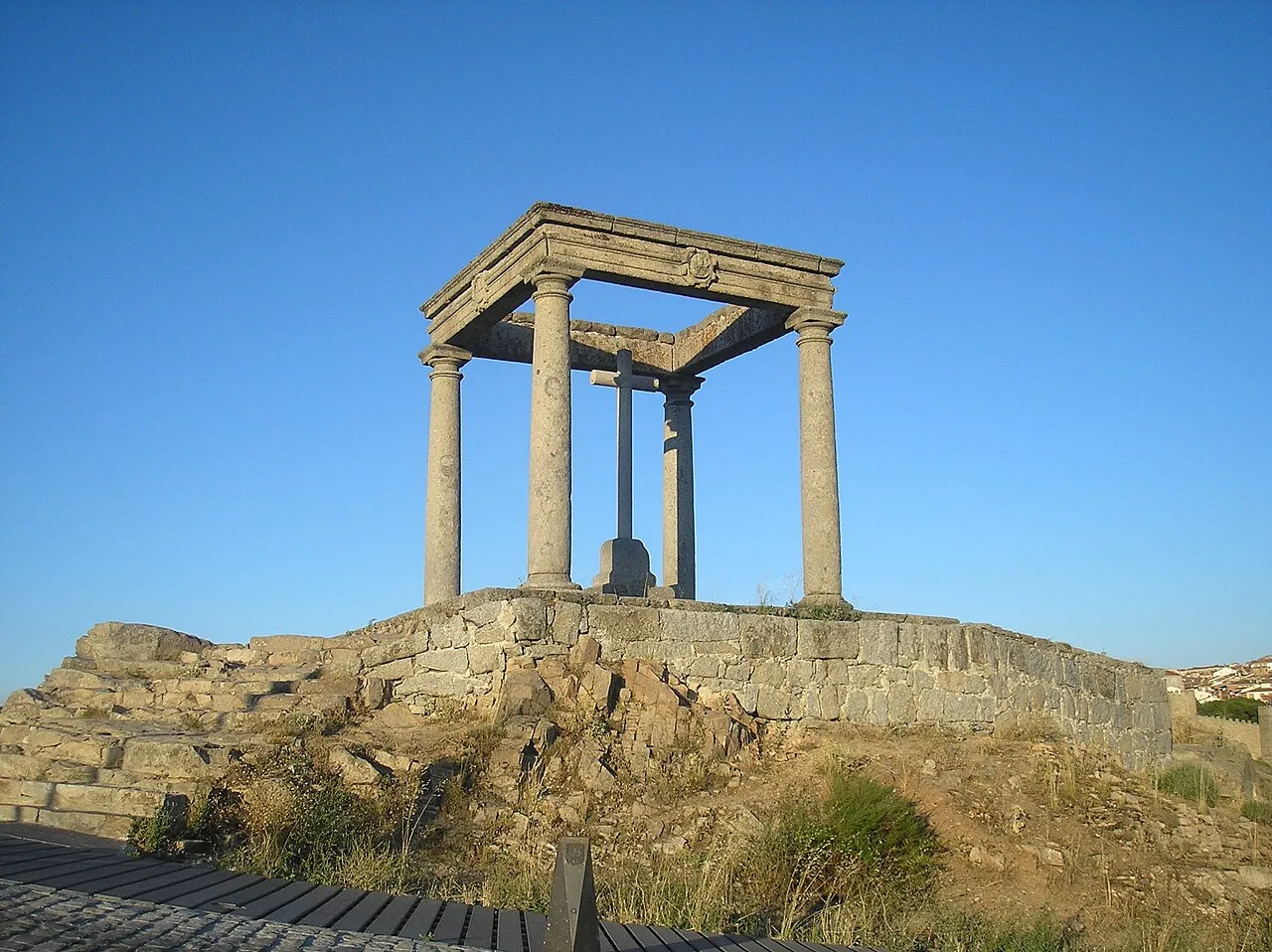
And San Segundo, by the river, is a small church with a remarkable funerary sculpture, on the natural path between the city and Los Cuatro Postes, so you pass it without a detour if you make that journey on foot.
The whole group is what gives sense to the UNESCO listing: Ávila is not only the enclosure but a system of walled city plus suburbs, and it is that system that came down to us complete. Seeing it only from inside is seeing half of it.
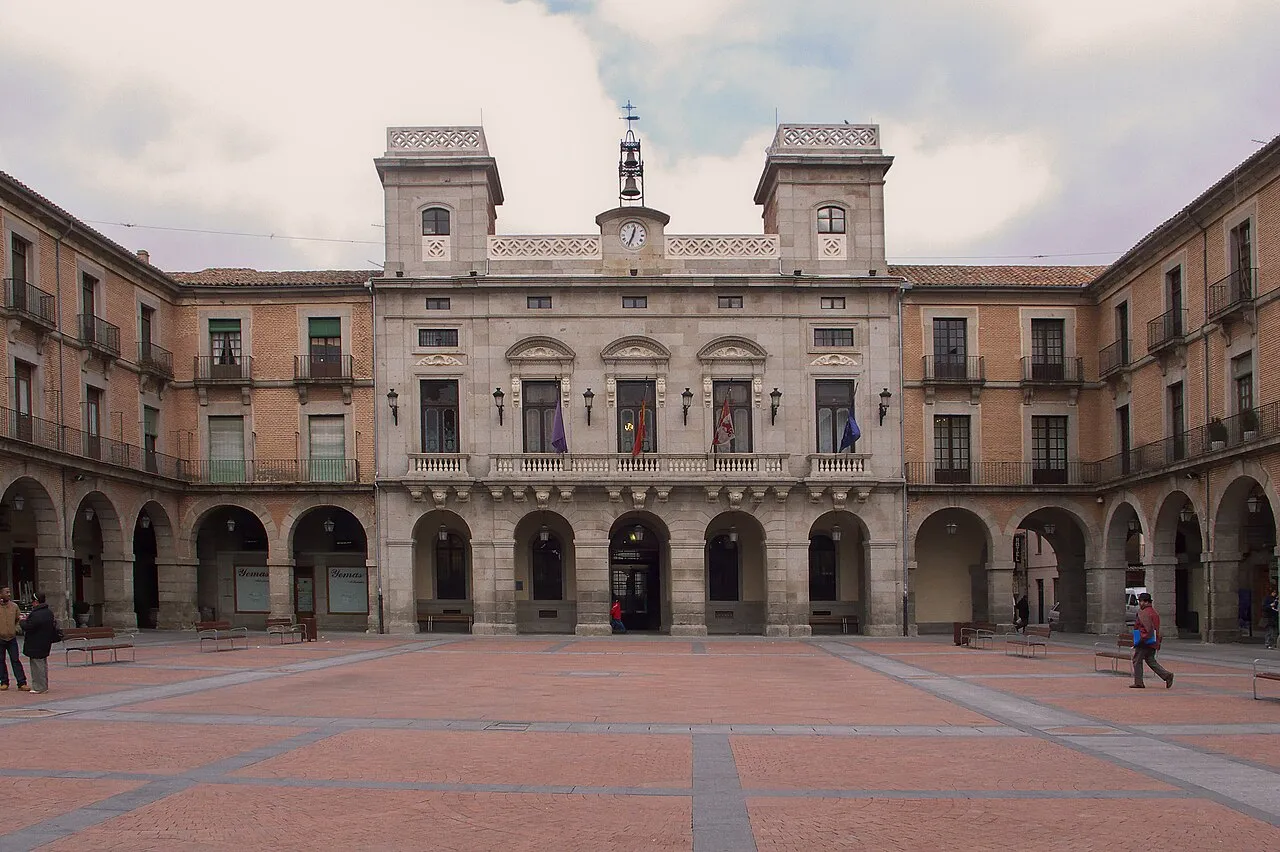
The gate you go out through to the Mercado Grande, where San Pedro stands. That square was for centuries the setting for the fairs, the jousts and the tournaments, and it is still the largest open space in the city.
The walk out here passes right by San Segundo, on the riverbank, so the two things link up with no detour. Fifteen minutes from the Puerta del Alcázar, and on arrival, the whole ring of walls on its hill.
Because it is a different material. Inside the enclosure the grey granite of the sierra dominates, hard and cold; outside they used caleña sandstone, a warm local stone running from ochre to reddish that catches fire in raking light. Sandstone is softer and allows carving with a detail that granite does not admit.
Why is the best sculpture outside the walls?
Because of the material. The sandstone of the suburbs lets you carve in detail, while the granite of the enclosure resolves its power through volume rather than relief. That is why the most worked doorways, such as the one at San Vicente, are outside the walls and not inside, even though the buildings inside were more important.
Which churches should you see?
San Vicente first of all, for its western doorway and for the cenotaph of the three martyrs. Then San Pedro, facing the Mercado Grande, with its great rose window and its east end of three apses. And if the Romanesque interests you, San Andrés to the north, which is the oldest and the most out of the way.
Are they included in the UNESCO listing?
Yes, expressly. The World Heritage listing of 1985 covers the walled city and the churches outside the walls as a single whole, because what is protected is not only the enclosure but the complete system of walled city plus suburbs, which is what came down to us intact.
How long does it take to see them?
An hour and a half for the whole group counting the walking, although most of that goes on getting from one to another. San Vicente on its own is about thirty minutes with the crypt included. If time is short and you have to choose one, San Vicente without argument.
What is the best time of day?
Late in the afternoon. Caleña sandstone needs raking light to give its colour, and with a low sun it catches fire in a way that does not happen at midday. It is exactly the same criterion that applies to the granite of the wall seen from Los Cuatro Postes.
Practical information
WhereAll of them outside the walls: San Vicente, San Pedro, San Andrés and San Segundo.
The main oneSan Vicente, next to the gate of the same name. Entry around 3 € including the crypt.
The restSan Pedro and San Andrés are free to enter, with opening hours tied to services.
Best timeLate in the afternoon: caleña sandstone catches fire in low light.
DurationAn hour and a half for the whole group, counting the walking between them.
Why it mattersThe churches outside the walls are included in the World Heritage listing.
On the map
🎧 With Viavoy
Walk Avila and listen at your own pace
Download Viavoy and walk Avila offline, whenever you like.