Sant Jordi in Barcelona: the day of books and roses
On 23 April, the whole city turns into an open-air bookshop. What it is, where to experience it, what time to go and why it resembles no other festival in Spain.
On 23 April, Barcelona does something no other city in the world does: it fills its streets with stalls of books and roses and goes out en masse to buy them. There are no processions, no fireworks, no parades. There are half a million people walking slowly along La Rambla and the Passeig de Gràcia, with a book under their arm and a rose in their hand. It is the most civilised and the strangest festival in Spain, and in a single day around a quarter of all the books sold in Catalonia in a year change hands.
It is not a public holiday. Sant Jordi is celebrated on a working day, with people going out into the street before work, at lunchtime and afterwards. That is part of the charm.
A dragon, a rose and a publisher with a good idea
Sant Jordi — Saint George — is the patron saint of Catalonia, and the legend is the familiar one: a dragon that demanded sacrifices, the princess about to be devoured, the knight who kills it and a rose that springs from the spilt blood. Hence the rose.
The book came much later and in a very specific way. In 1926 Spain established the Day of the Book, and the Valencian writer and publisher Vicent Clavel, settled in Barcelona, proposed tying it to this date. 23 April also coincides with the death of Cervantes and with that of Shakespeare, which gave it an impeccable literary justification.
The combination took hold and became a mass social custom: traditionally he gave the rose and she gave the book, although today that division has fallen into disuse and both are given in any direction. UNESCO adopted the date as World Book Day in 1995, precisely on the basis of this Catalan tradition.
1
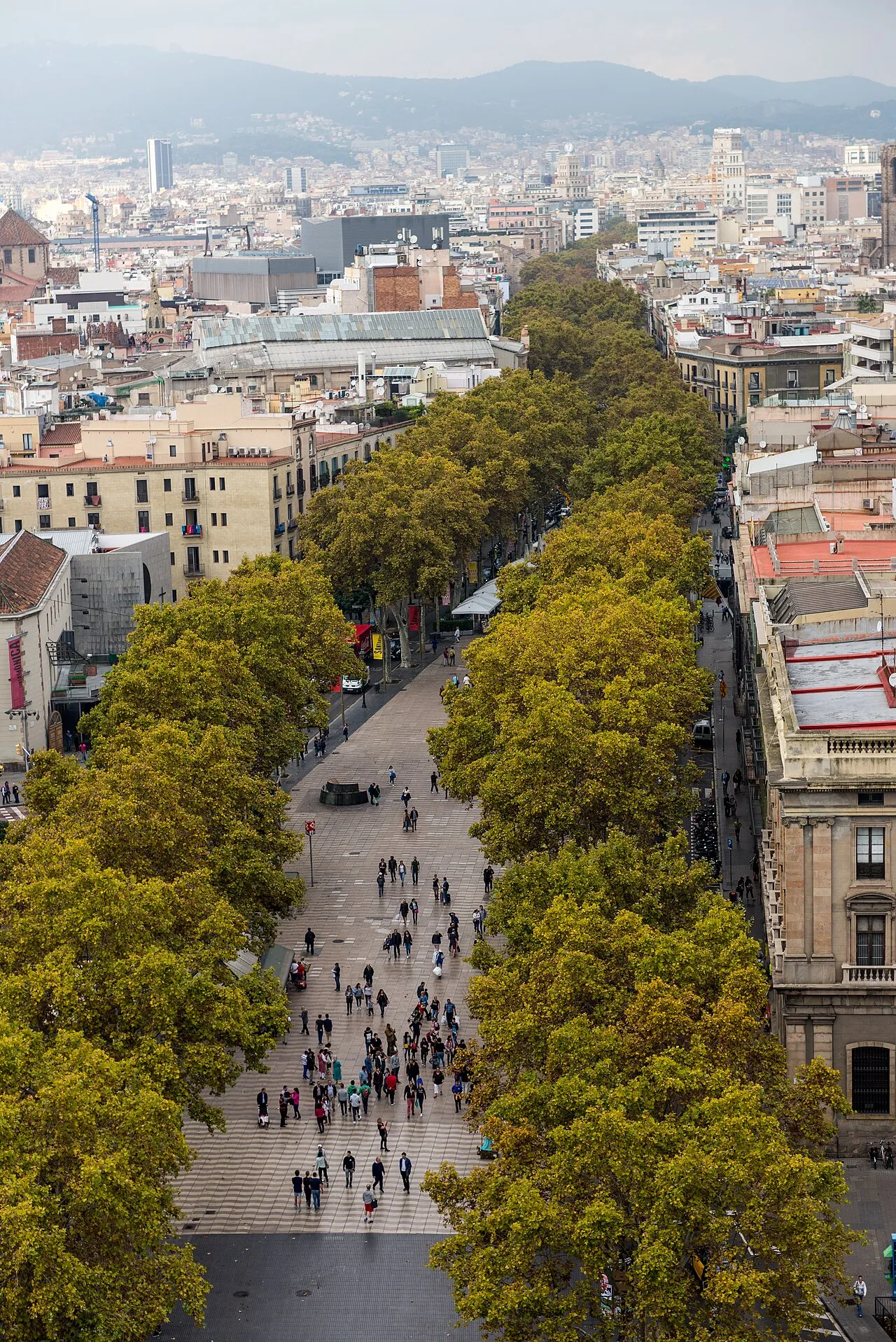
La Rambla
📍 From Plaça de Catalunya to the sea
The historic axis of Sant Jordi: stalls of books and roses along the kilometre and a bit of the promenade, in a double row, from first thing in the morning. It is the classic image of the festival and also the most saturated: by mid-afternoon you advance at the pace of a procession. If you are going with children or with little patience, there are better alternatives.
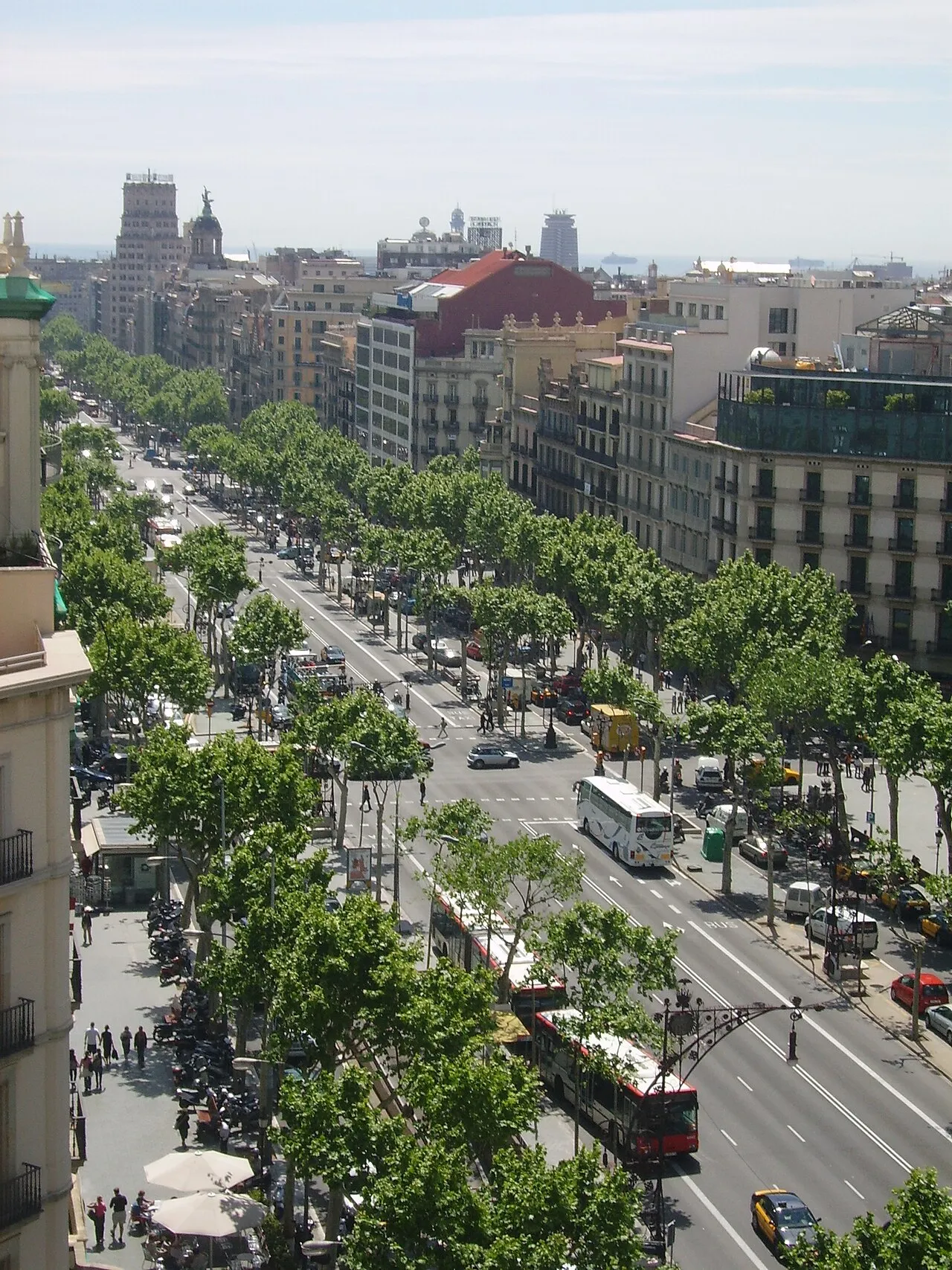
The other great axis of the day, wider, more comfortable and with the big publishers and bookshops laying out their tables in front of the Modernista houses. Many buildings that are normally visited for a fee open or light up their façades, and the Casa Batlló puts its carpet of roses out on the balcony. Less of a crush than La Rambla and better for strolling.
The seat of the Catalan government opens to the public on 23 April and its Pati dels Tarongers is covered in roses. It is one of the few days of the year when you can enter without a booking or an arranged visit, which is why the queue goes all the way round the square. Inside is the fifteenth-century chapel of Sant Jordi, dedicated to the patron saint.
Download the app and discover Barcelona offline, whenever you like. Take the walking tour Las Ramblas and the Boquería Market with a local guide in your ear.
The hour changes everything. From eight to eleven in the morning, the stalls are already set up and you can stroll in comfort; from twelve to three and from five to eight, La Rambla and the Passeig de Gràcia turn into a mass advancing at the pace of a procession. If you can only go in the afternoon, choose the secondary zones.
The alternatives that work: the Rambla de Catalunya, wider and quieter than the Passeig de Gràcia; the neighbourhood of Gràcia, with stalls run by independent bookshops and a neighbourhood atmosphere; and the Born, where the small publishers set up tables in the squares.
If you are interested in the books and not only in the atmosphere, look for the stalls of the independent bookshops rather than those of the big chains: they usually have a better backlist, the booksellers know what they are selling and there are often authors signing with no queue.
And if you are going with children, the Plaça de Sant Jaume and the Gòtic are better than the great axes: there are activities, castellers building human towers and sardanas, and the narrow streets impose a more manageable rhythm than the avenues.
4
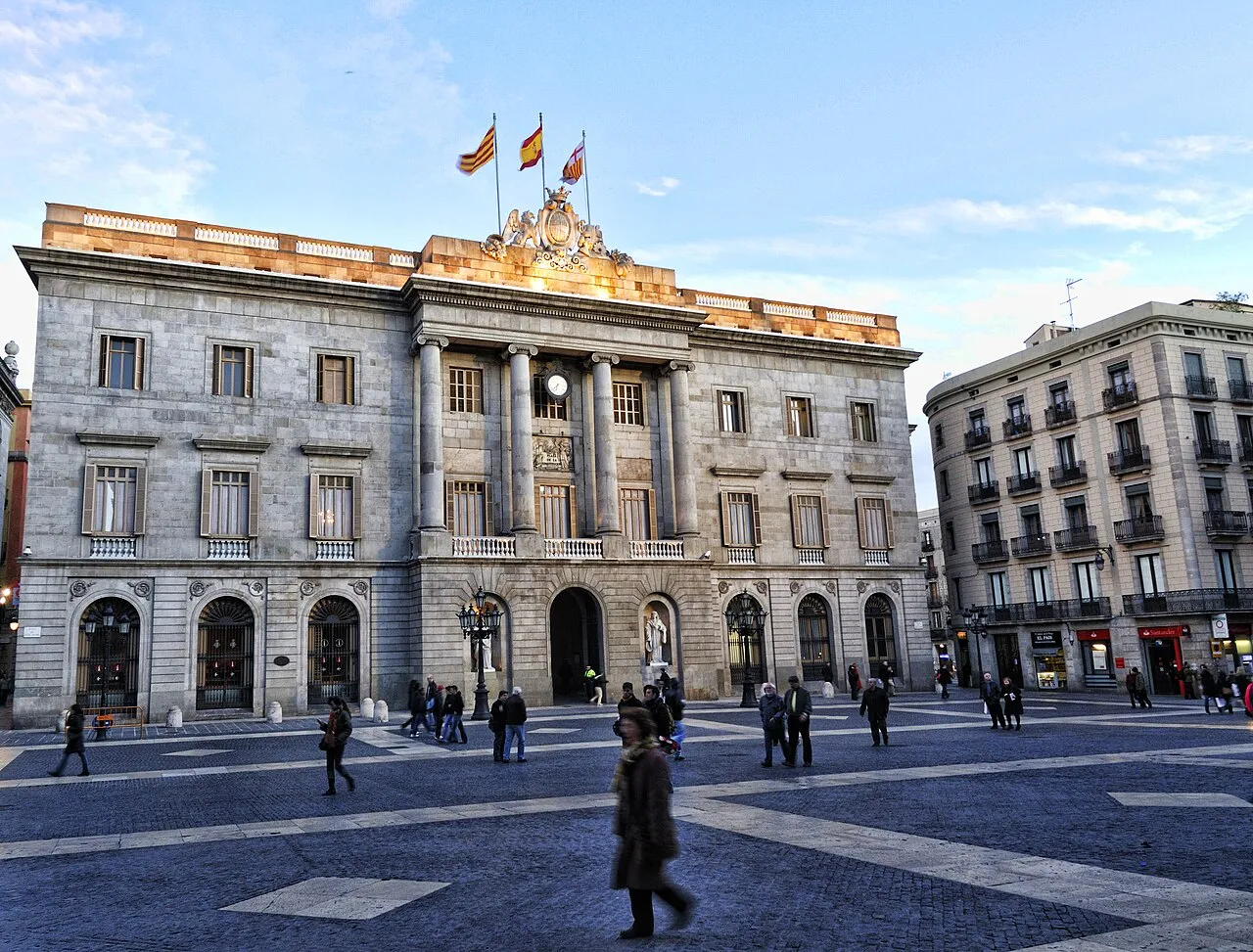
Plaça de Sant Jaume
📍 Gothic Quarter
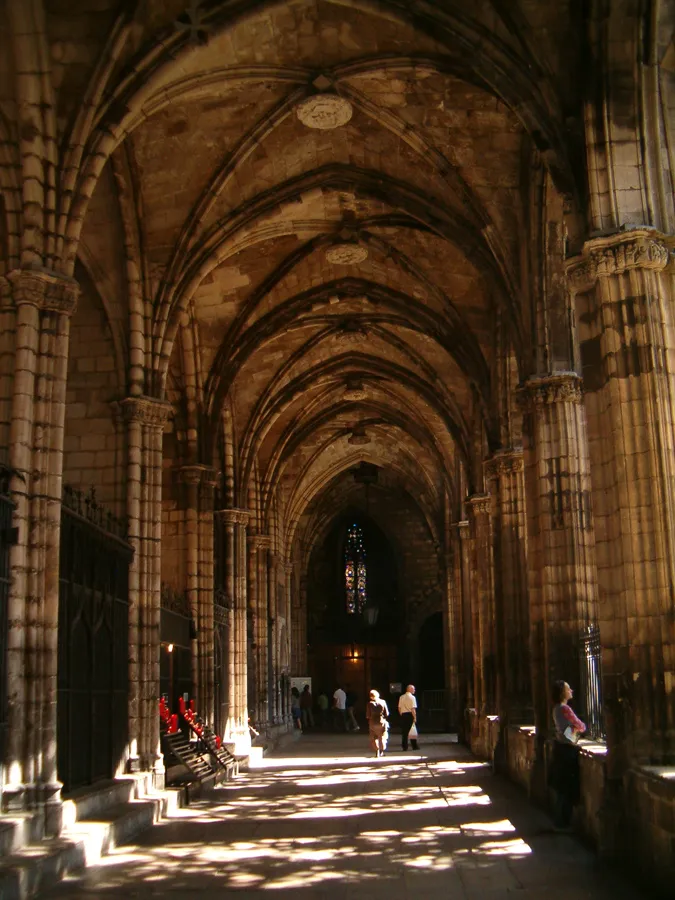
The institutional centre of the day, with the City Hall and the Generalitat facing each other, both open to the public. This is where the traditional events are concentrated: castellers raising human towers, sardanas and children's shows. With children it works much better than the great axes, and the streets of the Gòtic impose a more bearable pace.
The neighbourhood alternative: independent bookshops with a table in the street, rose stalls run by the residents' associations and full squares without the crush of the great axes. It is where people who do not want to fight to move three metres forward experience Sant Jordi, and where it is easiest to talk to the person selling you the book.
The small publishers and the neighbourhood's bookshops set up tables in the squares, with a more intimate atmosphere and considerably more publishing depth than the big commercial stalls. With Santa Maria del Mar as the backdrop, the Passeig del Born on 23 April is one of the most pleasant scenes of the day.
The volume is real: in a single day around a quarter of all the books sold in Catalonia during the year are sold, and several million roses are handed out. It is, by far, the biggest commercial event for books in the world concentrated into one day.
Books usually carry a ten per cent discount at the street stalls, an authorised exception to the fixed-price law. Roses go from a few euros for the simple ones to considerably more for those wrapped with an ear of wheat and a ribbon.
Public transport runs with extra services, but the centre is closed to traffic along the main axes. Taking the metro and walking is the only sensible option; going by car, quite simply, is not.
And an honest warning: if you hate crowds, this is not your day for monument-hopping in Barcelona. The big visits are saturated and so are the streets of the centre. On the other hand, if you are interested in seeing how a city behaves when all of it does the same thing at once, there is nothing like it in Europe.
Frequently asked questions
What is celebrated on 23 April in Barcelona?
Sant Jordi, the feast of the patron saint of Catalonia, turned since 1926 into the Day of the Book. The tradition combines two gifts: a rose, from the legend of the knight who kills the dragon and from whose blood a rose springs, and a book, tied to the date because both Cervantes and Shakespeare died on 23 April. The city fills with stalls of books and flowers and goes out en masse into the street.
Is Sant Jordi a public holiday?
No, it is a working day. People go out into the street before starting work, at lunchtime and when they leave, which produces three very marked waves over the course of the day. That explains why the central hours of the morning are the quietest for strolling and why from five in the afternoon the main axes turn into a mass advancing very slowly.
Where to see Sant Jordi in Barcelona without being overwhelmed?
Avoid La Rambla and the Passeig de Gràcia at peak hours and head for the alternatives: the Rambla de Catalunya, which is wider; the neighbourhood of Gràcia, with independent bookshops and residents' stalls; and the Born, where the small publishers set up their tables. The Plaça de Sant Jaume concentrates the traditional events — castellers, sardanas — and works much better with children than the great avenues.
How many books are sold on Sant Jordi?
Around a quarter of all the books sold in Catalonia during the entire year are sold on that single day, together with several million roses. It is the biggest commercial event for books in the world concentrated into a single day, which is why publishers hold back some of their most important launches of the year for that date.
Can you enter the Palau de la Generalitat on Sant Jordi?
Yes, it is one of the few days of the year when it opens to the public without the need for a booking or an arranged visit, and its Pati dels Tarongers is covered in roses. The City Hall, on the same square, also opens. The price is the queue, which usually goes all the way round the Plaça de Sant Jaume: if you want to go in, go first thing in the morning.
Why are books and roses given?
The rose comes from the legend of Sant Jordi: from the ground soaked with the dragon's blood a rosebush springs, and the knight hands a rose to the princess. It is a tradition documented in Barcelona since the fifteenth century. The book is much more recent: it was added in 1926, when the publisher Vicent Clavel managed to have the Day of the Book fixed on this date, taking advantage of the fact that it coincides with the death of Cervantes and of Shakespeare.
Practical information
When23 April, every year. It is a working day, not a public holiday.
WhereLa Rambla, Passeig de Gràcia and Rambla de Catalunya. Alternatives: Gràcia, the Born and the Plaça de Sant Jaume.
Best timeFrom eight to eleven in the morning. From twelve to three and from five to eight, the main axes are saturated.
PricesBooks with a 10 % discount at the street stalls. Roses from a few euros.
Buildings openThe Palau de la Generalitat and the Ajuntament (City Hall) open to the public. The queue goes all the way round the square.
TransportMetro with extra services and the centre closed to traffic. Going by car is not an option.
🎧 With Viavoy
Walk Barcelona and listen at your own pace
Download Viavoy and walk Barcelona offline, whenever you like.
from 2,99 €· one-off payment
City Pass · 9,99 €3 days, all the tours in Barcelona