Gràcia: the town Barcelona annexed and that still has not noticed
Squares full at all hours, Gaudí's first house, cinemas in the original language and a festa major in which the streets compete to decorate themselves. The neighbourhood where the city lives.
Until 1897, Gràcia was an independent town with its own town hall, and it still behaves like one. It is fifteen minutes on foot from the Passeig de Gràcia and looks like another city: narrow streets, low houses, squares where people sit for hours and a neighbourhood life that central Barcelona lost decades ago. The first house Gaudí built is here, and even so what is most worthwhile is sitting in a square and doing nothing.
Gràcia resisted the annexation of 1897 with demonstrations and riots. It lost, but it keeps its street plan, its shops and an identity the city has not managed to dilute in more than a century.
A town that defended itself
Gràcia grew in the nineteenth century around a convent and the road that climbed northwards, and by 1850 it was already the ninth-largest town in Spain by population. It was a working-class, republican municipality with a strong tradition of associations: unions, cooperatives, ateneos and choral societies.
That tradition explains two things. First, the resistance: when Barcelona annexed the towns of the plain in 1897, Gràcia protested with demonstrations and riots, and lost, but it kept its urban fabric intact because Cerdà's Eixample stopped at its boundary.
And second, the bell tower in the Plaça de la Vila. Its clock tower was the symbol of the revolt of 1870 against the quintas, the military conscription system that allowed the rich to buy their way out: the residents barricaded themselves inside and rang the alarm bells for days. The army shelled it. The tower is still there.
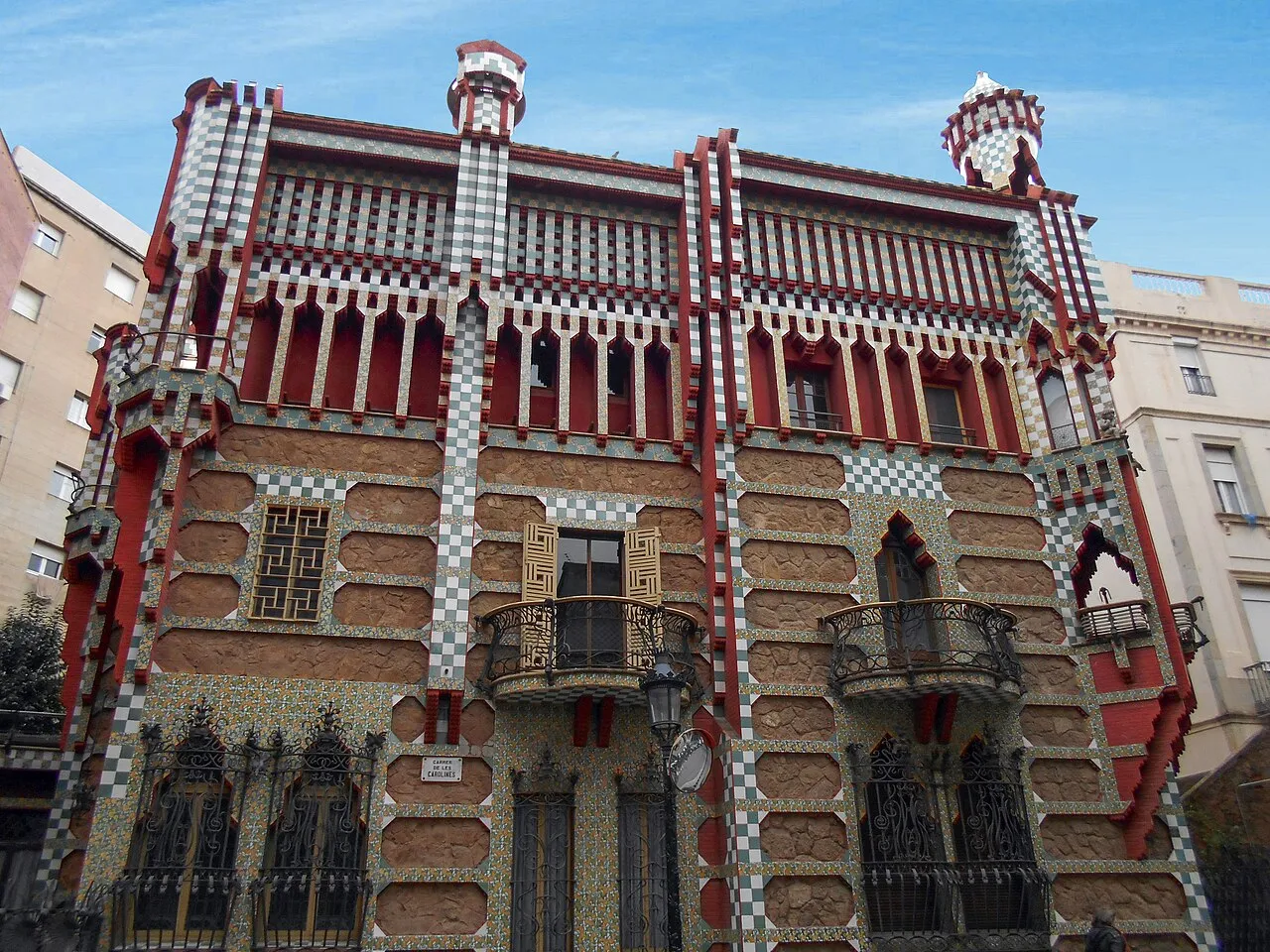
Gaudí's first major work, from 1883, when he was just over thirty and Gràcia was still an independent municipality. Green, white and yellow glazed ceramics, with tiles that copy the French marigold that grew on this very plot and an iron railing that imitates the leaves of the wild dwarf palm. It was a private home until 2017: it is the Gaudí house with the shortest queue and the cheapest ticket.
Plaça de la Vila de Gràcia and the Torre del Rellotge
📍 Centre of Gràcia
The square of the old town hall, with its clock tower from 1864. That tower was the symbol of the revolt of 1870 against the quintas: the residents barricaded themselves inside and rang the alarm bells for days until the army shelled it. Today it is the neighbourhood's living room, with full terraces and children playing from mid-afternoon.
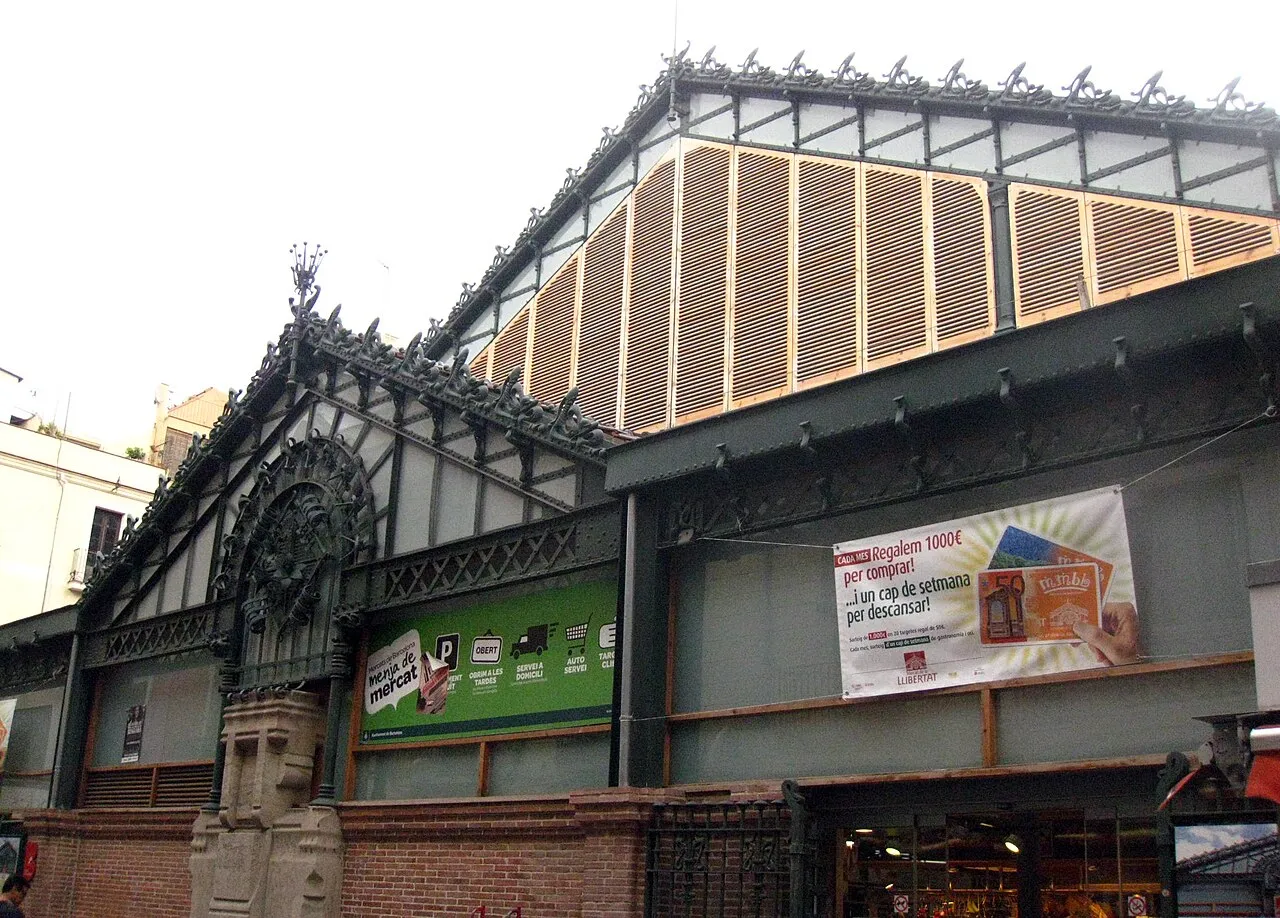
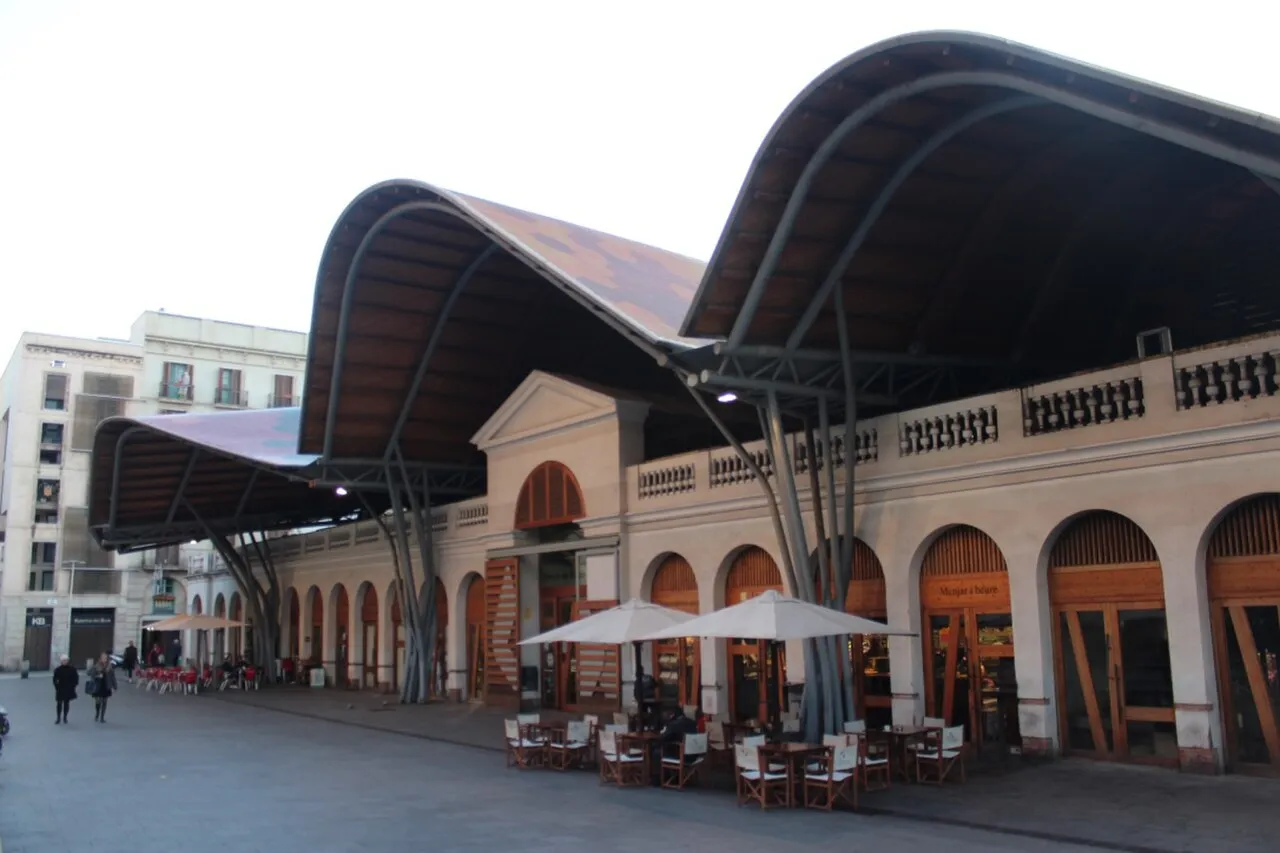
The neighbourhood market, with an iron structure from 1893 signed by Francesc Berenguer, Gaudí's closest collaborator, who never qualified as an architect and signed almost everything under other people's names. It is still a market for locals, with counters where you eat standing up and prices that have nothing to do with those in the centre.
Download the app and discover Barcelona offline, whenever you like. Take the walking tour Gràcia: Squares and Neighborhood Life with a local guide in your ear.
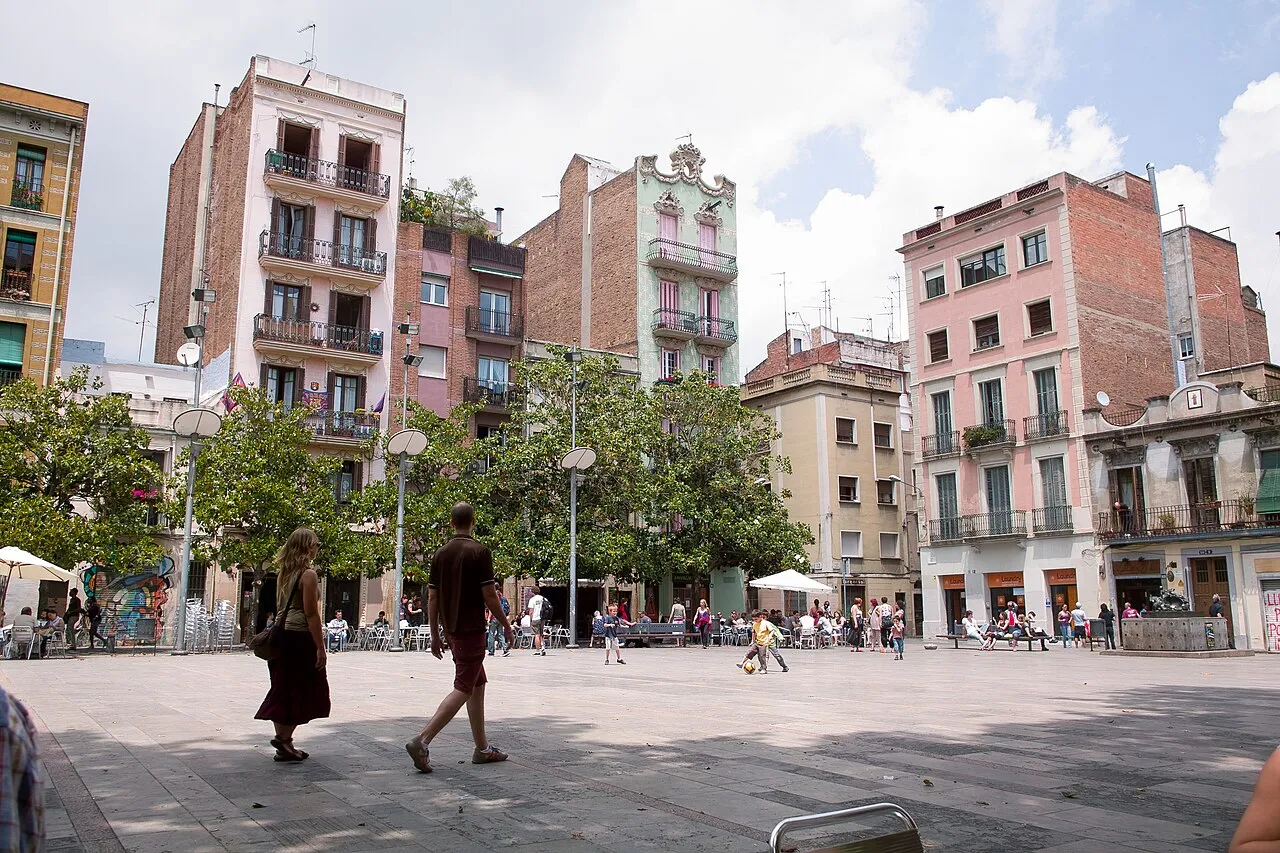
Gràcia is organised around a handful of small squares, each with its own character. The Plaça del Sol is the noisiest and the youngest, full from mid-afternoon until the small hours; the Plaça de la Virreina, with the church of Sant Joan at the far end, is the quietest and the prettiest; the Plaça de la Vila is the institutional one; the Plaça de la Revolució is the most local.
The plan that works here is not an itinerary, it is an afternoon: drifting from square to square with a drink, with no timetable and no list. It is literally what the people of the neighbourhood do, and there is nothing to see that is worth skipping it for.
In the middle, the Carrer de Verdi, the street with the most personality in Gràcia: small shops, bookshops and the Verdi cinemas, which since the eighties have screened films in the original language with subtitles and which for decades were almost the only ones in Barcelona to do so.
And the shops: Gràcia keeps a density of independent shops that has disappeared in the centre. Bakeries, grocers, workshops, neighbourhood bookshops. It is the real reason the neighbourhood still works the way it does.
4
Plaça del Sol
📍 Heart of Gràcia
The liveliest square in the neighbourhood and the default meeting point: terraces on all four sides, people sitting on the ground and atmosphere from mid-afternoon until very late. Beneath it there is an underground car park built in the eighties, and the neighbourhood is still arguing over whether it was a good idea. Coexistence between nightlife and residents is an open question.
The street with the most character in the neighbourhood: independent shops, bookshops and the Verdi cinemas, which since the eighties have screened films in the original language with subtitles. For decades they were almost the only ones in Barcelona to do so, and they are still the reference. During the Festa Major, this street competes for the best decoration and is usually among the favourites.
A chocolate house with wooden toys, marble tables and suizos, hot chocolate with whipped cream, served in porcelain cups, which for years has been the place the neighbourhood's families go on Sunday afternoons. It is exactly the opposite of a designer venue, and that is why it works. You usually have to wait.
The Festa Major de Gràcia is held in August, around the 15th, and it is one of the most singular popular festivals in Spain. For months, the associations of each street prepare a complete themed decoration — with recycled materials, cardboard structures and lights — and compete for first prize.
The result is twenty or thirty streets turned into installations that you walk through, with concerts, food and improvised bars on every corner. It is crowded, it is free and it is completely neighbourhood-run: the decorations are put up by the residents themselves.
The flip side is that during those days the neighbourhood is overwhelmed and residents have for years been calling for control of the noise and the crowds. If you go, go aware that you are at a neighbourhood's festival, not at an event staged for tourism.
The rest of the year, the best moment in Gràcia is any weekday evening from seven onwards. That is enough: there is nothing to plan and nothing to book except, if anything, the Casa Vicens.
Frequently asked questions
What to see in Gràcia, Barcelona?
The Casa Vicens, Gaudí's first major work and the one with the shortest queue; the Mercat de la Llibertat, with its iron structure from 1893; the Plaça de la Vila de Gràcia with its clock tower, symbol of the revolt of 1870; and above all the squares: the Plaça del Sol, the Plaça de la Virreina and the Plaça de la Revolució. But Gràcia is not a neighbourhood of monuments: the real plan is to sit on a terrace and watch the afternoon go by.
Why does Gràcia look like a village inside Barcelona?
Because it was one until 1897, with its own town hall, and because Cerdà's Eixample stopped at its boundary without reorganising its fabric. The result is that it keeps the narrow streets and low houses of the original town, as well as a very strong tradition of associations — ateneos, cooperatives, choral societies — that still functions. When the annexation came there were demonstrations and riots: Gràcia resisted becoming Barcelona.
When is the Festa Major de Gràcia?
In August, around the 15th, and it lasts a good week. Its distinctive feature is that the associations of each street spend months preparing a complete themed decoration, assembled from recycled materials by the residents themselves, and compete for prizes. Twenty or thirty streets are turned into installations that you walk through, with concerts and improvised bars. It is free, crowded and absolutely neighbourhood-run.
Is it worth going up to Gràcia from the centre?
Yes, and it is closer than people think: fifteen minutes on foot from the Passeig de Gràcia or two metro stops. It is the neighbourhood where you best see how Barcelona lives when it is not looking after anyone, it has a density of independent shops the centre has lost and the prices for eating and drinking are noticeably lower. What is more, Park Güell sits just above it.
Which is the best square in Gràcia?
It depends on what you are looking for. The Plaça del Sol is the liveliest and the youngest, full from mid-afternoon until very late. The Plaça de la Virreina, with the church of Sant Joan at the far end, is the quietest and the prettiest for sitting down to read. The Plaça de la Vila de Gràcia is the institutional one, with the clock tower. And the Plaça de la Revolució is the most local and the one that receives the fewest visitors.
Is Park Güell in Gràcia?
It sits just above it, in the upper part of the Gràcia district, on the hill of El Carmel. From the centre of the neighbourhood it is about twenty minutes on foot, but seriously uphill; there are public escalators on the Lesseps side that help quite a bit. The monumental zone of the park requires a ticket and a booked time slot; the rest of the grounds is free and has excellent viewpoints over the city.
Practical information
Getting thereMetro L3 Fontana or Lesseps; FGC Gràcia. From Passeig de Gràcia, 15 minutes on foot along the Carrer Gran de Gràcia.
DurationAn afternoon. It is not a neighbourhood for an itinerary, it is a neighbourhood for sitting down.
What costs moneyOnly the Casa Vicens, around 18 €. The rest is streets, squares and market.
Festa MajorMid-August, around the 15th. Streets decorated by the residents, free and crowded.
Where to eatMercat de la Llibertat, the streets around the Plaça de la Vila and the Verdi axis. Neighbourhood prices.
Best momentAny weekday evening from seven onwards, when the squares fill up.
🎧 With Viavoy
Walk Barcelona and listen at your own pace
Download Viavoy and walk Barcelona offline, whenever you like.
from 2,99 €· one-off payment
City Pass · 9,99 €3 days, all the tours in Barcelona