El Peine del Viento: when to go and what to look at
It is not one sculpture but three, it is not made to be looked at and it works better in bad weather. Everything to know before going down to the rocks, including the holes almost nobody sees.
It is the most photographed spot in San Sebastián and probably the worst understood. Most visitors arrive, find a piece of steel on a rock, photograph it and leave. But there are three pieces, not one; the square you stand on is part of the work; and the whole thing is designed to work precisely on the days when almost nobody goes near it.
The best day to come is not the sunny, calm one: it is the one with a swell running. With a moving sea, the water shoots out through the holes in the platform in columns of foam. In a full storm it closes for safety.
Three pieces, not one
And not one of them placed where it would be convenient.
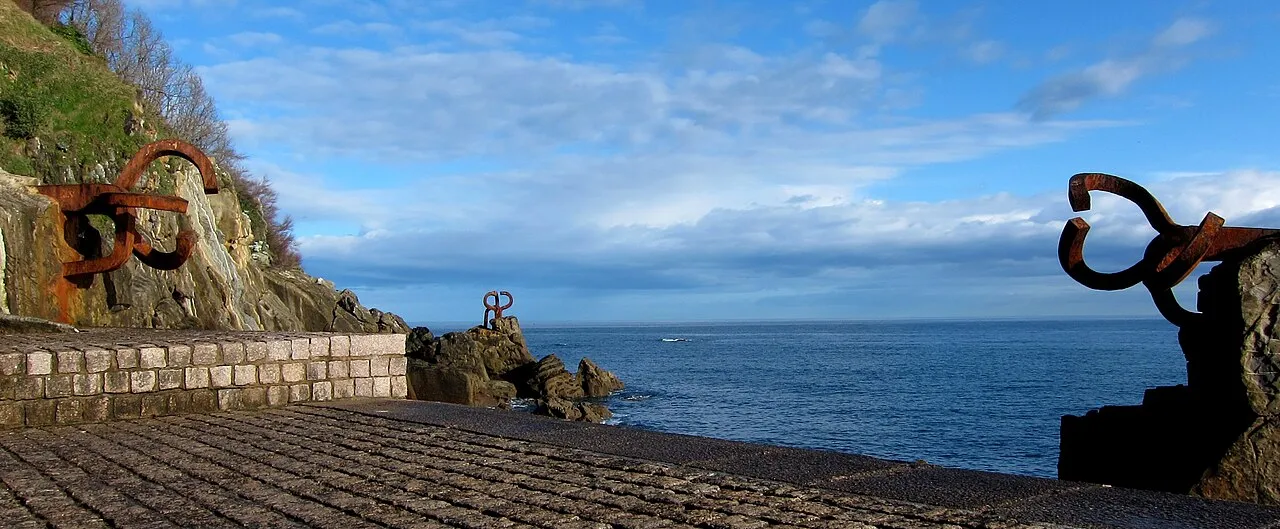
The commonest mistake is to look for one sculpture and find it. There are three steel combs spread over the rocks at the end of the bay, each with a different shape and position: one anchored in the cliff, another on an isolated rock and a third further out, visible only from certain angles. You have to move around the platform to see them all.
Each piece weighs about ten tonnes and was forged at the Patricio Echeverría foundry, in Legazpi, in the heartland of the Basque ironmasters. Moving them here and anchoring them directly into the living rock, fighting the tides, was a considerable feat of engineering.
Chillida was explicit about the intention: he did not put them there for the viewer to contemplate but so that they would comb the wind coming up off the Cantabrian. He went so far as to say the work was not his, that it was a homage to the wind. That line, which sounds like an artist's modesty, is in fact a set of instructions.
Notice what the material does. Iron is the most rigid thing there is in sculpture, and here it curves as if it were cloth moved by a gust. Chillida's whole career turns around that tension between the hardness of the metal and forms that suggest movement.
Unveiled in 1977 and known as Peine del Viento XV: Chillida had spent almost thirty years working the same idea through a long series, and this was the one that closed the circle, planted in the city where he was born. Free and open access, at any hour.
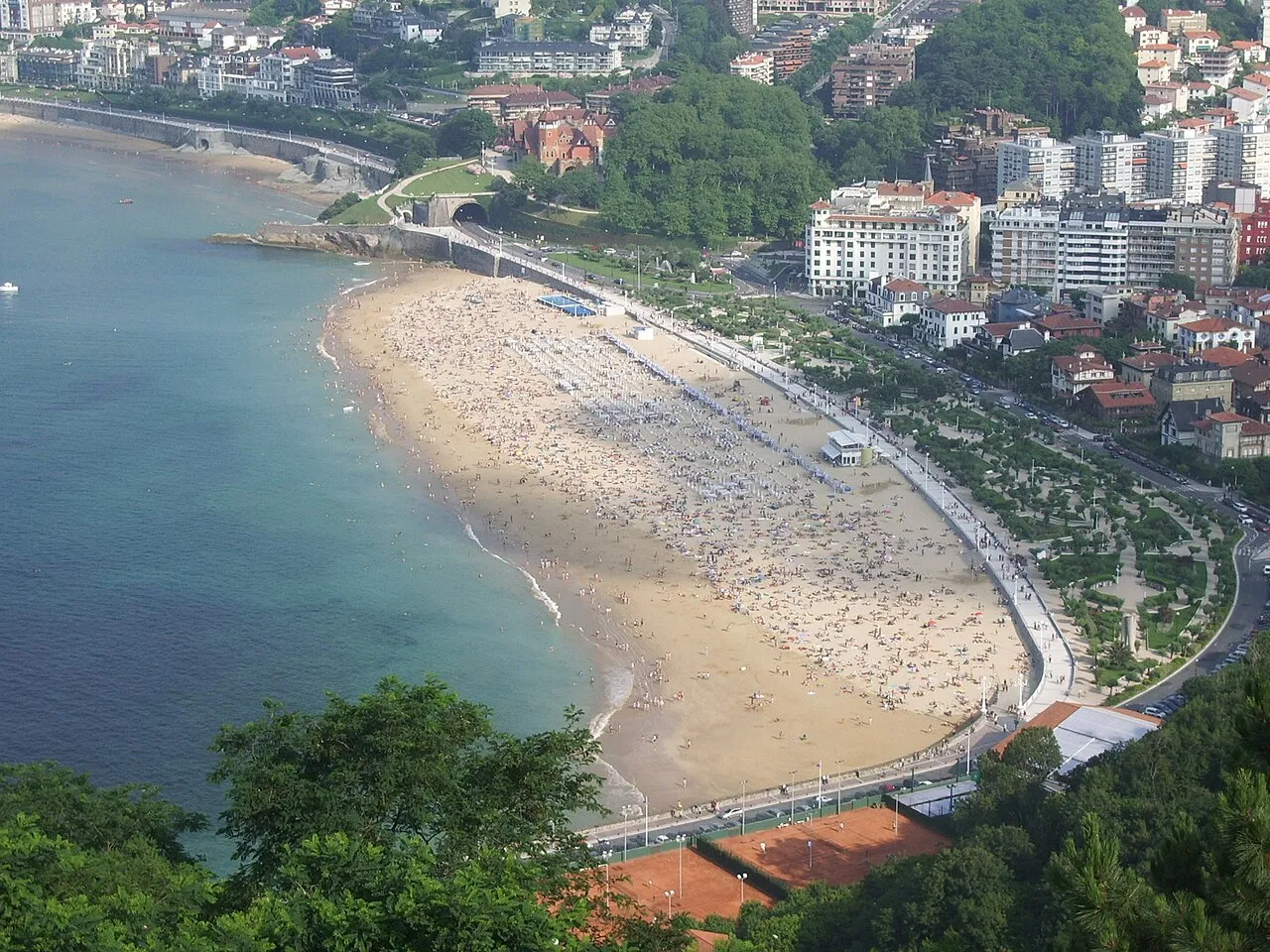
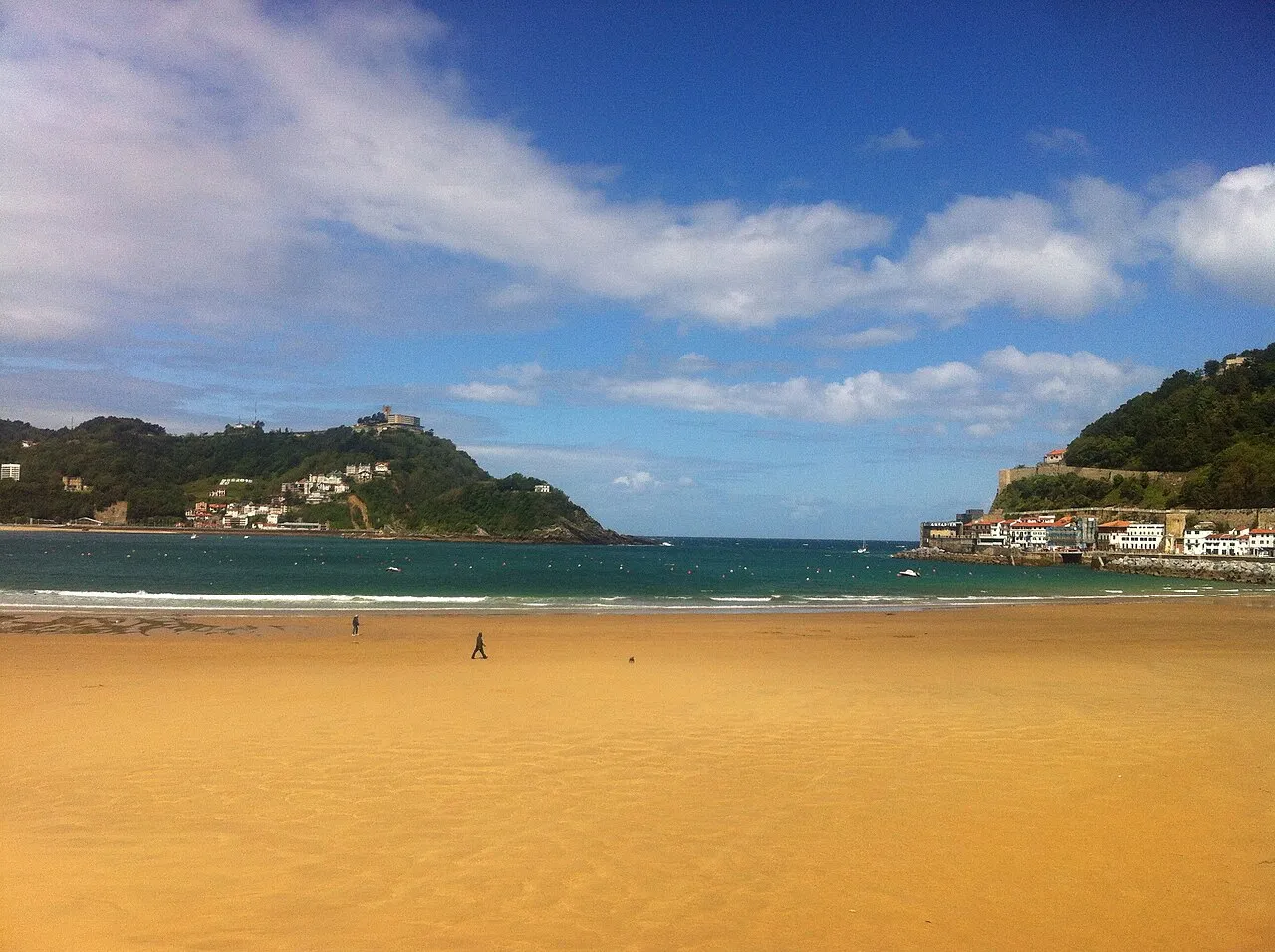
The walk that takes you to the Peine, with fine sand, calm water and shaded gardens behind. It is the natural route: twenty flat minutes from the centre along the edge of the bay, one of the best city walks in Spain.
The ground was resolved by the architect Luis Peña Ganchegui with a stepped platform of pink stone that seems to grow out of the rock and drops towards the water in irregular tiers. It is not a paving to give access: it is half the work, and without it the sculptures would be unreachable.
In that platform there are circular holes cut into the stone, and there lies what almost nobody identifies. Beneath them are cavities connected to the sea: when a swell comes in, the water compresses and shoots out through those openings in columns of foam accompanied by a dull roar.
In other words, the work sounds and splashes, and it does so on its own, with no mechanism at all. Peña Ganchegui designed a sound sculpture using the physics of the site, and that detail turns a viewpoint into a physical experience. With a flat sea, the holes are just holes in the ground.
That is why the advice on timing is the reverse of the usual. The brilliant day with a flat sea gives the best photograph and the worst visit; the grey day with a swell gives the opposite. In a full storm the platform closes for safety, so the ideal point is in between.
Getting there and what to chain it with
It is at the end of the bay promenade, at the west end, some twenty-five minutes on foot from the centre and completely flat. Several city bus lines also run to Ondarreta, five minutes' walk from the spot.
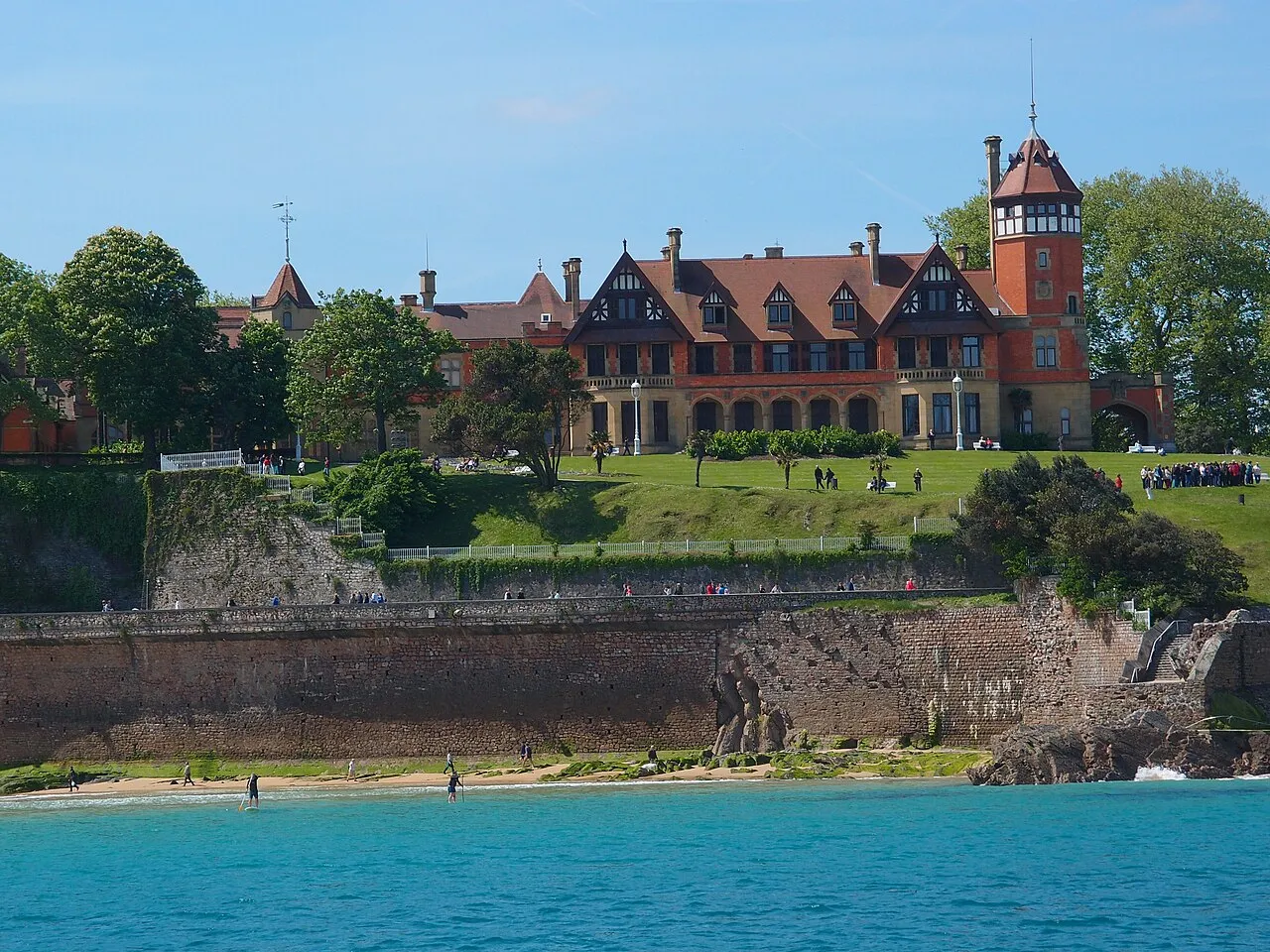
The route that makes sense is to do it from east to west: the gardens of the Palace of Miramar, with the best view of the bay; the monument to Queen María Cristina at the foot of the rise; Ondarreta beach; and the Peine at the end. Told in that order, the walk explains how the modern city was built.
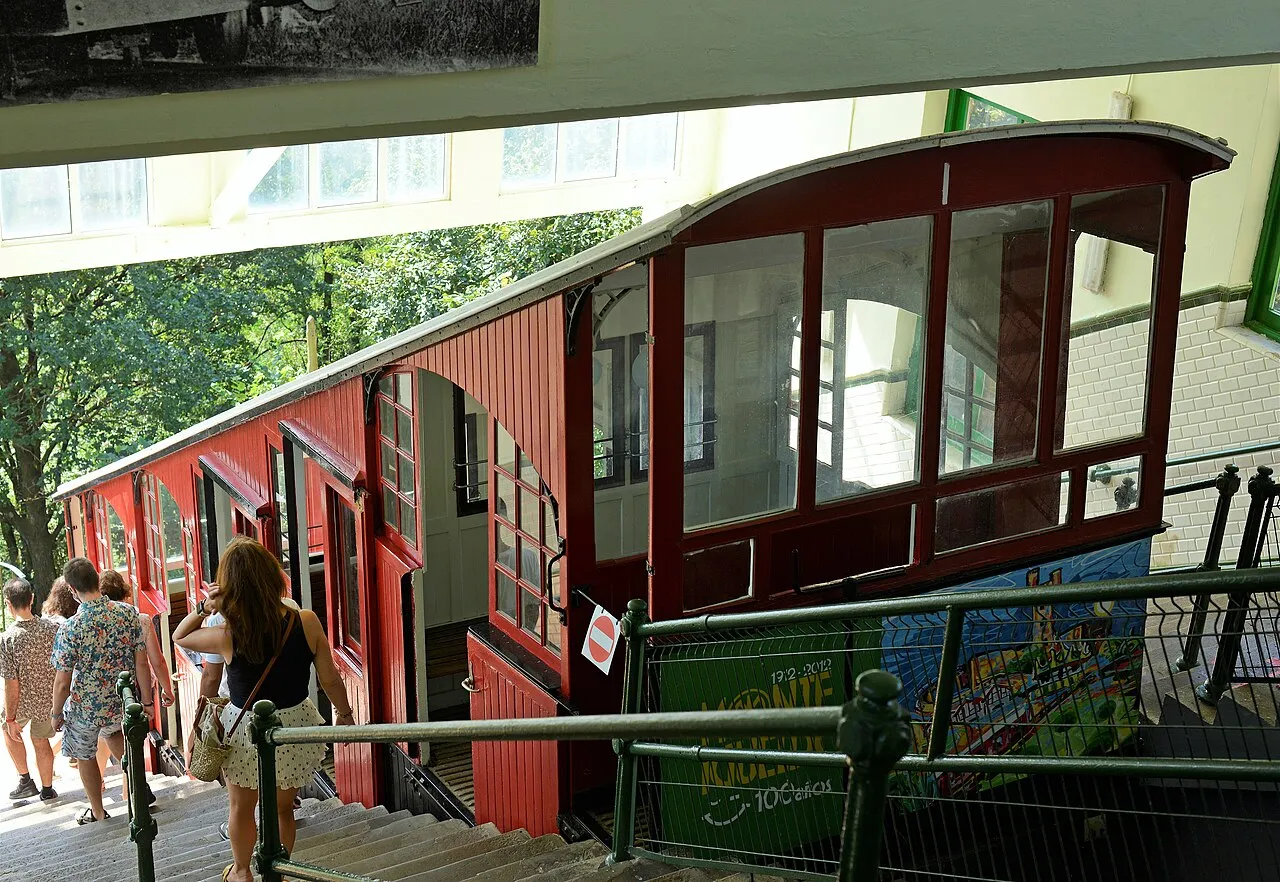
Right above the Peine is the plaza of the Igueldo funicular, which has run since 1912 and climbs to the viewpoint from which you see the whole bay with the island in the middle. Chaining the two is the logical thing and takes half an afternoon.
For the photograph, dusk: the sun drops straight ahead and the steel is cut out against the water. It is also when there are most people. If you want the image with nobody in it, go early or take advantage of a bad-weather day, which is also when the work does what it was made to do.
First stop on the western route. Its gardens are free and from the rise you look down on La Concha on one side and Ondarreta on the other, with Santa Clara island opposite. Almost nobody climbs up: most people skirt the rise through the tunnel on the seafront promenade.
It has run since 1912 and climbs in a few minutes to the viewpoint with the classic panorama of the bay. It is right above the Peine del Viento, so chaining the two costs no extra journey at all.
How many sculptures does the Peine del Viento have?
Three, spread over the rocks at the end of the bay in different positions and with different shapes: one anchored in the cliff, another on an isolated rock and a third further out. You have to move around the platform to see them all, because from any single point you never take in all three.
When is the best moment to visit it?
With a moving sea. The stone platform has holes connected to cavities under the rock: when a swell comes in, the water shoots out through them in columns of foam with a dull roar. With a flat sea that effect does not exist. In a full storm it closes for safety, so the ideal point is a moderate swell.
Is it free?
Yes, it is a public space with open access at any hour, with no ticket and no opening times. The only thing that can block the way is a safety closure on storm days, when the waves come over the platform. In those cases you can still see it from the upper walkway, at some distance.
Who made the Peine del Viento?
The sculpture is by Eduardo Chillida, a native of San Sebastián, and the stepped square of pink stone around it is by the architect Luis Peña Ganchegui. They worked together and the whole was unveiled in 1977. It is Peine del Viento XV: Chillida had spent almost thirty years developing the same idea through a long series.
How do you get there from the centre?
On foot, some twenty-five minutes along the bay promenade, all flat and beside the water, on what is one of the best city walks in Spain. Several city bus lines also run to Ondarreta, five minutes' walk from the spot. You do not need a car and there is no convenient parking.
What else is nearby?
Right above it is the plaza of the Igueldo funicular, which since 1912 has climbed to the viewpoint with the classic panorama of the bay. And coming from the centre you pass the free gardens of the Palace of Miramar, the best view of the bay without climbing a hill, and Ondarreta beach.
Practical information
WhereEnd of the Ondarreta promenade, west end of the bay.
Getting there25 minutes on foot from the centre, all flat. City bus to Ondarreta.
PriceFree and open access, at any hour.
WhenWith a swell running, not with a flat sea. In a full storm the platform closes.
For the photoDusk, with the sun ahead of you. It is also when there are most people.
Combine withMiramar gardens before, Igueldo funicular after. All in half an afternoon.
On the map
🎧 With Viavoy
Walk San Sebastián and listen at your own pace
Download Viavoy and walk San Sebastián offline, whenever you like.
from 2,99 €· one-off payment
City Pass · 9,99 €3 days, all the tours in San Sebastián