Across the river, with a beach that has waves, two glass rocks by Moneo and the best pintxo counters without the pressure of the Parte Vieja. What is there and why it pays to cross the bridge.
Crossing the Urumea takes five minutes and changes the whole city. Gros has no historic monuments and no old town: it has a beach with waves, a building by Moneo, a grid of quiet streets and a density of good counters that people from here prefer to the ones in the old town. It is the neighbourhood where you see how San Sebastián lives when it is not posing.
The pintxo circuit in Gros, around the plaza de Cataluña and calle Zabaleta and calle Bergara, is on the same level as the one in the Parte Vieja, with a local crowd, slightly better prices and room to move.
Moneo's two rocks
The building that changed the river mouth.
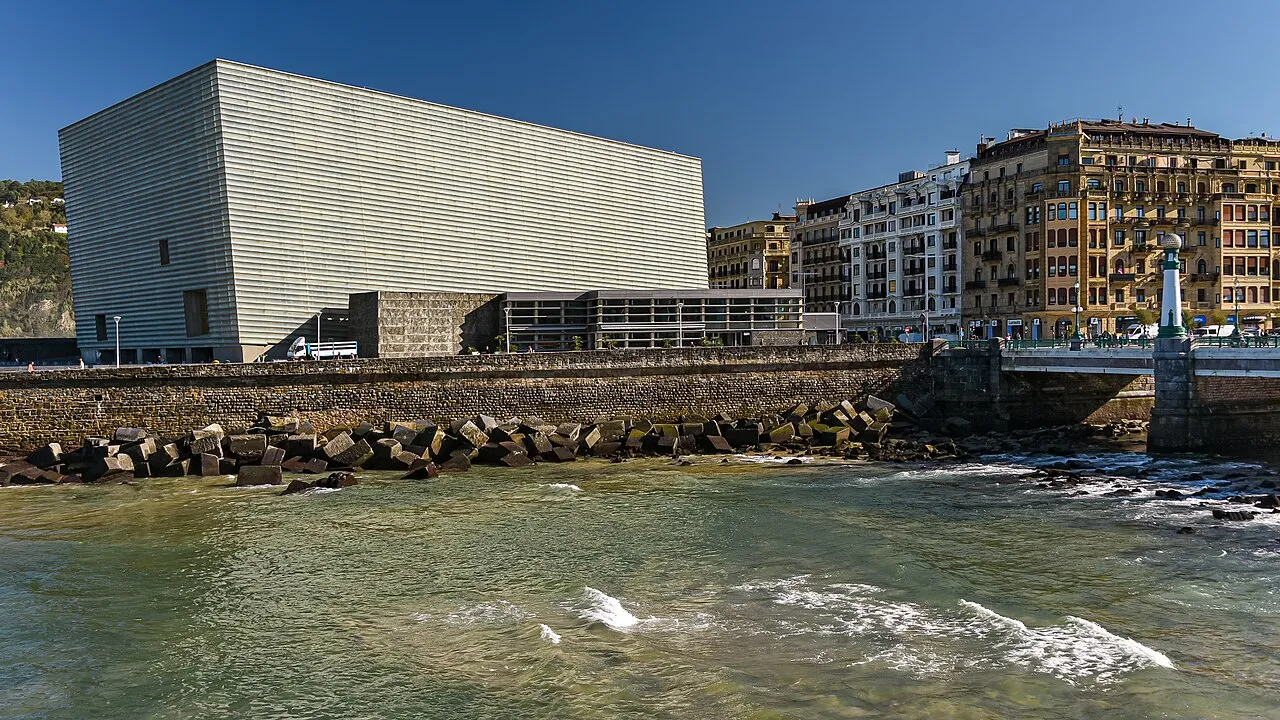
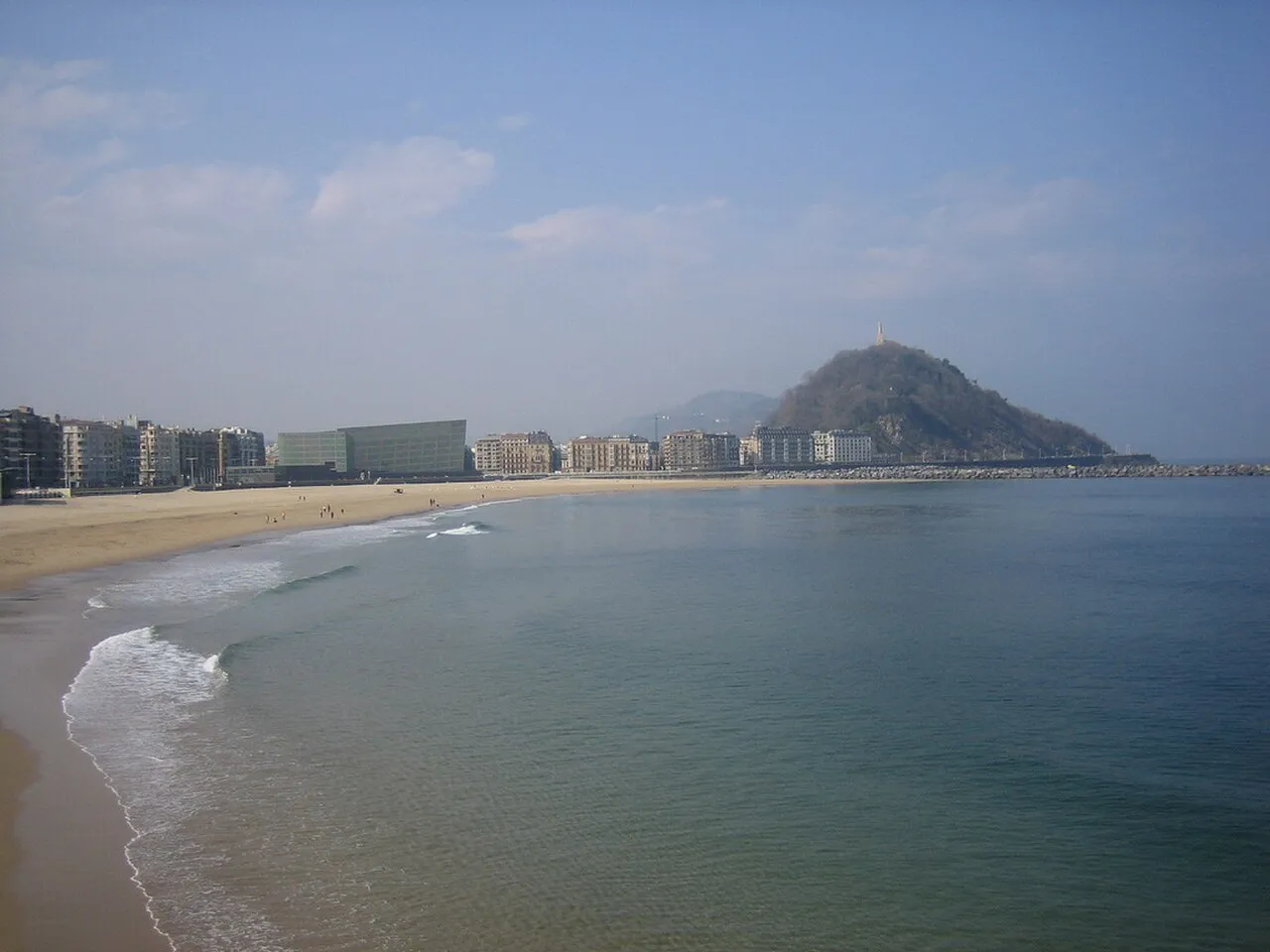
At the mouth of the river, where the beach meets the city, stand the two leaning glass prisms of the Kursaal. Rafael Moneo designed them and they opened in 1999, on a site that had stood empty for decades after the old casino was pulled down.
Moneo called them beached rocks and deliberately separated the two volumes instead of building a single one: that gap between them keeps open the visual relationship between the sea and the urban fabric, which any large building on that spot would have cut off.
The façade is of curved, translucent glass in a double skin, designed to filter the northern light without hard reflections. That is why the building changes colour through the day — pearl grey in the morning, amber in the afternoon — and at nightfall it lights up from inside and turns into two giant lanterns above the sand.
The name comes from the old Gran Kursaal, a Belle Époque casino with roulette and a ballroom that was left without a purpose when the Primo de Rivera dictatorship banned gambling in 1924. Kursaal is German and means cure hall, from when sea bathing was a medical treatment.
Home of the San Sebastián Film Festival, which every September turns the building into the centre of the city. There are guided visits at set times; otherwise you go in with a ticket for a performance. The best image is taken at nightfall from the Zurriola bridge.
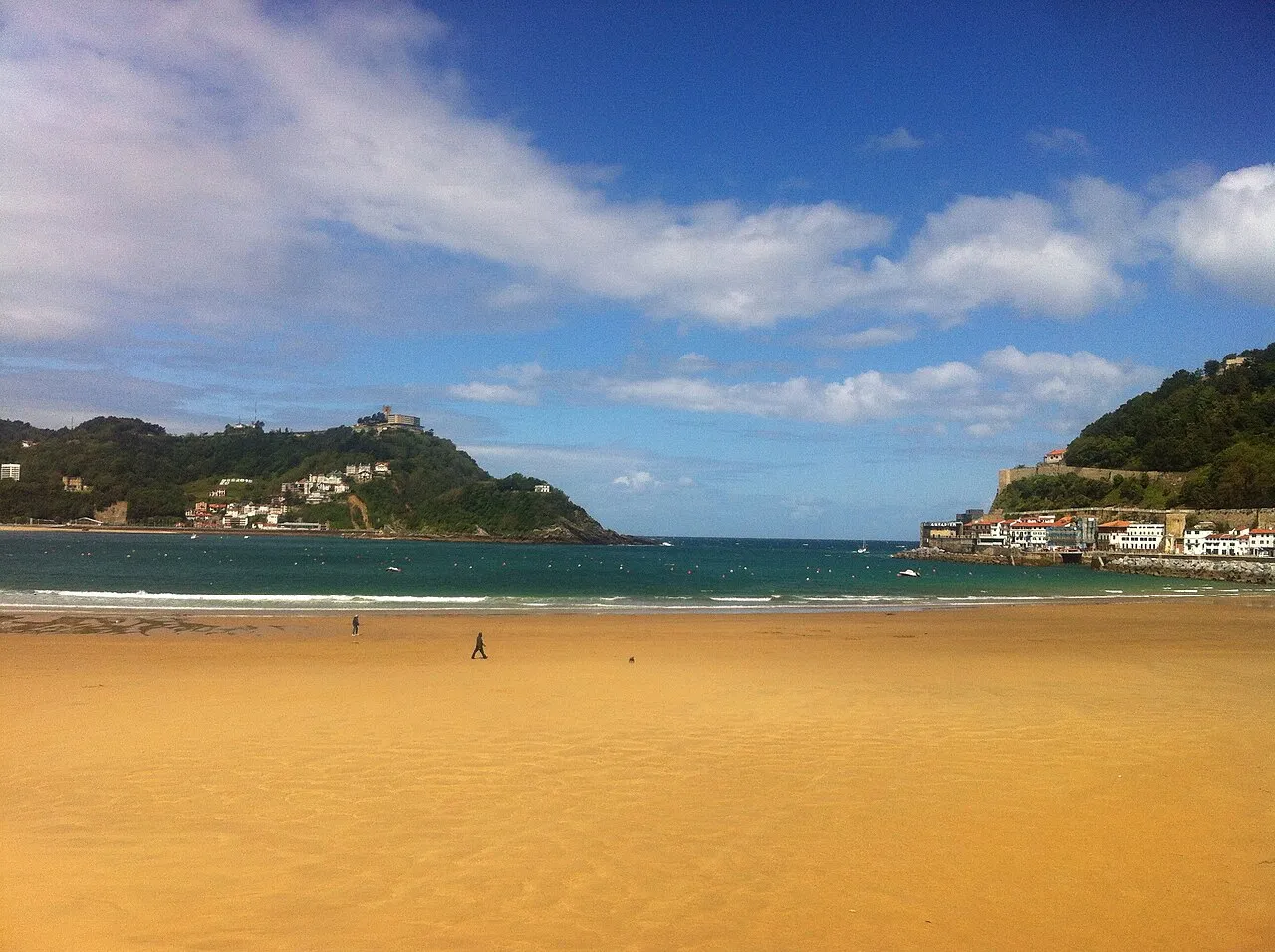
Eight hundred metres of sand beaten by the open sea, with no bay to protect it. It is the sanctuary of surfing in San Sebastián, with schools on the promenade itself and activity all year round. The present stretch of sand had to be regenerated with a breakwater after decades of storms.
Download the app and discover San Sebastián offline, whenever you like. Take the walking tour Gros, the Kursaal and Zurriola with a local guide in your ear.
A neighbourhood with no monuments and plenty of life
Gros grew at the beginning of the twentieth century as an extension on the other side of the river, with regular blocks and residential buildings, and it has no great monument at all. That absence is exactly what makes it interesting: it is ordinary urban fabric, with neighbourhood shops, a market and children playing in the squares.
The social axis is the plaza de Cataluña and the streets running off it. That is where the pintxo circuit almost everyone who lives here recommends is found, with counters of a very high standard and considerably less tourist pressure than the Parte Vieja, as well as somewhat more contained prices.
There is also a cultural tradition of its own: for decades Gros has been the city's cinema and jazz neighbourhood, with historic venues and a close relationship with the two big festivals, the film one in September and the jazz one in July.
And being flat and compact, you can walk all of it in half an hour. The beach is on its edge, so you can go down to the sand, come up for a drink and go back without any real journey.
The end of the beach and the hill
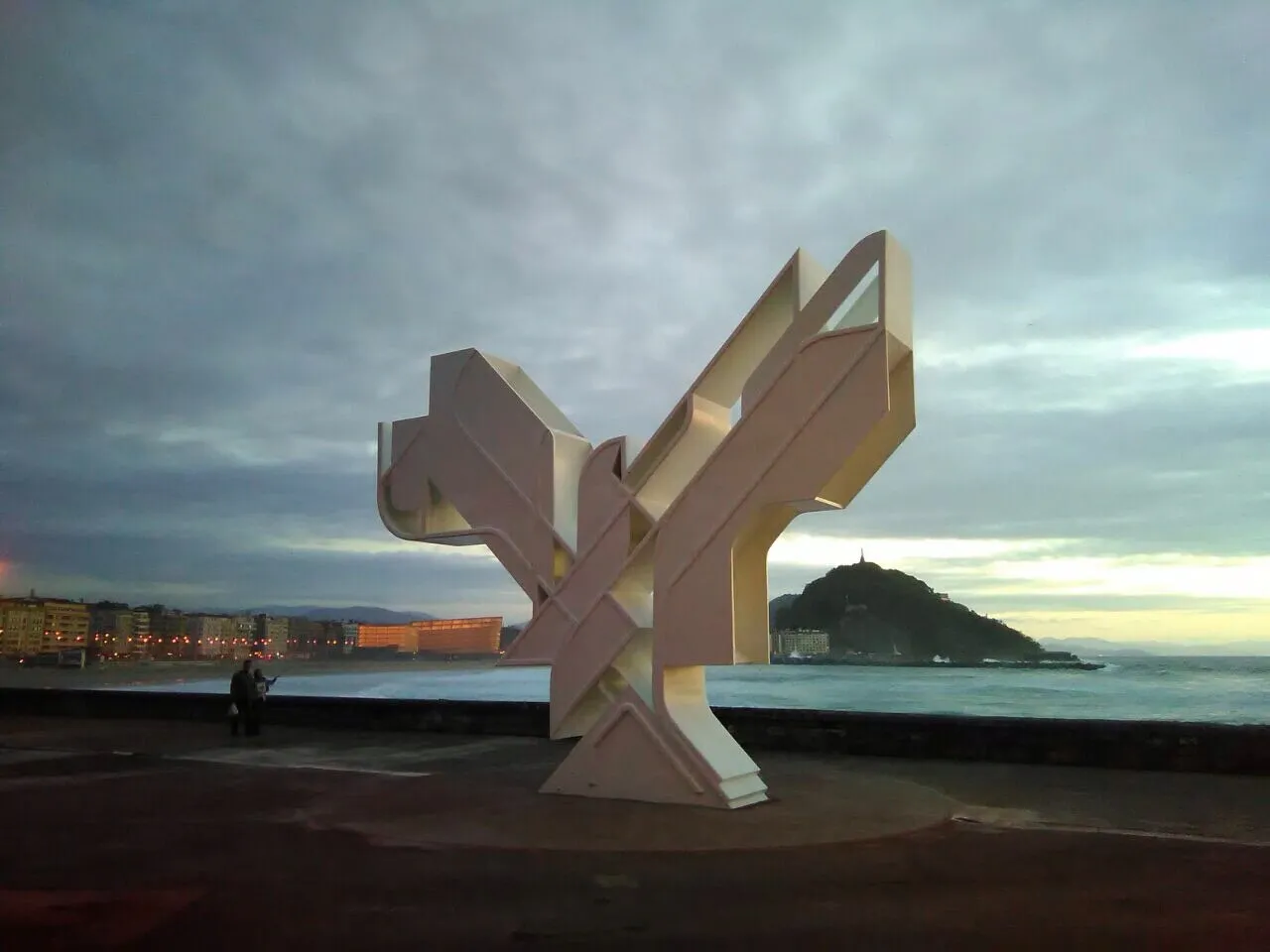
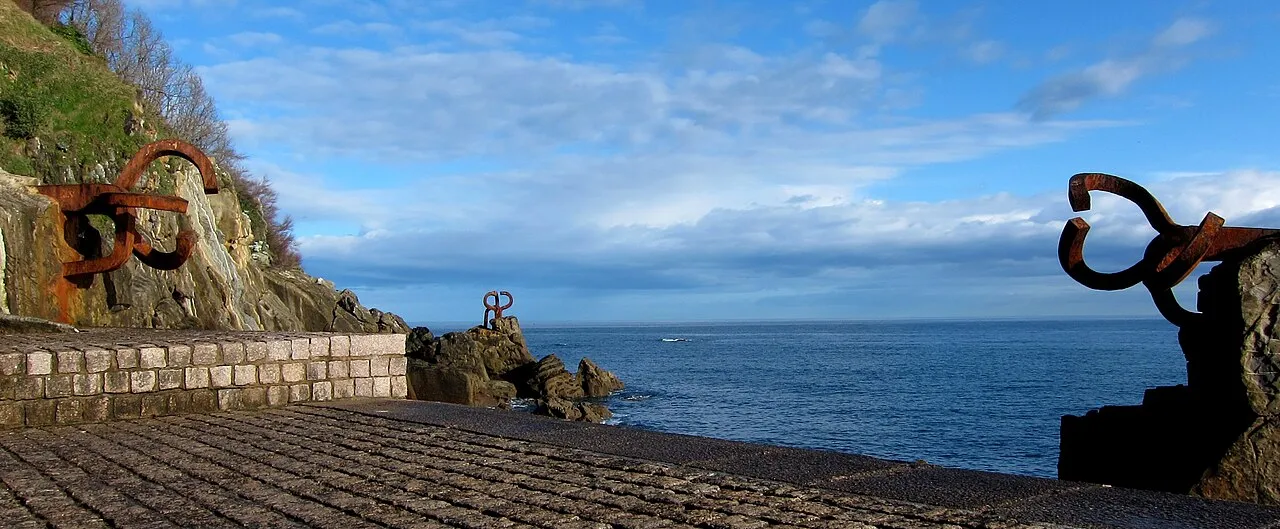
At the eastern end, where the sand runs out and the cliffs begin, is the Sagüés point, with Néstor Basterretxea's Dove of Peace cut out against the sky. It was placed there in 1980, one of the hardest years of the terrorism, and it was not an ornament but a public statement.
From there starts the climb up Monte Ulía, the third of the hills that surround the city and the least visited. It does not give you the bay but the open coast: cliffs, sea and paths that reach Pasaia in about two hours, along one of the finest stretches of the Camino del Norte.
That side of the neighbourhood is the one fewest people set foot on and where you best see the real Cantabrian. With a moving sea, the waves break against the rocks right below the sculpture, and the place changes character completely.
The way back to the centre is five minutes over the Zurriola bridge, with the Kursaal lighting up on your left if it is the right hour. It is probably the best end of an afternoon the city has to offer.
Seven metres of white silhouette in polyester-clad steel, by Néstor Basterretxea, who besides being a sculptor was a painter and a film-maker: he co-directed “Ama Lur”, Mother Earth, in 1968, funded by public subscription in the middle of the Franco years. The piece has been moved several times.
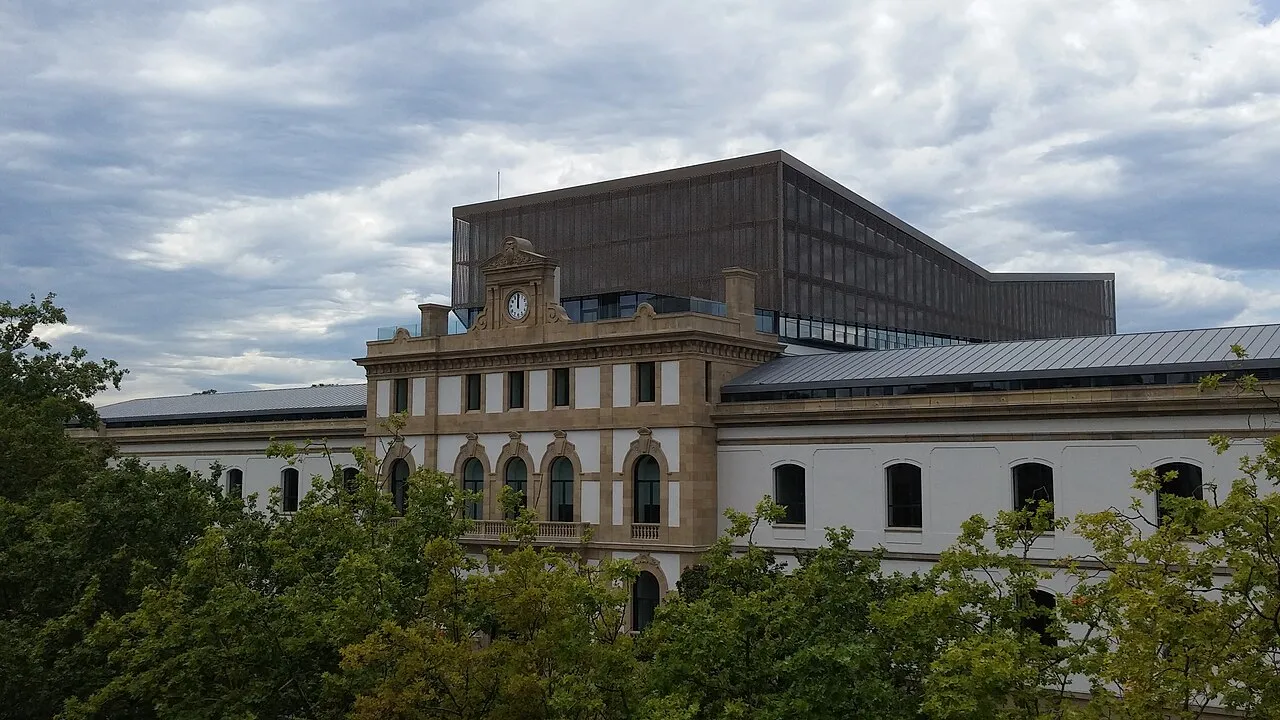
Ten minutes from Gros, the old tobacco factory converted into a cultural centre, with a media library and a library open to all and a free rooftop viewpoint on the top floor. Next door, the Cristina Enea park, the best in the city, with peacocks roaming free.
What does Gros have that the Parte Vieja does not?
Space, a local crowd and slightly better prices with the same standard at the counters. It has no historic monuments and no old town, but it does have a beach with waves, the Moneo building and an ordinary urban fabric where you see how the city lives. It is what almost everyone who lives here recommends.
Is it worth staying in Gros?
Very much so. It is five minutes on foot from the Parte Vieja across the bridge, it is cheaper than the centre, far quieter at night and it has the beach on the edge of the neighbourhood. For anyone looking to rest and not minding crossing a bridge several times a day, it is the best value in the city.
What is the Kursaal?
The city's conference centre and auditorium, two leaning glass prisms that Rafael Moneo called beached rocks and that opened in 1999. It is the home of the San Sebastián Film Festival. The name comes from the old Belle Époque casino that occupied the site until gambling was banned in 1924.
Can you visit the Kursaal inside?
There are guided visits to the building at set times, which are worth checking on the official website. Otherwise, you go in by attending a concert, a conference or a screening. The terrace and the surroundings are freely accessible, and the best image of the building is taken from outside, at nightfall, from the bridge.
Is the Zurriola a good beach for swimming?
For a quiet swim, not really: it is outside the sheltered bay and takes the swell of the Cantabrian head on, with currents that can be strong. For surfing it is the best in the city, with schools on the promenade itself and activity all year round. If you want calm water, La Concha and Ondarreta are ten minutes away.
What is beyond the end of the beach?
The Sagüés point, with Basterretxea's Dove of Peace, and the start of the climb up Monte Ulía, the least visited of the city's three hills. From there a coastal path sets off towards Pasaia, about two hours over uneven ground, with continuous views of the Cantabrian.
Practical information
WhereEast of the river Urumea, 5 minutes from the Parte Vieja over the Zurriola bridge.
DurationHalf an afternoon with the beach and a round of pintxos.
EatingPlaza de Cataluña and calle Zabaleta and calle Bergara. High standard and a local crowd.
BeachZurriola, with a swell and surf schools. Check the flags before you swim.
Where to stayA good alternative to the centre: cheaper, quieter and 5 minutes from the old town.
NearbyTabakalera and the Cristina Enea park, 10 minutes towards Egia.
On the map
🎧 With Viavoy
Walk San Sebastián and listen at your own pace
Download Viavoy and walk San Sebastián offline, whenever you like.
from 2,99 €· one-off payment
City Pass · 9,99 €3 days, all the tours in San Sebastián