The beaches of San Sebastián: which to choose and when
Three city beaches with three different seas, and an island in the middle of the bay you reach by boat. With what you need to know about the tides, which here change the whole beach.
Few cities have three city beaches so different from one another and ten minutes' walk apart. The difference is not the sand or the facilities: it is the sea. Two are inside a bay closed in by hills and with an island plugging its mouth, and the third lies outside that shelter, exposed to the open Cantabrian. Choosing well depends on that and on the tide, which here rules more than it seems.
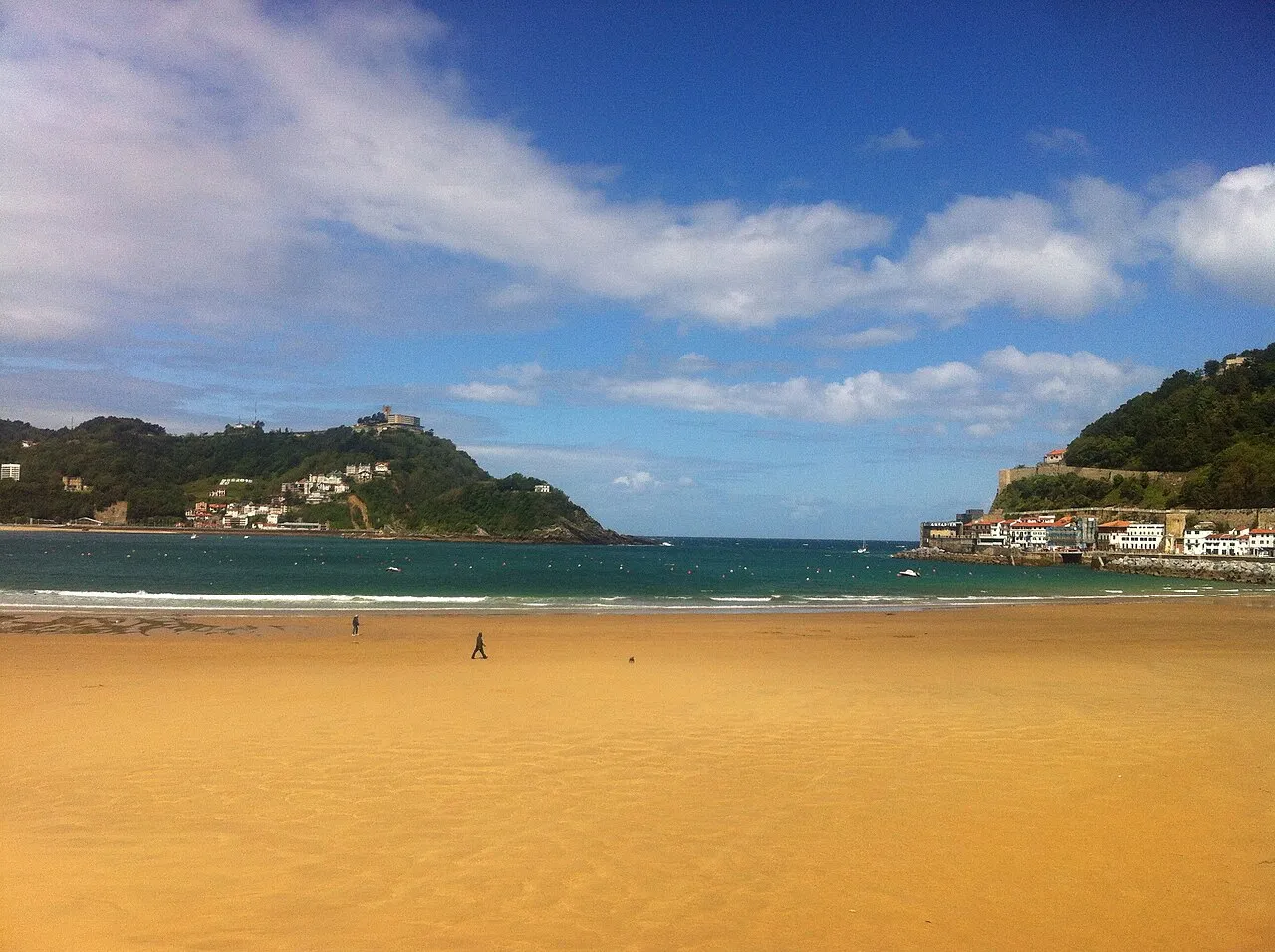
At high tide, La Concha is left with almost no sand and the water comes practically up to the wall. At low tide an enormous, firm stretch of sand appears that you can walk along almost as far as the island. Look at the tide table before you go down.
La Concha: the face of the city
Calm water and two kilometres of promenade.
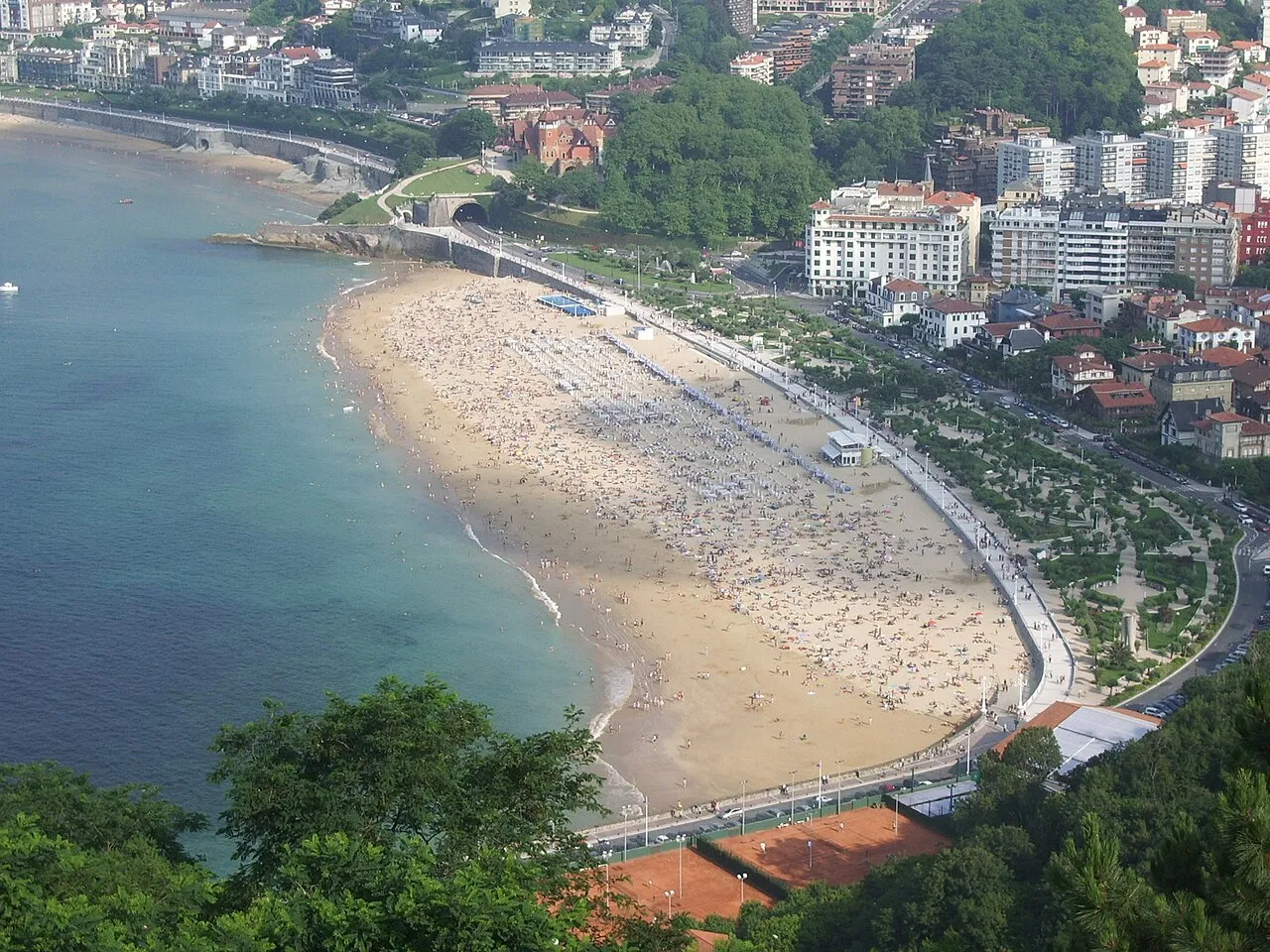
It is the one in all the photographs and the one that usually tops the lists of the best city beaches in Europe. Its shape is an almost perfect crescent closed by Monte Urgull to the east and Igueldo to the west, with Santa Clara island planted in the middle of the mouth breaking the swell.
That natural shelter is what allowed the Spanish summer holiday to be born here. In the nineteenth century sea bathing was prescribed as a medical treatment and it needed calm, shallow water; La Concha met both conditions and was a day's journey from Madrid. The court did the rest.
The promenade that skirts it is as important as the sand: two flat kilometres with the white railing of 1910, whose profile is then repeated in lamp posts and clocks all over the city until it becomes its graphic signature. In the middle of the afternoon it is the social walk of the people of San Sebastián.
In high season it fills up completely and that is worth bearing in mind. In winter, with the tide out and the promenade almost empty, is when it most resembles the idea you have of it.
Calm water, fine sand and every facility. At the western end is the balneario of La Perla, the bathing pavilion where the aristocracy took their wave baths and which is today a thalassotherapy centre. At the eastern end, the City Hall, which was the Gran Casino until gambling was banned in 1924.
The same calm water as La Concha, finer sand and considerably fewer people in high season. It has shaded gardens behind it, something its neighbour lacks, and that is why many local families choose it. Ondarreta means literally sandy place, from the Basque ondar.
Download the app and discover San Sebastián offline, whenever you like. Take the walking tour La Concha Bay and the Romantic Expansion with a local guide in your ear.
Ondarreta occupies the western end of the same bay, at the foot of Igueldo, and shares with La Concha the shelter of the island and the hills. In other words: the same calm sea with considerably fewer people, because it is twenty minutes on foot from the centre instead of five.
Its old nickname was the beach of the priests and the gentry, and it describes who it served: this is where the aristocracy who summered in the villas of the Antiguo neighbourhood bathed, while the more central one was left to the general public. The separation was social, not geographical.
Behind it there are gardens with big trees and shaded areas, something La Concha does not offer and which with children or in the heat decides the choice. The Antiguo neighbourhood, moreover, keeps a life of its own with its market and its bars as soon as you move fifty metres away from the promenade.
And in the middle of the bay is Santa Clara island, reached by boat from the harbour in season, with short, frequent crossings. It has a lighthouse, a landing stage and a tiny beach that only exists at low tide. Very few of the people who spend a few days in the city get across.
La Zurriola: the other sea
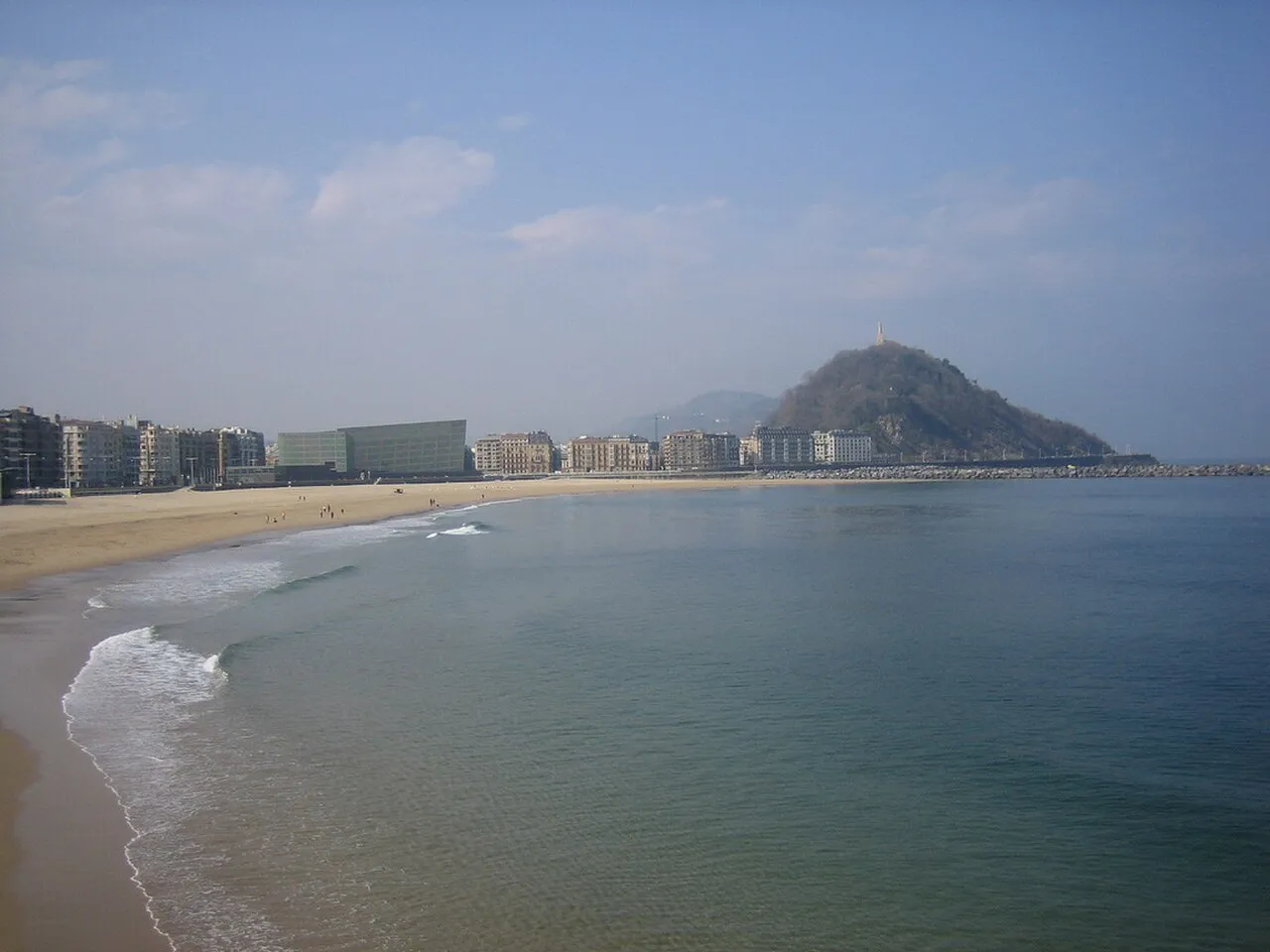
Across the river, in the Gros neighbourhood, everything changes. The Zurriola lies outside the sheltered bay and takes the swell of the Cantabrian head on, with no island or hills to soften it. It is eight hundred metres of sand with a completely different sea from the one ten minutes earlier.
That is why it is the sanctuary of surfing in San Sebastián, with schools on the promenade itself, board hire and activity all year round, in a wetsuit in winter. Surfing reached this coast from Biarritz in the mid-fifties and spread from there across the whole north of the peninsula.
This stretch of sand, as you see it today, had to be rebuilt: for a good part of the twentieth century the storms ate away at the sand until there was almost nothing left, and a breakwater was built to tame the swell and regenerate it.
One warning that does matter here: the current can be strong and the undertow catches out anyone who has come from swimming on a sheltered beach. The flags are respected more than on other beaches for a simple reason, which is that the sea behaves differently.
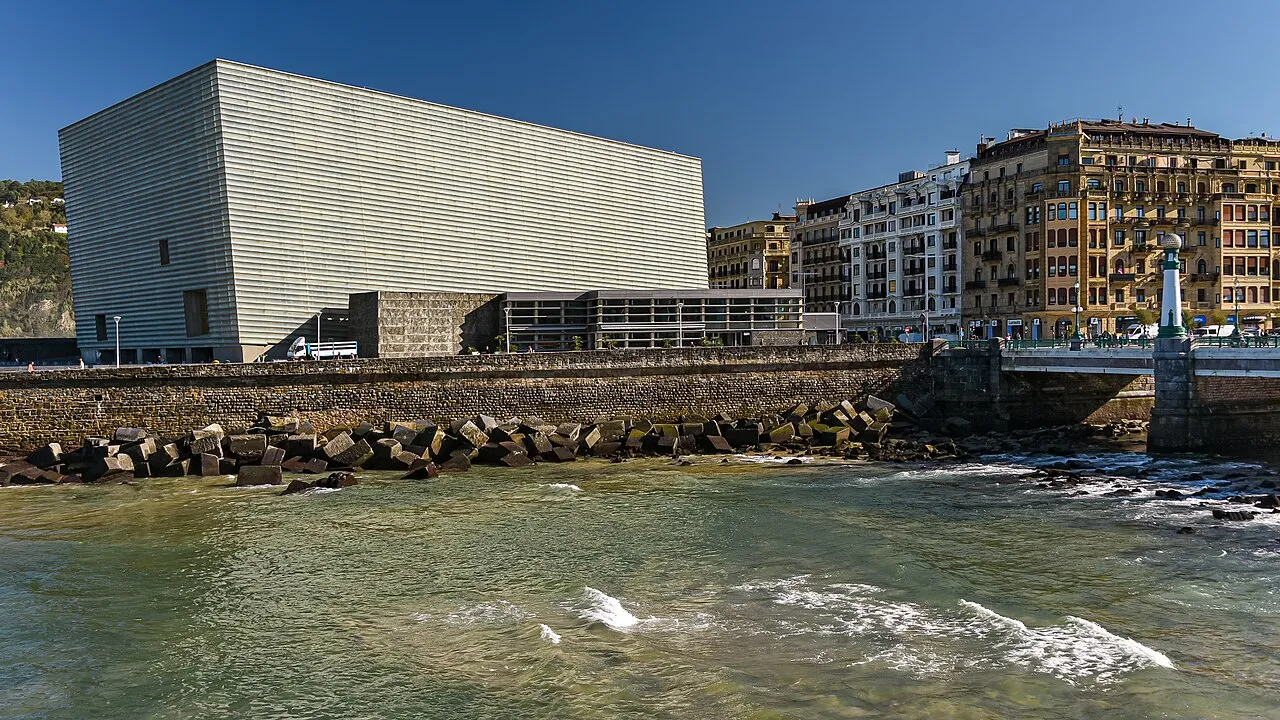
Eight hundred metres of open sea and a young crowd, with the Kursaal closing it at one end and the Sagüés point at the other. It is the liveliest beach in the city and the only one where swimming means looking at the flags. Behind it, the best neighbourhood for pintxos according to the locals.
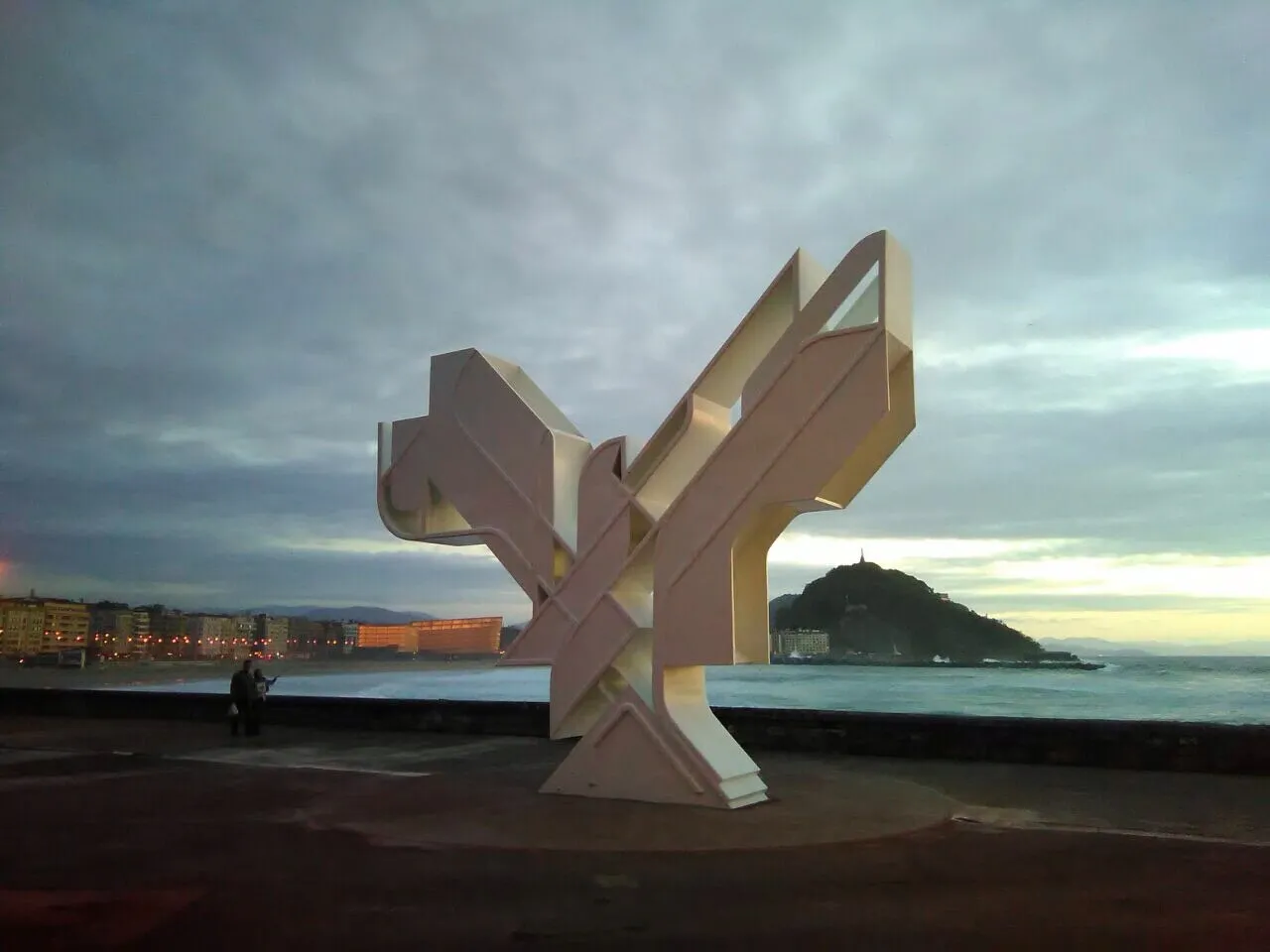
It closes the Zurriola to the east, on the headland where the sand ends and the cliffs begin. From here the climb up Monte Ulía sets off. With a moving sea, the waves break right below and the place changes character completely.
It depends what you are after. La Concha is the most beautiful and the most central, with calm water, but it fills up in summer. Ondarreta offers the same sea with fewer people and shaded gardens behind. The Zurriola is for anyone who wants swell, surf and a young crowd. They are all less than twenty minutes' walk from one another.
Why is the water in La Concha so calm?
Because of the geography. The bay is closed by Monte Urgull to the east and Igueldo to the west, and in the middle of the mouth is Santa Clara island, which breaks the swell coming in from the Cantabrian. That natural shelter is what allowed the Spanish summer holiday to be born here in the nineteenth century.
How do the tides affect it?
Enormously, and it is what most surprises anyone coming from the Mediterranean. At low tide an enormous, firm stretch of sand appears at La Concha that you can walk along almost as far as the island; at high tide the water comes practically up to the wall and barely a narrow strip is left. It is worth checking the tide table before going down.
Can you visit Santa Clara island?
Yes, by boat from the harbour during the season, with short, frequent crossings. The island has a lighthouse, a landing stage, a small bar and a tiny beach that only appears at low tide. Very few of the people who spend a few days in the city get across, and it is one of the things that most repays the effort.
Can you surf in San Sebastián?
On the Zurriola, yes, and it is one of the busiest city beaches in the north of the peninsula. There are several schools on the promenade itself, board hire and lessons all year round, in a wetsuit in winter. At La Concha and Ondarreta, no: the water is too sheltered and not enough swell gets in.
What temperature is the water?
Cold all year, even in summer, when it is around twenty or twenty-two degrees. It is Cantabrian water and it is nothing like the Mediterranean. A lot of local people swim anyway in spring and autumn, and on the Zurriola a wetsuit is normal for a good part of the year.
Practical information
La ConchaCalm water, every facility, the most central and the fullest in summer.
OndarretaThe same calm sea, fewer people, finer sand and shaded gardens.
ZurriolaOpen sea, swell, surf and a young crowd. Check the flags before you swim.
TidesThey decide the beach. At high tide, La Concha is left with almost no sand.
The islandBoat from the harbour in season. Lighthouse, landing stage and a beach only at low tide.
SeasonThe water is cold all year. In summer it is around 20-22 degrees.
On the map
🎧 With Viavoy
Walk San Sebastián and listen at your own pace
Download Viavoy and walk San Sebastián offline, whenever you like.
from 2,99 €· one-off payment
City Pass · 9,99 €3 days, all the tours in San Sebastián