Plaza Mayor
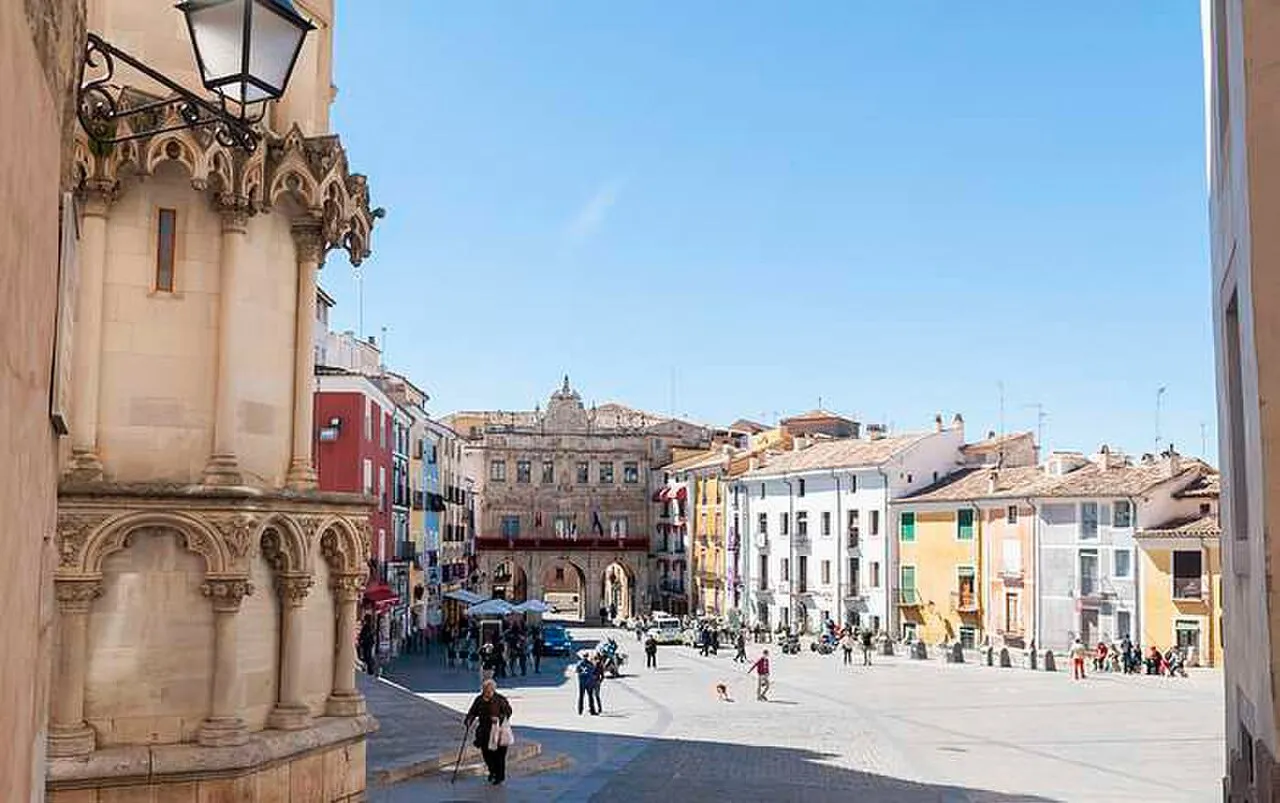
The centre of eating in the upper old town, with terraces beneath the warm-toned mansions and the cathedral opposite. It is where you eat with a view, though prices on the square itself are higher than in the streets running off it.

Mountain and game cooking, with dishes you will not find outside the province. What each one is, what to order first and why dessert ends up being a liqueur.
🎧 On the walk Hanging Cuenca: from the Hanging Houses to the CastleThe cooking of Cuenca is mountain cooking: game, pork, lamb, garlic and bread, with dishes invented to give calories to people working outdoors in winter at a thousand metres of altitude. Almost none of them is found outside the province, and several have names that mean nothing to anyone arriving from elsewhere, so it is worth knowing what you are ordering.
Morteruelo, ajoarriero, zarajos.
Morteruelo is the flagship dish: a kind of warm pâté made with pig's liver and game meats — hare, partridge, sometimes hen — pounded into a paste, bound with breadcrumbs and spiced with clove, cinnamon, caraway and paprika. It is served spread on bread and warm.
Its origin lies in making use of everything: it was made at the matanza, the annual pig slaughter, with the parts that were no good for anything else, and the strong spicing, surprisingly sweet-edged, is medieval. It is a heavy, very wintry dish, and whoever tries it usually ends up asking for more.
Ajoarriero is the opposite: cold, mild and light. Flaked salt cod, boiled potato, garlic, oil and sometimes egg or walnuts, all pounded until it emulsifies. It is eaten spread on bread and works at any time of year, including summer.
And zarajos, which are the most characteristic tapa: lamb tripe wound around two vine shoots and grilled or fried. They sound bad and are far better than they seem. They are one of those things you should order without thinking about it too much.
The centre of eating in the upper old town, with terraces beneath the warm-toned mansions and the cathedral opposite. It is where you eat with a view, though prices on the square itself are higher than in the streets running off it.
Download the app and discover Cuenca offline, whenever you like. Take the walking tour Hanging Cuenca: from the Hanging Houses to the Castle with a local guide in your ear.
Find out more about Viavoy →The Serranía de Cuenca is big- and small-game country, and that is on the menu all year but above all in autumn and winter: partridge in escabeche, hare, wild boar, deer and venison in long stews. It is the best cooking in the province and the least known outside it.
Gazpacho manchego, despite the name, is a hot game stew — rabbit, partridge, sometimes chicken — served over a flatbread of unleavened dough cut into pieces, which soaks up the broth. It has absolutely nothing to do with Andalusian gazpacho, and ordering it in summer expecting something cold is the classic visitor's mistake.
As for lamb, there is the Castilian roast and the caldereta stew; and Manchego cheese, which here is a local product and is found in excellent aged versions at source prices. Also the oil and the honey of the Cuenca Alcarria, which has its own denomination of origin.
To drink, wines from La Mancha and Manchuela, the province's denominations, which have improved considerably and are among the cheapest in Spain for what they give.
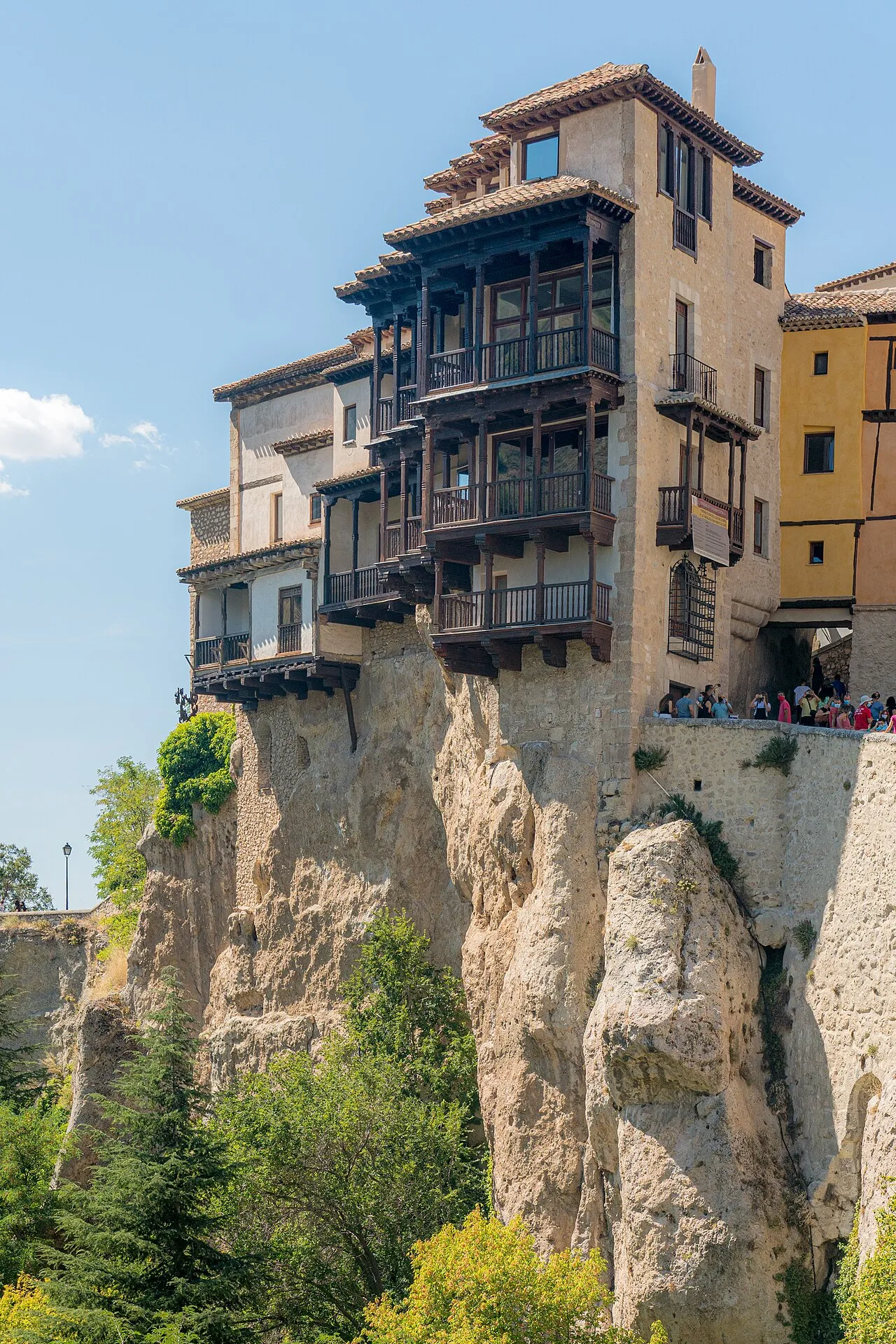
One of the three houses holds a restaurant, which is the only way to eat literally hanging over the ravine. It is expensive and you have to book, but for a special occasion the setting has no possible comparison in any other Spanish city.
A kind of warm pâté made with pig's liver and game meats — hare, partridge, sometimes hen — pounded into a paste, bound with breadcrumbs and spiced with clove, cinnamon, caraway and paprika. It is served warm and spread on bread. It is the flagship dish of the province and a dish that made use of everything from the matanza, the annual pig slaughter.
Flaked salt cod pounded with boiled potato, garlic and oil until it emulsifies, sometimes with egg or walnuts. It is eaten cold, spread on bread, and unlike morteruelo it is mild and light, so it works well in summer. Not to be confused with the Navarrese ajoarriero, which is a completely different dish, with tomato and pepper.
No, and that is the classic visitor's mistake. It is a hot game stew — rabbit, partridge, sometimes chicken — served over a flatbread of unleavened dough cut into pieces that soaks up the broth. It has no relation to Andalusian gazpacho beyond the name, which comes from a different root.
Lamb tripe wound around two vine shoots and grilled or fried, served as a tapa. It is the most characteristic appetiser in Cuenca. They sound worse than they are: the vine shoot lends aroma as it grills and the result is crisp on the outside. They are worth ordering without thinking about it too much.
The liqueur of Cuenca: aguardiente macerated with coffee, burnt sugar, cinnamon, orange peel and clove. It is drunk cold at the end of the meal, it is milder than it looks and it is sold in any shop in the old town. It is the city's default edible souvenir, along with alajú.
In the upper old town, the Plaza Mayor and the streets running off it, with terraces and views, though on the square itself prices go up. In the lower town, the area around calle Fray Luis de León has the tapas scene of the people of Cuenca, cheaper and livelier. And outside high season many places in the old town close early on weekdays.
The traditional dessert is alajú, a sweet of Andalusi origin made with honey, almond, breadcrumbs and spices, pressed between two wafers. It is dense, very sweet and belongs to a family of sweets — that of turrón and marzipan — that arrived in the peninsula with the Arabs and was preserved here almost unchanged.
And then there is resoli, the liqueur of Cuenca: aguardiente macerated with coffee, burnt sugar, cinnamon, orange peel and clove. It is drunk cold at the end of the meal, it is milder than it looks and it is sold in any shop in the old town. It is the city's default edible souvenir.
On areas: the Plaza Mayor and the streets running off it concentrate the restaurants of the upper old town, with terraces and views, though on the square itself prices are higher. In the lower town, the area around calle Fray Luis de León has the tapas scene of the people of Cuenca, cheaper and livelier.
And a practical warning: in the old town many places close early outside high season, above all on weekdays. If you are going to eat late, it is worth checking opening hours or going down to the new town.
Download Viavoy and walk Cuenca offline, whenever you like.

Keep reading