Cuenca in a day: an itinerary through the old town
A city built vertically on a crest of rock. How to climb it without dying in the attempt, in what order to see it and exactly where the photo of the Hanging Houses is taken.
Cuenca is not walked horizontally: you climb it. The old town occupies a rocky crest between two ravines and the whole itinerary is a continuous slope from the lower town up to the castle. The good news is that every stretch has its viewpoint, and that a well-planned day is enough to see it all without rushing.
Go up with the public lift or the town bus and walk down. Doing it the other way round is the quickest way to ruin your day.
Morning: from Mangana to the cathedral
Two and a half hours.
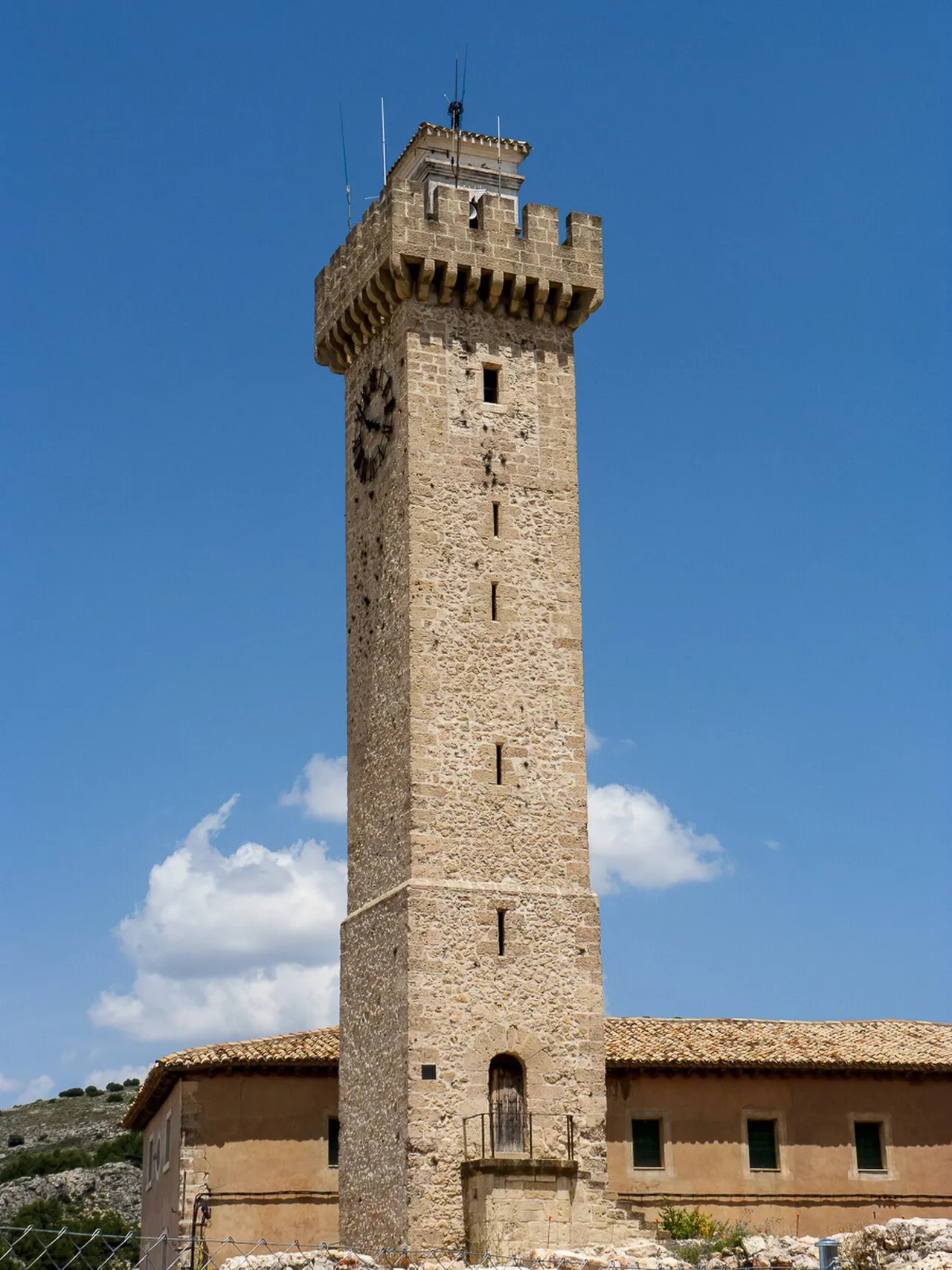
Start at the Torre de Mangana, at the highest and oldest point of the first settlement. It was the watchtower of Muslim Cuenca, though its present appearance — with battlements — was given to it by two twentieth-century restorations that are still argued about here. From the esplanade you look out over the Júcar gorge.
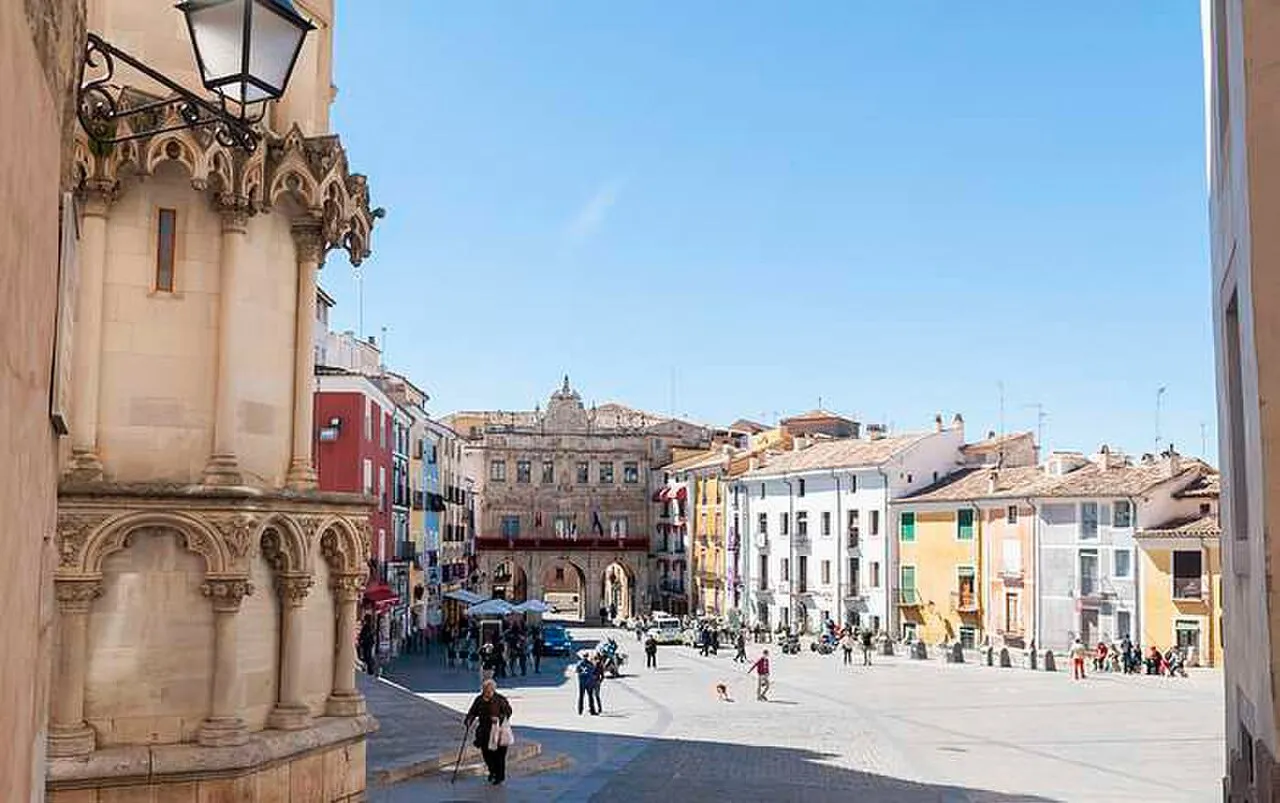
Keep climbing towards the Plaza Mayor through the streets of the old town. The square is an elongated triangle, not a rectangle: the rock allowed no more, and it was fitted in where the hill left room. It is closed off by the Baroque City Hall, raised on three arches through which the street still passes.
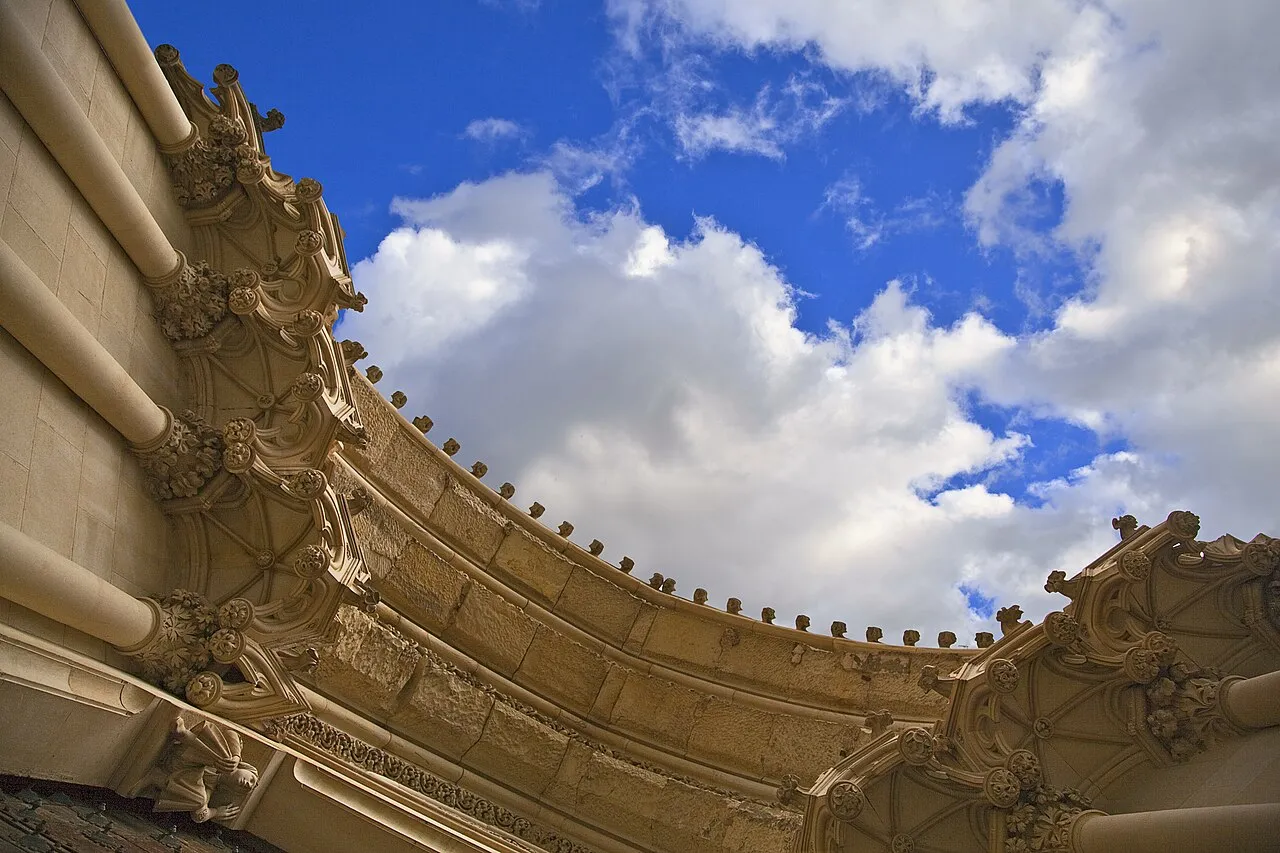
The cathedral presides over the wide side and is the long visit of the morning. It is one of the first Gothic buildings in Spain, with an Anglo-Norman influence that arrived with Eleanor Plantagenet, wife of Alfonso VIII. The façade is neo-Gothic, from 1902, but the good things are inside: the triforium of the angels, the Arco de Jamete and abstract twentieth-century stained glass that no other Spanish cathedral has.
If you have half an hour to spare, the Bishop's Palace with the Diocesan Museum is next door and holds work by El Greco.
The emblem of the city and also its most disputed monument: two twentieth-century restorations took away its 1532 spire and gave it battlements. It is the collective clock of Cuenca, where locals eat the New Year's Eve grapes.
One of the first Gothic buildings in Spain, begun after the conquest of 1177 with stonemasons and tastes from the north. It looks more Norman than Castilian. Inside, the triforium of the angels, the Arco de Jamete and abstract twentieth-century stained glass.
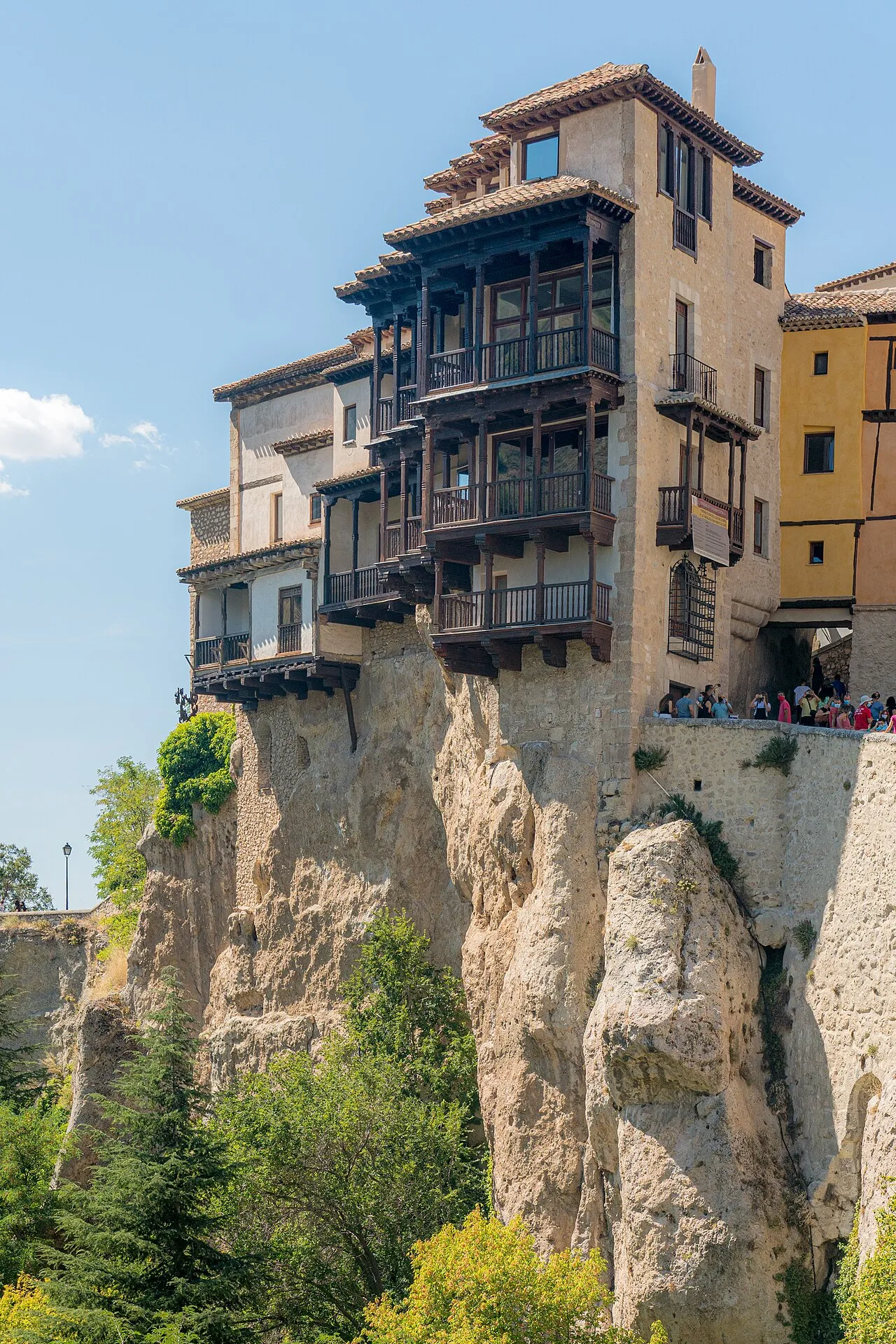
Go down calle Obispo Valero to the Hanging Houses, the image that probably brought you here. There are three of them, from the thirteenth to the fifteenth century, with their wooden overhangs above almost forty metres of void, and they are not a whim: in a city with no horizontal ground, growing outwards was the only option.
Go into the Museum of Spanish Abstract Art, which occupies two of them and whose entry is free. It is the only way to see them from inside and to lean out of their windows over the precipice, with Chillida, Tàpies and Saura hung a hand's breadth from the abyss.
And cross the Puente de San Pablo, the iron footbridge over the Huécar gorge. That is where every photo you have seen of Cuenca is taken: from the bridge, the houses are seen in profile above the ravine. On the other side is the former convent of San Pablo, today a parador, a state-run hotel.
It is also the area to eat in, with the Plaza Mayor five minutes away. And in summer, the shade of the ravine at this hour is welcome.
Three real houses flying over the precipice, restored at the beginning of the twentieth century when they were half in ruins. There was once a whole cornice of them leaning over the void. The photo is taken from the Puente de San Pablo, not from here.
The painter Fernando Zóbel set it up in 1966 to bring together the work of his friends, and the artists themselves designed the rooms. That display changed Spanish exhibition design. Zóbel donated it in 1980 to the Fundación Juan March and entry is free.
Afternoon: the ronda, the upper quarter and the castle
Two hours.
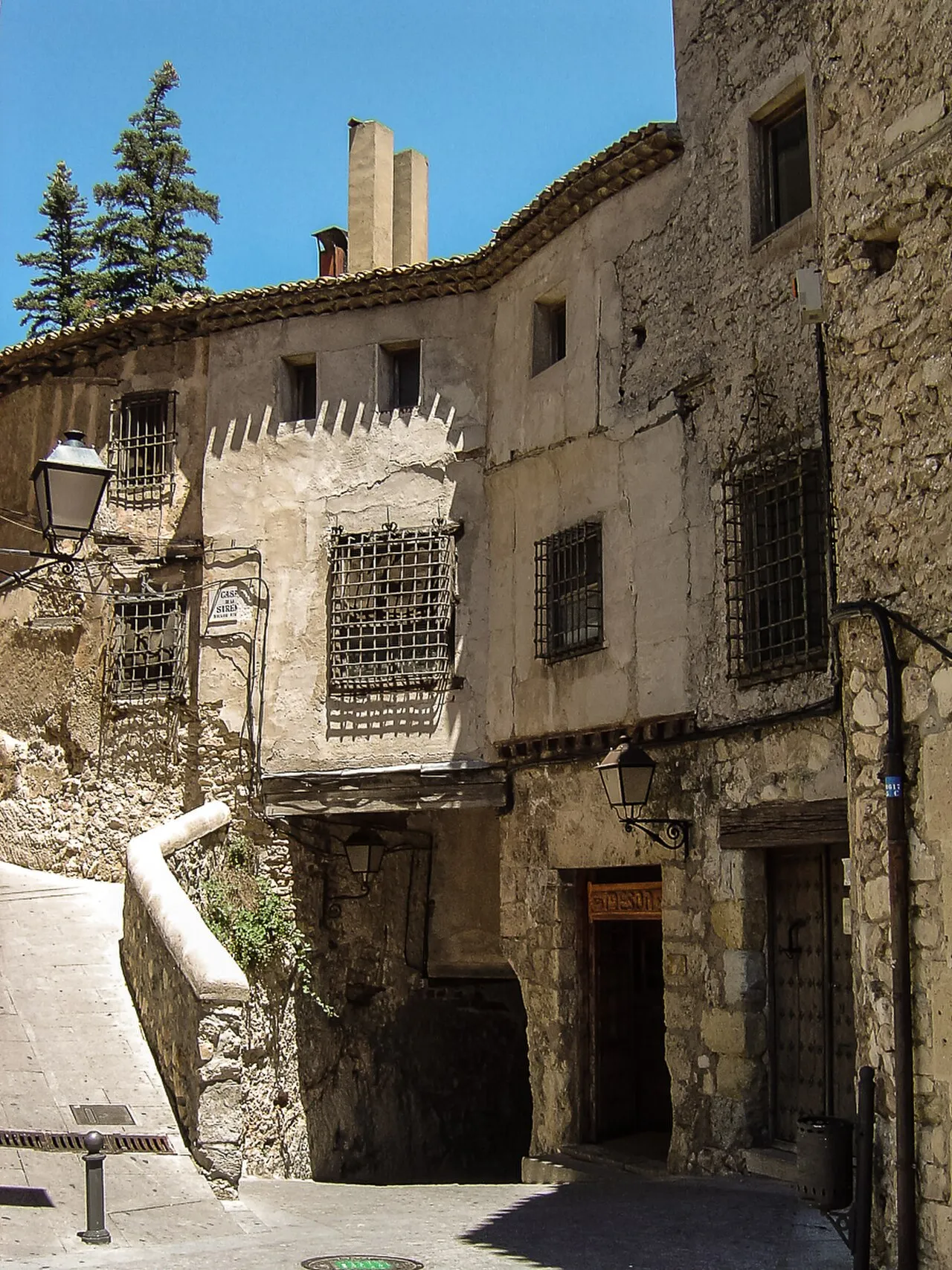
Climb the ronda de Julián Romero, a narrow stepped street-cum-viewpoint with houses hanging off the edge, which is one of the most beautiful walks in the old town. On the way you pass beside the church of San Pedro and the Fundación Antonio Pérez, another contemporary art museum installed in a convent.
The final stretch enters the Barrio del Castillo, the highest and least visited part of the old town: modest houses, very narrow streets and an atmosphere that is no longer monumental but residential. It is where the old town is still alive.
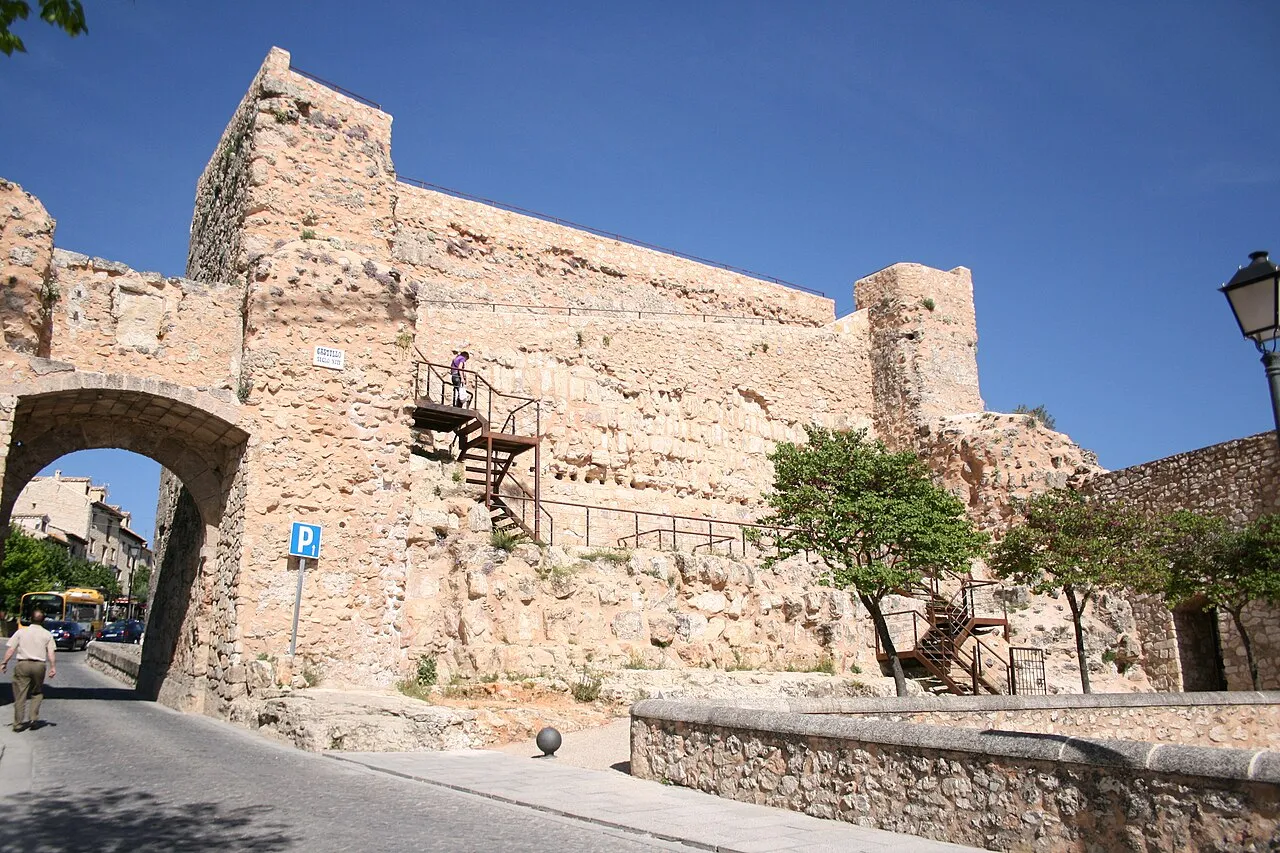
Of the castle there remain some stretches of curtain wall, a tower or two and the Arco de Bezudo, but that matters little: what you come here for is the view. From the top you see the two gorges on either side and the whole city tumbling down the spine of rock.
Come down while there is still light, because the streets of the quarter are narrow and badly lit. And end the day in the Plaza Mayor, which at night, with the cathedral lit up, is another place altogether.
The only attackable front of a city surrounded by precipices, and therefore the point where it all began. Once it had lost its military role, the tribunal of the Inquisition set up beside it and its rooms served as a prison. Free access and the best viewpoint in the city.
Come back at the end of the day. It is the city's default meeting point — in Cuenca people arrange to meet “in the plaza”, with no further precision — and at night, with the cathedral lit and the warm-toned mansions around it, it changes completely.
Yes, the whole old town fits into one day: the Torre de Mangana, the Plaza Mayor, the cathedral, the Hanging Houses with the museum, the Puente de San Pablo and the castle. With a second day you can add the other art foundations, the walk through the Huécar gorge and a trip to the Ciudad Encantada, thirty kilometres away.
How do you get up to the old town?
There is a public lift connecting the lower town with the upper old town, and also a town bus. Walking up is possible but the climb is serious, so the sensible thing is to go up with one of them and walk down. Inside the old town, moreover, the route keeps climbing all the way to the castle.
Where is the classic photo of the Hanging Houses taken from?
From the Puente de San Pablo, the iron footbridge that crosses the Huécar gorge. From there you see them in profile, with the ravine below. At midday and in high season the bridge fills up, so to take it without people it is best to go first thing in the morning or at night, with the houses lit up.
Is the Museum of Spanish Abstract Art free?
Yes, entry has been free ever since Fernando Zóbel donated the museum to the Fundación Juan March in 1980. And it is the only way to get inside the Hanging Houses and lean out over the precipice from within. Check the weekly closing day beforehand, because it is the one museum in the old town you should not leave until last.
Is it worth going up to the castle?
Of the castle itself little remains: some stretches of curtain wall, a tower or two and the Arco de Bezudo. But the view from the top — the two gorges on either side and the city tumbling down the crest — is the best in Cuenca and the one that makes you grasp at once the geography it is built on. Access is free.
What is there near Cuenca?
The Ciudad Encantada, some thirty kilometres away, a landscape of eroded rock formations you can walk in an hour and a half. And the source of the river Cuervo, a little further. Both require a car. The whole Serranía de Cuenca is a mountain area with gorges, reservoirs and villages that is worth several days.
Practical information
DurationA full day. With two you can fit in the Ciudad Encantada and the walk through the gorges.
Going upPublic lift or town bus up to the upper old town. Walk down.
FreeThe Abstract Art museum, the castle, the Puente de San Pablo and the Mangana esplanade.
The photoFrom the Puente de San Pablo. First thing in the morning or at night, lit up.
FootwearConstant slopes and cobbles along the whole route.
EatingPlaza Mayor and around. Morteruelo, ajoarriero and zarajos.
On the map
🎧 With Viavoy
Walk Cuenca and listen at your own pace
Download Viavoy and walk Cuenca offline, whenever you like.