1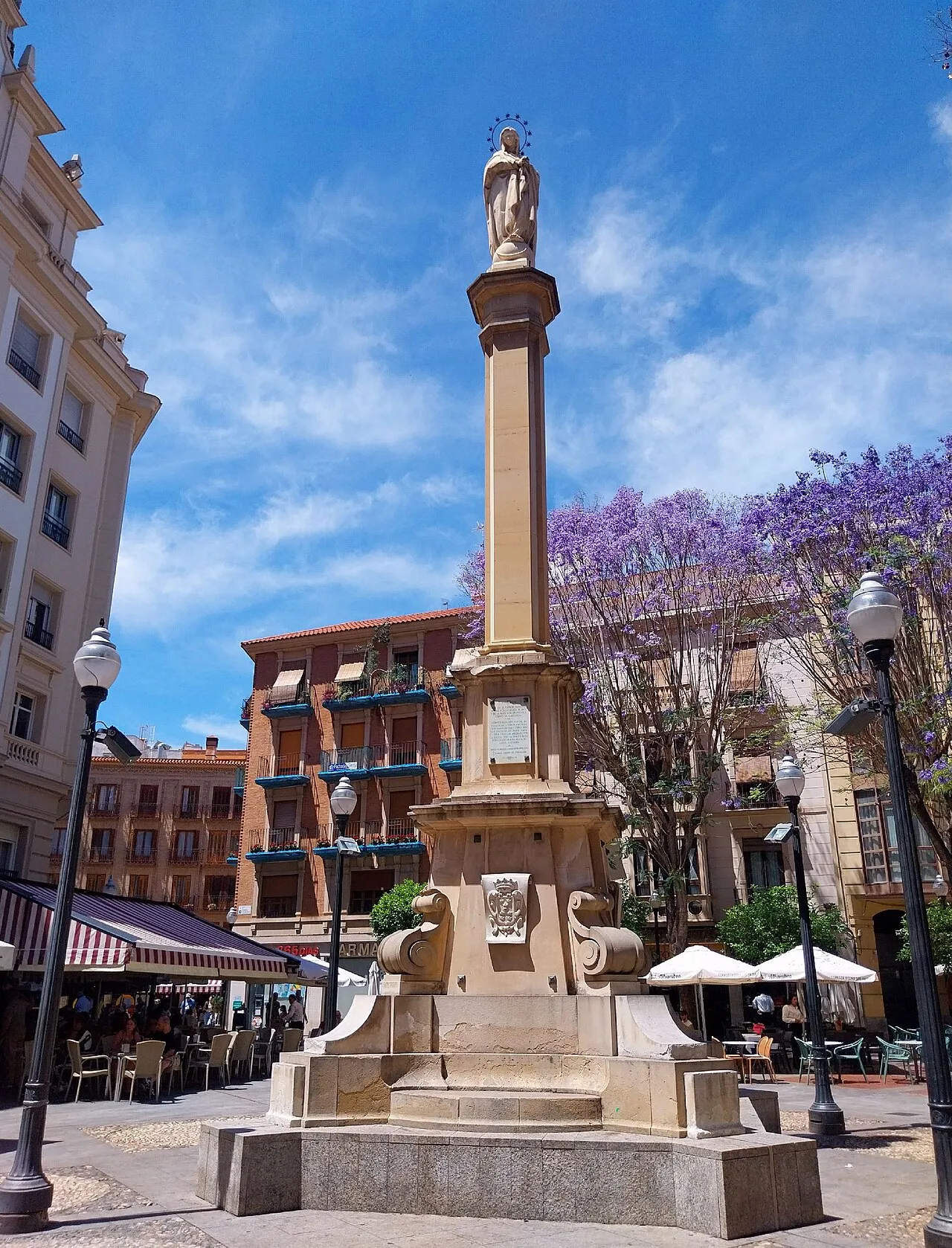
Plaza de Santa Catalina
📍 Historic centre
It was the main square of the city and today it is the epicentre of the tapas scene. Tables, beers in the sun and voices crossing at any hour.
A tapa with a vocabulary of its own, the best vegetables in Europe and three wine denominations less than an hour away. What to order and where, without looking like an outsider.
🎧 On the walk Las Flores, Verónicas and the tapasMurcia has one of the best tapas cultures in Spain and almost nobody comes for it. Its emblem tapa has three names depending on what goes on top, its huerta, the market-garden plain, supplies vegetables to half the continent in winter, and it is all concentrated in a triangle of streets you can cover in five minutes.
Everything happens at three points five minutes from one another: the plaza de Santa Catalina, the plaza de las Flores and the Mercado de Verónicas. You eat well outside them too, but that is the heart of it.
Santa Catalina also has a story that gives it its charm: it was the main square of Murcia, where the town council met, proclamations were read and the condemned were executed. Today it is where the city sits down to eat. Not a bad exchange.
The Mercado de Verónicas is the larder: Art Nouveau in reddish brick from 1912-1916, with huerta produce on the ice. It works in the mornings, so you have to go early if you want to see it running.
Murcian hours are late even by Spanish standards: the aperitivo stretches out, lunch starts from half past two or three, and dinners begin late. Adapting to that is half the work.
It was the main square of the city and today it is the epicentre of the tapas scene. Tables, beers in the sun and voices crossing at any hour.
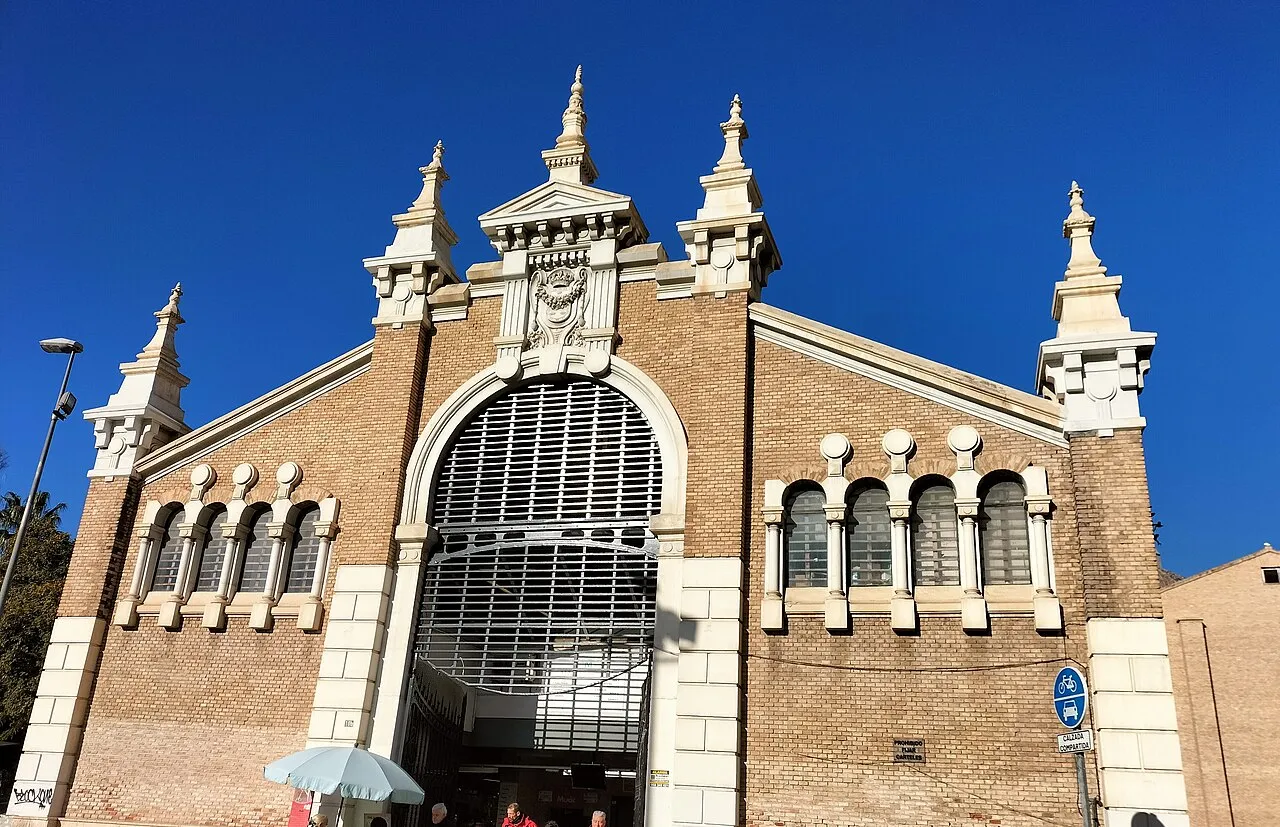
Art Nouveau of 1912-1916 by Pedro Cerdán. The market garden of Europe on the ice, with winter vegetables that supply half the continent.
Download the app and discover Murcia offline, whenever you like. Take the walking tour Las Flores, Verónicas and the tapas with a local guide in your ear.
Find out more about Viavoy →The marinera is the queen: a ring of bread with ensaladilla rusa and an anchovy on top. And it has a naming system worth learning: without the anchovy it is called a “bicicleta”, and with a boquerón, cured in vinegar, instead of the anchovy, a “marinero”.
The michirones are the other flagship dish: dried broad beans stewed with chorizo, ham, bay leaf and chilli, served hot in an earthenware dish. It is a winter dish and a tasca dish, from the old taverns, and you will hardly find it outside the region.
The zarangollo is pure vegetable: courgette and onion softened very slowly, sometimes with egg. Simple in the extreme and a good test of the quality of the produce, because there is nowhere to hide.
The pastel de carne murciano is puff pastry filled with minced meat, chorizo and hard-boiled egg inside, with the pastry dusted with sugar in some versions. It is street food and you eat it hot, with your hands.
And the pataticas, the snails in season, the rice — Murcia makes excellent rice dishes — and the vegetables from the huerta, which in winter are among the best in Europe: artichoke, broccoli, celery, lettuce.
The region has three denominations of origin of its own: Jumilla, Yecla and Bullas, all less than an hour away, with monastrell as the dominant grape. They are full-bodied reds, grown unirrigated and at altitude, which have improved enormously in recent decades and are still well priced.
The produce comes from the huerta, one of the most fertile plains in Europe, watered by the Segura through a network of acequias, irrigation channels of Arab origin that still work, with a customary court that settles disputes over water.
That system explains why Murcia produces what it produces, and why in winter it supplies vegetables to half the continent, when the rest of Europe is not in production.
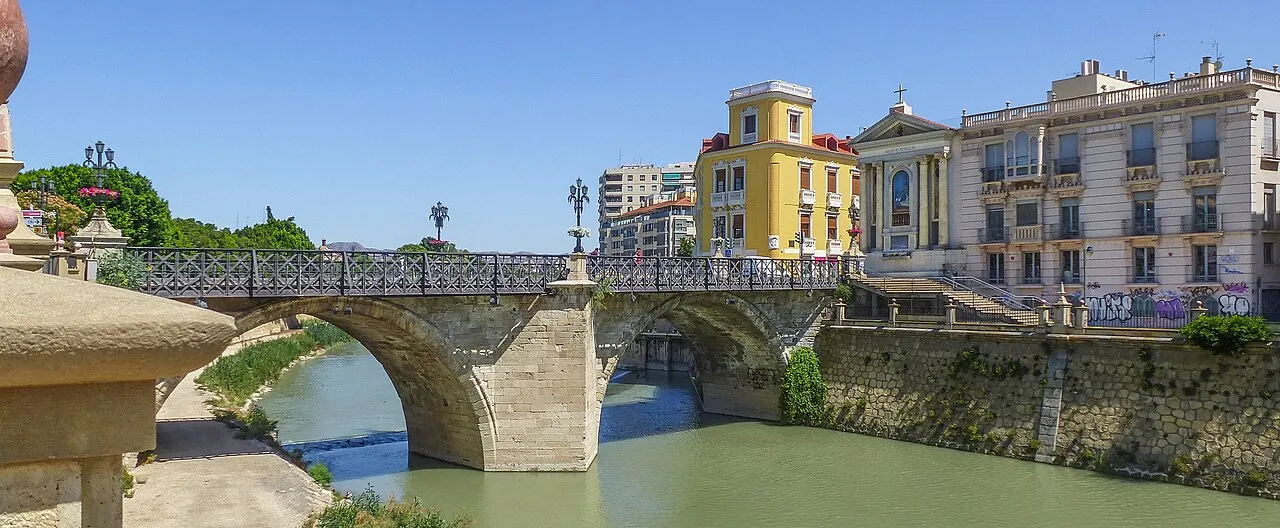
After lunch, the natural thing is to carry on strolling along the calle Trapería and the historic centre, or to cross the Puente Viejo, the old bridge, towards the barrio del Carmen. All flat and five minutes away.
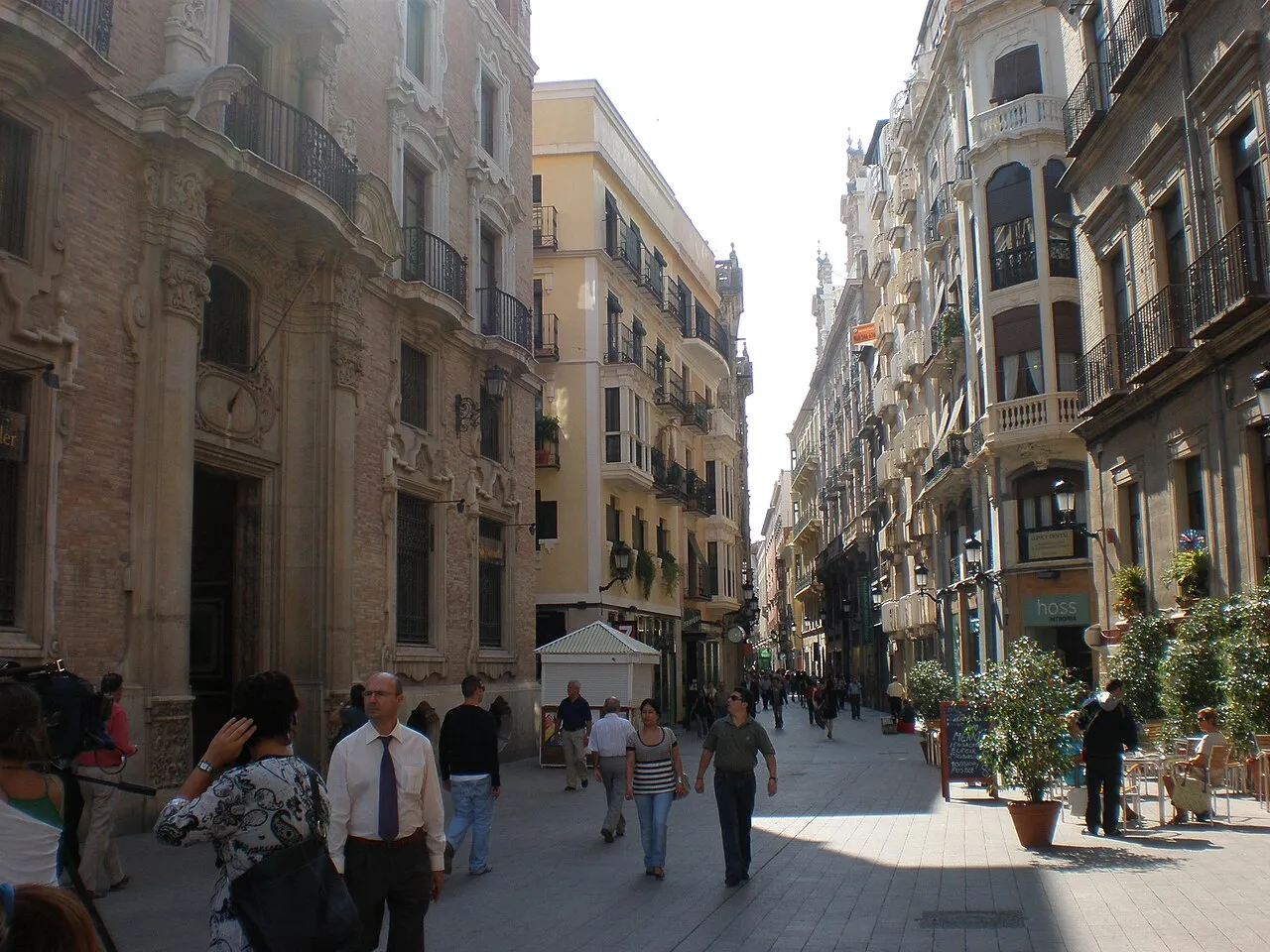
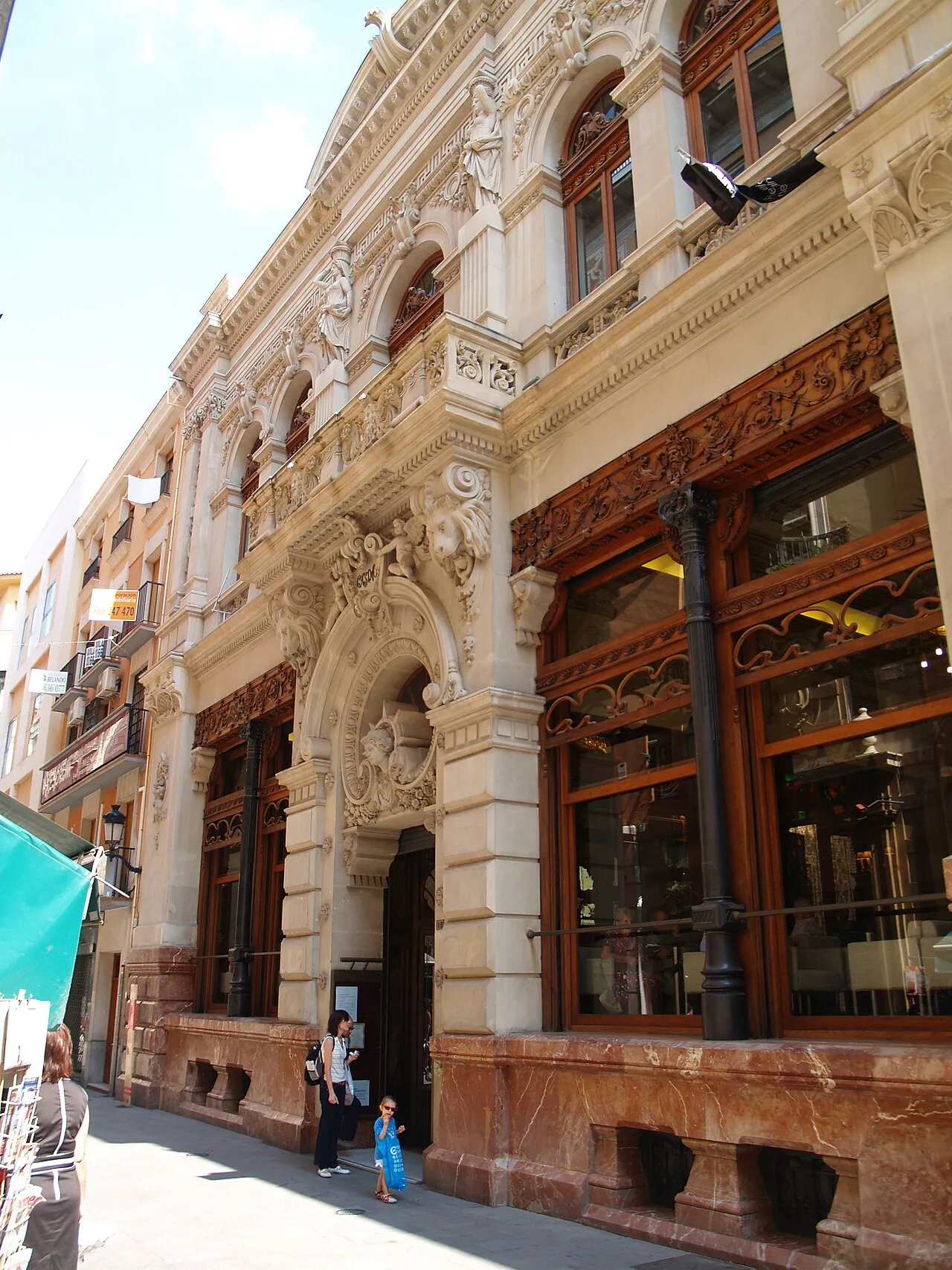
The natural walk after lunch: the main street of Murcia since 1266, pedestrian and with the best façades in the centre.
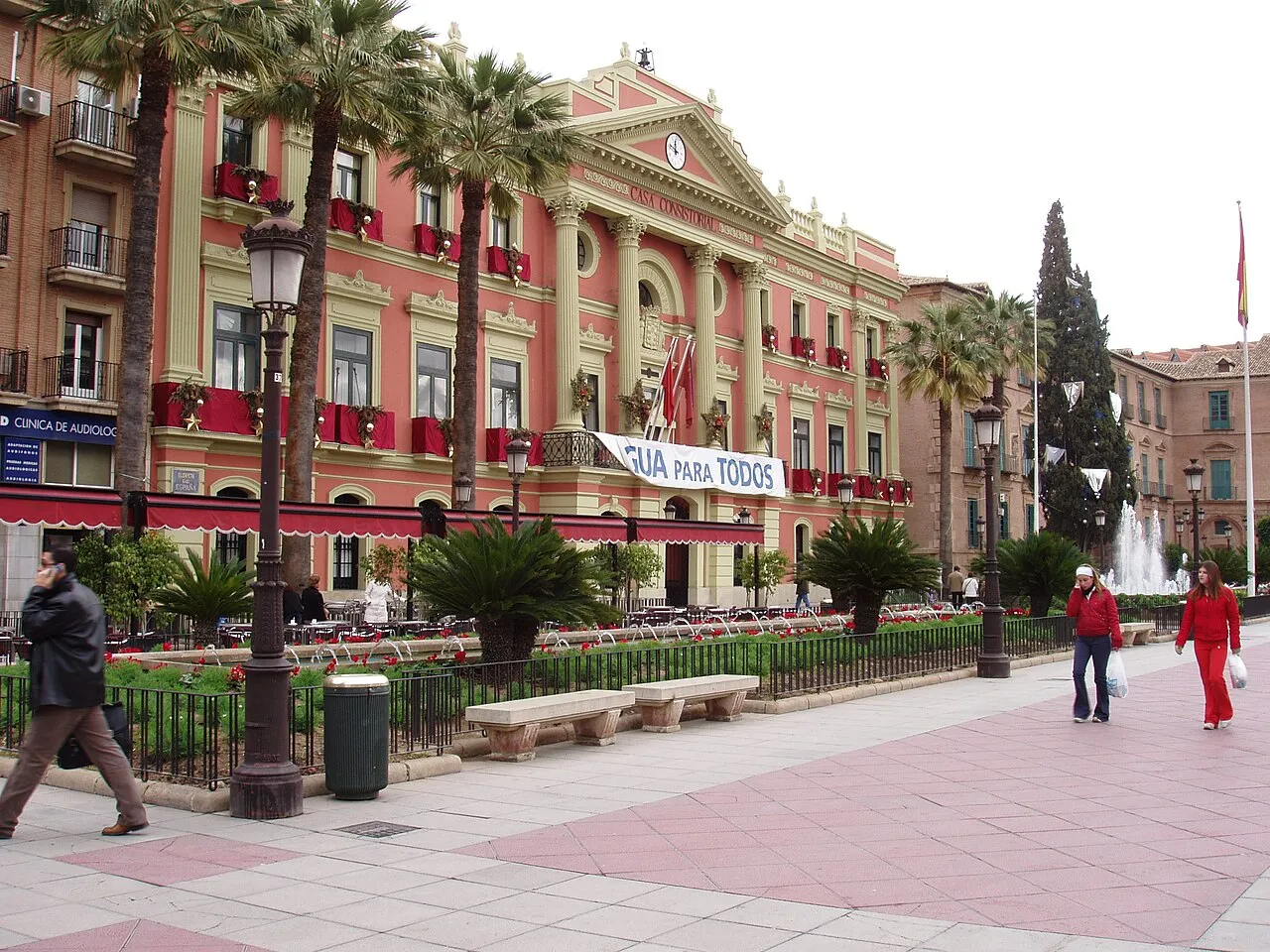
The city's living room, with hundred-year-old ficus trees and fountains inspired by the Generalife. The best shade in the centre for the sobremesa.
The queen of Murcian tapas: a ring of bread with ensaladilla rusa and an anchovy on top. You eat it in a couple of bites, with a caña, a small glass of beer, and it is practically compulsory on any visit to the city. It is hard to find the same thing outside the Region of Murcia.
The base is the same — a bread ring with ensaladilla rusa — and what changes is what goes on top. With an anchovy it is a marinera; with nothing on top, a “bicicleta”; and with a boquerón cured in vinegar instead of the anchovy, a “marinero”. Ordering them by their correct name marks you out as a local and is appreciated.
Dried broad beans stewed with chorizo, ham, bay leaf and chilli, served hot in an earthenware dish. It is the tasca dish par excellence in Murcia, typical of winter, and you will hardly find it outside the region. It goes perfectly with a red from Jumilla.
In the triangle formed by the plaza de Santa Catalina, the plaza de las Flores and the area around the Mercado de Verónicas, all five minutes apart on foot. Santa Catalina was for centuries the main square of the city, where the town council met, and today it is the epicentre of the tapas scene.
Red from the region, above all from the three denominations of origin of its own: Jumilla, Yecla and Bullas, all less than an hour away. The dominant grape is monastrell, which gives full-bodied wines, grown unirrigated and at altitude. They have improved a lot in recent decades and are still well priced.
Because of the huerta: one of the most fertile plains in Europe, watered by the Segura through a network of acequias of Arab origin that still works. In winter it supplies vegetables to half the continent, when the rest of Europe is not in production. Artichoke, broccoli, celery and lettuce are the star products.
Late, even by Spanish standards. The aperitivo stretches out, lunch starts from half past two or three, and dinners begin late. Adapting to those hours is half the work if you want to find the squares full and the atmosphere at its best.
Download Viavoy and walk Murcia offline, whenever you like.

Keep reading