1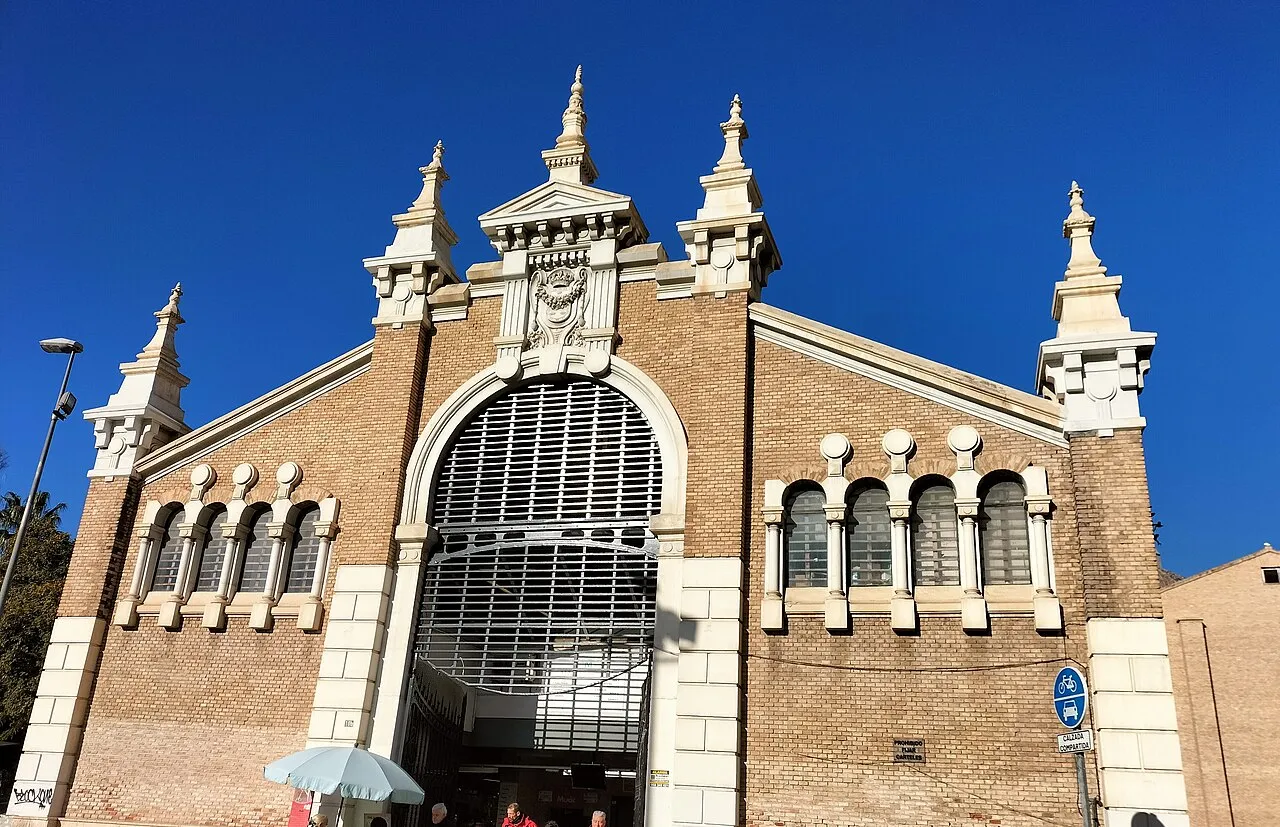
Verónicas Market
📍 Beside the river
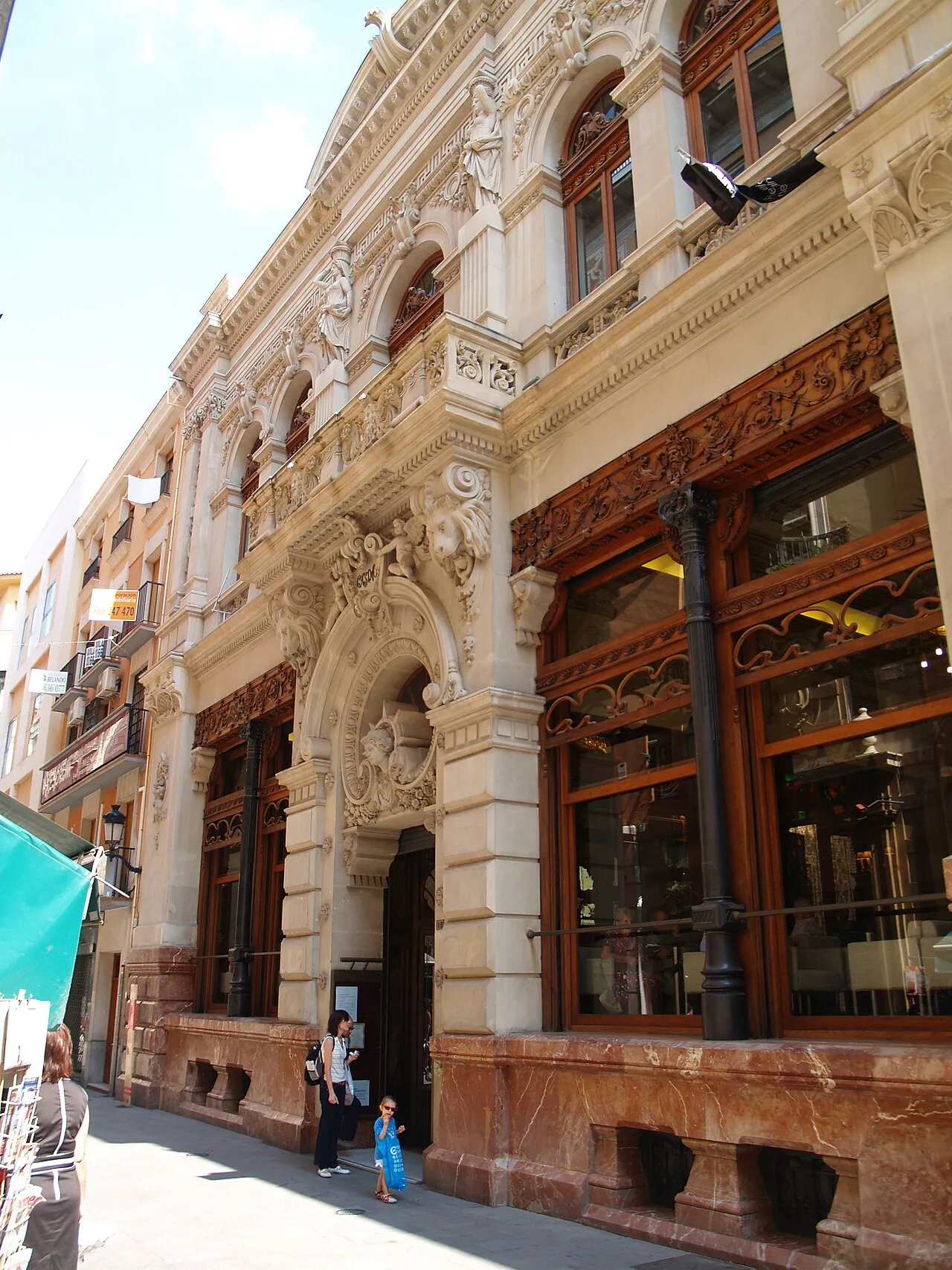
Where the huerta reaches the city. Art Nouveau of 1912-1916 over a market that has worked since the fifteenth century. Go in the morning.
A thousand-year-old irrigation network that still works, a dyke built to hold back the floods and a bridge that held when everything else fell.
🎧 On the walk The Malecón, Floridablanca and the SeguraMurcia exists because of water and has suffered because of water. The same river plain that made it one of the most fertile lands in Europe punished it for centuries with floods that carried off houses, harvests and lives. The whole city — its bridges, its walls, its bells — is built around that double relationship.
The irrigation network that orders the huerta, the market-garden plain, was laid out by the Muslims from the ninth century onwards, and its logic has not changed: azudes that divert water from the Segura, main acequias that share it out, brazales that carry it to each plot and azarbes that return the surplus to the river.
That system turned an already fertile plain into one of the most productive lands in Europe, and it is the reason Murcia supplies vegetables to half the continent in winter, when the rest of Europe is not in production.
The sharing of the water is still regulated by a customary court, the Consejo de Hombres Buenos de la Huerta de Murcia, the Council of Good Men, recognised as intangible cultural heritage. It is an extraordinary case of institutional continuity: a thousand years settling the same disputes.
All of that reaches the plate. In the Mercado de Verónicas, where food has been sold since the fifteenth century, the winter vegetables — artichoke, broccoli, celery, lettuce — are of a quality you notice from the first bite.
Where the huerta reaches the city. Art Nouveau of 1912-1916 over a market that has worked since the fifteenth century. Go in the morning.
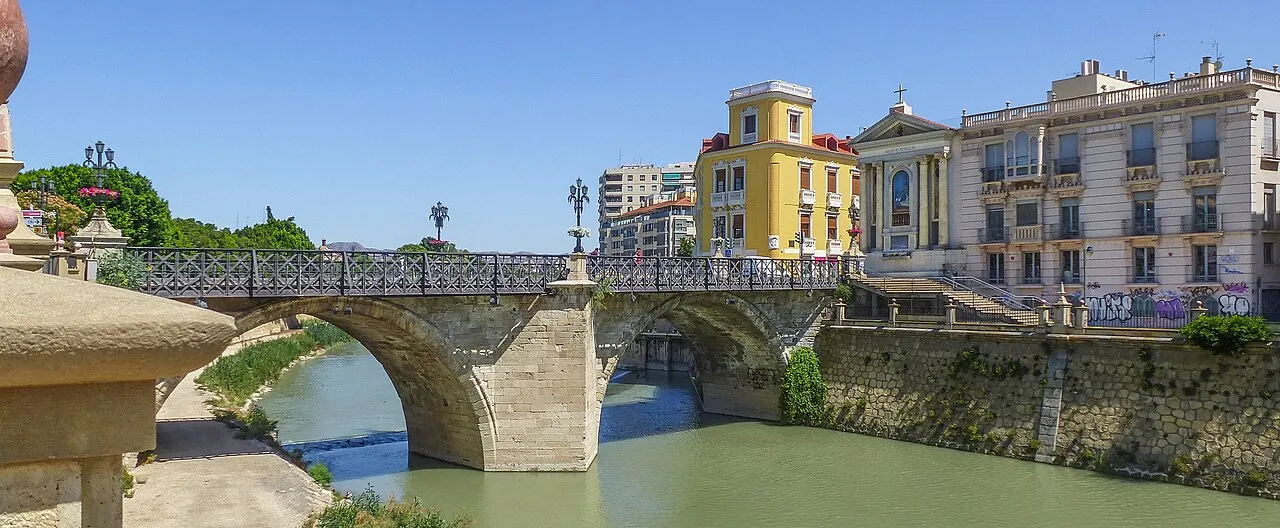
Built between 1718 and 1742 because the flood of 1701 carried off the previous one. It survived the great Santa Teresa flood of 1879.
Download the app and discover Murcia offline, whenever you like. Take the walking tour The Malecón, Floridablanca and the Segura with a local guide in your ear.
Find out more about Viavoy →The same river that waters the huerta used to lay it waste periodically. The floods of the Segura are part of the collective memory of Murcia: catastrophes that carried off houses, harvests and lives, with the Santa Teresa flood of 1879 as the most remembered.
The Puente Viejo, the old bridge, is the direct answer to one of them: the flood of 1701 carried off the wooden bridge that joined the two banks, and between 1718 and 1742 this stone one was raised, so solid and so well planted that it withstood everything that came afterwards.
For almost two centuries it was the city's only bridge over the Segura: the whole of Murcia crossed here, on foot and by cart, until in 1903 the Puente Nuevo, made of iron, was opened downstream.
The other defence was the Malecón, a retaining wall raised to hold back the floodwaters. Today it is a raised walkway with views over the huerta, and at its entrance stands the Lion, a guardian with the city's coat of arms between its claws.
And even the cathedral tower played its part: its bells warned of the floods when the river ran wild, as well as marking the irrigation turns. High up there was a Conjuratorio from which storms and plagues of locusts were conjured away.
The most accessible spot is the paseo del Malecón, on the Carmen bank: raised on the old dyke, you walk with the city on one side and the plain on the other. It is flat, pleasant and ten minutes from the centre.
Crossing the Puente Viejo from the Glorieta you get there in five minutes, passing the church of El Carmen, which gives its name to the whole barrio on that bank.
On the same route are the Jardín de Floridablanca, one of the first public gardens in Spain, and the Alameda de Colón, with its hundred-year-old trees. This is the green part of the city.
And to see the huerta from above, the cathedral tower: ninety-three metres from which you take in the whole plain. It is the best way to understand at a glance why this city exists.

It guards the dyke that protected the city from the river, with the coat of arms and its seven crowns between its claws. The one you see is a replica.
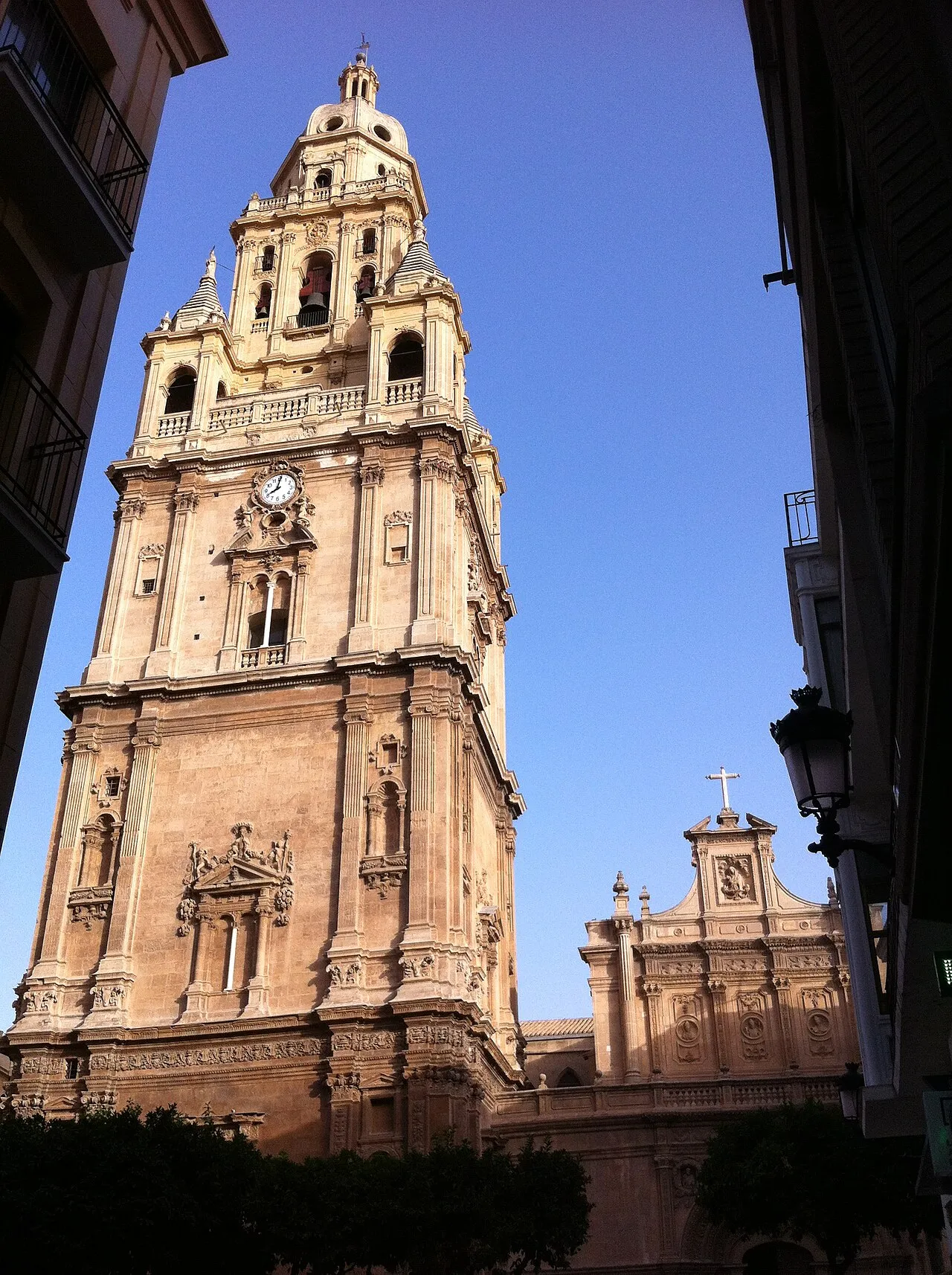
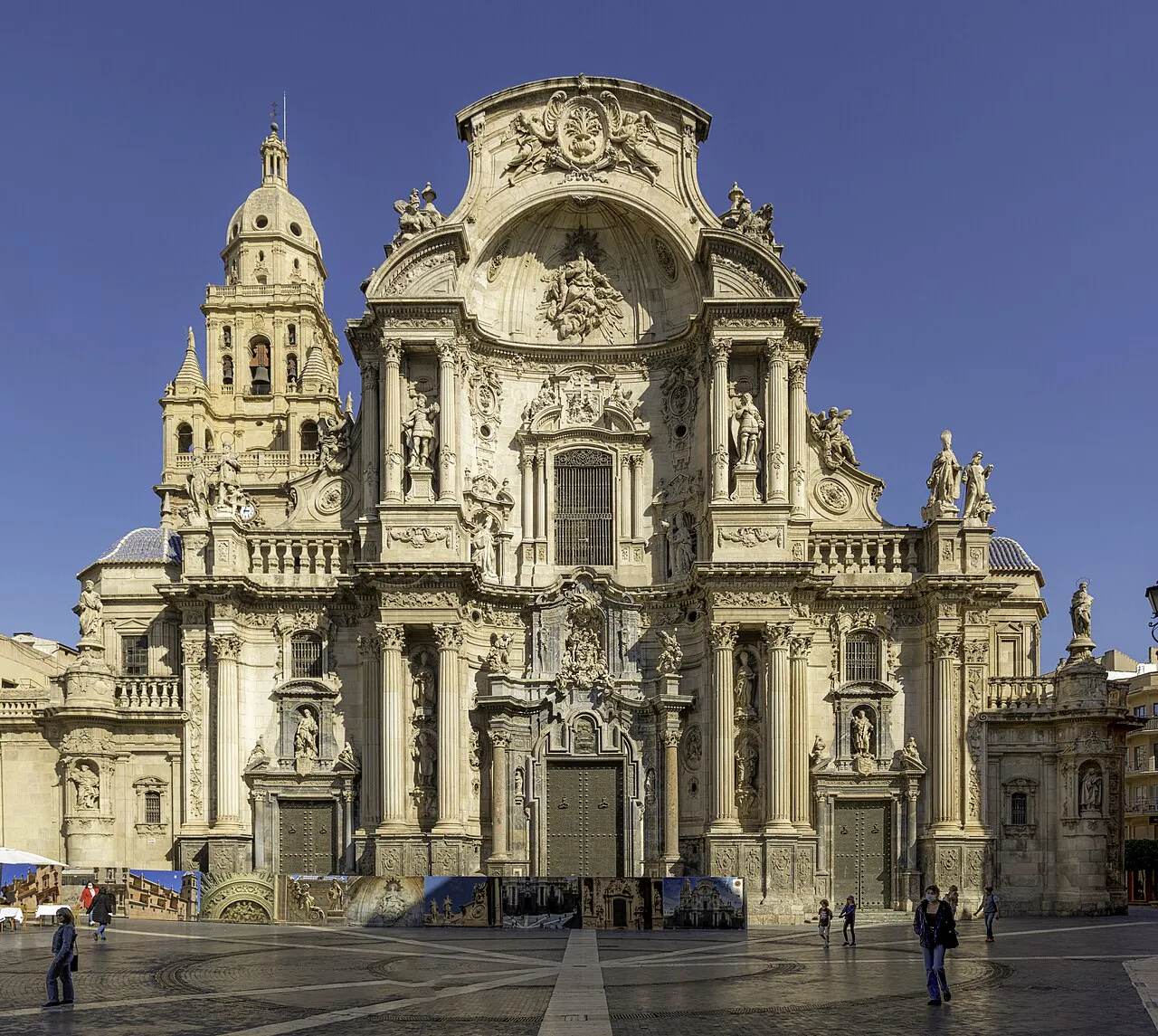
Ninety-three metres from which you take in the whole plain. Its bells warned of the floods and marked the irrigation turns.
Yes, and it is one of the most remarkable continuities in Spain. The network was laid out by the Muslims from the ninth century onwards and its logic has not changed: azudes that divert water from the Segura, main acequias, brazales down to each plot and azarbes that return the surplus. It still waters the huerta today.
A customary court that regulates the sharing of water in the huerta of Murcia and settles disputes between irrigators, recognised as intangible cultural heritage. It is an extraordinary case of institutional continuity: it has been applying the same rules for centuries and still meets.
Because of the combination of very fertile plain soil, a climate with many hours of sunshine and a thousand-year-old irrigation system that multiplies productivity. The result is that Murcia supplies vegetables to half the continent in winter, when the rest of Europe is not in production.
Catastrophic rises that periodically laid waste to the city and the huerta, carrying off houses, harvests and lives. They are part of the collective memory of Murcia, with the Santa Teresa flood of 1879 as the most remembered. The whole city — bridges, dykes, bells — was organised to face them.
Because the flood of 1701 swept away the wooden bridge that joined the centre to the other bank. Between 1718 and 1742 this stone one was raised, deliberately solid and heavy, to hold. And hold it did: it survived tremendous surges while other bridges fell.
A retaining wall built to protect the city from the rises of the Segura. Today it works as a raised walkway, with the city on one side and the plain on the other, and at its entrance stands the Lion of the Malecón, with the coat of arms of Murcia and its seven crowns between its claws.
From the cathedral tower, ninety-three metres that let you take in the whole plain at a glance and understand at once why this city exists. At street level, the paseo del Malecón, raised on the old dyke, is the best way to get close to the huerta without leaving the centre.
Download Viavoy and walk Murcia offline, whenever you like.

Keep reading