1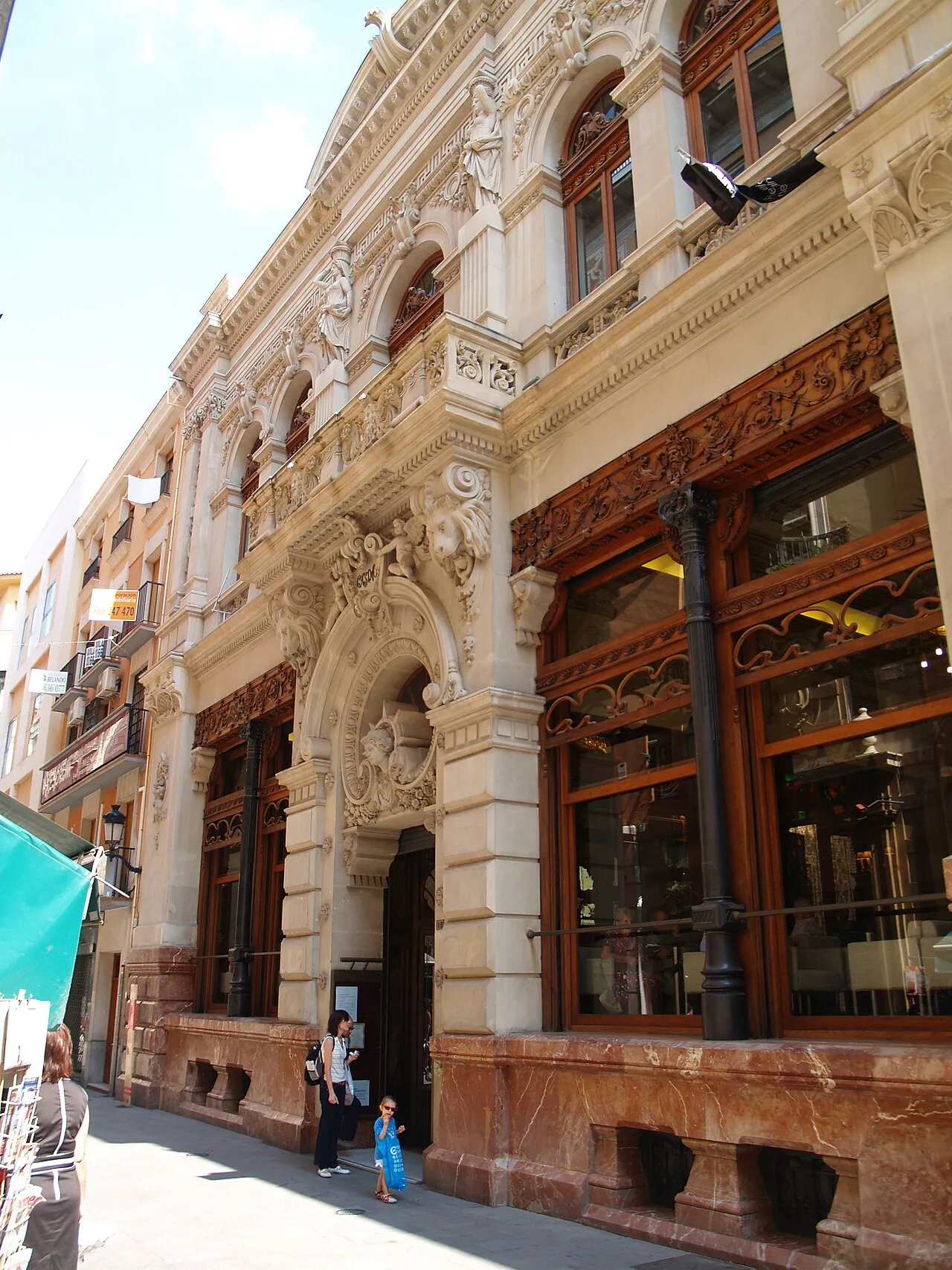
Royal Casino of Murcia
📍 Calle Trapería
Founded in 1847, with the building begun in 1853. A National Monument since 1983 and the most visited civil building in the region. Forty-five minutes.
Nobody ever played roulette here. Every generation of members since 1847 added one more room, each more spectacular than the last, and the result is a journey through every fashion of the nineteenth century.
🎧 On the walk The Casino, Trapería street and the Romea TheatreIt is the most visited civil building in the Region of Murcia and one of the best ways to understand the Spanish nineteenth century. Behind its façade of columns, garlands and caryatids there are half a dozen rooms, each in a different style, built by successive generations of members in decorative competition.
The Society was founded in 1847 and the building was begun in 1853. From then on, each generation of members went on adding rooms, each more spectacular than the last, and that cumulative process is what explains its character: there is no one style, there is a collection of successive ambitions.
The model of the casino as a bourgeois club was repeated all over Spain during the nineteenth century: a private space where the upper middle class read newspapers, played billiards, did business and organised balls. Few keep the whole ensemble as complete and as well cared for as this one.
It was declared a National Historic-Artistic Monument in 1983, and since then it can be visited with a paid ticket, although it is still a working society with its members.
It stands right on calle Trapería, the main street of Murcia since the conquest of 1266, and that location is no accident: the society wanted to plant itself on the most sought-after street in the city.
Founded in 1847, with the building begun in 1853. A National Monument since 1983 and the most visited civil building in the region. Forty-five minutes.
Download the app and discover Murcia offline, whenever you like. Take the walking tour The Casino, Trapería street and the Romea Theatre with a local guide in your ear.
Find out more about Viavoy →The most famous is the Patio Árabe, the Arab courtyard, Alhambra-inspired, with plasterwork, arches and a glazed dome that floods with light a space designed to dazzle the moment you walk in. It is nineteenth-century neo-Mudéjar in its most ambitious version.
The Biblioteca Inglesa, the English library, is the opposite: dark wood, shelves to the ceiling, some twenty thousand volumes and the atmosphere of a London club. It is the corner where the building lowers its voice.
The Salón de Baile, the ballroom, under its chandeliers, is the space for display par excellence. And the Tocador de Señoras, the ladies' dressing room — with a painted ceiling, mirrors and the air of a boudoir — sums up the society that built it: a space of their own for women, delicate and carefully separate.
The route is completed by the Patio Pompeyano, the Pompeian courtyard, with Ionic marble columns and a central fountain, and the Salón de Billar, the billiard room. Walking through them one after another is a journey through every decorative fashion of the nineteenth century in less than an hour.
That mixture of references — Arab, English, Pompeian, Versailles — is not incoherence: it is exactly what nineteenth-century eclecticism was after, understanding historical styles as a catalogue to choose from according to the function of each room.
The Trapería has been the backbone of the historic centre since the Christian founding of the city in 1266. The name comes from the traperos, the merchants of cloth and fabric, who together with the silversmiths formed the two souks inherited from the medina.
Murcia lived for centuries on silk: the huerta raised the worms and the city was one of the great silk capitals of Spain. Hence the fact that the cloth merchants' street was the richest and the most sought-after, and hence the quality of its façades.
For centuries it was also the stage for the evening paseo: the whole city paraded along here in its best clothes, courted and closed deals. Today it is pedestrian and keeps that air of a noble street that knows it is important.
A few minutes away is the Romea Theatre, opened in 1862 with Isabella II in the royal box, on the garden of a Dominican convent left free by the desamortización, the state seizure of church land. It carries a legend of fire: they say a friar cursed it with three fires, and it really did burn more than once.
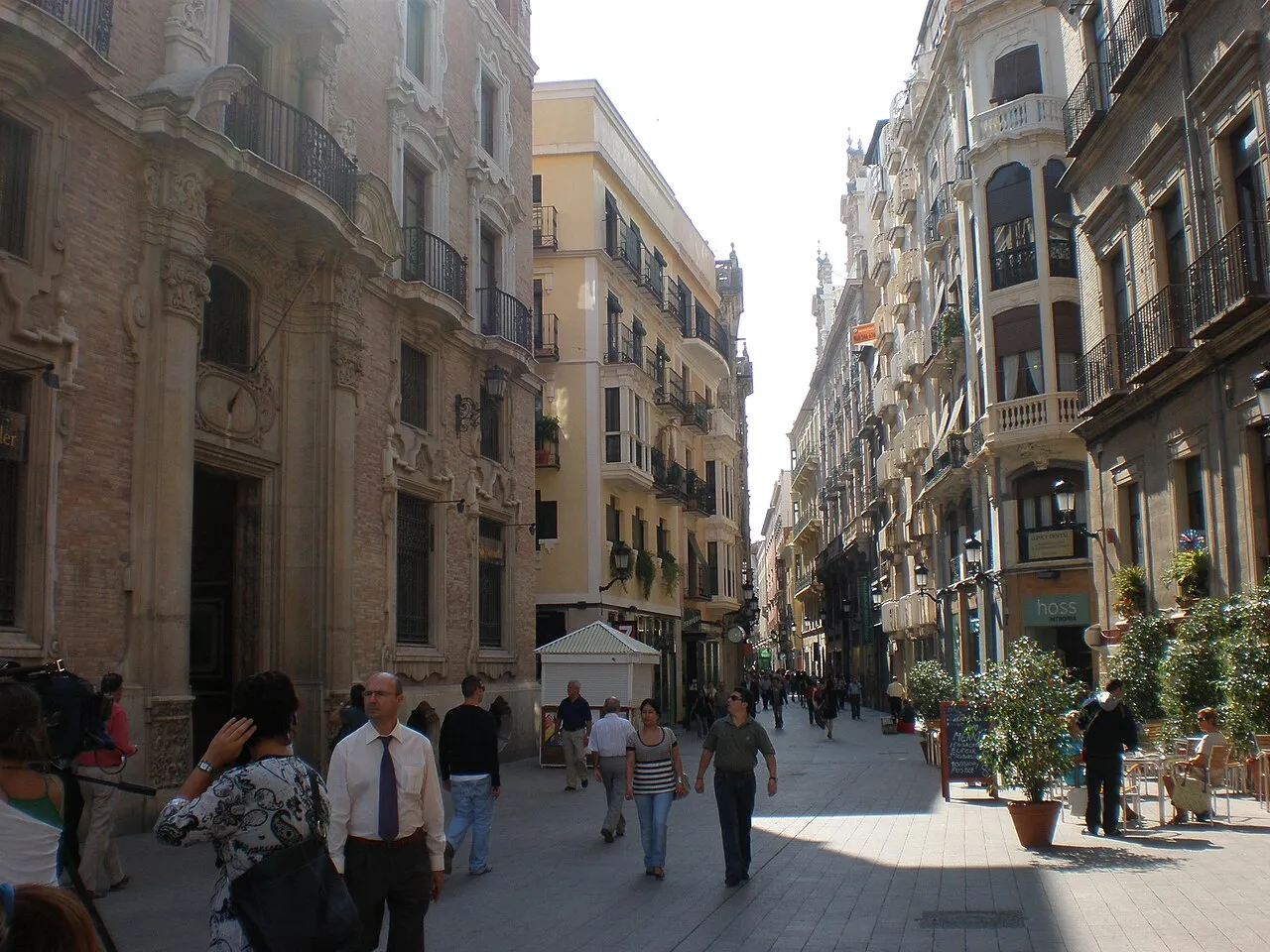
The main street of Murcia since 1266, where the cloth merchants sold. Look up above the shop windows.
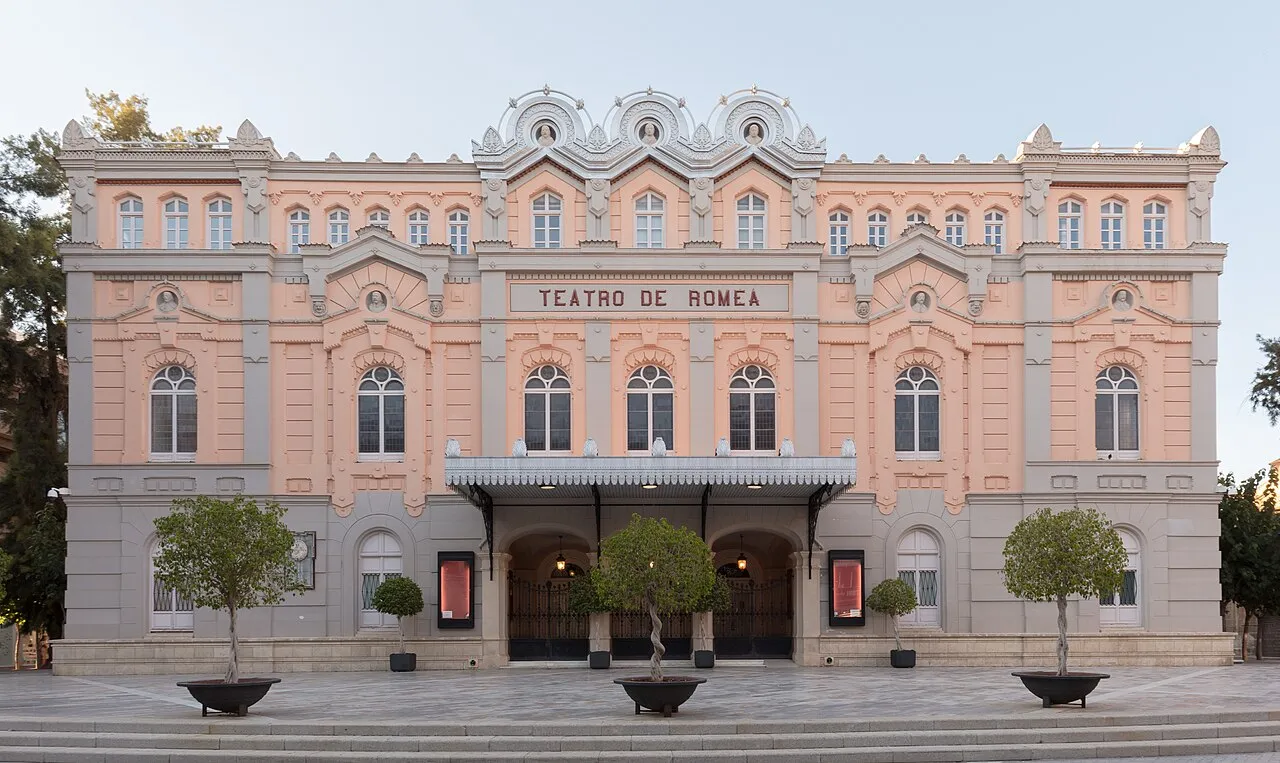
Opened in 1862 with Queen Isabella II. Even today one ticket per performance is withheld so the theatre never fills and the friar's curse is not fulfilled.
No, and roulette was never played here. In the nineteenth century a casino was a private gentlemen's society: a club where the bourgeoisie read the press, closed deals, played billiards and organised balls. It is a completely different use of the word from today's and it is worth knowing before you go in.
The Society was founded in 1847 and the building was begun in 1853. From then on each generation of members went on adding rooms, each more spectacular than the last, and that cumulative process explains why there is no single style but a collection of successive ambitions.
The Patio Árabe, Alhambra-inspired with a glazed dome, is the most famous; the Biblioteca Inglesa, with twenty thousand volumes and the atmosphere of a London club, is its exact opposite. And then the Salón de Baile, the Tocador de Señoras, the Patio Pompeyano and the Salón de Billar.
Because it is pure nineteenth-century eclecticism: that century understood historical styles as a catalogue to choose from according to the function of each room. Arab to dazzle at the entrance, English for the library, Pompeian for the courtyard. It is not incoherence, it is method.
The ticket is paid, at a contained price, and the visit takes about forty-five minutes. It is still a working society, so it is worth checking the hours because there are days with restricted access for members' events.
Because this is where the traperos, the merchants of cloth and fabric, had their shops. Together with calle Platería, the silversmiths' street, it formed the two souks inherited from the Muslim medina that became the commercial heart of the Christian city after the conquest of 1266.
The legend says that a friar from the Dominican convent whose site the theatre occupies cursed it with three fires. And there were real fires: the Romea burned more than once in the nineteenth century. Even today one ticket per performance is withheld from sale so the theatre never fills and the curse is not fulfilled.
Download Viavoy and walk Murcia offline, whenever you like.

Keep reading