1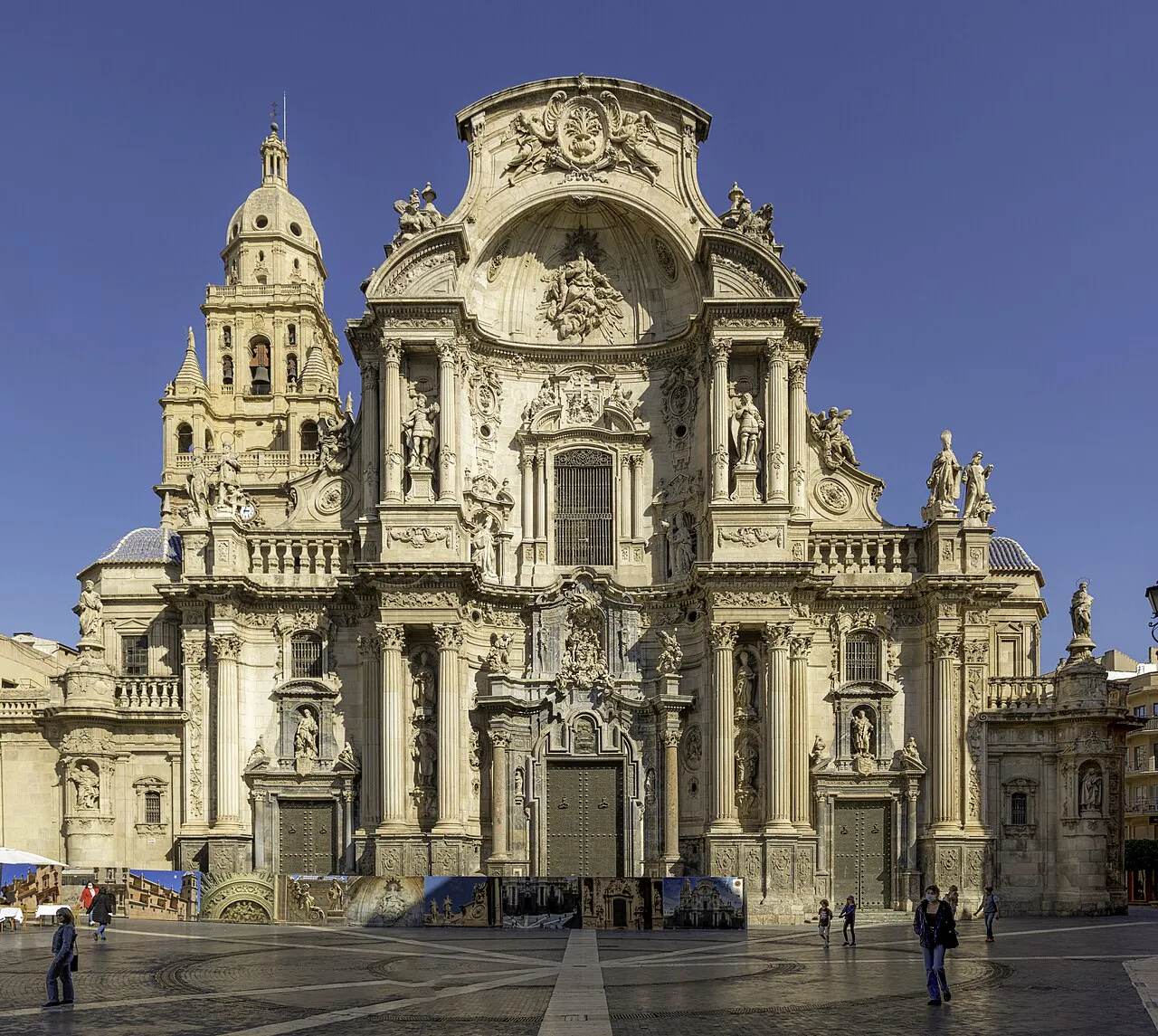
The imafronte of the Cathedral
📍 Plaza del Cardenal Belluga
A giant altarpiece set out in the open, and concave. Behind it, a Gothic cathedral two centuries older with the heart of Alfonso X.
A flat, compact and fairly unknown city, with one of the great façades of the Spanish Baroque and a tapas culture with a vocabulary of its own.
🎧 On the walk The Cathedral, Belluga and the Baroque heartMurcia is little visited and much remembered. It is flat, compact and covered on foot, and into a single day fit one of the great Baroque façades of Spain, an Andalusi palace under an enclosed convent, the finest religious statuary in the country and a square where people eat in a way that is not repeated anywhere else.
Start on the plaza del Cardenal Belluga, planted right in front of the imafronte of the cathedral, its west front. Notice that the façade is concave, curving inwards like a pair of open arms: that is why you feel the stone wrap around you. It was raised between 1737 and 1754 to a design by Jaime Bort.
Go in, and prepare for the change of century: behind that eighteenth-century stage set there is a Gothic nave, the Chapel of Los Vélez with its star vault, and under the high altar the heart of Alfonso X. Then climb the tower: ninety-three metres, almost three centuries of building and the best view of the city and the huerta.
On the same square is Rafael Moneo's City Hall Extension, by the first Spanish Pritzker winner: a stone screen with openings ordered like the lines of a musical score, which answers the Baroque opposite without imitating it. And it opens no door onto the square, out of deference.
A step away is the Church of San Juan de Dios, on an oval plan, under which you can see the remains of the alcázar of the Muslim kings. Here Alfonso X ordered the first Christian church in Murcia to be built after the conquest.
A giant altarpiece set out in the open, and concave. Behind it, a Gothic cathedral two centuries older with the heart of Alfonso X.
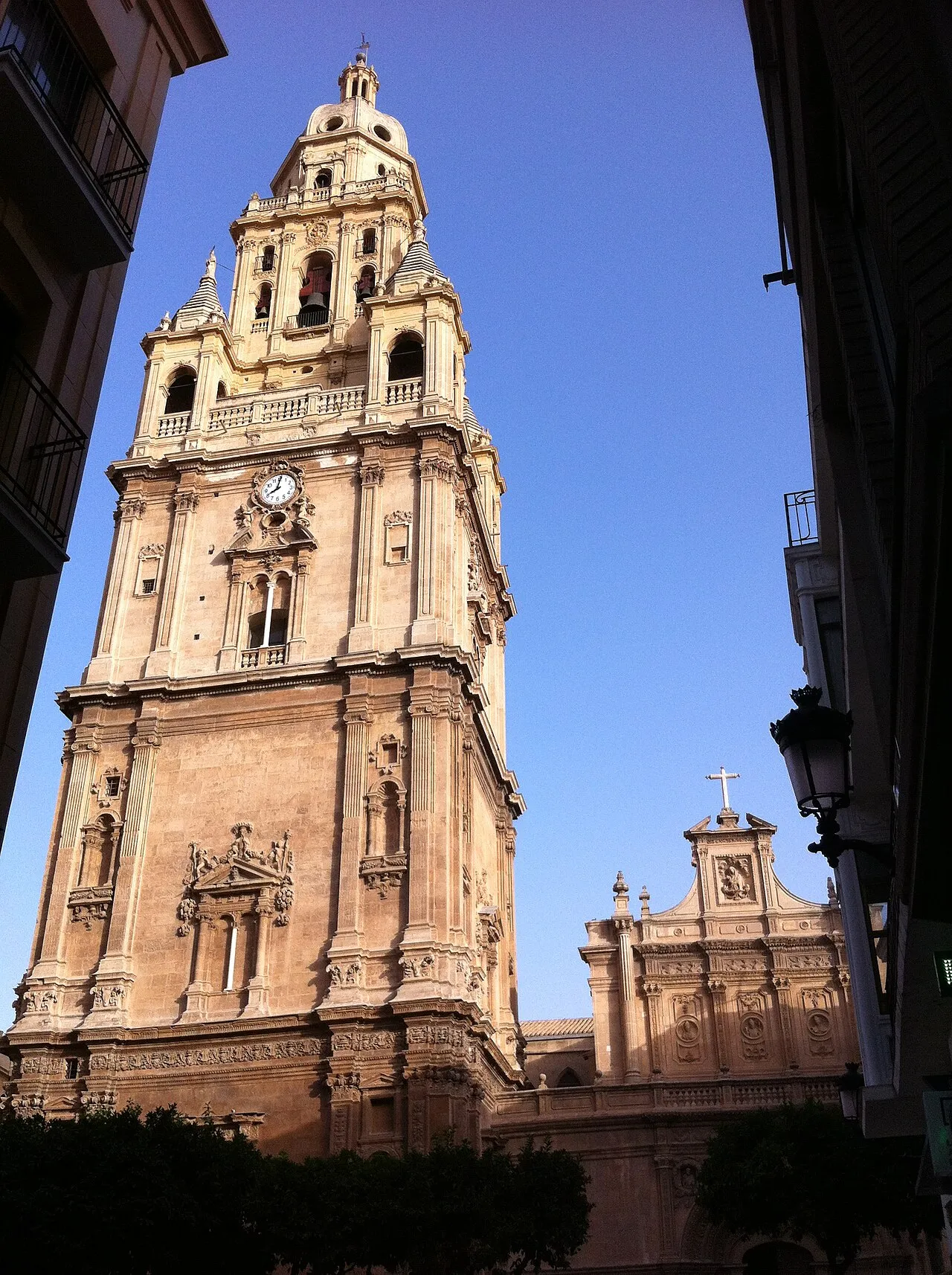
Ninety-three metres raised between 1519 and 1793. It changes style as you go up, and its bells marked the irrigation turns in the huerta.
Download the app and discover Murcia offline, whenever you like. Take the walking tour The Cathedral, Belluga and the Baroque heart with a local guide in your ear.
Find out more about Viavoy →Walk up calle Trapería, the main street since the conquest of 1266, where the cloth merchants had their shops. Murcia lived on silk: the huerta raised the worms and this was one of the silk capitals of Spain. Lift your eyes above the shop windows.
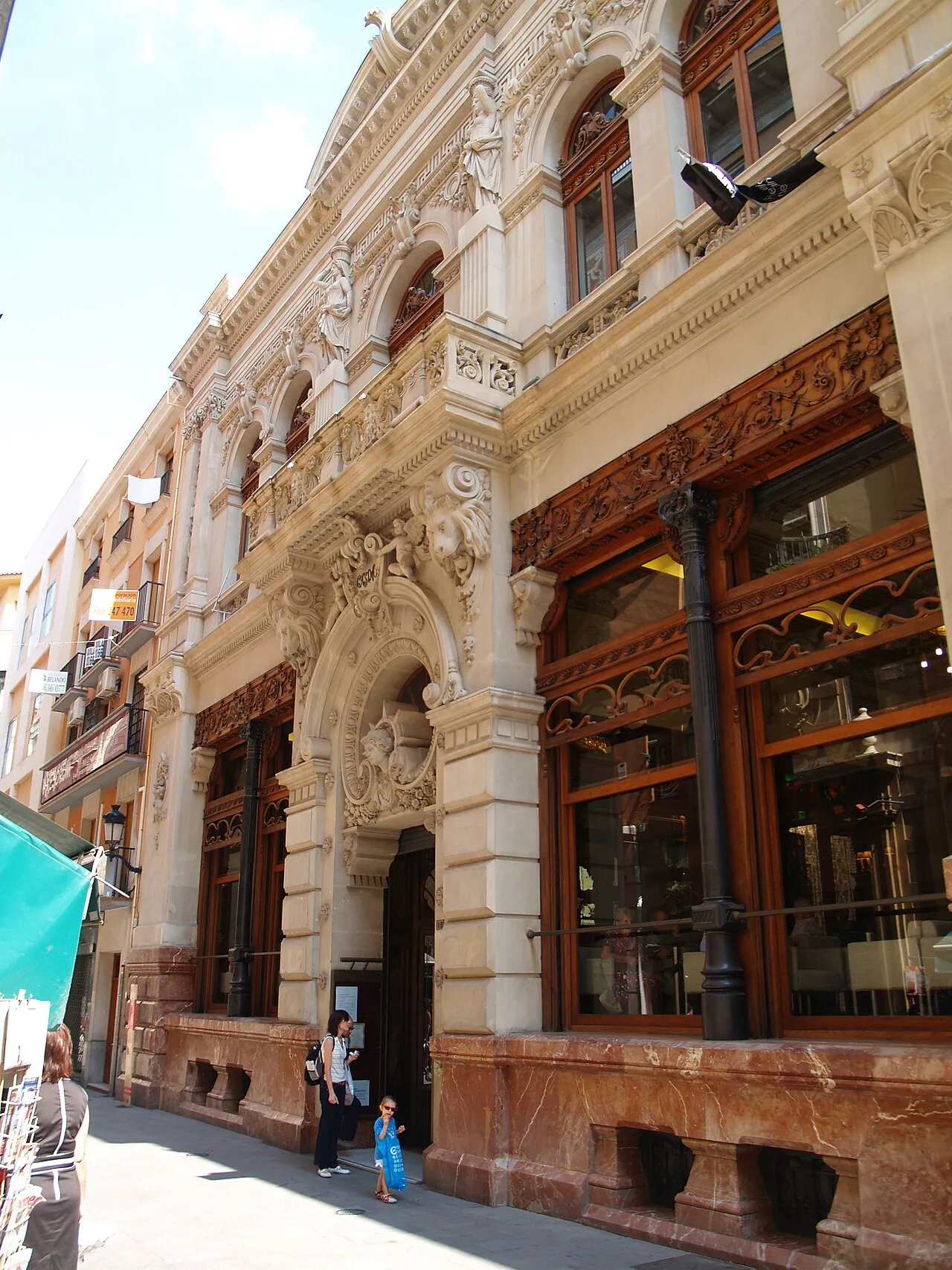
Halfway along the street is the Real Casino, the most visited civil building in the region. Watch out for the word: in the nineteenth century a casino was a private gentlemen's club. Founded in 1847, each generation of members added a room: an Alhambra-inspired Patio Árabe, a Biblioteca Inglesa, a Salón de Baile, a Tocador de Señoras.
Nearby is the Romea Theatre, opened in 1862 with Isabella II in the royal box, on the garden of a convent left free by the desamortización, the state seizure of church land. They say a friar cursed it with three fires, and it really did burn more than once.
And at lunchtime, the plaza de Santa Catalina: it was the main square of Murcia, where the town council met, and today it is the epicentre of the tapas scene. Order a marinera — a bread ring with ensaladilla rusa, Russian salad, and an anchovy — and learn the language: without the anchovy it is a “bicicleta”, with a boquerón cured in vinegar it is a “marinero”.
Next to it are the plaza de las Flores and the Mercado de Verónicas, Art Nouveau of 1912-1916, with the market garden of Europe on the ice. The three of them form the gastronomic triangle of the city.
Walk ten minutes to the Salzillo Museum, the heart of Murcia's Holy Week (Semana Santa). Here is “The Prayer in the Garden”, from 1754, and a Belén, a nativity scene, of more than five hundred tiny figures in which Salzillo dressed the shepherds as eighteenth-century Murcian peasants, not as people from the Holy Land.
Beside it, the Church of Jesús, which is round: the brotherhood conceived it as a case, with radial chapels where each paso, each processional float, rests. The procession of “los moraos”, the purple ones, sets off from this door in the small hours of Good Friday.
And the greatest surprise: the Monastery of Santa Clara la Real, where three cities are stacked. Underneath beats a thirteenth-century Islamic palace with its pool and its plasterwork, later turned into a royal alcázar and finally into a convent of Poor Clares, who are still here in enclosure.
Finish by going down to the Glorieta, Murcia's living room with its hundred-year-old ficus trees, and crossing the Puente Viejo, built between 1718 and 1742 because a flood carried off the previous one. On the other side is the Lion of the Malecón, guardian of the dyke that protected the city from the river.
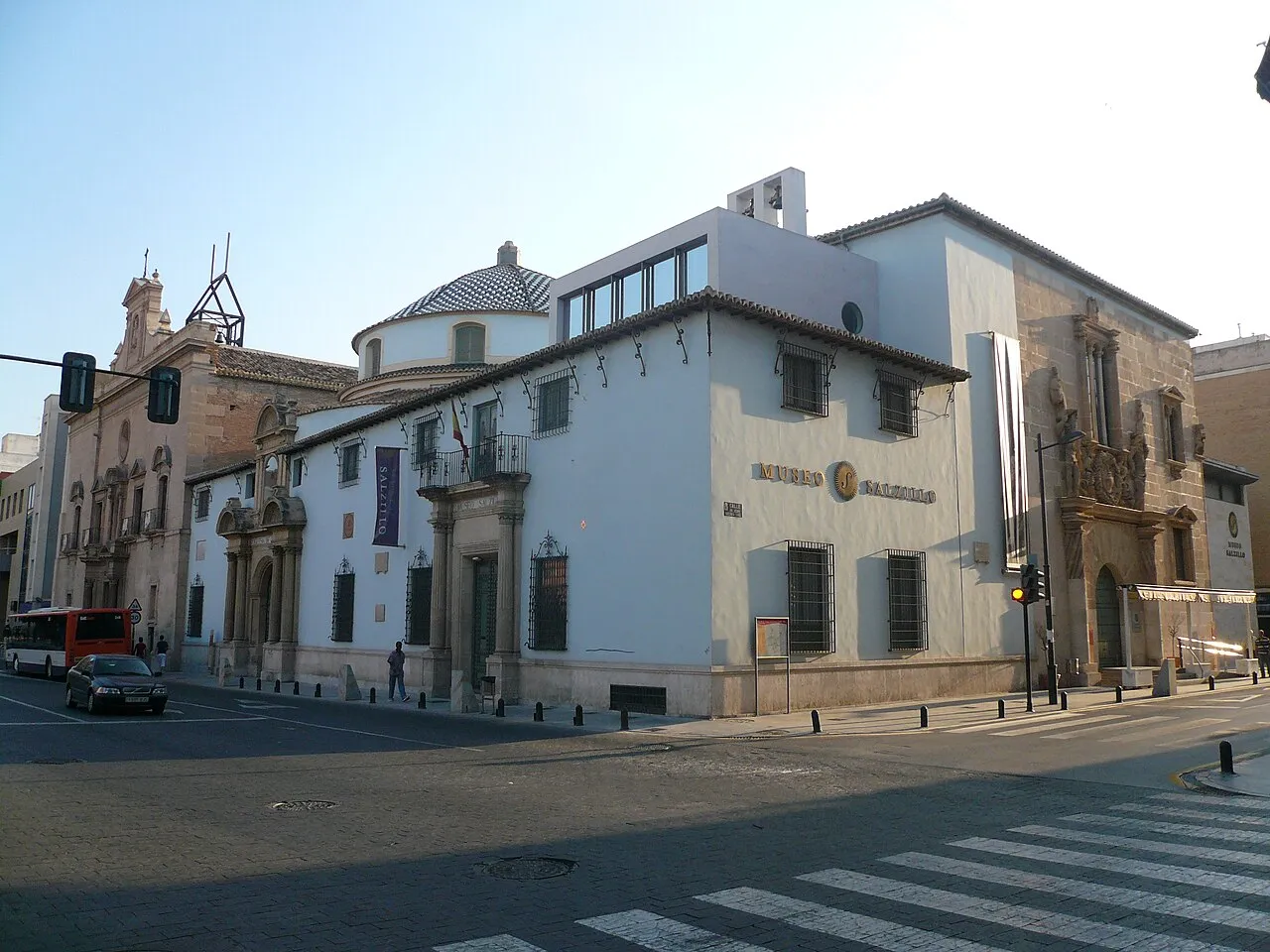
The work of the greatest image-maker of the Spanish Baroque, with a Belén of five hundred figures. A long hour, and set aside a while for the Belén alone.
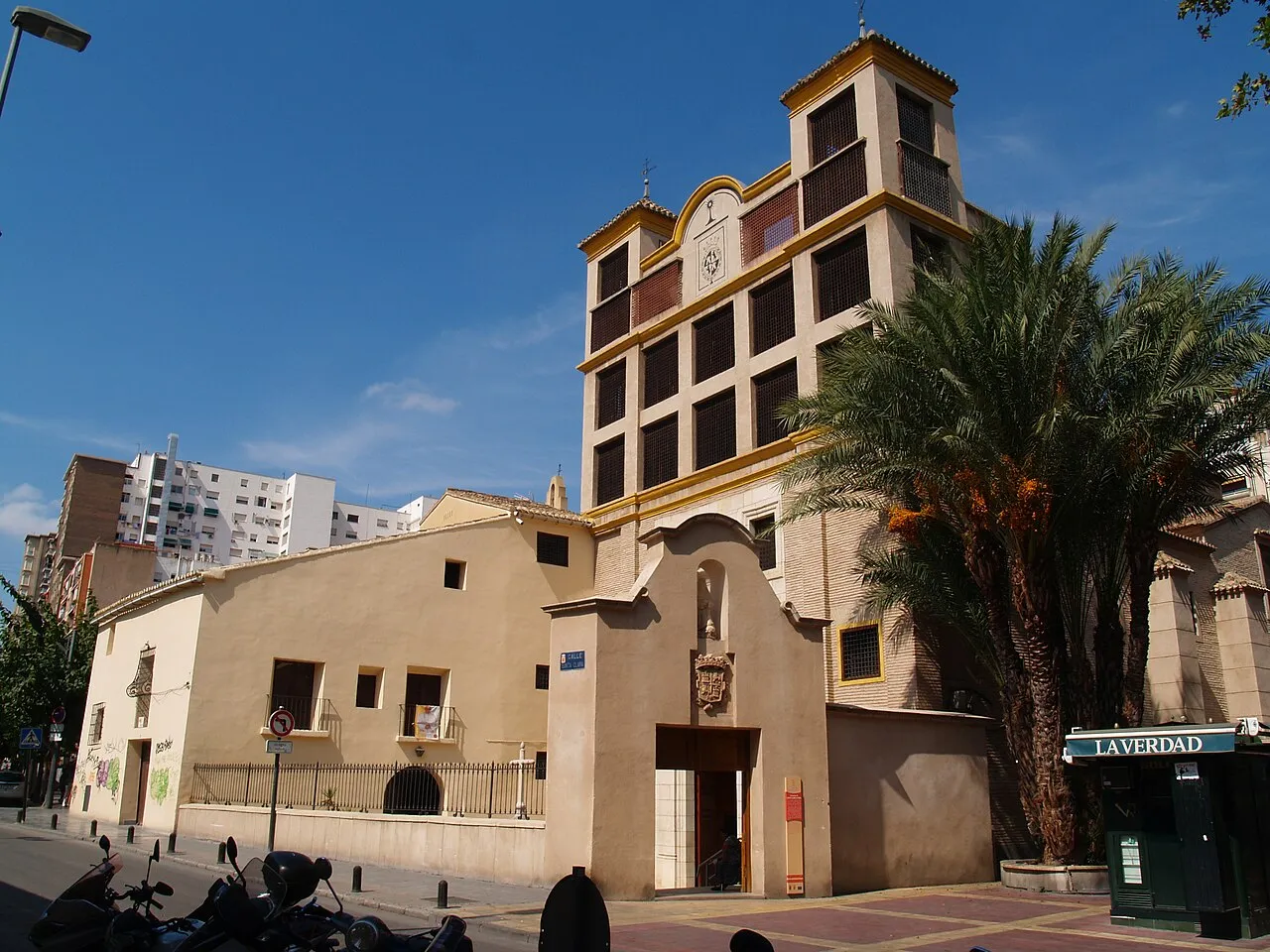
A thirteenth-century Islamic palace under an active enclosed convent. It came to light in excavations at the end of the twentieth century.
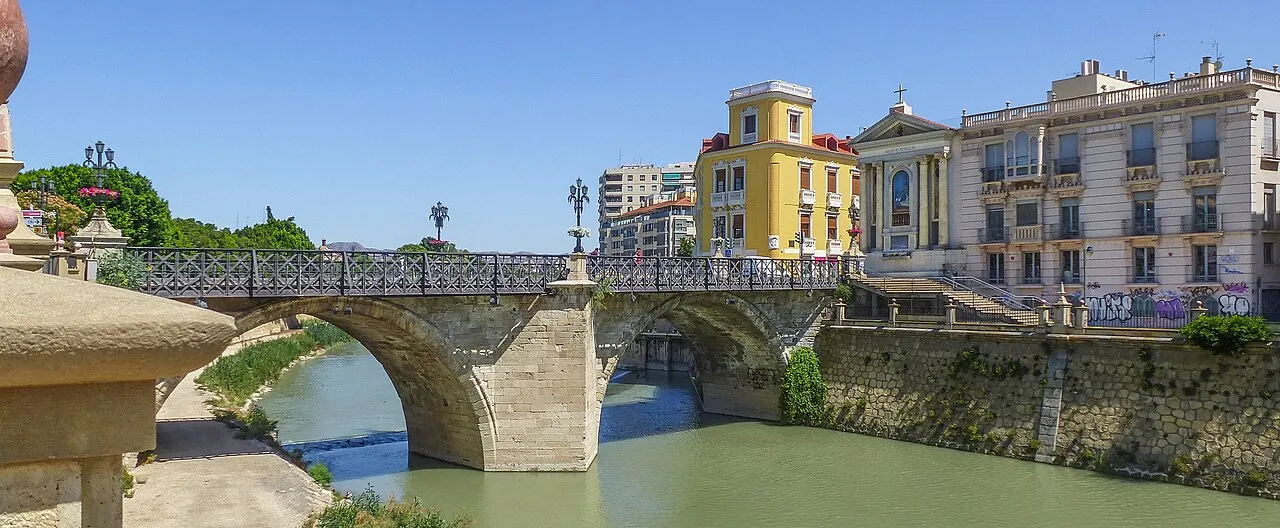
The oldest stone bridge over the Segura, from 1718-1742. The only one for almost two centuries, it survived the great Santa Teresa flood of 1879.
Yes, comfortably. The city is flat and compact, and everything essential is less than fifteen minutes' walk away: the cathedral with its tower, the Trapería with the Real Casino, the Teatro Romea, the Salzillo Museum, the Monastery of Santa Clara and the Glorieta. With two days the museums fit in unhurried and so does the other bank of the river.
The Monastery of Santa Clara la Real, where there is a complete thirteenth-century Islamic palace — with a pool and plasterwork — under a convent still under active enclosure; and Salzillo's Belén, with more than five hundred tiny figures dressed as eighteenth-century Murcian peasants. Nobody expects either of them.
Because it is one of the great works of the Spanish Baroque and because it is concave: it curves inwards like a pair of open arms, something very rare in a façade. Standing in front of it you feel the stone wrap around you. And behind it there is no Baroque church but a Gothic cathedral two centuries older.
A ring of bread with ensaladilla rusa and an anchovy on top: the queen of Murcian tapas. It has a vocabulary of its own and it is worth knowing: if you take the anchovy off it is called a “bicicleta”, and if you put a boquerón cured in vinegar in its place, a “marinero”. Ordering it properly is appreciated.
Spring and autumn. In summer the heat is serious — this is one of the hottest cities in Spain — and it is worth organising the day the other way round: interiors and museums at midday, the street first thing in the morning and last thing in the afternoon. In Holy Week the city throws itself in, but it is packed.
Yes. It is ninety-three metres and the climb is manageable. From the top you take in the whole city and, beyond it, the plain of the Segura, which is the reason Murcia exists. The tower itself is also an extraordinary object: it was begun in 1519 and finished in 1793, and it changes style as you go up.
The barrio del Carmen, which grew around its church and took its name from it. There you have the Lion of the Malecón, guardian of the dyke that protected the city from the floodwaters, the Jardín de Floridablanca and the paseo del Malecón, raised on the old wall and with views over the huerta. All flat and in half an hour.
Download Viavoy and walk Murcia offline, whenever you like.

Keep reading