Zaragoza in 2 days: Rome, Mudéjar, taifas and Baroque
Four historical layers in a flat old town you can walk. With the free viewpoint almost nobody climbs, the Roman museum that turned up by chance and the three days of the month that change a visit.
Few Spanish cities pile up so many historical layers in so few metres. Beneath the centre is the colony Augustus founded to discharge his legionaries; above it, the brick Mudéjar that was born because there is no good stone here; above that, the Baroque of the Pilar; and on the edge, an eleventh-century Islamic palace with no equivalent in Europe. All flat, all pedestrian and all in two days.
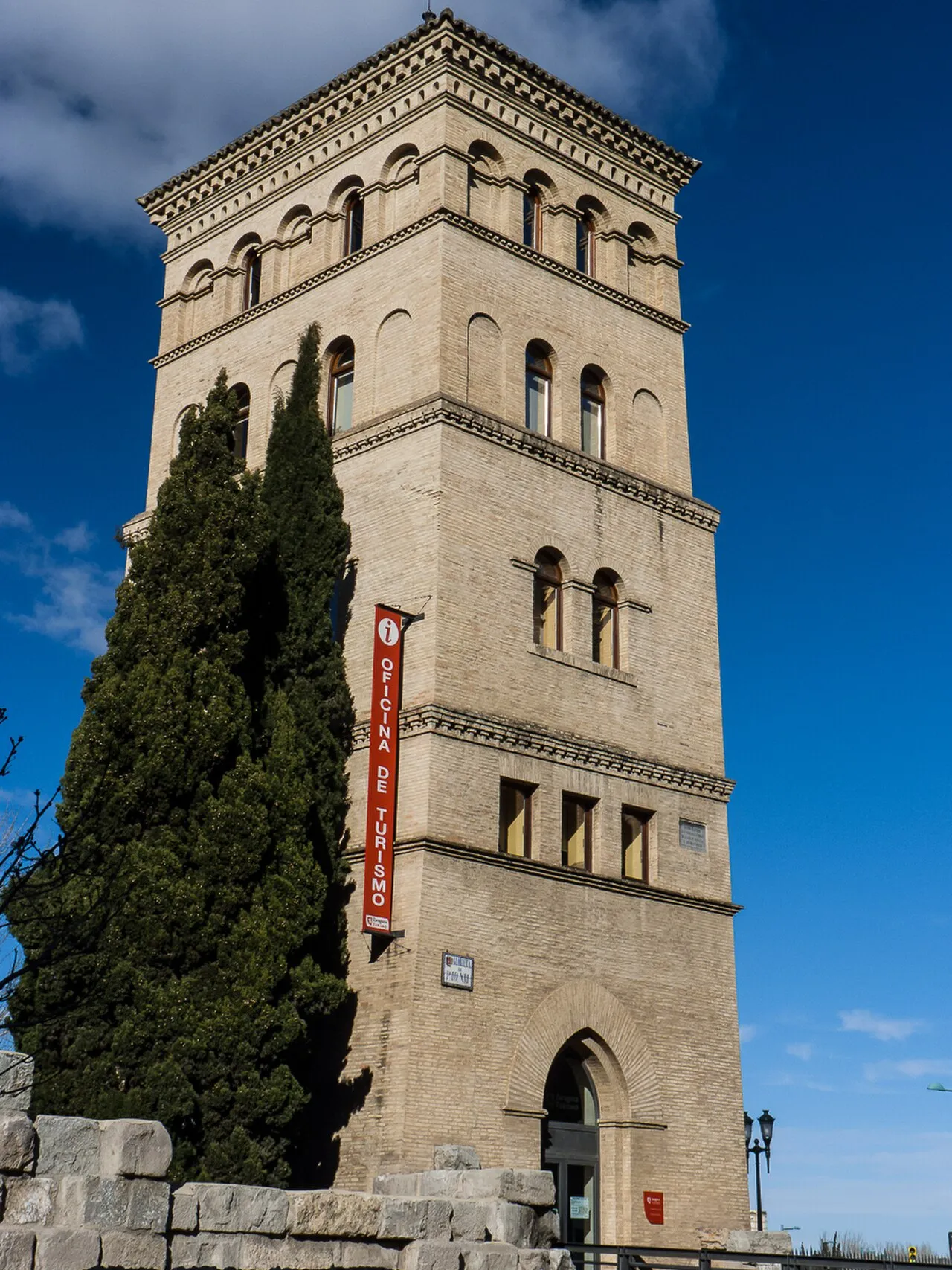
Go up to the viewpoint of the Torreón de la Zuda first thing: it is free, it is inside the tourist office and from the top you can place the whole city. Plenty of people go in for a map and leave without climbing.
Day 1, morning: the Plaza del Pilar
Four monuments in a single space.
Start at the western end, where the Roman walls with the statue of Augustus and the Torreón de la Zuda are, with its free viewpoint. From the top you understand the layout of the centre and the rest of the day arranges itself. Next to it, the church of San Juan de los Panetes, whose Mudéjar tower is visibly crooked because the ground has settled.
Then cross the square, one of the largest in Europe and with a present shape that dates from the eighties: the blocks that separated the four monuments were knocked down to join them together. It was a much argued-over operation and it still divides opinion.
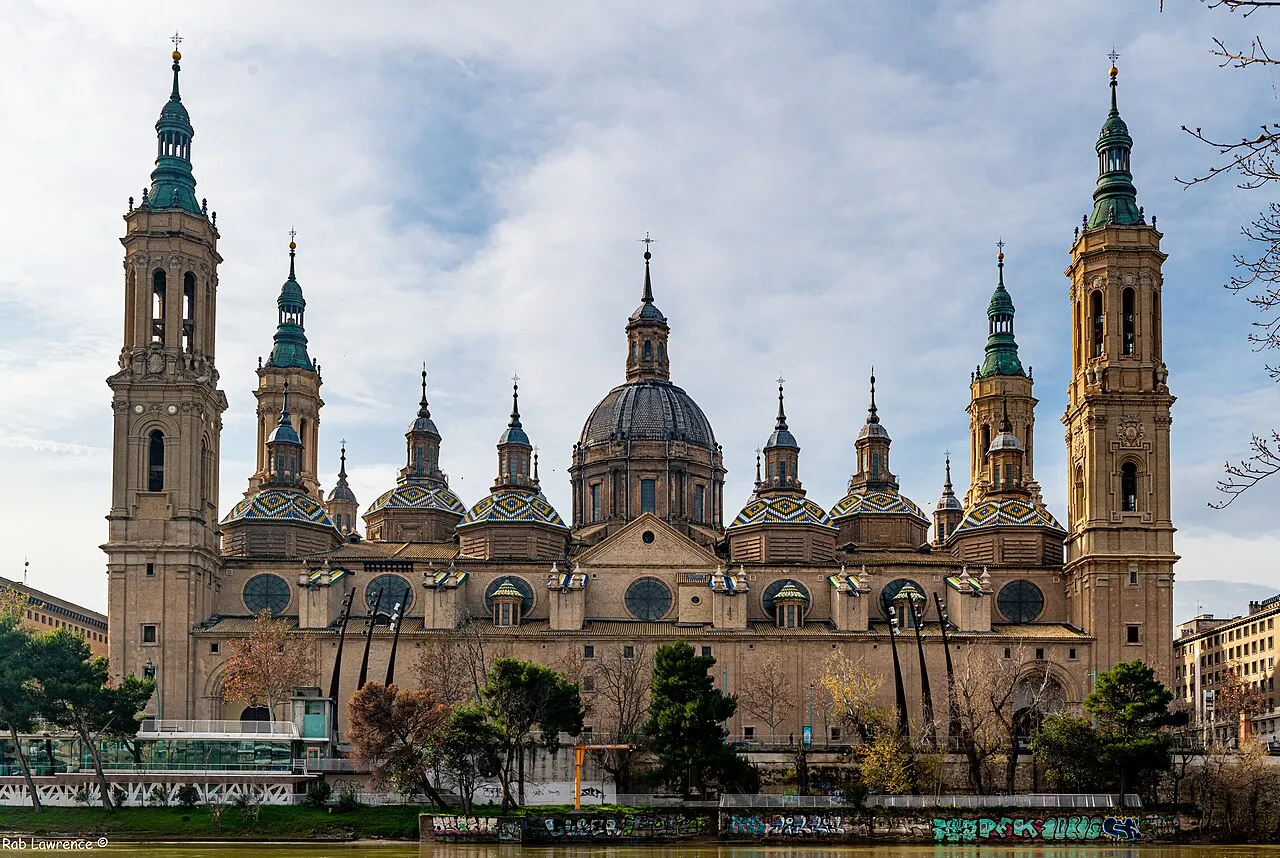
The Basílica del Pilar is what everybody comes to see, with its four towers and its eleven domes of glazed tile. Inside you have to look for two things: the domes Goya painted — “Regina Martyrum” and the one over the coreto, unsignposted — and the two bombs from 1936 that never went off and that hang from a pillar beside the Santa Capilla.
And there is a calendar detail very few people know about: on the 2nd, the 12th and the 20th of each month the column is shown without the embroidered mantle that covers it the rest of the year. If your trip falls on one of those dates, it changes the visit.
All that is left of the palace of the Muslim governors and later of the kings of Aragon. Zuda comes from Arabic and means palace. At the top, a free glazed viewpoint with the best panorama of the centre. Tourist office hours: it opens early and closes in the mid-afternoon.
The church is free to enter; the museum and the lift up the tower are paid for separately and cost around 3 € each. The Santa Capilla, the marble shrine that holds the column, was designed by Ventura Rodríguez: it is a complete building inside the nave.
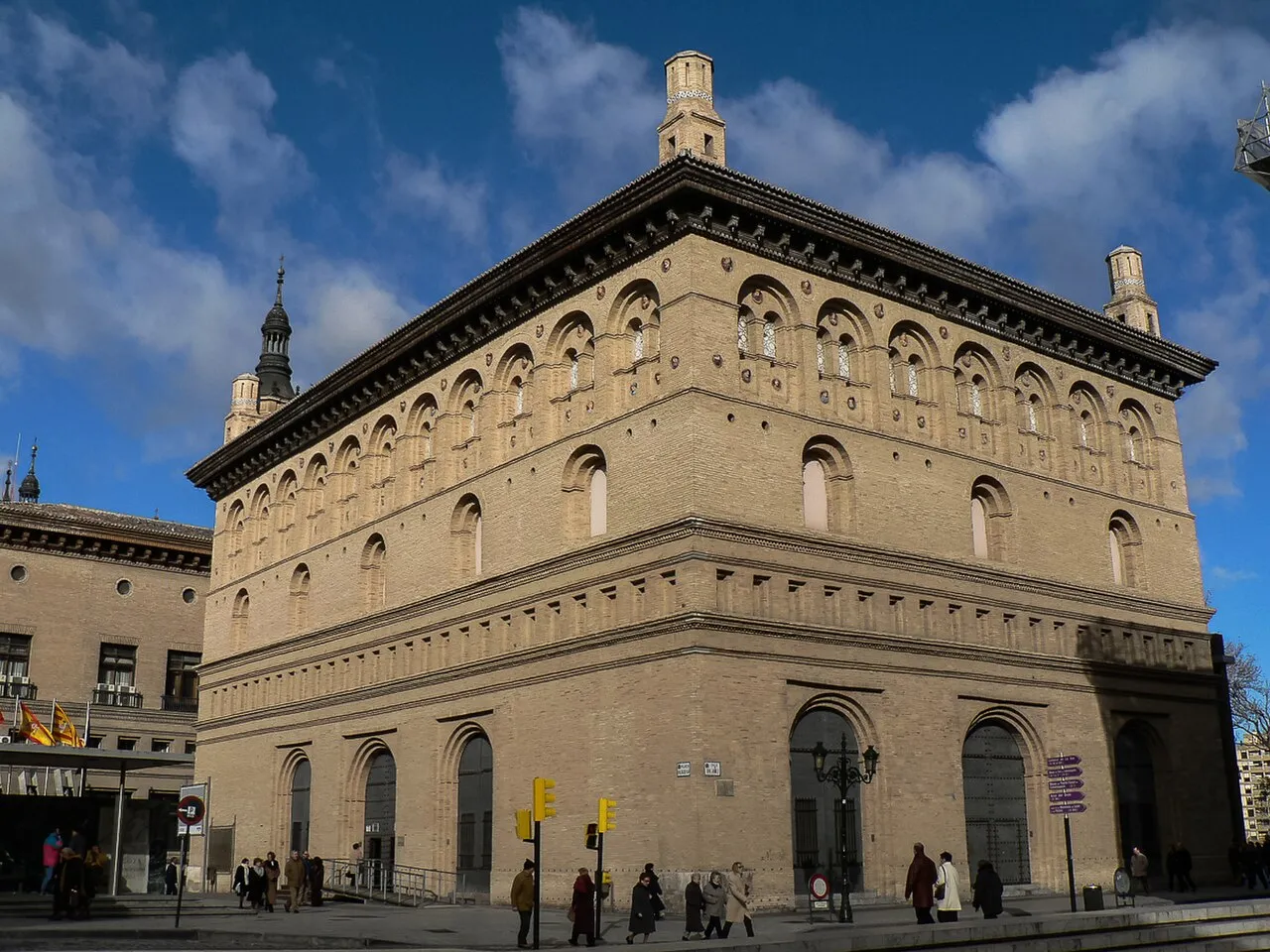
The sixteenth-century exchange: sober brick outside, and inside a great hall with eight ringed columns and star vaults. Free entry as a municipal exhibition space, and almost every visitor to the square walks straight past. Fifteen minutes.
Download the app and discover Zaragoza offline, whenever you like. Take the walking tour El Pilar, La Seo and the Ebro riverfront with a local guide in your ear.
Day 1, afternoon: la Seo, the river and the Roman city
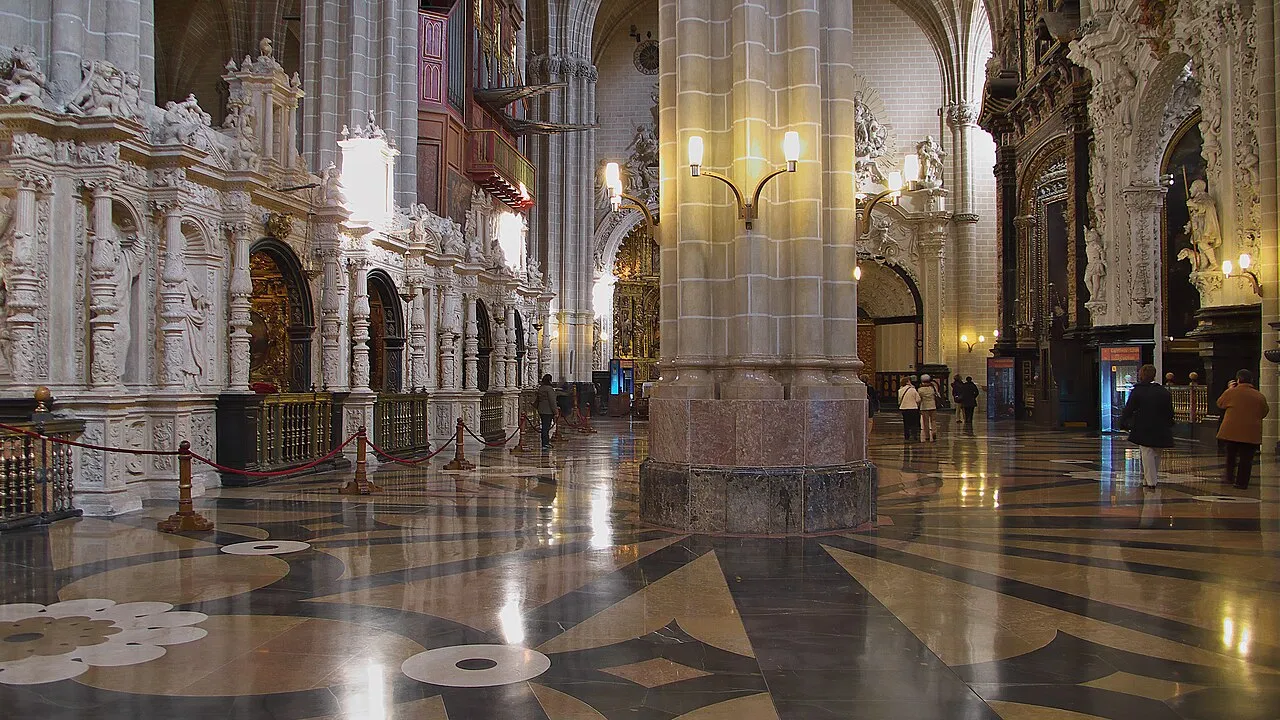
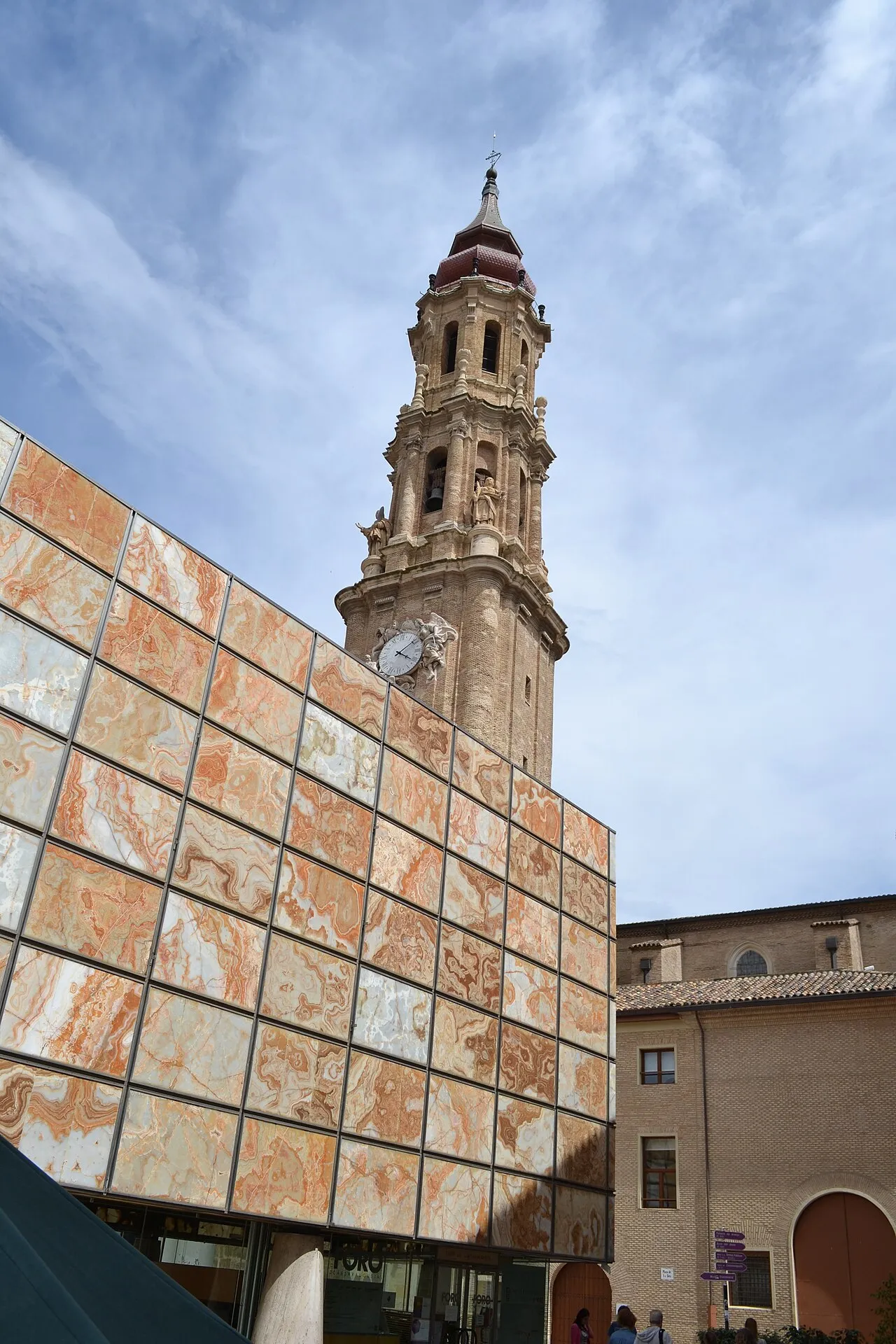
At the opposite end of the square is la Seo, the old cathedral, which many visitors skip in order to go to the Pilar. That is a mistake: it stands over the temple of the Roman forum and later over the main mosque, and it piles up Romanesque, Mudéjar, Gothic, Renaissance and Baroque without any layer wiping out the one before.
Before going in, walk round to the side that faces the street and look for the parroquieta wall: a fourteenth-century panel of brick laid proud of the surface and glazed ceramic, a World Heritage Site, and the most singular thing in the building. A great many people go in and out without seeing it.
Inside, as well as the five naves and the alabaster altarpiece, there is the Tapestry Museum: some sixty Flemish pieces from the fifteenth to the seventeenth centuries, considered the best collection of Gothic tapestries in the world. It has survived here because the chapter never sold them.
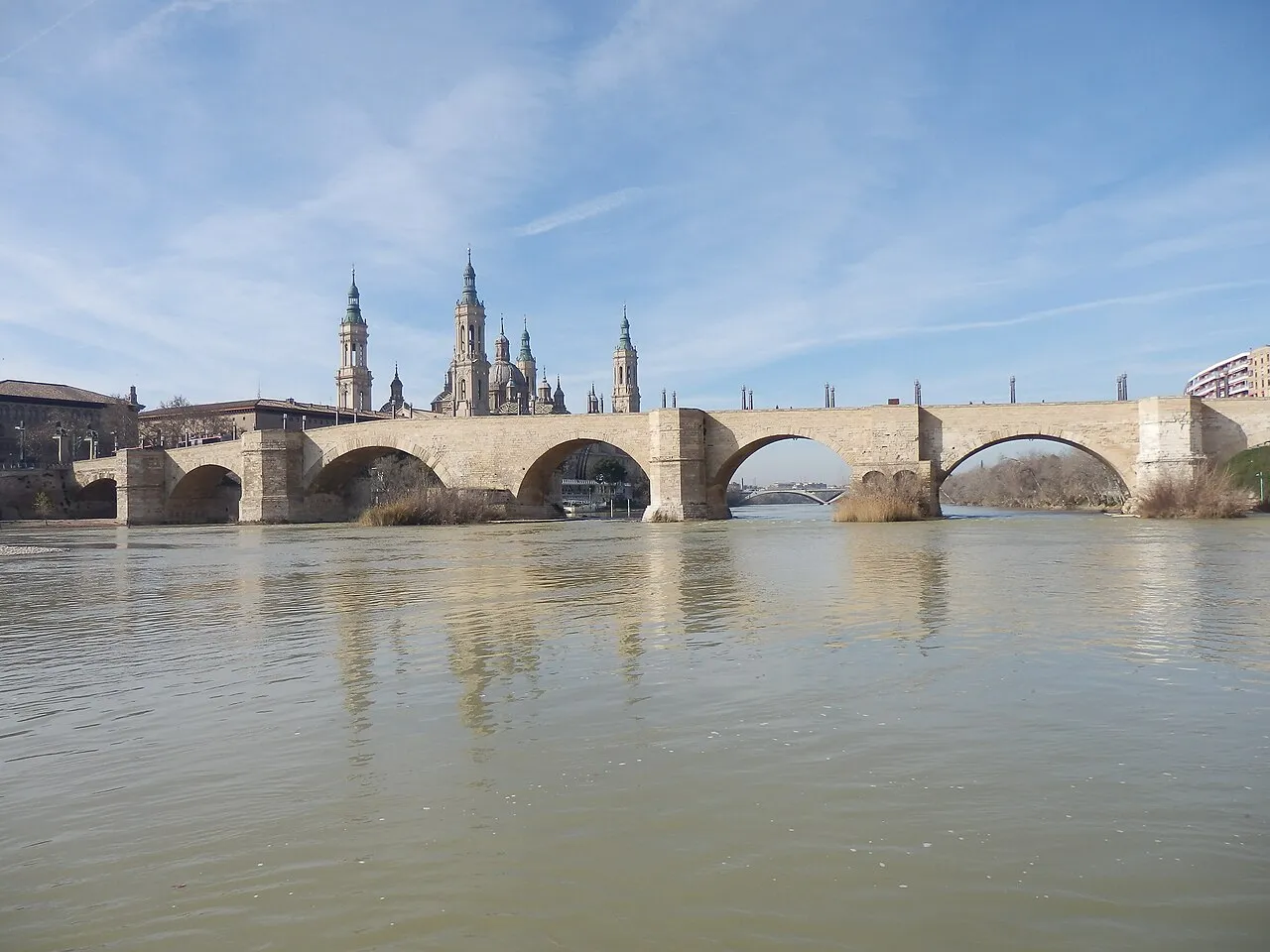
Beneath the paving of the square itself is the Museum of the Forum, the Roman public square, with a walkable stretch of sewer. And going down to the Ebro, the Puente de Piedra: cross it all the way and turn round from the other bank, which is where the classic image of the city is.
Five naves at the same height, on a hall-church plan, with an octagonal lantern tower decorated with Mudéjar plasterwork. Entry around 7 € with the Tapestry Museum included, which is what justifies the visit: give it at least twenty minutes.
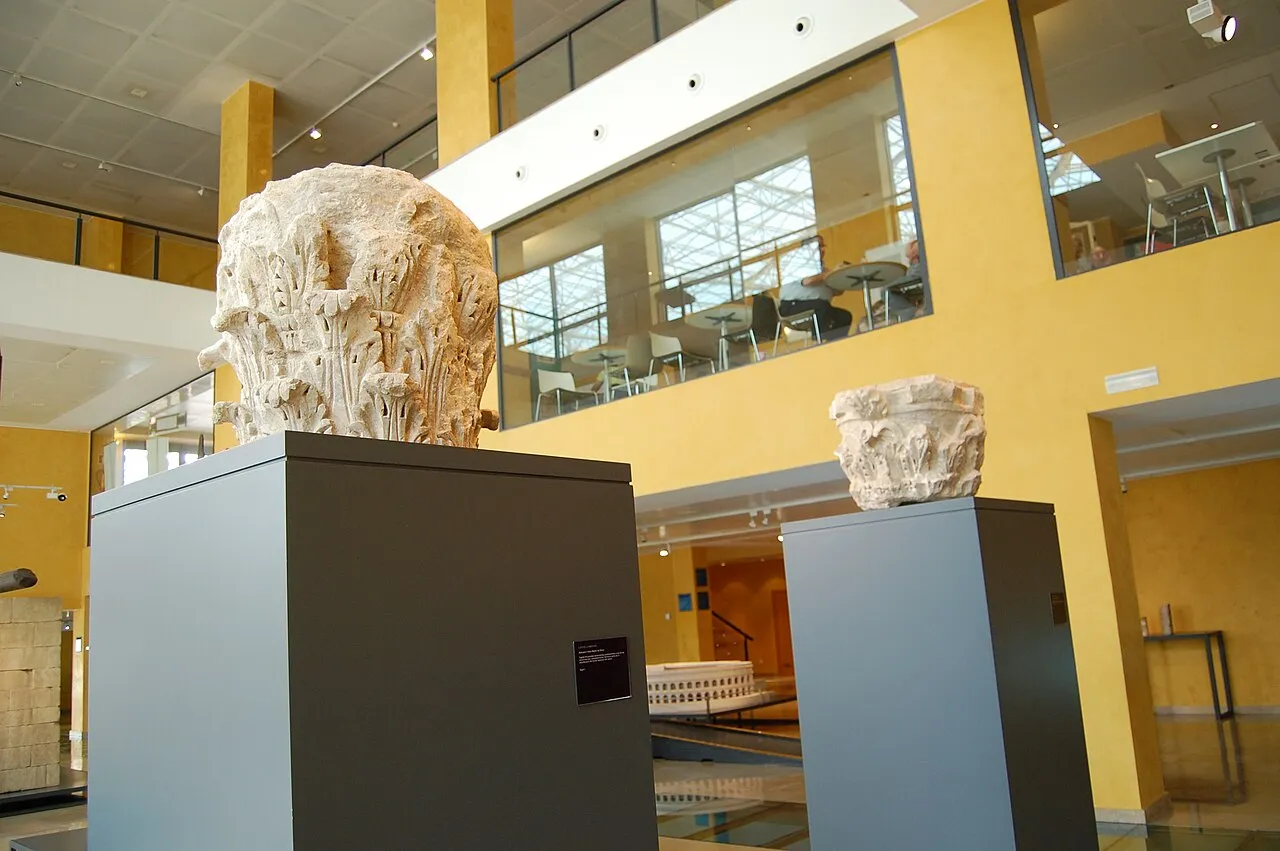
You go down a staircase from the paving itself. Two thousand years later, the civic centre of the city is still where Augustus's engineers put it. Do it first of the four Roman museums: it gives the best general context.
Seven arches with triangular cutwaters that split the current. The four bronze lions are from 1991, though they look far older, and in a few years they changed the bridge's popular name. At dusk, with the basilica lit up and reflected in the water.
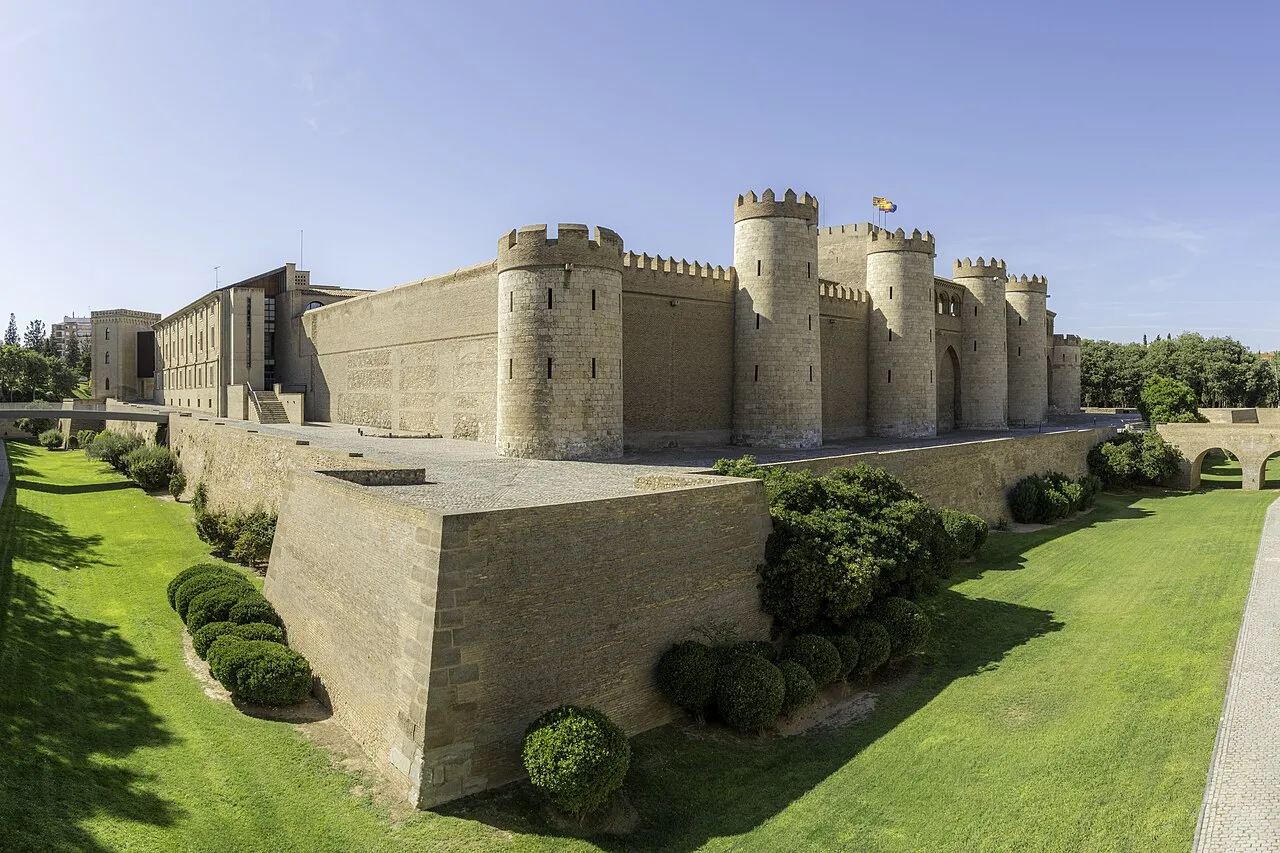
The only sight that requires travelling, twenty minutes on foot or a few minutes by tram to the west, and the one that pays off most. La Aljafería is the best preserved Islamic palace in the north of the peninsula and the great surviving witness to taifa art in Europe.
It was built in the eleventh century, when Zaragoza was an independent kingdom after the break-up of the caliphate of Córdoba. What you have to look at are the arches: interlaced, lobed, layered over several planes until they form lattices that no longer hold anything up and that directly anticipate the Alhambra two centuries earlier.
On top of it, in the fifteenth century, the Catholic Monarchs added a whole floor with state rooms and an exceptional polychrome Mudéjar coffered ceiling. Then came the fall: Inquisition, barracks, ruin. And today it is the seat of the Cortes de Aragón, with the plenary chambers built inside the complex.
Being a parliamentary seat, the hours change with the activity of the Cortes and there are days with limited access. It is worth checking in advance and booking in high season.
A thousand years of continuous institutional use that no other Spanish building can claim: taifa palace, palace of the kings of Aragon, seat of the Inquisition, military barracks and today the regional parliament. Entry around 5 €. Allow a good hour.
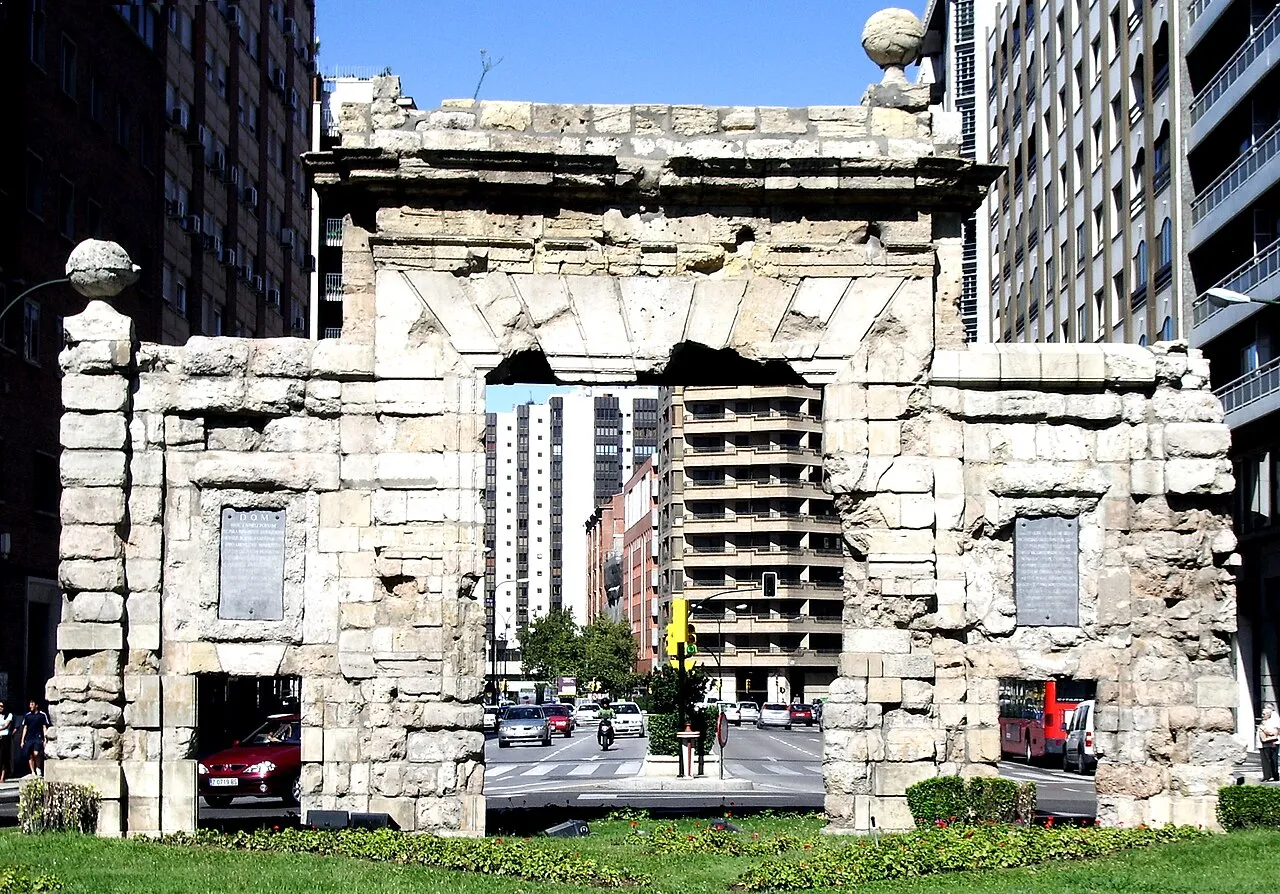
On the way between the centre and La Aljafería, the last gate of the enclosure, its ashlar riddled with impacts from 1809 that were deliberately left unrepaired. It is the only place in the city where you can physically touch what happened in the Sieges.
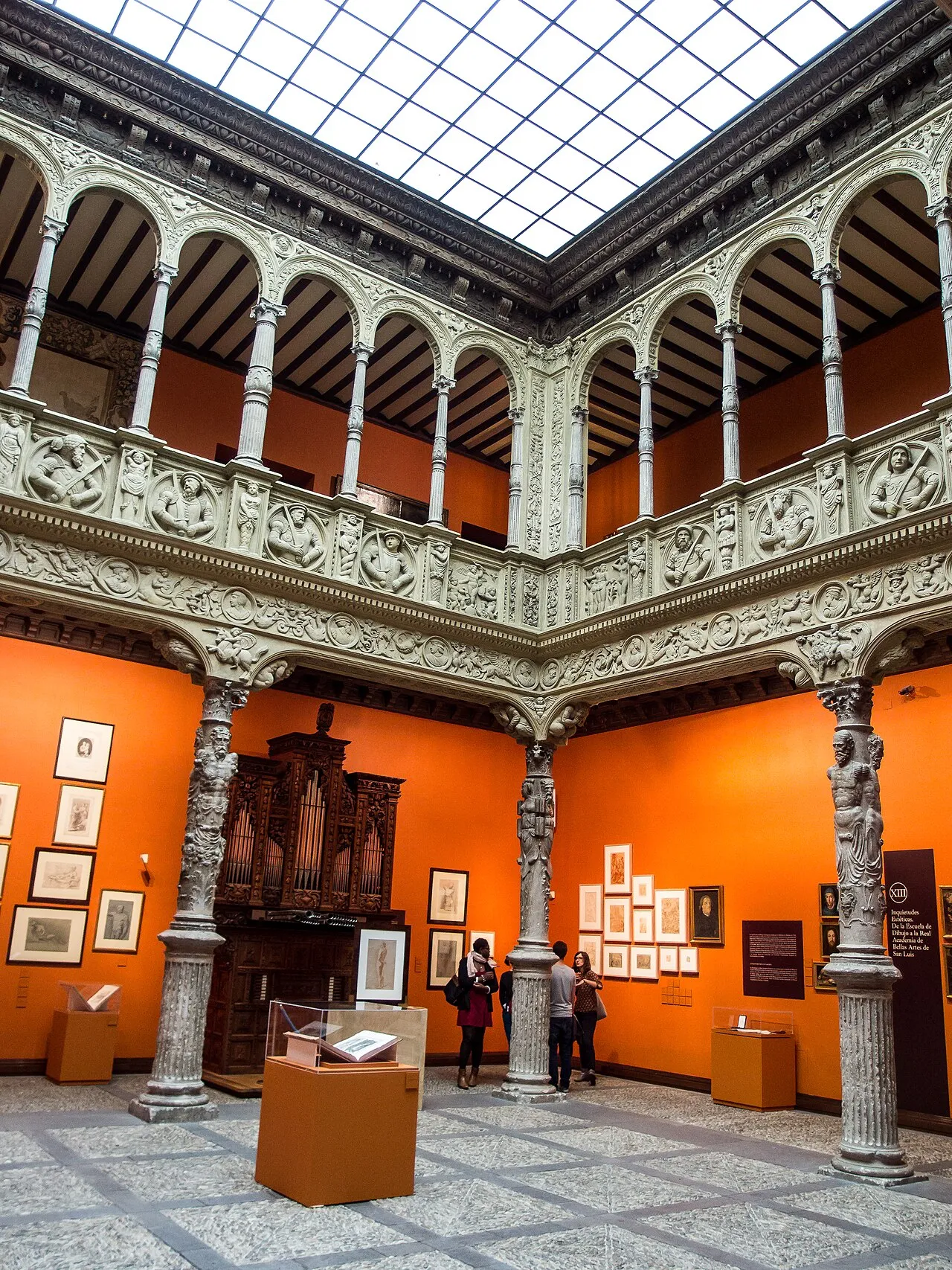
A Renaissance courtyard that a French antique dealer bought in 1903, dismantled and took to Paris, where it stayed for more than fifty years. It came back and was reassembled inside a building on the Coso. Free entry and no front of its own: you have to know it is there.
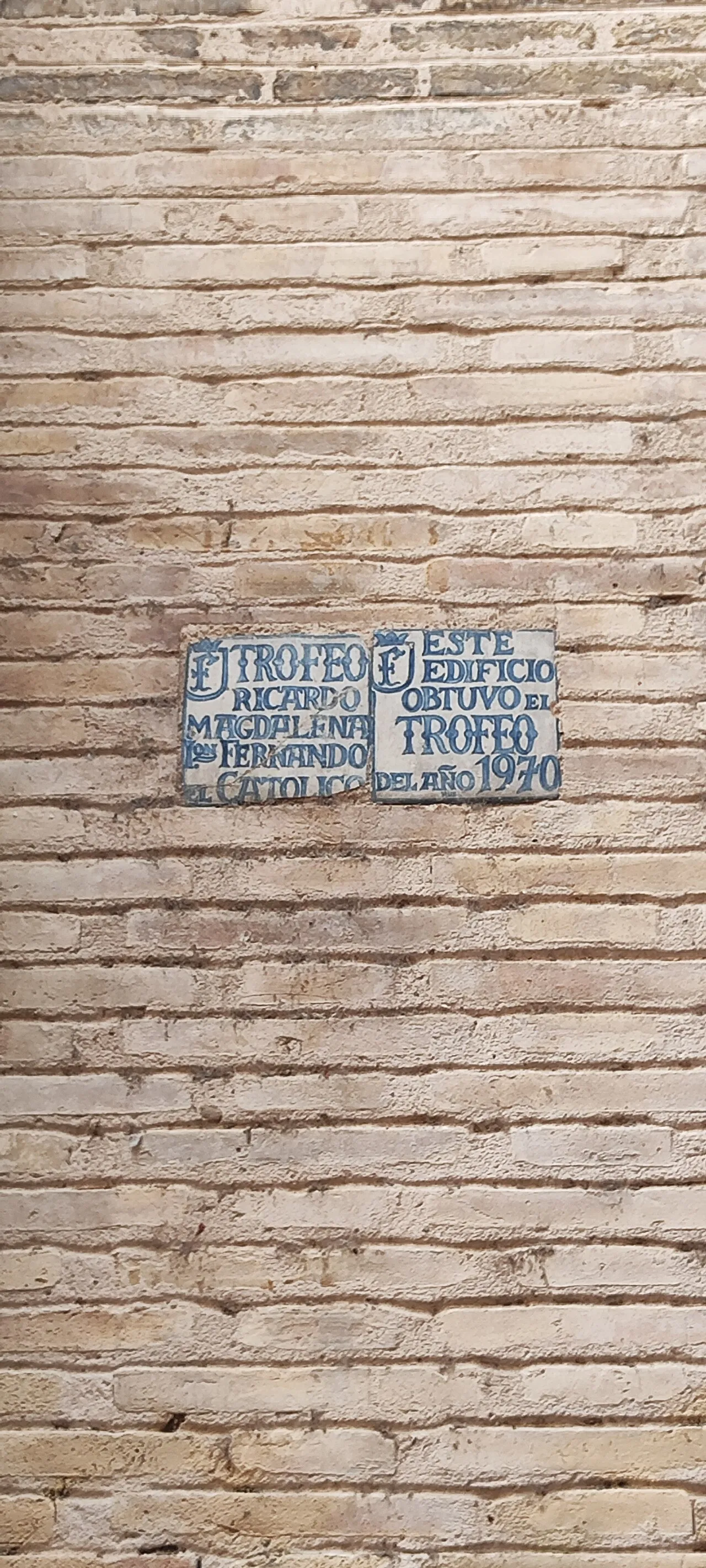
Come back to the old town and give the afternoon to the two remaining layers. The Mudéjar one is in two towers: La Magdalena, in the east of the old town, probably the most beautiful, and San Pablo, listed as World Heritage, in the barrio de El Gancho, in a church they call the third cathedral here.
Aragonese Mudéjar was born of a limitation: there are no nearby quarries of good stone in the Ebro valley, so the alarifes developed a complete decorative language with brick laid proud of the surface, so that raking light creates the design through shadow. That is why it is best to see them in the middle of the morning or last thing.
The Roman layer is beneath the barrio de la Magdalena: the Museum of the Theatre of Caesaraugusta, the largest remain in the city, with room for six thousand spectators, which turned up by chance in 1972 when some buildings were knocked down. If you are only doing one of the four Roman museums, this one.
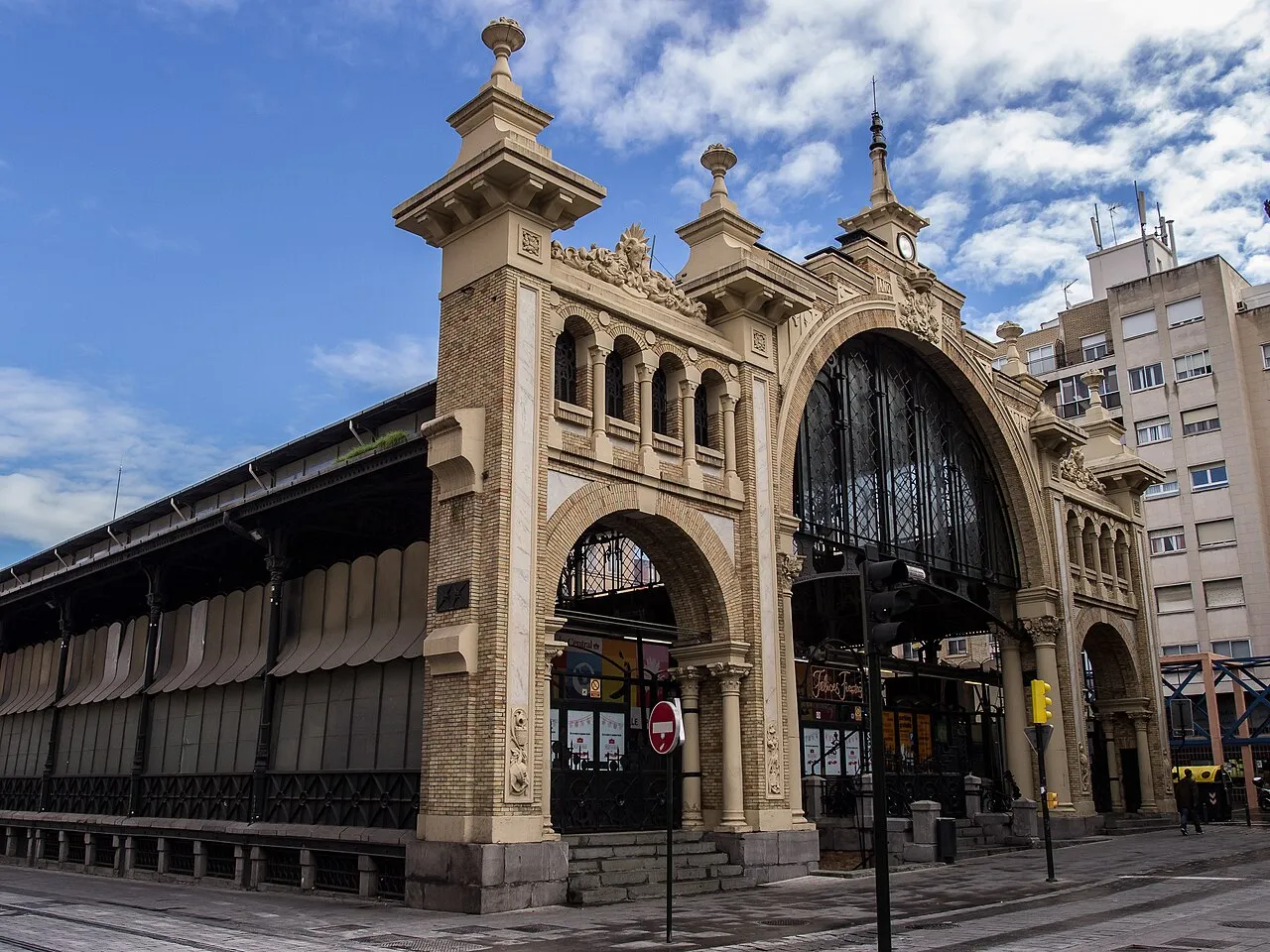
And finish in El Tubo, the tangle of alleys in the old town where the traditional tapas scene is concentrated. Before that, if it is the morning, the Mercado Central, from 1903, which is still a real market and is built right on top of the Roman wall.
You go round on walkways under a translucent roof that protects without closing it in, and the design takes in the medieval houses built on top of it over the centuries. The combined ticket for the four Roman museums works out much cheaper than separate visits.
Diamonds, eight-pointed interlace, blind arcading and friezes layered in successive registers: almost the whole Aragonese Mudéjar repertoire on a single shaft. The neighbourhood keeps its medieval street plan and has the most alternative life in the city.
Iron, glass and brick from 1903, on the Les Halles model, and still a real market where the neighbourhood does its shopping. The restoration kept the building and the function without turning it into a food court. It closes in the mid-afternoon and does not open on Sundays.
Yes, at an easy pace. The old town is flat and compact and everything is done on foot except La Aljafería and the Parque Grande. Two days cover the Plaza del Pilar with its four monuments, la Seo, the Roman route, the Mudéjar towers, La Aljafería and the palaces on the Coso. A third day fits in the southern axis and the museums of the ensanche.
Is the Caesaraugusta Route worth it?
Very much so, and the combined ticket for the four museums — forum, river port, baths and theatre — works out much cheaper than separate visits. If you are only going to do one, the theatre is the most impressive. They are all under cover, so the route works very well as a rainy-day or hot-afternoon plan.
Where are the Goya domes?
In the Basílica del Pilar, and they are not obviously signposted: you have to look up and find them. They are “Regina Martyrum” and the one over the coreto, painted when he was young, in one of the first important commissions of his career. There is more Goya in the Museum of Zaragoza, which is free as well.
What are the 2nd, the 12th and the 20th?
The only days of the month when the column of the Pilar is shown without the embroidered mantle that covers it the rest of the time, letting you see its worked silver casing. It is a detail very few people know about and which, if your trip coincides, changes the visit to the basilica quite a lot.
Do you have to book for La Aljafería?
It is advisable, above all in high season, because it is the seat of the Cortes de Aragón and visiting hours change with parliamentary activity: there are days with limited access and days when it is closed. It is worth checking in advance before travelling out there.
What do you eat in Zaragoza?
Ternasco de Aragón with a denomination of its own, borraja — a winter vegetable barely eaten outside here — migas, longaniza de Graus and jamón de Teruel. The place for tapas is El Tubo, the tangle of alleys in the old town. And wines from Cariñena, Campo de Borja, Calatayud or Somontano.
Practical information
Getting thereAVE from Madrid and Barcelona in a little over an hour and a half. Airport 20 minutes away.
Getting aroundThe old town is flat and pedestrian. Tram only for La Aljafería and the Parque Grande.
Combined ticketCaesaraugusta Route: four Roman museums with a joint ticket that is much cheaper.
FreeLonja, Zuda viewpoint, Patio de la Infanta, Sástago, Museum of Zaragoza and the Paraninfo.
DatesOn the 2nd, the 12th and the 20th of each month the column of the Pilar is shown without its mantle.
EatingTapas in El Tubo. Ternasco, borraja and migas. Wines from Cariñena, Campo de Borja or Somontano.
On the map
🎧 With Viavoy
Walk Zaragoza and listen at your own pace
Download Viavoy and walk Zaragoza offline, whenever you like.
from 2,99 €· one-off payment
City Pass · 9,99 €3 days, all the tours in Zaragoza