1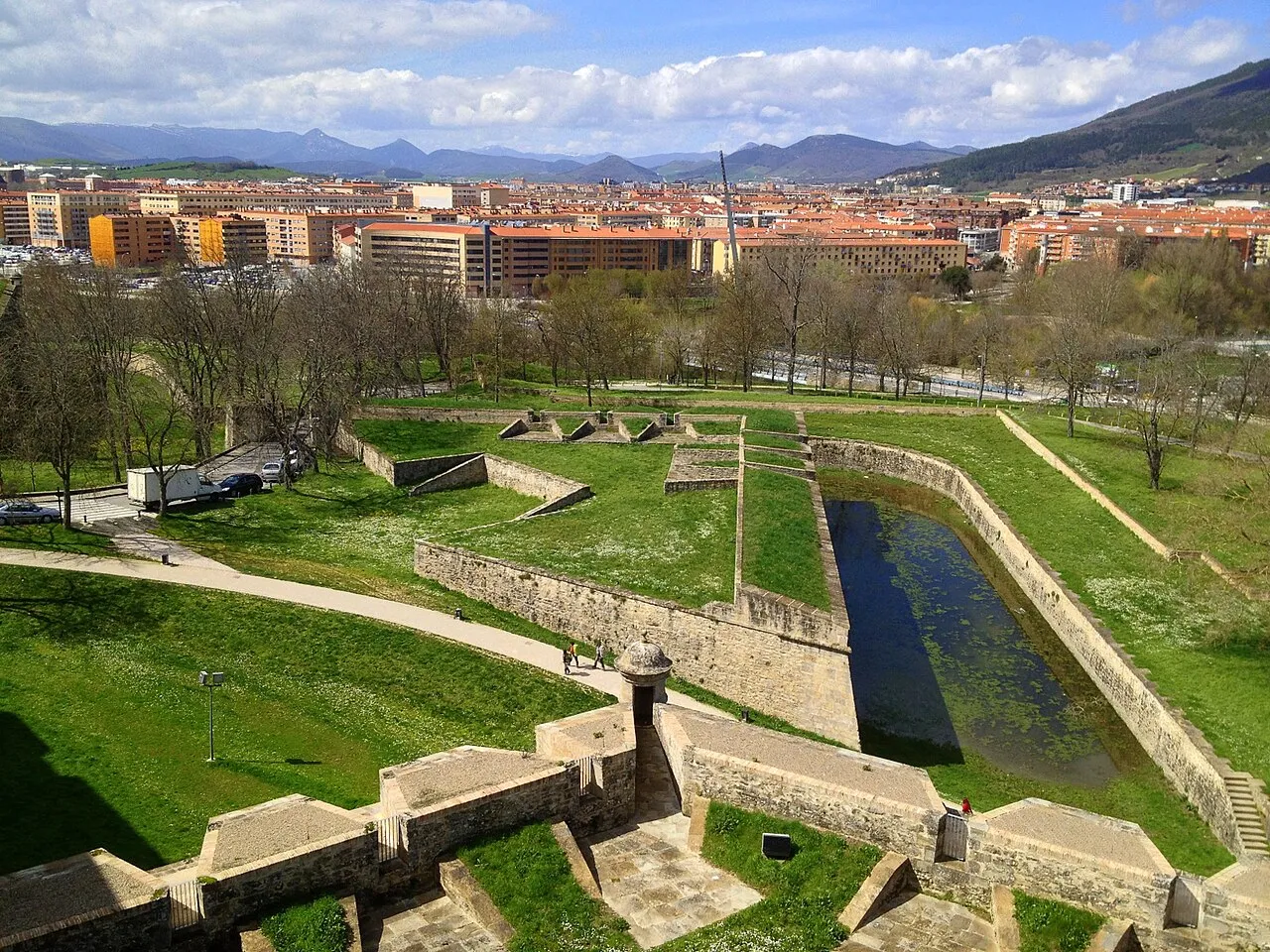
The walls: the Redín bastion
📍 Next to the cathedral
The highest point of the circuit, raised around 1512 facing France. The full loop takes a good hour and a half, and it is the best walk in the city.
The key to the kingdom facing France, with one of the best-preserved bastioned fortifications in Europe. And an invincible fortress taken with snowballs.
🎧 On the walk The Cathedral, the walls and monumental PamplonaFor centuries Pamplona was a front-rank military stronghold, and that left it two things: an exceptional fortified heritage and a city that could not grow until 1915, locked inside its own corset of stone. Today that corset is its finest walk.
The walls form one of the best-preserved bastioned fortifications in Europe, with some five kilometres you can walk almost without interruption.
Their star-point shape is not aesthetic: the bastions cover each other and fire across each other, so that not one corner is left unwatched and no attacker can approach the wall without taking crossfire.
The highest point is the Redín bastion, raised around 1512 on the front that looked towards France, the most delicate flank. That date coincides with the conquest of Navarre by Ferdinand the Catholic, which turned the city into the military frontier of Castile.
Above it is el rincón del Caballo Blanco, the best viewpoint in the city, and going down along the wall-walk you reach the Portal de Francia, from 1553, the best-preserved gate in the whole circuit.
The highest point of the circuit, raised around 1512 facing France. The full loop takes a good hour and a half, and it is the best walk in the city.
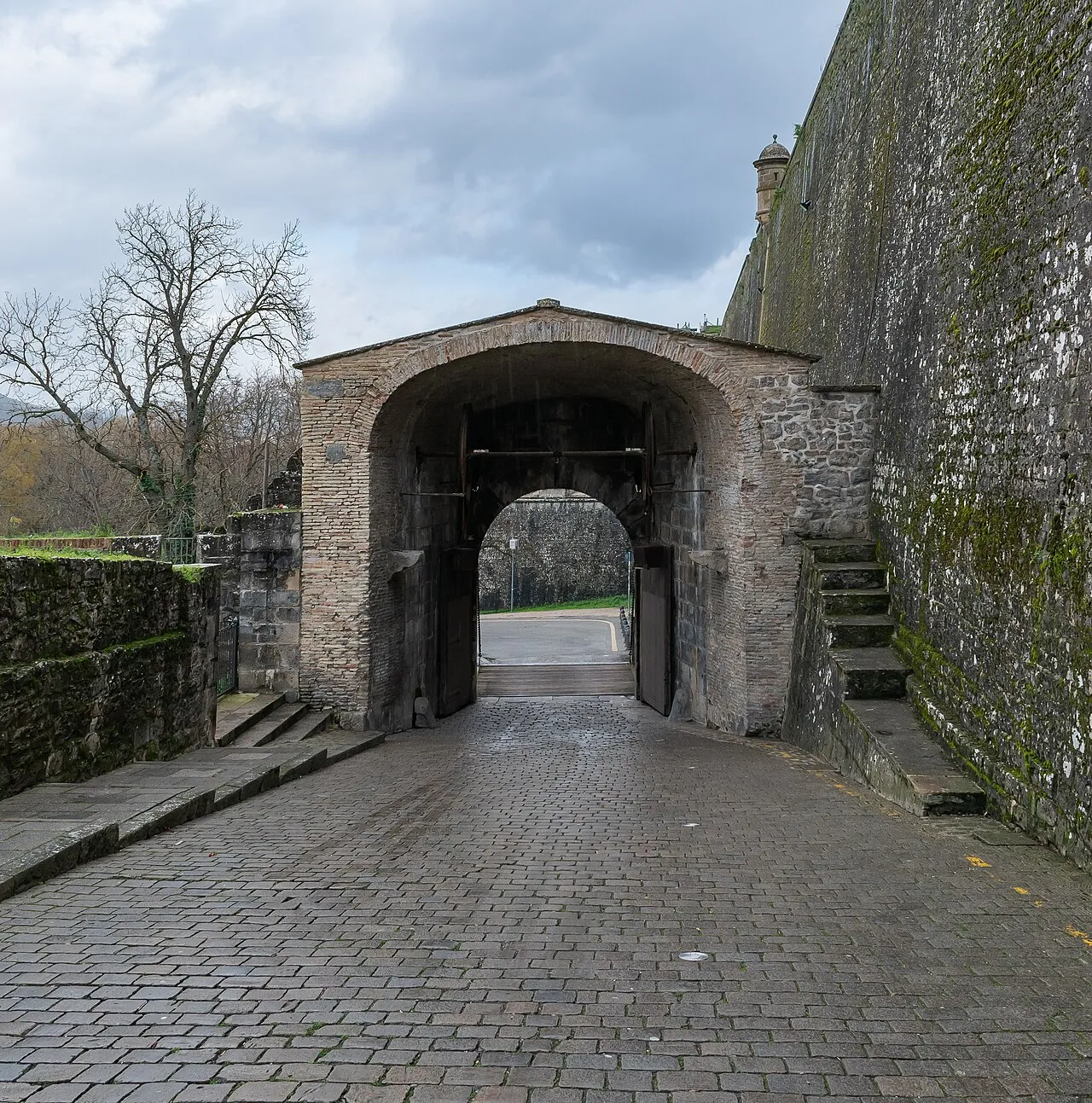
From 1553, and a rarity: it keeps the entire mechanism for closing the city, with studded wooden doors and the slot for the drawbridge.
Download the app and discover Pamplona offline, whenever you like. Take the walking tour The Cathedral, the walls and monumental Pamplona with a local guide in your ear.
Find out more about Viavoy →The Citadel was ordered by Philip II in 1571 from the Italian engineer Giacomo Palearo, el Fratín, who laid out a bastioned pentagon following the model of Antwerp, which the whole of Europe was copying at the time.
Its five bastions each had a name of their own: Santa María, Santiago, Real, San Antón and La Victoria. The last two were demolished from 1888 onwards so that the city could grow towards the Ensanche; the other three are still standing.
And it fell only once, without a fight. On 16 February 1808 Napoleon's troops, then allies of Spain, came up to the gate pretending to have a snowball fight. Amid the laughter and the flying snow they distracted the sentries, drew their hidden weapons and took the fortress without a shot.
That capture was one of the first moves of the French occupation of Spain, months before the uprising of 2 May. Napoleon took the strongholds of the north by deception, not by battle.
The price of all that fortification was brutal: the city could not grow outwards until little more than a hundred years ago. Shut inside its circuit, Pamplona reached extremely high densities and very poor living conditions.
In 1915 permission was given to demolish the southern front, and with it went curtain walls and bastions. What you walk today is the remainder, saved in time and declared a National Monument in 1939.
On the freed-up ground they laid out the Segundo Ensanche, the second planned expansion, the orderly grid of wide streets and chamfered corners signed by Serapio Esparza in the twenties, with the avenida de Carlos III as its backbone.
And the ground that surrounded the walls — the glacis, where nothing was allowed to grow so as not to give shelter to the enemy — became the green ring: the Jardines de la Taconera, with deer in the moat, and the parque de la Media Luna, on top of another eighteenth-century defensive work.
That process — obsolete fortifications turned into parks — was repeated all over Europe in the nineteenth century. In Pamplona the result was especially successful, because the wall was not completely knocked down and the walk is still continuous.
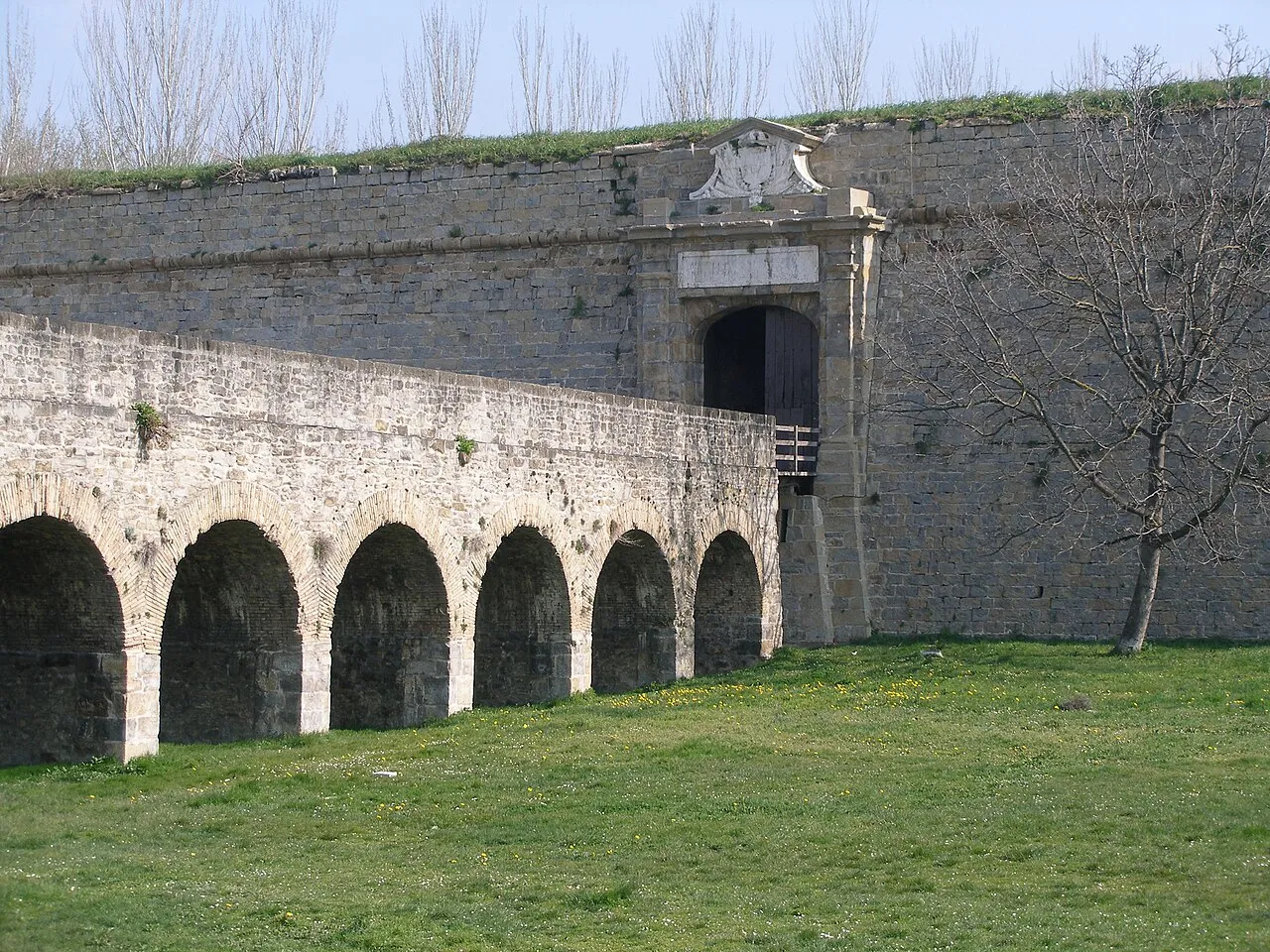
A five-pointed star from 1571, today a public park. It fell only once, and that was to a staged snowball fight.
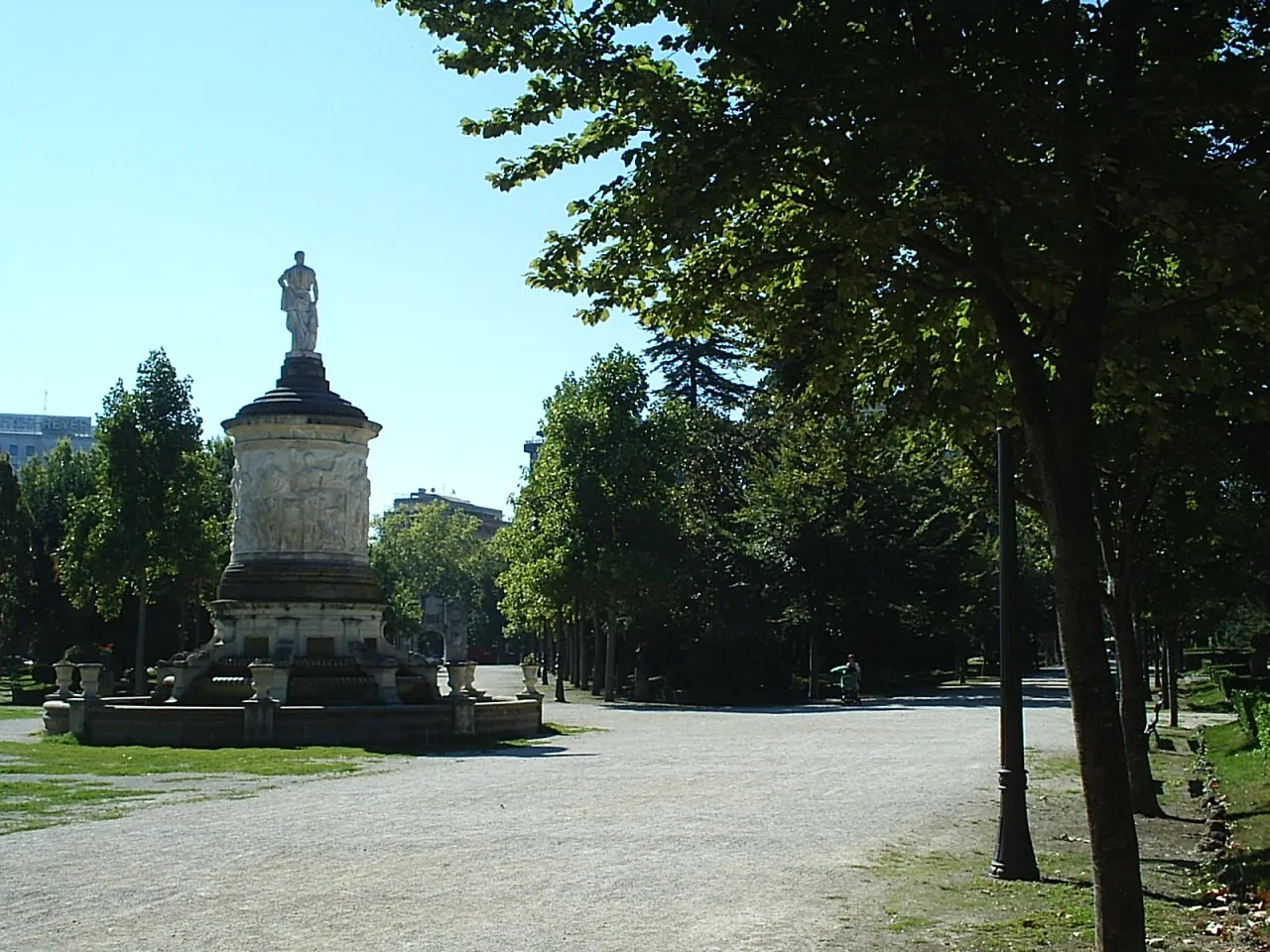
On the military glacis, where nothing used to be allowed to grow. Today it has beeches, magnolias and deer living in the moat.
Some five kilometres you can walk almost without interruption, which makes it one of the best-preserved bastioned fortifications in Europe. It was declared a National Monument in 1939, after permission was given in 1915 to demolish the southern front so that the city could grow.
Because they are designed to absorb cannonballs, not to resist them. Gunpowder artillery had made tall, thin walls useless, since they collapsed on impact, so the answer became low, thick, sloping structures, with angled bastions that cover each other and fire across each other.
Yes. On 16 February 1808 Napoleon's troops, then allies of Spain, came up to the gate pretending to have a snowball fight. Amid the laughter and the flying snow they distracted the sentries, drew their hidden weapons and took the fortress without a single shot.
The Italian engineer Giacomo Palearo, nicknamed el Fratín, commissioned by Philip II in 1571. He laid out a bastioned pentagon following the model of the citadel of Antwerp, which was the one the whole of Europe was copying after the arrival of modern artillery. It is considered one of the finest in Spain.
Because the city was suffocating. Shut inside its circuit for centuries, Pamplona reached extremely high densities and could not grow. In 1915 permission was given to demolish the southern front, and on that ground they laid out the Segundo Ensanche, the grid of wide streets that today forms the modern centre.
The open, cleared ground that surrounded the walls on the outside, where it was strictly forbidden for anything to grow or be built: any tree or building would have given cover to an attacker and blocked the line of fire of the defenders. In Pamplona that glacis became the Jardines de la Taconera.
The full circuit, between an hour and a half and two hours walking without hurrying. The best plan is to start at the Redín bastion, next to the cathedral, pass el rincón del Caballo Blanco and go down to the Portal de Francia. It is flat, pleasant and probably the best walk in the city.
Download Viavoy and walk Pamplona offline, whenever you like.

Keep reading