1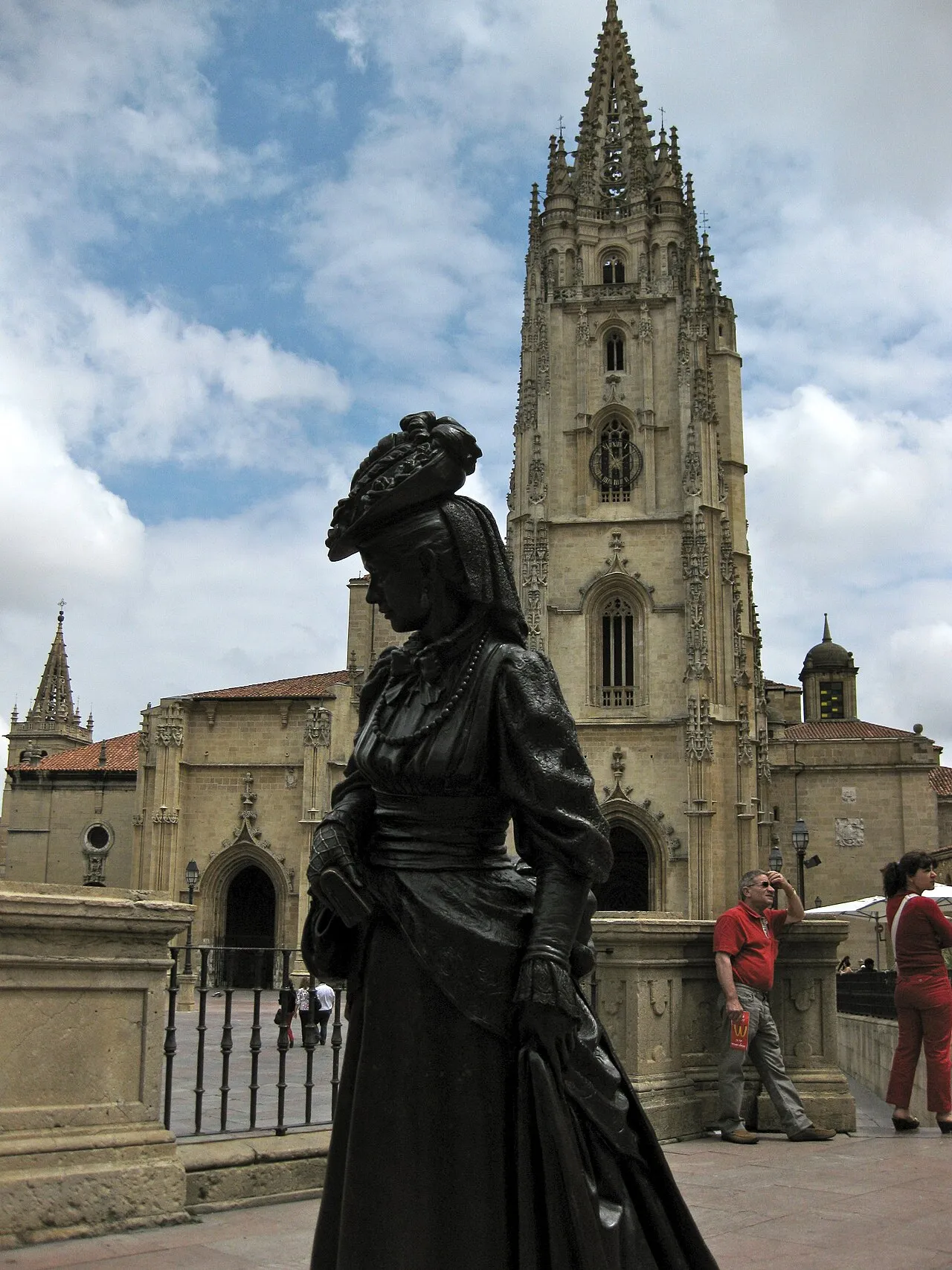
Statue of La Regenta
📍 Plaza de Alfonso II el Casto
Ana Ozores in bronze, by Mauro Álvarez, 1997, on the same flagstones she walked in the novel. People touch her hand as they pass.
The city Clarín stripped bare without mercy in 1884, and which today has more than a hundred sculptures in the street, many of them given to prizewinners who said something nice about it.
🎧 On the walk The University, Santullano and old VetustaThere is a lovely irony in Oviedo. The city that felt insulted for decades by the novel that portrayed it under a false name has today turned it into an emblem, and has filled its streets with bronzes — including several of fictional characters and of foreign prizewinners who praised it.
Leopoldo Alas “Clarín” was professor of law at the University of Oviedo when he published La Regenta between 1884 and 1885. Many consider it the finest Spanish novel of the nineteenth century after Don Quixote.
In it he portrayed the city under a false name — Vetusta — and with sharpened truths. Ana Ozores, the central character, is a sensitive, lonely woman, married to an older man, caught between her confessor and her seducer, and crushed by a society that watches her.
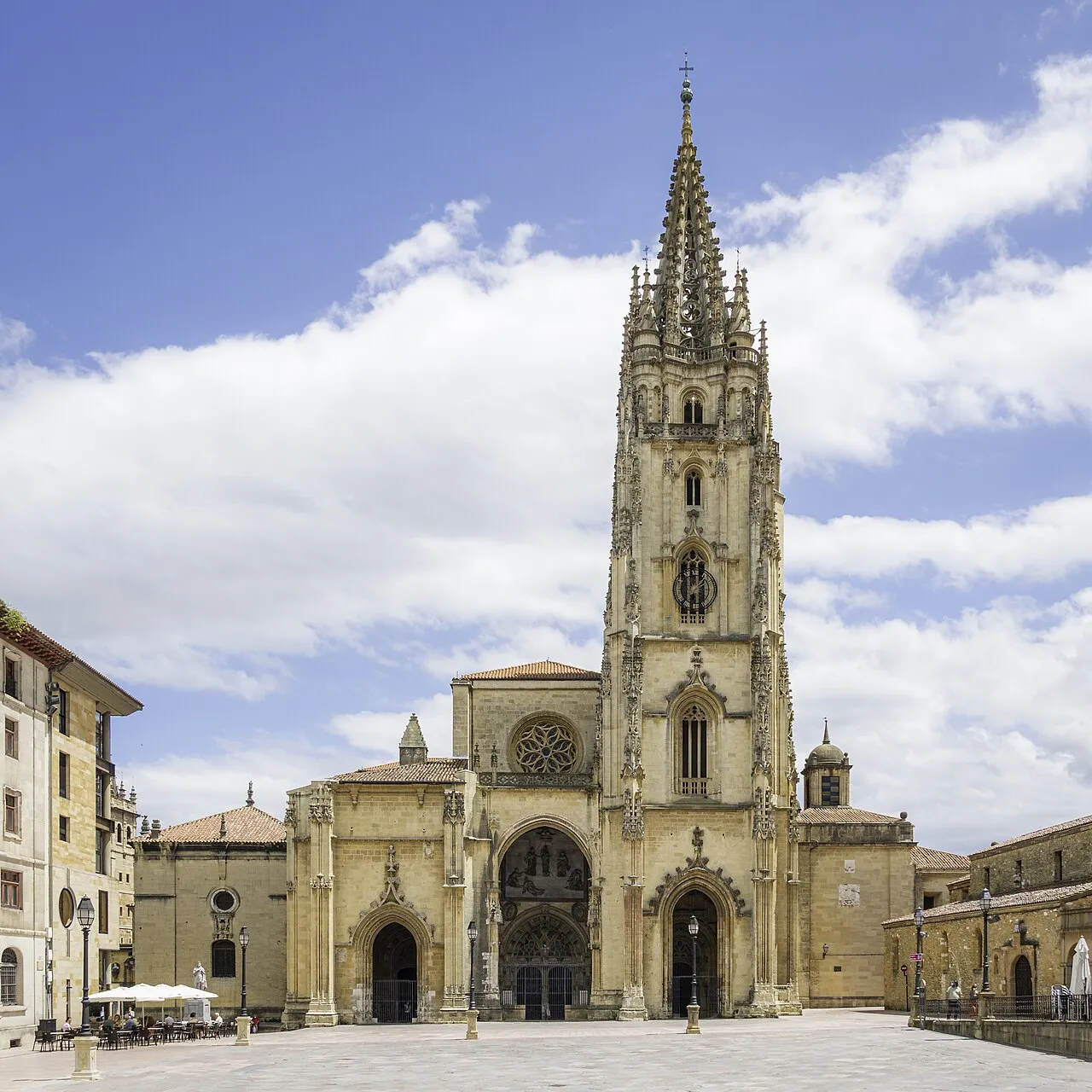
The novel opens in the tower of the cathedral, with the magistral canon don Fermín de Pas looking out over the city through a spyglass, like a man watching over a flock. Clarín described that tower as “a romantic poem in stone, a delicate hymn of sweet lines of mute and everlasting beauty”.
When it came out, it scandalised Oviedo. For decades it was left half pushed aside, with few editions and a good deal of local discomfort. Only in the second half of the twentieth century did the critics place it where it stands today: it took almost a hundred years to stop being read as an insult.
Ana Ozores in bronze, by Mauro Álvarez, 1997, on the same flagstones she walked in the novel. People touch her hand as they pass.
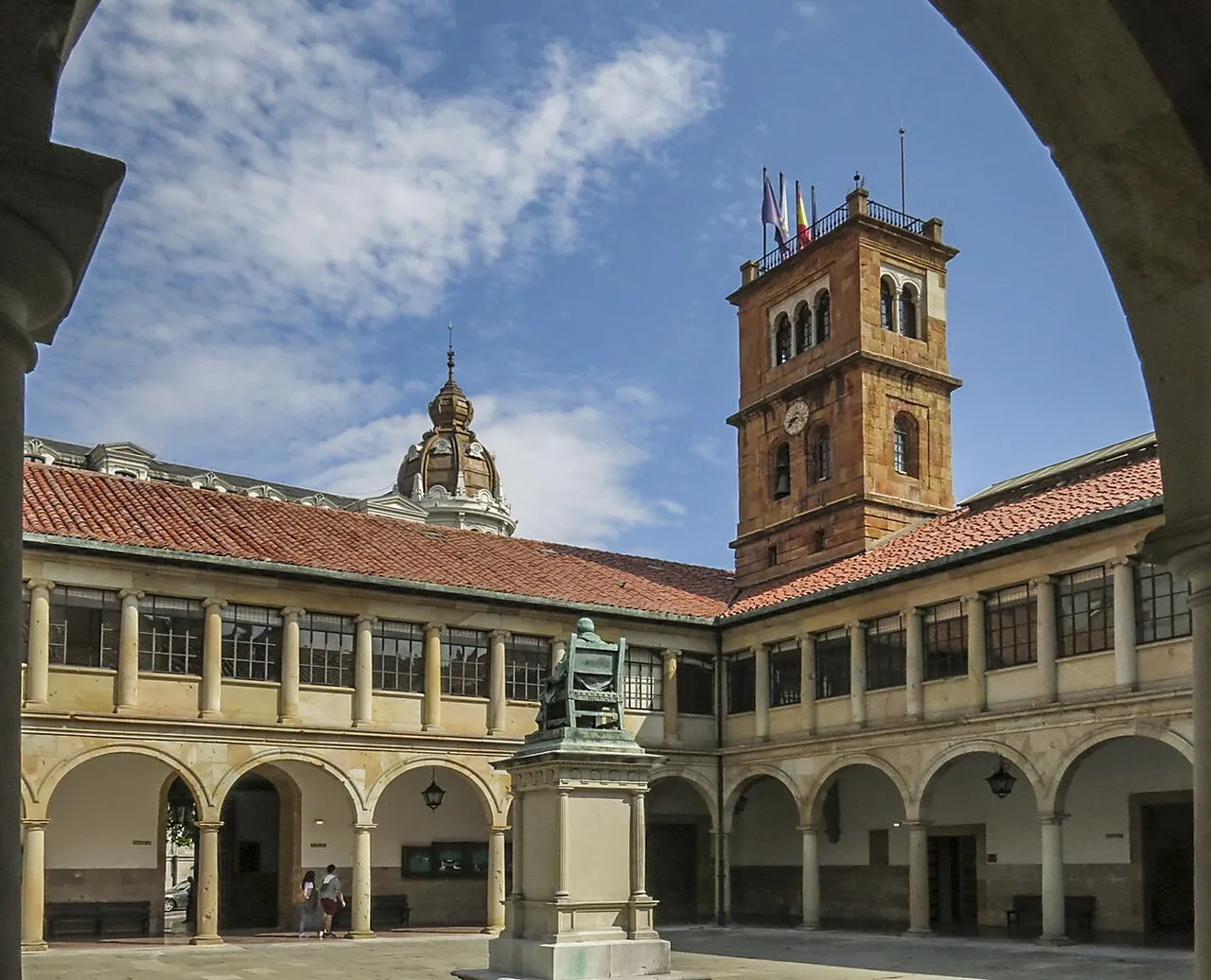
Where Clarín was professor of law. Founded with the bequest of an Inquisitor General and opened in 1608, forty years after his death.
Download the app and discover Oviedo offline, whenever you like. Take the walking tour The University, Santullano and old Vetusta with a local guide in your ear.
Find out more about Viavoy →Today Oviedo has more than a hundred sculptures in the open air spread through streets and squares, most of them put up from the nineties onwards. That is why people say the old town is a museum with no roof and no tickets.
The statue of La Regenta, by Mauro Álvarez, was placed in 1997 in front of the cathedral, on the same flagstones Ana walked in the fiction. People photograph it and touch its hand until the bronze of the dress wears thin.
The most famous for many people is Fernando Botero's Maternity, a rounded bronze woman lying on the plaza de la Escandalera since the mid-nineties. It is the meeting point par excellence of the people of Oviedo.
And the cheekiest is Culis Monumentalibus, four metres of bronze backside that Eduardo Úrculo planted in 2001 opposite the Campoamor Theatre. When it appeared, some called for it to be taken away the next day; today it is one of the most photographed.
Úrculo took the mock-Latin name from an article Camilo José Cela wrote in 1977 about his fondness for painting backsides, those figures “outlawed in more prudish times”.
Two of the best loved sculptures are here because of the Princess of Asturias Awards, handed out every autumn at the Teatro Campoamor and which many call the little Nobels of southern Europe.
Woody Allen came in October 2002 to collect the one for the Arts and, instead of offering four polite sentences, poured out praise: he said Oviedo was delicious, exotic, beautiful, clean, pleasant, “as if it did not belong to this world”. The city returned the compliment by casting him in bronze in 2003.
And it did not stop at words: in 2008 he came back and shot part of “Vicky Cristina Barcelona” here, with the city appearing on screen under its own name, something rare in his films outside New York.
Mafalda arrived by the same route: in 2014 Quino received the Award for Communication and Humanities, and the city commissioned the statue from Pablo Irrgang. She has an identical twin in the San Telmo neighbourhood, in Buenos Aires.
And on the plaza de Trascorrales stands La Lechera, a far more local homage: to the women who until the seventies came down from the villages with their donkeys to deliver milk house by house.
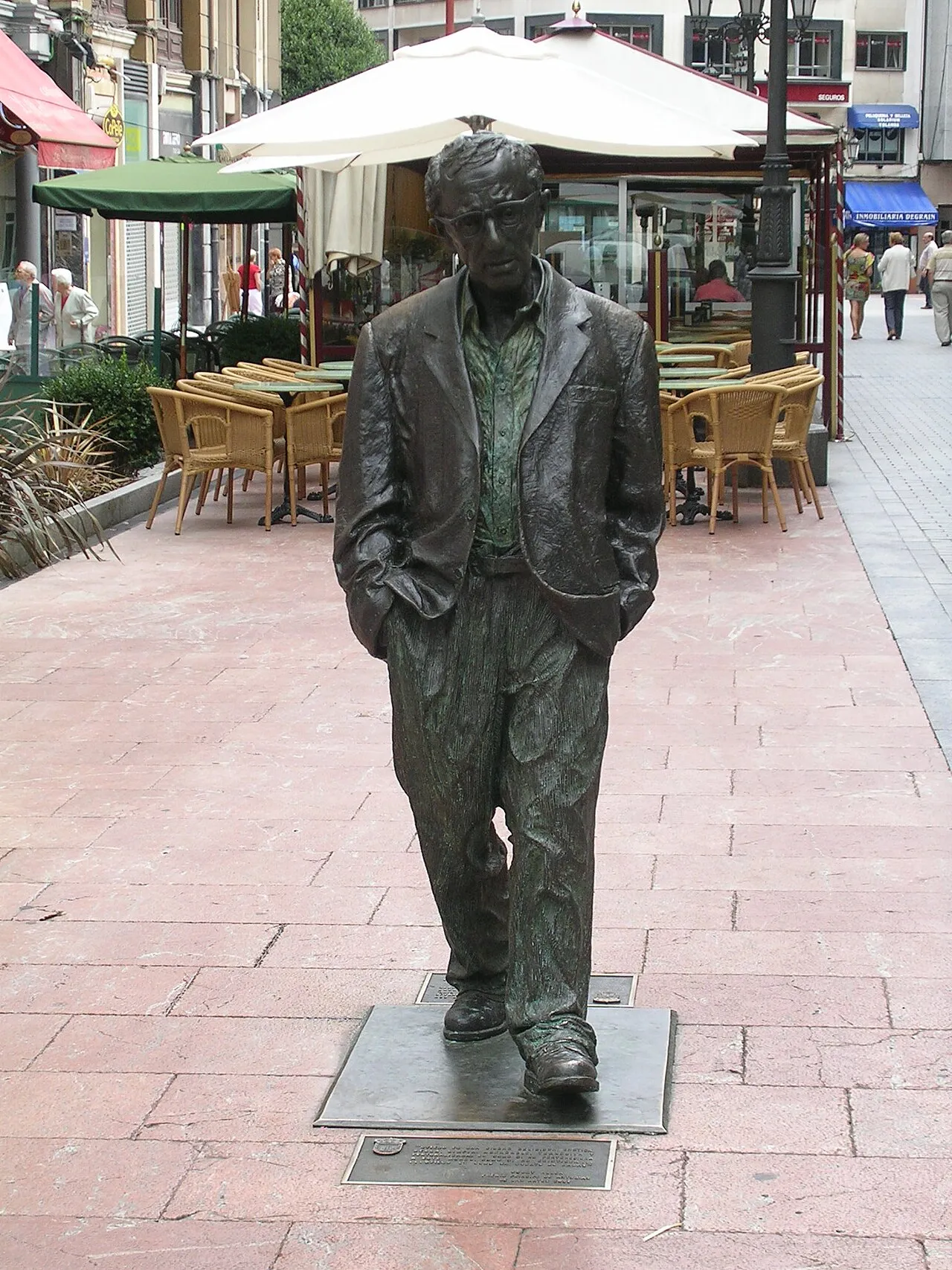
From 2003, after the film-maker praised the city while collecting the Prince of Asturias Award. His glasses are stolen constantly.
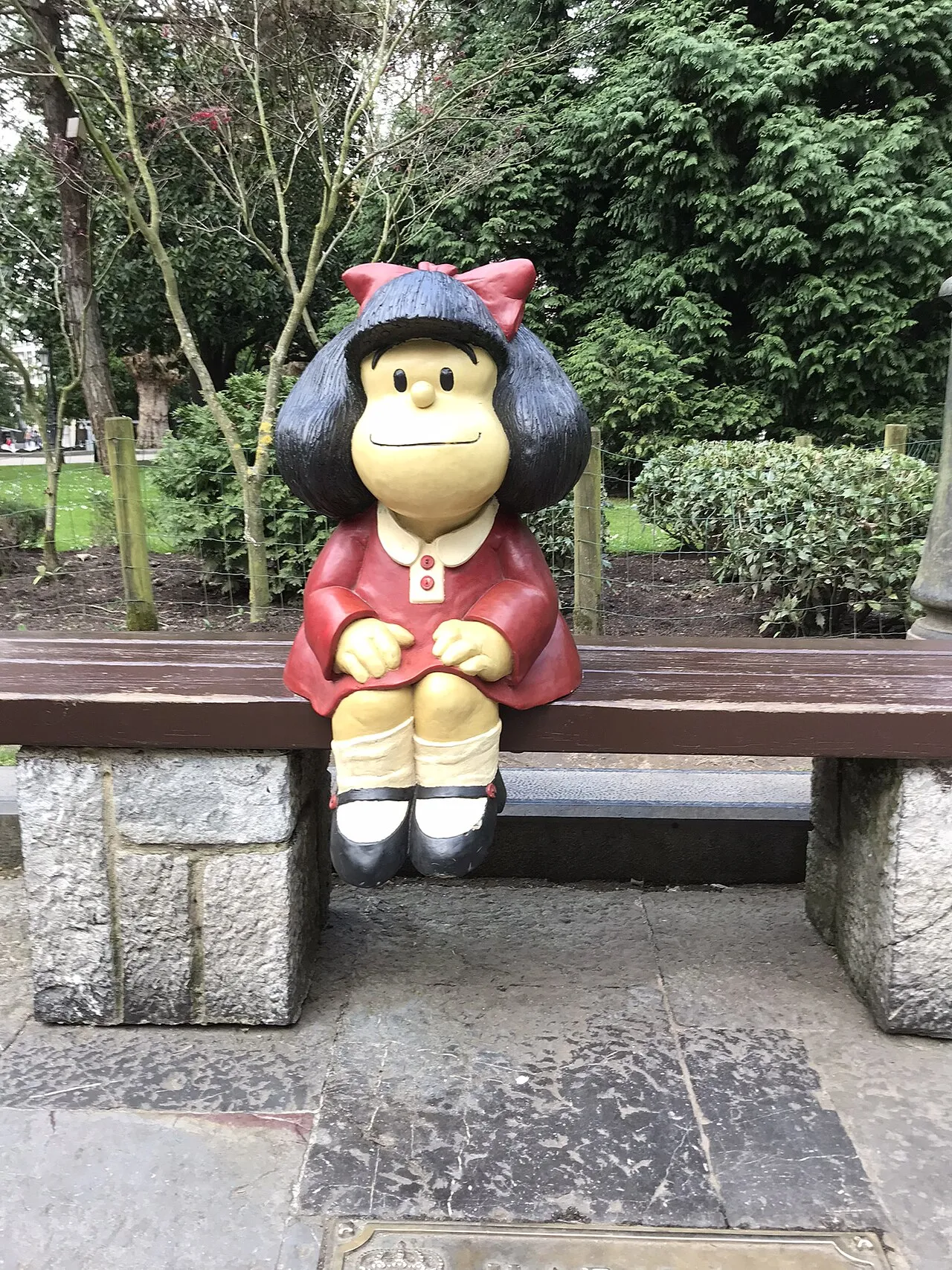
Sitting on her bench since 2014, when Quino received the award. She has an identical twin in San Telmo, in Buenos Aires.
The name was given to it by Clarín — Leopoldo Alas — professor of law at the University of Oviedo, in his novel La Regenta, published between 1884 and 1885. He portrayed the city under a false name and with sharpened truths: its ambitious priests, its idle gentry, its gossip, its hypocrisy.
Badly, and for a long time. Many recognised themselves and did not like it one bit, and the novel was left half pushed aside for decades, with few editions and a good deal of local discomfort. Only in the second half of the twentieth century did the critics place it where it stands today: it took almost a hundred years to stop being read as an insult.
On the plaza de Alfonso II el Casto, in front of the cathedral, on the same flagstones Ana Ozores walked in the fiction. Mauro Álvarez made it in 1997, and people photograph it and touch its hand as they pass to the point of wearing the bronze of the dress thin.
More than a hundred in the open air, spread through streets and squares, most of them put up from the nineties onwards. It is a sustained municipal policy and quite unusual for its scale, and that is why people say the old town is a museum with no roof and no tickets.
Because in October 2002 he came to collect the Prince of Asturias Award for the Arts and poured out praise for the city, saying it was “delicious, exotic, beautiful, clean, pleasant, as if it did not belong to this world”. Oviedo returned the compliment by casting him in bronze in 2003. And in 2008 he came back to film here.
By the same mechanism: in 2014 the cartoonist Quino received the Prince of Asturias Award for Communication and Humanities here, and the city commissioned the statue from Pablo Irrgang. She has an identical twin sitting on a bench in the San Telmo neighbourhood, in Buenos Aires.
Four metres of bronze backside on a granite pedestal, the work of Eduardo Úrculo, installed in 2001 opposite the Teatro Campoamor. He took the mock-Latin name from an article by Camilo José Cela from 1977 about his fondness for painting backsides. When it appeared, some called for it to be removed; today it is one of the most photographed.
Download Viavoy and walk Oviedo offline, whenever you like.