Marbella in one day: the old town nobody visits and Puerto Banús
A Muslim medina with a Renaissance square on top, hidden coffered ceilings, ten Dalís on an avenue and an Andalusian village invented in 1970. All in one day.
Marbella carries a reputation that hides what it has. Almost everyone arrives looking for the beach or Puerto Banús and leaves without having set foot in an old town that keeps caliphal wall, a square laid out with a ruler in 1485, Mudéjar coffered ceilings and a museum with prints by Picasso. One day is enough for both Marbellas.
The old town can be walked end to end in a good hour and it is what fewest people visit. If you only have a spare morning, give it to the old town: it more than repays you.
Morning: the old town
A good hour, and all pedestrian.
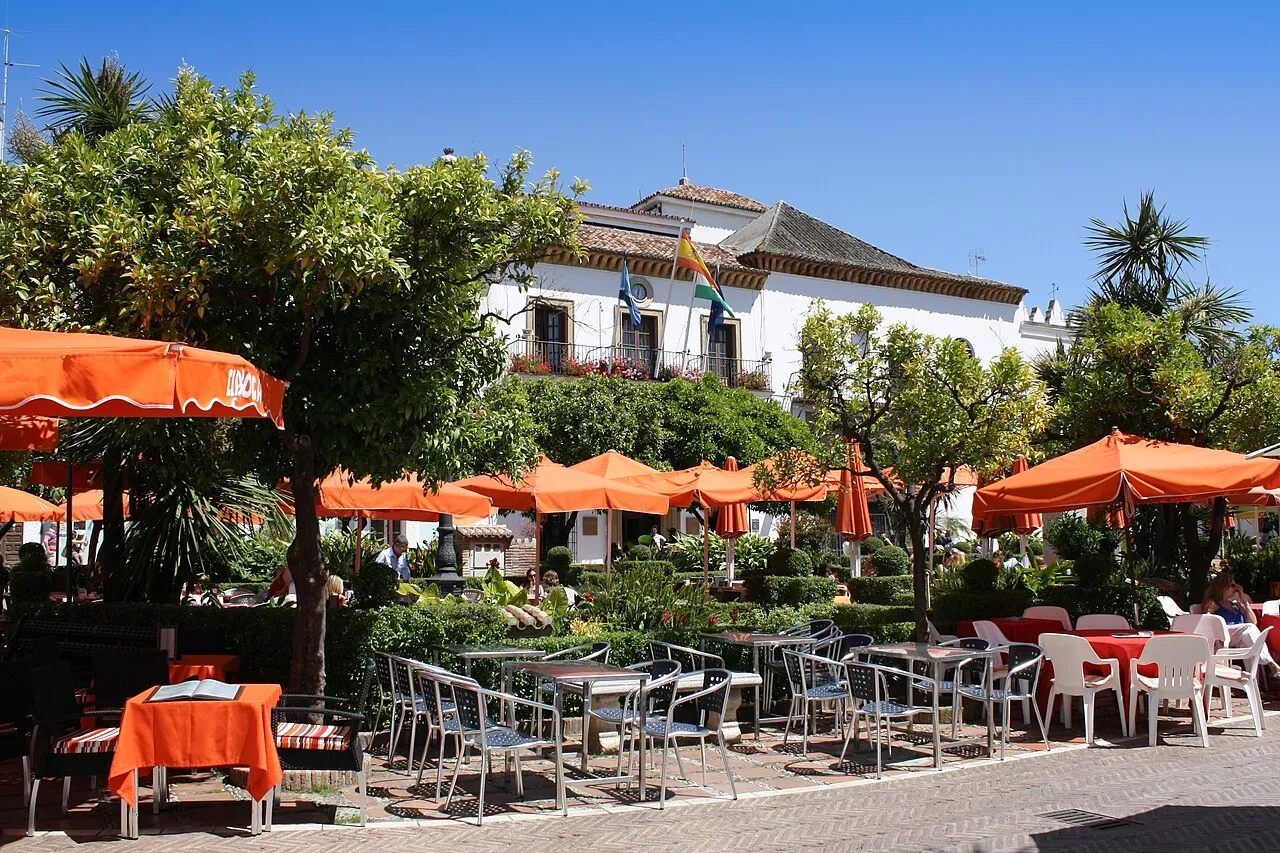
Start at the Plaza de los Naranjos, which did not grow on its own as in so many towns: it was deliberately drawn with ruler and compass in 1485, with the town just taken, to break the maze of lanes of the Muslim medina with a Renaissance rectangle.
Around it were placed the three powers: civil government in the Casa Consistorial, justice in the Casa del Corregidor and the Church in the hermitage of Santiago. All three can be seen at a glance from the middle, and that arrangement is pure political town planning.
Look at the doorway of the Casa del Corregidor, from 1552: it has a Gothic pointed arch, Mudéjar plant decoration by Morisco master builders and a crowning that is already Renaissance. Three worlds living together on a single front, which is exactly what Marbella was in the sixteenth century.
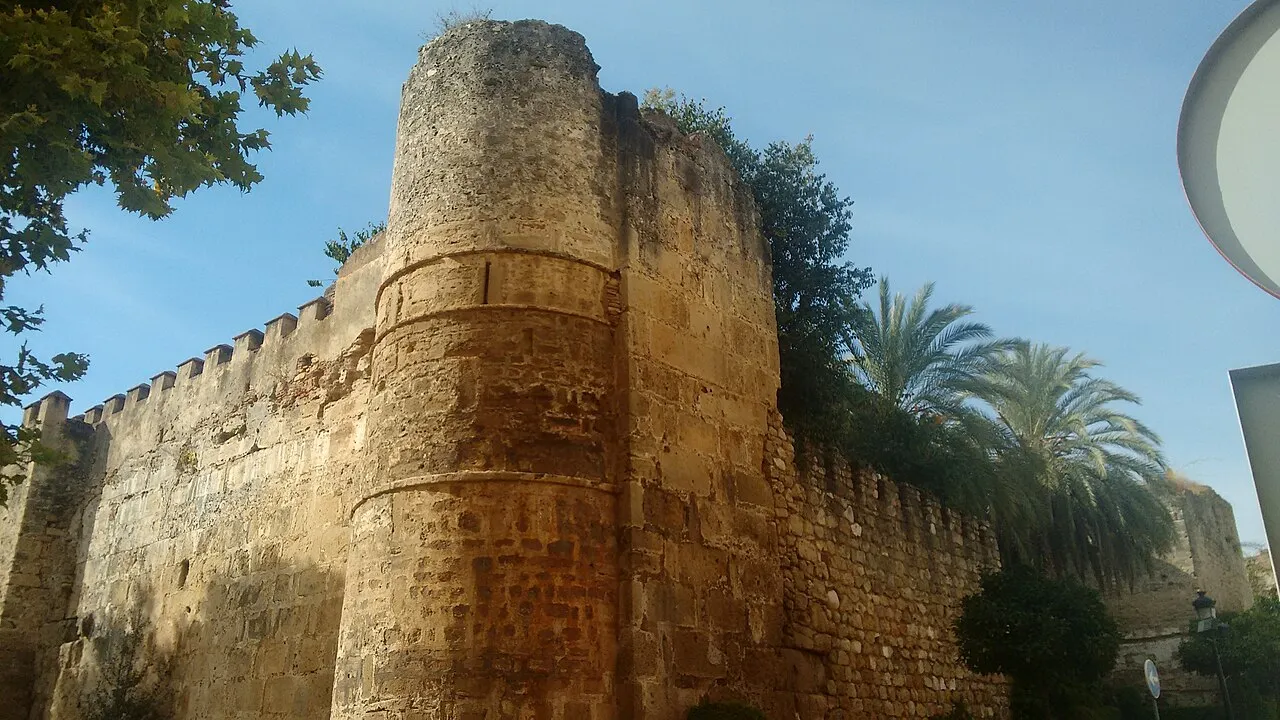
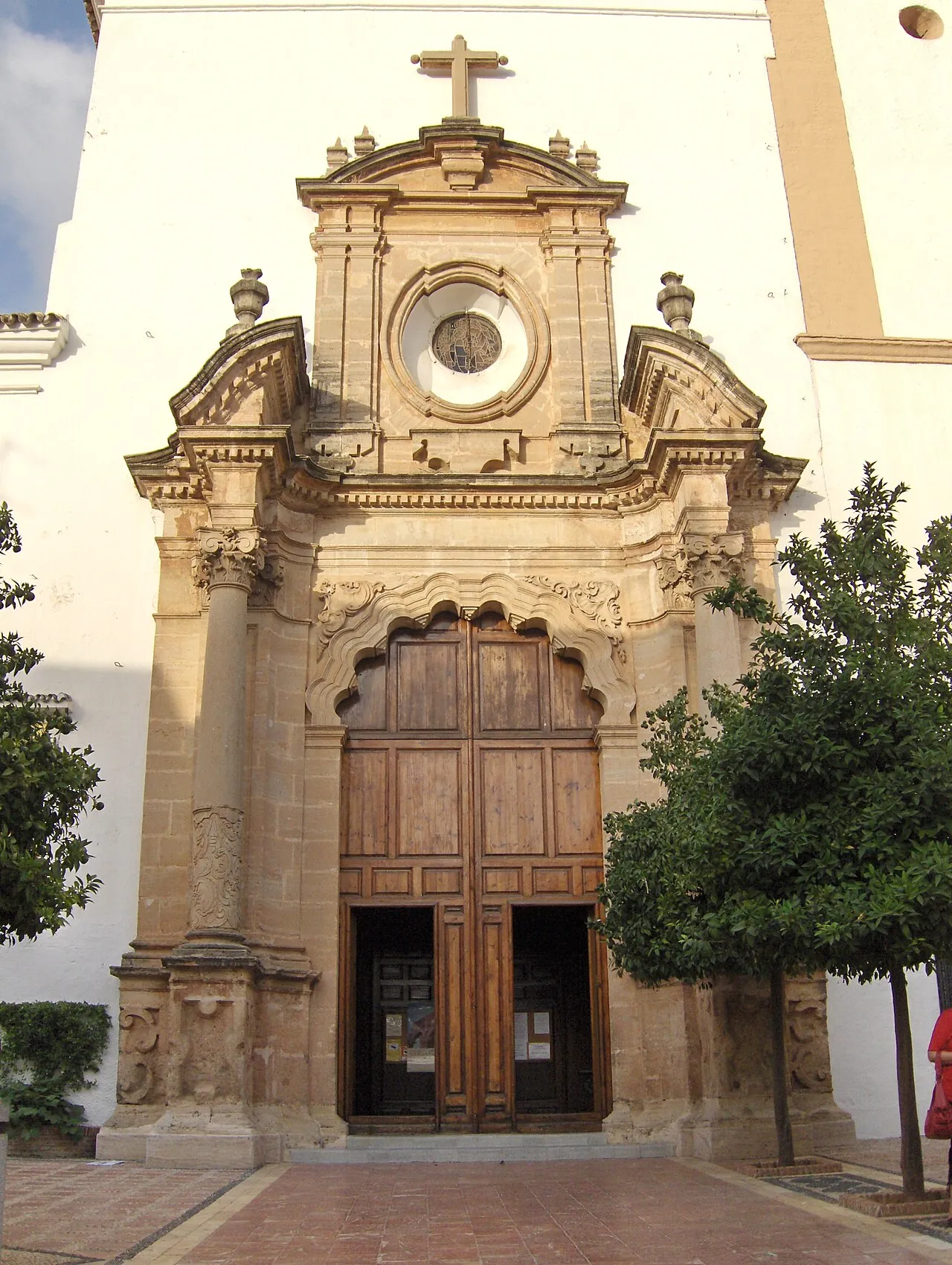
Carry on to the church of the Encarnación, built over the main mosque, with a Rococo doorway from 1750-1767 that is a piece of stone lacework, and look for the remains of caliphal wall built into the houses: they are from the tenth and eleventh centuries, from the enclosure that embraced ninety thousand square metres.
The orange trees are bitter ones and their fruit is impossible to eat straight off the branch. They are planted for the blossom, which scents the air for weeks, and because the tree stands up well to heat and pruning. Go early: at mealtimes the terraces take up the whole square.
Caliphal stone from the tenth and eleventh centuries, with reused Roman ashlars inside it: layers of empires in the same wall. In 1485 Marbella surrendered by agreement, without a siege, and that is why its urban fabric survived better than that of the cities taken by storm.
Download the app and discover Marbella offline, whenever you like. Take the walking tour The Old Town and the Orange Square with a local guide in your ear.
The Museo del Grabado Español Contemporáneo is the biggest surprise. From outside it is the Hospital Bazán, noble civil architecture of the sixteenth century; inside it keeps more than four thousand prints signed by Picasso, Miró, Dalí, Chillida and Tàpies.
It was born from a generous gesture: the donation of one thousand three hundred and fifty prints in 1992. And it is worth making clear that a print is not a copy: the artist works a plate, inks it and prints it, and from that matrix several copies come out, all of them original and numbered.
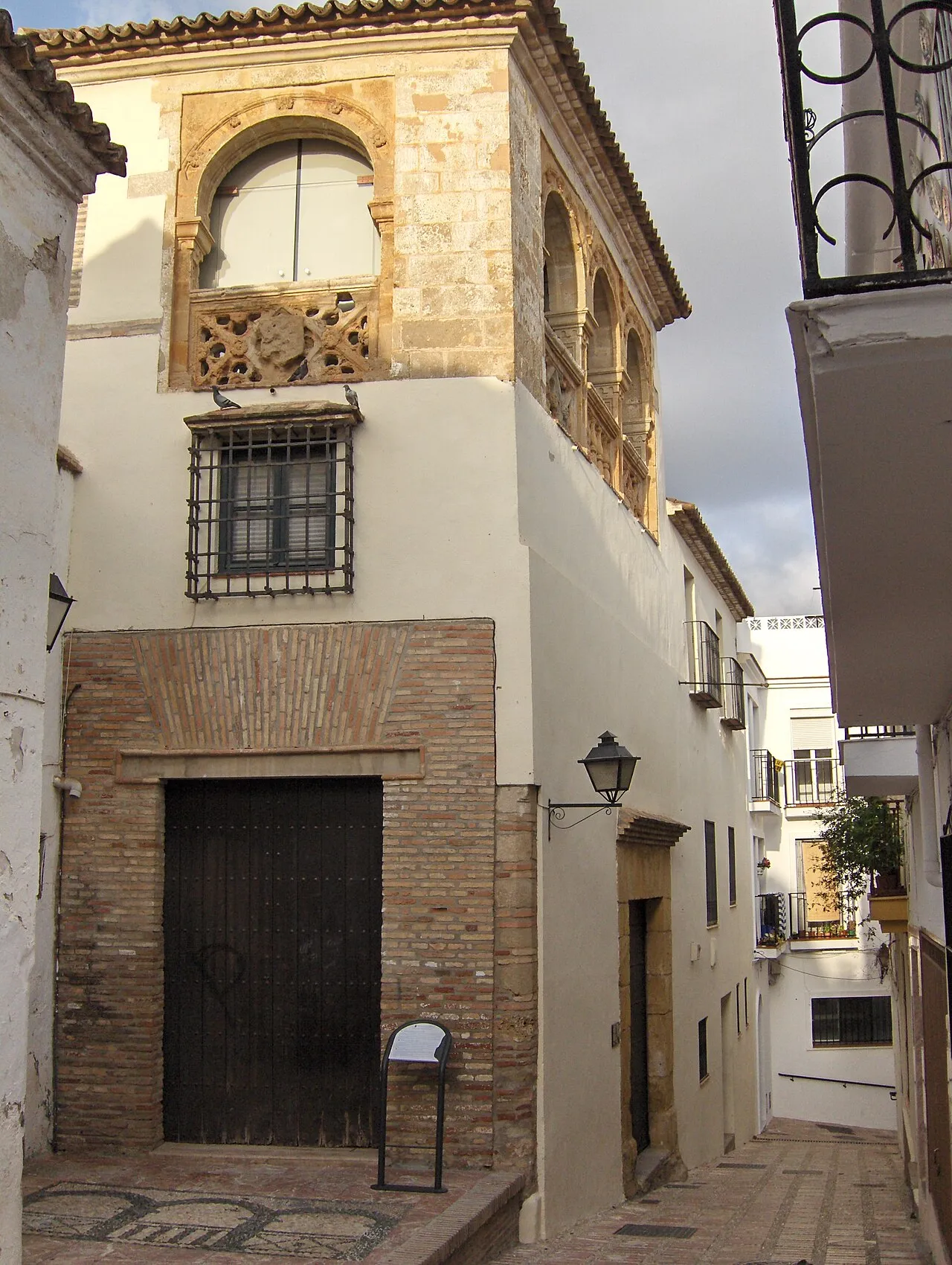
The chapel of San Juan de Dios was part of the Royal Hospital founded by the Catholic Monarchs as soon as they conquered the city. On the doorway, the coat of arms with a pomegranate, a granada: the symbol of the kingdom just incorporated into Castile, a political signature in stone.
And inside it keeps a Mudéjar coffered ceiling that was covered over and forgotten until the middle of the twentieth century, when it was rediscovered by chance. Those ceilings are the most valuable part of Marbella's heritage and the thing fewest people know exists.
Look at the lookout tower on the corner, in golden ashlar with a three-arched gallery: it gives away that people of means lived here before the building became a hospital in the seventeenth century.
Its tower of almost fifty metres has been the city's beacon on land for centuries. Inside, an organ from the seventies with some five thousand pipes of tin, copper and wood, capable of making the whole church vibrate.
Come down from the old town to the Alameda park, the oldest garden in the city, documented since 1761, when there were black poplars here watered by acequias, irrigation channels. That is where the name comes from, although they disappeared long ago.
What remains are the glazed ceramic benches faced with hand-painted Seville tiles and the cast-iron lampposts, pieces from another age that have survived everything. It used to cover twenty thousand square metres; the city grew and ate into it.
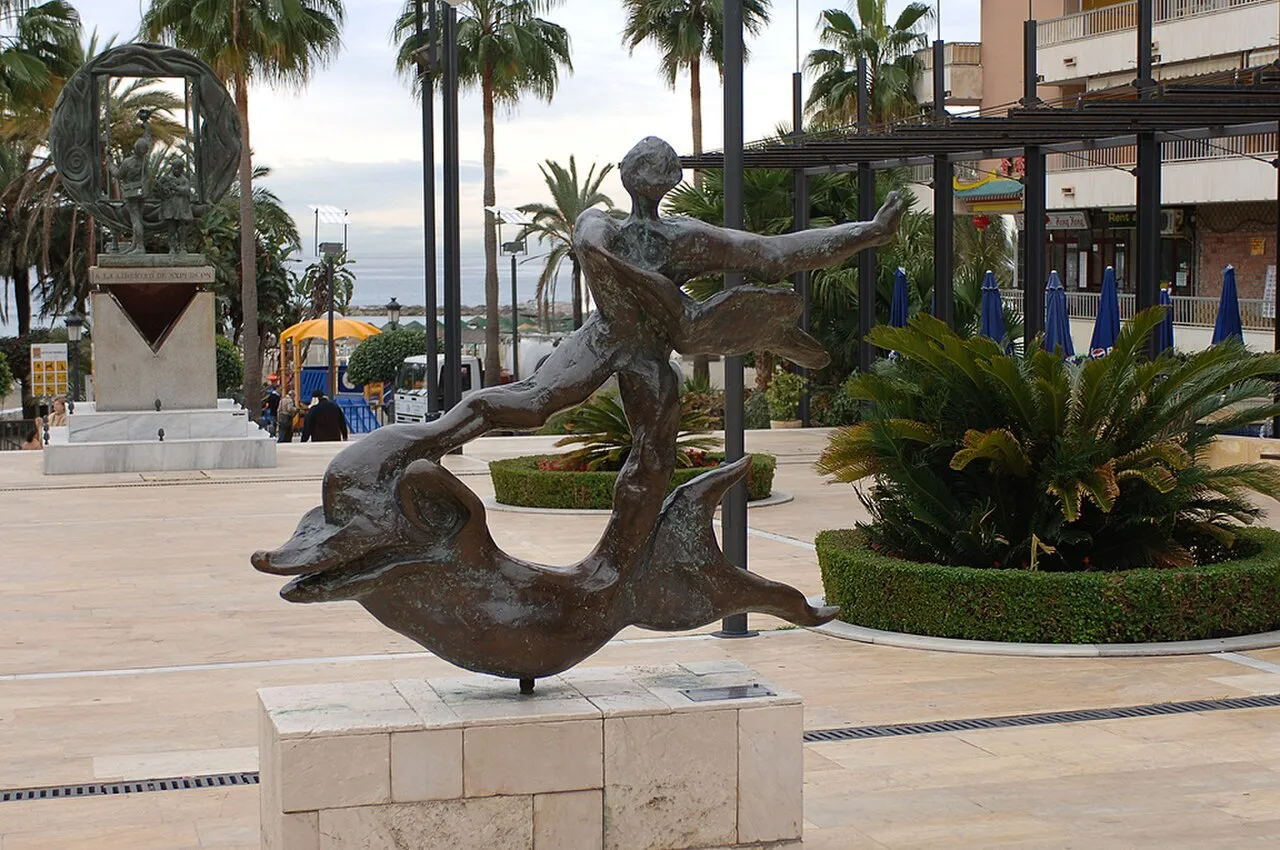
From here the Avenida del Mar sets off, where the ten bronze sculptures by Salvador Dalí installed in 1998 stand: the Cosmic Elephant with its impossible legs, Horse with Stumbling Rider, Gala at the Window. Walk around them and look at them against the light with the sea behind.
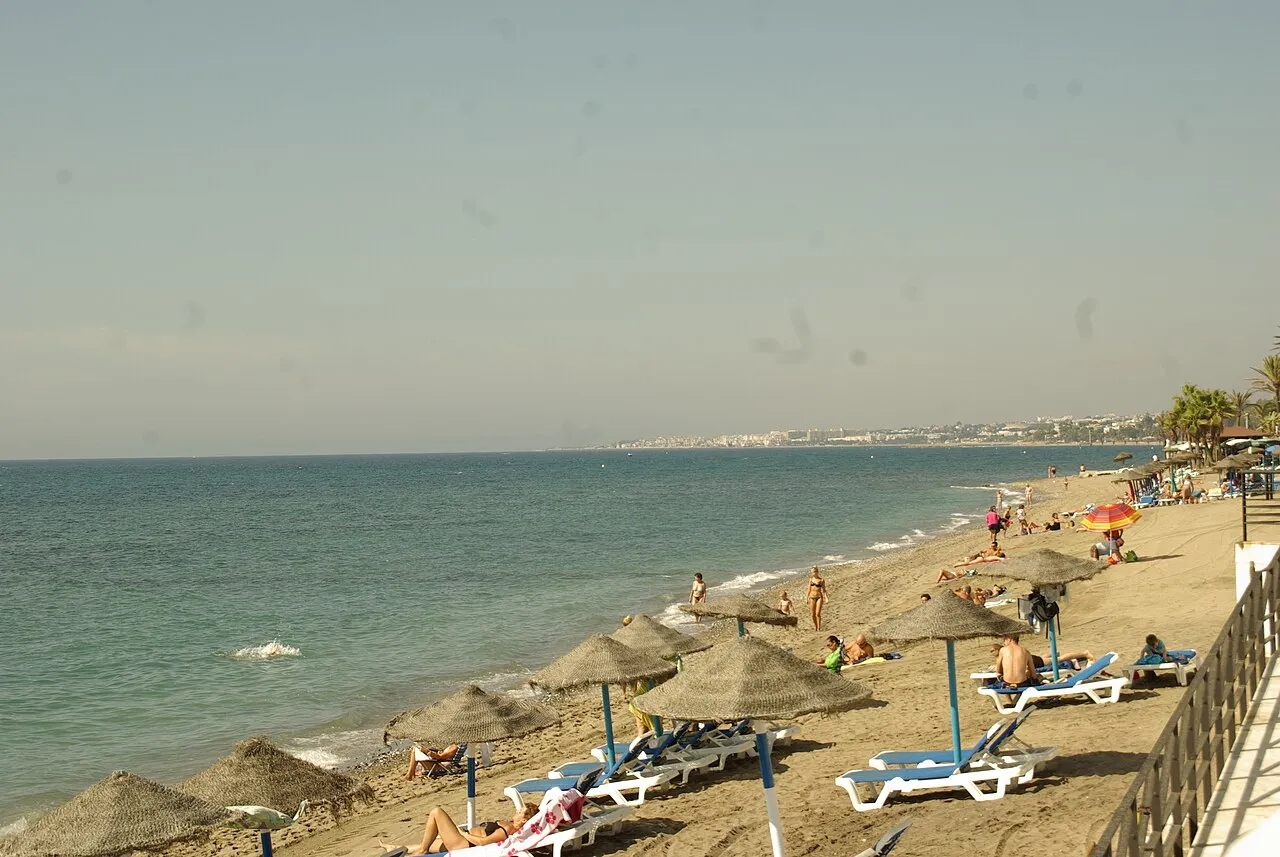
And it ends at La Fontanilla beach, more than a kilometre of toasted sand. Its name comes from a spring of fresh water that welled up among the rocks at the shore, documented in 1869: drinking water in the middle of the beach before there were any pipes.
The elephant's impossible legs come from Rome: Dalí was fascinated by a sculpture Bernini designed in the seventeenth century, a marble elephant carrying a genuine Egyptian obelisk. From the nineteen-forties on, the animal reappears constantly in his work.
The smell from the chiringuitos is the sardine espeto: they are threaded onto a cane and grilled over a wood fire inside an old boat full of sand. They are eaten from May to August, the months without an R, and with your hand.
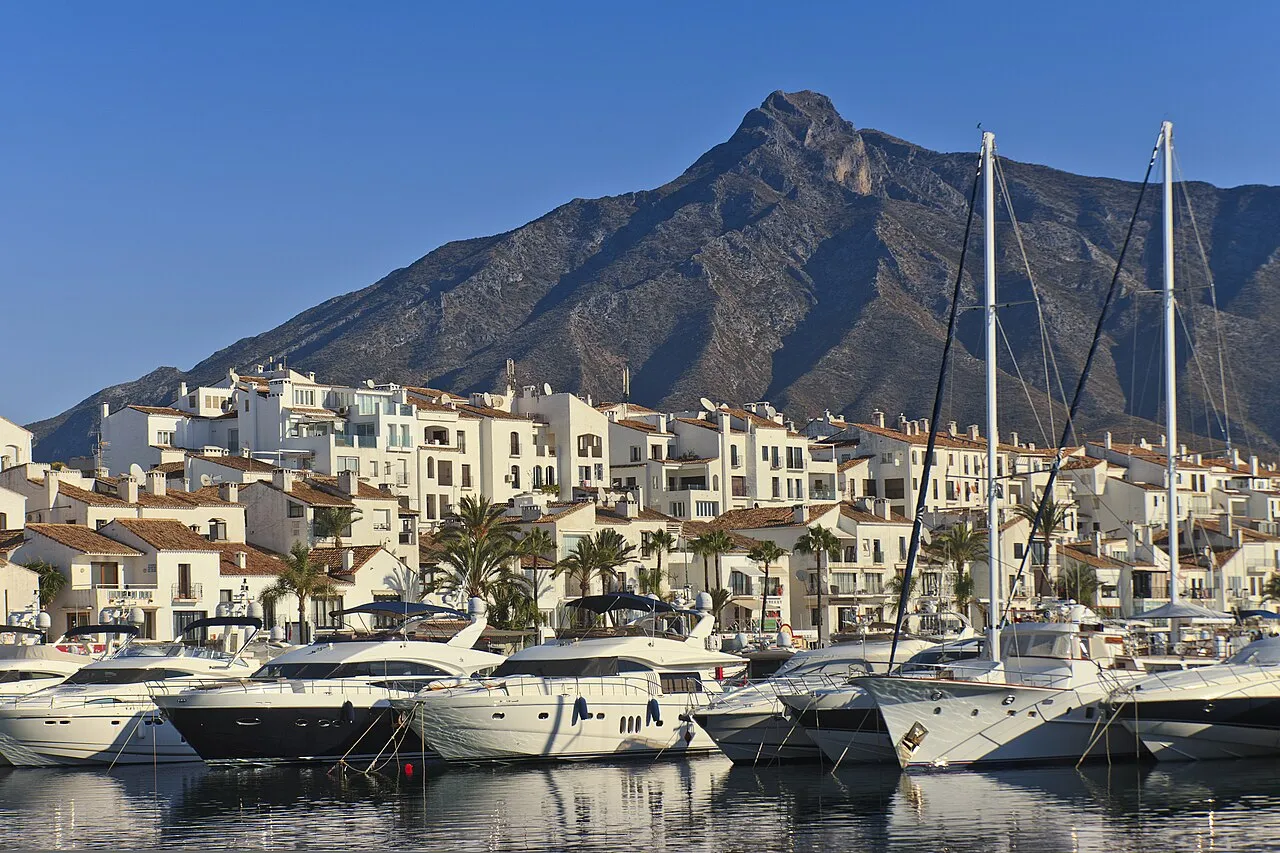
Take the city bus to Puerto Banús, seven kilometres to the west. It is hard to believe that all this was born out of nothing: until 1970 there was nothing here but beach and reed beds.
It was built by José Banús, a Catalan developer who had grown rich on workers' housing in post-war Madrid, and instead of putting up tower blocks his architects faked an old Andalusian village with a luxury marina in front of it. The man responsible for that air was Noldi Schreck, who came from working in Beverly Hills.
On the roundabout at the entrance you will see La Victoria, the mass of bronze more than twenty metres tall that the people of Marbella call “the Russian's statue”. It was presented as a gift from the mayor of Moscow in 1994 and ended up in court, with stolen documents included.
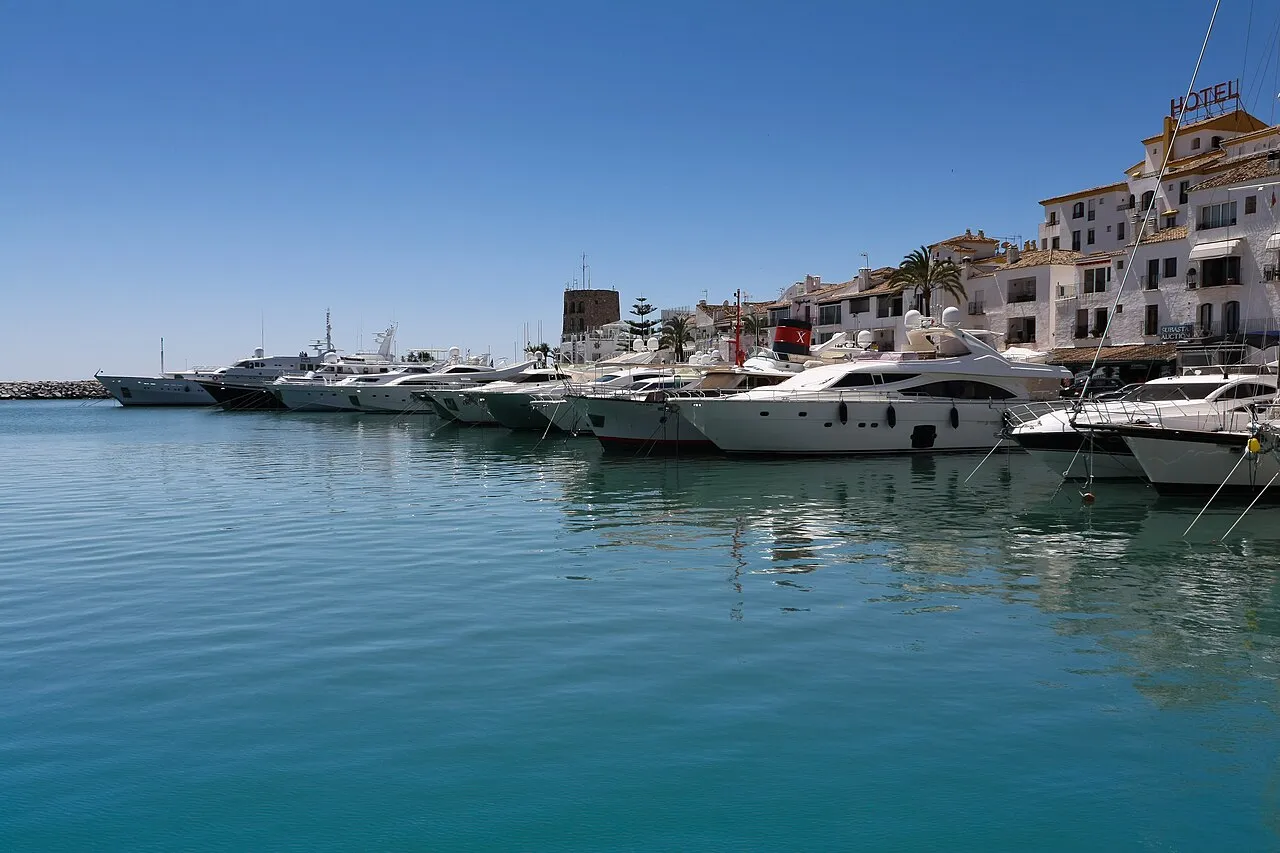
And walk along the Muelle de Honor: the yachts moor stern-on to the promenade, with the rear platform open like a drawing room, so that the laid table can be seen. You are not paying for metres of water, you are paying for the looks. It is pure theatre.
The opening in May 1970 brought together the Aga Khan, Roman Polanski and Prince Rainier and Princess Grace of Monaco, with three hundred waiters serving twenty-two kilos of caviar. To sing, they hired a then unknown Julio Iglesias.
Marbella was for years the summer capital of the Saudi royal family: King Fahd built himself an immense palace with its own mosque right next door. A good part of the local economy is explained from there.
Far more than its reputation would suggest. It is a walled Muslim medina on which Castile laid out a Renaissance square with ruler and compass in 1485, with sixteenth-century buildings, hidden Mudéjar coffered ceilings and a museum with prints by Picasso, Miró and Dalí. It can be walked end to end in a good hour.
Can you see Marbella in one day?
Yes, and comfortably: the whole old town with its interiors in the morning, the Alameda, the Dalí sculptures and the beach in the afternoon, and Puerto Banús at dusk. The old town on its own can be done in a spare morning if you are coming from the beach.
How do you get to Puerto Banús?
It is about seven kilometres west of the centre, with a frequent city bus. You can also get there by car, but parking in high season is a real problem. The combination that works is to go by bus at dusk and come back after dinner.
What are the Mudéjar coffered ceilings of Marbella?
Wooden ceilings assembled like a puzzle, almost without nails, with thousands of geometric pieces slotted together forming interlaces and eight-pointed stars. They were made by the Muslim carpenters who went on working for the Christians after the conquest. The one in the chapel of San Juan de Dios was covered up until the twentieth century.
Is it true that Puerto Banús dates from 1970?
Yes. Until that year there was nothing here but beach and reed beds. It was built by the Catalan developer José Banús, and his architects decided to fake an old Andalusian village with a luxury marina in front of it. The designer was Noldi Schreck, who came from working in Beverly Hills, and that is where that film-set air comes from.
What do you eat in Marbella?
Costa del Sol cooking: sardine espeto grilled on a cane over a wood fire inside a boat full of sand, pescaíto frito, boquerones in vinegar, gazpachuelo and Málaga ajoblanco with grapes. The espeto is eaten from May to August — the months without an R — and with your hand.
Practical information
DurationA full day for both Marbellas. The old town on its own, a morning.
Old townIt can be walked end to end in a good hour, all pedestrian. It is what almost nobody visits.
InteriorsMuseo del Grabado, chapel of San Juan de Dios and hermitage of Santo Cristo. Check the opening hours.
Puerto Banús7 km away, with a frequent city bus. By car, parking is difficult in summer.
When to goSpring and autumn. In summer, a lot of people and prices through the roof.
EatingSardine espeto at a chiringuito, from May to August and with your hand.
On the map
🎧 With Viavoy
Walk Marbella and listen at your own pace
Download Viavoy and walk Marbella offline, whenever you like.
from 2,99 €· one-off payment
City Pass · 9,99 €3 days, all the tours in Marbella