1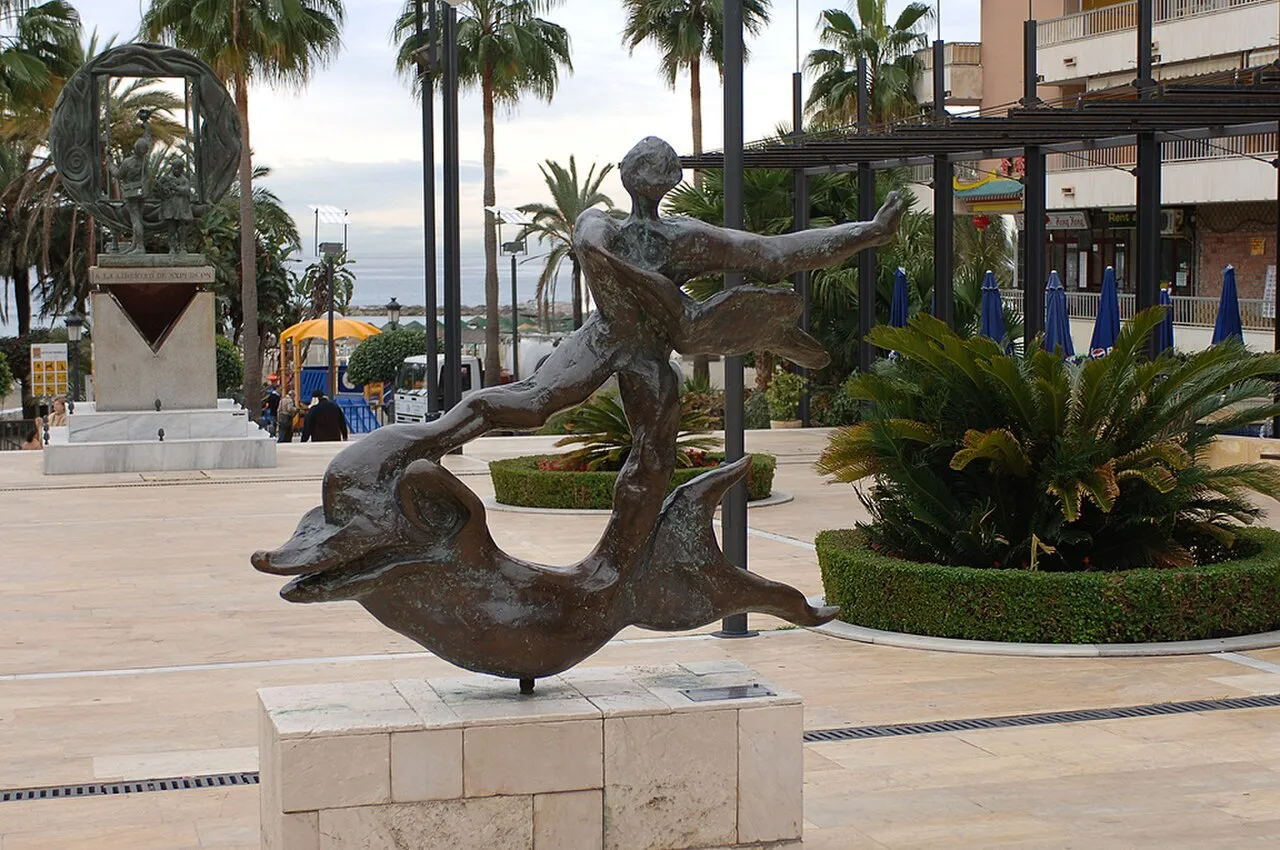
The Dalí sculptures
📍 Avenida del Mar
Ten original bronzes installed in 1998, each more than two metres tall, on a pedestrian avenue open at any hour. Free access and fifteen minutes well spent.
Bronzes more than two metres tall out in the street, a printmaking museum with Picasso and Miró, and the monument that best sums up a whole era of the city.
🎧 On the walk Avenida del Mar, the Alameda and the promenadeIt is the last thing you expect of Marbella and it is among the most interesting things it has: ten original Dalí sculptures installed on an avenue you walk down on your way to the beach, a museum of contemporary printmaking with first-rank names inside a sixteenth-century hospital, and on the roundabout at Puerto Banús a twenty-metre mass of bronze with a court case behind it. You can see it all in one afternoon.
They were installed in 1998 and they are originals: ten bronze pieces more than two metres tall and weighing between two hundred and four hundred kilos each, set out in the open air on the pedestrian avenue that runs down from the Alameda park to the seafront promenade.
The titles are pure Dalí universe: the Cosmic Elephant, Horse with Stumbling Rider, Mercury, Perseus, Man on a Dolphin, Don Quixote Seated, Gala at the Window, Nude Woman Climbing the Stairs.
The piece that deserves most attention is the elephant. Those impossibly thin legs holding up an obelisk on its back are Dalí's obsession with weightlessness, and they did not come out of nowhere: he was fascinated by a sculpture Bernini designed in the seventeenth century for the Piazza della Minerva in Rome, a marble elephant carrying a genuine Egyptian obelisk. From the nineteen-forties on, the animal reappears again and again in his work.
The Gala leaning out of the window was his wife and his absolute obsession: Elena Diákonova, Russian by birth, previously married to the poet Paul Éluard. He painted her and sculpted her without a break for decades.
The practical advice is simple and hardly anyone follows it: walk around them. They are sculptures in the round and they change enormously depending on where you stand. At the very end of the afternoon, with the sun striking the bronze from the side and the sea behind, is when they work best.
Ten original bronzes installed in 1998, each more than two metres tall, on a pedestrian avenue open at any hour. Free access and fifteen minutes well spent.
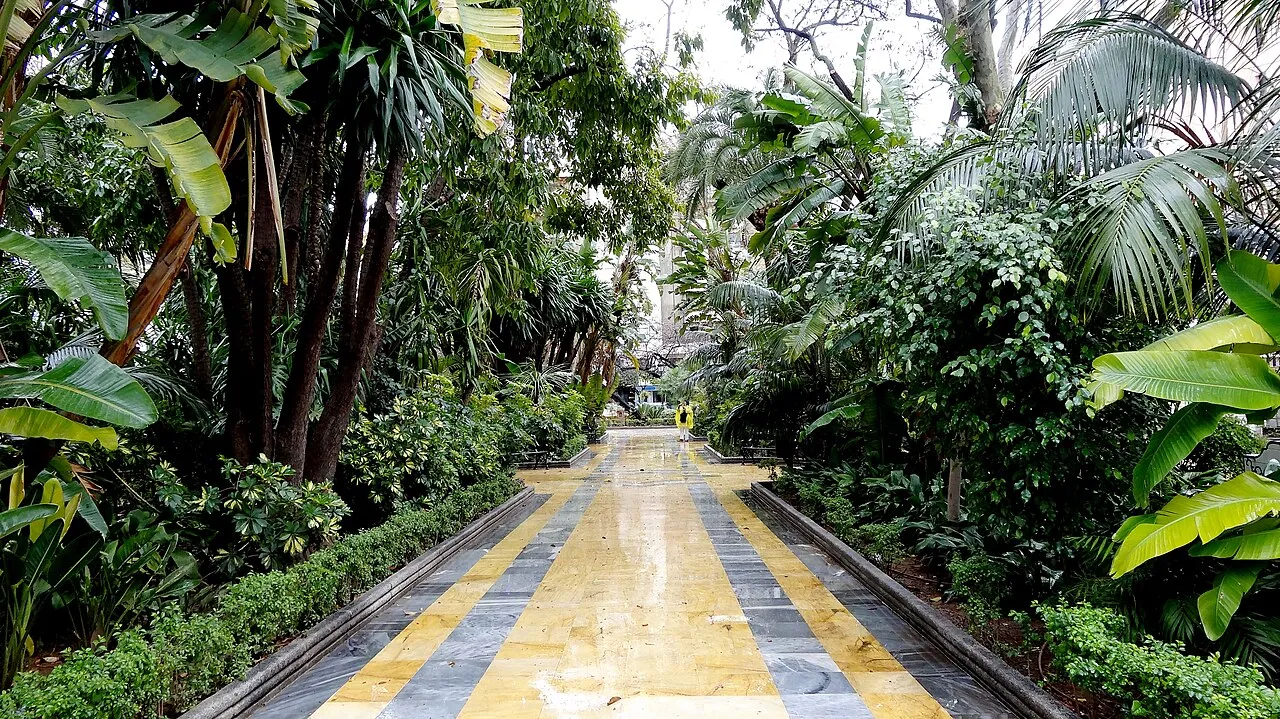
The oldest garden in the city, documented since 1761, and the point where the Dalí route begins. Benches of hand-painted Seville tiles and cast-iron lampposts.
Download the app and discover Marbella offline, whenever you like. Take the walking tour Avenida del Mar, the Alameda and the promenade with a local guide in your ear.
Find out more about Viavoy →The Museum of Contemporary Spanish Engraving is a double surprise. From outside it is the Hospital Bazán, noble civil architecture of the sixteenth century in the middle of the old town. Inside it keeps more than four thousand works on paper signed by Picasso, Miró, Dalí, Chillida and Tàpies.
It was born from a donation of one thousand three hundred and fifty prints in 1992 and today it is one of the most important museums in Spain in its speciality. That it is in Marbella and not in a capital is one of those accidents that anyone who takes the trouble to go in is grateful for.
Printmaking is also the perfect technique for understanding these artists from another angle: they are not sketches or reproductions, but original work conceived for paper, with procedures — etching, drypoint, lithography — that impose their own rules.
It is a step away from the Plaza de los Naranjos, so it fits naturally into the old town route. Check the opening hours before going: it is a small museum and its calendar is not that of a big one.
On the roundabout leading into Puerto Banús there is a mass of bronze and copper more than twenty metres tall. It is called La Victoria, it was signed by the Georgian sculptor Zurab Tsereteli and it was installed in 1994. Nobody here calls it by its name: it is “the Russian's statue”.
The official version said it was a gift from the mayor of Moscow. The version that later came to light was considerably murkier: it cost the municipal coffers money and two plots of land, the affair ended up in court with stolen documents included, and there were even suspicions that the piece installed was not the one that had been bought, because the measurements did not add up.
Tsereteli is known for the sheer excess of his work: the Peter the Great of more than ninety metres that presides over a Moscow river and that half the city detests is his, as is a colossal figure of Columbus that several American cities turned down.
That way of running the town carried on after Jesús Gil and blew up completely in 2006 with Operación Malaya, one of the biggest cases of planning corruption in Spanish history, so serious that the national government ended up dissolving Marbella's town council. The statue is still there, and the people of Marbella look at it with a mixture of mockery and affection.

More than twenty metres of bronze and copper that you cannot miss as you arrive at the port. A five-minute stop: its interest is not artistic but documentary.
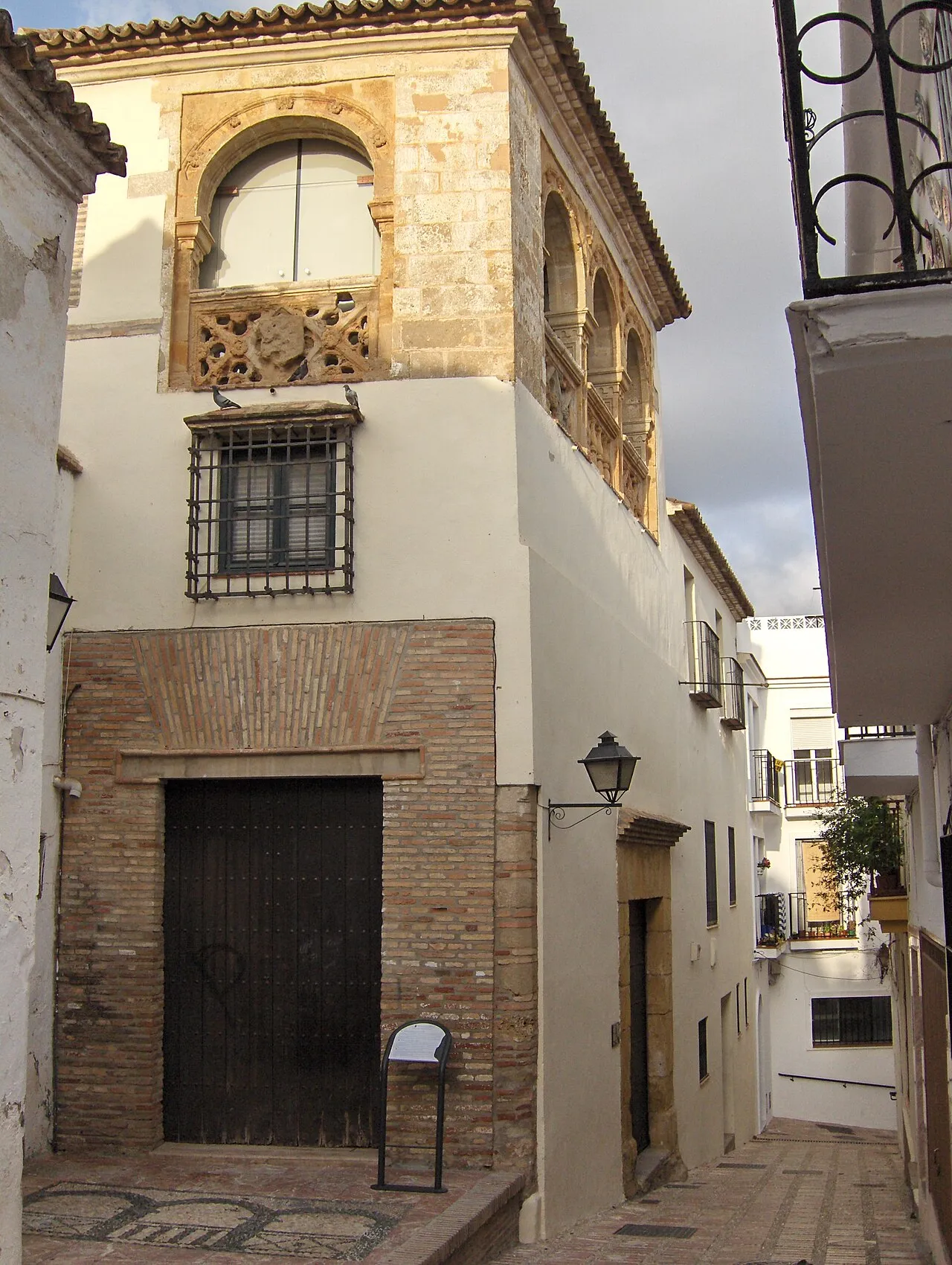
More than four thousand works signed by Picasso, Miró, Dalí, Chillida and Tàpies, inside a noble civil building of the sixteenth century. Check the opening hours before going.
Yes. They are ten original bronzes more than two metres tall and weighing between two hundred and four hundred kilos each, installed on the Avenida del Mar in 1998. They are in the open air, on a pedestrian avenue you walk down on your way to the beach, with free access at any hour.
It is his obsession with weightlessness and with dreams that defy physics, and it has a specific origin: he was fascinated by a sculpture Bernini designed in the seventeenth century for the Piazza della Minerva in Rome, a marble elephant carrying a genuine Egyptian obelisk. From the nineteen-forties on, the animal reappears again and again in his painting.
Elena Diákonova, Russian by birth, Dalí's wife and his great obsession. Before she crossed paths with him she had been married to the French poet Paul Éluard. Dalí painted her and sculpted her without a break for decades, and in Marbella she appears leaning out of a window in one of the ten pieces.
More than four thousand works on paper signed by Picasso, Miró, Dalí, Chillida and Tàpies, in one of the most important museums in Spain in its speciality. It was born from a donation of one thousand three hundred and fifty prints in 1992 and it occupies the Hospital Bazán, a noble civil building of the sixteenth century in the middle of the old town.
It is called La Victoria, it stands more than twenty metres tall and it was signed by the Georgian sculptor Zurab Tsereteli. It was installed in 1994 presented as a gift from the mayor of Moscow, but it ended up costing the municipal coffers money and two plots of land, it finished in court with stolen documents included, and there were even doubts as to whether the piece put up was the one that had been bought.
Mayor of Marbella from 1991 to 2002, with a party of his own, and at the same time president of Atlético de Madrid. He ran the town on a grand scale and in his own way, and he ended up surrounded by court cases. A good part of the city's public art — the Dalís and La Victoria — was installed during his mandate.
A long afternoon. The Dalís on the Avenida del Mar are fifteen minutes, the Museo del Grabado around an hour, and La Victoria a five-minute stop as you arrive at Puerto Banús. The natural thing is to link it with the old town on one side and with the beach or the port on the other.
Download Viavoy and walk Marbella offline, whenever you like.

Keep reading