La Tamborrada: twenty-four hours of drums in Donostia
The big festival of San Sebastián was born out of mocking an invading army. What happens on 20 January, where to be at midnight and why everyone is dressed as a cook.
At midnight between 19 and 20 January the city flag is raised in the Plaza de la Constitución and twenty-four unbroken hours of drums begin. Thousands of local people, dressed as cooks and as Napoleonic soldiers, cross the city playing without stopping until the following midnight. It is not a festival for tourists: it is the festival the city puts on for itself.
The raising of the flag at midnight in the Plaza de la Constitución is the key moment, and the square fills up a long time beforehand. If you want to be inside it, you have to go well in advance.
A festival born out of mockery
Barrels, water and the French occupation.
The origin lies in the Napoleonic occupation at the beginning of the nineteenth century. The French troops did their changes of guard and their parades with drums through the streets of the city, and the residents who went to the fountains for water began to mark the step by beating their barrels, imitating and parodying that military discipline.
That spontaneous mockery was repeated and ritualised until it became a tradition, and over the nineteenth century it was organised into companies with their own uniform, band and march. That the main festival of a city should consist of parodying an invading army says a good deal about the local character.
That is where the two costumes come from. The soldiers represent the Napoleonic troops and carry a drum; the cooks represent the residents and carry a barrel, which is the original instrument, the one that was beaten on the way to the fountain. Every company mixes the two.
The march played is always the same, the Marcha de San Sebastián, composed by Raimundo Sarriegui in the nineteenth century. It sounds literally for twenty-four hours all over the city, and anyone spending those days in Donostia learns it whether they want to or not.
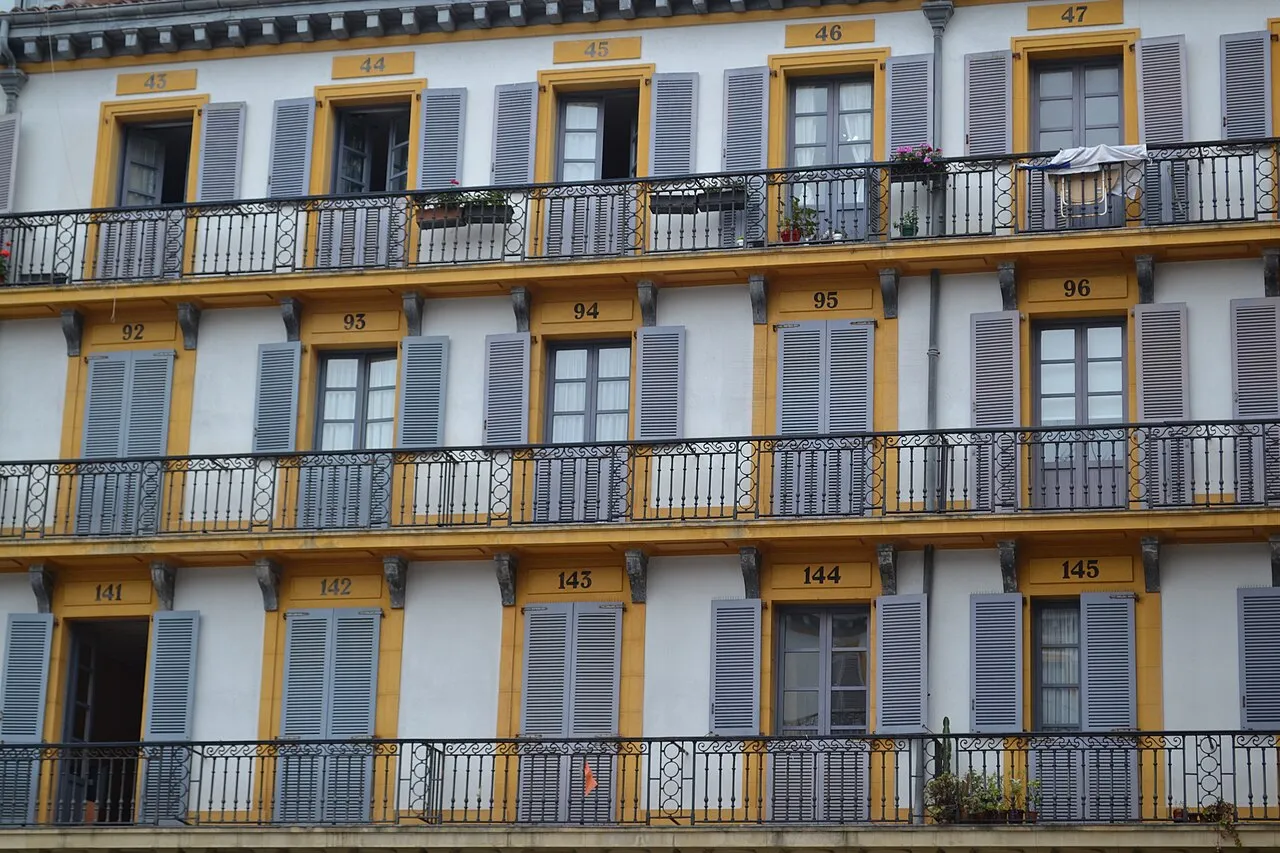
The setting for the raising of the flag at midnight, with the square and its numbered balconies full to the brim. It is the most crowded moment of the year in the city and you have to arrive a long way in advance to be inside the square.
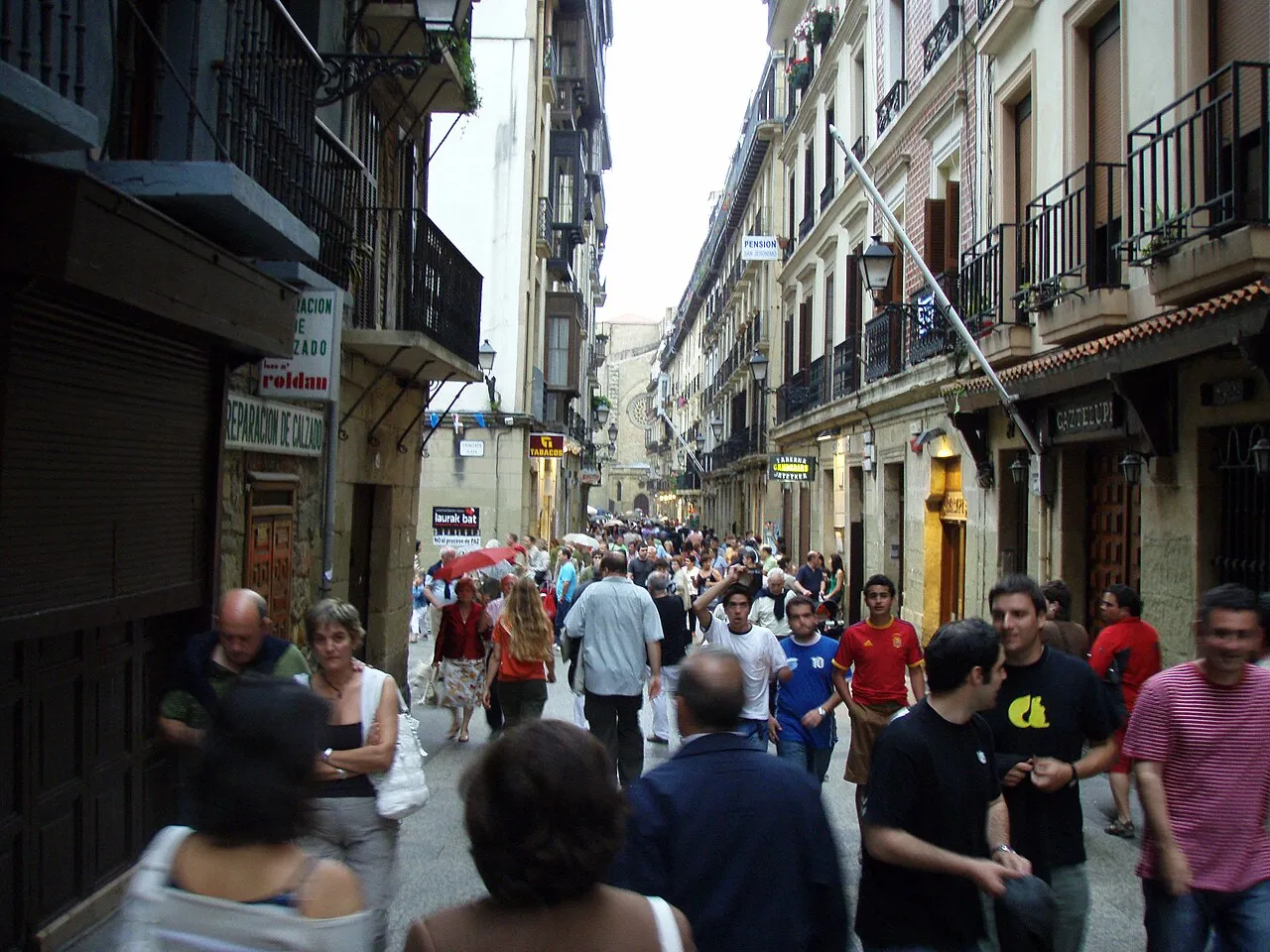
One of the streets the companies pass along throughout the day, and where the sound bounces between the façades in a particularly impressive way. It is also where some of the most veteran bars are, for getting your strength back.
Download the app and discover San Sebastián offline, whenever you like. Take the walking tour The Parte Vieja and Monte Urgull with a local guide in your ear.
After the flag is raised, the companies spread out across the city and do not stop. Each has its route, its timetable and its fixed stops, and at any moment of the night or the morning of the 20th there are drums sounding somewhere in the centre.
In the middle of the morning comes one of the best loved moments: the children's Tamborrada, with thousands of children from the city's schools parading with their own drums and barrels. It draws huge crowds, it is much photographed and it is considerably more accessible than the night events.
The gastronomic societies, which in this city carry enormous social weight, are the structure on which almost everything is organised: each one puts together its company, rehearses for months and eats together. Most of them are private, and that is why part of the festival happens behind closed doors.
At midnight on the 20th the flag is lowered in the same square and everything ends at once. That closing, with thousands of people in silence after a whole day of noise, is as impressive as the opening.
How to experience it as an outsider
The first thing worth understanding is that this is not a festival designed for the visitor. There are no stands, no programme aimed at tourism, no show in the usual sense: there is a city doing something of its own, and the outsider watches from the pavement. That is precisely what makes it valuable.
For the midnight raising of the flag you have to go to the Plaza de la Constitución well in advance, because it fills to the brim. If you cannot get a place, the surrounding streets fill up just the same and the atmosphere is identical, even if you do not see the ceremony.
For the rest of the day the best thing is not to plan: just walk through the Parte Vieja and the centre and the companies appear one after another. The children's Tamborrada, in the middle of the morning, is the easiest to see and one of the best.
A practical warning: it is January, it is cold and it rains often, the city fills up and accommodation rises sharply in price and sells out months in advance. And you do not sleep: the drums do not stop all night, and that includes the street your hotel is on.
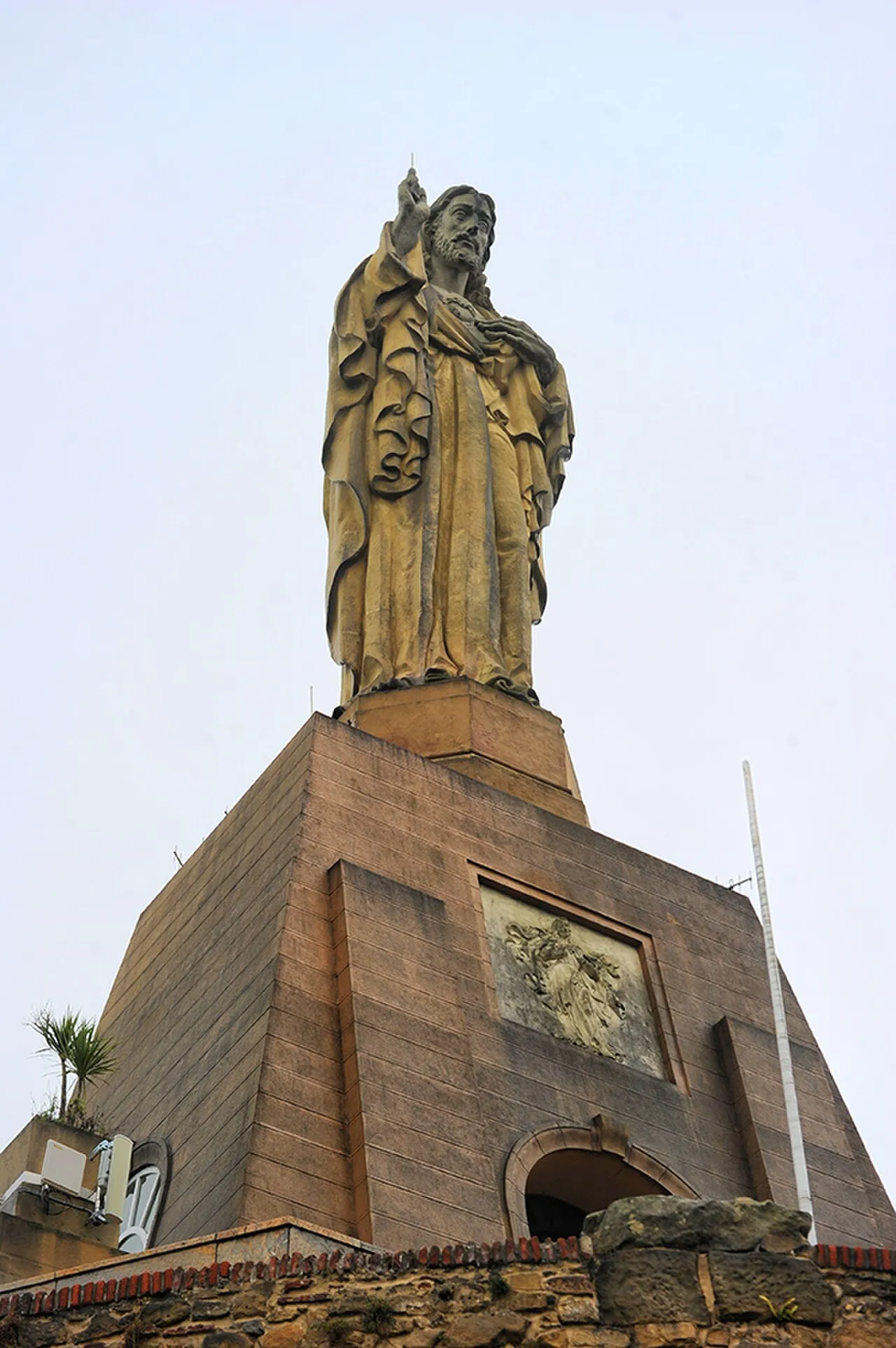
An escape route if the centre becomes unbearable with people. The hill is free and stays open, and from the top you hear the murmur of the drums rising from the city, which is a very different and rather beautiful way of living the day.
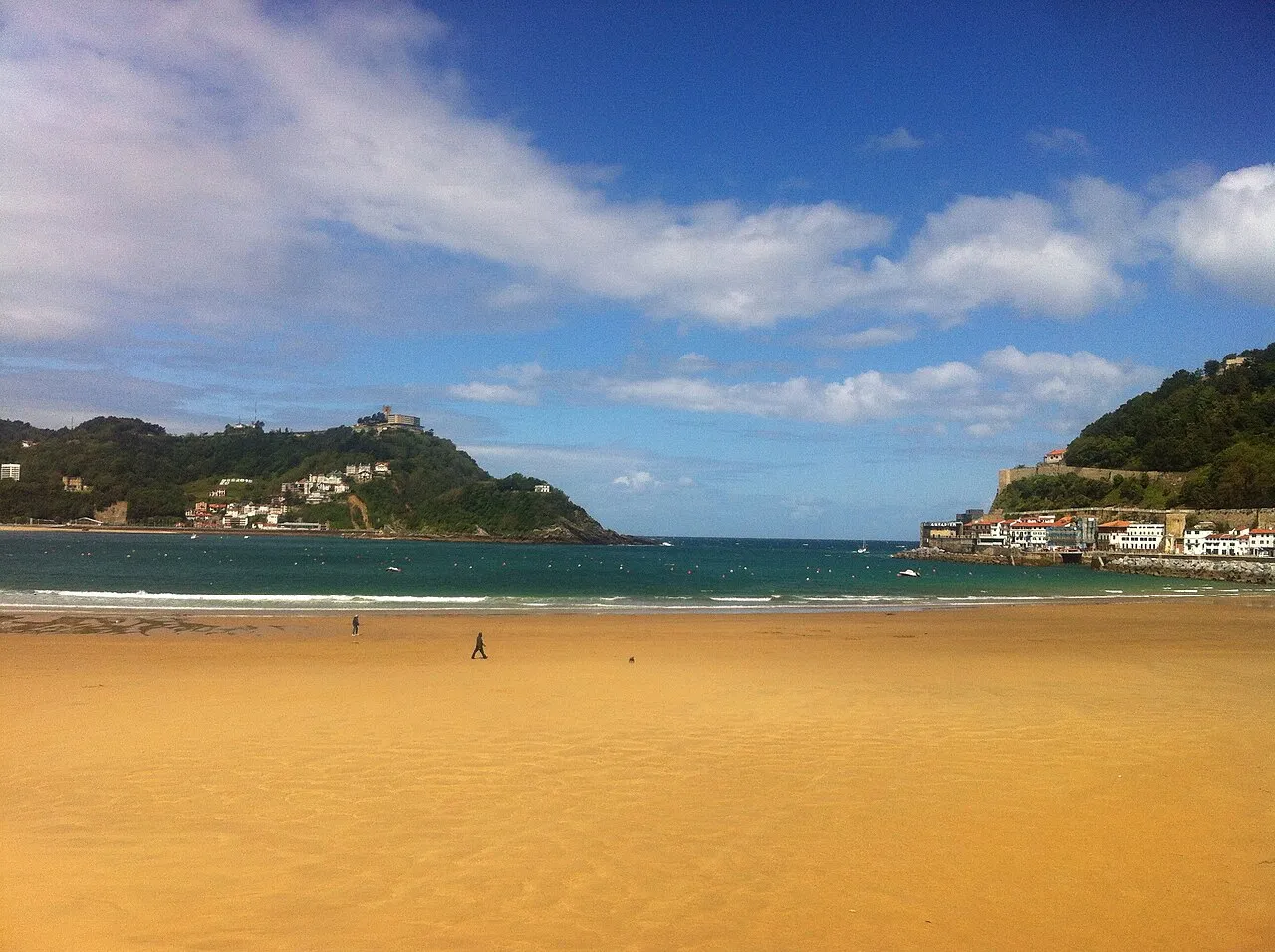
In January, with the tide out and the promenade empty, the beach is at one of its best moments of the year. It is the perfect quiet counterpoint to the hours of drums, and it is five minutes from the epicentre of the festival.
It starts at midnight between 19 and 20 January, with the raising of the city flag in the Plaza de la Constitución, and lasts exactly twenty-four hours, until midnight on the 20th, when it is lowered in the same place. 20 January is the feast of Saint Sebastian, patron of the city.
Why are they dressed as cooks and as soldiers?
The soldiers represent the Napoleonic troops that occupied the city at the beginning of the nineteenth century, and the cooks the residents who went to the fountains for water and marked the step by beating their barrels, parodying those military parades. The festival was born out of that mockery, and that is why the barrel is the original instrument.
Where should you be at midnight?
In the Plaza de la Constitución, where the flag is raised, but you have to go well in advance because it fills to the brim and it is the most crowded moment of the year. If you cannot get a place, the surrounding streets fill up just the same and the atmosphere is practically identical.
What is the children's Tamborrada?
The mid-morning parade on the 20th in which thousands of children from the city's schools take part with their own drums and barrels, organised by school. It draws huge crowds, is much loved locally and is considerably easier to see than the night events, so it is the best option for anyone travelling with a family.
Is it worth travelling on those dates?
If you are interested in seeing a genuine festival and not one staged for the visitor, very much so. What you have to accept is that it is January, with cold and likely rain, that the city fills up, that accommodation rises in price and sells out months in advance, and that you do not sleep, because the drums do not stop all night.
Can you visit the city as normal that day?
The beaches, the hills and the promenades stay open and work as usual, and in fact Monte Urgull is a good place to escape the crowd and listen to the drums from above. Museums and monuments may have special opening times, and the centre is hard to cross for a good part of the day.
Practical information
WhenFrom midnight between 19 and 20 January until midnight on the 20th. Exactly twenty-four hours.
Where it startsThe flag is raised in the Plaza de la Constitución. Arrive well in advance.
EssentialThe children's Tamborrada, in the middle of the morning of the 20th, with thousands of schoolchildren.
CostumesCooks with a barrel and Napoleonic soldiers with a drum. Every company mixes the two.
Where to stayIt sells out months in advance and prices rise sharply. And you do not sleep: the drums do not stop.
Watch outIt is January: cold and rain likely. It is not a festival put on for the visitor.
On the map
🎧 With Viavoy
Walk San Sebastián and listen at your own pace
Download Viavoy and walk San Sebastián offline, whenever you like.
from 2,99 €· one-off payment
City Pass · 9,99 €3 days, all the tours in San Sebastián