Eating in Salamanca: ibérico, hornazo and Lunes de Aguas
The province produces one of the best hams in the world and the city has a festival that consists, literally, of going out into the countryside to eat a pie. What to order, where and on what date.
Salamanca has an advantage that many Castilian cities would like: its province produces ibérico ham from Guijuelo, one of the best in the world, and the dehesa, the open oak pasture that makes it possible, begins half an hour from the old town. Add to that a hearty winter cuisine and a tradition no other city has: a festival whose only content is going out into the countryside to eat.
Lunes de Aguas falls on the Monday after Easter Monday. The whole city heads out into the countryside or to the banks of the Tormes to eat hornazo, and the origin of the festival is as unsolemn as it is entertaining.
Guijuelo ibérico
And why the dehesa matters.
Guijuelo is less than an hour from Salamanca and is one of the most recognised denominations of origin for ibérico ham. What makes this product what it is is not only the breed of the pig but the system: the dehesa, that open woodland of holm oaks and cork oaks where the animal feeds on acorns during the montanera.
That montanera runs from October to March and is when the pig, roaming free, fattens on acorns and grass. The fat it builds up then is what marbles the muscle and what gives the ham its texture and its flavour. An acorn-fed ibérico is literally a product of the forest.
Then comes the curing, which in Guijuelo benefits from the climate: considerable altitude, very cold winters and dry summers, ideal conditions for drying slowly. An acorn-fed ham can spend three years or more in the cellar.
In Salamanca it is eaten in tabernas and in specialist shops, carved by knife, and it is worth asking about the grade rather than simply ordering ham: there is a real difference between a cebo, a cebo de campo and a bellota, and the price reflects it.
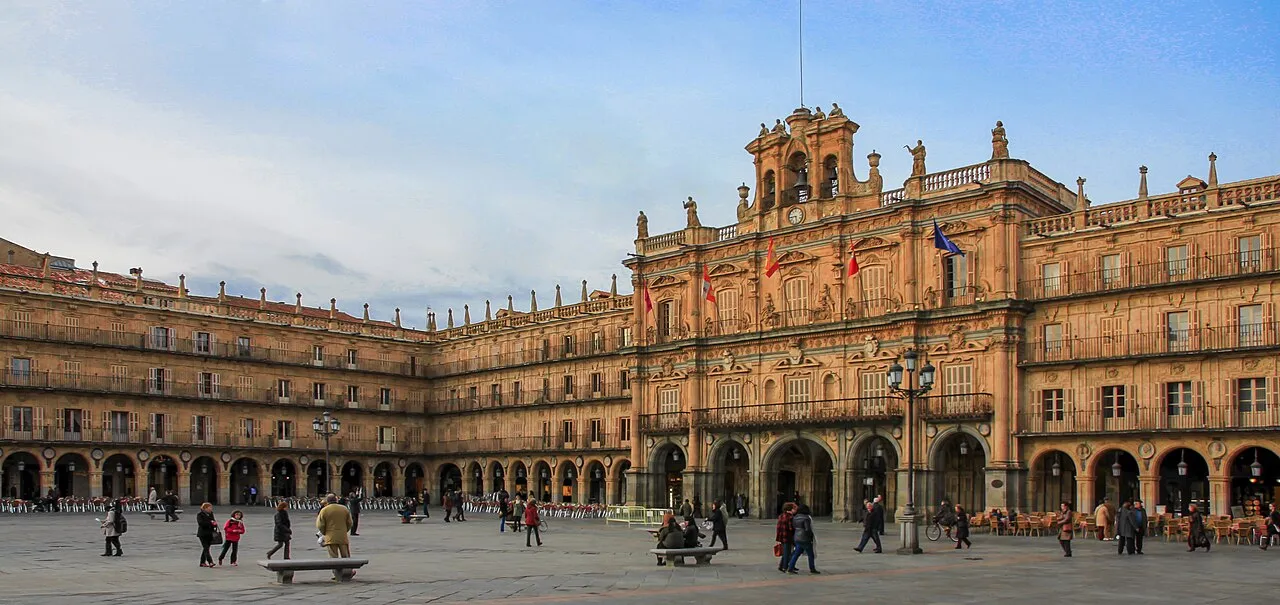
Beneath its arcades are the city's historic cafés, and the streets leading off it hold a good share of the restaurants. It is the obvious starting point, although the surrounding areas have better prices and less tourist pressure.
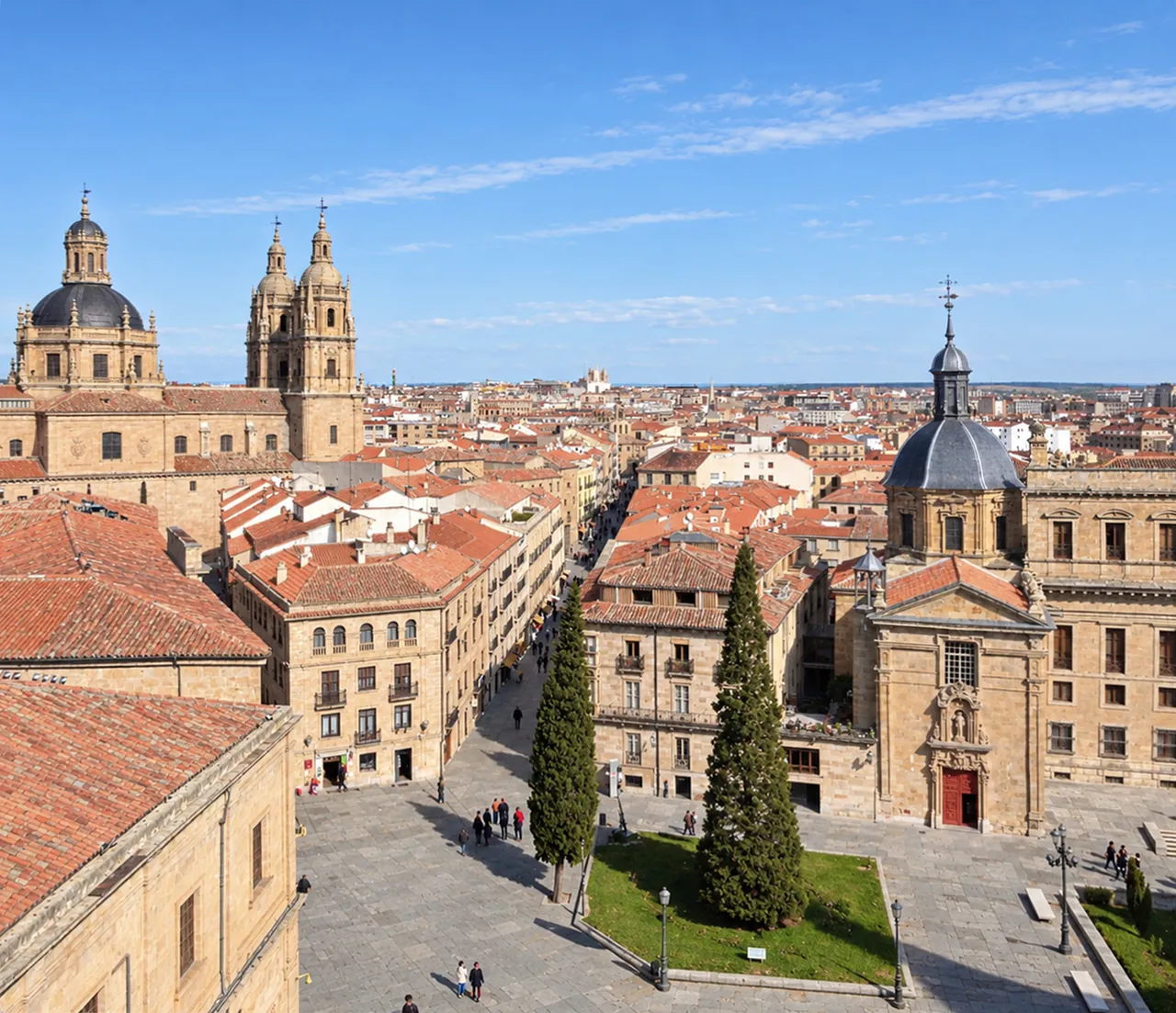
The axis linking the square with the university buildings, with shops and restaurants on both sides. Very busy, and priced accordingly: to eat well it is worth turning into the side streets, where the local and student clientele is.
Hornazo is a dense-crusted pie filled with marinated pork loin, chorizo, ham and boiled egg, baked whole and cut into portions. It is eaten all year round, but it has a date of its own and a story behind it that deserves telling.
Lunes de Aguas falls on the Monday after Easter Monday and its origin goes back to the sixteenth century. During Lent, the authorities expelled the prostitutes from the city and moved them to the other side of the Tormes, to guarantee that the students kept to their studies during those weeks.
On the Monday after Easter Monday they came back across the river in boats, escorted by a cleric they called the Padre Putas, the whores' father, and the students went out to meet them on the far bank with food and wine. From that celebration the festival was born, and today it consists of going out into the countryside or to the riverbank to eat hornazo.
The origin is so unsolemn that for a long time it was told in a sweetened version, but it is documented. Today it is probably the most widely attended festival in the city and works as a massive collective picnic on the banks of the Tormes.
What else to order and where
Chanfaina is the house stew: rice with lamb offal, chorizo and spices, cooked long and hearty to the point of being indisputable. It is thrifty cooking, winter cooking, long-table cooking, and it is found in the traditional tabernas of the old town.
Roast lamb and suckling pig are also part of the repertoire, with the same Castilian wood-fired oven technique used all across the meseta, along with meat from the Morucha, the province's native breed, which has a protected geographical indication of its own.
For dessert, chochos — sugared almonds — and bollo maimón, a ring-shaped sponge cake that used to be made for weddings. And to drink, wines from two small denominations in the province: Sierra de Salamanca, with the rufete grape, and Arribes, on the border with Portugal.
On the areas: the Plaza Mayor and the Rúa Mayor concentrate the tourism and the prices that come with it. To eat well it is worth turning into the side streets of the old town and heading for the Van Dyck area, already outside the historic centre, which is where people from the city go for ibérico and grilled meat.
One of the most pleasant squares for a terrace table in the centre, five minutes from the Plaza Mayor and with far less through traffic. A good place for a pause within a walk around noble Salamanca, and with more reasonable prices than the main axis.
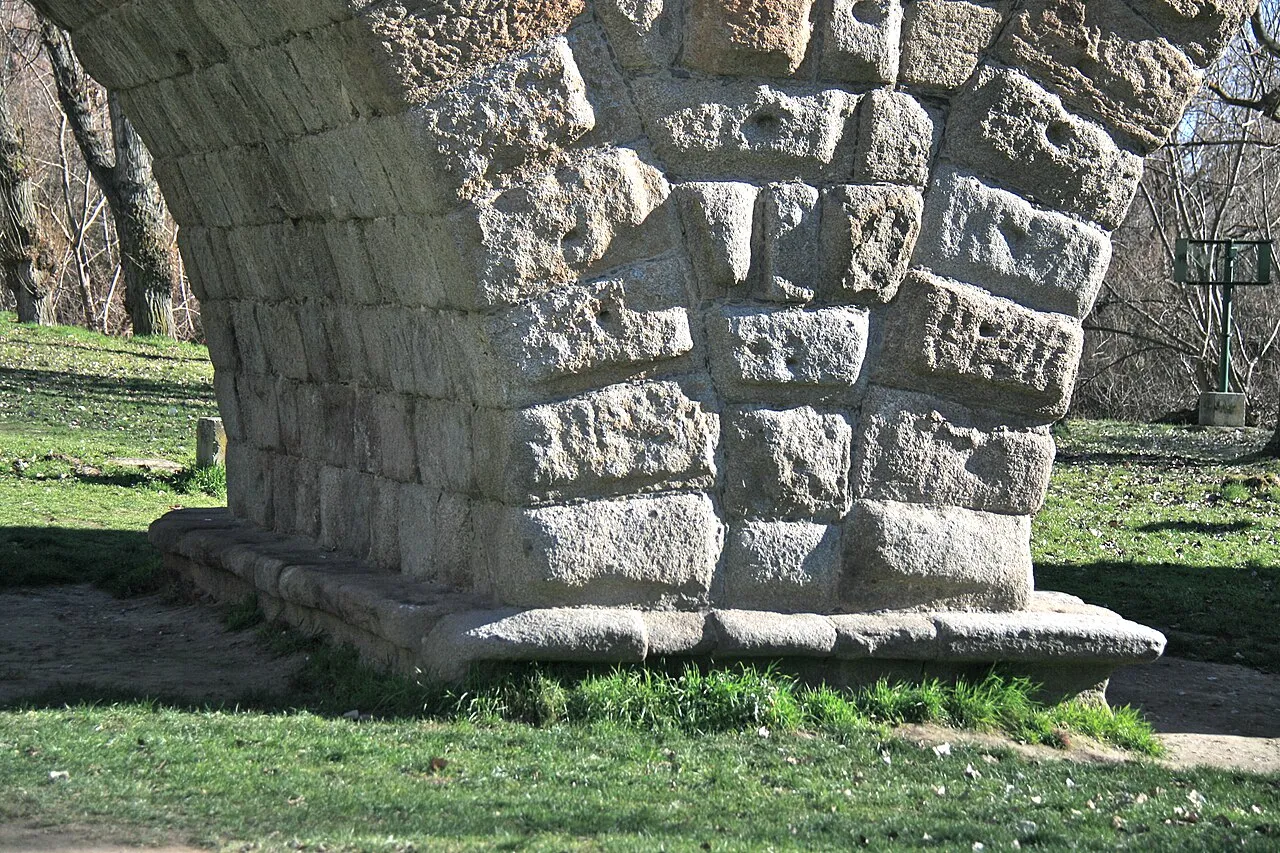
The setting for Lunes de Aguas: the festival is held on the riverbank, on the far side of the bridge, where the whole city goes out to eat hornazo on the Monday after Easter Monday. The rest of the year, the bank is a place for walking and for people out running.
A dense-crusted pie filled with marinated pork loin, chorizo, ham and boiled egg, baked whole and cut into portions. It is eaten all year round in Salamanca, but it has a date of its own, Lunes de Aguas, when the whole city goes out into the countryside or to the banks of the Tormes to eat it.
When is Lunes de Aguas?
The Monday after Easter Monday, so the date changes every year. It is probably the most widely attended festival in Salamanca and consists of going out into the countryside or to the riverbank to eat hornazo. It works as a massive collective picnic and has no official programme beyond that.
What is the origin of that festival?
It is documented, and it is not solemn. In the sixteenth century the authorities expelled the prostitutes from the city during Lent, moving them to the other side of the Tormes to guarantee that the students kept to their studies. On the Monday after Easter Monday they came back by boat escorted by a cleric, and the students went out to meet them with food and wine.
Why is Guijuelo ibérico so good?
For two reasons: the dehesa and the climate. The pig feeds on acorns in freedom during the montanera, from October to March, and that fat marbles the muscle. Then the altitude of Guijuelo, with very cold winters and dry summers, allows a slow curing that can go beyond three years for acorn-fed pieces.
What is chanfaina?
The city's traditional stew: rice with lamb offal, chorizo and spices, cooked long and fairly hearty. It is thrifty winter cooking, and it is found in the traditional tabernas of the old town. It is not a light dish and does not pretend to be.
Where is it best to eat?
The Plaza Mayor and the Rúa Mayor concentrate the tourism and the prices that come with it. To eat better and more cheaply it is worth turning into the side streets of the old town, where the student clientele goes, and heading for the Van Dyck area, already outside the historic centre, which is where people from the city eat ibérico and grilled meat.
Practical information
The productGuijuelo ibérico, less than an hour away. Ask about the grade: cebo, cebo de campo or bellota.
The dishHornazo, a pie of marinated pork loin, chorizo, ham and egg. Eaten all year round.
The festivalLunes de Aguas, the Monday after Easter Monday. The whole city heads for the banks of the Tormes.
From the potChanfaina: rice with lamb offal. A hearty winter dish.
DrinkingWines from Sierra de Salamanca, with the rufete grape, or from Arribes.
WhereThe side streets of the old town and the Van Dyck area, outside the centre. The Rúa Mayor is the most touristy.
On the map
🎧 With Viavoy
Walk Salamanca and listen at your own pace
Download Viavoy and walk Salamanca offline, whenever you like.
from 2,99 €· one-off payment
City Pass · 9,99 €3 days, all the tours in Salamanca