Noble Salamanca: palaces, skulls and a war of factions
The north of the old town holds the palaces and almost nobody walks it. A palace of which only a quarter was ever built, four skulls that spawned legends and a city split in two for two centuries.
Before it was a city of students, Salamanca was a city of noble lineages, and that layer survives almost intact in the north of the old town: Renaissance palaces, houses with coats of arms and squares named after real conflicts. It is five minutes from the Plaza Mayor and receives a tiny fraction of the visitors, who concentrate along the university axis.
During the fourteenth and fifteenth centuries the city was split into two noble factions locked in a fight to the death. It was not a symbolic rivalry: there were ambushes, murders and families wiped out inside the walls.
Monterrey: a quarter of a project that set the model
The most copied Renaissance palace in Spain.
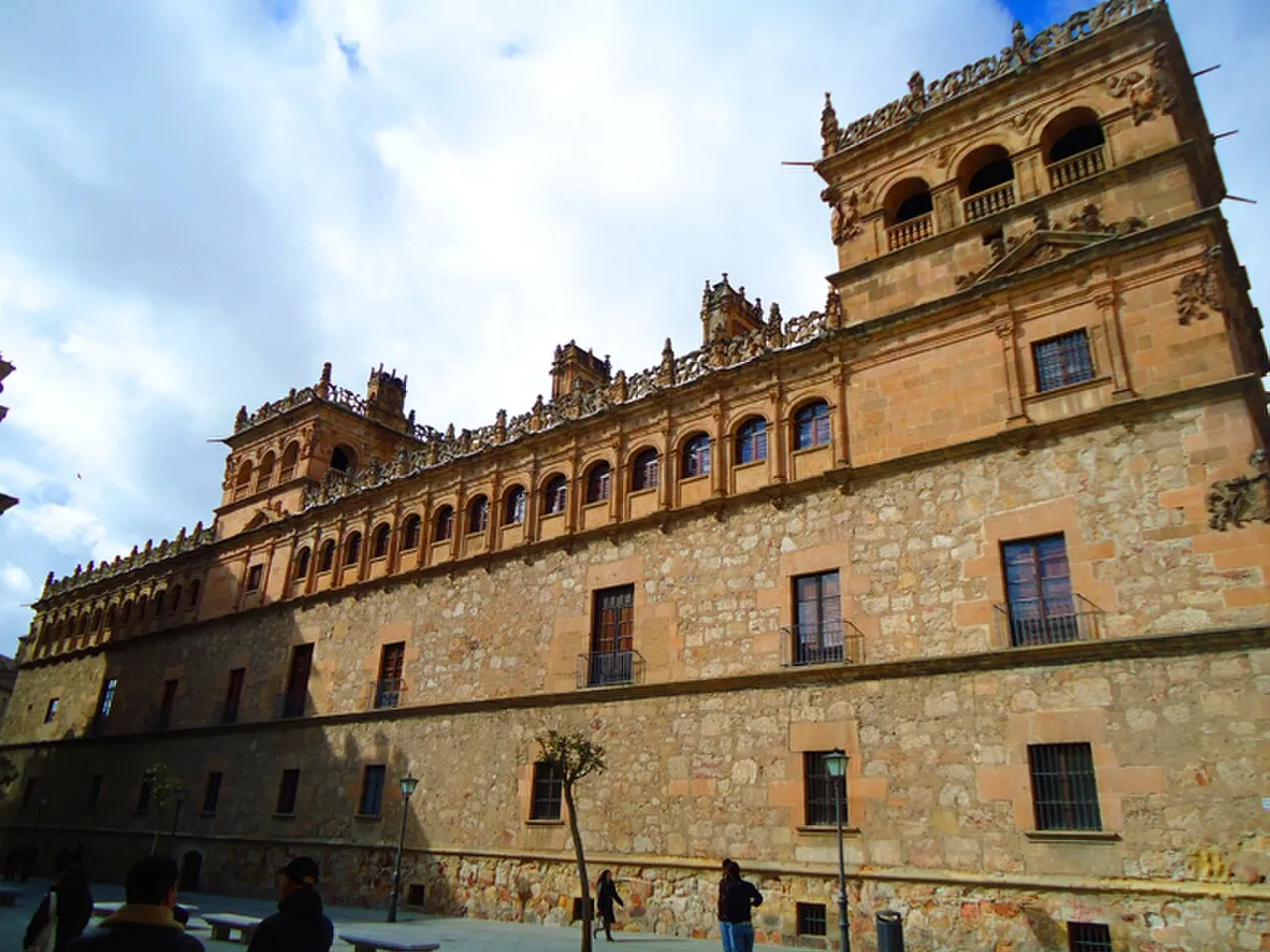
It was begun around 1539 by the third count of Monterrey to a design by Rodrigo Gil de Hontañón, the architect of the New Cathedral. The plan was a square block with a tower at each corner and a central courtyard. One wing with two towers went up and the work stopped for lack of funds.
What today looks like a long, balanced façade is in fact a side, and the building was left without the courtyard or the volume that gave it meaning. The paradox is that this fragment worked better than the whole that had been planned.
The combination of a solid lower storey, an open upper gallery with segmental arches and a crested parapet on top proved so effective that it became a type and was repeated all over Castile during the following century. It is the most influential Renaissance palace in Spain.
The most Italian and most copied feature is the chimneys: each one is carved and composed as if it were a small temple, set among the openwork cresting. In a country where roofs were usually settled without further thought, deciding that the silhouette against the sky was part of the design was a new idea.
It belongs to the House of Alba and for a long time it could not be visited. For some years now it has opened for guided visits in limited time slots, allowing you to see rooms with furniture, tapestries and paintings from the family collection. Even if you do not go in, the exterior makes up for it.
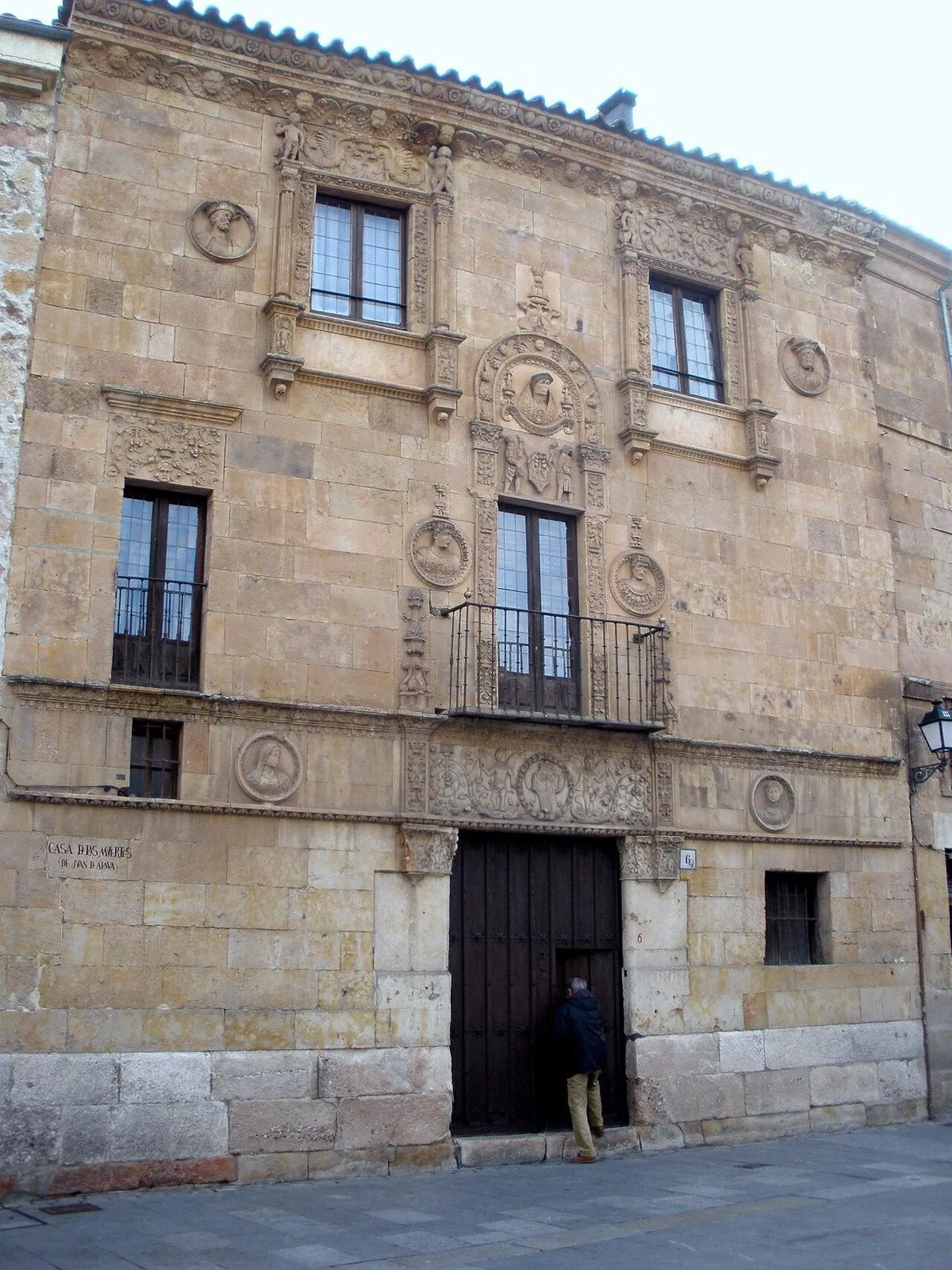
Four small skulls on the corbels of the lower part, hard to spot, which the city turned into a dark legend with stories of crimes and apparitions with no basis whatsoever. They are in fact a conventional memento mori dedicated to Archbishop Fonseca.
Download the app and discover Salamanca offline, whenever you like. Take the walking tour Palaces, squares and noble Salamanca with a local guide in your ear.
The Plaza de los Bandos carries that name for a concrete reason. During the fourteenth and fifteenth centuries the urban noble lineages grouped into two factions, that of San Benito and that of Santo Tomé, in order to control council posts, revenues and justice, and that competition degenerated into open violence for decades.
Each faction took the name of the parish around which it organised itself, and those churches worked as headquarters, meeting point and family burial place. Going to mass was, literally, a declaration of allegiance. The city ended up paralysed by the conflict.
The best remembered story is that of doña María Rodríguez de Monroy, known as María la Brava, the fierce one. Her two sons died at the hands of the Manzano brothers, of the rival family. The chronicle tells that she gathered a group of men, chased them as far as Portugal, killed them and came back with their heads, which she laid on her sons' tomb.
Her house survives on this same square, with its Gothic façade and the family coat of arms. What today is a quiet space with terrace tables was the centre of a war that lasted generations and was only calmed by the intervention of the crown and the mediation of San Juan de Sahagún.
Fonseca, and the visual rest
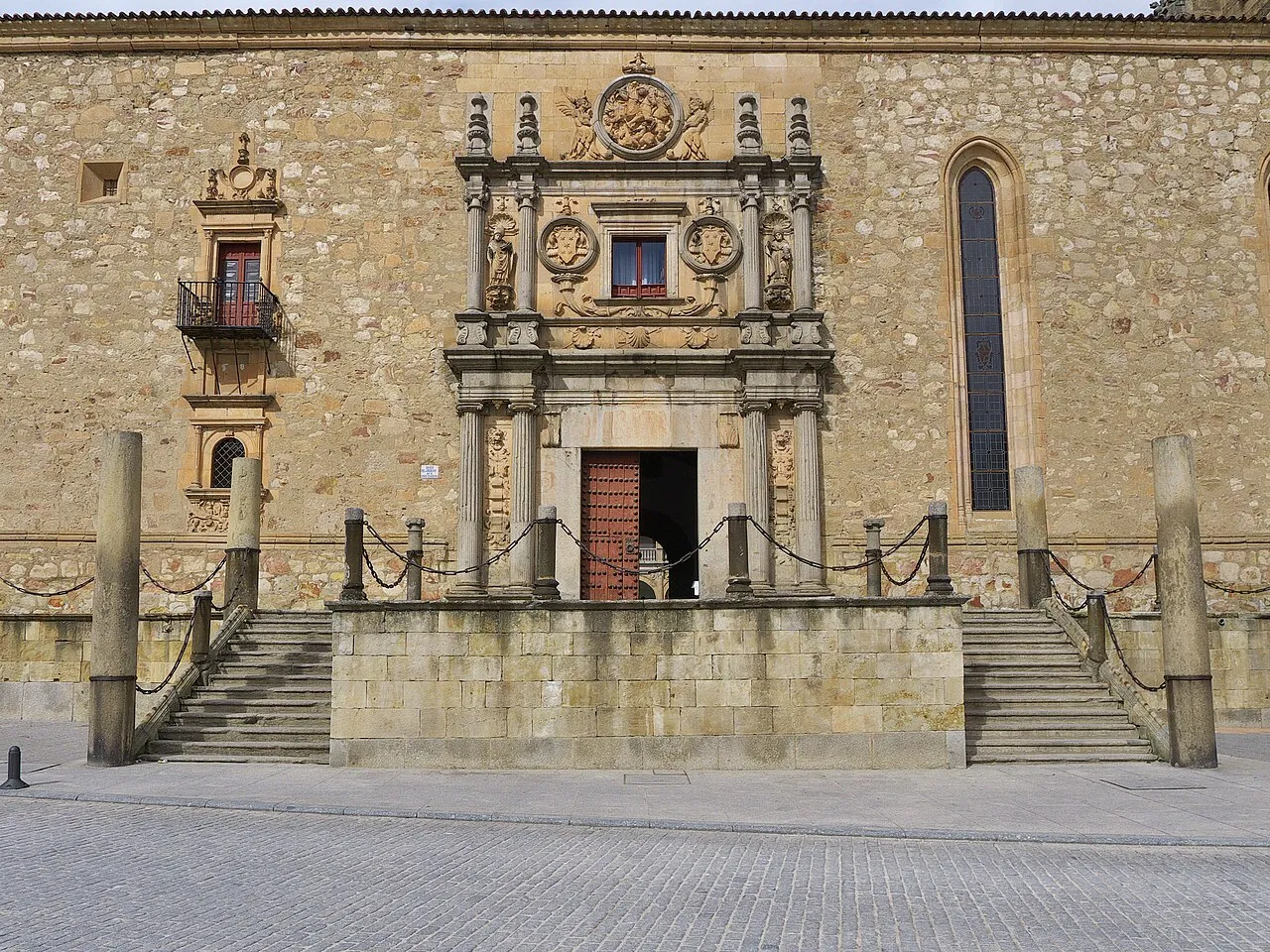
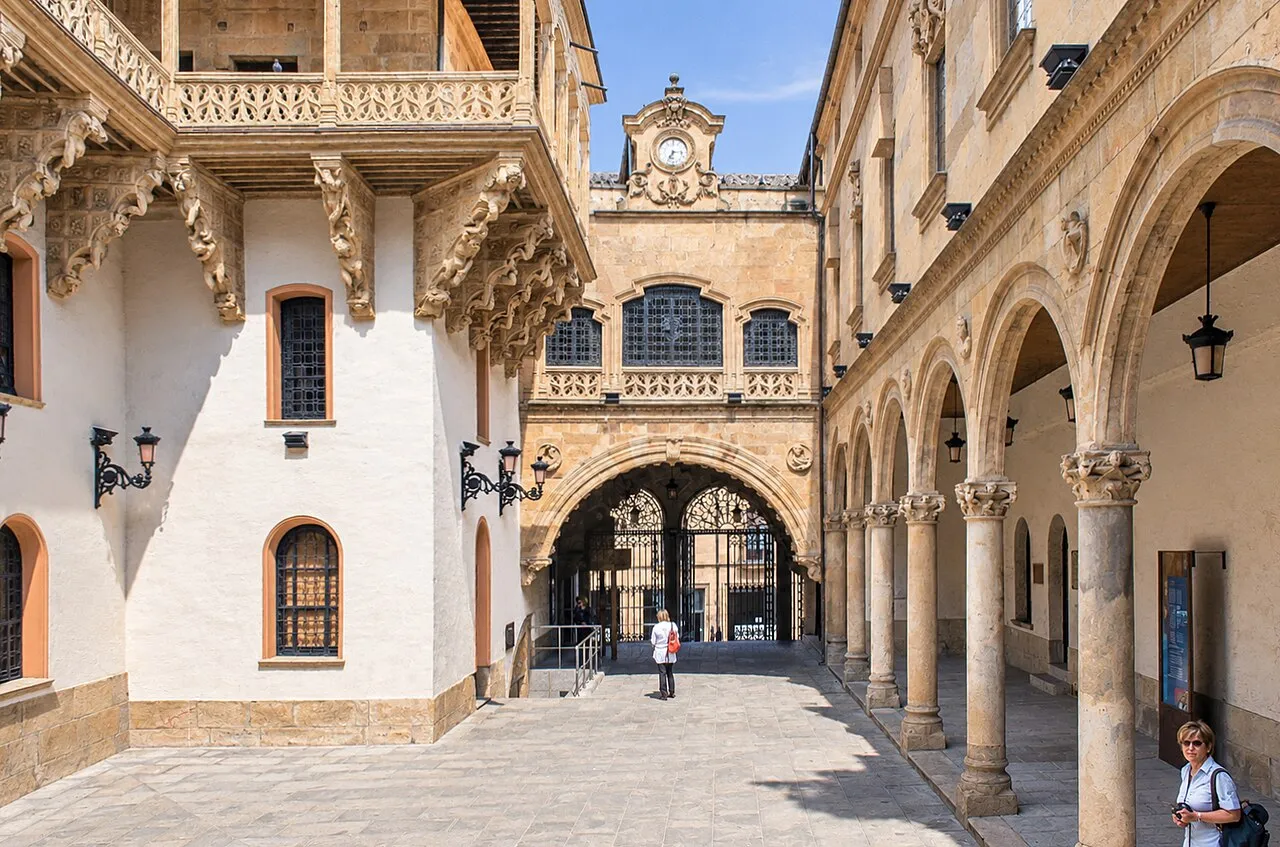
At the north-western end of the old town, ten minutes from the Plaza Mayor, stands the Colegio Mayor de Santiago Apóstol, known as the Colegio de los Irlandeses, the Irish college. It was founded in 1519 by Archbishop Alonso de Fonseca and its courtyard was designed by Diego de Siloé.
That courtyard is probably the purest Renaissance space in Salamanca: two storeys of arcading on columns, medallions in the spandrels and a proportion so measured that it conveys a calm no other space in the city reaches. Siloé came from Italy and brought a classicism far more orthodox than the decorative local Plateresque.
That is why it is worth leaving it for the end of the day rather than the beginning. After a day of façades saturated with ornament, this courtyard works as a visual rest, and you feel that difference physically as you step in.
The chapel also holds an altarpiece by Alonso Berruguete, the most important sculptor of the Spanish Renaissance, a first-rate piece that almost nobody associates with this building. The name Irlandeses comes from the nineteenth century, when it took in Catholic students who could not train in their own country.
Today it is a pleasant space with terrace tables and shade, and it works well as a pause. The house of María la Brava stands on one of its sides, with a Gothic façade and coat of arms, and cannot be visited inside. San Juan de Sahagún, the friar who mediated, ended up as the city's patron saint.
One of the four colegios mayores of Salamanca, institutions with their own revenues and statutes that produced bishops and senior figures in the Castilian administration. Today it belongs to the university and the courtyard and chapel can be entered for about 3 €.
Another sixteenth-century palace, today the seat of the provincial council, with a courtyard that holds a curiosity: a gallery held up by corbels carved with twisted human figures and expressions of effort, as if they were physically bearing the weight. Free access during office hours.
Because only a quarter of the project was ever carried out. Rodrigo Gil de Hontañón's plan called for a square block with a tower at each corner and a central courtyard; one wing with two towers went up and the work stopped for lack of funds. What today looks like a complete façade is in fact a side.
What are the four skulls on the Casa de las Muertes?
A conventional Renaissance memento mori, carved on the corbels of the lower part of the façade, alluding to Archbishop Alonso de Fonseca, to whose memory the house was dedicated. The city later built its own story around them with tales of crimes and apparitions, none of them with any documentary basis.
What was the war of the factions?
During the fourteenth and fifteenth centuries the noble lineages of Salamanca grouped into two factions, San Benito and Santo Tomé, to control council posts and revenues, and the competition degenerated into open violence with ambushes and murders inside the walls. The city ended up paralysed for decades.
Who was María la Brava?
Doña María Rodríguez de Monroy, whose two sons died at the hands of the rival family during the conflict of the factions. The chronicle tells that she gathered a group of men, chased the killers as far as Portugal, killed them and came back to Salamanca with their heads, which she placed on her sons' tomb. Her house still stands on the Plaza de los Bandos.
Is the Fonseca courtyard worth it?
Very much so, and it is one of the least visited spaces in the old town. Diego de Siloé designed it with an orthodox classicism brought from Italy, without the ornamental saturation of the dominant Plateresque, and it conveys a calm no other place in the city reaches. Its chapel also holds an altarpiece by Alonso Berruguete.
Can you go inside the Palacio de Monterrey?
For some years now, yes, with a guided visit and in limited time slots, since it belongs to the House of Alba. It lets you see some rooms with furniture, tapestries and paintings from the family collection. It is worth checking the times in advance. Even if you do not go in, the exterior is reward enough on its own.
Practical information
WhereNorth and north-west of the old town, 5-10 minutes from the Plaza Mayor.
DurationA good hour for the full walk with Fonseca included.
FreePlaza de los Bandos, the exteriors of Monterrey and the Casa de las Muertes, the courtyard of La Salina.
What costs moneyFonseca, about 3 €. Monterrey, with guided visits in limited time slots.
TipLeave Fonseca for the end: after saturated Plateresque it works as a visual rest.
Watch outThe skulls of the Casa de las Muertes are tiny and sit on the lower corbels.
On the map
🎧 With Viavoy
Walk Salamanca and listen at your own pace
Download Viavoy and walk Salamanca offline, whenever you like.
from 2,99 €· one-off payment
City Pass · 9,99 €3 days, all the tours in Salamanca