Here you do not dress up: you compose. Four categories with rules of their own, a competition that lasts weeks and lyrics that criticise the powerful by name. How it works and how to experience it.
The essential difference between Cádiz Carnival and any other in the world comes down to one verb: here, people sing. It is not a fancy-dress party with music in the background, it is a competition of composition and lyrics in which groups that rehearse for months compete with repertoires of their own. And those lyrics are razor-sharp.
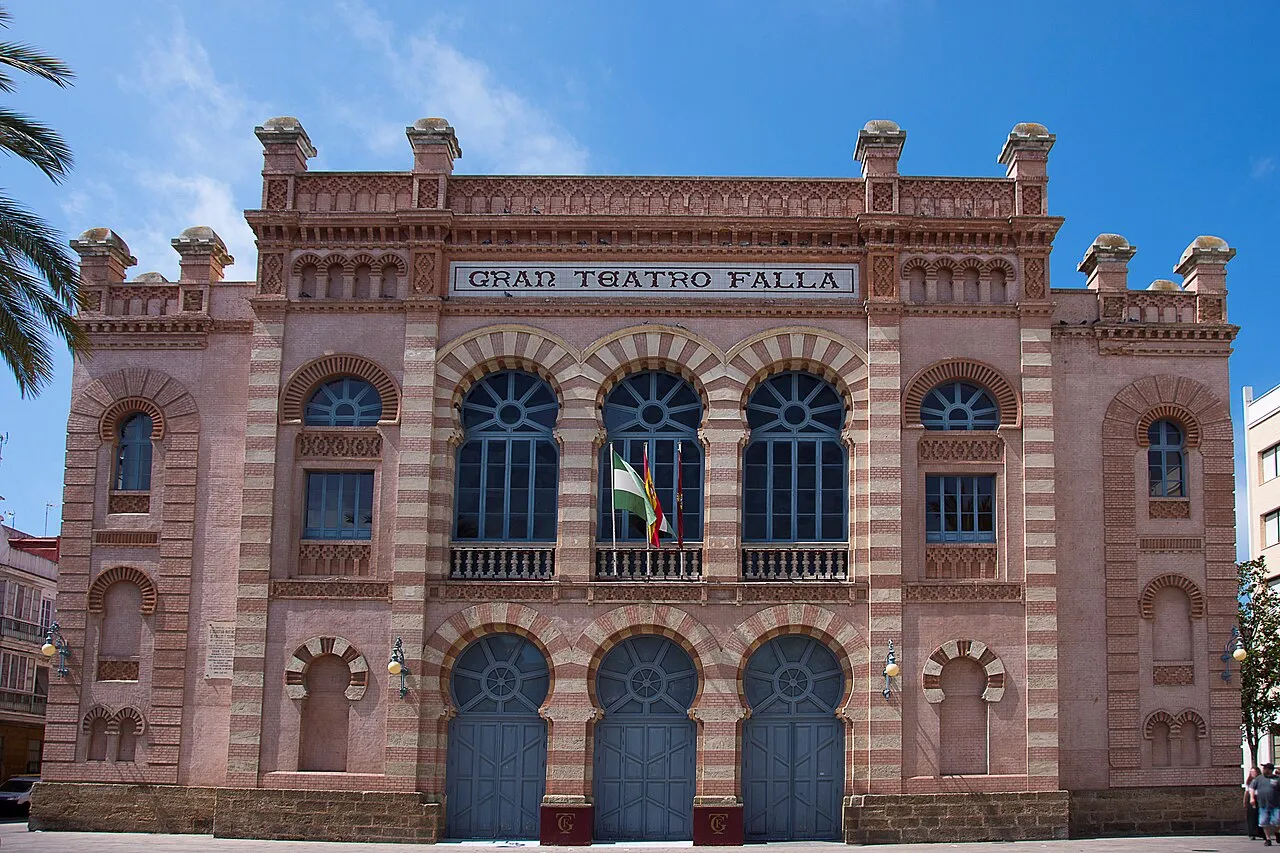
The Concurso Oficial de Agrupaciones, the official competition at the Gran Teatro Falla, starts weeks before Carnival and runs until the final. Tickets and accommodation sell out months in advance.
Four categories and their rules
Each one competes in its own class.
The chirigota is the best known and the most comic: groups of a dozen or so people in a collective costume and a repertoire of shameless humour, with short, catchy cuplés. Their speciality is the topical joke and they spare absolutely nobody.
The comparsa is its lyrical opposite: more polished voices, harmonies in several parts and lyrics that range from social criticism to the sentimental, with pasodobles that are listened to in silence. Many Gaditans would say it is the category with the highest musical level.
The coro is the large formation, thirty or forty people, which goes out on a float through the streets accompanied by bandurrias, lutes and guitars. Its tangos are a genre of their own and are sung in the open air, not in the theatre.
And the cuarteto, which is the hardest to explain: three or four people mixing theatrical parody, spoken sketches and music on improbable instruments, often a couple of sticks. It is absurd humour taken to the limit and it is the most Gaditan category of them all.
The cathedral of Carnival, neo-Mudéjar in red brick raised between 1884 and 1905 on the site of a theatre that had burnt down. The official competition starts weeks before the festival and the whole city follows it, in the theatre or on television. It seats more than a thousand.
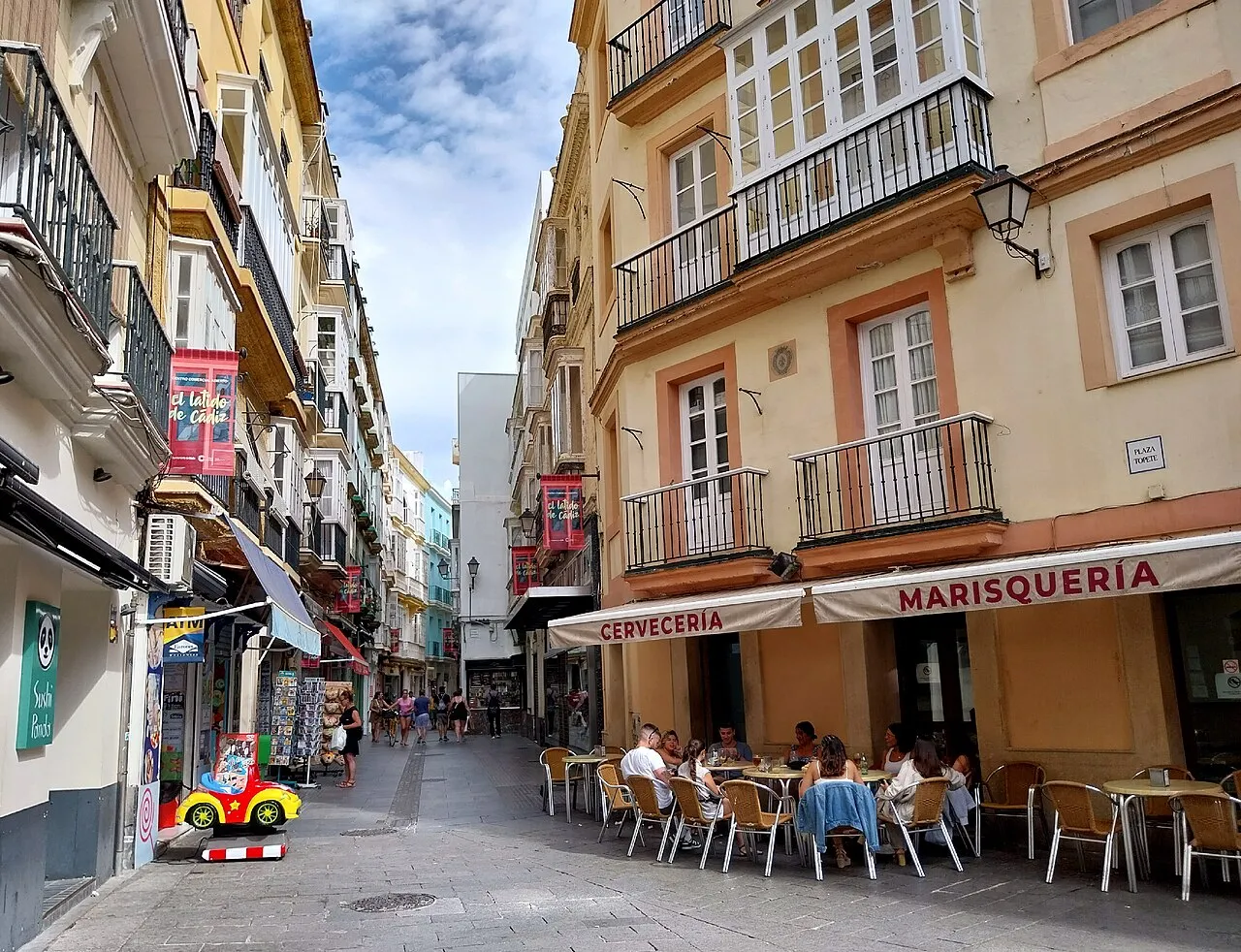
One of the epicentres of street Carnival, where the roaming groups and the atmosphere concentrate during the big days. The rest of the year it is the square of the flower stalls and the freidurías, and one of the most pleasant in the old town.
What sets this Carnival apart is the level of the writing. The authors work for months on repertoires that combine classical metre, full rhyme and a command of double meaning that in the best groups reaches genuine literary quality.
And they are political without any ambiguity. The coplas criticise the government of the day, the city council, the church, the monarchy and whoever else needs it, by name and without euphemism. That tradition of mockery aimed at power is the core of the festival, not a decoration.
Under the Franco dictatorship Carnival was banned outright, and to stop it disappearing it was renamed with an inoffensive title: “Fiestas Típicas Gaditanas”. The people of Cádiz went on singing as best they could, with the censors going over the lyrics, and when they got their freedom back they got the name back too.
That episode explains a good deal about the character of the festival. In Cádiz, Carnival is not a tourist attraction that became popular: it is a form of expression that survived a ban, and you can tell in the way the city lives it.
How to experience it as an outsider
There are two different carnivals and it is worth choosing. The theatre one is the official competition, with tickets, long sessions and a high musical level; the street one is what happens during the big days, with the so-called illegal groups — that is what they are called, with no pejorative intent — singing without competition or permit around the squares of the old town.
The street version is more accessible and easier to enjoy without knowing the context: you walk through the old town, come across groups, stop to listen and move on. The liveliest areas are the Plaza de las Flores, the Plaza de la Catedral and the La Viña neighbourhood.
One important warning: the city fills up to a degree that is hard to imagine, accommodation sells out months in advance and prices multiply. Many people sleep in Jerez or El Puerto de Santa María and come in by train or catamaran.
And if your trip does not coincide, you do not lose everything. The Falla can be visited at set times, and at any time of year there are Gaditans willing to explain the difference between a comparsa and a chirigota with more passion than you would expect.
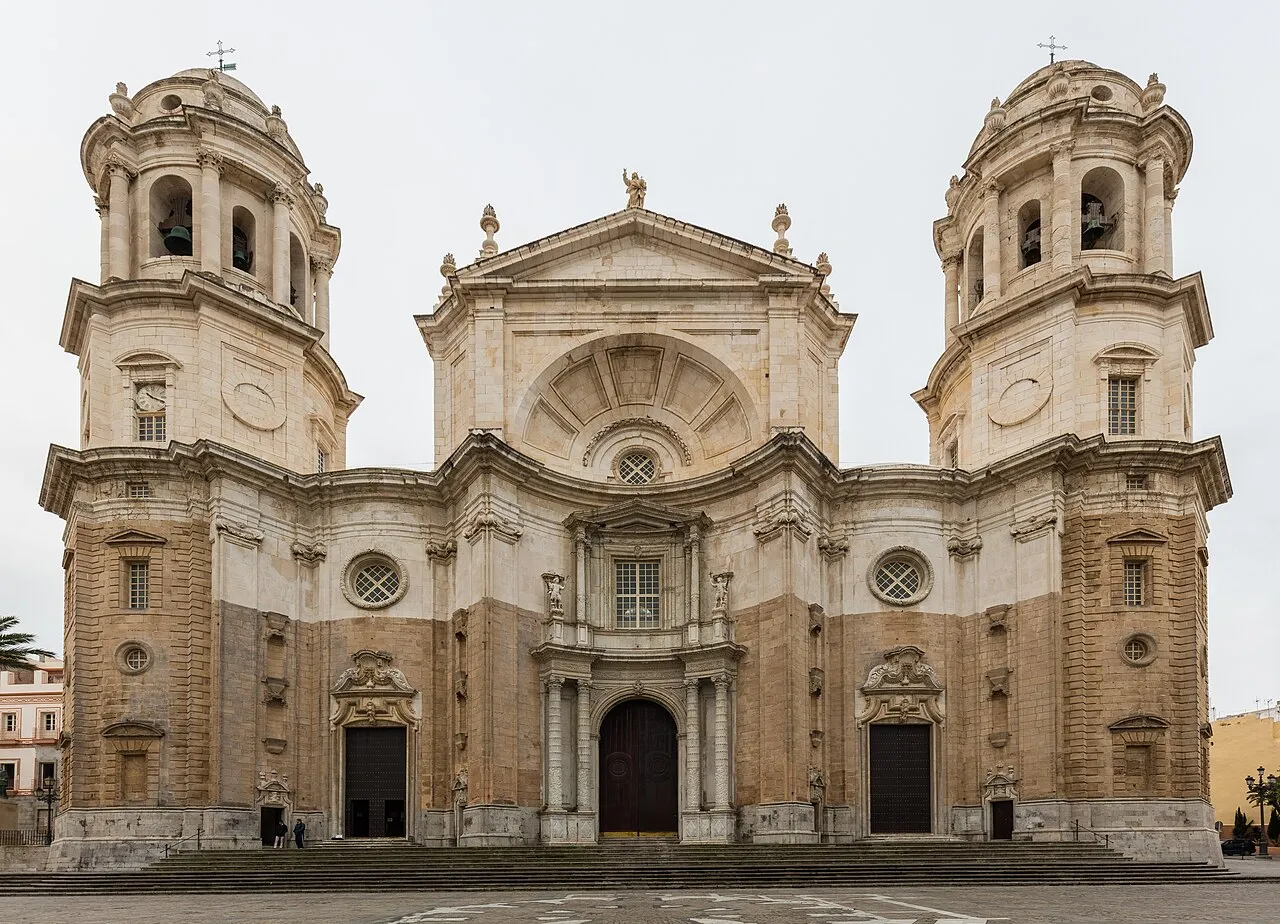
Its square is one of the liveliest spots of the street Carnival, with groups singing in front of the Baroque façade. The rest of the year it is the compulsory stop of the old town, with a crypt and a ramp up the tower.
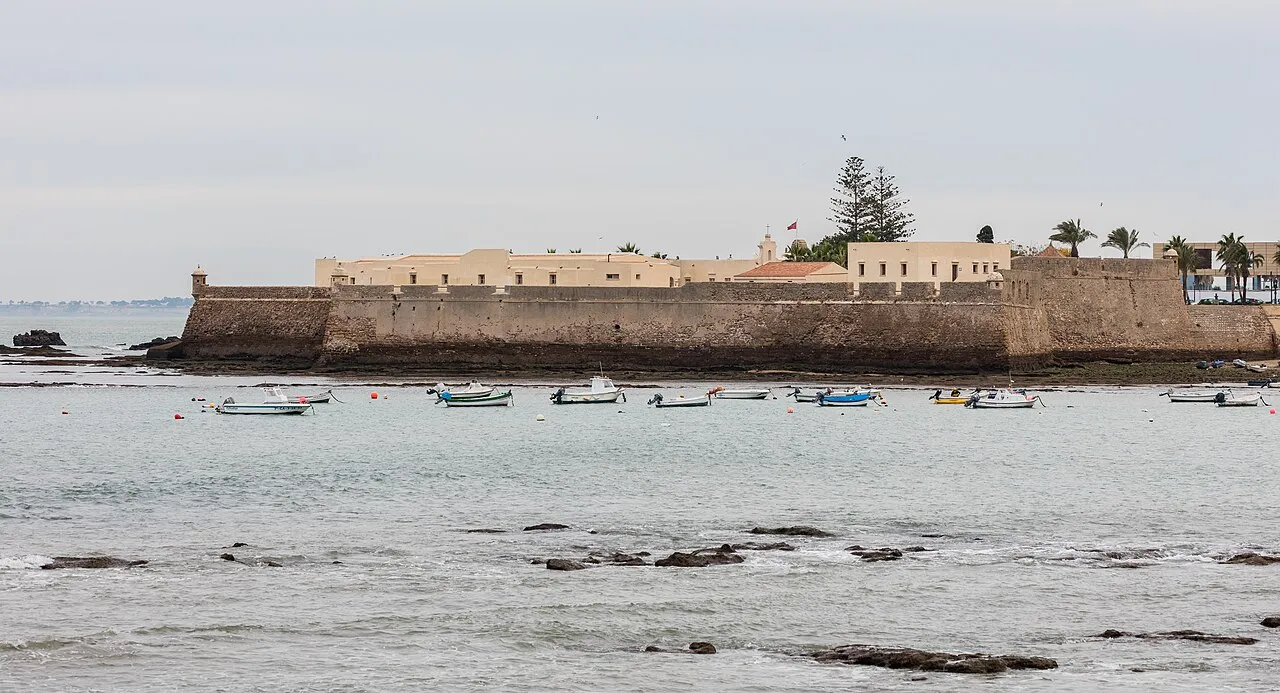
The neighbourhood of the freidurías and of the most street-level Carnival, between the old town and La Caleta. During the big days it is where a good part of the atmosphere concentrates, and the rest of the year it is the best place in the city to eat pescaíto frito standing up in the street.
In February, on a variable date set by the liturgical calendar. But the festival begins much earlier: the official competition at the Gran Teatro Falla starts weeks beforehand and runs until the final, and the whole city follows it in the theatre or on television. The big days in the street come afterwards.
What is the difference between a chirigota and a comparsa?
The chirigota is the comic category, with a collective costume and short cuplés of shameless topical humour. The comparsa is more lyrical, with polished voices, harmonies in several parts and pasodobles that are listened to in silence, and lyrics that range from social criticism to the sentimental. They compete in different classes.
Do I need to buy tickets?
For the competition at the Gran Teatro Falla, yes, and they sell out a long way ahead. The street Carnival, with the groups known as illegal singing around the squares of the old town without competition or permit, is free and open, and it is the most accessible option for anyone coming from outside without knowing the context.
Is it true that it was banned?
Yes. Under the Franco dictatorship Carnival was banned, and to stop it disappearing it was renamed with an inoffensive title, “Fiestas Típicas Gaditanas”, with the censors going over the lyrics. The people of Cádiz went on singing as best they could, and when they got their freedom back they got the original name back too.
Where is the atmosphere best in the street?
In the Plaza de las Flores, next to the Mercado Central; in the Plaza de la Catedral, with the groups singing in front of the Baroque façade; and in the La Viña neighbourhood, which is the most carnival-minded of all. You walk through the old town, come across groups, stop to listen and move on.
Is it possible to find accommodation?
Only well in advance, and at notably higher prices. The city fills up to a degree that is hard to imagine and the old town is small. Many people choose to sleep in Jerez or in El Puerto de Santa María and come in by train or by catamaran, both of which run extra services during those days.
Practical information
WhenFebruary, on a variable date. The competition at the Falla starts weeks earlier.
Two festivalsThe official competition in the theatre, with tickets; and the street Carnival, free and open.
AreasPlaza de las Flores, Plaza de la Catedral and the La Viña neighbourhood.
Where to stayIt sells out months in advance. Many sleep in Jerez or El Puerto and come in by train.
CategoriesChirigota, comparsa, coro and cuarteto. Each with its own rules and format.
Outside those datesThe Gran Teatro Falla can be visited at set times all year round.
On the map
🎧 With Viavoy
Walk Cadiz and listen at your own pace
Download Viavoy and walk Cadiz offline, whenever you like.