Eating in Cádiz: pescaíto frito, cazón and almadraba tuna
Why Cádiz frying is a technique and not just a way of cooking anything, what the almadraba is and where you eat standing up in the street. With the market that solves the middle of the day.
Pescaíto frito has a bad name outside Andalusia because it gets confused with frying fish, and they are not the same thing. Here it is a technique with strict rules: a specific flour, oil at a very high temperature, very little time and immediate draining. The result has to come out dry on the outside, juicy inside and with no trace of oil. Getting it wrong is extremely easy.
In Cádiz pescaíto is often eaten standing up out of a paper cone, bought at a freiduría and eaten in the street or in the bar next door. That is not informality: it is the traditional format.
The frying, explained
Chickpea flour, very hot oil and haste.
The flour is not ordinary wheat flour. Cádiz frying uses a special durum wheat flour, in many cases mixed with chickpea flour, which absorbs less oil and gives that fine, dry crust that does not go soggy. The fish is floured and shaken well: the excess burns and turns bitter.
The oil has to be very hot, above one hundred and eighty degrees, and the fish goes in and comes out in a matter of seconds or a couple of minutes depending on the piece. If the oil is lukewarm, the fish absorbs it and comes out oily, which is exactly what gives the dish its bad name.
And it is eaten straight away. Fried fish does not wait: it loses its edge in five minutes, so in a proper freiduría it goes straight from the oil to the paper and from the paper to your hand. That is the reason for the cone.
What to order: boquerones, chocos, cazón en adobo, puntillitas, acedías, pijotas and tortillitas de camarones. The last of those are a dish apart and deserve an explanation of their own.
1
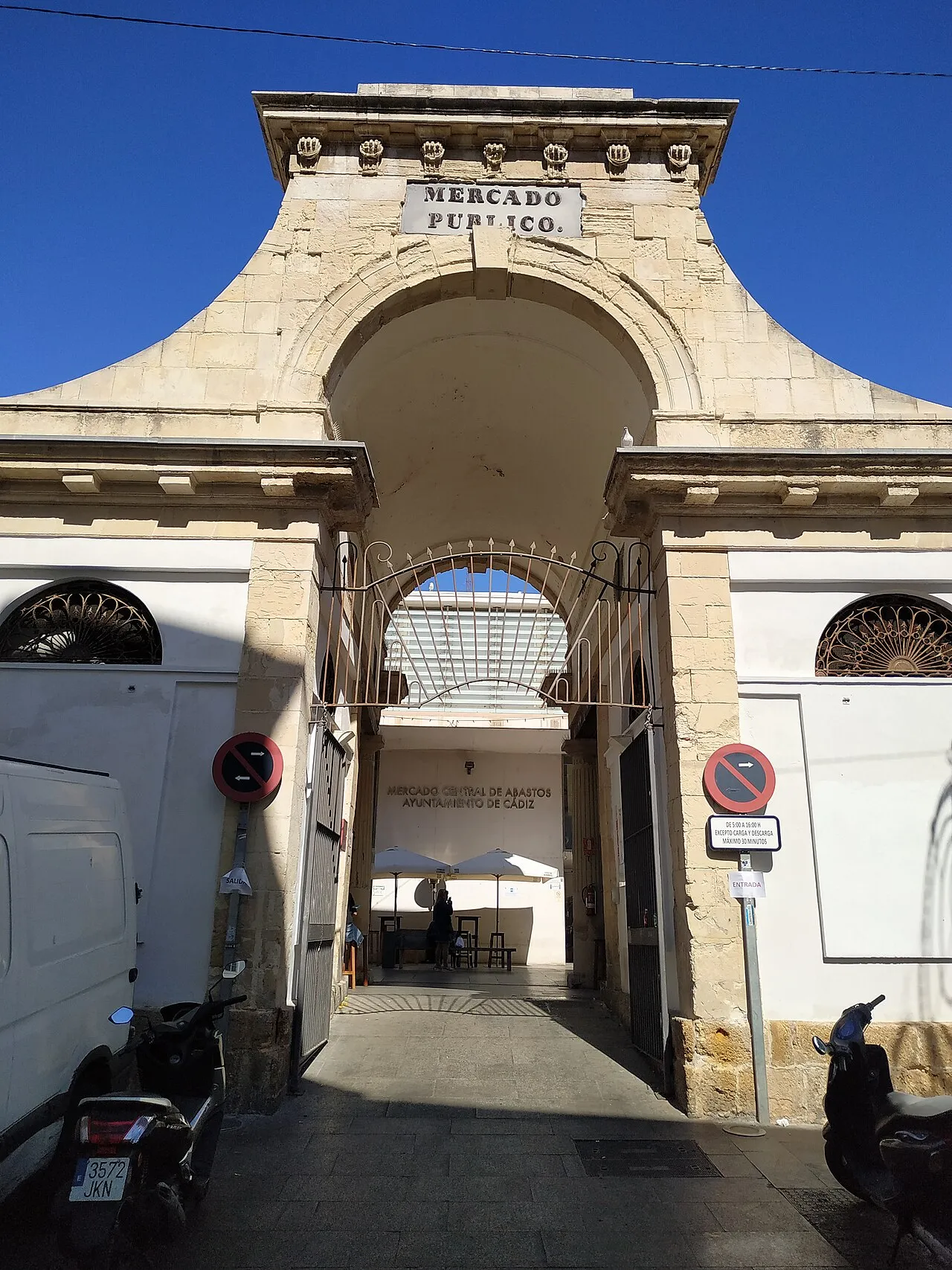
Mercado Central de Cádiz
📍 Plaza de la Libertad
Neoclassical, from 1838, and still a real market, with the best fish in the bay on the stalls at the back and an area of bars where you eat what you have just seen on the counter. It closes in mid-afternoon and does not open on Sundays. The best midday stop in the city.
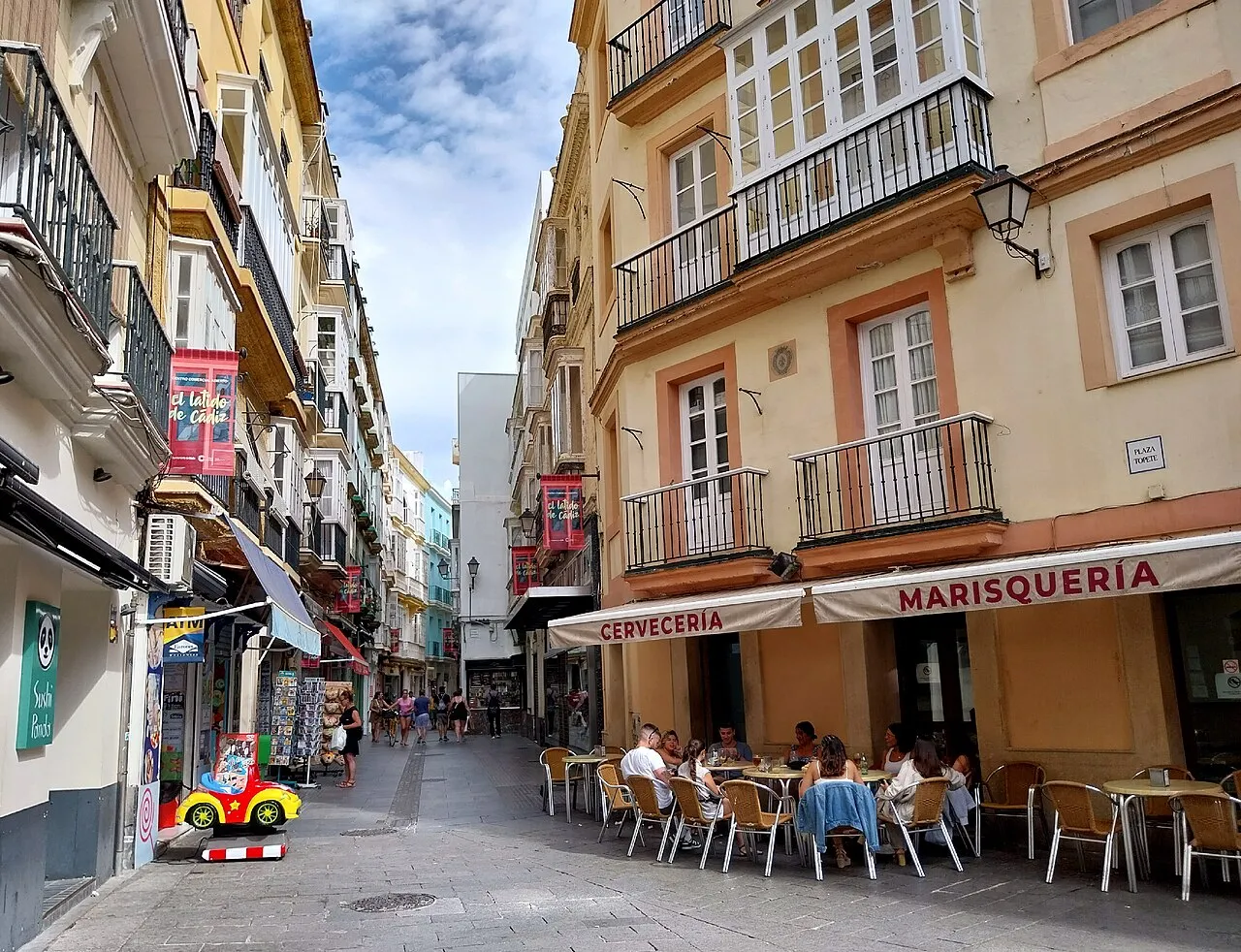
The square of the flower stalls and the freidurías, and one of the most pleasant in the old town. Some of the city's most venerable fried-fish shops are here, where you buy the paper cone and eat it standing up or in the bar next door, which is how it is done.
Cazón en adobo is the most Gaditan dish of all. It is a small shark, with firm flesh, marinated for hours in vinegar, garlic, cumin, oregano and paprika before being floured and fried. The adobo is not a dressing: it is a method of preservation that predates refrigeration and stayed on because it tasted better.
Tortillitas de camarones are wheat and chickpea flour, spring onion, parsley and live shrimps — tiny, almost transparent — fried in a very liquid batter that spreads out by itself as it hits the oil. A good tortillita is thin, crisp and lacy: if it is thick and soft, it has been badly made.
And bluefin tuna from the almadraba, the great product of this coast. The almadraba is a Phoenician fishing method still practised between Conil, Barbate, Zahara and Tarifa: a maze of fixed nets anchored to the seabed that intercepts the tuna on its migration towards the Mediterranean, between April and June.
That tuna is butchered into more than twenty different cuts, each with its own name and its own use — descargamento, tarantelo, morrillo, mormo, ventresca — and in season it appears on every menu in the province. It is the same fish the Romans salted right here two thousand years ago.
Where to eat and what to drink
The Mercado Central solves the middle of the day better than any restaurant: it is a real market, with the fish from the bay on the stalls at the back, and it has an area of bars where you eat what you have just seen on the counter. It closes in mid-afternoon and does not open on Sundays.
The La Viña neighbourhood, between the old town and La Caleta, is the one with the lifelong freidurías and the most seafaring feel. There you eat standing up, in the street or in the bar, and it is where the traditional format is best preserved. Around the Plaza de las Flores there are also fried-fish shops with a great deal of pedigree.
To drink, manzanilla from Sanlúcar or fino from Jerez, both produced less than half an hour from here. They are dry fortified wines, served very cold and in catavinos, and their combination with fried fish is one of the most rounded in Spanish cooking. Ordering beer is perfectly acceptable, but you lose something.
And in season, two things you find only here: sea urchins, eaten raw with a small spoon in the winter months, and ortiguillas, sea anemones coated in batter and fried, with an intensely marine flavour that divides opinion radically.
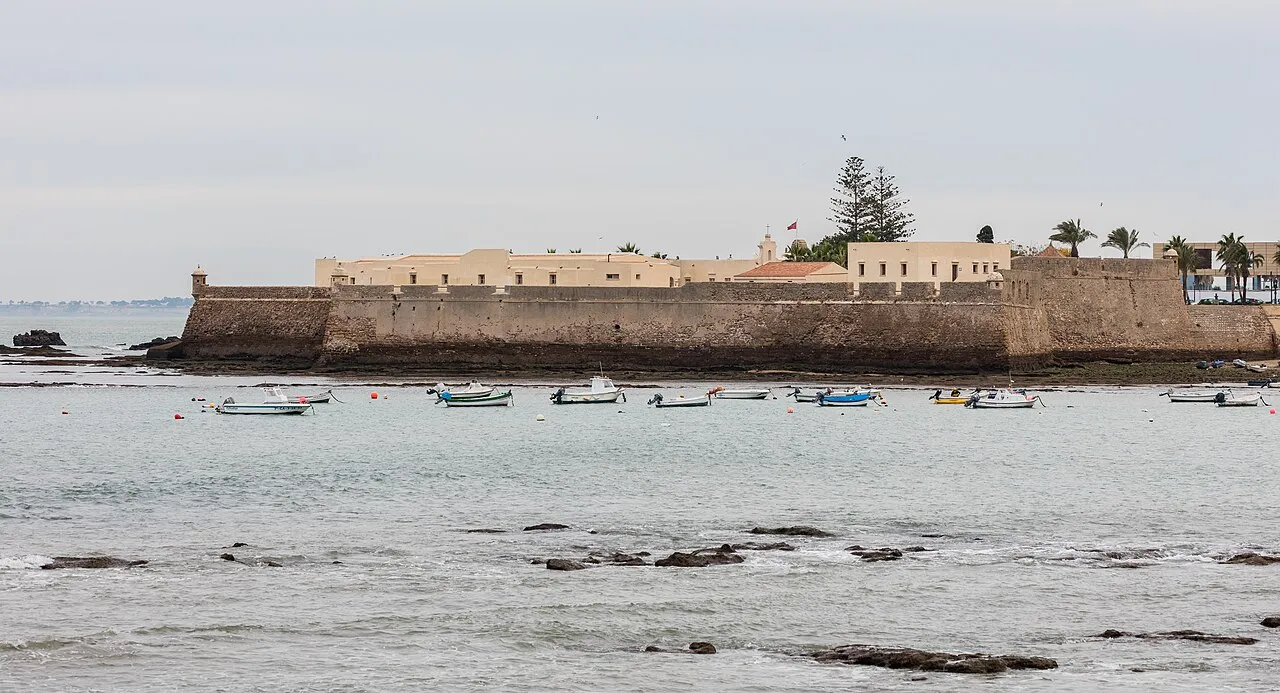
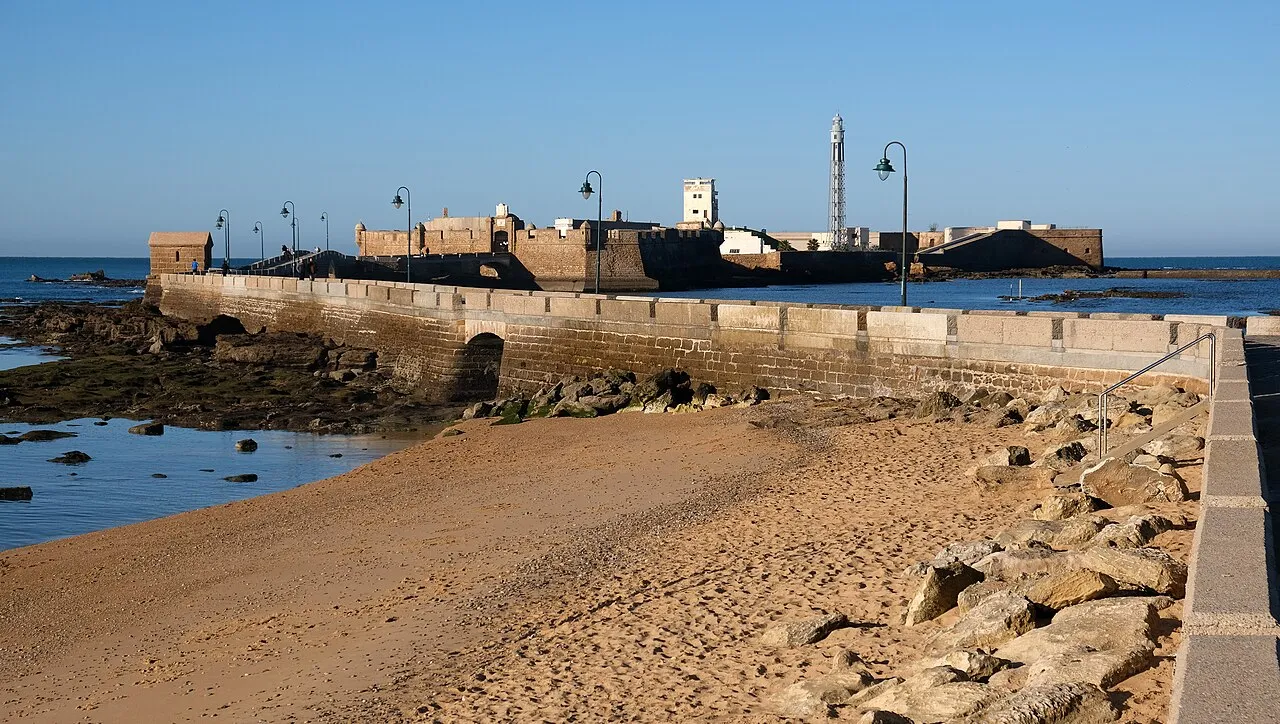
A landmark for locating the La Viña neighbourhood, which lies between the old town and this beach and is the most seafaring in the city: lifelong freidurías, neighbourhood atmosphere and the best pescaíto frito in Cádiz. A good area for dinner after sunset at La Caleta.
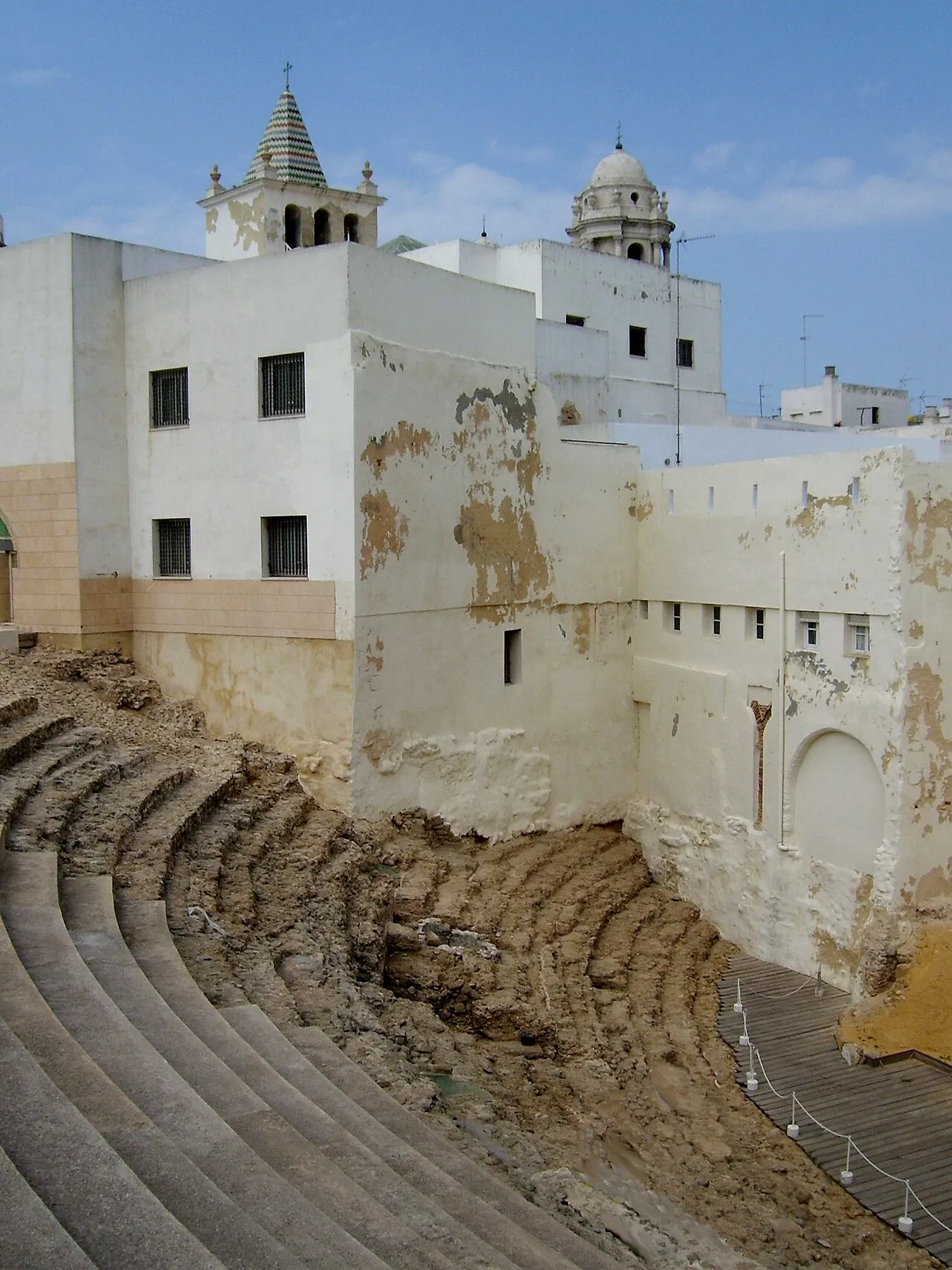
Right here, in Roman Gades, there were salting factories exporting garum and preserved tuna across the whole empire. It is the same fish the almadraba brings up today between April and June, caught with a method the Phoenicians were already practising on this coast.
It is a technique with rules, not simply frying fish. Durum wheat flour is used, often mixed with chickpea flour, which absorbs less oil; the oil has to be above one hundred and eighty degrees; and the fish goes in and comes out in seconds. It should come out dry on the outside, juicy inside and with no trace of oil.
What is cazón en adobo?
A small shark with firm flesh, marinated for hours in vinegar, garlic, cumin, oregano and paprika before being floured and fried. The adobo was originally a method of preservation that predates industrial refrigeration, and it stayed on because the result tasted better. It is probably the most Gaditan dish there is.
What is the almadraba?
A fishing method of Phoenician origin still practised between Conil, Barbate, Zahara and Tarifa: a maze of fixed nets anchored to the seabed that intercepts bluefin tuna on its migration towards the Mediterranean, between April and June. The tuna is butchered into more than twenty cuts, each with its own name and its own use.
How do you tell a good tortillita de camarones?
By the thickness. A well-made tortillita is paper-thin, crisp and almost lacy, because the batter is very liquid and spreads out by itself as it hits the oil. If it comes out thick, soft or stodgy, it has been badly made. It contains wheat and chickpea flour, spring onion, parsley and tiny, almost transparent shrimps.
Where is the best place to eat in Cádiz?
The Mercado Central solves the middle of the day better than any restaurant, with the fish from the bay on the stalls and an area of bars. The La Viña neighbourhood is the one with the lifelong freidurías and the most seafaring feel. And around the Plaza de las Flores there are fried-fish shops with a great deal of pedigree.
What do you drink with pescaíto?
Manzanilla from Sanlúcar or fino from Jerez, both produced less than half an hour from here. They are dry fortified wines, served very cold and in catavinos, and their combination with fried fish is among the most rounded in Spanish cooking. Beer is perfectly acceptable, but you lose part of the charm.
Practical information
The techniqueDurum wheat and chickpea flour, oil above 180 degrees and very little time.
What to orderCazón en adobo, tortillitas de camarones, chocos, puntillitas and acedías.
SeasonAlmadraba tuna between April and June. Sea urchins and ortiguillas in winter.
WhereMercado Central at midday, La Viña and the Plaza de las Flores for the freidurías.
DrinkingManzanilla from Sanlúcar or fino from Jerez, very cold and in catavinos.
The formatStanding up and in a paper cone. That is not informality: it is how it is done.
On the map
🎧 With Viavoy
Walk Cadiz and listen at your own pace
Download Viavoy and walk Cadiz offline, whenever you like.