A dome that is not gold, a crypt that carries whispers and a hundred and sixty towers built to see the ships arrive before the competition did. The eighteenth century explained from above.
There is one date that explains almost all the architecture of the old town of Cádiz: 1717, when the Casa de Contratación, the crown's trade house, moved here from Seville and this peninsula became the port of the American monopoly. That money paid for the cathedral, for the merchants' palaces and for an urban feature that exists in no other Spanish city: the lookout towers.
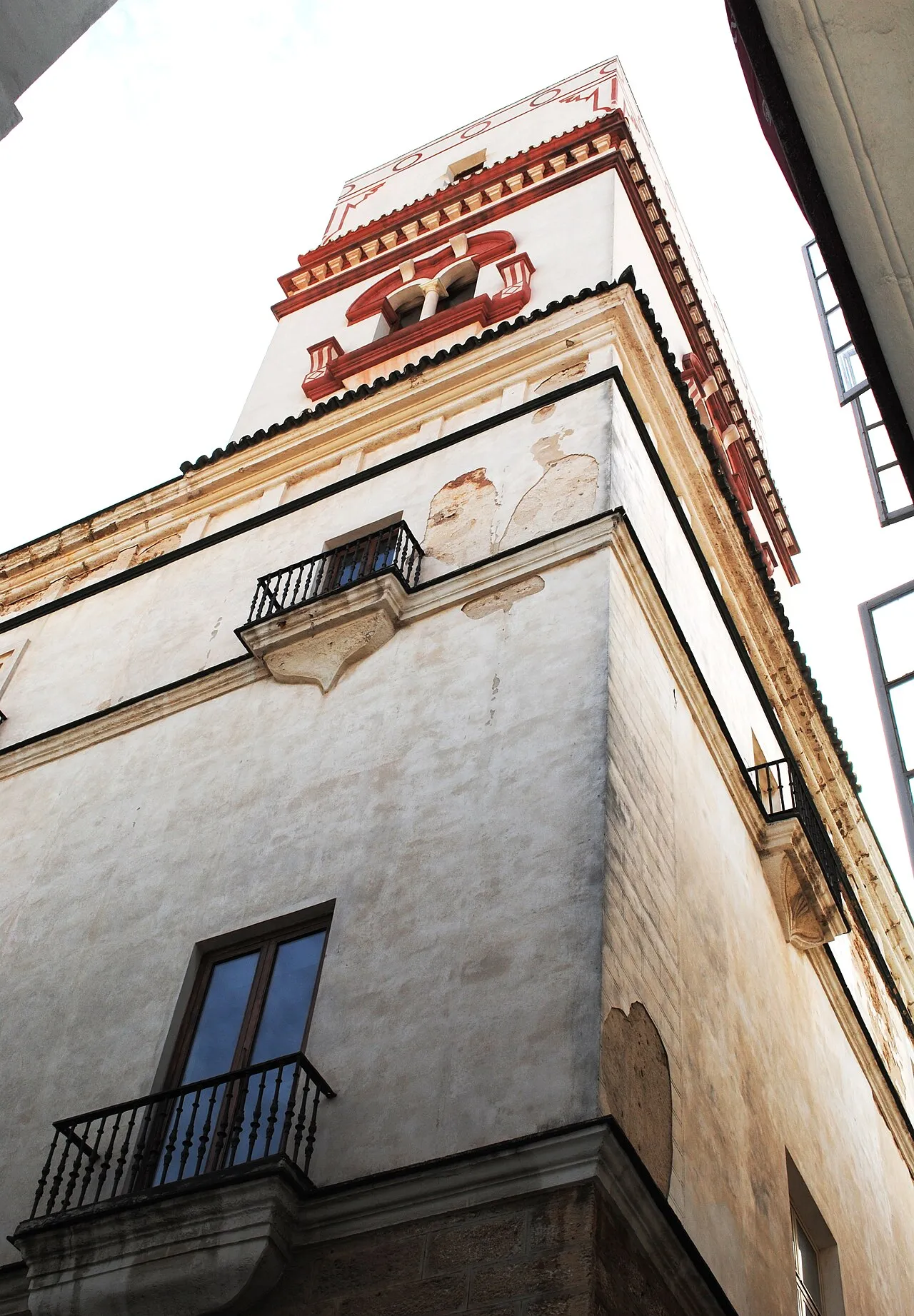
The towers were not ornament. Merchants built them on top of their houses to scan the horizon and be the first to see their ships come in, and so place their goods better. There came to be more than a hundred and sixty.
The cathedral paid for by trade with the Indies
A hundred and sixteen years, two styles.
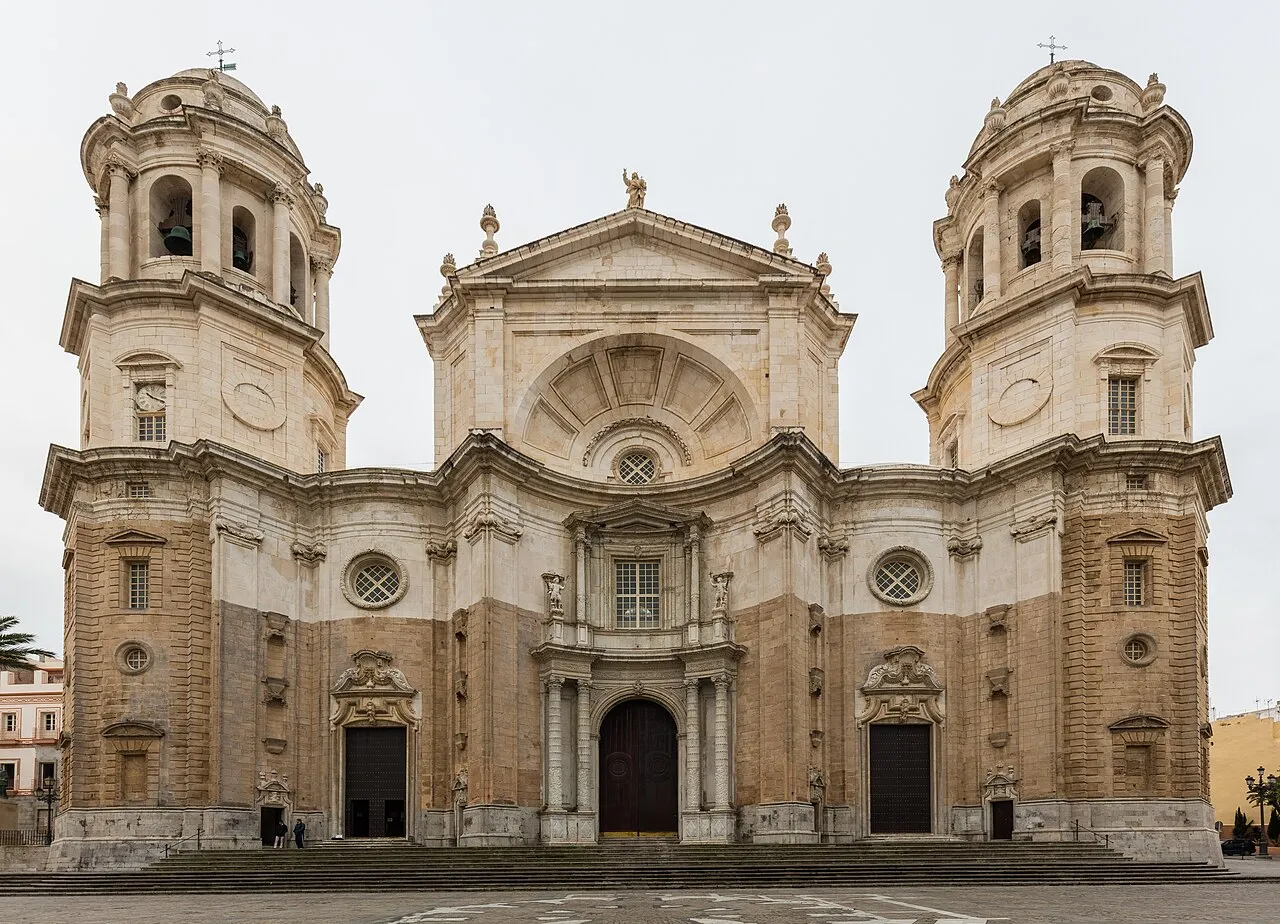
It was begun in 1722, five years after the Casa de Contratación moved here, and not finished until 1838. Over that long century architectural fashions changed completely, which is why the building is born Baroque at the bottom and ends up Neoclassical at the top. You read it by raising your eyes up the façade.
It was financed by the merchants of the Indies through taxes on the goods that came in through the port. When American trade declined after the independences of the nineteenth century, the works slowed down and had to be finished off with more modest solutions than those of Vicente Acero's original design.
The yellow dome that appears in every photograph is not gold: it is glazed tiles. And its great enemy is the sea damp, which continuously attacks the piedra ostionera, the shell stone of the fabric, and forces permanent restoration, to the point that nets had to be put up to stop pieces falling.
Underneath there is a crypt dug almost at the level of the water, with a vault so well drawn that a whisper close to the wall travels to the far end and is heard clearly. It is a genuine acoustic phenomenon and the guides demonstrate it on the spot. Manuel de Falla and José María Pemán are buried there.
The Torre de Poniente, the clock tower, is climbed by ramp rather than by stairs, which makes it far more accessible than almost any bell tower. From the top you see the city laid out over the water with its flat roofs and its forest of lookout towers. Entry around 7 € including crypt and tower.
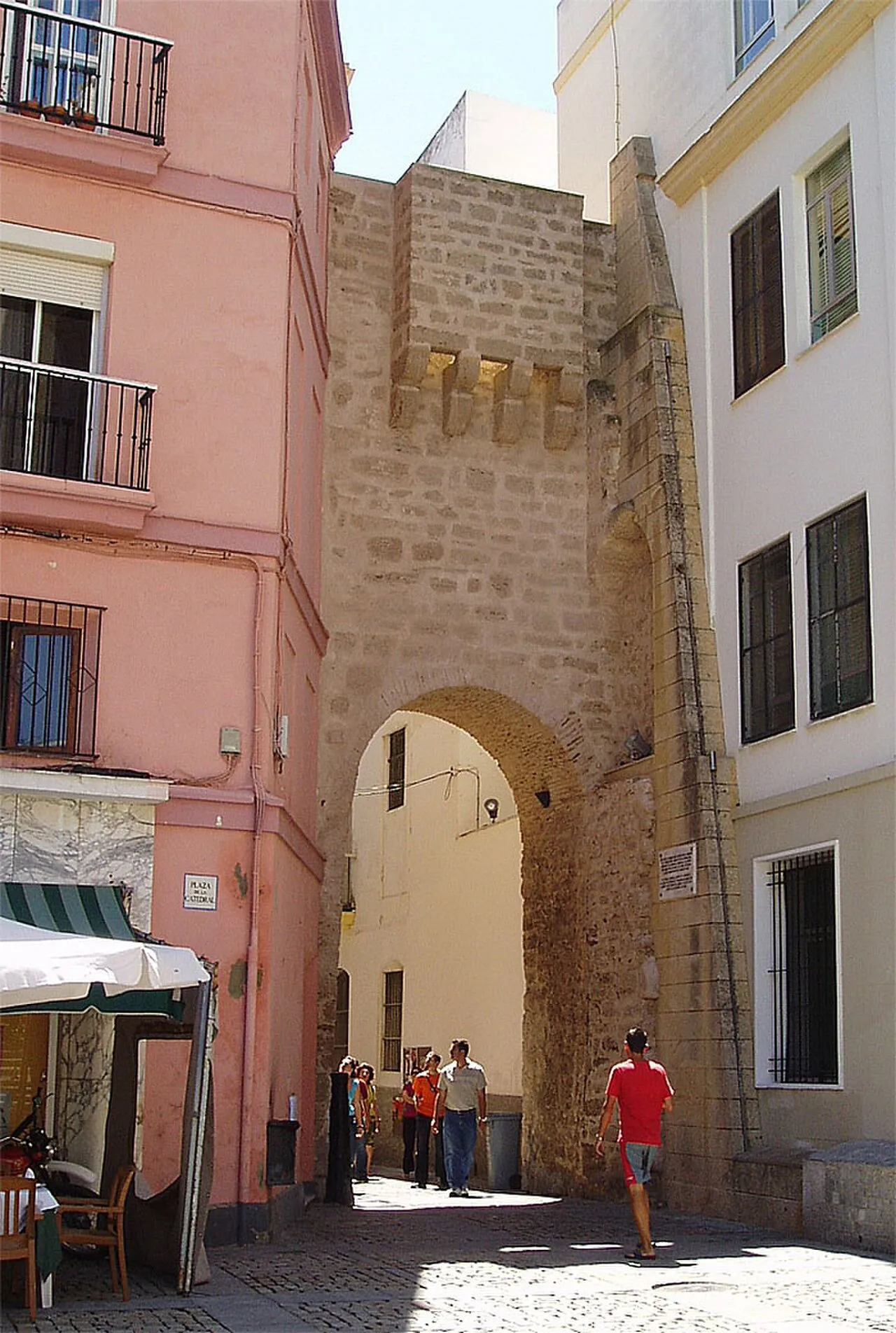
One of the three gates left from the medieval wall, right beside the cathedral, and the natural passage between the Pópulo neighbourhood and the square. The contrast is immediate: you cross a thirteenth-century arch and an eighteenth-century Baroque façade appears.
The whole economy of eighteenth-century Cádiz depended on what came in through the bay. Whoever saw the sails of their fleet first had a real advantage: they could get ahead in the negotiation, place goods and adjust prices before the news was known at the exchange.
Hence the merchants building lookouts on top of their houses. It was not a decorative fashion but an investment with a measurable return, and there came to be more than a hundred and sixty above the roofs of the old town. A good hundred still survive, and from any high roof terrace you see that forest poking up between the rooftops.
They were not all the same. They are classified by their crown into simple terraces, enclosed sentry boxes and more elaborate lookouts with a roof and large windows, and each family showed off with its own. The social hierarchy of the city could literally be read by looking up.
The Torre Tavira, the tallest at forty-five metres above the sea, became the official lookout of the port in 1778 and took the name of its first watchman, Antonio Tavira. That public function explains why it stood higher than all the private ones.
The camera obscura and what you see from the top
The Torre Tavira today houses the first camera obscura installed in Spain, and it is the main reason to climb it. The device is simple and old: a set of lenses and mirrors in a completely darkened room that projects the city, moving and live, onto a white concave screen.
Seeing Cádiz move like that, in silence, with people crossing the squares and the waves breaking in the background, is hard to explain and genuinely gets under your skin. The sessions last about twenty minutes, come with a live commentary and have limited numbers, so it is worth booking and choosing a clear day.
From the terrace, the full view: the cathedral, La Caleta, the two castles, the port, the bay and, around all of it, the water. It is the place where you understand that Cádiz is an extremely narrow peninsula and not just another coastal city.
That is why this stop is best made at the start of the route and not at the end. From the top you place every other point of the day, and coming down knowing the exact shape of the city changes the way you walk it.
Forty-five metres above sea level and the highest point in the old town. Entry around 8 € including the camera obscura, with limited numbers per session. It is five minutes from the cathedral and the Mercado Central, right in the pedestrian centre.
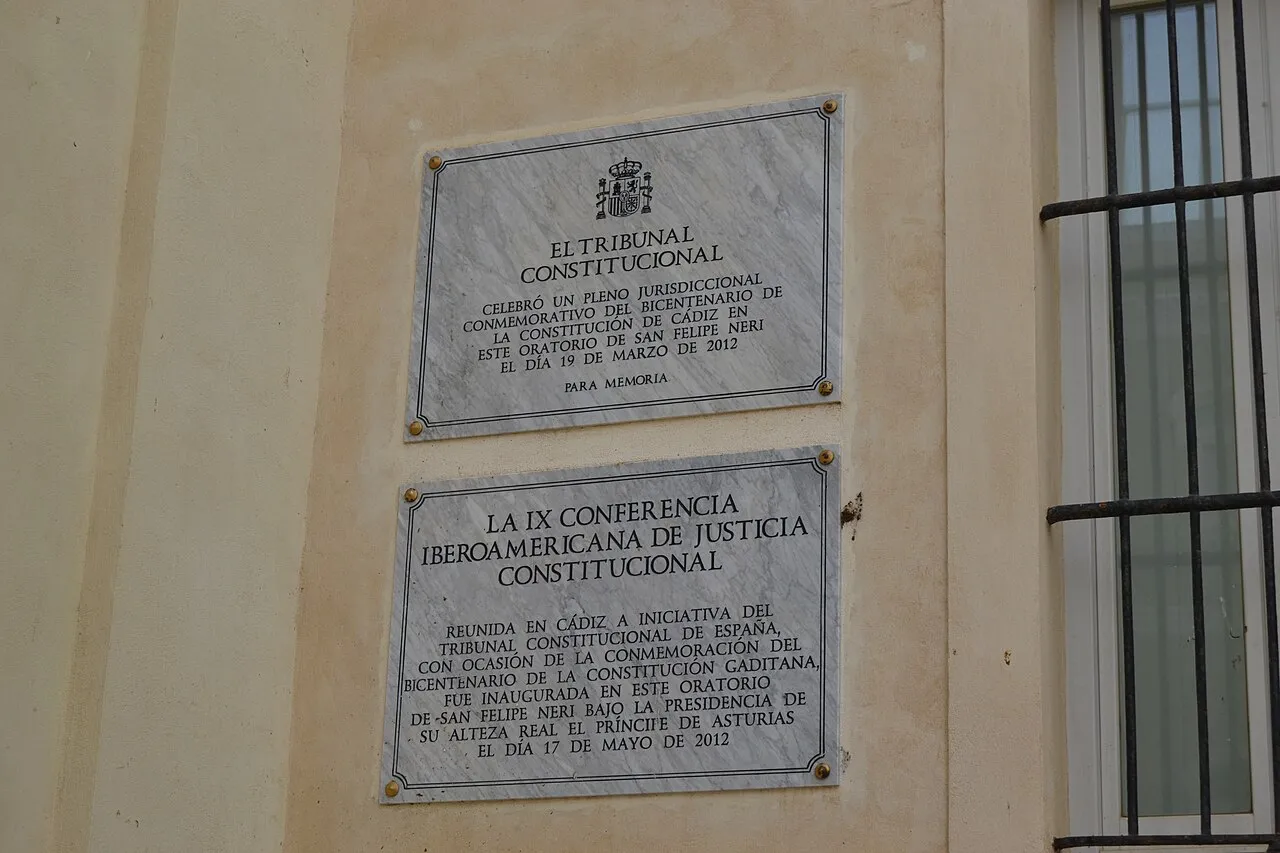
Two minutes from the Torre Tavira, the building where the Cortes that approved the Constitution of 1812 met. It is a church on an oval plan, an unusual shape, with commemorative plaques on the façade placed there by cities from all over Spain and America.
No, they are yellow glazed tiles, although from a distance and in the sun the effect suggests otherwise. Its problem is the sea damp, which continuously attacks the piedra ostionera of the building and forces permanent restoration; at some periods nets had to be put up to stop pieces falling on visitors.
What are the lookout towers of Cádiz?
Lookouts built on top of the houses by eighteenth-century merchants to scan the horizon and be the first to see their ships come in from America, and so get ahead in the negotiation. There came to be more than a hundred and sixty and a good hundred still survive. They exist in no other Spanish city.
Is the camera obscura worth it?
Yes, and it is the main reason to climb the Torre Tavira. It is an old optical device — lenses and mirrors in a darkened room — that projects the city, moving and live, onto a concave screen. It was the first installed in Spain. Twenty-minute sessions with limited numbers, and better on a clear day.
Is it hard to climb the cathedral tower?
Considerably less so than usual: the Torre de Poniente is climbed by a continuous ramp instead of a spiral staircase, which makes it far more accessible than almost any Spanish bell tower. From the top you see the city laid out over the water with the forest of lookout towers poking up between the roof terraces.
What is special about the crypt?
It is dug almost at sea level and has a stone vault so well drawn that a whisper close to the wall travels to the far end and is heard clearly. It is a genuine acoustic phenomenon that the guides demonstrate on the spot. The composer Manuel de Falla and the writer José María Pemán are buried there.
Why does the cathedral have two styles?
Because it took a hundred and sixteen years to build, from 1722 to 1838, and over that long century architectural fashions changed completely. It is born Baroque at the bottom and ends up Neoclassical at the top. On top of that, the decline of American trade in the nineteenth century forced it to be finished off with more modest solutions than those of the original design.
Practical information
The cathedralPlaza de la Catedral. Around 7 € including crypt and tower. Restricted hours on Sundays.
Torre de PonienteClimbed by ramp, not by stairs. Far more accessible than a normal bell tower.
Torre TaviraAround 8 € including the camera obscura. Limited numbers per session: it is worth booking.
The orderDo the Tavira at the start of the day: from the top everything else falls into place.
The cryptAsk them to show you the acoustic effect. It is real and it always works.
Watch outThe camera obscura needs a clear day: with fog or rain it loses definition.
On the map
🎧 With Viavoy
Walk Cadiz and listen at your own pace
Download Viavoy and walk Cadiz offline, whenever you like.