Cádiz in a day: three thousand years on a peninsula
From the Roman theatre uncovered by a fire to the tower from which people watched the ships arrive from America, ending on a kilometre-long causeway over the sea. With the view that puts the city in order.
The old town of Cádiz fits on a peninsula a kilometre and a half long, it is completely flat and it is surrounded by water on almost every side. That makes it one of the easiest cities in Spain to explore: there are no hills, no transport to catch and no way of getting lost for very long. A day is enough, and it is best to start by climbing a tower.
Climb the Torre Tavira first. From the top you grasp all at once that Cádiz is an extremely narrow peninsula surrounded by sea, and everything else in the day falls into place.
Morning: El Pópulo and buried Rome
Come in through the port and go down to the theatre.
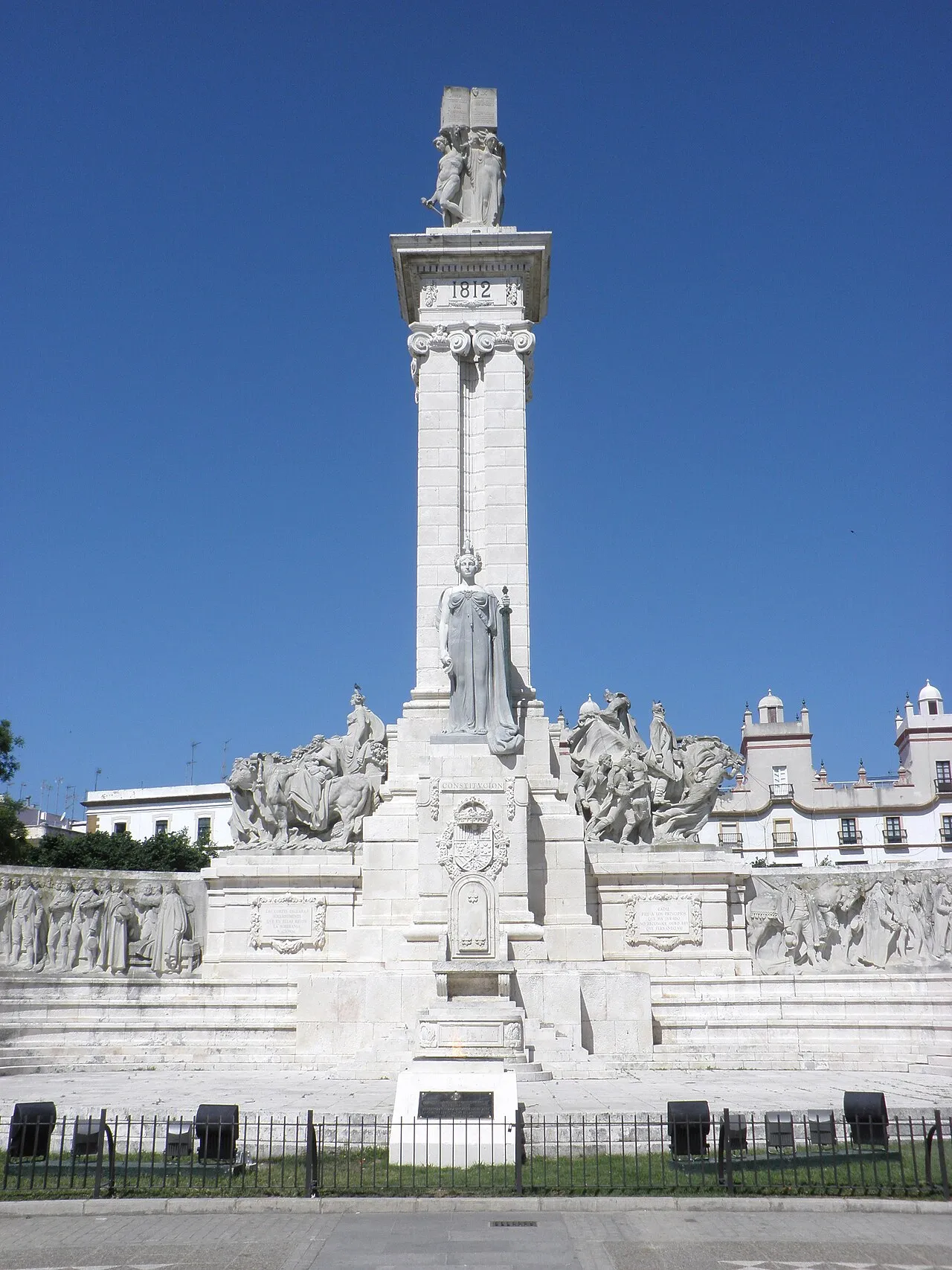
Start in the Plaza de España, next to the port, which is where anyone arriving by boat or train enters the city. It is presided over by the monument to the Cortes of 1812: here the first Spanish Constitution, La Pepa, was proclaimed while Napoleon besieged the city without managing to take it in more than two years.
The monument looks unfinished and it is so on purpose: the semicircle is left open, as if to say that freedom is never quite complete. Look for the two empty chairs at the top, which allude to the deputies from the overseas territories.
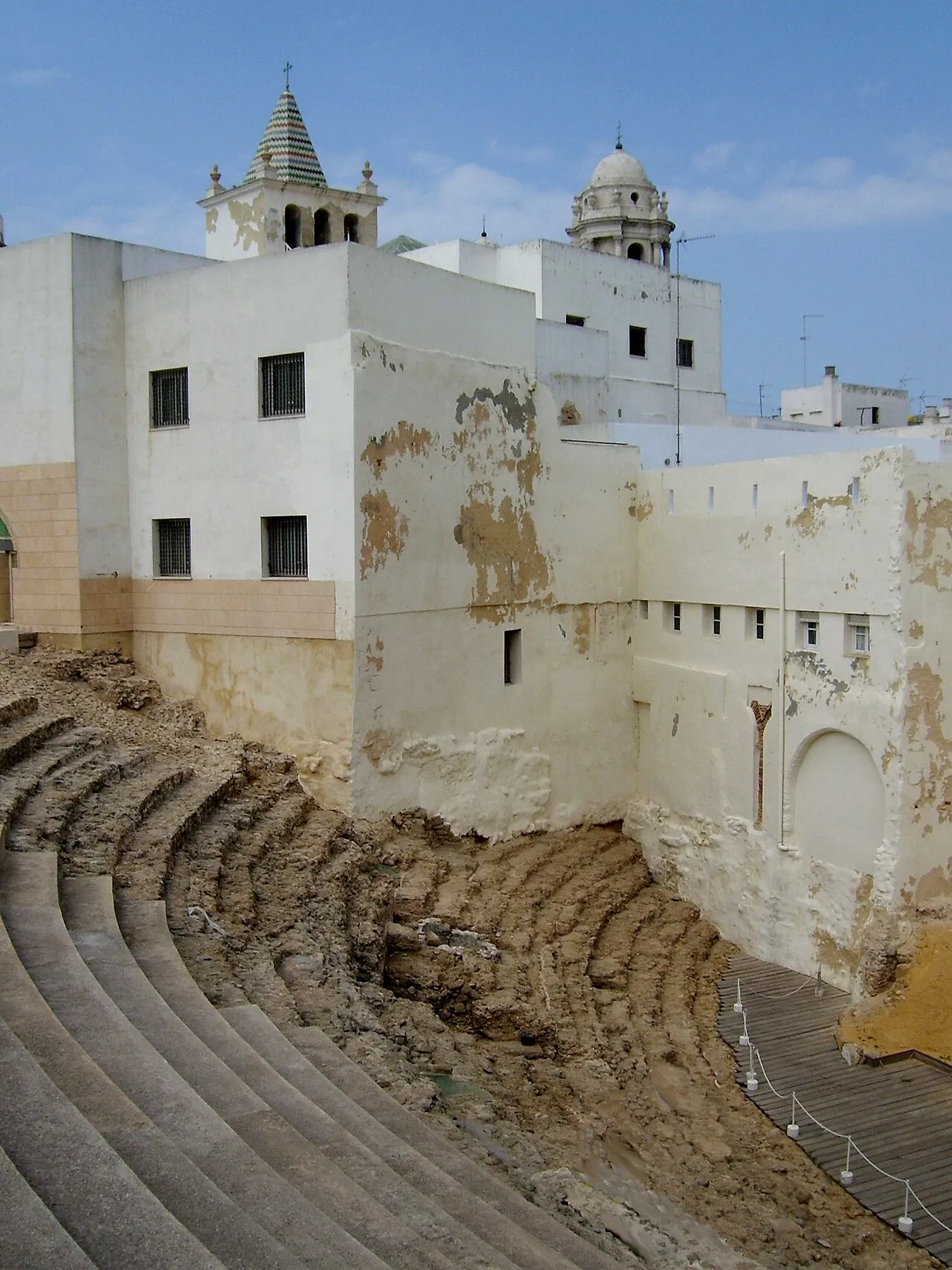
Five minutes away is the Pópulo neighbourhood, the medieval core, with the three arches that survive from the wall. And beneath its houses, the Roman theatre: it turned up by chance in 1980 during the investigation of a fire in some warehouses, and it is the oldest known on the Iberian Peninsula.
It was commissioned by Balbus the Younger at the end of the first century BC, a Gaditan so powerful that he was the first man born outside Italy to become consul in Rome. Part of the tiered seating still lies under the houses and the church, and it cannot be excavated without demolishing the neighbourhood. Entry is free.
Cádiz withstood the Napoleonic siege thanks to its geography: a peninsula joined to the mainland by a long isthmus, with the British fleet controlling the sea. That isolation made it the refuge of the Cortes and the only place in Spain with freedom of the press at that moment.
Tiered seating some hundred and twenty metres across and room for ten thousand spectators. The orchestra, part of the seating and an original vaulted gallery through which the spectators circulated all survive: walking through it is the best part. It closes at midday and on Mondays.
The oldest part of the old town, with narrow streets that contrast with the more open layout of the rest of the city. It keeps the three arches of the medieval wall — Pópulo, Rosa and Blanca — and the Casa del Almirante, with its Baroque doorway in Genoese marble.
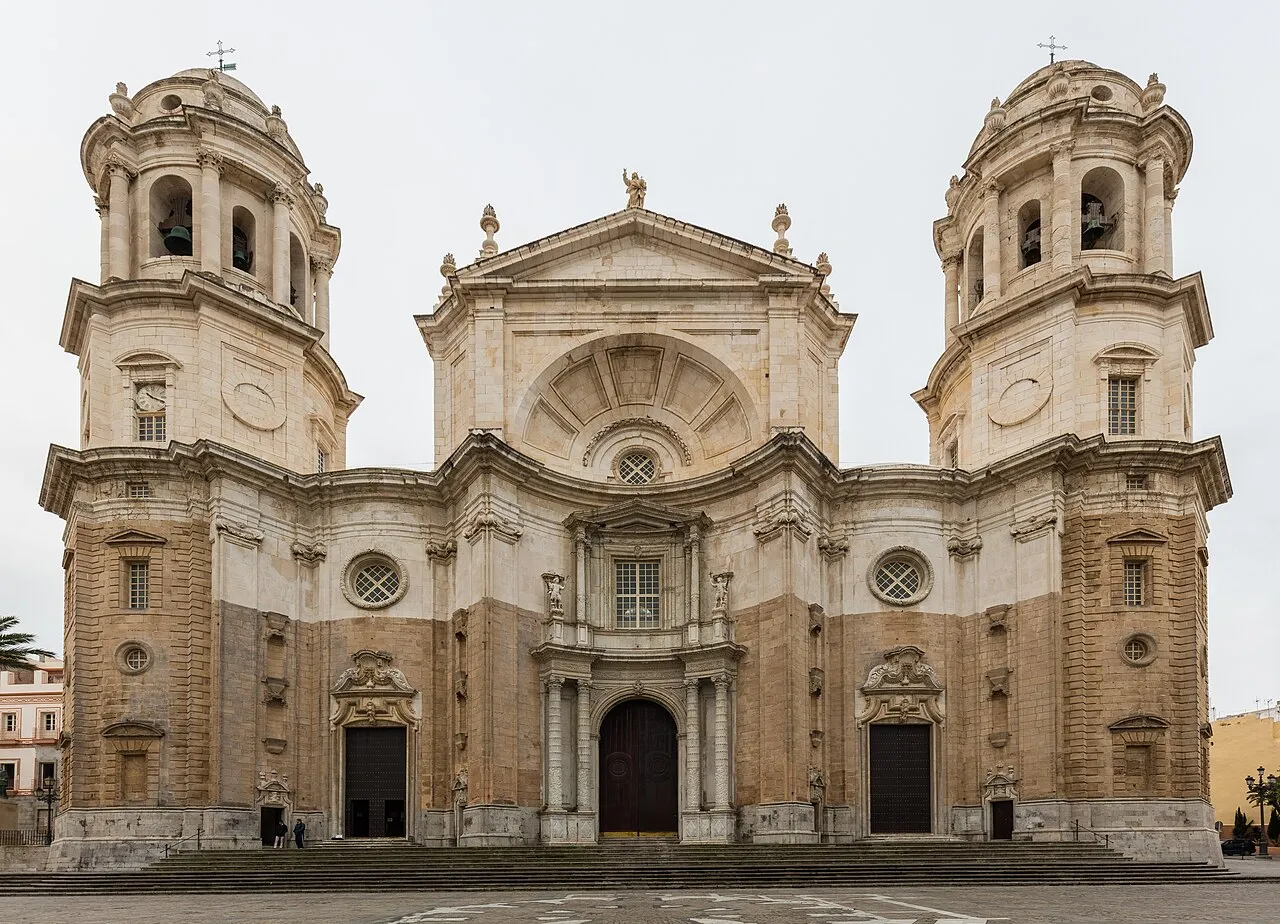
The yellow dome shining in the sun is the signature of Cádiz, and it is not gold: it is glazed tiles. The cathedral was begun in 1722 and not finished until 1838, a hundred and sixteen years in which fashions changed, so it is born Baroque at the bottom and ends up Neoclassical at the top.
It was paid for by trade with the Indies, through taxes on the goods that came in through the port. When that trade declined after the American independences, the works slowed down and had to be finished off with more modest solutions than planned.
Go down to the crypt, dug almost at sea level, where Manuel de Falla and José María Pemán are buried. Its vault is so well drawn that a whisper close to the wall travels to the far end and is heard clearly. And climb the Torre de Poniente, which goes up by ramp instead of stairs.
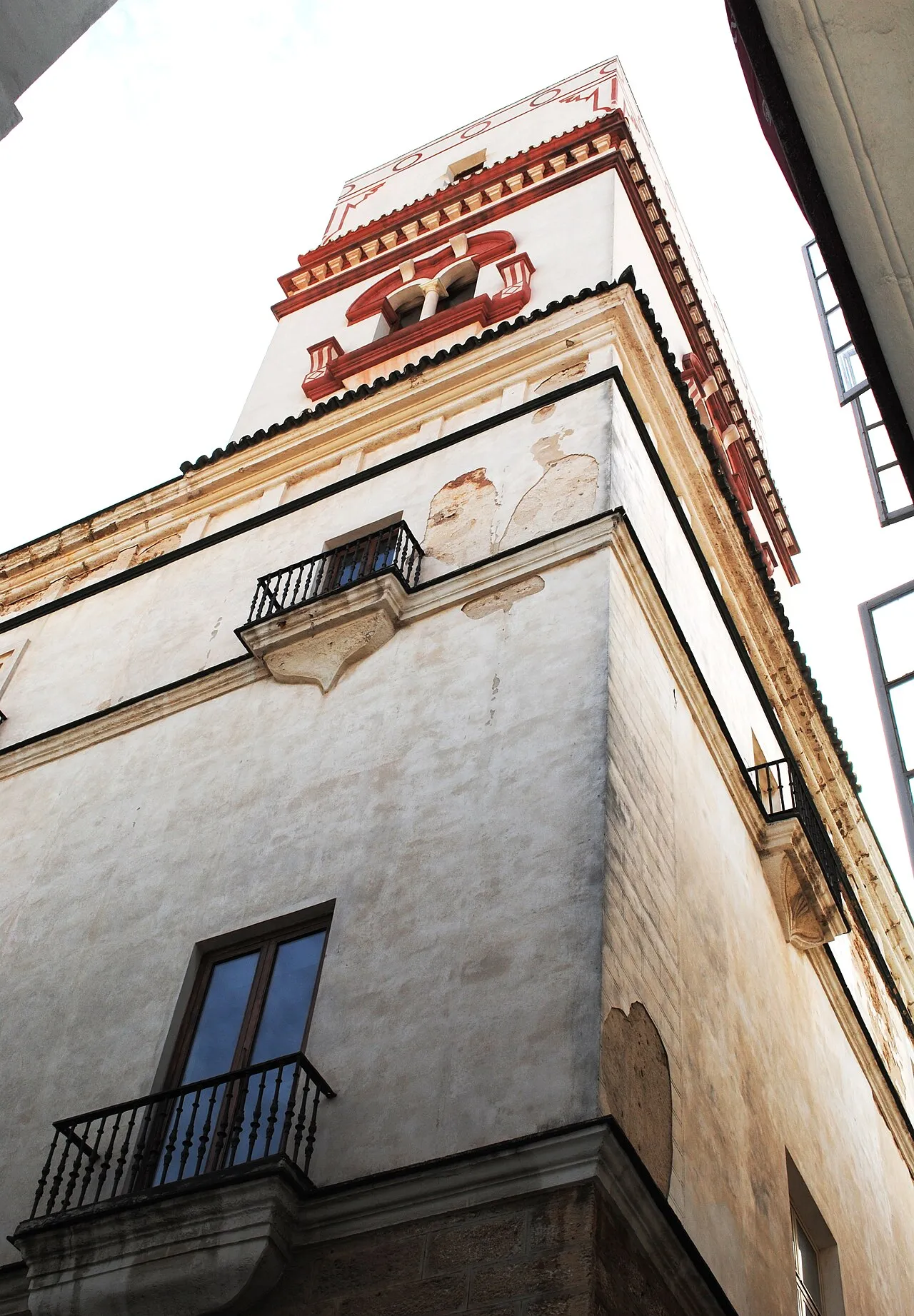
Then the Torre Tavira, five minutes away. It is the highest point in the old town and explains a unique piece of town planning: in the eighteenth century there were more than a hundred and sixty lookout towers above the rooftops, built by merchants to see their ships arrive before the competition did.
Vicente Acero began it in 1722 with an ambitious design and ended up abandoning it; other masters followed for more than a century. The sea air devours the stone without pause and forces permanent restoration. Entry around 7 € including crypt and tower.
Official lookout of the port since 1778, named after its first watchman. It houses the first camera obscura installed in Spain: lenses and mirrors that project the city, moving and live, onto a concave screen. Twenty-minute sessions with limited numbers.
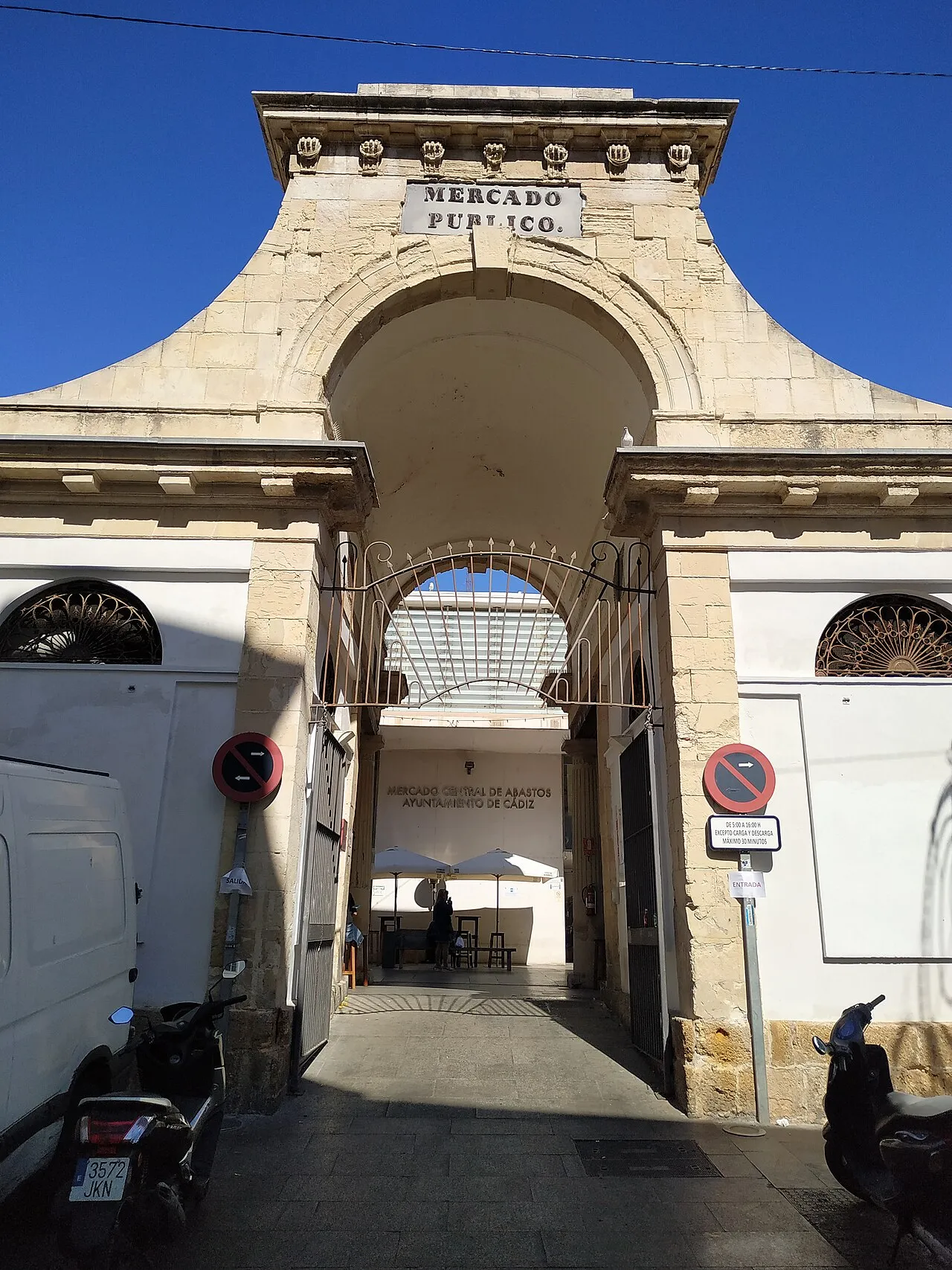
Neoclassical, from 1838, and still a real market, with the best fish in the bay on the stalls at the back and an area of bars where you eat what you have just seen on the counter. It closes in mid-afternoon and does not open on Sundays. The best midday stop.
The old town opens to the Atlantic on the west, and there lies La Caleta, the only beach in the old town, wedged between two castles. It is small, it has an Art Nouveau bathing pavilion in the middle and it is the spot with the best sunsets in the city, because it faces due west.
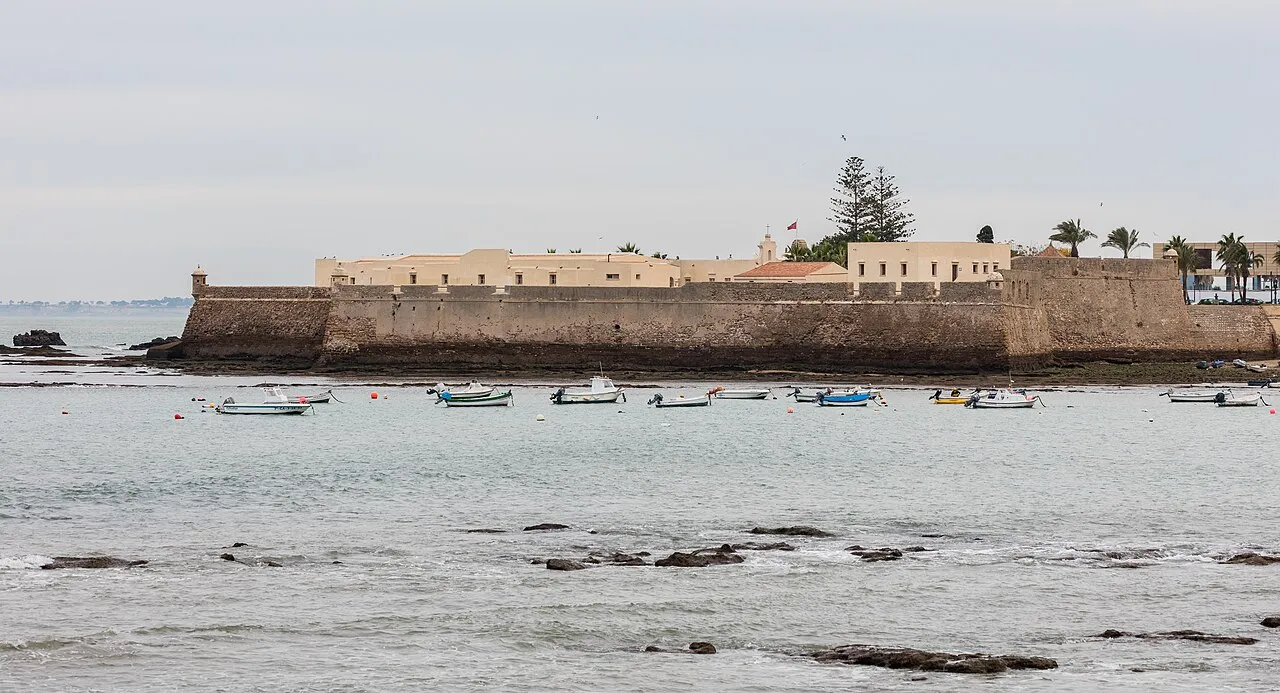
The Castillo de Santa Catalina closes it off to the north, with its star-shaped plan. It was begun in 1598, right after an English fleet sacked and burned Cádiz in 1596, and Cristóbal de Rojas designed it with pointed bastions so that the artillery left no blind angles. Access is free.
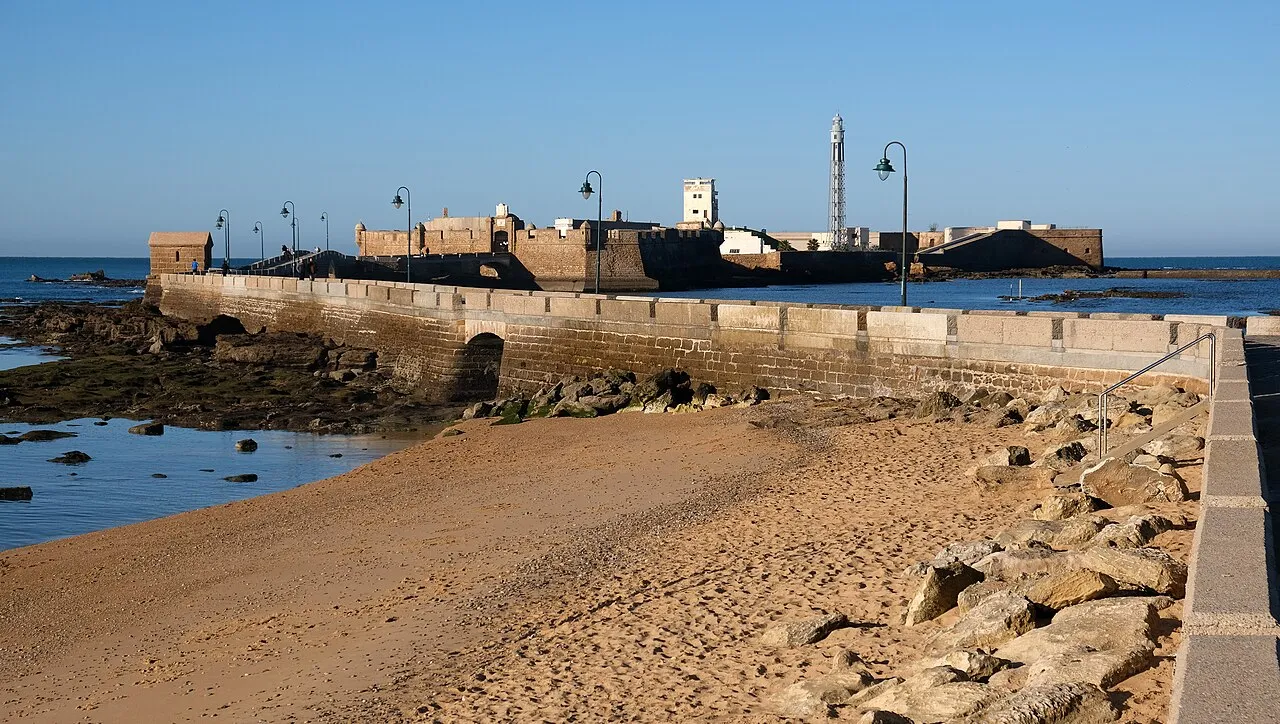
And to the south, the Castillo de San Sebastián, on an islet reached by a stone causeway almost a kilometre long laid over the sea, with no railing for much of the way. Ancient tradition placed a temple to Cronus here, at the end of the known world.
Walking that kilometre is the best possible ending. Do it slowly and keep turning round: halfway along you have the whole city inside the frame, with the dome dominating the skyline. And if the fort is closed for works, as has happened at various times, the walk is worth it all the same.
It was a barracks and a prison for military and political prisoners until well into the twentieth century, and today it hosts exhibitions and concerts with free access. Run your hand over the walls: they are made of piedra ostionera, pressed shells and fossils quarried from the coast itself.
Its iron lighthouse, lit in 1908, was one of the first electric ones in Spain: forty-one metres of light warning the ships. In 1457 some Venetian sailors in quarantine built a chapel here on the ruins of an ancient lighthouse, and that is where the name comes from.
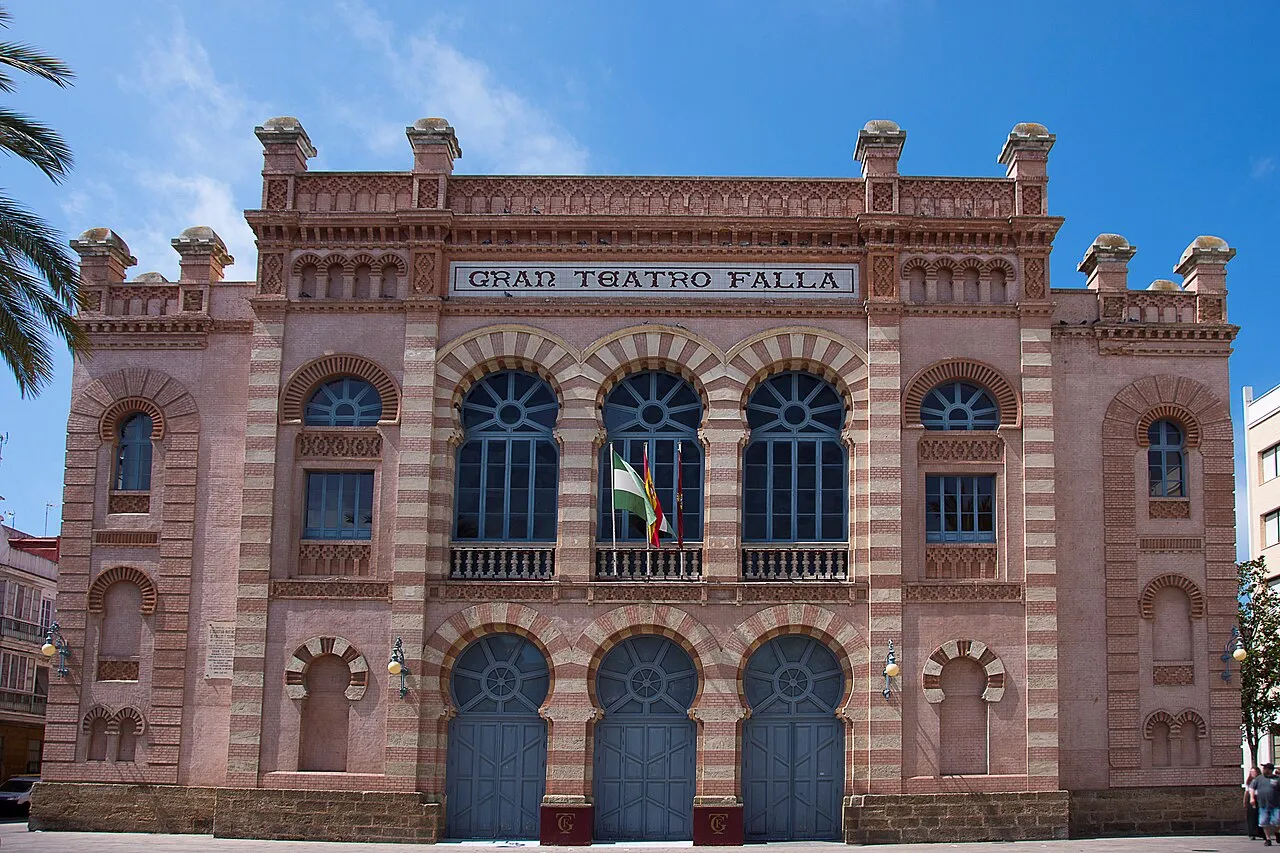
On the way to La Caleta, the cathedral of the Carnival: neo-Mudéjar in red brick with horseshoe arches, built between 1884 and 1905. Every February it hosts the Concurso Oficial de Agrupaciones, where chirigotas and comparsas sing lyrics that criticise the powerful by name.
Yes, comfortably. The old town fits on a peninsula a kilometre and a half long, it is completely flat and you can walk the whole of it without taking any transport. One day covers the Plaza de España, the Roman theatre, the cathedral, the Torre Tavira, the Falla and the two castles of La Caleta. With two days you can fit in the big beaches and the Museo de Cádiz.
Where is the best place to start?
The Torre Tavira, even if it is not first in geographical order. It is the highest point in the old town and from the top you grasp all at once that Cádiz is an extremely narrow peninsula surrounded by water, with the cathedral, La Caleta, the castles and the port all in view. The rest of the day falls into place.
What is the camera obscura at the Torre Tavira?
An old optical device — lenses and mirrors in a darkened room — that projects the city, moving and live, onto a white concave screen. It was the first installed in Spain. The sessions last about twenty minutes, come with a live commentary and have limited numbers, so it is worth booking.
Is it true that the Roman theatre was discovered because of a fire?
Yes. It was discovered in 1980 during the investigation of a fire in some warehouses in the Pópulo neighbourhood, and nobody knew it was there after two thousand years. Part of the complex still lies under the houses and the neighbourhood church, and it cannot be excavated without demolishing the historic urban fabric on top of it. Entry is free.
Can you get to the Castillo de San Sebastián?
You reach it along a stone causeway almost a kilometre long laid over the sea from La Caleta, with no railing for much of the way, and it is closed in stormy weather. The fort has had variable opening hours and closures for works at different times, so it is worth checking. The walk along the causeway is worth it even if it is closed.
What is the best time for La Caleta?
Sunset, no argument. The beach faces due west, the sun sets right in front of it and from there you watch it drop into the Atlantic with the Castillo de Santa Catalina on one side and San Sebastián on the other. It is probably the best end to a day on the whole Andalusian coast.
Practical information
Getting thereTrain from Seville in an hour and a half and from Jerez in half an hour. Catamaran from El Puerto de Santa María.
Getting aroundThe whole old town is flat and pedestrian. No transport is needed on any stretch.
Start withThe Torre Tavira: from the top the whole city falls into place and the rest of the day organises itself.
FreeThe Roman theatre, the Castillo de Santa Catalina and all the seafront promenades.
EatingMercado Central at midday. Pescaíto frito, cazón en adobo and tortillitas de camarones.
Best timeSunset at La Caleta, which faces west, with the two castles in silhouette.
On the map
🎧 With Viavoy
Walk Cadiz and listen at your own pace
Download Viavoy and walk Cadiz offline, whenever you like.