Bonaval: the Santiago most people never set foot in
Three staircases that climb without touching, the pantheon of Galicia, a free Álvaro Siza museum with a public terrace and a park built over a cemetery. All ten minutes from the cathedral.
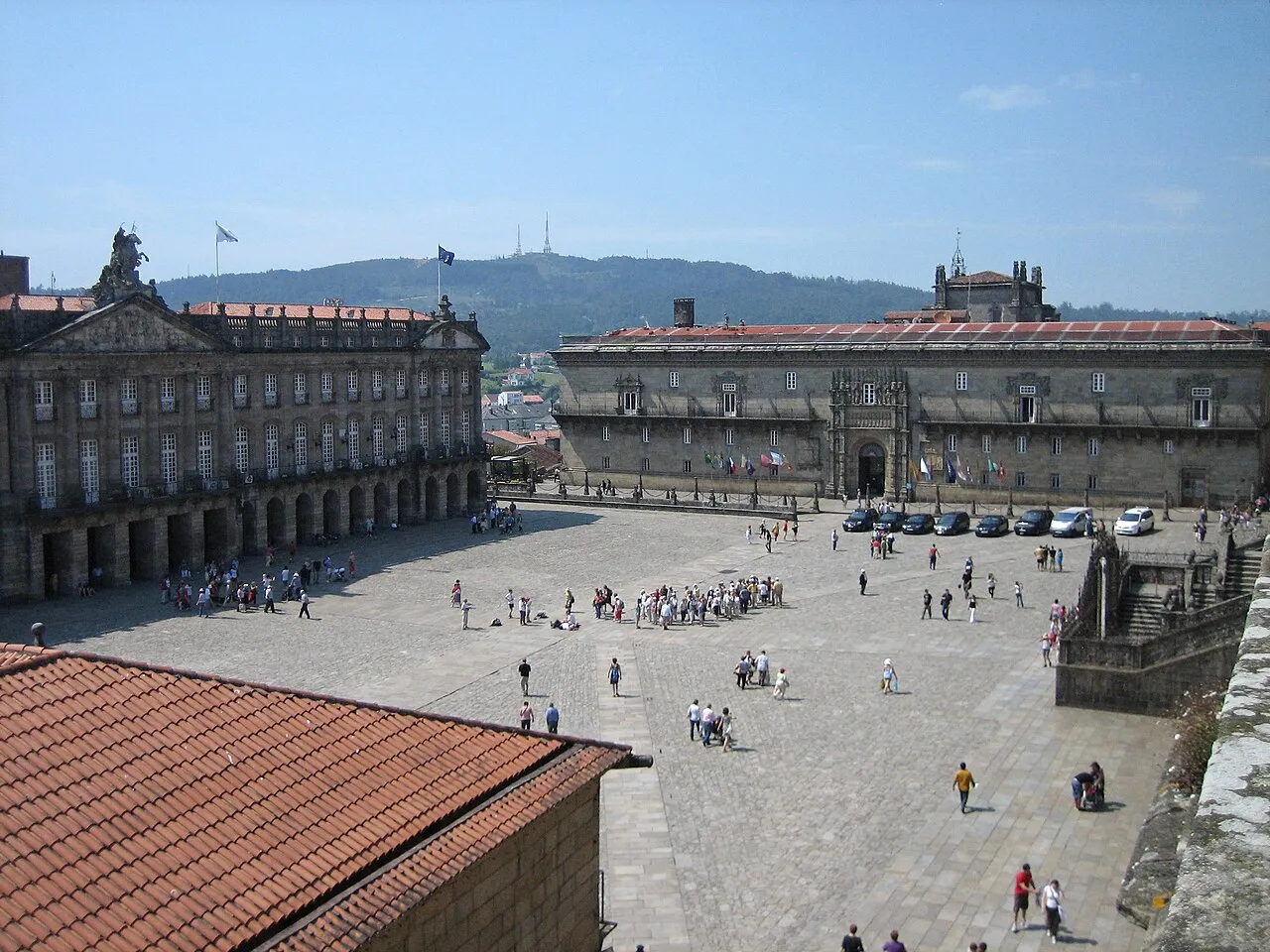
There is an area of Santiago that brings together three of the best things in the city, is largely free and receives a tiny fraction of the visitors who reach the Obradoiro. It is ten minutes on foot, climbing up from the Porta do Camiño, on the slope of the monte da Almáciga, where the stone city looks out over the green.
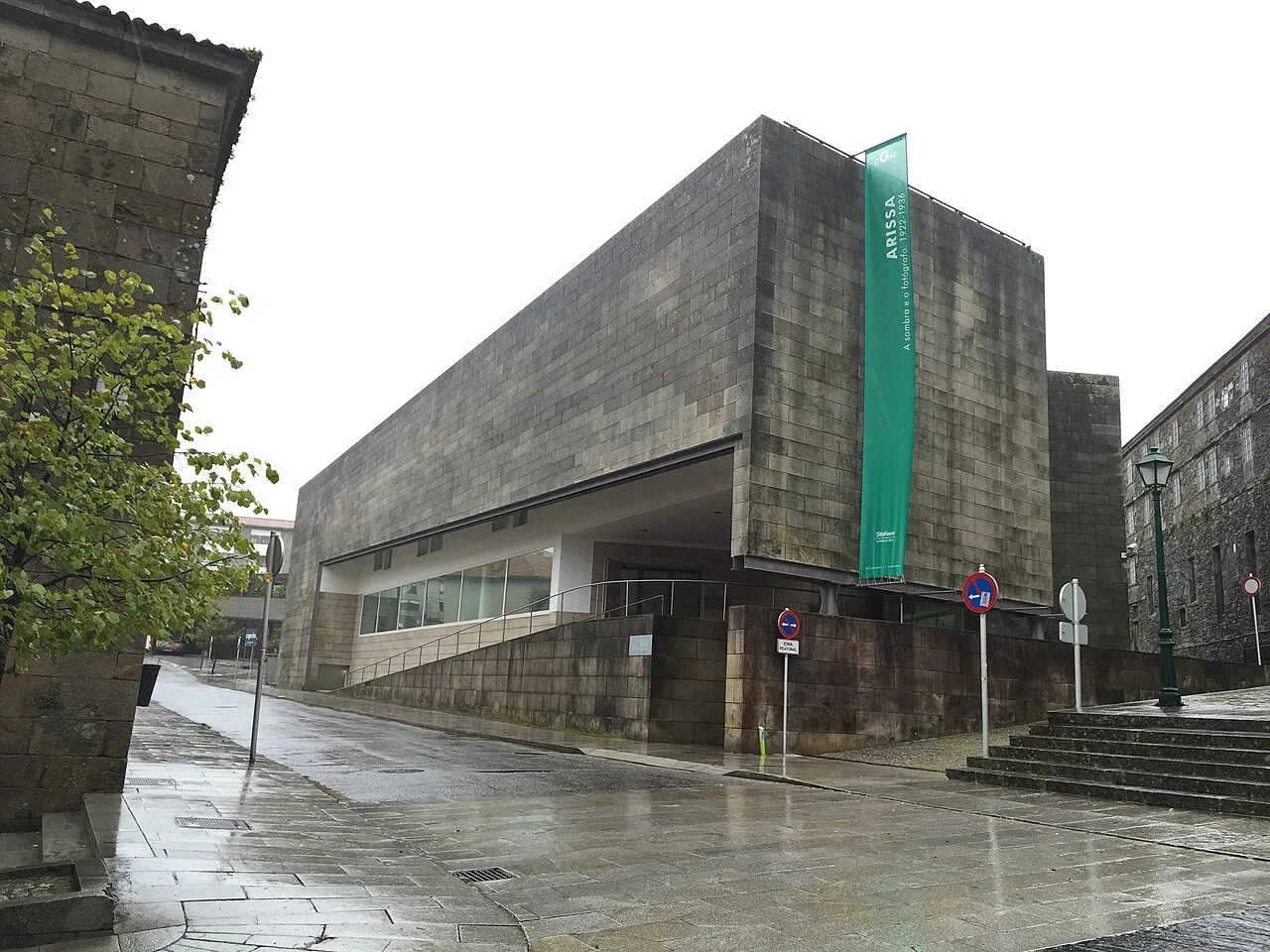
The roof of the CGAC is a public, free terrace-viewpoint over the rooftops of the old town. Siza conceived it as one more square in the city, not as a roof, and almost nobody goes up.
The convent, and an impossible staircase
Three spirals that never cross.
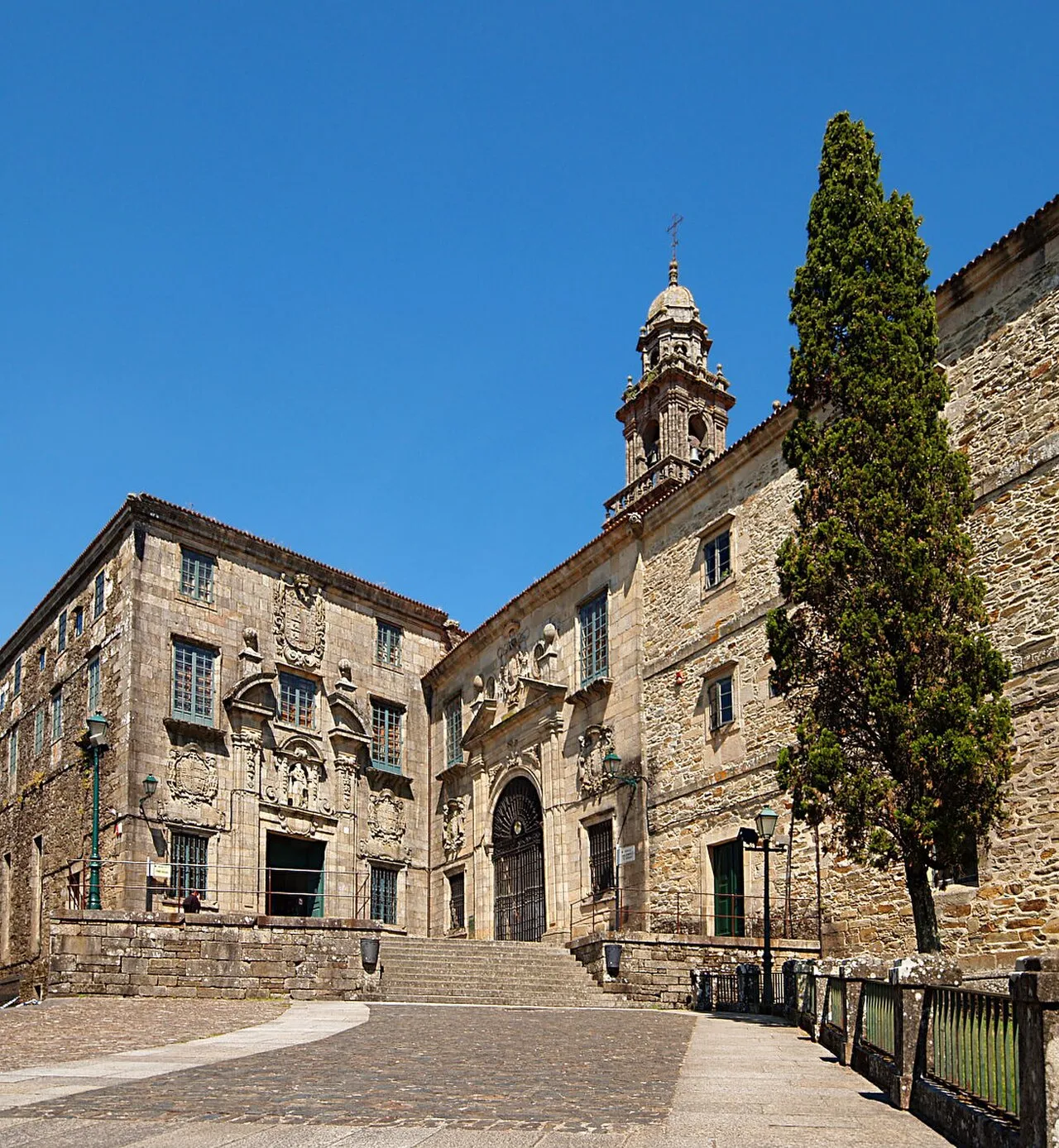
San Domingos de Bonaval was founded, tradition says, by Saint Dominic de Guzmán in the thirteenth century and rebuilt in the seventeenth. Since 1977 it has housed not friars but the Museo do Pobo Galego, the museum of the Galician people, and its most photographed feature is a staircase that looks like an exercise in geometry pushed to the limit.
They are three independent spiral staircases, fitted inside the same cylindrical shaft, that climb in a spiral without ever crossing and without touching at any point. Each one starts in a different place and comes out on a different floor, so three people can go up at the same time without seeing one another.
It was signed by Domingo de Andrade, master of works at the cathedral and also the author of the Berenguela, the clock tower. Andrade was as good a mathematician as he was an artist: he wrote a treatise on geometry applied to building, and this staircase is his practical demonstration.
The rest of the convent is taken up by the Museo do Pobo Galego, with the farming tools, the boats, the looms, the pottery and the bagpipes that explain how people lived in Galicia the day before yesterday. It is a first-rate ethnographic museum and one of the most honest in Spain.
In one of its chapels is the Panteón de Galegos Ilustres, the national pantheon of Galicia. Rosalía de Castro arrived in 1891 with what was almost a state funeral, and the pantheon was created to receive her. With her, Castelao, whose remains could not return from exile in Buenos Aires until 1984.
Álvaro Siza opened it in 1993, the year after he won the Pritzker. He used the same golden stone as the neighbouring convent but in contemporary lines, with no pastiche and no violent contrast. The light comes in at a low angle from above, with no windows in sight. Free entry.
Between the convent and the museum stretches the parque de Bonaval, which occupies the old cemetery and the convent's kitchen garden and which Álvaro Siza himself restored together with the landscape designer Isabel Aguirre. It is one of the most unusual spaces in Santiago and one of the least busy.
The intervention did not erase what was there: the old graves, the retaining walls and the stone terraces of the garden were worked into the design, so the park is at once a contemporary garden and an archaeological remain. You walk among gravestones and oaks without it ever feeling gloomy.
From the upper terraces you look out over the old town with the cathedral towers behind, and that view is different from the one at the Alameda viewpoint: here you see the city from the north and from closer up, with the slate roofs in the foreground.
The ensemble — convent, park and museum — is conceived as a unit and is the best demonstration of how you can work inside a heritage city without dressing up or destroying anything. It pays to walk the whole of it, without hurrying.
The street where the city goes out
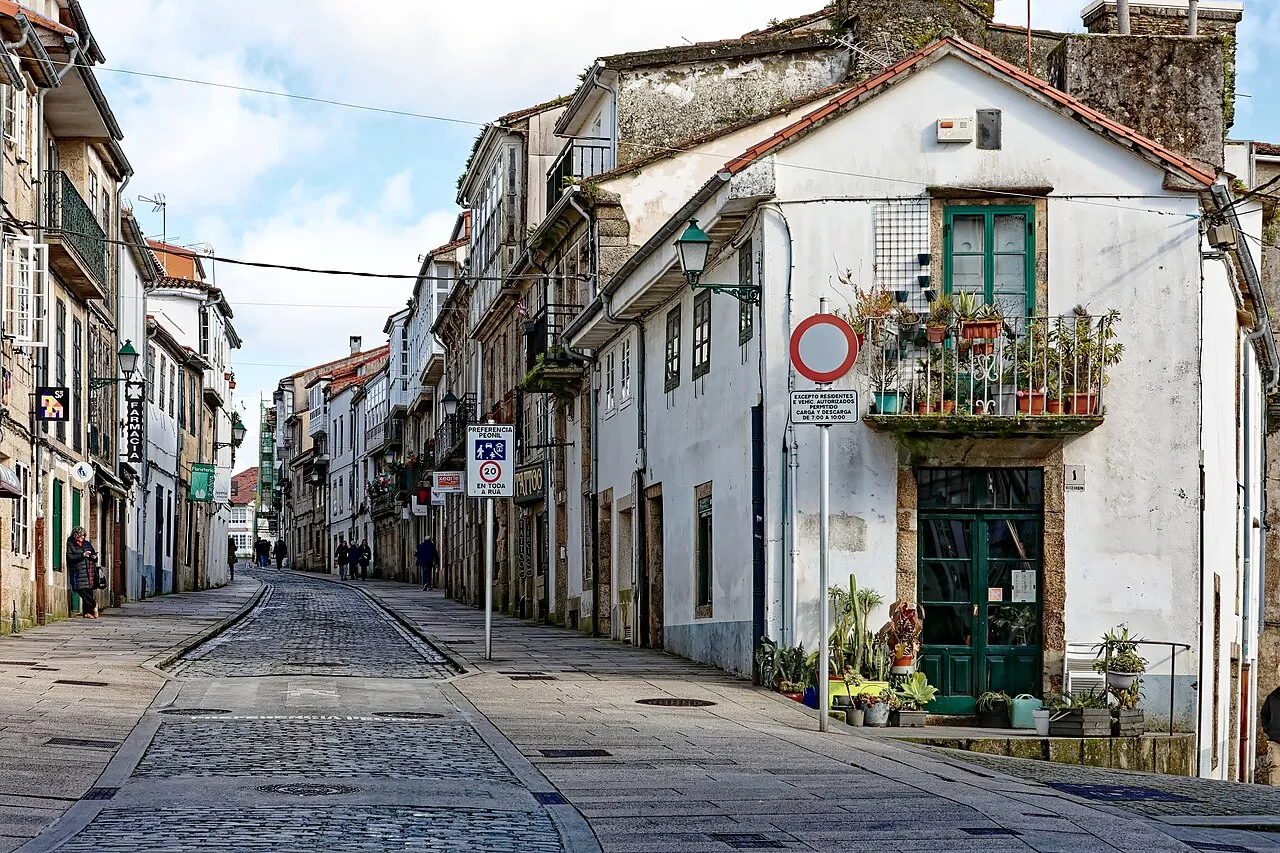
Coming down from Bonaval you reach the Porta do Camiño and the Rúa de San Pedro, the last few metres of the Camino Francés, the French Way. It is the street most of the world's pilgrims walk in by, and first thing in the morning you see them coming down in silence, almost on tiptoe.
In recent decades San Pedro has stopped being only a street you pass through. It has filled with bars with character, bookshops, music venues and street markets, and has become the area where the young people of Santiago go out and where prices are still not old-town prices.
That balance is the interesting part: the pilgrim hostels, the neighbourhood life of always and a tapas circuit that most passing visitors never find, because they stay in the rúas of the centre, all live side by side. You only have to walk ten minutes downhill.
On Saturday mornings there is a producers' market nearby. And taken together, Bonaval in the morning and San Pedro in the afternoon is probably the best day you can have in Santiago away from the cathedral axis.
Working architecture: bare stone, glazed galleries and shopfronts, with no palaces and no coats of arms, because this was the service road of the pilgrimage. Today it holds the best night-time atmosphere in the city, at reasonable prices.
Starting point of the Bonaval route going up, or arrival point coming down. The city was walled after the year 997, when Almanzor carried off the cathedral bells to Córdoba on the shoulders of Christian captives. Of the seven gates not one is left standing.
Three independent spiral staircases fitted inside the same cylindrical shaft in the convent of San Domingos de Bonaval, which climb without ever crossing and without touching at any point. Each one starts and ends in a different place. It was signed by Domingo de Andrade, master of works at the cathedral and a mathematician too.
Who is buried in the Panteón de Galegos Ilustres?
Rosalía de Castro, the mother of Galician literature, whose remains arrived in 1891 with what was almost a state funeral and for whom the pantheon was created; Castelao, the father of political Galicianism, who could not return from exile in Buenos Aires until 1984; the sculptor Asorey and the cartographer Domingo Fontán.
Is the CGAC free?
Yes, entry to the museum costs nothing, something very few people know. And its roof is a public terrace-viewpoint over the rooftops of the old town, with the cathedral towers behind, which Siza conceived as one more square in the city. Twenty minutes is enough if all you want is the view.
What is the parque de Bonaval?
The old cemetery and the convent's kitchen garden, restored by Álvaro Siza together with the landscape designer Isabel Aguirre. The intervention worked the old graves, the retaining walls and the stone terraces into the design, so it is at once a contemporary garden and an archaeological remain. It is free and very quiet.
Is the Museo do Pobo Galego worth it?
Very much so, and it is one of the most honest ethnographic museums in Spain. It brings together farming tools, boats, looms, pottery and bagpipes that explain how people lived in Galicia until very recently, with no idealising. It shares a building with the pantheon and with the triple spiral staircase, so the visit is three in one.
How much time should you give the area?
A long half-day to do it properly: an hour and a half between the museum, the pantheon and the staircase, an hour for the CGAC and its terrace, and as much again for the park at a slow pace. If you then walk down to the Rúa de San Pedro to eat or have a drink, it is a full day away from the usual circuit.
Practical information
WhereOn the slope of the monte da Almáciga, climbing up from the Porta do Camiño.
Getting there10 minutes on foot from the Obradoiro, heading east and uphill.
DurationHalf a day with the museum, the park and the CGAC.
FreeThe whole of the CGAC, its terrace-viewpoint and the parque de Bonaval.
What costs moneyThe Museo do Pobo Galego, around 4 € and free on some days.
Closing daysBoth the museum and the CGAC close on Mondays.
On the map
🎧 With Viavoy
Walk Santiago de Compostela and listen at your own pace
Download Viavoy and walk Santiago de Compostela offline, whenever you like.
from 2,99 €· one-off payment
City Pass · 9,99 €3 days, all the tours in Santiago de Compostela