Santiago in 2 days: the cathedral, the rúas and Bonaval
Cathedral and four squares on the first day, Bonaval and the Alameda on the second. With what has to be booked in advance and the free viewpoint almost nobody climbs to.
Santiago exists because there is a tomb, and that sentence explains the whole street plan: the streets, the economy, the walls it once had and even the university grew around a grave found at the start of the ninth century. The old town is compact and you cover it on foot, so two days are enough. The only thing you have to do in advance is book the two visits you cannot improvise.
The Pórtico da Gloria and the cathedral roofs are separate from free entry to the church, with advance booking and small groups. In summer and in a Holy Year they sell out days ahead.
Day 1, morning: the cathedral and the four squares
Start at the Obradoiro, before ten.
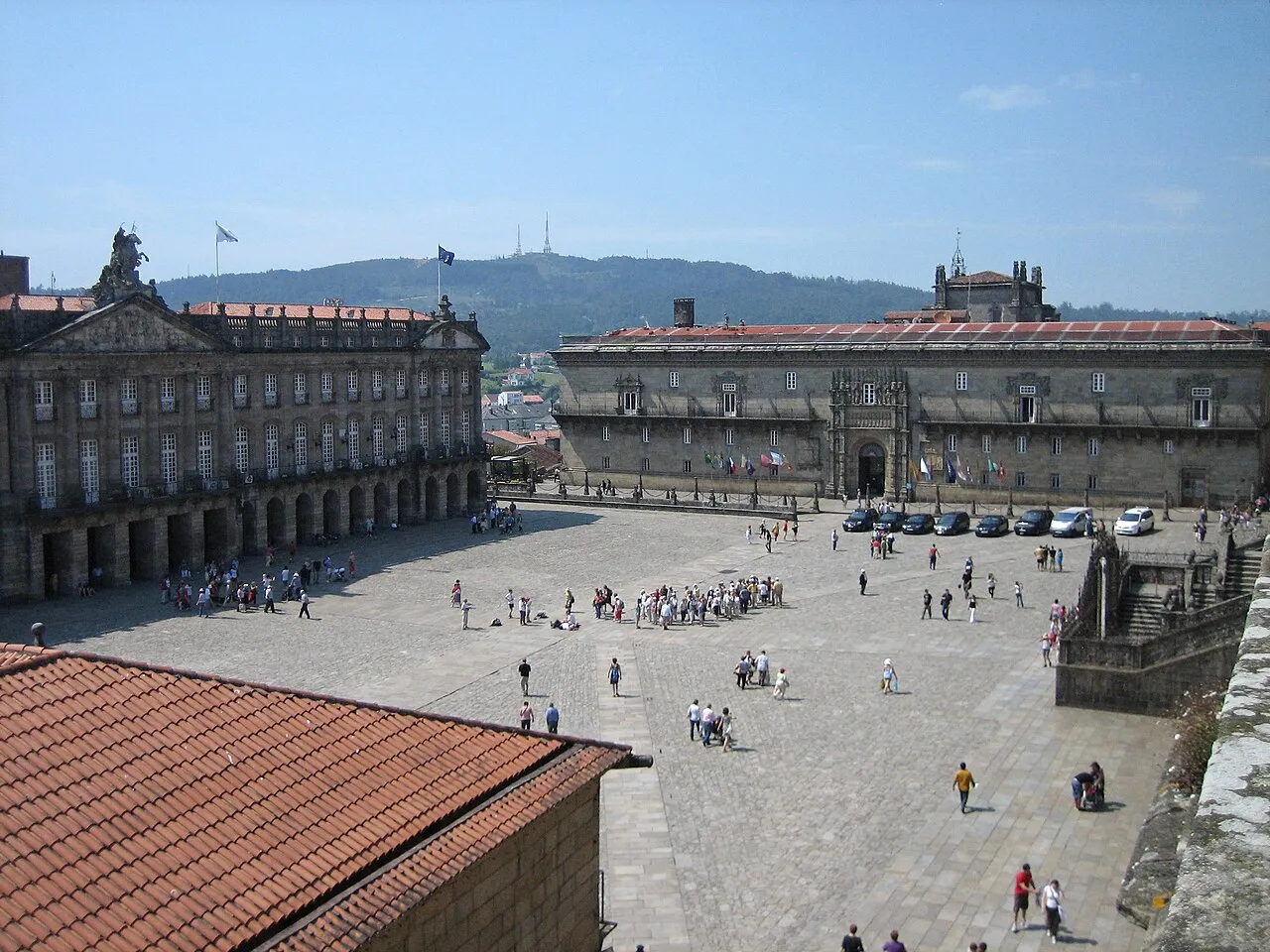
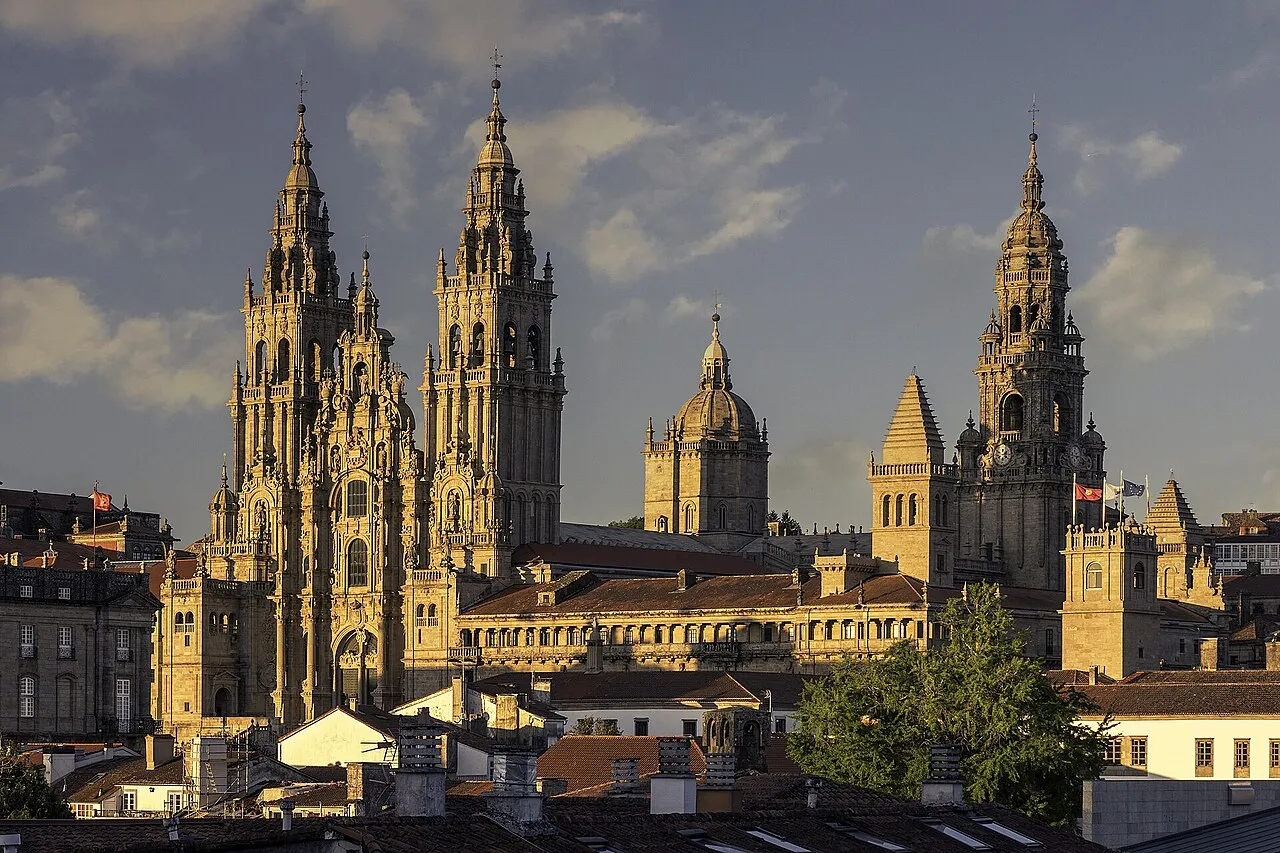
The Obradoiro façade impresses before you know anything, but there is one fact that changes it: it is not the cathedral. It is a stone curtain that Fernando de Casas Novoa put up around 1740 in front of the Romanesque church, to protect it from the constant rain and to dazzle the pilgrim arriving after weeks on the road.
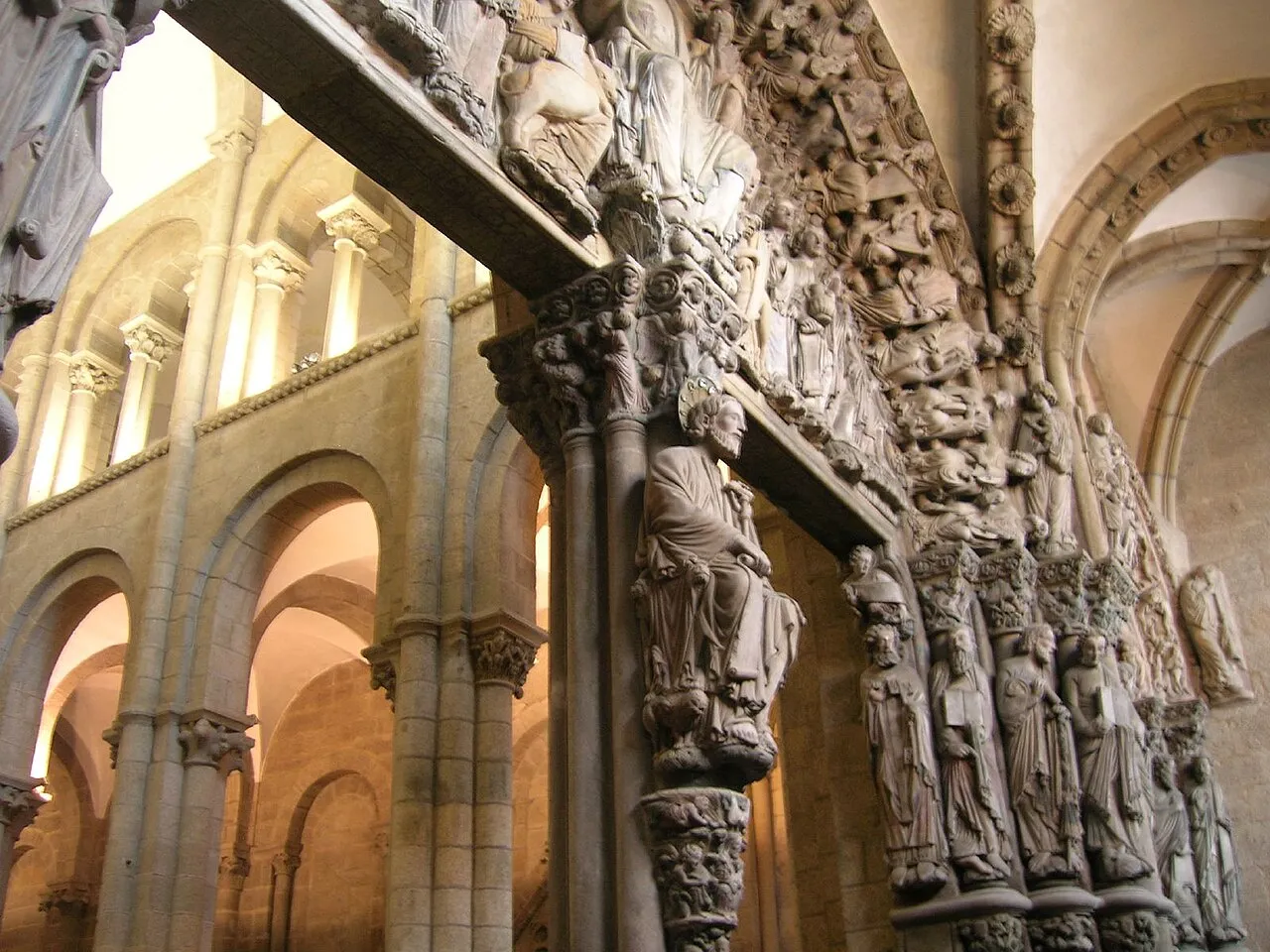
Behind that skin the Pórtico da Gloria is still intact, the doorway whose lintels Master Mateo set in place in 1188 (the work was consecrated in 1211) and which for centuries was the main entrance. It is the summit of European Romanesque sculpture: more than two hundred figures which, for the first time in that style, talk to one another, smile and tune real instruments of the period.
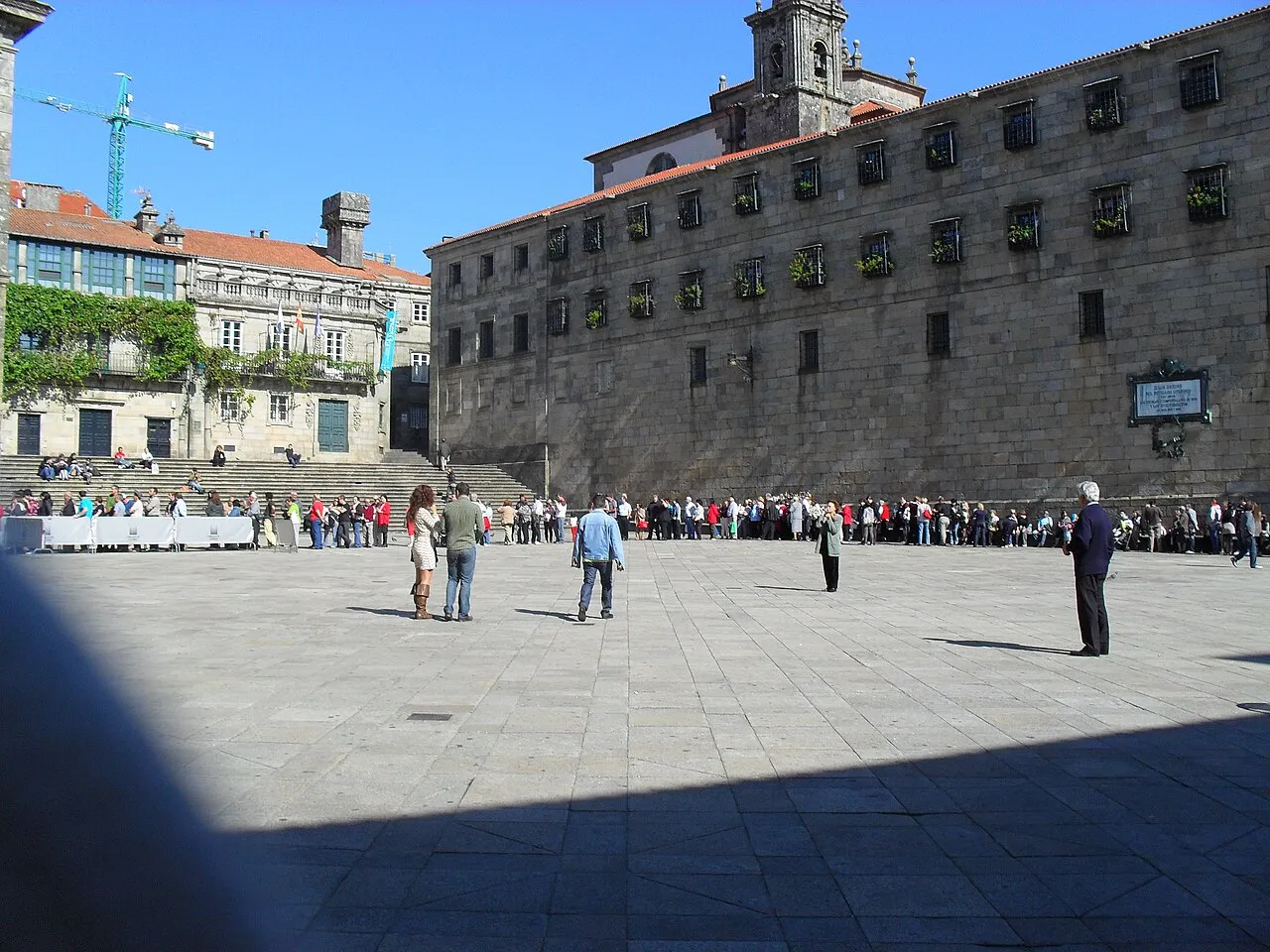
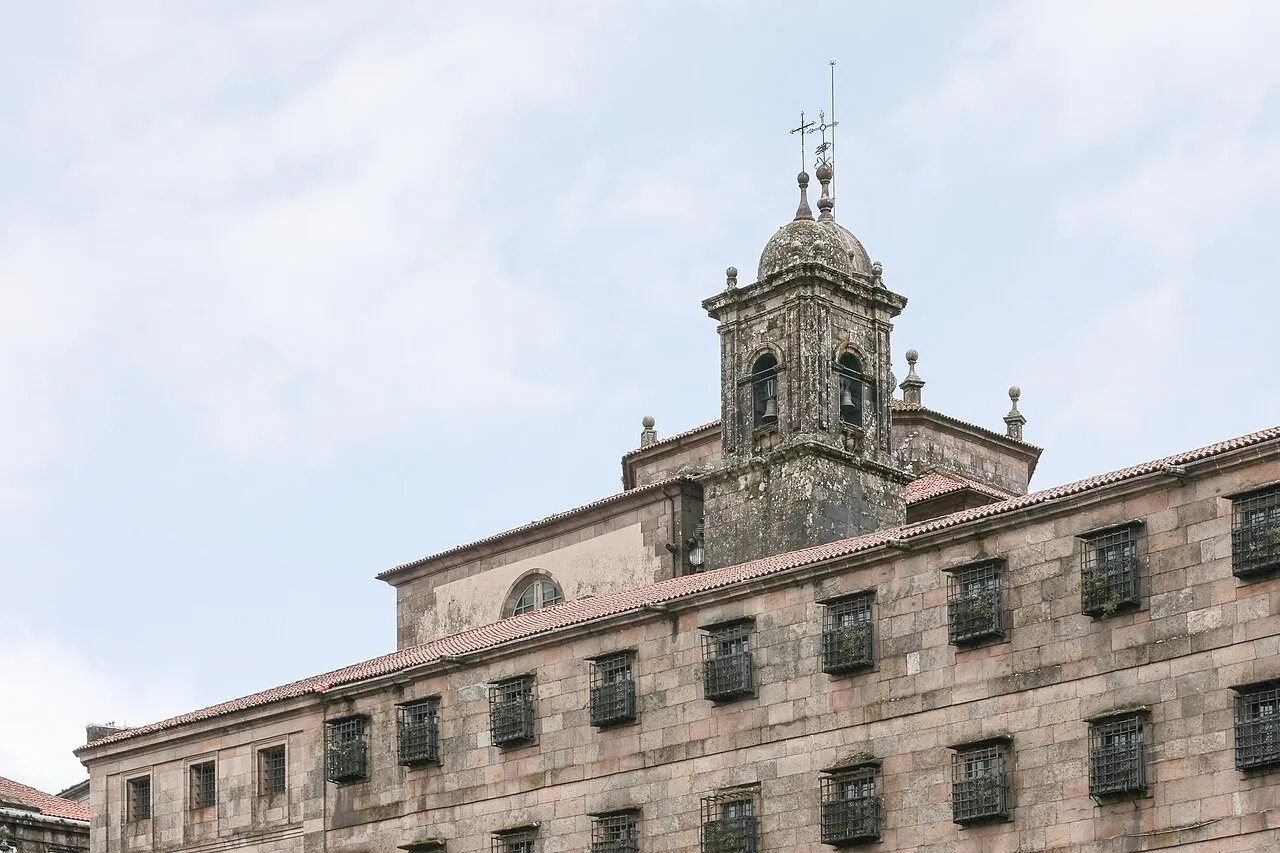
Then walk round the church by the other three squares, which is the best exercise for understanding it from the outside. Praterías with its fountain of the horses, Quintana with its flight of steps splitting the square into two levels and the Porta Santa that only opens in a Holy Year, and Inmaculada with the bulk of San Martiño Pinario opposite.
The church itself is free to enter; what you pay for and book is the Pórtico, the museum and the roofs. The roofs are the least known visit and one of the best: you walk over the stone rooftops, between the towers, with the city below.
The four sides correspond to four different powers: the cathedral, the neoclassical Pazo de Raxoi, the Hostal dos Reis Católicos — founded in 1499 as a pilgrims' hospital and one of the oldest hotels in the world still in operation — and the Colexio de San Xerome. Obradoiro means workshop.
The Pórtico da Gloria recovered its original polychromy after restoration: it was painted in intense colours, and seeing it like that dismantles the idea of bare Romanesque stone. Below the altar, the crypt with the tomb. And the botafumeiro, the giant censer, which does not fly every day: check the calendar.
The most theatrical of the four, divided by a great flight of steps into two levels with names of their own: Quintana de Vivos above and Quintana de Mortos below, the latter over the old cemetery. This is where the Porta Santa is, walled up except in a Holy Year.
Download the app and discover Santiago de Compostela offline, whenever you like. Take the walking tour The Cathedral and the Four Plazas with a local guide in your ear.
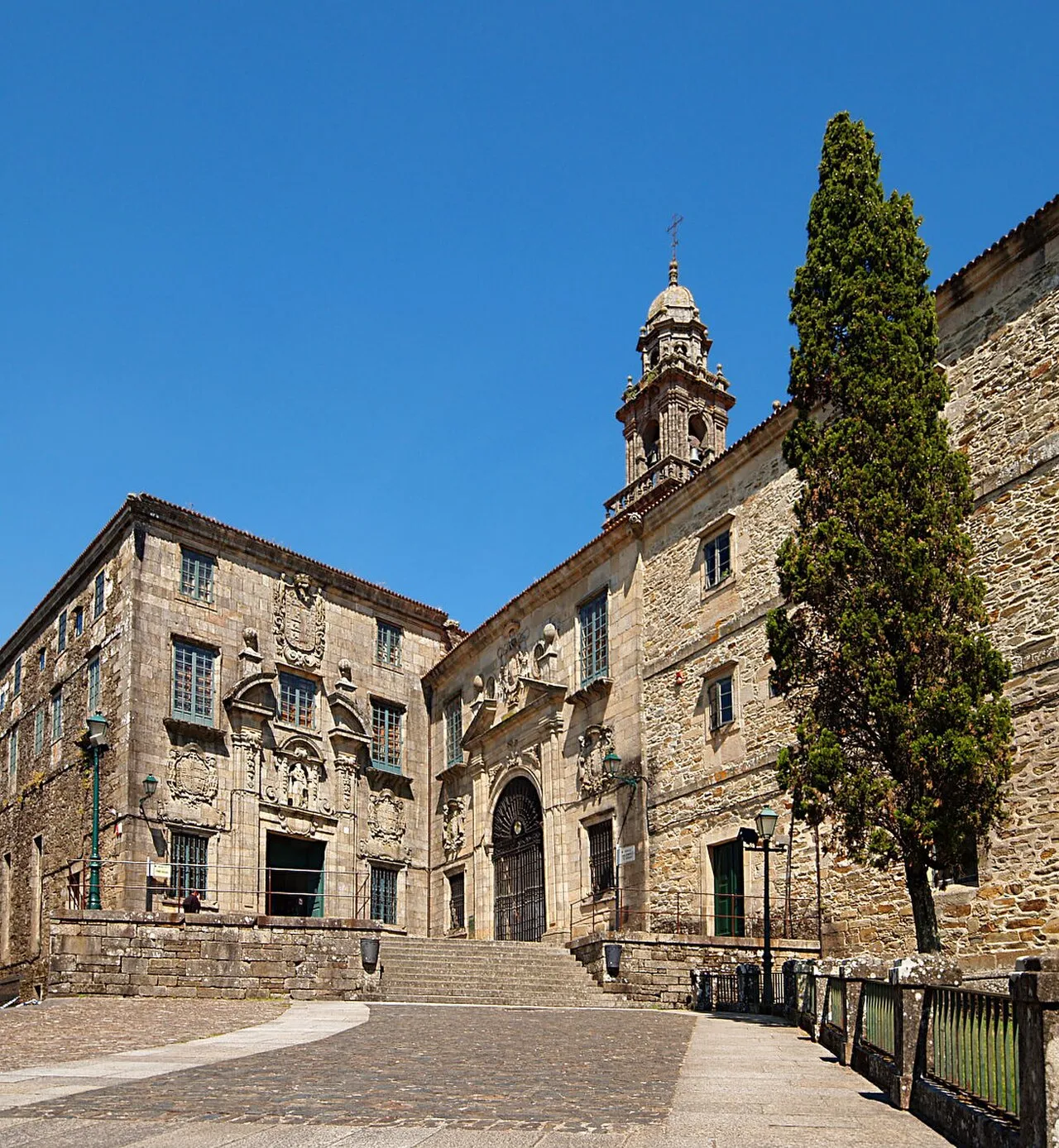
Behind the cathedral, closing the Quintana, there is a very long wall with almost no windows: it is the monastery of San Paio de Antealtares, of enclosed Benedictine nuns, founded in the ninth century with monks to keep watch over the Apostle's tomb; the Benedictine nuns have lived there since 1499.
Look in that wall, at street level, for a small wooden window that turns. It is a torno, a revolving hatch, and through it the nuns sell the sweets they make themselves without anyone seeing anyone's face: you speak, you leave the coins, the tray turns and comes back with almond tart. It is worth it even if you do not fancy anything sweet.
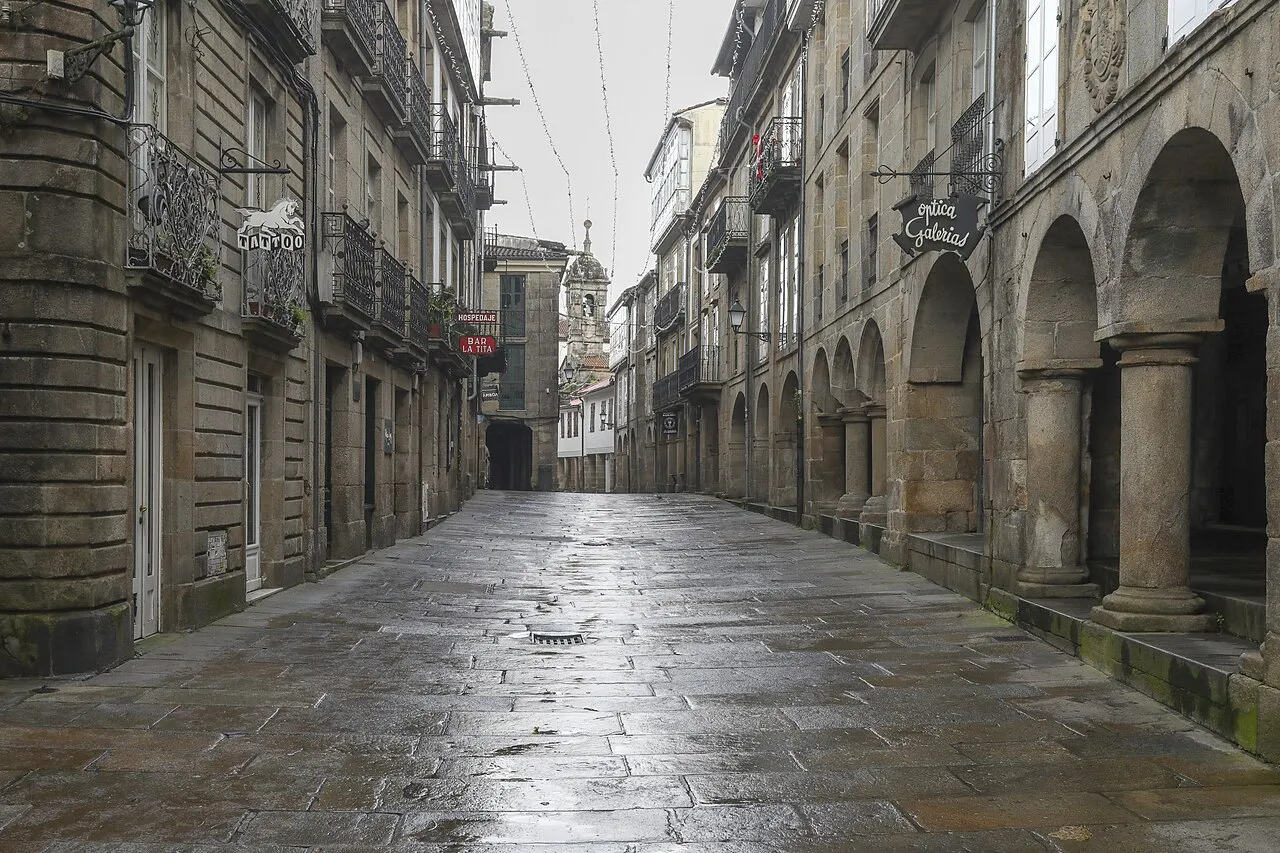
Then, the rúas. Rúa do Vilar and Rúa Nova with their continuous arcades — designed for walking without getting wet, which here is a necessity — the Praza do Toural, the Colexio de Fonseca, founded around 1526 and historic seat of the university (born in 1495), and the small churches that keep appearing.
Santiago has been a university city for five centuries and that changes everything: the old town is lived in, not turned into a museum, and from eight o'clock onwards the rúas fill with people who live here. That is the difference from almost any other Spanish heritage city.
It was founded by Alfonso II in the ninth century with monks, not nuns, to keep watch over the tomb day and night. That same king was the first pilgrim in history, walking down from Oviedo. Its museum keeps the Ara de Antealtares, the altar that stood over the grave before the cathedral existed.
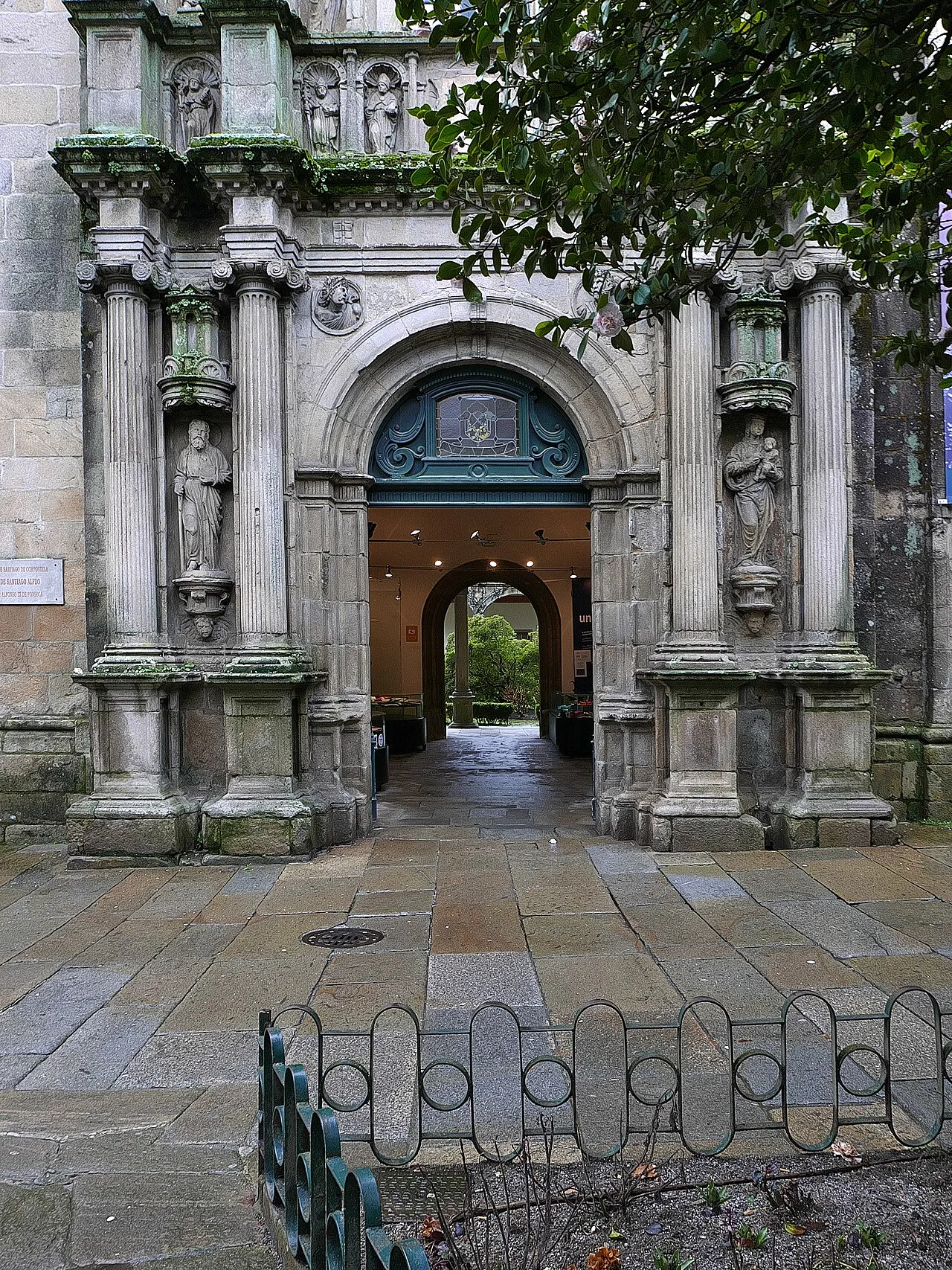
A Plateresque doorway and a two-storey cloister with medallions watching from above. It was founded around 1526 by archbishop Alonso de Fonseca, a humanist who corresponded with Erasmus of Rotterdam. Free access to the cloister and the exhibition hall.
The arcades of Santiago are not decorative: they let you cover a good part of the old town without getting wet in a city where it rains all year. Rúa Nova and Rúa do Vilar are the two arteries of the old town and hold the shops, the cafés and much of the nightlife.
Climb east, towards the Porta do Camiño, and the city changes. This was the main one of the seven gates in the wall and the entrance of the pilgrims of the Camino Francés for a thousand years. The arch was pulled down in the nineteenth century, but the function is still alive: this is where they walk in.
From there the Rúa de San Pedro drops away, the last metres of the Camino. First thing in the morning you see the pilgrims coming down in silence, almost on tiptoe, as if they were afraid of waking the city they have been dreaming about for weeks. The street has also filled with bars, bookshops and music, and it is where the young people go out.
Climbing up from there is the convent of San Domingos de Bonaval, which holds two exceptional things: Domingo de Andrade's triple spiral staircase — three independent spirals that climb without ever crossing — and the Panteón de Galegos Ilustres, with Rosalía de Castro and Castelao. The rest is the Museo do Pobo Galego.
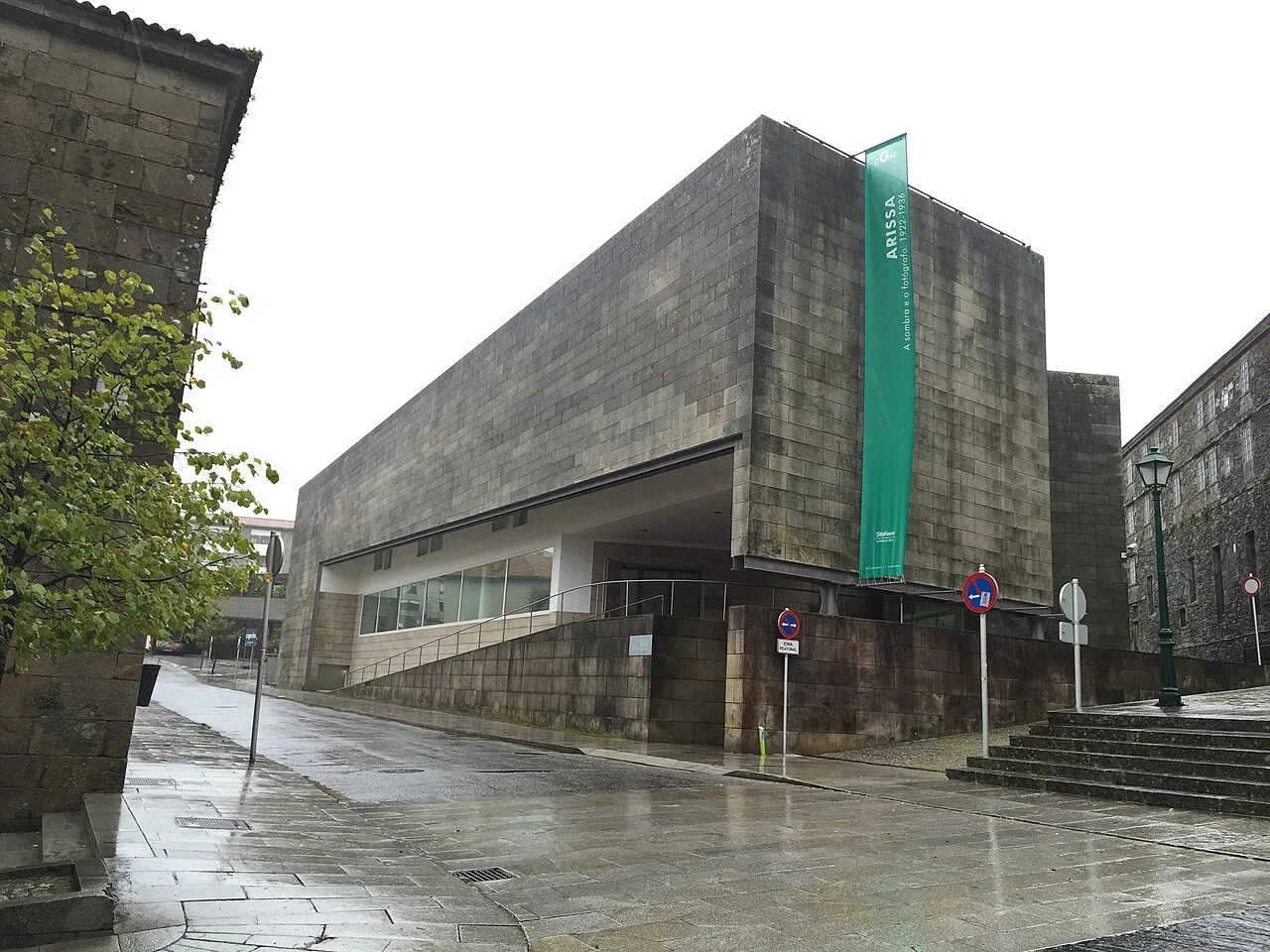
And right beside it, Álvaro Siza's CGAC, which used the same golden stone as the convent but in contemporary lines. Entry is free and, above all, its roof is a public terrace-viewpoint over the rooftops of the old town that almost nobody climbs to.
The city was walled after the year 997, when Almanzor razed it and carried off the cathedral bells to Córdoba on the shoulders of Christian captives. In 1987 the first marker declaring the Camino the first European Cultural Itinerary was set here.
Andrade was as good a mathematician as he was an artist and wrote a treatise on geometry applied to building: the triple spiral staircase is his practical demonstration. Rosalía de Castro arrived here in 1891, with what was almost a state funeral, and the pantheon was created to receive her.
Álvaro Siza opened it in 1993, a year after winning the Pritzker. The light comes in at a low angle from above, with no windows in sight, and changes through the day. Free entry, and its roof is designed as one more public square in Santiago.
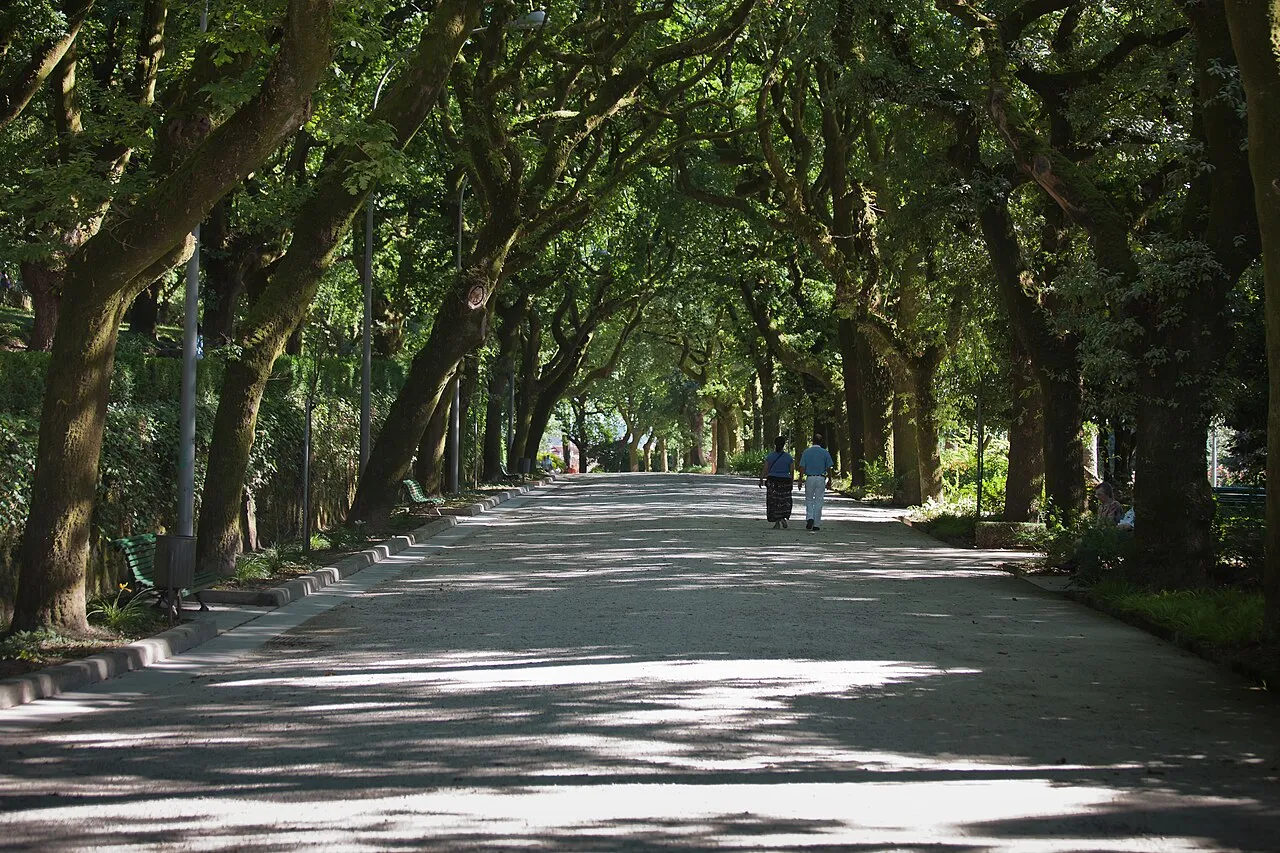
Close the trip in the parque de la Alameda, five minutes from the old town through the Porta Faxeira. It is the great public space of a city of narrow streets with no large squares, and it works as lungs and as drawing room at the same time.
Its spine is the Paseo da Ferradura, a long curve that hugs the monte de Santa Susana with the old city unfolding on the other side. There is a student superstition told in all seriousness: you must not walk it from end to end until you have finished your degree, so you see people turning back halfway.
Then climb up to the Carballeira de Santa Susana, a genuine Galician oak wood that ended up inside the city when the city grew around it. From there, between the trunks, the cathedral appears: it is the postcard of Santiago, and what makes it unique is precisely that it arrives framed by the trees and not all at once.
The moment is dusk, when the stone turns golden, or a foggy day, and fog is plentiful here and gives the most characteristic image: the cathedral floating above the wet roofs. It is free, open and has no set hours.
Lamp posts and railings full of Art Nouveau motifs from the start of the twentieth century that almost nobody looks at. Scattered through the park are the statues of Rosalía de Castro, Valle-Inclán and the Dúas Marías, two real sisters who walked here every day dressed in loud colours.
The most famous view in the city, and it portrays something eighteenth-century: the Baroque façade, not the Romanesque church behind it. In fog the cathedral seems to float; in the middle of the morning it is backlit. Wear footwear with grip, because the floor of the oak wood turns to mud.
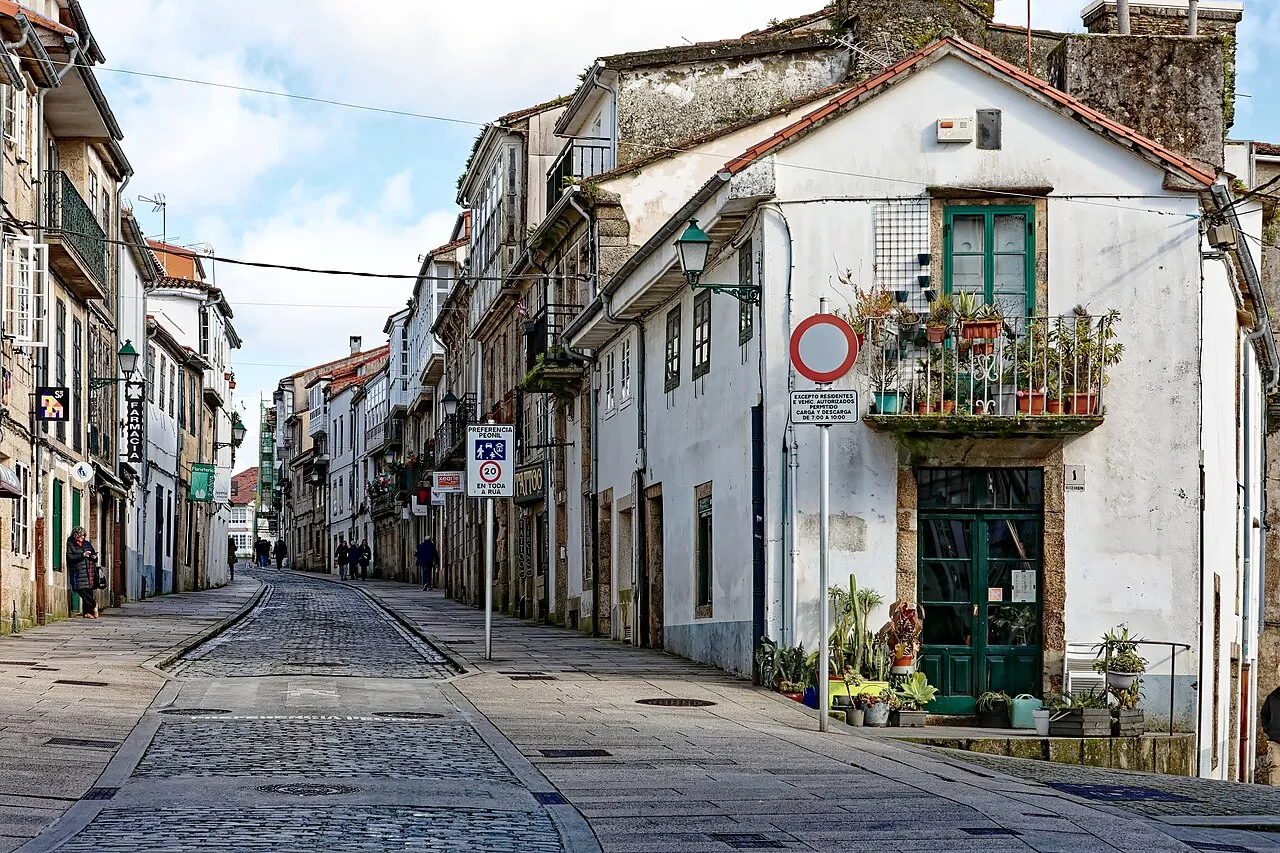
Working architecture: bare stone, glazed galleries and shopfronts, with no palaces and no coats of arms, because this was the service road of the pilgrimage. Today it is the area with the best night-time atmosphere and prices that are still not old-town prices.
Yes, at a calm pace. The old town is very compact and everything is done on foot. Two days cover the cathedral with the four squares, the rúas, the monastery of San Paio, Bonaval with the museum and the CGAC, and the Alameda with the viewpoint. With a third day you can fit in Padrón, the coast or the museums of the new town.
What has to be booked in advance?
The Pórtico da Gloria and the cathedral roofs, which are separate from free entry to the church and work with advance booking and small groups. In summer and in a Holy Year they sell out days ahead. The rest of the city does not require booking for anything.
When does the botafumeiro fly?
Not at every Mass. It flies on the great solemnities of the liturgical calendar and also when someone pays for the service, which happens often but unpredictably. The cathedral publishes the calendar of the scheduled services, so it is worth checking if that is the reason for the trip.
Where is the classic view of the cathedral?
In the Carballeira de Santa Susana, inside the parque de la Alameda, ten minutes from the Obradoiro. The cathedral appears framed between hundred-year-old oaks, and that framing is what makes the image recognisable. It is free and has no set hours. Better at dusk or in fog; in the middle of the morning it is backlit.
Is it worth leaving the old town?
Very much so. The Bonaval area, with the convent, the Museo do Pobo Galego, Siza's CGAC and the park, is the part of the historic city with the least tourist pressure and has three of the best things in Santiago. It is ten minutes on foot and most visitors never get there.
Does it rain as much as they say?
Quite a lot, and at any time of year. It is not usually heavy rain but persistent and fine, what they call orballo here. A waterproof is better than an umbrella, and footwear that does not slip on wet granite. The arcades of the rúas let you cover a good part of the old town under cover.
Practical information
Getting thereLavacolla airport 15 minutes away. Trains from Madrid and A Coruña.
Getting aroundThe whole old town is pedestrian and you cover it on foot. No transport needed.
BookingPórtico da Gloria and the cathedral roofs, in advance and with limited places.
FreeThe church, the CGAC with its terrace, the Alameda and the parque de Bonaval.
RainIt rains at any time of year. A waterproof rather than an umbrella, and footwear that does not slip on granite.
EatingPulpo á feira, empanada, shellfish and tarta de Santiago. Albariño or ribeiro.
On the map
🎧 With Viavoy
Walk Santiago de Compostela and listen at your own pace
Download Viavoy and walk Santiago de Compostela offline, whenever you like.
from 2,99 €· one-off payment
City Pass · 9,99 €3 days, all the tours in Santiago de Compostela