Visiting the Cathedral of Santiago: what to book and what is free
The Pórtico da Gloria, the botafumeiro, the crypt and roofs you walk across between the towers. What you pay for, what you do not and what has to be booked days in advance.
The Cathedral of Santiago is not one visit but four or five, and some are booked separately. The church is free to enter; the Pórtico da Gloria, the museum and the roofs are separate, with limited places. Knowing what is what before you arrive avoids the most common mistake, which is turning up at the door and finding that what you came to see sold out three days ago.
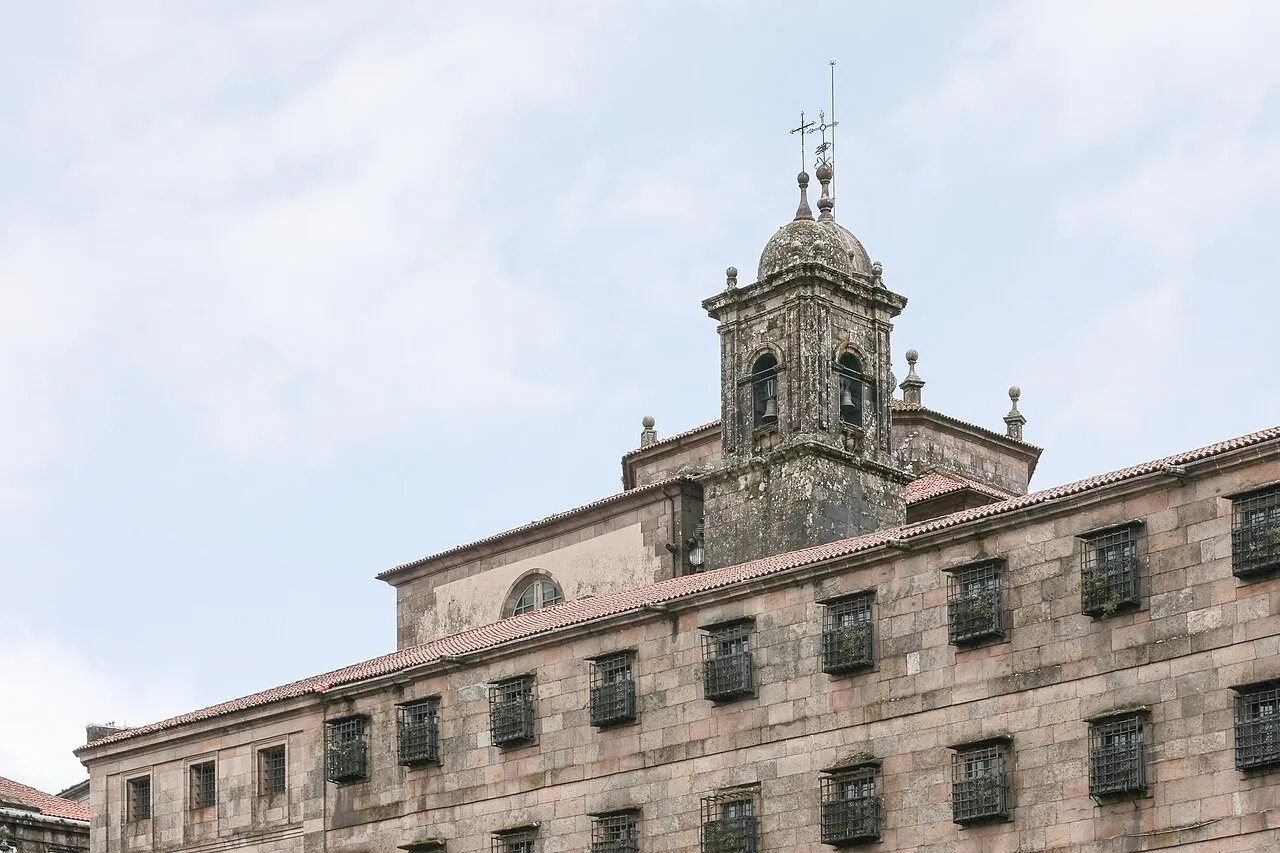
The roofs are the least known visit and probably the best: you walk over the stone rooftops of the church, between the towers, with the whole city below. Small groups and compulsory booking.
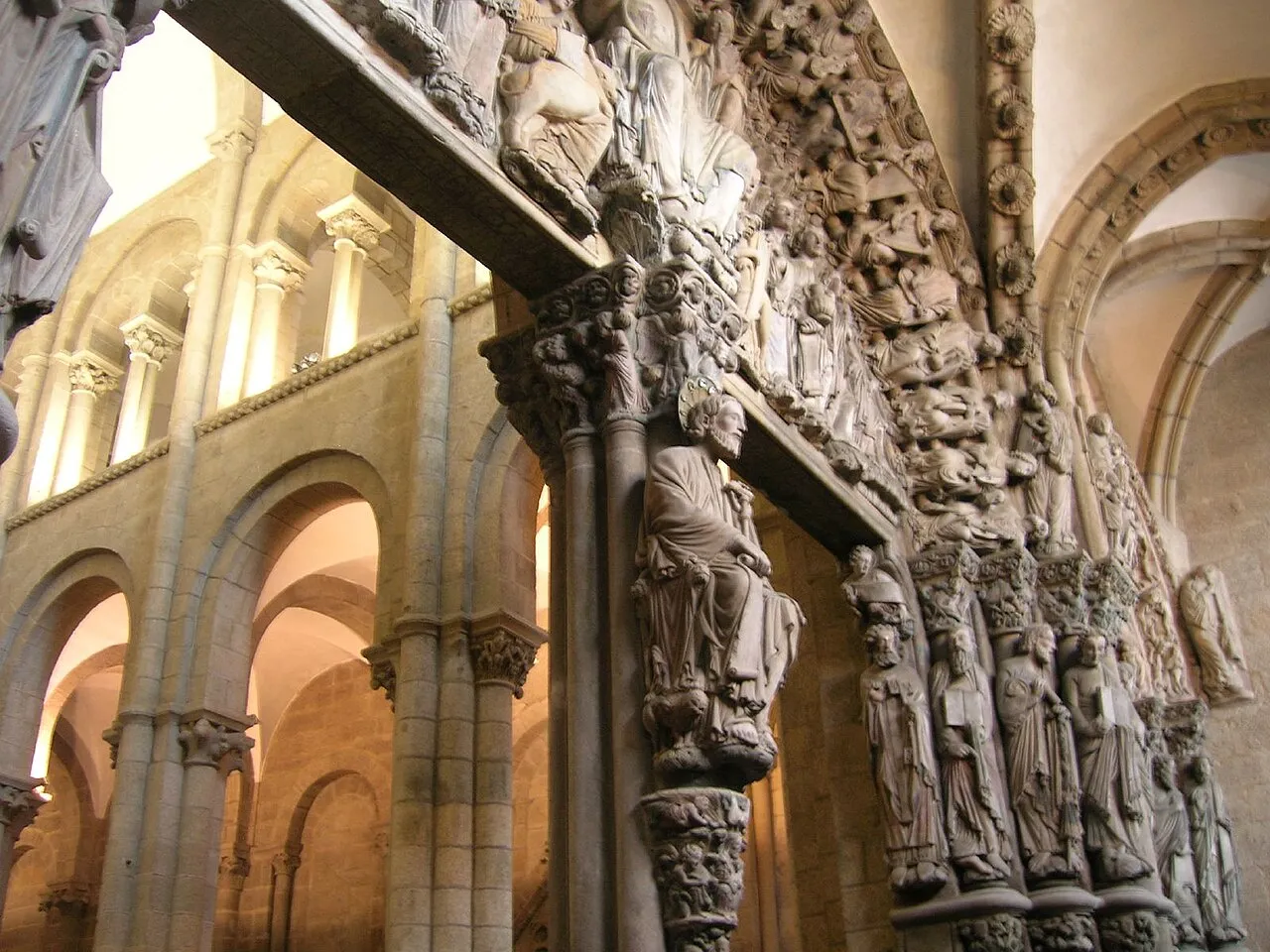
The Pórtico da Gloria
Hidden behind the Baroque façade.
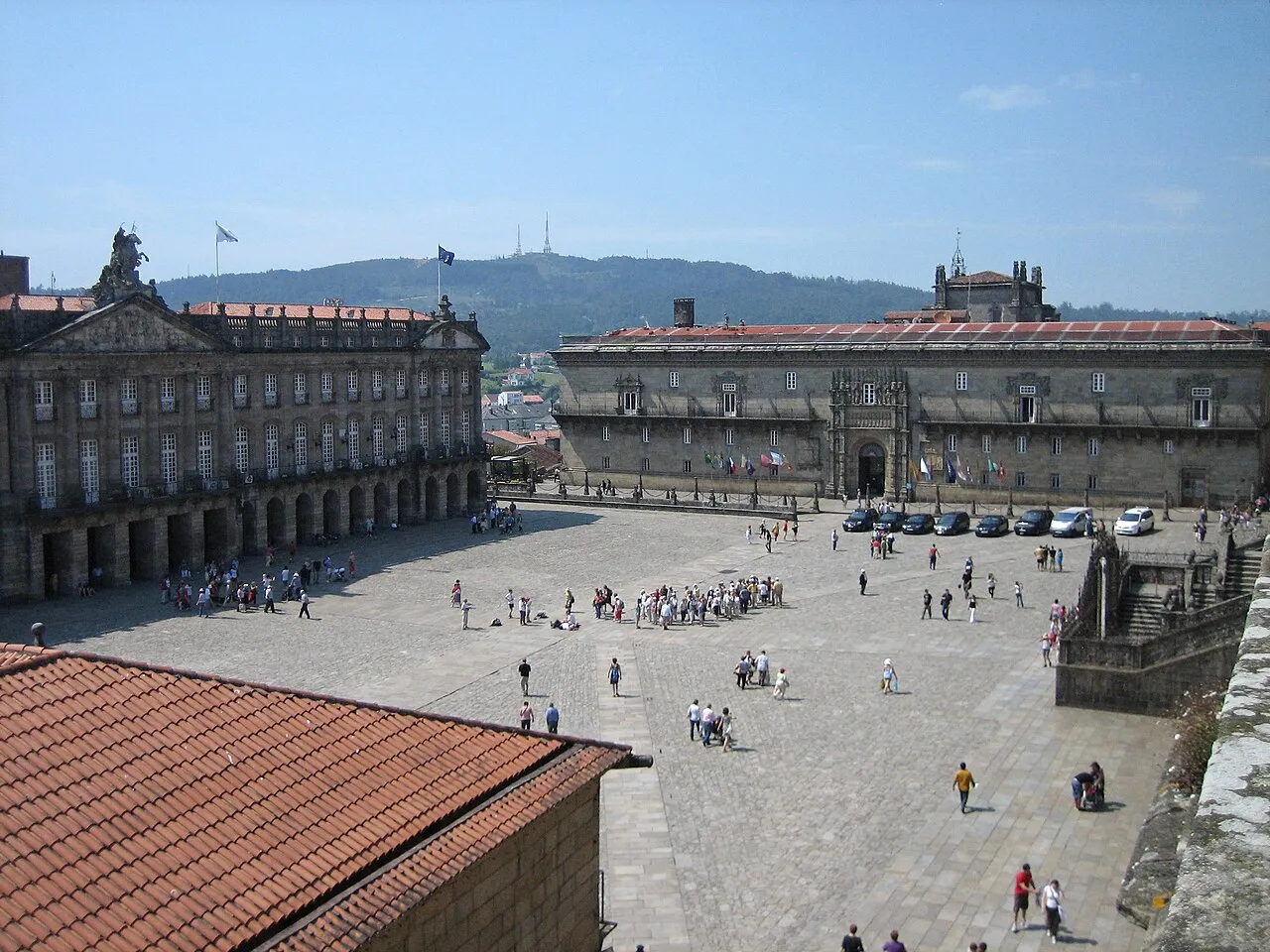
It is right behind the Obradoiro, and that is the first thing that throws you: the most famous façade in Spain deliberately covers an even greater masterpiece. The Baroque one was put up around 1740 precisely to protect the Romanesque doorway underneath from the damp, a doorway that for centuries was the main entrance.
Master Mateo and his workshop set its lintels in place in 1188, a date recorded in the inscription itself (the work was consecrated in 1211), which makes this one of the very few Romanesque works with a certain author and a certain date. There are more than two hundred figures spread over three arches and a central mullion.
What is exceptional is not the size but the humanity. The twenty-four elders of the Apocalypse hold real musical instruments of the period and are tuning them and talking to one another; the prophets look at each other, gesture, smile. In earlier Romanesque work the figures are rigid and frontal: here, for the first time, they are alive.
And there is a surprise the restoration gave back: the Pórtico was painted in intense colours, and today it is seen with much of that polychromy recovered. Seeing it like that dismantles the idea of bare stone that we associate with the Romanesque, which is a modern misunderstanding.
The church is free to enter. A Romanesque nave of almost a hundred metres under all the Baroque additions, with the crypt of the tomb below the high altar and the camarín that lets you embrace the figure of the Apostle from behind, a gesture pilgrims have been making for eight hundred years.
The Baroque façade by Fernando de Casas Novoa, around 1740, one of the peaks of the Spanish Baroque. Its two towers have names of their own: the das Campás, which marks the hours, and the da Carraca, after the wooden rattle that sounded in Holy Week (Semana Santa) when the bronze bells fell silent.
Download the app and discover Santiago de Compostela offline, whenever you like. Take the walking tour The Cathedral and the Four Plazas with a local guide in your ear.
The botafumeiro weighs some eighty kilos when loaded and hangs from a rope more than thirty metres long that crosses the transept. It is moved by eight men called tiraboleiros, pulling together on a system of pulleys until it reaches twenty metres in height and touches seventy kilometres an hour at the low point of its arc.
Its origin is more practical than devotional: medieval pilgrims arrived after weeks on the road without washing and slept inside the church, so the smoke served a very concrete hygienic and atmospheric purpose. That it survives as a liturgical act does not erase that origin.
It does not fly at every Mass. It does so on the great solemnities of the calendar and when someone pays for the service, which happens often but unpredictably. The cathedral publishes the calendar of the scheduled services, and it is worth checking if that is the reason for the trip.
Below the high altar is the crypt with the silver urn holding the remains attributed to the Apostle. You go down a narrow staircase, the queue moves quickly and the visit lasts two minutes. It is the point for which the whole city exists.
What you pay for, what you do not and what you book
The church is free to enter and you can walk round it without paying anything, including the nave, the crypt and the Apostle's camarín. What has a ticket of its own and advance booking is the Pórtico da Gloria, with small groups and tightly set time slots.
The Cathedral Museum, which occupies part of the cloister and the outbuildings, is also paid for separately and includes the treasury, the library where the botafumeiro is kept when it is not flying and a terrace over the Praza do Obradoiro that many people do not know exists.
And then there are the roofs, the visit that pays off most. You go up with a guide and walk over the sloping stone rooftops of the church itself, between the towers and the pinnacles, with the four squares and the whole city below. Very small groups, compulsory booking and not suitable for anyone with a fear of heights.
A note on timing: during pilgrims' Masses and solemn services tourist access is restricted. And in a Holy Year, when 25 July falls on a Sunday and the Porta Santa is opened, numbers multiply and everything needs more advance planning.
It closes the square behind the cathedral with a windowless wall. Alfonso II founded it in the ninth century to keep watch over the tomb, and its museum holds the Ara de Antealtares: the stone altar that stood over the grave before the great cathedral existed.
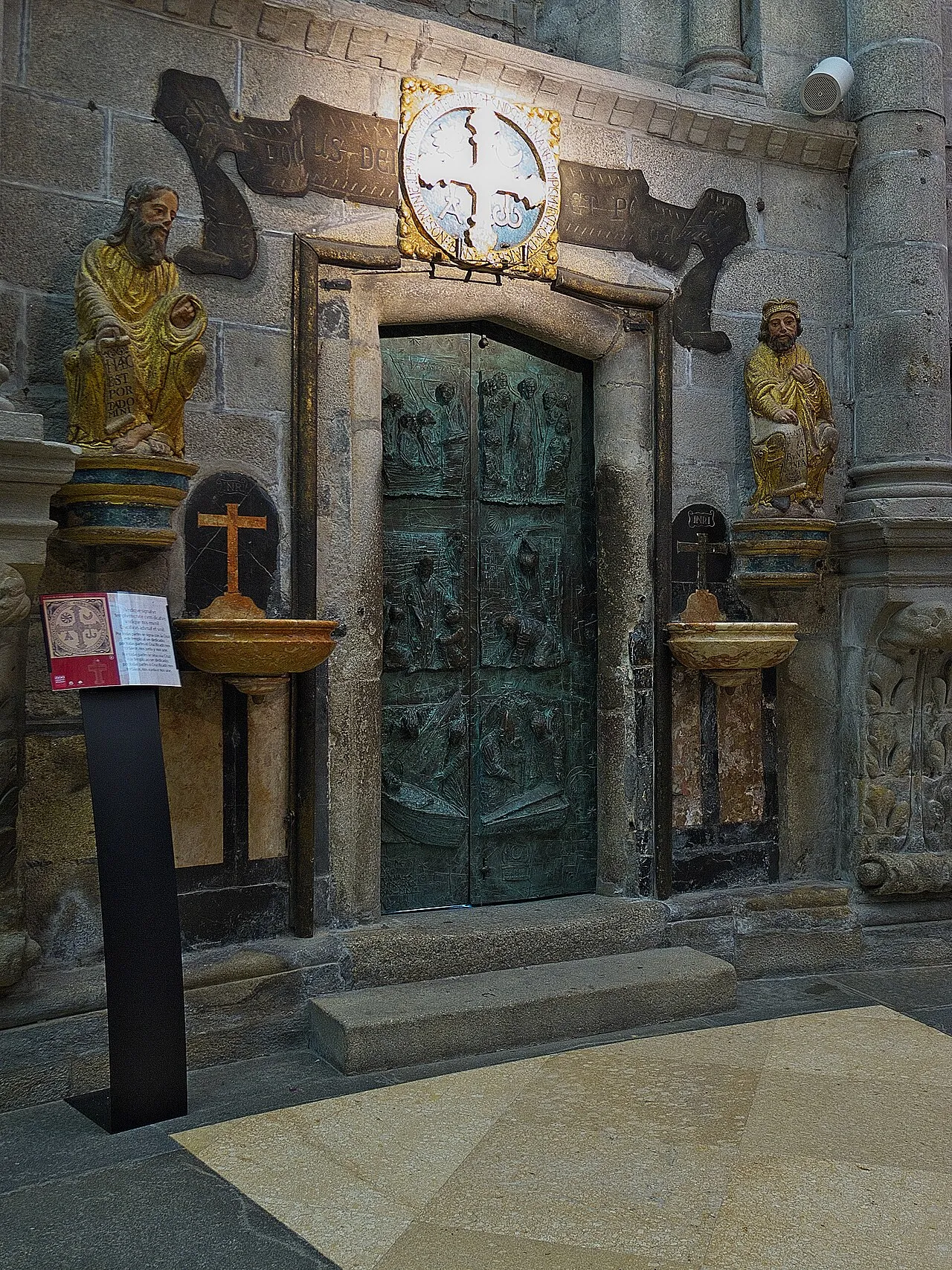
It stays walled up and only opens in a Holy Year, that is, when 25 July falls on a Sunday. Going through it is the central gesture of the jubilee pilgrimage. The rest of the time you see the closed wall with the stone figures that came from Mateo's old choir.
The church is: the nave, the crypt with the Apostle's tomb and the camarín are visited without paying. What has a ticket of its own is the Pórtico da Gloria, the Cathedral Museum and the roofs, three independent visits that also require advance booking with limited places.
Do you have to book to see the Pórtico da Gloria?
Yes, and in advance. It works with small groups and tightly set time slots, and in summer and in a Holy Year they sell out days ahead. It is the most common mistake: turning up at the door and finding that what you came to see sold out a while ago.
When does the botafumeiro fly?
On the great solemnities of the liturgical calendar and when someone pays for the service, which happens fairly often but unpredictably. The cathedral publishes the calendar of the scheduled services. It weighs some eighty kilos when loaded and eight tiraboleiros move it until it touches seventy an hour.
What are the cathedral roofs?
A guided visit over the sloping stone rooftops of the church itself, walking between the towers and the pinnacles with the four squares and the whole city below. It is the least known and probably the best. Very small groups, compulsory booking and not suitable for anyone with a fear of heights.
Can you embrace the Apostle?
Yes. Behind the high altar there is a camarín you reach by a staircase and from which you embrace the figure of the Apostle from behind, a gesture pilgrims have been making for some eight hundred years. It is included in free access to the church and the queue usually moves fast.
What is the Porta Santa?
A door on the Praza da Quintana that stays walled up and only opens in a Holy Year, that is, when 25 July falls on a Sunday. Going through it is the central gesture of the jubilee pilgrimage. The rest of the time you see the closed wall, with stone figures that came from the old choir of Master Mateo.
Practical information
FreeThe whole church: nave, the Apostle's crypt and camarín.
What costs moneyPórtico da Gloria, Cathedral Museum and roofs, each one separately.
BookingPórtico and roofs, in advance. Small groups and set time slots.
DurationAn hour for the church; an hour and a half more with the Pórtico and the roofs.
BotafumeiroOnly on solemnities or when someone pays for it. Check the official calendar.
Watch outDuring Mass tourist access is restricted. In a Holy Year, everything needs more advance planning.
On the map
🎧 With Viavoy
Walk Santiago de Compostela and listen at your own pace
Download Viavoy and walk Santiago de Compostela offline, whenever you like.
from 2,99 €· one-off payment
City Pass · 9,99 €3 days, all the tours in Santiago de Compostela