How the tomb was discovered, why the shell is the symbol, what the Compostela is and what exactly happens when a pilgrim walks into the city. A guide to understanding what you are looking at.
Even if you do not arrive on foot, understanding the Camino, the Way of St James, changes the visit to Santiago completely, because it explains every detail of the street plan: why the city is where it is, why the rúas have arcades, why there is a royal hospital on the main square and why at certain hours of the day there are people sitting on the ground of the Obradoiro in tears.
The Compostela, the Latin diploma that certifies the pilgrimage, is given to anyone who has completed at least the last hundred kilometres on foot or two hundred by bicycle. It once counted as forgiveness of sins.
How it all began
Lights over a wood, at the start of the ninth century.
The founding story goes like this: a hermit called Pelayo saw strange lights shining at night over a lonely wood, told bishop Teodomiro, and the bishop dug and found a tomb that he declared to be the tomb of the Apostle St James. King Alfonso II came down from Oviedo to venerate it, becoming the first pilgrim in history.
About the name of the city there is an argument that has lasted centuries and is worth knowing. The romantic version says Compostela comes from the Latin campus stellae, field of the star, after those lights. The more rigorous version points to compostum, which meant something like cemetery or burial place. Both are plausible.
What happened next can be measured: within a few centuries, a tomb at the north-western edge of Europe became the third great pilgrimage destination in Christendom after Jerusalem and Rome, and the economic and cultural engine of the whole north of the peninsula.
The Camino also had its guidebook, one of the first in the world. Around 1140 the Codex Calixtinus was written, and its last book is literally a practical guide: which routes to follow, where there was good water, who to trust and what the people of each land were like. The great-grandfather of any travel guide.
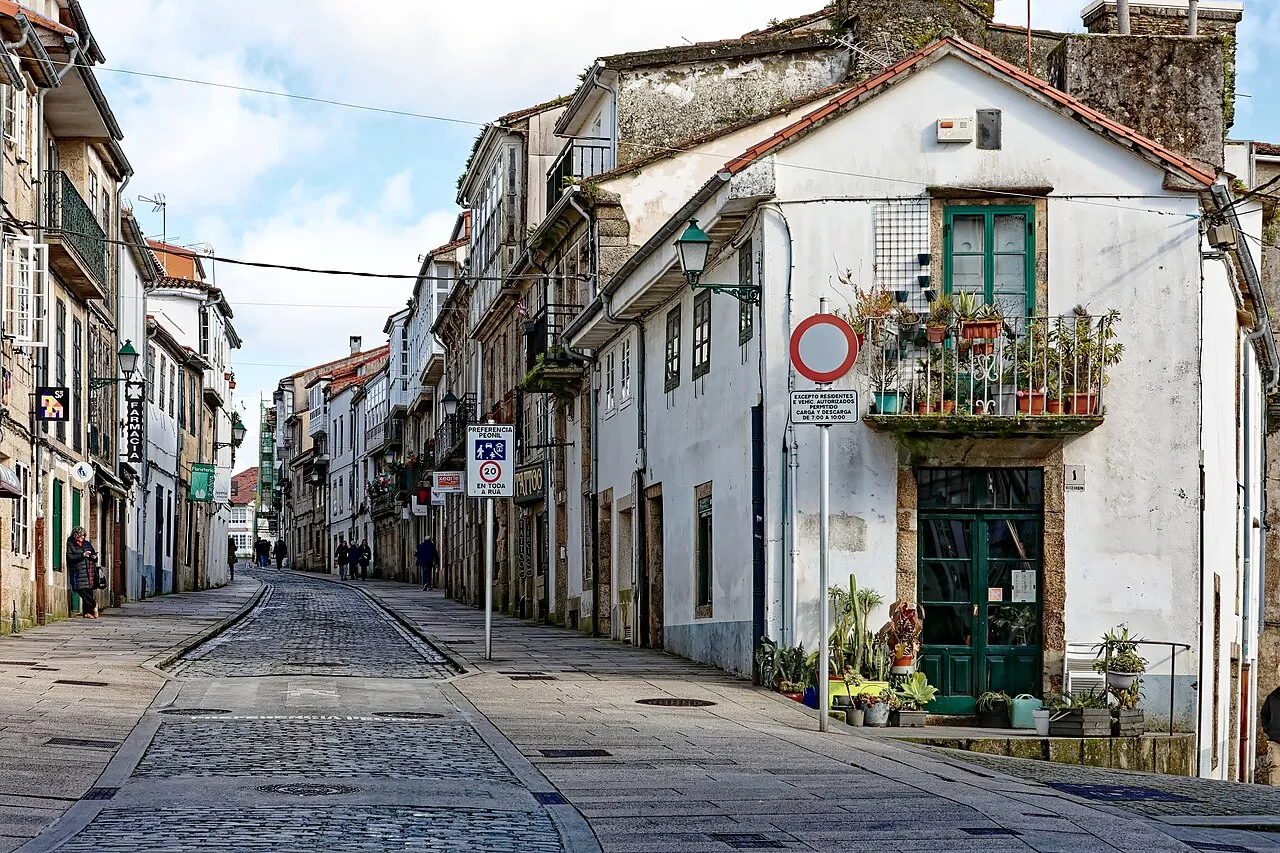
The main one of the seven gates in the wall and the entrance of the pilgrims of the Camino Francés, the French Way, for a thousand years. The arch was pulled down in the nineteenth century but the function remains. In 1987 the first marker declaring the Camino the first European Cultural Itinerary was set here.
Most of the world's pilgrims walk in this way. First thing in the morning you see them coming down in silence, almost on tiptoe. Stone façades with glazed galleries, hostels, taverns and shops selling staffs and shells, with a pulse different from the rest of the city.
The scallop shell is the symbol of the Camino for a concrete reason: it was the proof of having arrived. After venerating the Apostle, pilgrims carried on to the Galician coast, as far as Finisterre, where for the ancients the land came to an end, and there they picked up a shell from the beach. That scallop shell proved the journey had been completed.
In time the shell went from being a certificate to being an identification: carrying it sewn onto your satchel or your hat told anyone that you were a pilgrim, with the rights of hospitality and protection that implied in medieval Europe. Today it still performs that symbolic function.
The bordón, that tall staff with a pointed tip, was used for walking, for fording rivers, for leaning on and also for fending off dogs and robbers, who were a real danger on the routes. The gourd hanging from it was the water bottle.
And then there are the yellow arrows, which are not medieval but date from the seventies. They were first painted by a parish priest from O Cebreiro, Elías Valiña, to waymark the Camino Francés when the route was practically lost. That individual gesture is the origin of the modern recovery of the pilgrimage.
What happens on arrival
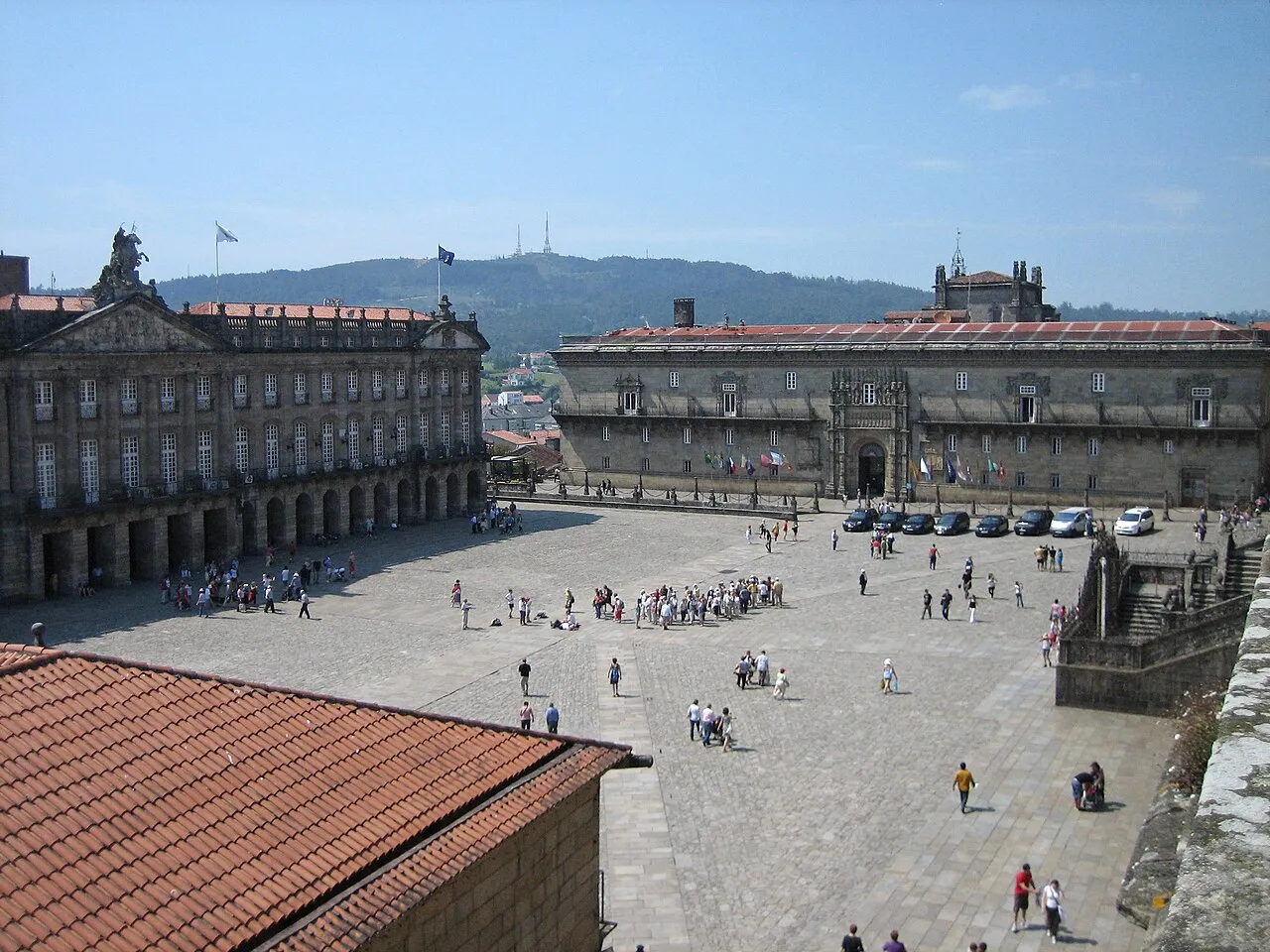
Pilgrims come in through the Porta do Camiño, walk down the Rúa de San Pedro and reach the Obradoiro, usually in the early afternoon, which is when you see the arrival scenes: people sitting on the ground looking at the façade, hugs, someone playing the bagpipes, a great deal of contained emotion and a fair amount of uncontained emotion.
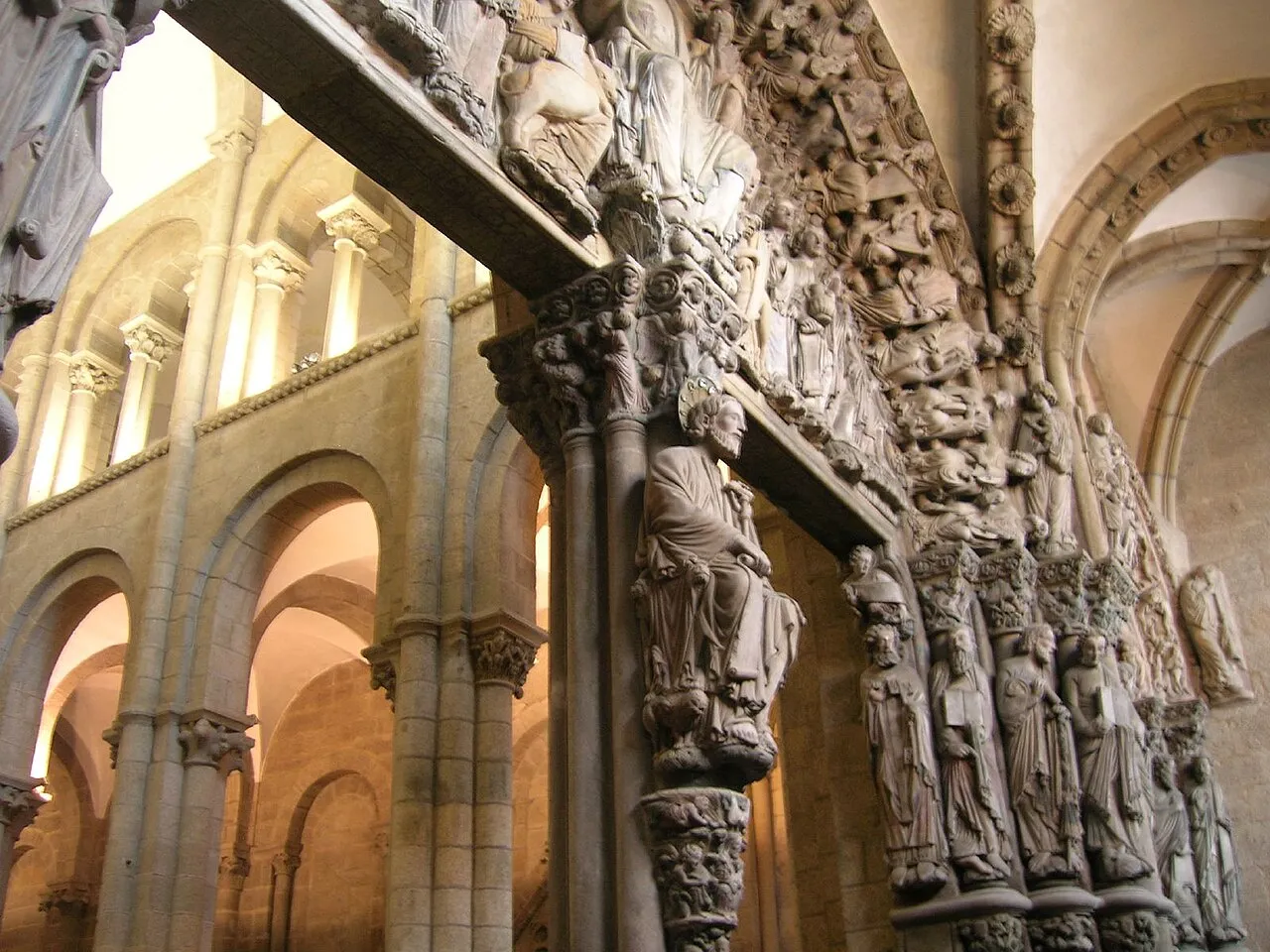
Inside the cathedral, the traditional gesture is to go up to the camarín, the small chamber behind the high altar, and embrace the figure of the Apostle from behind, something that has been done for some eight hundred years, and then to go down to the crypt where the tomb is. Both are included in free access to the church.
Afterwards you collect the Compostela at the pilgrim office, presenting the credencial, the pilgrim's passport, stamped along the route. It is granted to anyone who has done at least the last hundred kilometres on foot or two hundred by bicycle, and it is issued in Latin with the pilgrim's name in Latin form.
There is a greater prize, the Holy Years or Xacobeos, which are the years when 25 July falls on a Sunday. Then the Porta Santa, the Holy Door on the Praza da Quintana, is opened, walled up the rest of the time, and going through it is the central gesture of the jubilee pilgrimage.
The point where everything ends. In the early afternoon those who set off early on the last stage arrive, and the square becomes something no monument achieves on its own. It is the best hour to be here, better even than dawn.
The embrace of the Apostle in the camarín and the descent to the crypt are the two gestures that close the pilgrimage, and both are included in free access to the church. The pilgrims' Mass is held daily and is where the botafumeiro, the giant censer, may fly.
According to the founding story, at the start of the ninth century a hermit called Pelayo saw lights over a lonely wood, told bishop Teodomiro, and the bishop dug and found a tomb that he declared to be the tomb of the Apostle St James. King Alfonso II walked down from Oviedo to venerate it, becoming the first pilgrim in history.
What is the Compostela?
The Latin diploma the cathedral gives to anyone who completes the pilgrimage, on presenting the credencial stamped along the route. It is granted to anyone who has done at least the last hundred kilometres on foot or two hundred by bicycle. In the past it counted as an indulgence, that is, as forgiveness of sins.
Why is the shell the symbol of the Camino?
Because it was the proof of having arrived. After Santiago, pilgrims carried on to the coast, as far as Finisterre, where for the ancients the land came to an end, and there they picked up a scallop shell from the beach. In time it went from certificate to identification: carrying it sewn onto your satchel gave you a right to hospitality and protection.
What is a Xacobeo Holy Year?
The year in which 25 July, the Apostle's day, falls on a Sunday. It happens every six, five, six and eleven years. Throughout that year the Porta Santa on the Praza da Quintana, walled up the rest of the time, is opened, and going through it is the central gesture of the jubilee pilgrimage. Numbers multiply.
Where do the yellow arrows come from?
They are not medieval: they were first painted in the seventies by Elías Valiña, parish priest of O Cebreiro, to waymark the Camino Francés when the route was practically lost and unused. That individual gesture lies at the origin of the modern recovery of the pilgrimage, together with the European declaration of 1987.
What time do pilgrims reach the Obradoiro?
Above all in the early afternoon, when those who set off early on the last stage come in. It is the best moment to be in the square, even better than dawn: there are people sitting on the ground looking at the façade, hugs, bagpipes and an emotion no monument produces on its own.
Practical information
The CompostelaGiven after 100 km on foot or 200 by bicycle, on presenting the stamped credencial.
Holy YearWhen 25 July falls on a Sunday. The Porta Santa on the Quintana is opened.
The gesturesEmbrace of the Apostle in the camarín and descent to the crypt. Both free.
Best timeEarly afternoon on the Obradoiro: that is when the pilgrims arrive.
The shellProof of having reached Finisterre, where for the ancients the land came to an end.
The arrowsThey are not medieval: a parish priest from O Cebreiro began painting them in the seventies.
On the map
🎧 With Viavoy
Walk Santiago de Compostela and listen at your own pace
Download Viavoy and walk Santiago de Compostela offline, whenever you like.
from 2,99 €· one-off payment
City Pass · 9,99 €3 days, all the tours in Santiago de Compostela