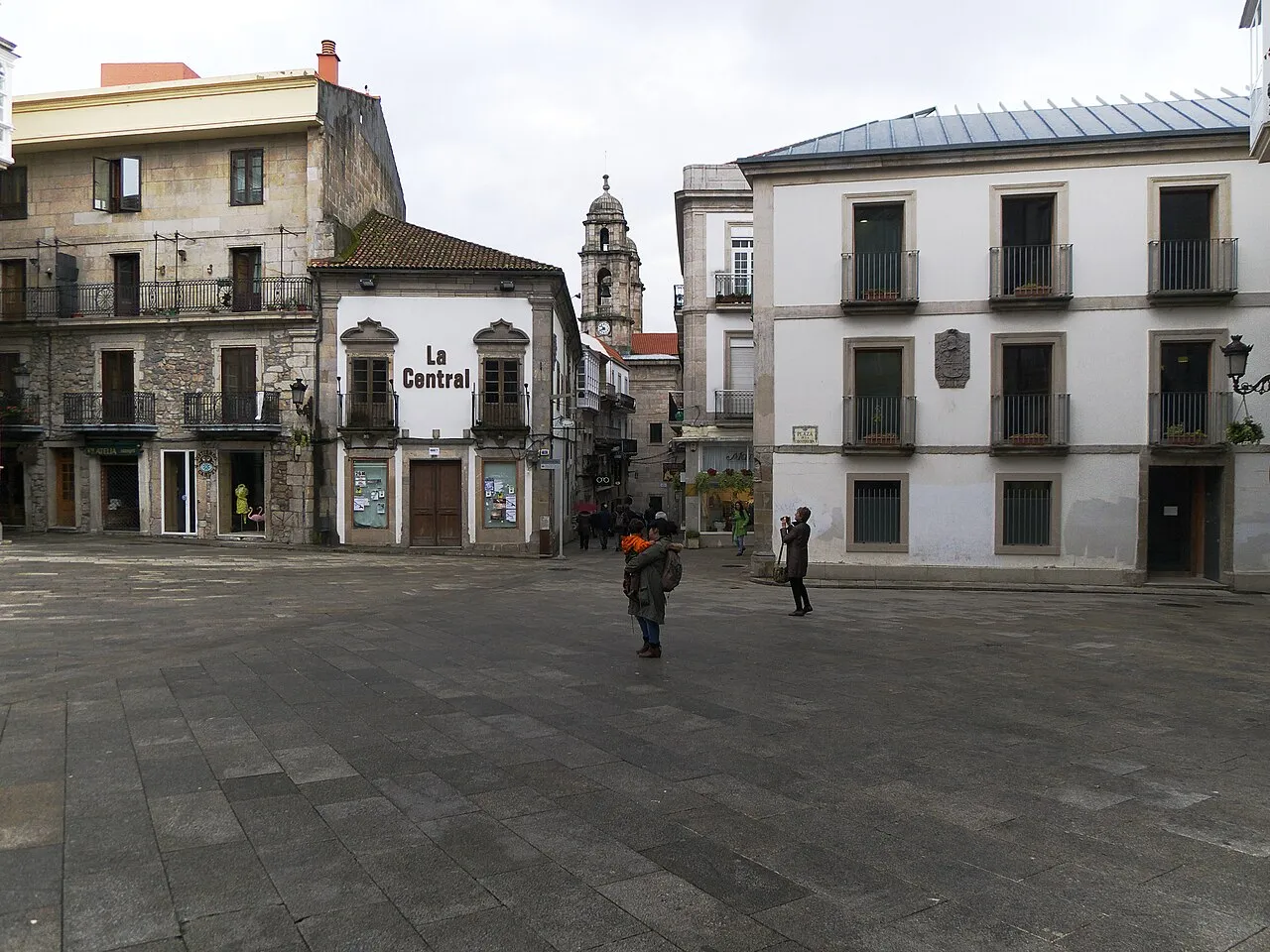
1
The Castro viewpoint
📍 Parque do Castro
The best view of the ría, with the bateas and the Cíes in the distance. Open access at any hour. If you can only do one thing in Vigo, make it this.
The route that comes down from the hill to the sea in the right order: viewpoint, castro settlement, old fishing quarter and a dozen oysters opened in front of you.
🎧 On the walk Monte do Castro and the new townVigo is laid out very clearly: a hill above, the sea below and the city spilling down between the two. Doing it in that order — top to bottom — is not a whim, it is the only way not to climb the same slopes twice and to understand the city before you step into it. This is the route.
Start by climbing up to the Parque do Castro. It is about twenty minutes uphill from the centre, or a taxi if you would rather save your legs. There are three things up there and all three matter.
The first is the castro settlement: stone circles that are the floor plans of houses more than two thousand years old, lived in from the sixth century BC through to Roman times. It is the literal origin of Vigo, and it was practically hidden until it opened as an open-air museum in February 2010.
The second is the Fortaleza do Castro, an irregular star of three rings of walls raised between 1656 and 1665, in a hurry and in fear, when the Portuguese Restoration War left Vigo on the front line.
And the third, the one you cannot skip under any circumstances, is the viewpoint. From there the whole ría opens up: the port with its cranes, the Morrazo shore, the Rande bridge, the mussel bateas floating on the water and the Cíes Islands closing off the mouth.
The best view of the ría, with the bateas and the Cíes in the distance. Open access at any hour. If you can only do one thing in Vigo, make it this.
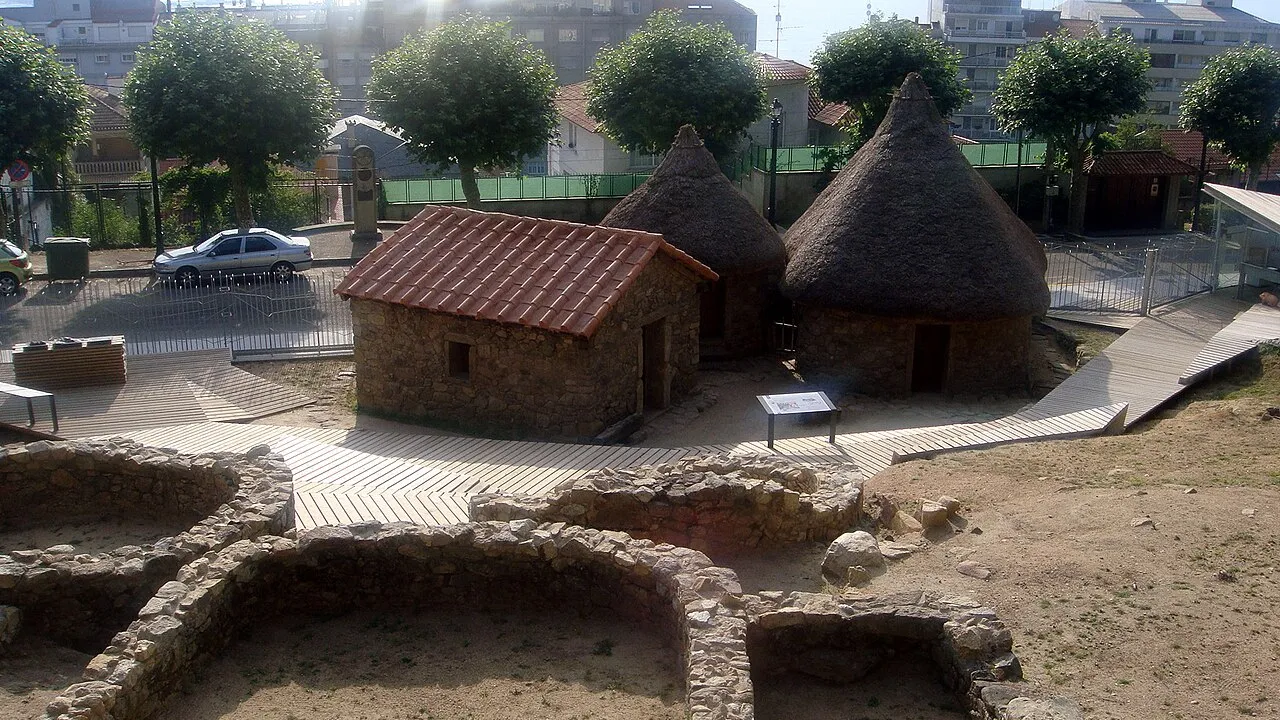
Circular Iron Age houses, with three of them reconstructed. The origin of the city, open to the public only since 2010.
Download the app and discover Vigo offline, whenever you like. Take the walking tour Monte do Castro and the new town with a local guide in your ear.
Find out more about Viavoy →Come down from the hill towards the Praza de España, where five bronze horses weighing forty tonnes burst out through a curtain of water. They are a tribute to the bestas, the semi-wild horses that still roam free across the Galician hills.
Carry on along the Rúa do Príncipe, the golden mile, pedestrianised and full of shops. Lift your eyes from the windows: the glazed galleries are the best thing on the street, and they were perfected by the carpenters who made the windows for ships. Halfway along stands the MARCO, a contemporary art museum installed in the former prison.
You will come out at Porta do Sol, the junction that is the heart of the city and the seam between two Vigos. Presiding over it is el Sireno, Francisco Leiro's 1991 sculpture, which divided the locals and is today the default meeting point.
From here on it is all downhill: the Praza da Constitución with its arcades, the co-cathedral — “A Colexiata” to everyone here — and the slopes dropping down in search of the water.
And then the moment of the day: A Pedra, where a group of women have been selling oysters on open-air stone tables for more than a century. You buy the dozen, they open them with one stroke of the knife, you squeeze lemon over them and eat them standing up, looking out at the port.
Just below lies O Berbés, the old fishermen's quarter, with stone arcades under which nets were mended and wicker creels woven. There has been a documented port here since the twelfth century, and until not so long ago the water came almost up to the door.
It was in these same streets that the Reconquista of 1809 was written, when the people of Vigo stormed the walls and made their city the first in Spain to free itself from Napoleon's troops.
Follow the waterfront to A Laxe, which was Vigo's first quay, and you will see the port at work: one of the largest fishing ports in the world, where frozen fishing was invented and from which hundreds of thousands of emigrants sailed for the Americas.
Close the day at the Alameda, the city's first public garden, with magnolias and camellias more than a hundred years old, and at the Real Club Náutico, that 1945 building that looks like an ocean liner run aground on the quay.
The oyster street. A dozen opened on the spot, lemon, and eaten standing up looking at the port. On Sundays there is also one of the most famous flea markets in Galicia.
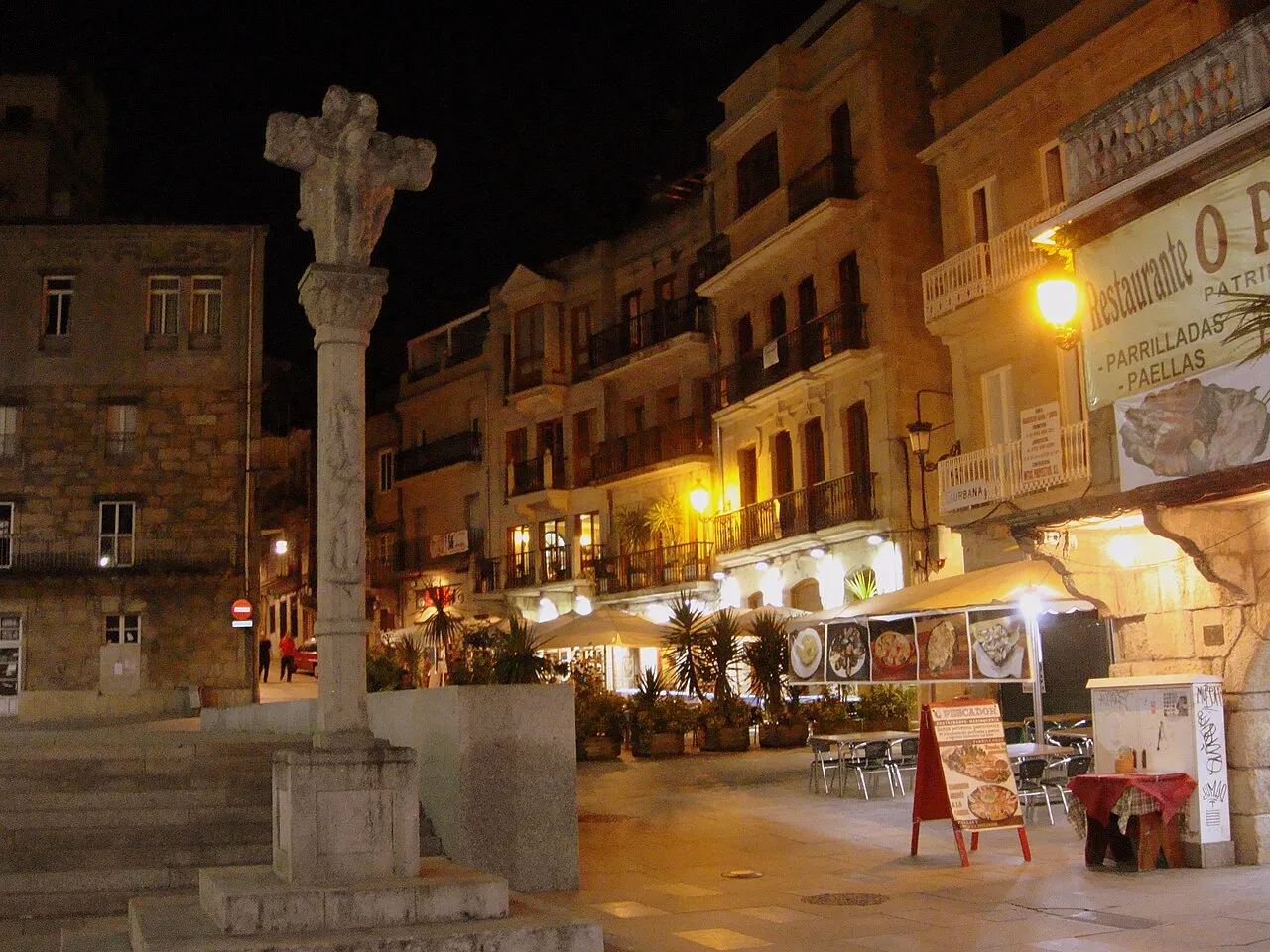
The old fishermen's quarter, with the arcades of what was the port of San Julián, documented since the twelfth century. The whole city grew out of here.
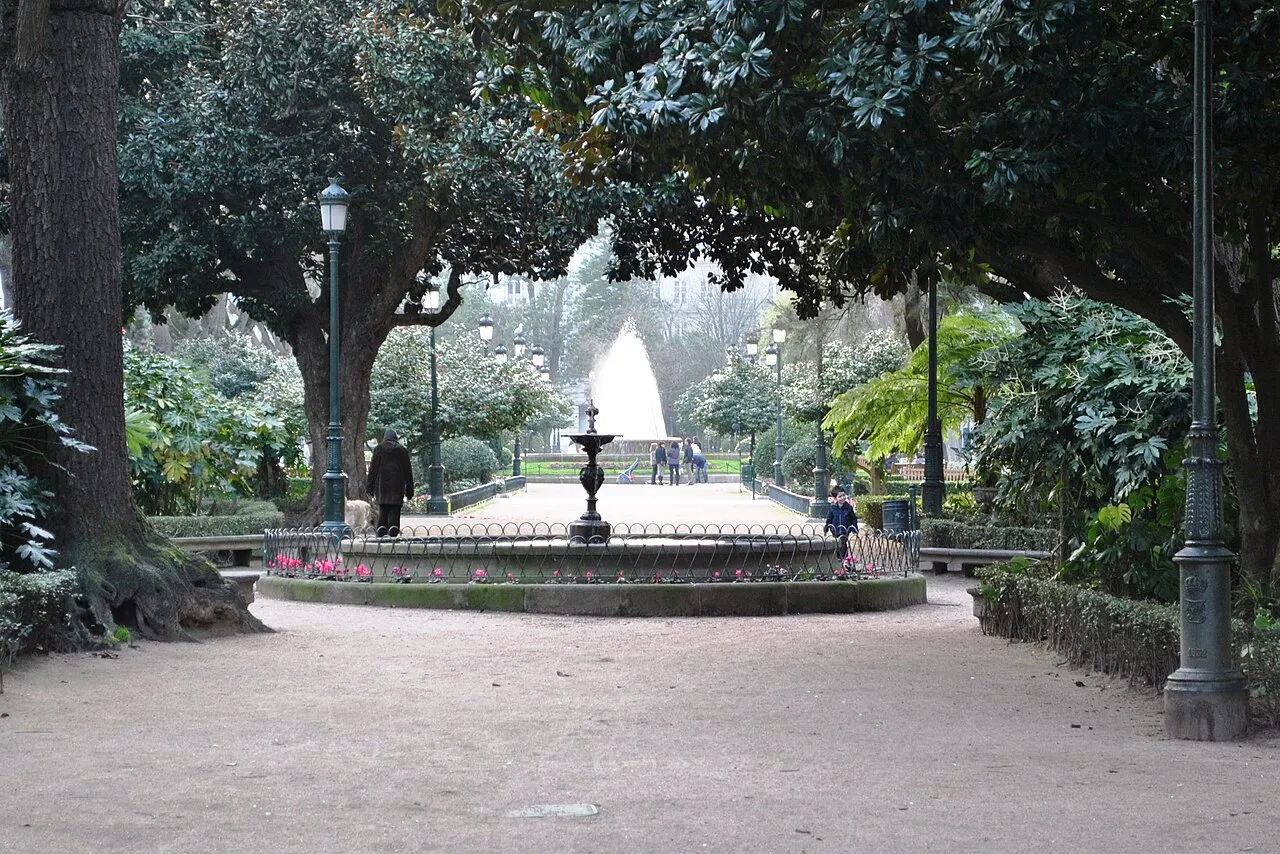
Vigo's first public garden, on land reclaimed from the sea. Century-old magnolias and camellias and the best shade on the waterfront.
Yes, with room to spare. The city is compact and everything important sits on one axis running down from the Monte do Castro to the water: the castro settlement, the fortress and the viewpoint at the top; Porta do Sol, Rúa do Príncipe and the Casco Vello in the middle; A Pedra, O Berbés, the port and the Alameda at the bottom. With a second day, the Cíes Islands.
For two practical reasons. The first is that from the viewpoint you see the whole ría and the city makes sense all at once, which gives context to everything else. The second is purely physical: Vigo has a serious gradient between the hill and the sea, and doing the route top to bottom means not climbing the same slopes twice.
On the Rúa da Pescadería, in the A Pedra area, which everyone calls the oyster street. A group of women have been selling them there for more than a century on open-air stone tables, in a trade that passes from mother to daughter. You buy the dozen, they open them on the spot with one stroke of the knife, you squeeze lemon over them and eat them standing up.
Quite a few, and it is worth knowing beforehand. The city drops from the hill to the sea in very little space, with streets in the old quarter that are literally staircases. Nothing is impossible or excessively hard, but comfortable shoes are compulsory and the order of the route matters if you do not want to suffer more than necessary.
The Castro viewpoint and the Casco Vello with A Pedra. With those two you have the view that sums up the ría and the quarter that sums up the city, oysters included. If you arrive by cruise ship and disembark at A Laxe, both are less than twenty minutes' walk from the quay.
Very much so, but they require planning. They are a national park and not just anyone can land: you need advance permission and each day there is a limit on how many people set foot on the sand. The boats leave from the ría ferry terminal. There are no cars and no hotels, only a campsite and footpaths, and that is why they are still the way they are.
May to September, when the Atlantic weather gives you more of a break and the boats to the Cíes run at full capacity. Late March has an attraction of its own: the Festa da Reconquista dresses the Casco Vello as it was in 1809, with a period market and re-enactments of the assault on the walls.
Download Viavoy and walk Vigo offline, whenever you like.

Keep reading