How it ended and what remains
The end came on two fronts at once. In the mid-nineteenth century, an epidemic called pébrine wiped out silkworms across Europe: it was so serious that the French Government commissioned Louis Pasteur to investigate it, and he devoted five years to the problem and ended up identifying the micro-organisms responsible.
At the same time, textile industrialisation was making the artisan loom unviable: the mechanised factories of Lyon and England produced more cheaply and faster. In a few decades, a trade of four centuries went out almost completely.
What remains is not only museum. Some Valencian looms still produce silk for the fallera costumes, which are made with hand-woven espolín brocades to historic patterns and whose price runs into thousands of euros. The trade survives thanks to the festival.
And the neighbourhood remains. Velluters has spent decades run-down and is in the middle of a restoration process, with the usual tension between recovery and the displacement of residents. Walking it, with its low houses and its workshops, is the third stop on this route and the least touristy of the three.
Practical information
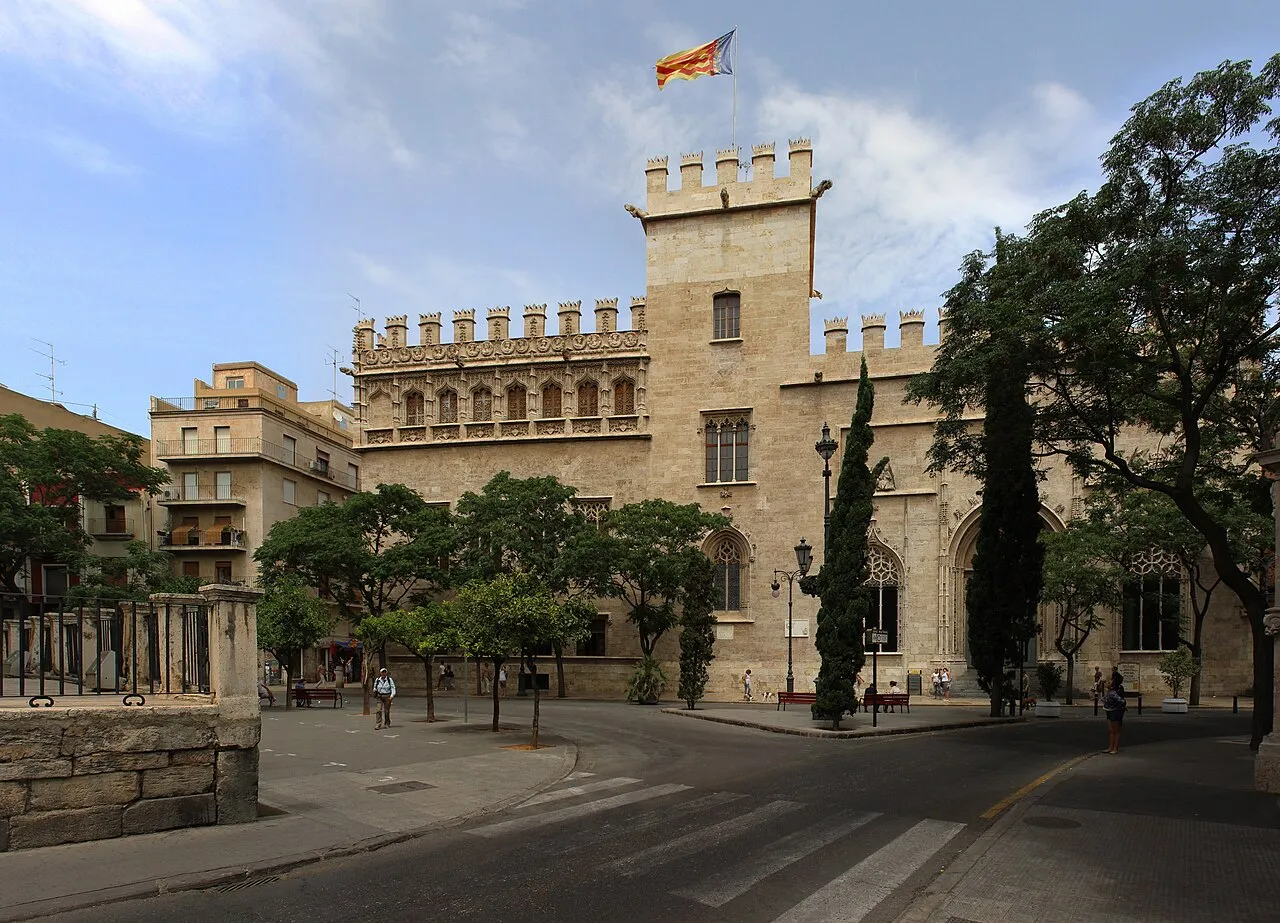
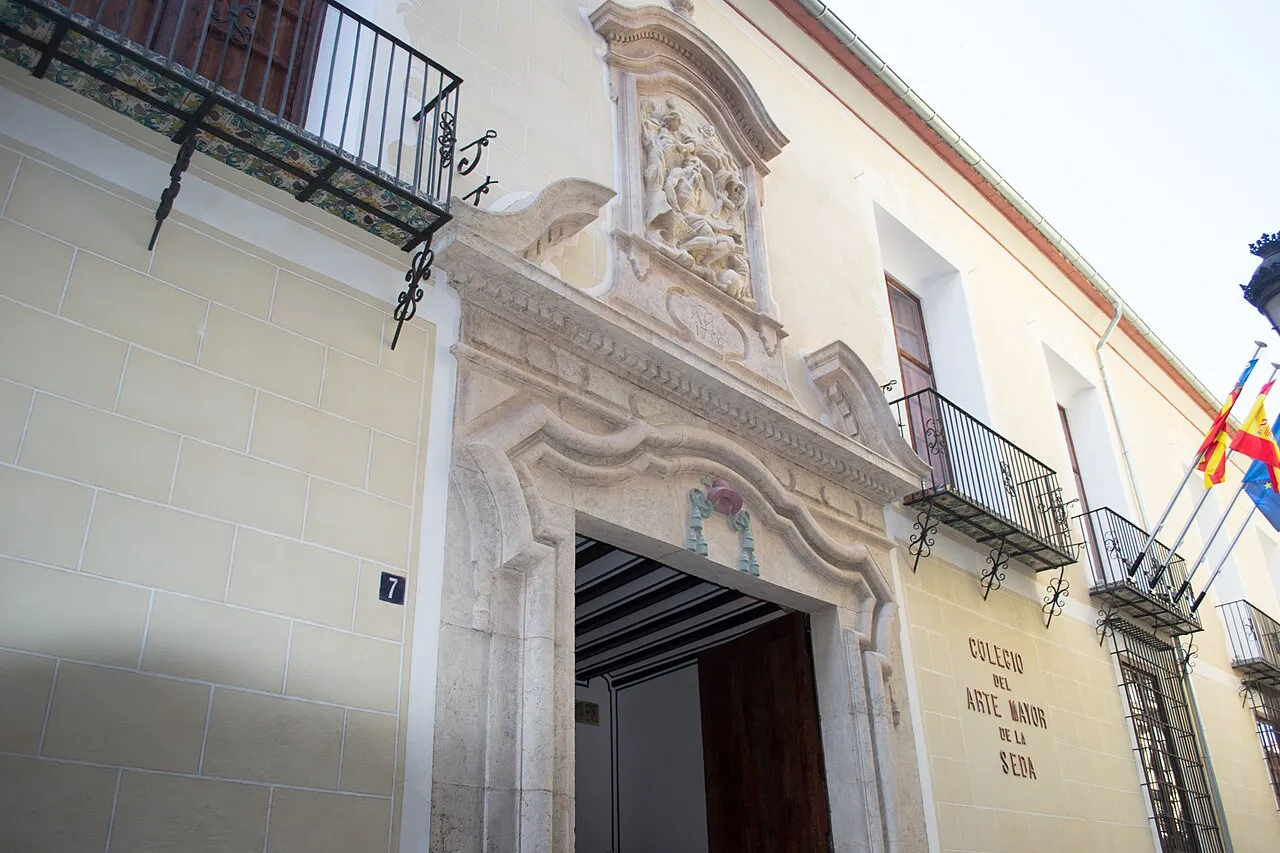
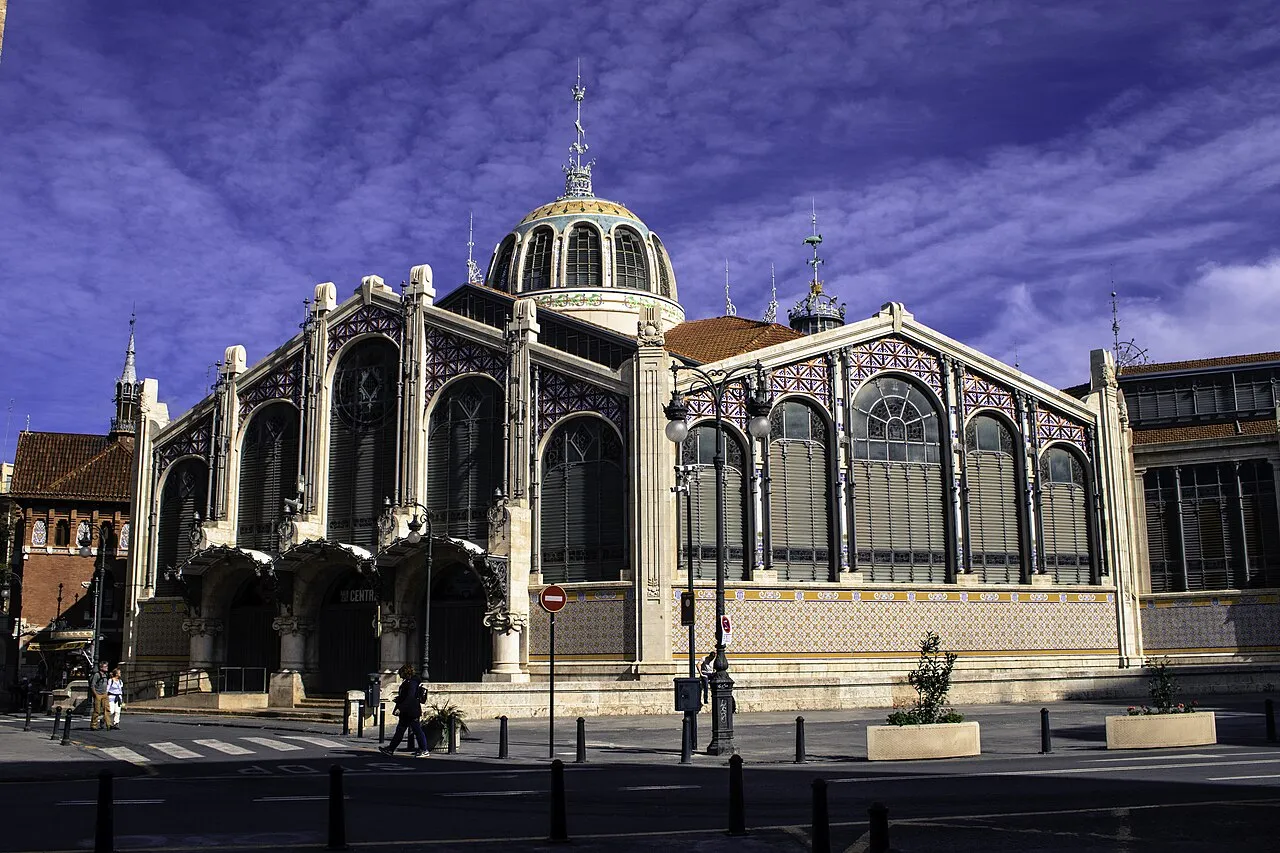
The three stopsLonja de la Seda, Mercado Central and Real Colegio del Arte Mayor de la Seda. All less than 10 minutes apart.
PricesLonja about 2 €, Colegio de la Seda about 9 €, Market free. It is a cheap route.
DurationA full morning with the three visits and the walk through Velluters.
Opening hoursThe Mercado Central opens only in the morning and closes on Sundays. The Colegio closes on Mondays.
Don't missThe tiled floor of the Sala de la Fama and the Jacquard punched cards.
The trade todayIt survives in the espolín brocades of the fallera costumes, hand-woven and priced in thousands of euros.