Valencia's Eixample: the Modernisme that oranges paid for
An iron market turned into the city's drawing room, wide avenues lined with the houses of citrus-trade burghers and the neighbourhood that almost no visitor sets foot in. Ten minutes from the cathedral.
When Valencia pulled down its city wall in 1865, the city expanded for the first time in six hundred years. What was built on that new ground was the Eixample: wide avenues, large blocks and the houses of a bourgeoisie that had grown rich on one very specific business, the export of oranges. Today that neighbourhood concentrates the city's best Modernista architecture and a street life that is entirely local, and it is ten minutes from the cathedral.
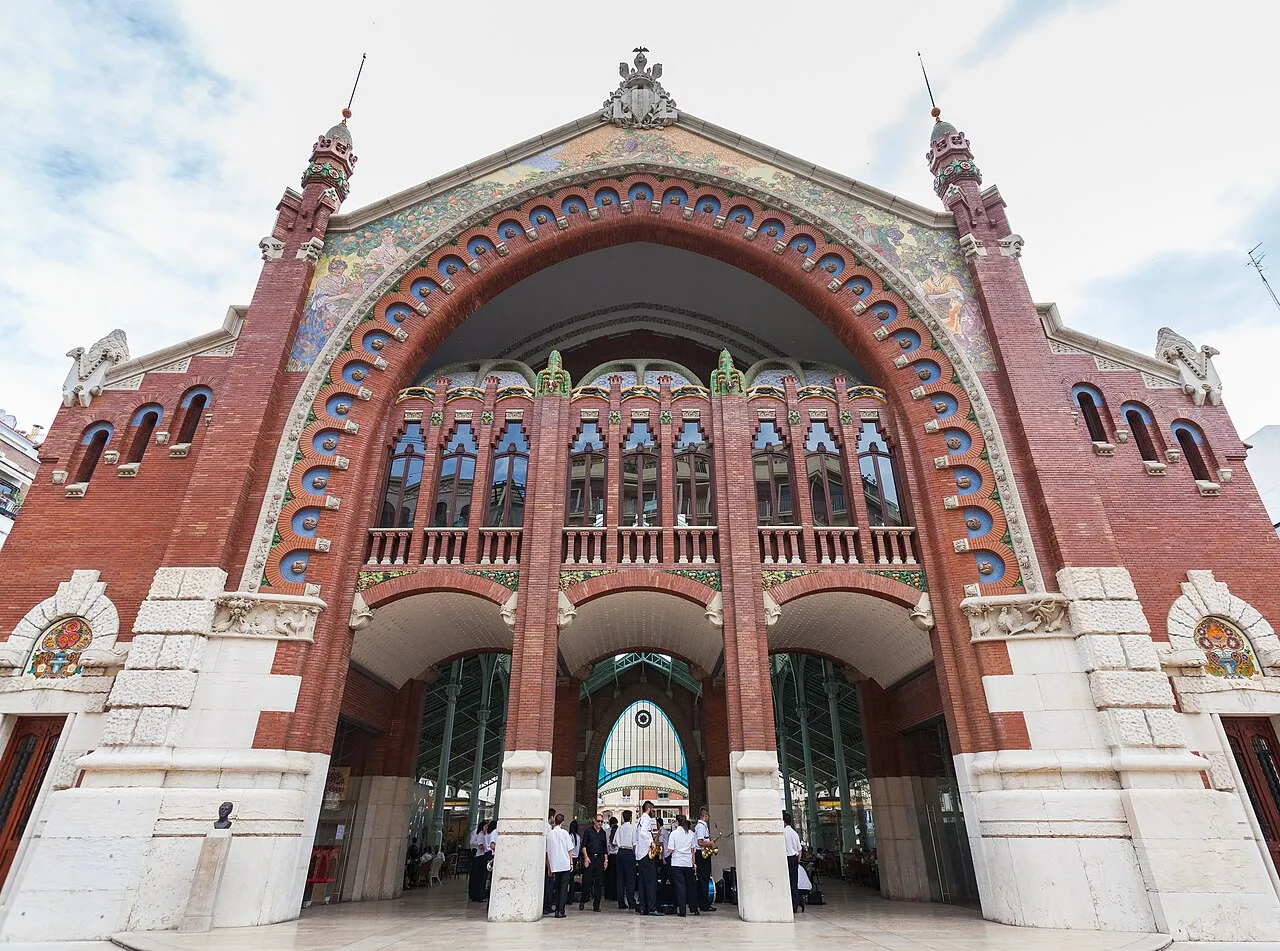
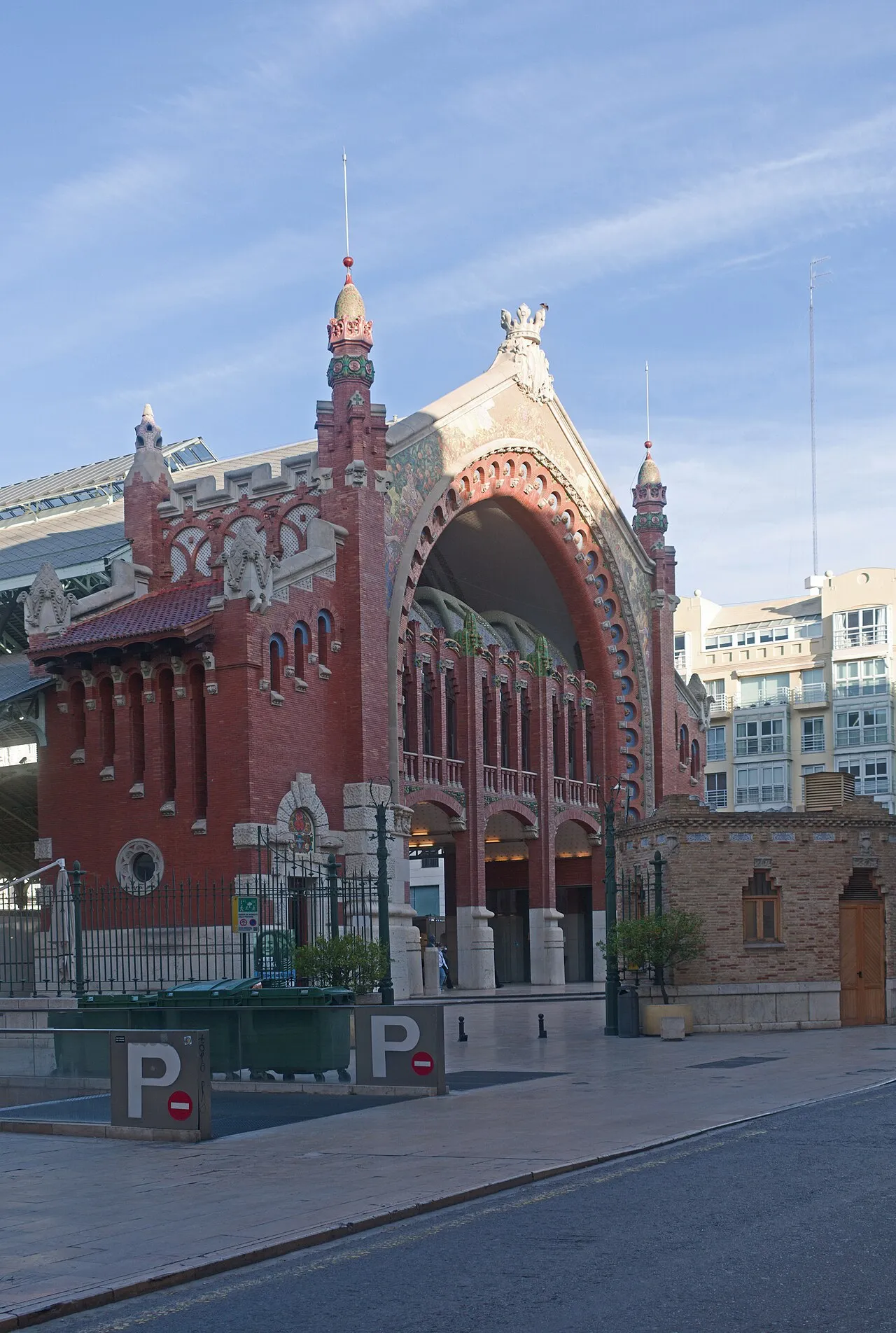
The Mercado de Colón stopped being a market in the eighties and came close to being demolished. Today it is one of the most beautiful spaces in Valencia and does not sell a single tomato.
Orange money
Between the late nineteenth century and the middle of the twentieth, Valencia lived off citrus. The huerta was converted wholesale to orange groves, the port was enlarged to ship the fruit out and the Valencian trading houses placed oranges in London, Paris, Hamburg and Liverpool. The Estación del Norte, built in 1917, has mosaics of oranges everywhere: it is not decoration, it is advertising.
That citrus bourgeoisie is who commissioned the houses of the Eixample. They wanted to stand out, and the style they chose was Valencian Modernisme, with architects such as Francisco Mora, Manuel Peris and Vicente Ferrer: curved façades, ceramics, wrought iron, glazed bay windows and pronounced plant-based decoration.
Valencia's Eixample never reached the size or the coherence of Barcelona's, but it has a character of its own and a remarkable density of good buildings, especially on calles Cirilo Amorós, Sorní and Jorge Juan and on the Gran Vía Marqués del Turia. It is a walk you do with your head tilted back.
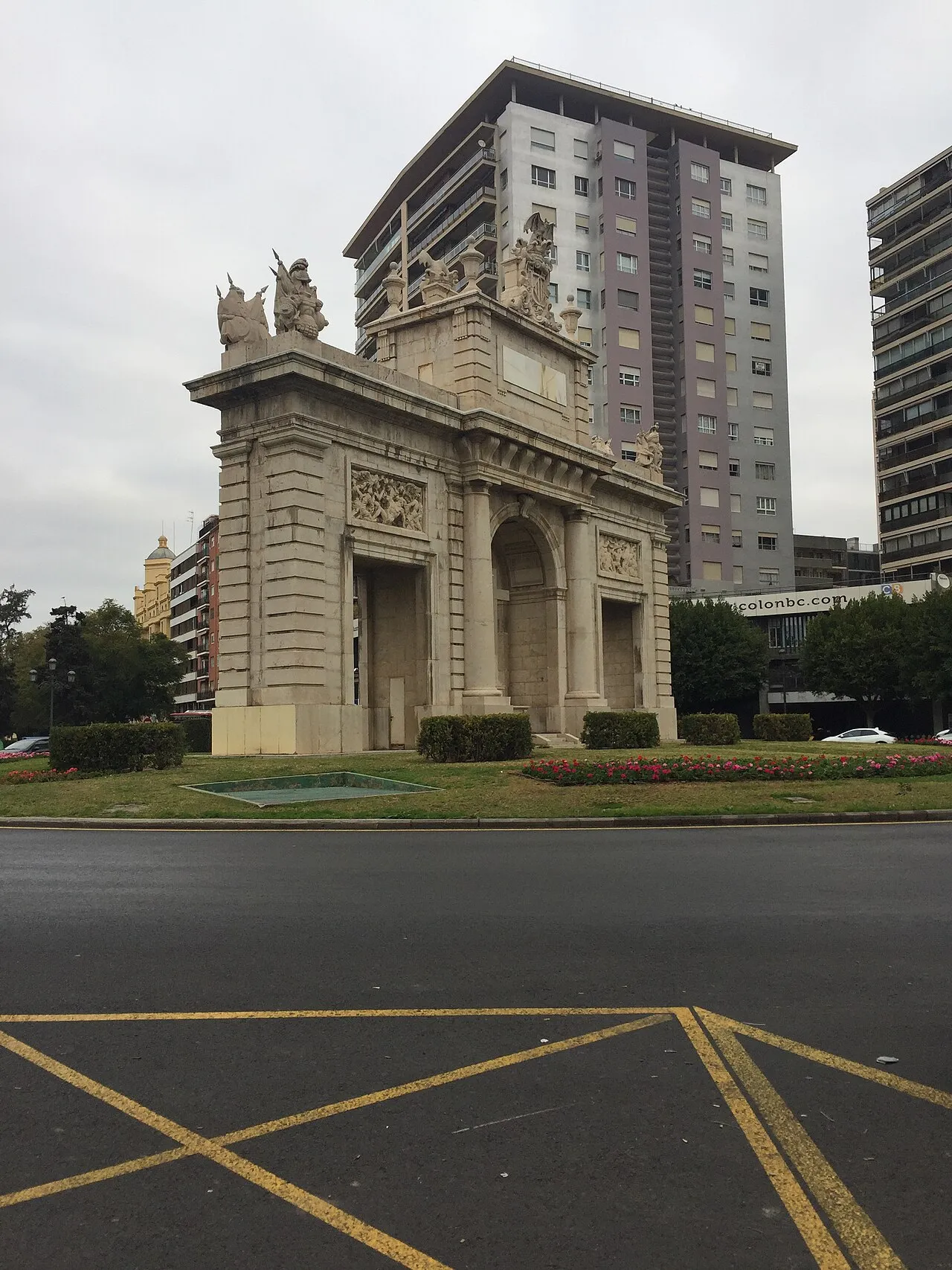
An arch with a great marble cross that looks medieval and dates from 1946: the original gate was demolished in 1865 with the whole wall and this one was put up afterwards on its site. In 1993 it was dismantled stone by stone to build the metro and reassembled. It marks the exact boundary between the old alleys and the bourgeois grid.
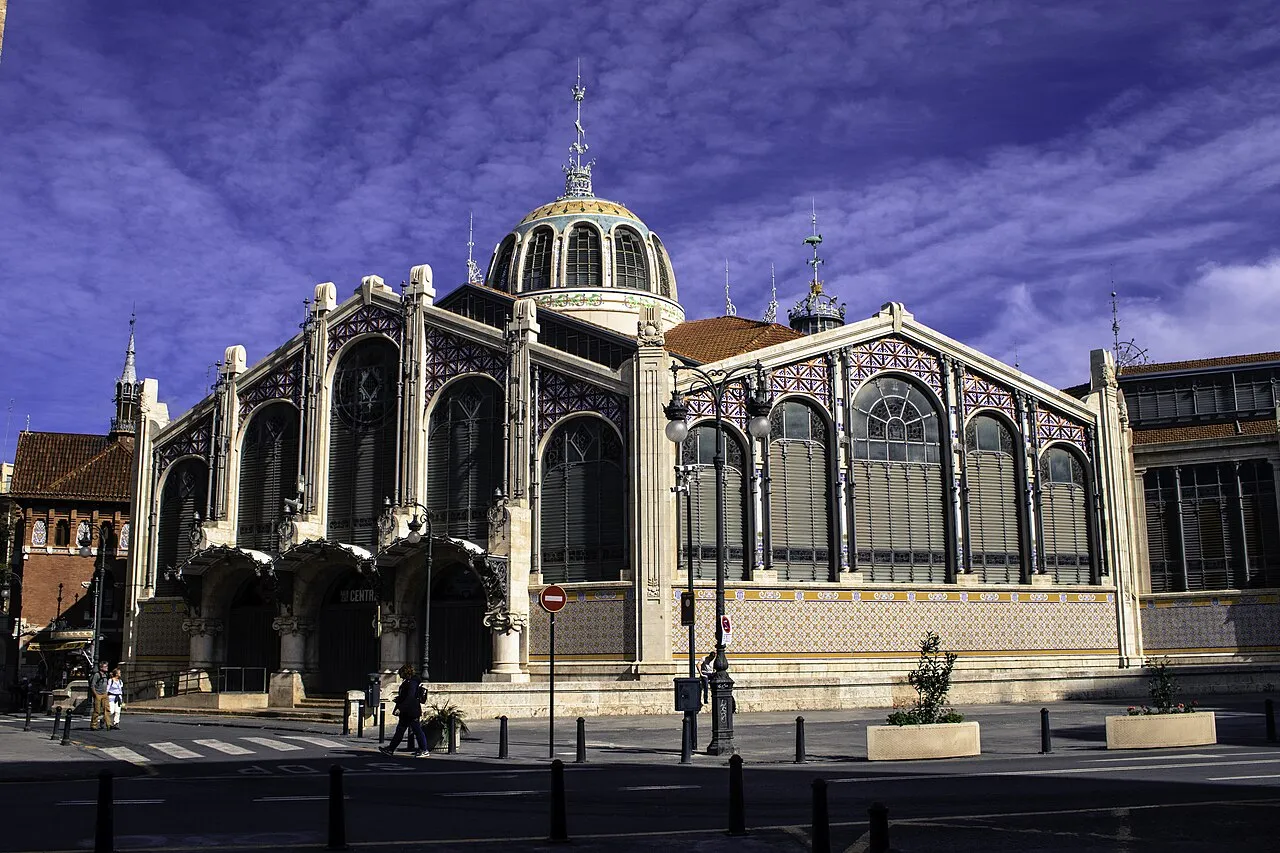
A masterpiece of Valencian Modernisme, by Francisco Mora, opened in 1916: an iron structure, brick, mosaic and two monumental ceramic façades. It stopped working as a market in the eighties, came close to being demolished and was restored as a food-and-drink space. Today it is among the most beautiful places in the city and sells no fresh food.
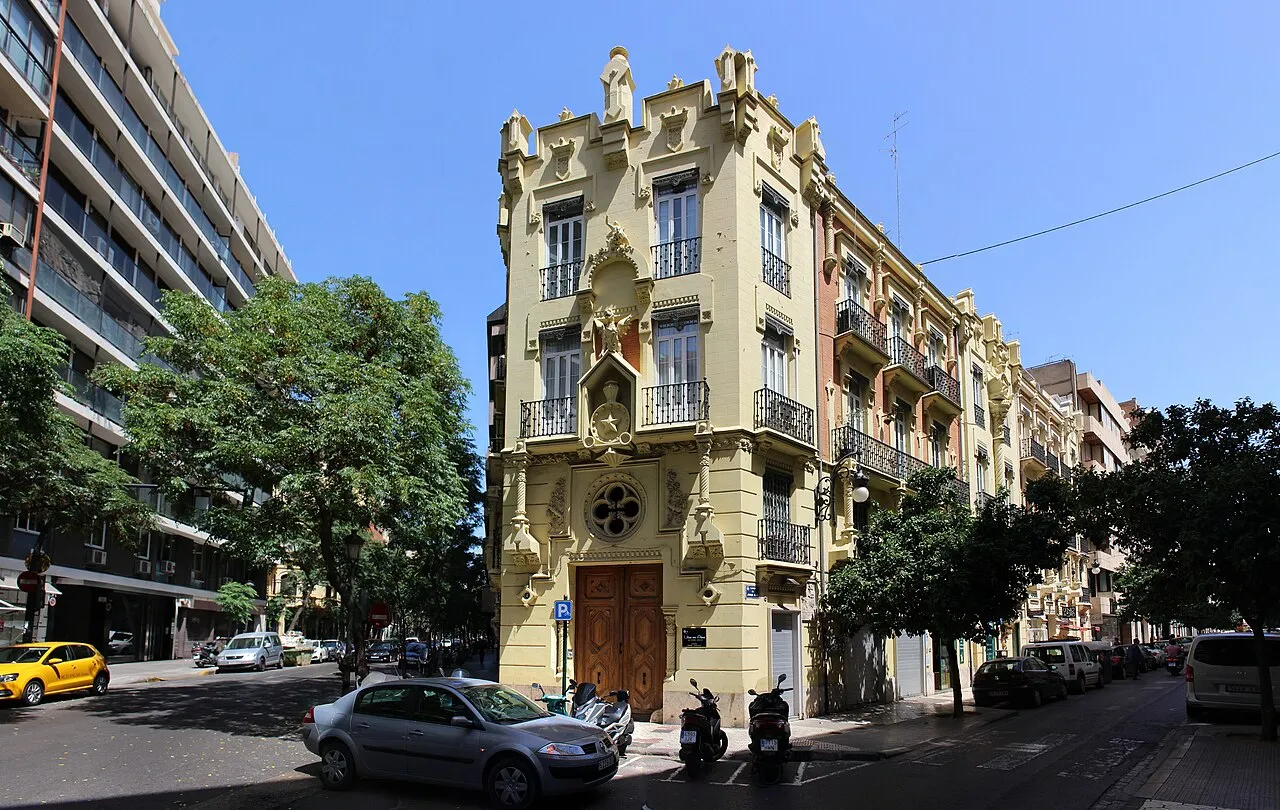
A house of 1901 with two stone dragons holding up the main balcony, the work of José Manuel Cortina, the most singular of Valencia's Modernista architects. His repertoire runs from fantastical Gothic to esoteric symbolism, and this façade is his most recognisable work. It stands on a corner half the city walks past without looking up.
The Mercado de Colón opened in 1916 to serve the new bourgeois neighbourhood, and that is why it was built with an architectural ambition no food market needed: two monumental façades of brick, ceramics and mosaic, and an interior iron structure of great span.
Over time the neighbourhood changed its habits and the market emptied out. It closed as a food market in the eighties, was left abandoned and demolition was even considered. Restoration came in 2003 and turned it into a space of restaurants, terraces and design shops.
The result cuts both ways. On the one hand, an extraordinary building was saved and today it is one of the most pleasant places in Valencia, with terraces beneath the iron structure and a horchatería included. On the other, a neighbourhood market was lost: nobody buys fish or vegetables here any more.
It is the same debate as in many European cities over converted historic markets. It is worth going knowing this: it is a very beautiful food-and-drink space, not a market.
4
Gran Vía Marqués del Turia
📍 Central axis of the Eixample
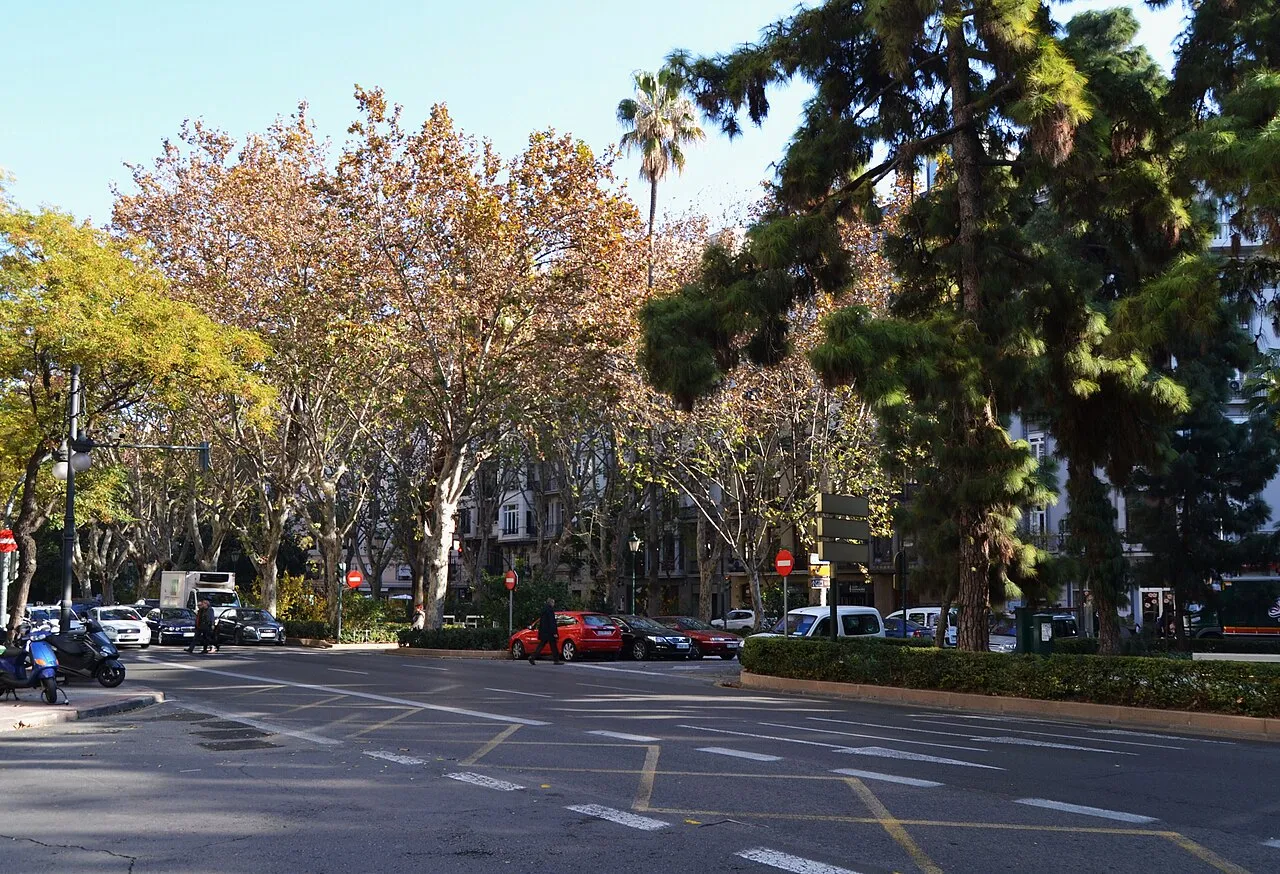
Valencia's most stately avenue, with a double row of plane trees, a central boulevard and the houses of the great orange exporters on either side. It is where you best see the scale the citrus bourgeoisie wanted to give itself. You stroll in the shade and practically without visitors: here the city goes about its life.
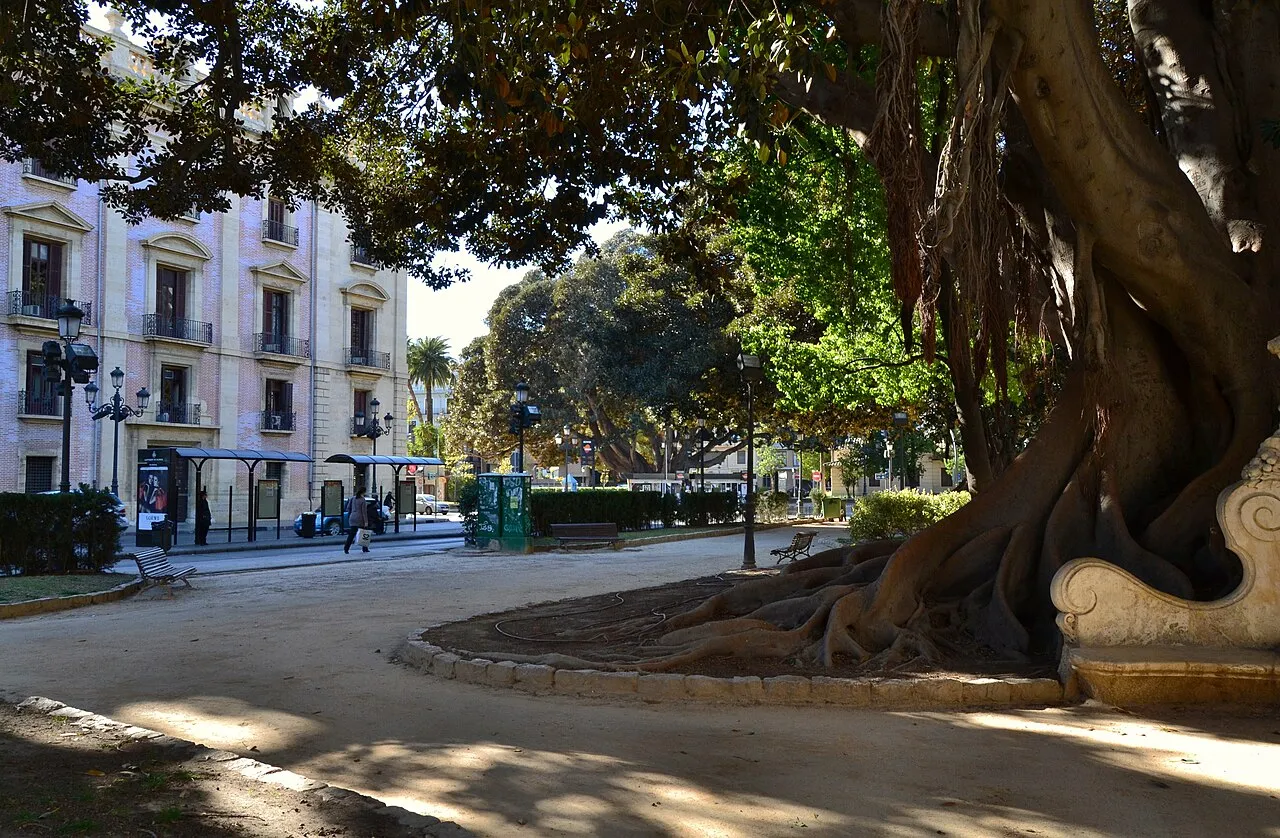
Two nineteenth-century historic gardens with enormous ficus trees whose overflowing roots lift the paving. They are among the shadiest spots in the centre and among the least mentioned in any guidebook. A good place to sit down between the old town and the Eixample, above all in summer.
Tiger-nut horchata from Alboraya with fartons, served very cold beneath the market's iron structure. Good horchata is fresh, not bottled, and has a short life of a few hours. It is the Valencian afternoon snack par excellence and the best reason to go into the Mercado de Colón in the middle of the afternoon.
The natural route starts at the Porta de la Mar, crosses the Jardines de la Glorieta, continues along Colón towards Cirilo Amorós and Sorní, reaches the Mercado de Colón and ends on the Gran Vía Marqués del Turia. That is about forty minutes' walking with stops.
It is the city's shopping district — calle Colón concentrates the big chains — and also where the design shops, the bookshops and the best restaurants are. Prices are those of a good neighbourhood, not a tourist area: not cheap, but honest.
The plan that works best is to do it in the middle of the afternoon: shops open, shade on the avenues and horchata at the Mercado de Colón around six. And if you go in summer, bear in mind that the Eixample has far less shade than the old town, so avoid the middle of the day.
One note: this part of Valencia is the one that receives the fewest visitors and at the same time the one that best explains what the city is like today. If you have a third day, giving it an afternoon is worth more than repeating the historic centre.
Frequently asked questions
What is the Mercado de Colón in Valencia?
A masterpiece of Valencian Modernisme, opened in 1916 and designed by Francisco Mora, with two monumental façades of brick, ceramics and mosaic and an interior iron structure. It was built as a food market for the new bourgeois neighbourhood, closed as such in the eighties, was even considered for demolition and was restored in 2003 as a space of restaurants and terraces. Today it is one of the most beautiful places in the city, but it no longer sells fresh food.
Is Valencia's Eixample worth visiting?
Yes, above all if you have a third day or if you are interested in architecture. It is where the best concentration of Valencian Modernisme is — the Mercado de Colón, the Casa de los Dragones, the houses of Cirilo Amorós and Sorní — and where you see how the city lives today, without tourist pressure. The walk is free, takes forty minutes and is ten minutes on foot from the cathedral.
Why are there so many oranges in Valencia's decoration?
Because the export of citrus was the city's economic engine between the late nineteenth century and the middle of the twentieth. The huerta was converted to orange groves, the port was enlarged to ship them out and the Valencian trading houses sold in London, Paris and Hamburg. The Estación del Norte, of 1917, is covered in mosaics of oranges and scenes of the huerta: it was not decoration, it was advertising for the product that paid for the party.
What is horchata and where do you drink it?
A drink made from tiger nuts, a tuber grown in the huerta of Alboraya, on the outskirts of Valencia, ground with water and sugar and served very cold. It comes with fartons, long sugared buns for dunking. Good horchata is fresh and has a life of a few hours, nothing like the bottled kind. You drink it in the historic horchaterías of the centre and at the Mercado de Colón, above all in the middle of the afternoon.
When was Valencia's city wall demolished?
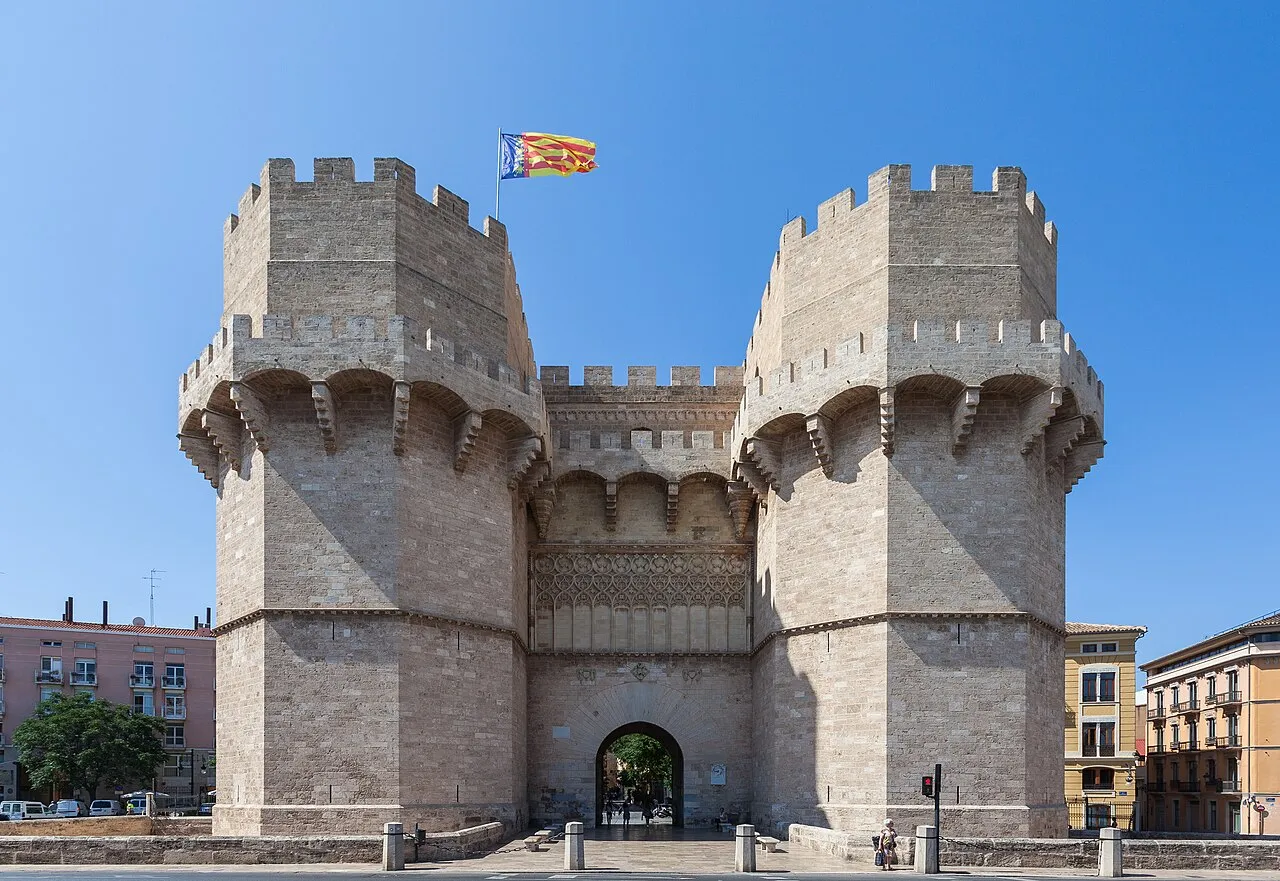
In 1865, by order of the civil governor, with the argument of giving work to the unemployed and allowing the city to grow. More than four kilometres of medieval wall and eleven of its twelve gates were demolished: only the Torres de Serranos and the Torres de Quart were saved, preserved because they were in use as a prison. On the land freed up, the Eixample was built.
Who was José Manuel Cortina?
The most singular of Valencia's Modernista architects, author of the Casa de los Dragones and other works in the Eixample. His language is not the usual floral Modernisme but a mixture of fantastical Gothic, symbolism and elements many have read as esoteric: dragons, bats, gargoyles and figures that are hard to decipher. His buildings are the ones that most catch the eye in the neighbourhood and the ones that resemble nothing else.
Practical information
Getting thereMetro L3/L5/L9 Colón, in the centre of the neighbourhood. From the Cathedral, 10 minutes on foot.
DurationAn afternoon. The walk with stops is 40 minutes.
What costs moneyNothing: it is an urban stroll. Only what you consume at the Mercado de Colón.
Key streetsCirilo Amorós, Sorní, Jorge Juan and Gran Vía Marqués del Turia. Keep your head tilted back.
Best momentMid-afternoon, with the shops open and horchata at the Mercado de Colón around six.
In summerLess shade than the old town. Avoid the middle of the day.
🎧 With Viavoy
Walk Valencia and listen at your own pace
Download Viavoy and walk Valencia offline, whenever you like.
from 2,99 €· one-off payment
City Pass · 9,99 €3 days, all the tours in Valencia