Paella and rice dishes in Valencia: what to order, where and when
Food and drink · Valencia

Paella and rice dishes in Valencia: what to order, where and when

Paella does not contain chorizo, is not a seafood dish, is not eaten at night and does not exist for one person. A guide to not getting it wrong in the city where rice is serious business.

10 min read · Updated for 2026
🎧 On the walk El Cabanyal and Malvarrosa: The Sea, Paella and Colorful Houses

In Valencia, rice generates arguments that other cities reserve for football. And most visitors end up eating badly through not knowing four very simple rules that everyone here takes for granted: paella is a dish of the huerta and not of the beach, it is eaten at lunchtime, it is ordered in advance and it is never served for one. This guide is about that, and also about all the other Valencian rice dishes, which are rather more numerous and often better.

“Paella” is the name of the pan, not the dish. It comes from the Latin “patella”. When you order a paella you are ordering, literally, a receptacle.

Valencian paella, and what it is not

Paella was born inland, in the huerta and around the Albufera, as farm labourers' food: it was cooked at midday in the fields, in a flat pan over orange wood, with whatever was to hand. The canonical ingredients are chicken, rabbit, flat green beans, garrofó — a broad white bean —, tomato, oil, saffron, water and rice. Full stop.

It admits variants recognised by tradition: snails or a sprig of rosemary, and in some areas duck. What it does not contain, and here this is not an opinion but a solid local consensus, is chorizo, peas, onion or seafood. Paella with chorizo is a British dish, not a Valencian one.

Seafood paella exists and is a different dish, coastal and later. Arròs a banda, arròs del senyoret, arroz al horno and fideuà are other dishes too. All are legitimate; what is not correct is calling them Valencian paella.

The element that separates a good paella from an average one is the socarrat: that layer of toasted, crispy rice that forms on the bottom. It is sought deliberately, by turning up the heat for the final seconds, and scraping the bottom of the pan is part of the ritual.

1Central Market

Central Market

📍 Plaça de la Ciutat de Bruges

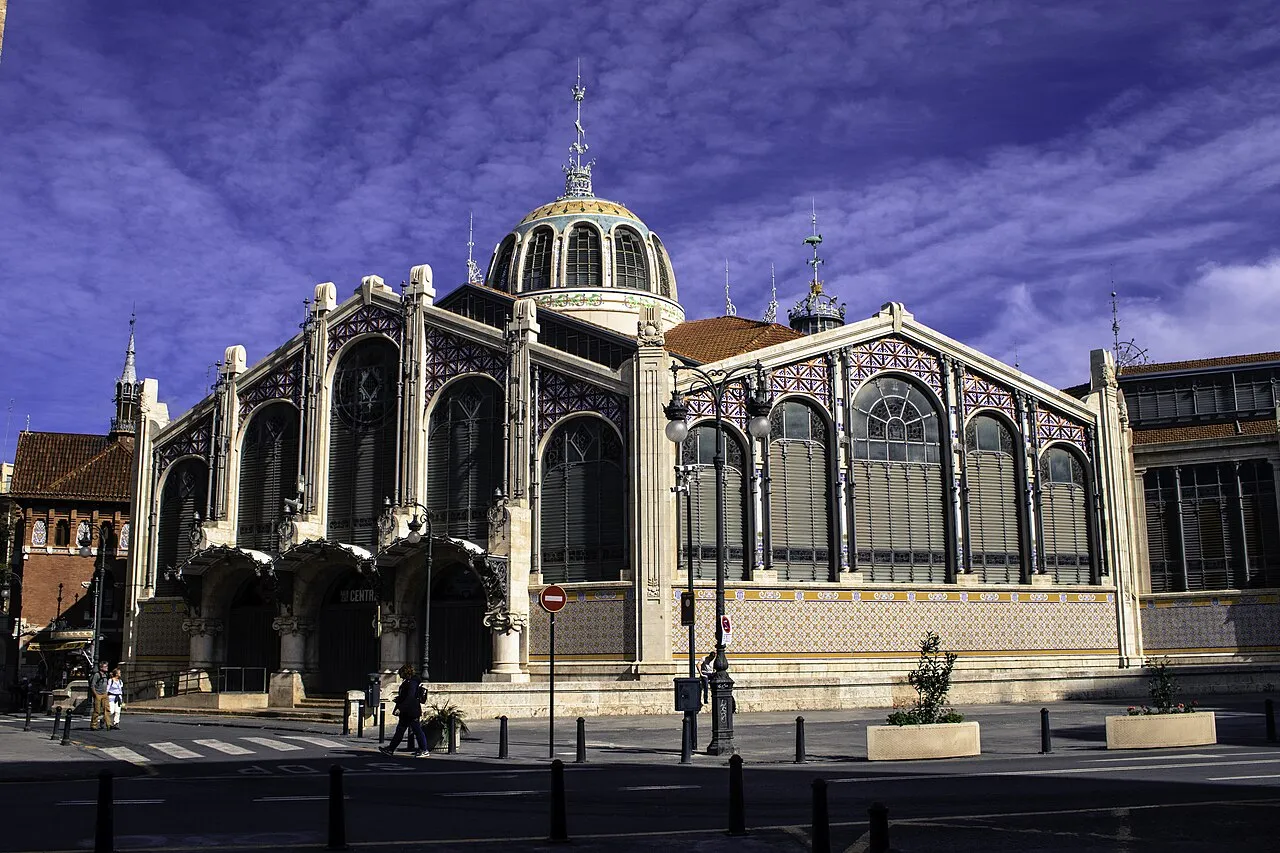
More than two hundred and fifty stalls beneath domes of iron and glass where the produce for all of this is bought: free-range chicken and rabbit, flat beans, garrofó, saffron threads and rice from the Albufera. It is the best place in the city to understand the ingredients before eating them. It opens only in the morning and closes on Sundays.

2Malvarrosa Beach

Malvarrosa Beach

📍 Passeig Marítim

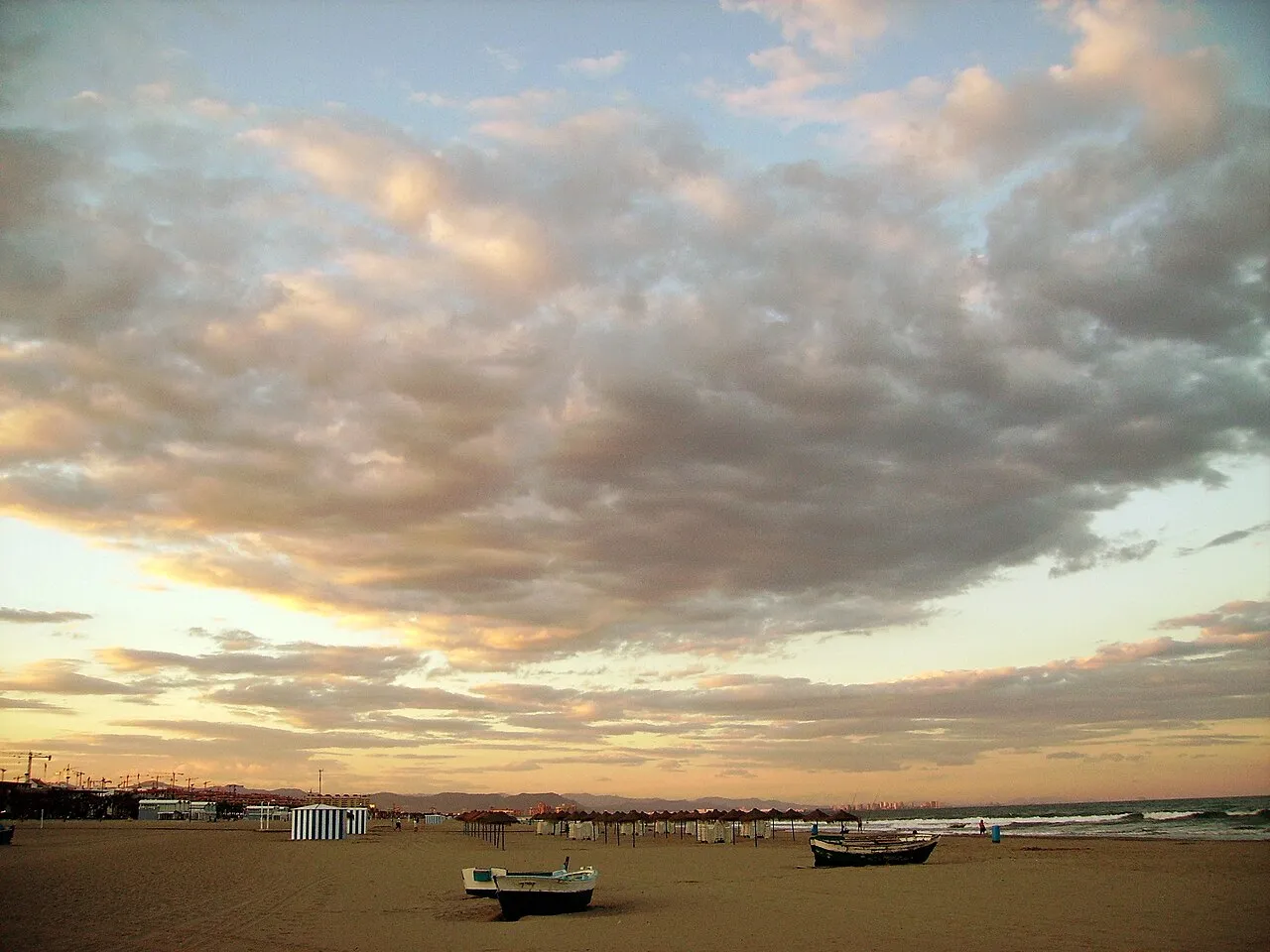
The place where half of Spain believes paella was born and where, precisely, you have to be most careful. The front-line terraces with photos of the dish by the door are the classic trap. One or two streets inland, in El Cabanyal, is the good stuff: arròs a banda, with fish stock and the fish served on the side.

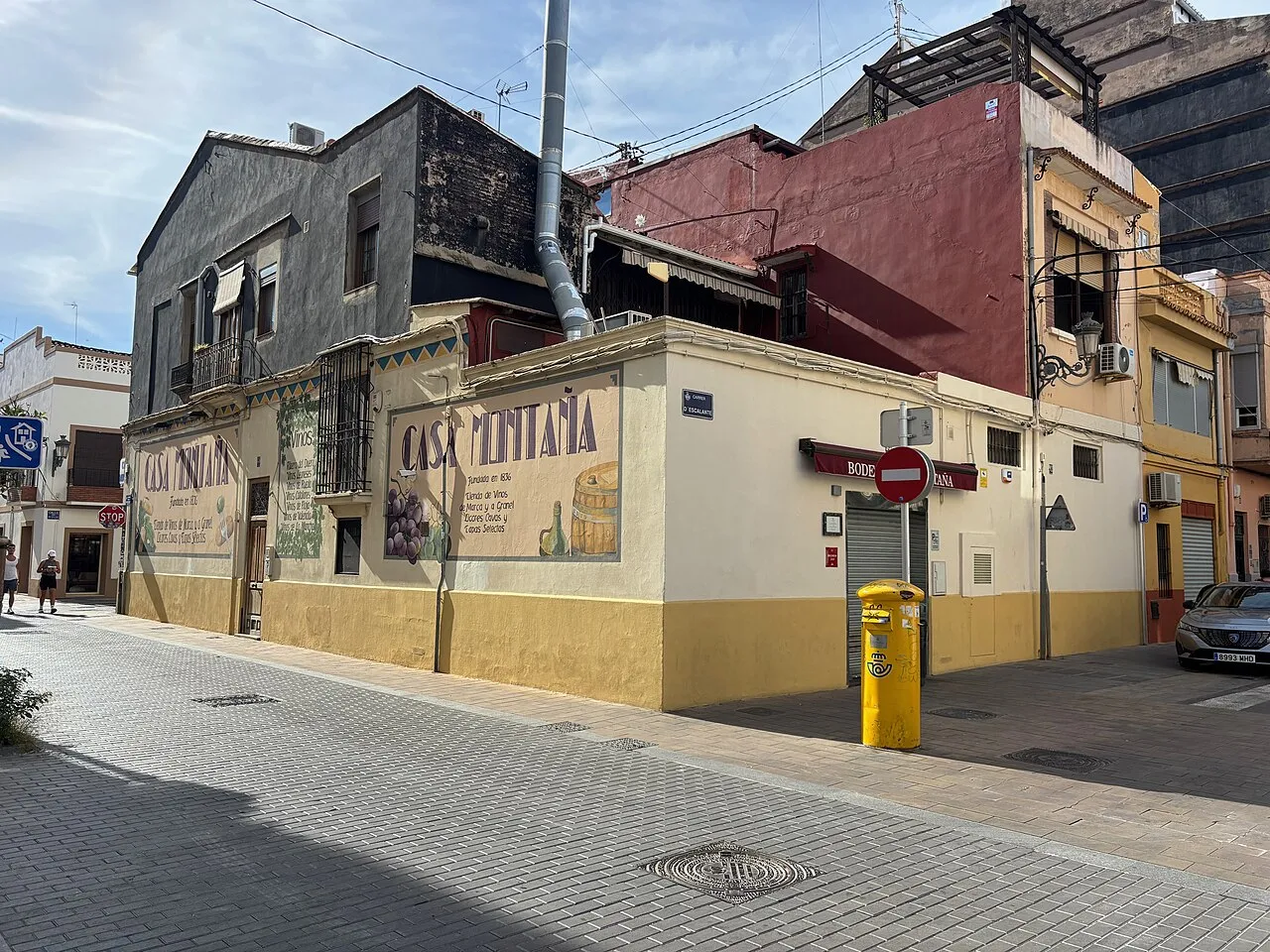
3Bodega Casa Montaña

Bodega Casa Montaña

📍 Carrer de Josep Benlliure, 69 · Cabanyal

Opened in 1836, with wooden barrels and marble tables, it is one of the oldest bodegas in the city and a national reference for wine. It is not a rice house: it is the place where you eat before or after, with tinned delicacies, esgarraet and titaina, the starters that go with rice in this area. Booking is advisable.

🎧 With Viavoy

Explore Valencia at your own pace

Download the app and discover Valencia offline, whenever you like. Take the walking tour El Cabanyal and Malvarrosa: The Sea, Paella and Colorful Houses with a local guide in your ear.

Find out more about Viavoy →

The other rice dishes, of which there are many

And several of them better than paella for a visitor.

Arròs a banda is the rice of the fishermen's quarter: it is cooked in fish stock and served on its own, with the fish on the side — “a banda” —, because the fishermen made use of the stock from the day's catch. It is more intense and less showy than paella, and for many people it is the best Valencian rice.

Arròs del senyoret comes with the seafood already shelled, to eat without dirtying your hands: hence the name, half in jest, the young gentleman's rice. Arroz al horno is made in an earthenware dish with chickpeas, black pudding, pancetta and sliced potato, and is a winter and family-Sunday dish.

Arroz negro, with squid ink, and arroz meloso, with a texture halfway between dry and soupy, complete the usual repertoire. And in the Albufera there are two dishes eaten only there: all i pebre of eel and rice with eel and young garlic.

Fideuà is made just like a rice dish but with noodles, and according to tradition it was invented in Gandía when a sailor decided to swap the rice so that the boat's skipper, who helped himself to too much, would eat less.

4Mercado del Cabanyal

Mercado del Cabanyal

📍 Carrer de Martí Grajales

The fishermen's quarter market, with fish from the auction hall next door and an absolutely local clientele. It is where the produce for the seafood rice dishes is bought, and it is considerably smaller and more authentic than the Mercado Central. Mid-morning it is full of locals with their shopping trolleys.

5Central Bar

Central Bar

📍 Inside the Mercado Central

A bar inside the market itself where you eat produce from the stalls next door, standing or on a stool, at a reasonable price. It is the best way to eat well in the historic centre without paying the mark-up of the terraces on the Plaza de la Reina. Mornings only, like the rest of the market.

6Horchatería de Santa Catalina

Horchatería de Santa Catalina

📍 Plaça de Santa Caterina

For the end of the meal, the other Valencian institution: tiger-nut horchata, with fartons for dunking. This horchatería has been running since the nineteenth century, with its tiles and its marble counter. Good horchata is fresh, not bottled, and is served very cold; the tiger nuts are grown in the huerta of Alboraya, right next door.

Frequently asked questions

What goes into authentic Valencian paella?

Chicken, rabbit, flat green beans, garrofó — a broad white bean —, tomato, olive oil, saffron, water, salt and rice. Tradition also admits snails or a sprig of rosemary, and duck in some areas. What it does not contain is chorizo, peas, onion or seafood: paella with chorizo is a foreign invention, and seafood paella is a different, later dish, perfectly legitimate but one that should not be called Valencian paella.

Where to eat the best paella in Valencia?

Not on the seafront promenade, which is where almost everyone looks for it. Paella is a dish of the huerta, so the best rice is in El Cabanyal, in the huerta surrounding the city and in El Palmar, beside the Albufera, twenty minutes away by car. In the historic centre, the bars of the Mercado Central sort out a decent, cheap lunch, although they are not rice houses.

Why is paella not eaten at night in Valencia?

By tradition and by kitchen logic. Rice is a lunchtime dish, cooked on the spot and eaten freshly made, and many serious rice houses simply do not make it at night. If a restaurant offers paella at any hour, dinner included, it is an almost infallible sign that it works with pre-cooked or frozen rice. A Valencian dinner is tapas, cured meats, tinned delicacies or fish, not rice.

What is socarrat?

The layer of toasted, crispy rice that forms on the bottom of the paella, almost caramelised, with all the flavour concentrated. It is not an accident: it is sought deliberately by turning up the heat for the final seconds of cooking, and it is what distinguishes a well-made paella from a merely correct one. Scraping the bottom of the pan with a spoon to prise it off is part of the ritual, and in many homes it is the part most fought over.

Can you order paella for one person?

At a serious place, no. Paella is cooked in a flat pan and that pan has a minimum size below which the rice does not turn out well, so the usual minimum serving is for two people. If a place offers you an individual paella served in five minutes, what you are going to eat is a reheated dish. If you are travelling alone, order a rice cooked in a dish, a fideuà in some places, or eat at the bar.

What is arròs a banda and how does it differ from paella?

It is the rice of the fishermen's quarter: it is cooked in fish stock and served on its own, with the fish on the side — “a banda” means exactly that —, because the fishermen made use of the stock from the day's catch and ate the fish as a second course. Compared with paella, it is more intense in flavour, less showy and with fewer visible ingredients. For many people here it is the best Valencian rice, and in El Cabanyal it is the one to order.

The rules that save you disappointment

At lunchtime. Rice is eaten at lunchtime, and many serious rice houses simply do not make it at night. If a restaurant offers paella at any hour of the day or night, it is an almost certain sign of pre-cooked or frozen rice.

With a booking and an order in advance. A good rice dish is cooked to order and takes between thirty and forty minutes. Many places ask you to order it when you book. Being made to wait is exactly what you want.

Minimum two people. Paella is made in a pan, and the pan has a minimum size. If you are offered an individual paella served in five minutes, it is a reheated dish. If you are travelling alone, order another rice cooked in a dish or eat at the bar.

And watch out for the signs. Photos of the dish by the door, menus with twenty different rice dishes, waiters touting for customers on the pavement and laminated menus in six languages: any one of the four, in Valencia, is reason enough to keep walking. The good places need none of them.

Practical information

The time ruleRice is eaten at lunchtime. Places that serve it at any hour use pre-cooked product.
BookingCompulsory at the good ones, and many ask you to order the rice when you book. It takes 30-40 minutes.
Minimum servingTwo people. An individual paella served fast is always reheated.
What to orderValencian paella (chicken, rabbit, beans, garrofó), arròs a banda, del senyoret, al horno or fideuà.
WhereCabanyal, the huerta and El Palmar beside the Albufera. Never the seafront promenade or the Plaza de la Reina.
Warning signsPhotos by the door, twenty rice dishes on the menu, touts on the pavement and laminated menus.
On the map

🎧 With Viavoy

Walk Valencia and listen at your own pace

Download Viavoy and walk Valencia offline, whenever you like.

from 2,99 €· one-off payment
City Pass · 9,99 €3 days, all the tours in Valencia
Find out more about Viavoy →
Viavoy app

Keep reading

More articles

Neighbourhoods

El Cabanyal and La Malvarrosa: tiles, rice and a neighbourhood that saved itself

Itineraries

Valencia in 2 days: the itinerary that makes the most of the real city

Culture

The silk route in Valencia: the Lonja, the guild and the weavers' neighbourhood

Neighbourhoods

Valencia's Eixample: the Modernisme that oranges paid for