Seville's Feria de Abril: a guide to not being left outside the casetas
Festivals and traditions · Seville

Seville's Feria de Abril: a guide to not being left outside the casetas

What a caseta is, which ones are public, what people drink and how a whole week works in a fairground that is built and taken down every year.

8 min read · Updated for the season
🎧 On the walk Plaza de España and Maria Luisa Park

The Feria de Abril has one peculiarity that throws almost everyone who comes for the first time: most of the casetas are private. An ephemeral city of a thousand casetas — marquee pavilions — goes up on the other side of the river, fills with people for a week and is then dismantled entirely, and the visitor who turns up without an invitation discovers they can walk the streets but get into almost nowhere. It is not hostility, it is how it works: the Feria was born as a gathering of families and guilds and it still is one. The good news is that there are public casetas, there are times of day when everything relaxes and there is a part — the horse parade, the lighting-up, the calle del Infierno — that belongs to everyone.

The Feria begins two weeks after Easter Sunday, so it falls in April or early May depending on the year. Check the dates before booking: it never coincides with Holy Week.

How the Real de la Feria works

The fairground is called the Real and it is set up in the Los Remedios neighbourhood, on the other side of the river. It is organised into streets named after bullfighters and closed off by a monumental gateway, the portada, an ephemeral construction that is different every year, which is lit up on the night of the alumbrado and marks the official start.

Inside there are around a thousand casetas. The vast majority belong to families, peñas, companies, political parties or brotherhoods, and to get in someone has to invite you. A handful are public, run by the City Council and the districts, and anyone can go into those. They are signposted and are usually among the largest.

The day has two very different halves. In the morning and until mid-afternoon the horse parade rules: carriages, horsemen and horsewomen riding through the Real, with the women dressed in flamenco dresses. From nightfall the atmosphere changes and the Feria turns into music, sevillanas and casetas packed until the early hours.

🎧 With Viavoy

Explore Seville at your own pace

Download the app and discover Seville offline, whenever you like. Take the walking tour Plaza de España and Maria Luisa Park with a local guide in your ear.

Find out more about Viavoy →

What to drink and what to eat

The repertoire is short and it is best not to stray far from it.

The unofficial drink is the rebujito: manzanilla from Sanlúcar mixed with lemonade, very cold, served in a jug and drunk from a small glass. It exists precisely because manzanilla on its own, in April and while dancing, is too much. People also drink manzanilla neat and fino from Jerez.

To eat, the repertoire is that of the Sevillian bar in caseta form: jamón, tortilla, pescaíto frito (small fried fish), croquetas and montaditos. There is one specific tradition worth knowing: on the night of the alumbrado people dine on pescaíto frito, which is why that night is called “la noche del pescaíto”.

And a warning that is rarely mentioned: you eat less and drink more than you think, in the heat and after many hours on your feet. Arriving having eaten at home and drinking water between rebujitos is not being a spoilsport, it is what the people who last until the end do.

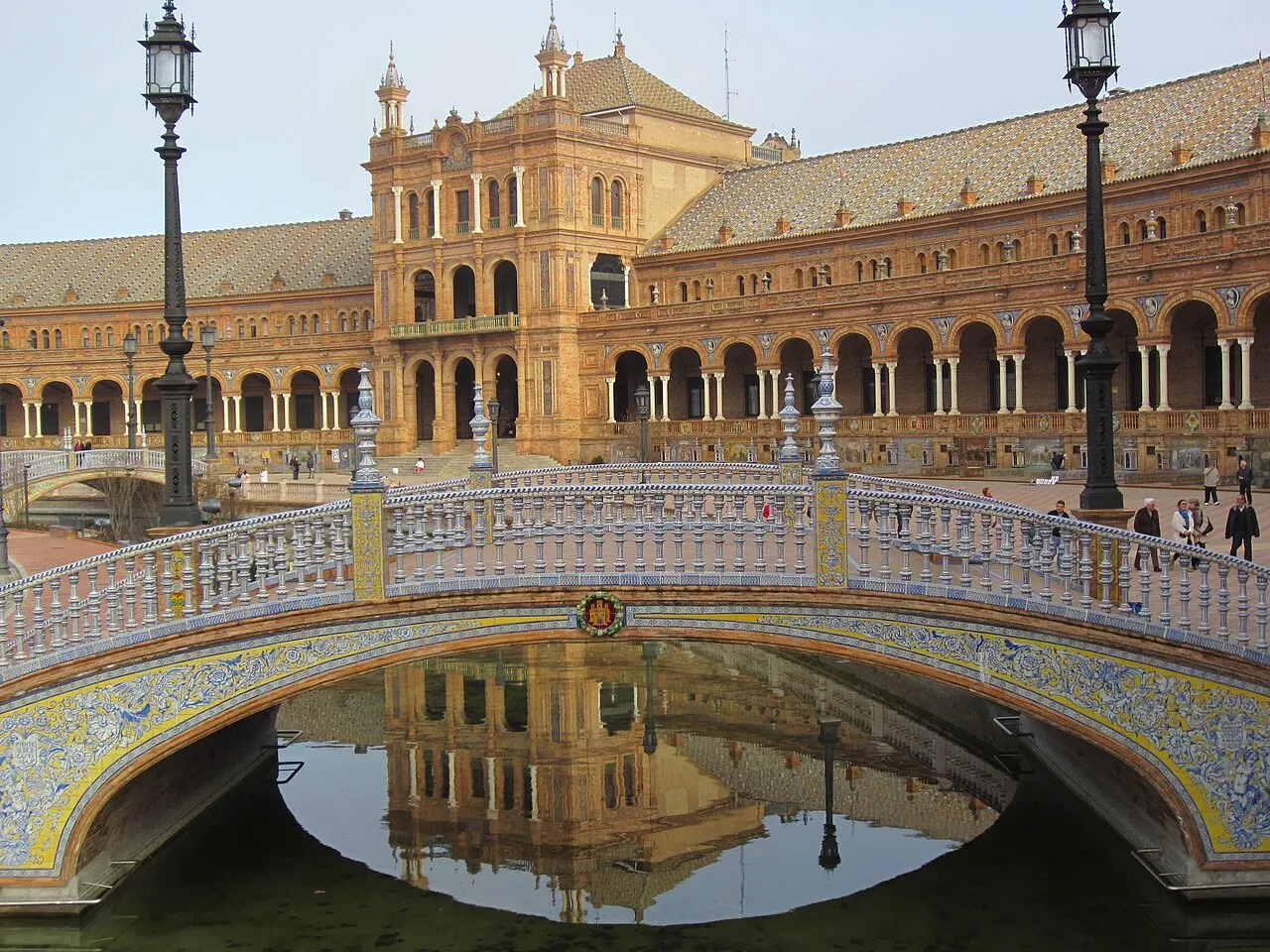
1Plaza de España

Plaza de España

📍 Parque de María Luisa

Outside the Real, but essential on these days: it is where the flamenco dresses look best in the afternoon light, and the place half the city goes to take photos before crossing over to the Feria. The hundred-and-seventy-metre semicircle that Aníbal González built for the 1929 Exposition works as a natural stage. The forty-eight provincial benches, each with its map and its tiled scene, are still the favourite pastime of anyone waiting.

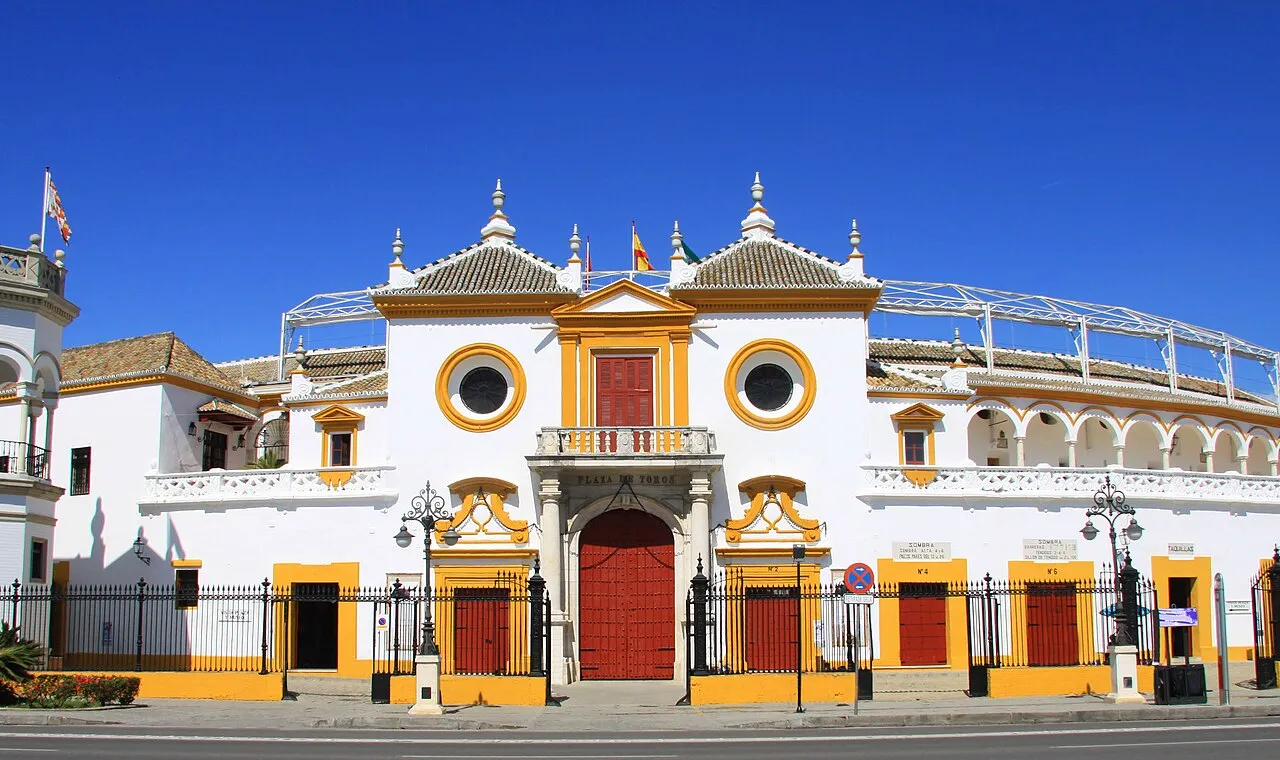
2Real Maestranza Bullring

Real Maestranza Bullring

📍 Paseo de Cristóbal Colón, 12

During the Feria, the Maestranza lives its greatest afternoons: the most eagerly awaited line-ups of the year and bullfighters who stake the prestige of a whole season here. The Sevillian crowd is knowledgeable, demanding and gives nothing away, and to triumph in April is about the highest thing a matador can aspire to. The rest of the year the ring rests almost in silence; that week the whole neighbourhood smells of albero sand, cigars and nerves. It can be visited inside outside bullfight days.

3Calle Betis

Calle Betis

📍 Triana, riverbank

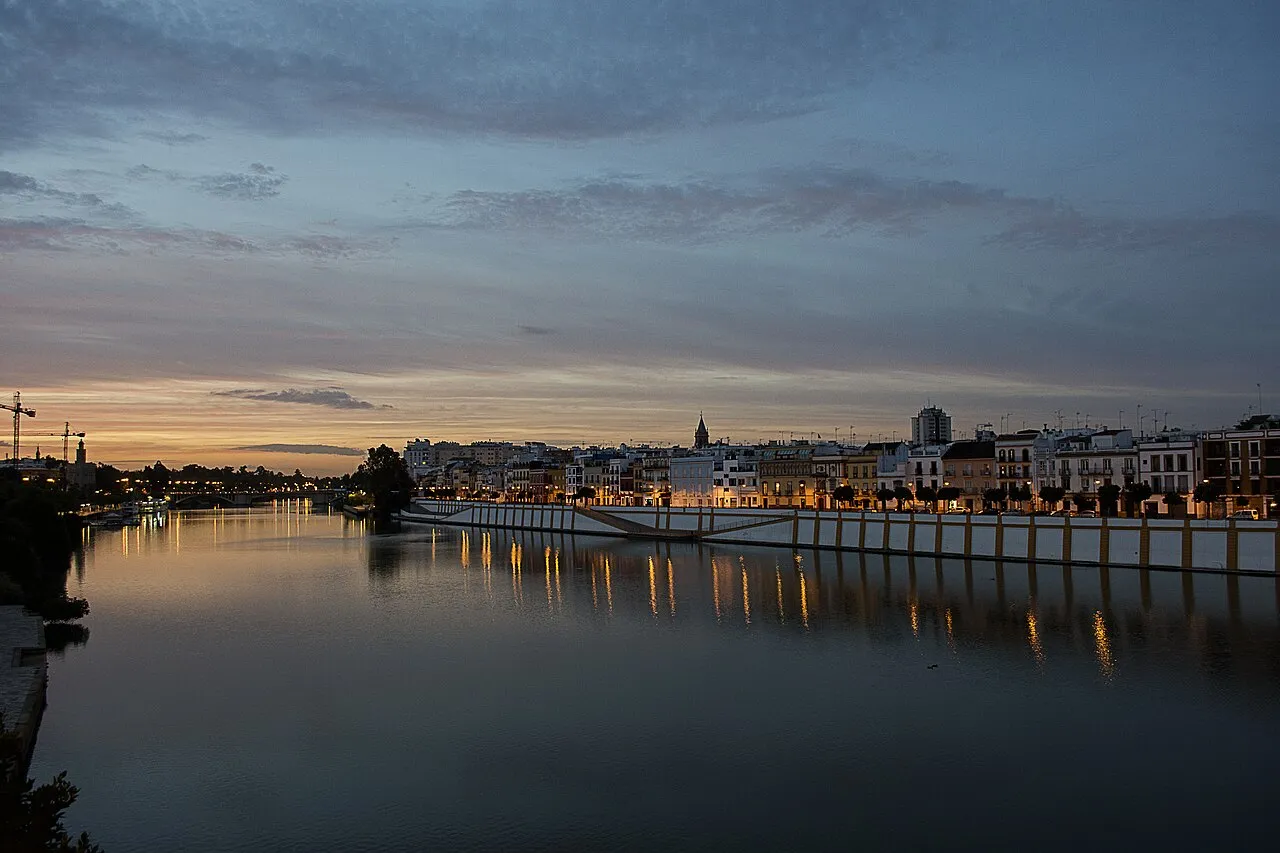
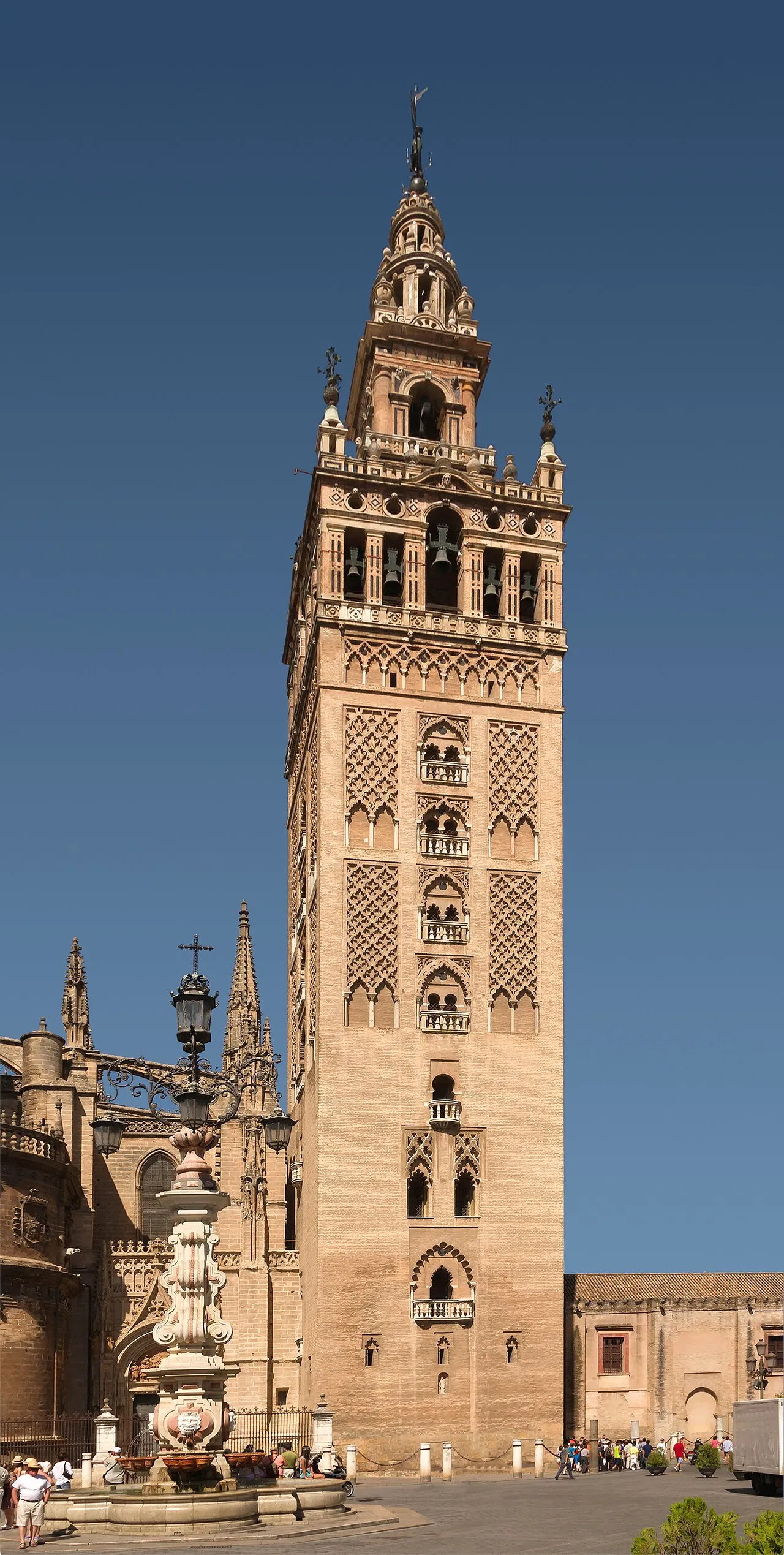
The natural way back from the Real to the centre passes along here, and during the Feria the street becomes an extension of the party until well into the early hours. With the coloured façades on one side and the whole of Seville lit up opposite — the Torre del Oro, the Maestranza and the Giralda in the background — it is one of the best places in the city to end the night.

How to get into a caseta if you don't know anyone

First route, the obvious one: the public casetas. These are the municipal and district ones, they are signposted and anyone can go in. They are large, they have a bar, a kitchen and space for dancing, and there is as much atmosphere in them as in any other. What they lack is the family feel of the private ones.

Second route: timing. At midday and in the early afternoon the private casetas are much more relaxed and it is not unusual for someone to invite you in for a drink, especially if you are with locals. In the early hours, on the other hand, they are full and the control at the door is strict.

Third route, and the most realistic: the street. The Real can be enjoyed perfectly well without going into any caseta. Watching the horse parade in the morning, walking the streets of the fairground, looking at the carriages, hearing the sevillanas from outside and ending up in the calle del Infierno — the funfair area — is a complete plan with free access.

And a recommendation that saves upset: don't insist at a door where you have been told no. The caseta is the private property of a group of members who pay for it all year round, and the refusal is nothing personal.

Frequently asked questions

When is Seville's Feria de Abril?

Two weeks after Easter Sunday, so it falls in April or early May depending on the year, and it never coincides with Holy Week. It lasts a week, begins with the night of the alumbrado — when the portada is lit up — and ends with fireworks over the river. It is worth checking the exact dates for the year before booking.

Can you go into the casetas at the Feria?

Most of them, no, because they are private: they belong to families, peñas, companies or brotherhoods and you need an invitation. But there are public casetas, municipal and district ones, signposted, that anyone can enter and where there is as much atmosphere as in the rest. Besides, at midday and in the early afternoon the private ones are much more relaxed than in the early hours.

Is it worth going to the Feria without an invitation?

Yes, as long as you go knowing what to expect. The Real can be enjoyed perfectly well from the street: the horse parade in the morning, the carriages, the streets of the fairground, the lit-up portada and the calle del Infierno with the funfair rides are all free to access. What you won't have is the experience of being inside a private caseta, which is another matter.

What is rebujito?

Manzanilla from Sanlúcar mixed with lemonade, very cold, served in a jug and drunk from a small glass. It is the unofficial drink of the Feria and it exists for a practical reason: manzanilla on its own, in the heat and after many hours of dancing, is too much. People also drink manzanilla neat and fino from Jerez.

Do you have to wear a flamenco dress?

Not at all, but it is worth knowing that here it is not a costume: it is what the locals wear and it is worn with total normality. Nobody expects a visitor to do it and nobody minds if you do it well, with the full dress. Men have no equivalent and go in ordinary clothes, smartly dressed. What does matter is footwear: the ground is albero and thin heels sink in.

How do you get to the Real de la Feria?

It is in the Los Remedios neighbourhood, on the other side of the river, and you cross on foot from the centre in about twenty or twenty-five minutes. In the early hours taxis are scarce and there are long queues, so walking back across the bridge is what almost everyone does. Going in comfortable shoes stops being advice and becomes a necessity.

The days that matter and how to dress

The alumbrado is the night that opens the Feria: the portada is lit up and everything begins, and that night people dine on pescaíto frito. It is one of the busiest and one of the most beautiful.

The rest of the week has a fairly steady rhythm, with the horse parade in the mornings and the casetas packed at night. Weekdays are noticeably more comfortable than the weekend. The Feria ends with fireworks over the river.

On clothing: the flamenco dress is not a costume for tourists, it is what the locals wear, and it is worn with complete normality. Nobody expects a visitor to wear one, but nor will anyone mind if you do it well — that is, with the full dress and not a souvenir-shop version. Men have no equivalent: they go in ordinary clothes, smartly dressed.

Footwear is more important than it seems. The ground of the Real is albero, which is compacted earth: thin heels sink in and open sandals end up the colour of the ground. Those who go every year wear closed, comfortable shoes, and those in flamenco dresses wear shoes with a wide heel.

One last practical note: the Real is on the other side of the river and the centre is a good walk away. In the early hours taxis are scarce and there are long queues. Walking back across the bridge is what almost everyone does, and it is part of the whole thing.

Practical information

When it isTwo weeks after Easter Sunday: April or early May depending on the year.
WhereThe Real, in Los Remedios, on the other side of the river. You cross on foot from the centre.
CasetasAround a thousand, almost all private. The municipal and district ones are public and signposted.
What to drinkRebujito: manzanilla with lemonade, very cold. Also manzanilla neat and fino.
Best momentMorning for the horse parade; weekdays to avoid the absolute crush.
FootwearClosed and comfortable. The ground is albero and thin heels sink in.
On the map

🎧 With Viavoy

Walk Seville and listen at your own pace

Download Viavoy and walk Seville offline, whenever you like.

from 2,99 €· one-off payment
City Pass · 9,99 €3 days, all the tours in Seville
Find out more about Viavoy →
Viavoy app

Keep reading

More articles

Festivals & traditions

Holy Week in Seville: how to understand it and where to see it

Itineraries

Seville in 2 days: the itinerary that really works

Food & drink

Tapas in Seville: a guide to the bars, the hours and what to order at each

Neighbourhoods

Triana: a guide to the neighbourhood that thinks it is a city apart