Going for tapas in Seville is not a cheap way to have dinner: it is a format with rules of its own, and most travellers break them without knowing it. You eat standing up. You order a little of many things. You don't occupy a table for two hours. And you move on: the point is to do three or four bars in an evening, not to settle into one. If you also respect the hours — lunch from 14:00 to 16:00, dinner from 21:00 — the whole city opens up. If not, you will end up eating in the only place that serves at seven, which is never the good one.
In many classic bars the bill is chalked up directly on the wooden counter. It is not folklore for tourists: it is how it has always been done and it still works.
The four rules of Sevillian tapas
First: the bar counter rules. In the classic places there are no tables with tablecloths, or if there are, they are for something else. You eat standing up, leaning on the counter or with your beer on a barrel out in the street, elbow to elbow with whoever got there first. It is not a discomfort to be tolerated, it is the plan.
Second: you order in short rounds. One or two tapas, a beer, and then you decide what comes next. Ordering eight things at once marks you out as an outsider, and besides, everything goes cold.
Third: you change bars. Each bar has two or three things it does better than anyone and does the rest decently. Tapas is about stringing together those two or three things from place to place.
Fourth: there is a real difference between a tapa, a media ración and a ración, and it is not just about size but about price per mouthful. If there are two of you, tapas; if there are four, the medias raciones work out better and are shared without a fight.
The triangle with the highest density of good bars per square metre in the city.
This is the classic tapas area, and it has a logistical advantage: the bars are so close to each other that you can do four in an hour and a half without taking a taxi. The Plaza del Salvador and the Plaza de la Alfalfa work as the two poles, and in between lies a swarm of lanes with bars of every kind.
The name Alfalfa gives away what it was: here, in the Muslim period and for centuries afterwards, alfalfa and fodder for animals were sold. It was a souk, a food market and even a square where birds were sold on Sundays. This piece of the city has been a place of buying, selling and bustle for more than a thousand years with hardly a pause. What is sold changes; the noise doesn't.
1
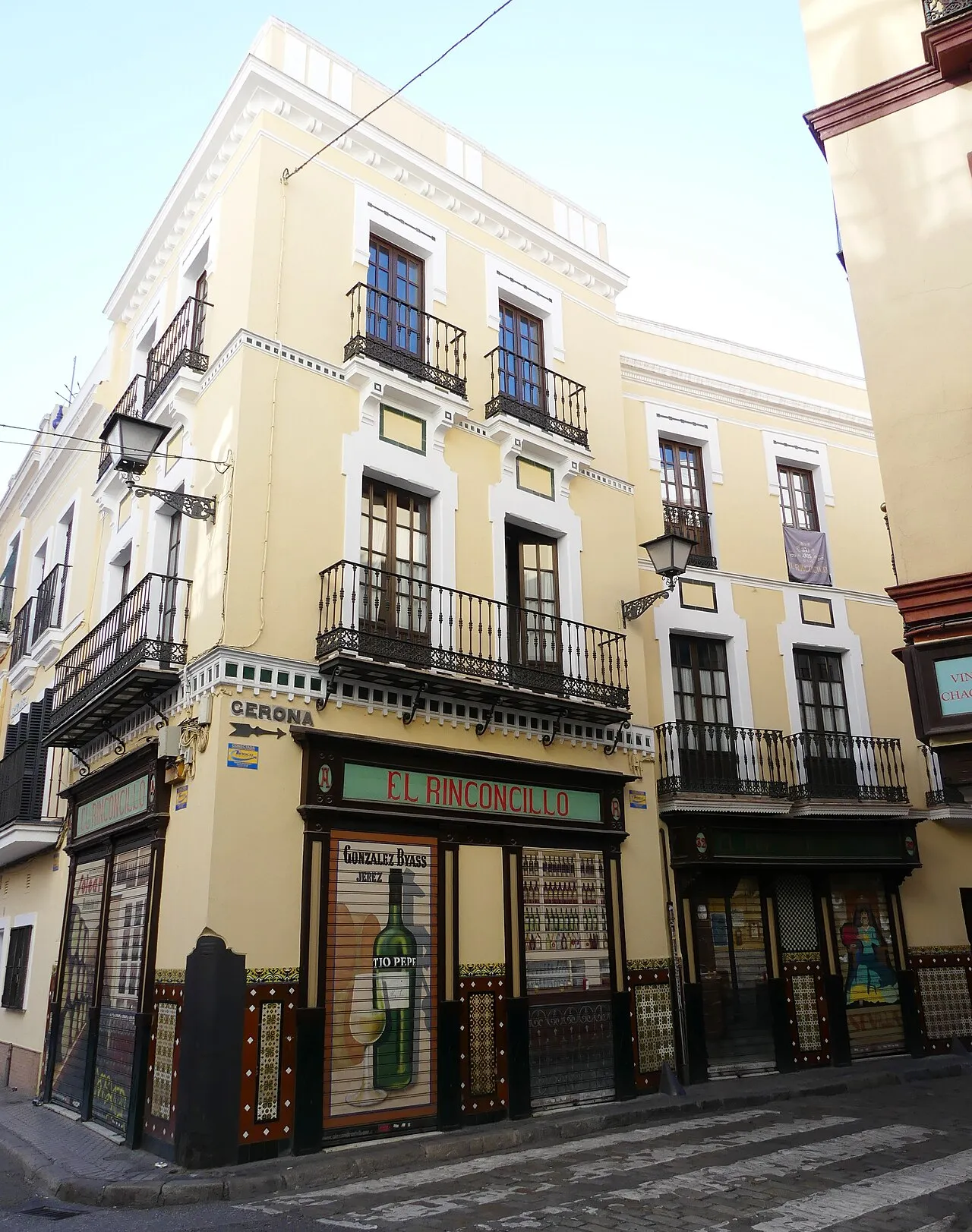
El Rinconcillo
📍 Calle Gerona, 40
Opened in 1670: it is the oldest tavern still in business in Seville, with more than three and a half centuries of service. Dark mahogany bar, old ceilings, tiles everywhere and hams hanging from above. The dish you cannot skip is the espinacas con garbanzos, spinach with chickpeas, a humble recipe of Arab origin, mild and spiced, which is the house's star tapa. With that and a little Iberian ham you eat wonderfully. Here the bill is still chalked up on the counter.
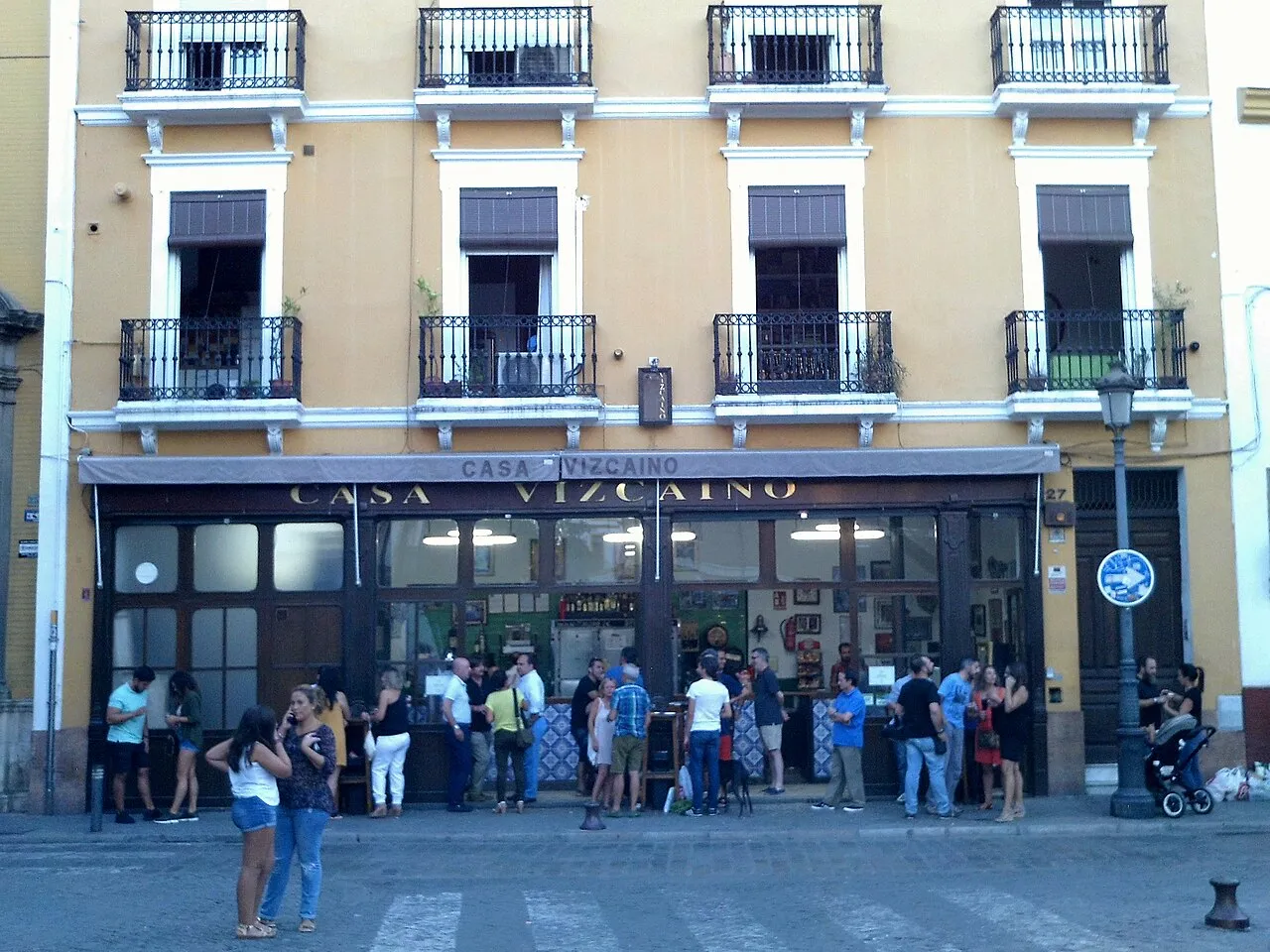
One of the liveliest bars in the centre and one of those that best sums up the format: small, noisy, with people spilling out into the square. It works especially well in the early evening, when the neighbourhood starts to fill up and you can still get to the counter. It is a good place to start a route because from here everything else is less than five minutes' walk away.
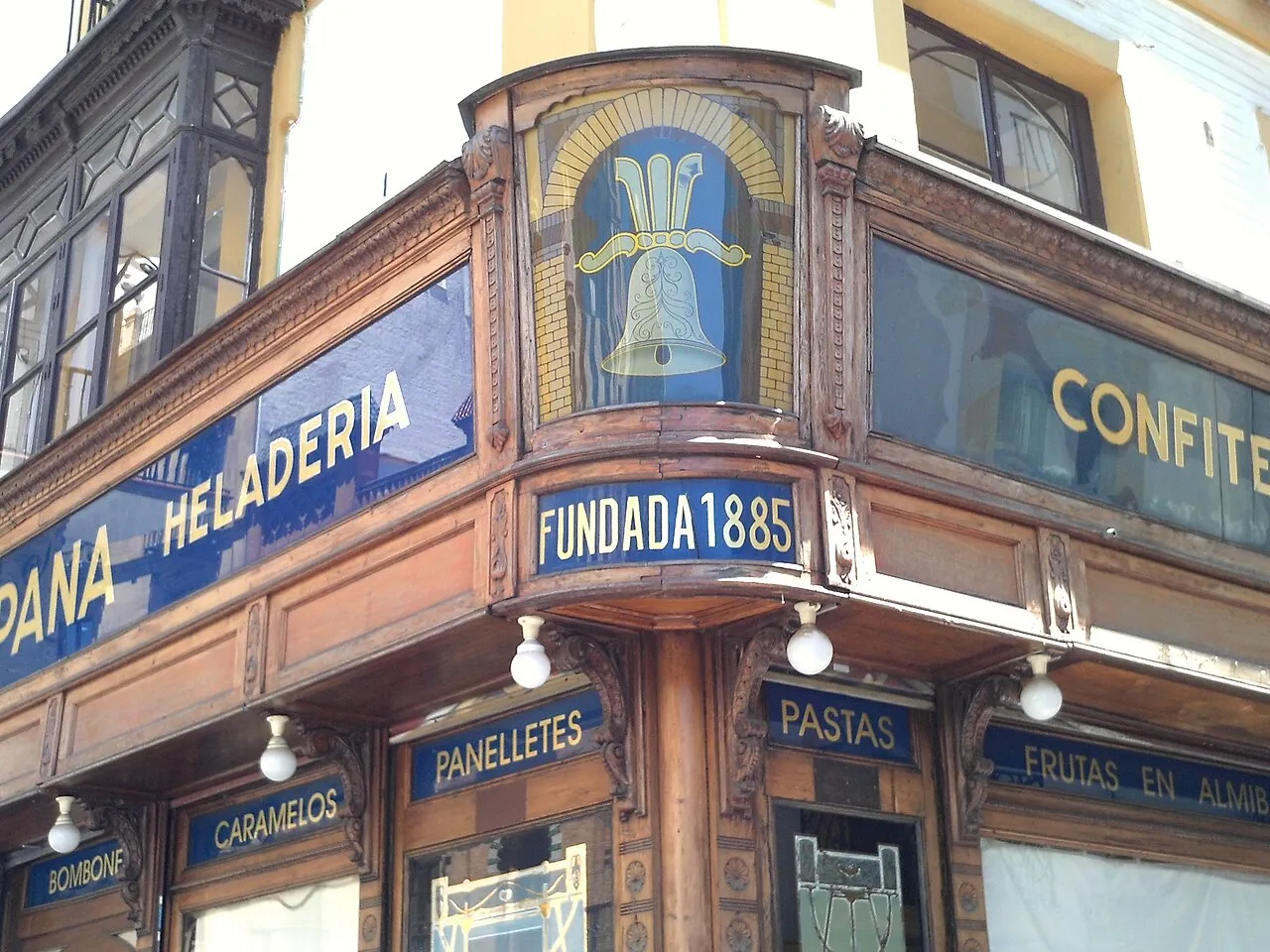
Not a tapas bar but the obligatory sweet stop, and it has been open since 1885: longer than the Eiffel Tower has been standing. It was founded by the master confectioner Antonio Hernández and is now in its fourth generation. Wooden counters, glass cases of meringues and Art Nouveau plasterwork with cherubs on the ceiling. Order a yema de San Leandro — little balls of egg yolk and sugar that are pure Sevillian convent — or a tocino de cielo. It supplied the Royal Household and boasts of it with a gilded coat of arms on the wall.
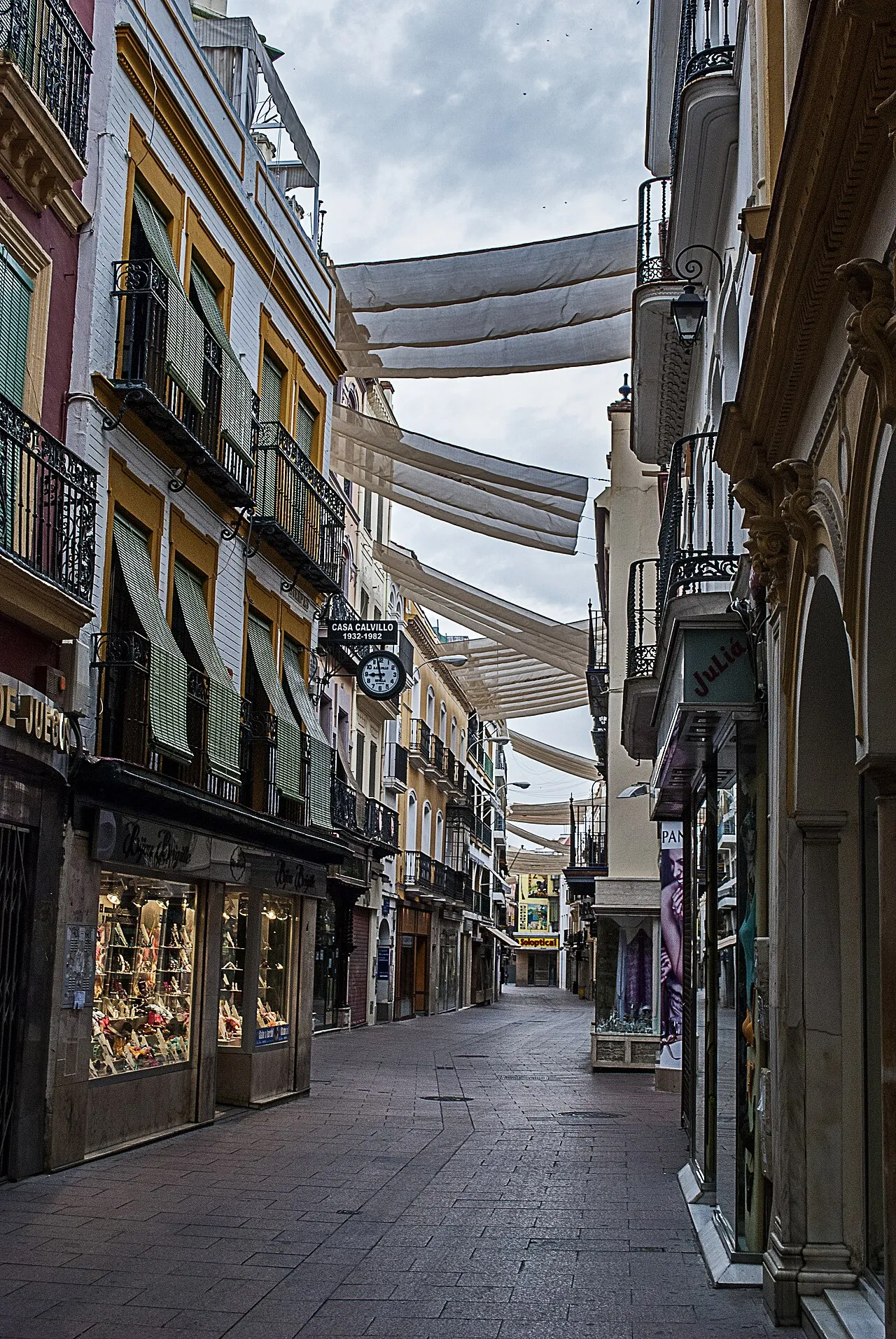
Seville's shopping street par excellence, pedestrianised, without a single car, and it has been so for as long as the city can remember. In summer look up: from façade to façade stretch great canvas awnings that leave the street in cool, golden shade. They have been put up every year since the mid-nineteenth century, and walking beneath them in August is one of those small pieces of wisdom this city has against the heat. Sierpes leads into the plaza de la Campana, which is where any self-respecting tapas route begins.
🎧 On the tour Tapas Through the Center: Sierpes, the Salvador, and La Alfalfa📍 View on Google Maps
Santa Cruz: eating history without realising
The tapas of the Jewish Quarter have been on the menu for a thousand years.
In Santa Cruz you have to choose well because the density of tourist traps is the highest in the city. The practical rule: if the place has photos of the dishes on the door or a laminated menu in six languages, keep walking.
It is worth knowing what you are eating. Spinach with chickpeas and fried aubergines with cane honey have their roots in Andalusi and Sephardic cooking, that of the Muslims and Jews who lived in exactly this neighbourhood. The aubergine was so closely tied to Spanish Jews that it almost identified them. And that cane honey is not bee honey but sugar-cane syrup, another sweet inherited from al-Andalus. You eat history without noticing.
4
Bodega Santa Cruz “Las Columnas”
📍 Calle Rodrigo Caro, 1
One of the most legendary bars in the city and one of the noisiest. There are no tables with tablecloths here: you eat standing up, at the bar or with your beer resting on a barrel out in the street, Sevillians and visitors mixed together. Order the montadito de pringá — the stewed meat from the cocido pressed into warm bread — the spinach with chickpeas or the fried aubergine with cane honey. Order a little of many things, an ice-cold beer, and stay outside on your feet: that is exactly the point.
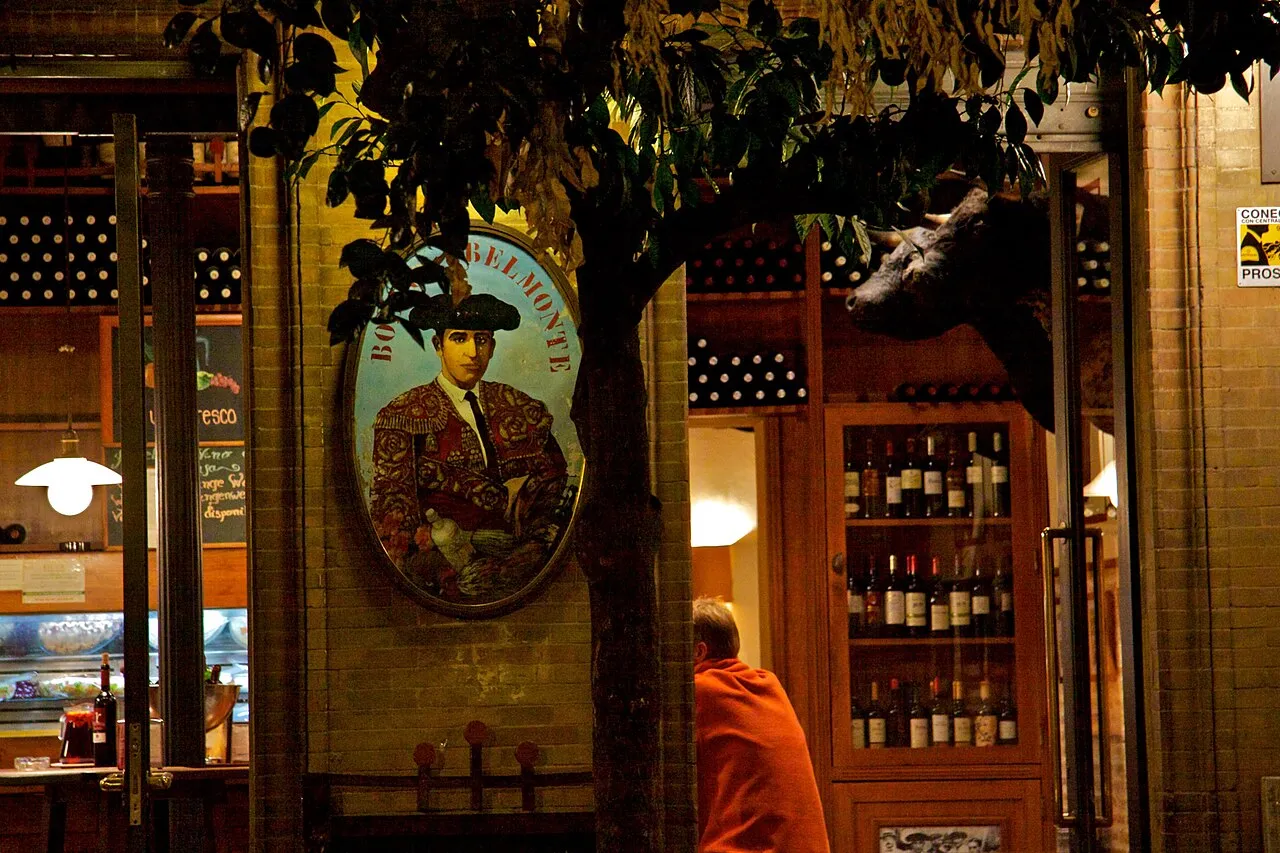
It opened in 1870 and is one of the oldest and best-loved taverns in Seville. The first thing to reach you is the smell of ham: the ceiling is a constellation of hanging legs perfuming the air above a marble bar, old photographs and bullfighting posters. What it does is clear: a tapa of Iberian ham sliced to order and a well-pulled beer. The street is named after Saint Teresa of Ávila, who founded a Carmelite convent nearby in 1575 during a hard spell she spent in the city.
Two steps from the cathedral and with an architectural surprise inside: the premises occupy a former twelfth-century Moorish bathhouse, and the vaults with their star-shaped skylights came to light in a recent restoration. The food is decent and the drink is good, but you come above all for the ceiling. It is one of the few places in the monumental area where the stop makes sense beyond mere proximity.
If you have more than two days, this is the part that separates a tourist visit from a good one. North of the centre, the Alameda de Hércules and calle Feria concentrate the bars where the city goes for tapas without passing trade. On the other side of the river, Triana has a circuit of its own, more about fish and fried food.
Calle Feria also holds a curiosity that deserves the detour: every Thursday morning its pavement is covered with blankets and tables of old junk, books, coins and paintings. This is El Jueves, the oldest flea market in Seville: the first time it appears in writing is in 1292, when Sancho IV regulated its holding. Seven hundred years of weekly flea market, and it is still going.
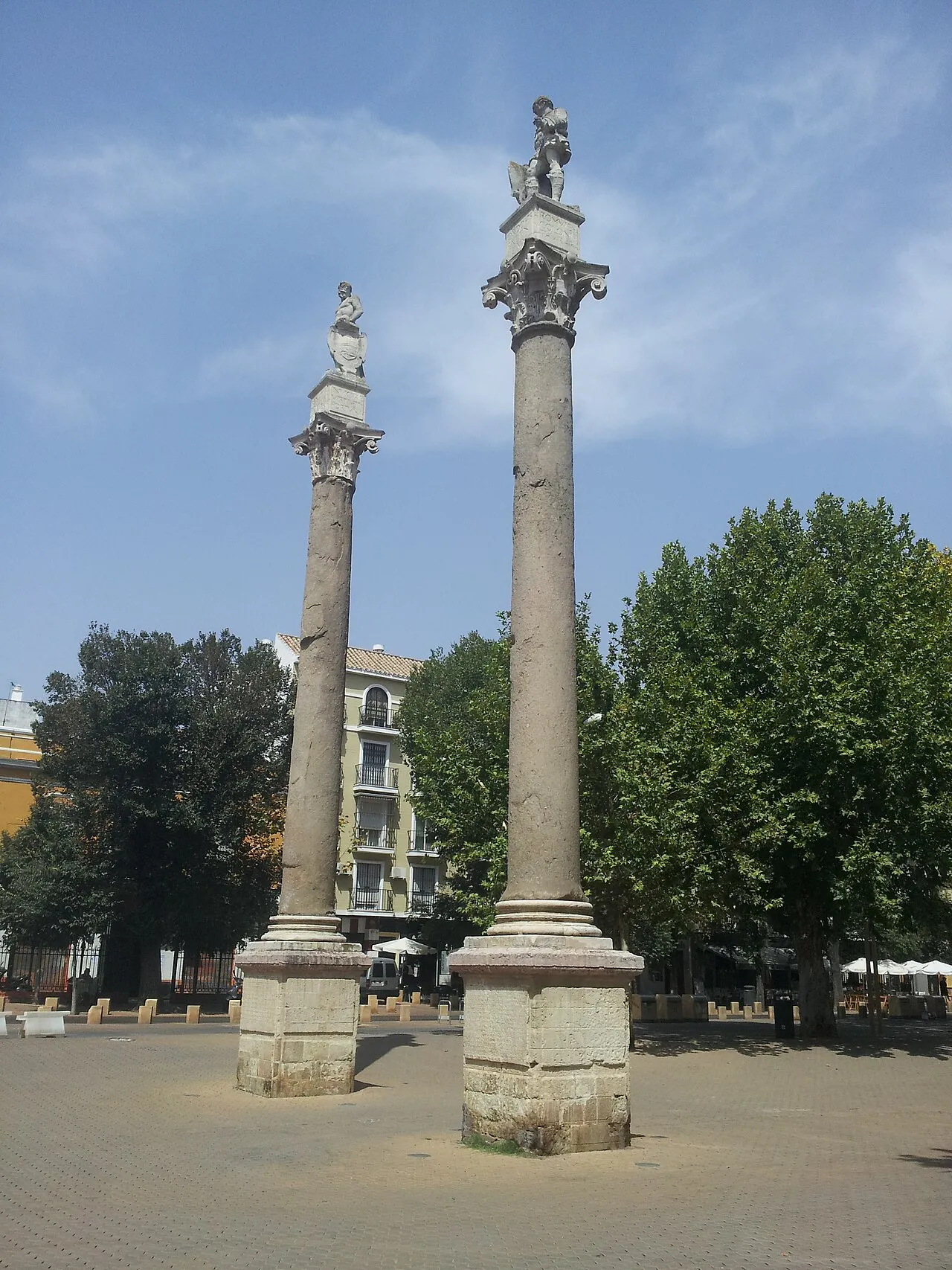
The Alameda, for its part, is no ordinary square: it was created in 1574, which makes it the oldest surviving public garden and tree-lined promenade in Spain and one of the oldest in Europe. Four and a half centuries of people strolling beneath the same trees, and today the bohemian heart of the city too.
7
Eslava
📍 Calle Eslava, 3 · next to San Lorenzo
For many people, the best tapas in Seville. From outside it looks like nothing special, and that is why there is usually a queue — of Sevillians, above all. Order the huevo sobre bizcocho de boletus, a yolk that breaks over a creamy mushroom sponge with a touch of wine, which years ago won the prize for the best tapa in the city. And don't leave without the honeyed pork rib, sticky, falling off the bone. If there is room at the bar, all the better; if not, wait, because it is worth it.
An old-school vermouth and manzanilla tavern, with the regulars leaning on the wall outside because nobody fits inside. It is not a place for dinner but for a glass of wine and a tapa standing up before moving on. It is right on calle Feria, so it goes especially well with Thursday morning, when the flea market takes over the pavement.
The neighbourhood stop par excellence in Triana, right in the area of the old potteries. Tiles up to the ceiling, waiters who have been there forever and a short menu that hasn't changed because it doesn't need to: grilled mushrooms, sirloin tips, cuttlefish. It is where the people of the neighbourhood go when they don't want to think. They don't take bookings and you usually have to wait a while on your feet.
Unassuming from outside and one of the places where you eat best in the whole of El Arenal, which half the city knows: there is almost always a queue, or it is worth booking. Modern-cooking tapas with ideas but without trying to be too clever. The creamy risotto with mushrooms and cheese is worth ordering twice; if you fancy meat, the pork cheek stewed until it falls apart or the duck confit. With three or four tapas and a glass of white you eat more than enough.
Start with something cold while you make up your mind: some marinated olives, a tapa of Iberian ham sliced to order, some chicharrones. They give you something in your hand while you look at the blackboard, which is where the real menu is in the good places.
The dish with the most history in the city is spinach with chickpeas, a recipe of Andalusi origin that is still the signature tapa of El Rinconcillo. With that and the fried aubergine with cane honey you have the complete Andalusi axis. If you also order a montadito de pringá, you have the popular axis: the stewed meat from the cocido pressed into warm bread, which is what was done with the leftovers from the stew pot.
In fish, the city stakes its reputation on frying. Cazón en adobo (marinated dogfish), cuttlefish, anchovies and puntillitas (tiny baby squid) are ordered in small portions, eaten straight from the fryer and brook no delay: if it arrives lukewarm, something has gone wrong. Triana is where it is done best.
To drink, three local options and none of them complicated: a well-pulled beer, a manzanilla from Sanlúcar or a fino from Jerez. Manzanilla, very cold and in a small glass, is what goes best with fried fish and ham. In summer, the refreshing alternative is the rebujito, manzanilla with lemonade, which is what people drink at the Feria.
And dessert is almost never at the bar: you go out for it. The yemas de San Leandro and the tocino de cielo at La Campana are the classic way to close the evening, and they are on the way to almost everything.
Frequently asked questions
What time do people go for tapas in Seville?
Lunch is served from 14:00 to 16:00 and dinner from 21:00, and those slots are kept to pretty strictly. In between, many kitchens close, even if the bars keep serving drinks and something cold. If you come from a country with earlier hours, you deserve the warning: having dinner at seven in Seville is condemning yourself to the worst place in the neighbourhood.
Which is the oldest tavern in Seville?
El Rinconcillo, on calle Gerona, opened in 1670: more than three and a half centuries of uninterrupted service. It keeps its mahogany bar, its tiles and the custom of chalking up the bill on the counter. Its signature tapa is spinach with chickpeas, a recipe of Arab origin that is still the most ordered dish in the house.
Which tapas must you try in Seville?
Four essentials: spinach with chickpeas, of Andalusi root; fried aubergines with cane honey, which is sugar-cane syrup, not bee honey; the montadito de pringá, the stewed meat from the cocido pressed into warm bread; and fried fish — cazón en adobo, cuttlefish, puntillitas — on which the city stakes its reputation. For dessert, yemas de San Leandro.
Do you eat better in the centre or in the neighbourhoods?
In the neighbourhoods, almost always. The centre and Santa Cruz concentrate the highest density of tourist traps in the city, although also some of the best classic bars. The Alameda de Hércules, calle Feria and Triana have less passing trade and better value for money. The practical rule: if there are photos of the dishes on the door, keep walking.
What do you drink with tapas?
A well-pulled beer, a manzanilla from Sanlúcar or a fino from Jerez. Manzanilla, very cold and in a small glass, is what goes best with fried fish and ham. In summer and at the Feria people drink rebujito, which is manzanilla with lemonade. Red wine is ordered less and almost never with fried fish.
Do you need to book for tapas?
Practically never: the format is bar-counter and first come, first served. The clear exception is La Brunilda, in El Arenal, where it is worth booking or resigning yourself to the queue. Eslava and Las Golondrinas don't take bookings either, so the strategy is to go early or wait on your feet, which is part of the whole thing.
Practical information
Opening hoursLunch from 14:00 to 16:00, dinner from 21:00. Outside those slots many kitchens close.
FormatStanding at the bar. Tapa for two, media ración for four.
What it costsWith three or four tapas and two beers you eat more than enough per person at any classic bar.
BookingOnly at La Brunilda. The rest work on a first-come, first-served basis.
AreasCentre (Alfalfa-Salvador-Sierpes), Santa Cruz, Alameda and calle Feria, Triana and El Arenal.
With ViavoyThe route “Tapas Through the Center: Sierpes, the Salvador, and La Alfalfa” strings together the bars and the monuments that lie in between.
🎧 With Viavoy
Walk Seville and listen at your own pace
Download Viavoy and walk Seville offline, whenever you like.
from 2,99 €· one-off payment
City Pass · 9,99 €3 days, all the tours in Seville