Ronda in a day: the bridge, the ring and the floor of the Tajo gorge
The itinerary that goes down into the canyon instead of staying up top looking at it. With the stairway cut into the rock, the baths saved by neglect and the free viewpoint almost nobody sets foot on.
Almost everyone arrives in Ronda on a day trip, leans over the bridge, takes the photograph and leaves. It is a pity, because the city is not up top: it is down below. What makes Ronda unique is the hundred-metre gorge that splits it in two, and that canyon is only understood by going down to the bottom, which is twenty minutes of path and the best decision of the day.
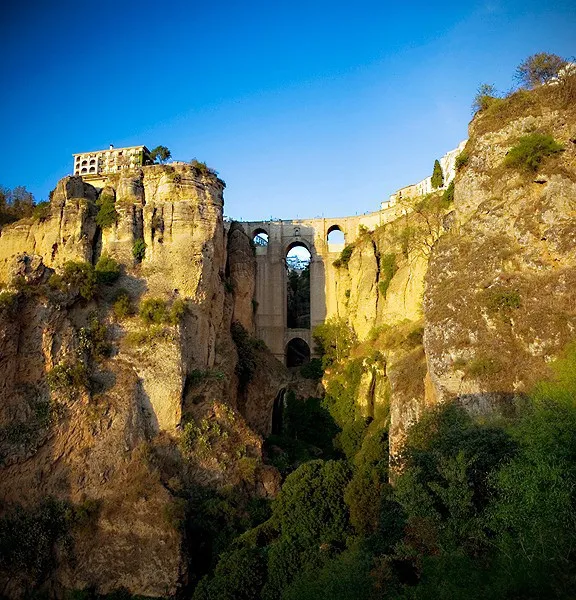
A path drops from the Puente Nuevo to the floor of El Tajo, the gorge: twenty minutes of descent with steps and uneven stretches, and the only way to see the bridge whole. The way back is all uphill.
Morning: the Mercadillo and the bullring
Start to the north, before you cross.
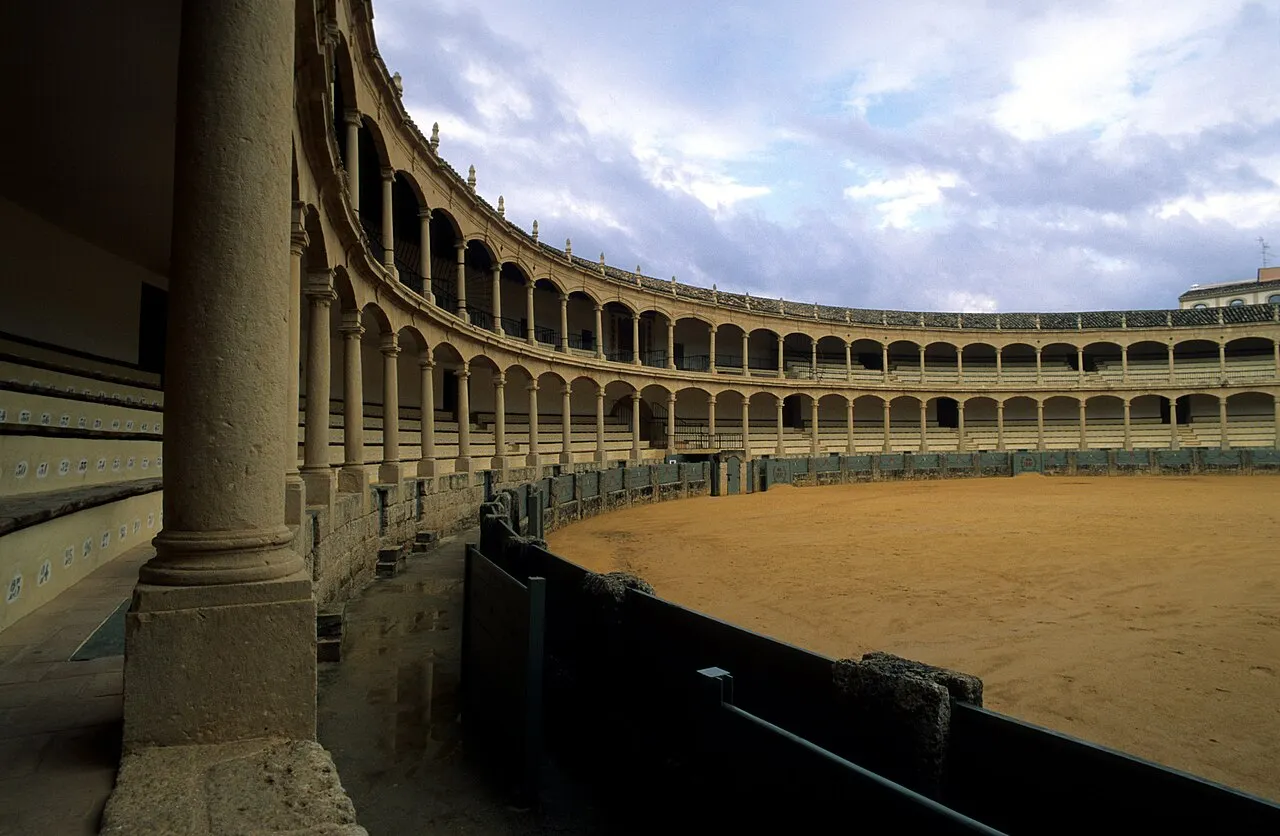
Coming in from the station or the car park you enter through the Mercadillo neighbourhood, the Ronda of the eighteenth and nineteenth centuries, and the first stop is the bullring. From outside it is a sober façade of golden stone that gives no hint of what is inside: a ring sixty-six metres across, the largest in the world, surrounded by a hundred and thirty-six columns in a double gallery.
Almost every Spanish bullring was raised in brick; this one is stone, with ashlar arcading, and that is why it looks more like a Renaissance cloister than a bullring. It was built by Martín de Aldehuela between 1780 and 1785, the same engineer as the bridge, and it still belongs to the Real Maestranza de Caballería.
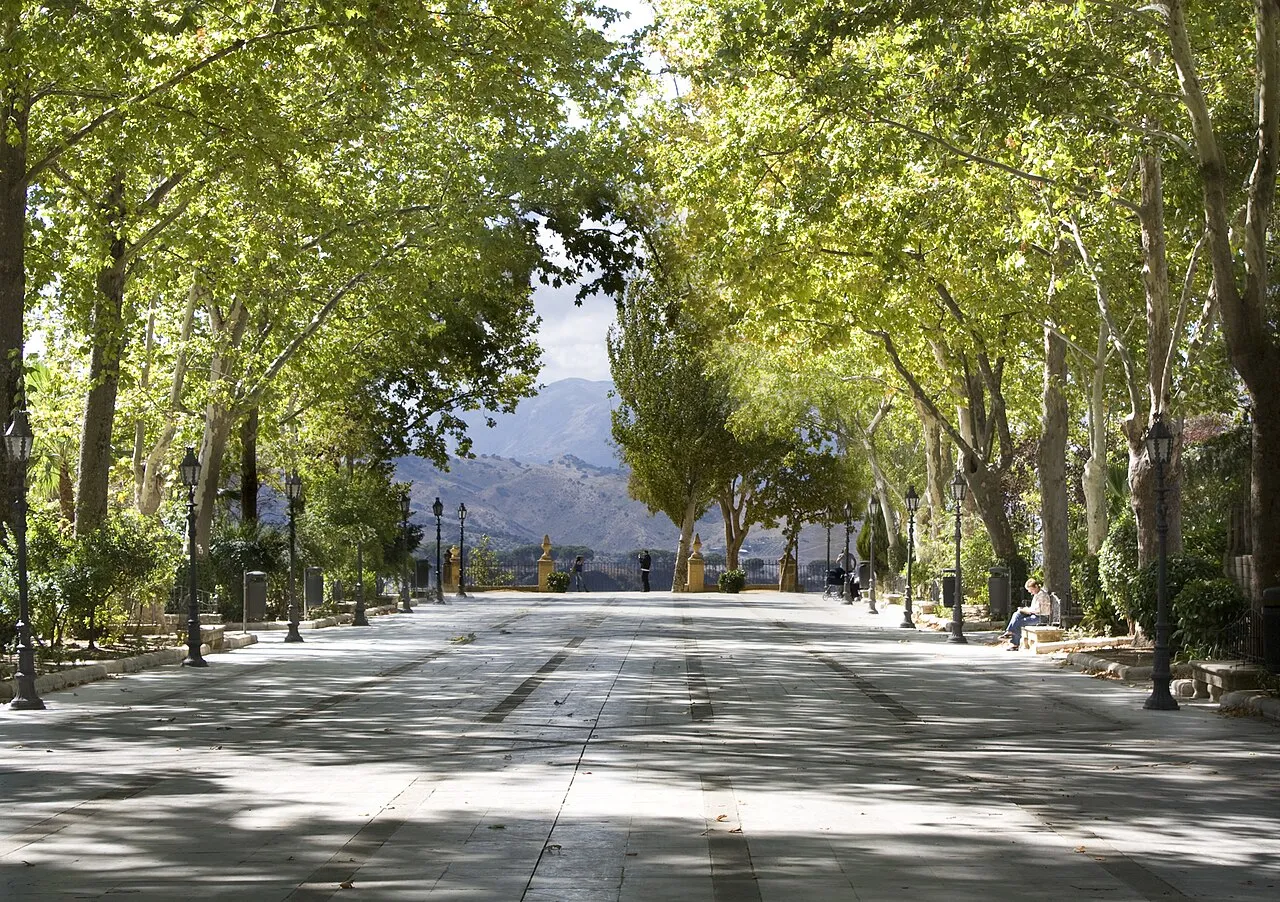
Right behind it is the Alameda del Tajo, a nineteenth-century garden with cantilevered viewpoints over the abyss from which you see the whole Serranía. It is free, a great many people skip it and it gives some of the best views in the city.
After that, the Puente Nuevo. And here it helps to know that there was another one before, thrown up in great haste in 1735 with a single enormous arch, which came down six years later and dragged some fifty people with it. The present one, with three arches resting on the floor of the canyon, took thirty-four years to build.
You can visit the ring, the horse yard, the royal stables, the chapel and the Museo Taurino, the bullfighting museum. Here Pedro Romero, born in Ronda in 1754, set the rules of bullfighting on foot against the earlier mounted tradition. Every September the Corrida Goyesca is held.
A nineteenth-century garden with cantilevered viewpoints that lean straight out over the ravine, with the Serranía de Ronda behind. It is free, it is two minutes from the bullring and most visitors do not even go near it.
All the stone came out of the abyss itself: the ashlars were quarried from the floor of the Tajo gorge, at the foot of the works. Above the central arch there is a chamber hanging over the void that was the keeper's room, a lock-up and a prison during the Civil War, and that today is an interpretation centre.
Crossing the bridge southwards you change city and almost change century. Old Ronda was Muslim until 1485 and keeps its street plan, with narrow streets, palaces and sheltered squares where the traffic drops away at once.
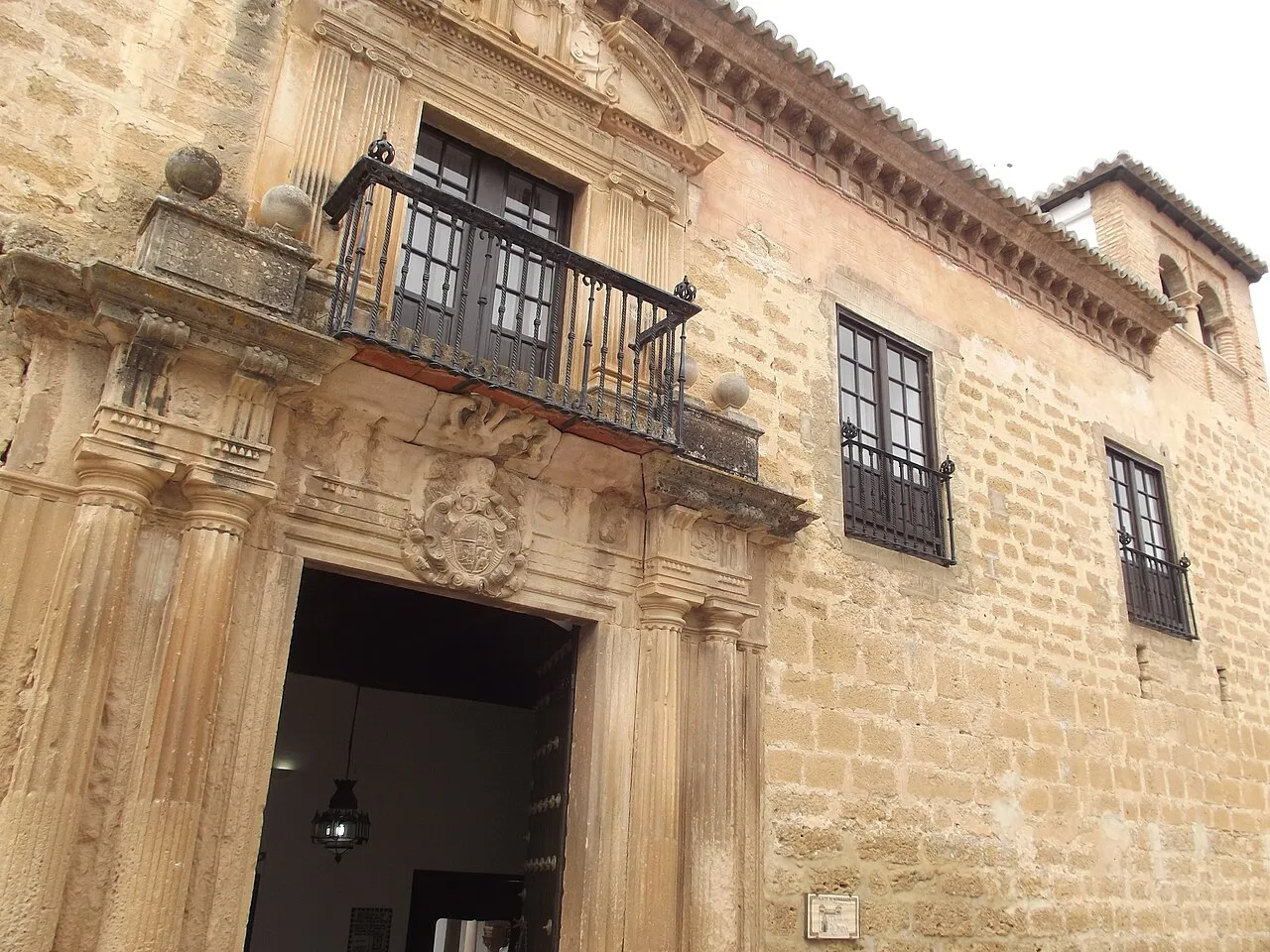
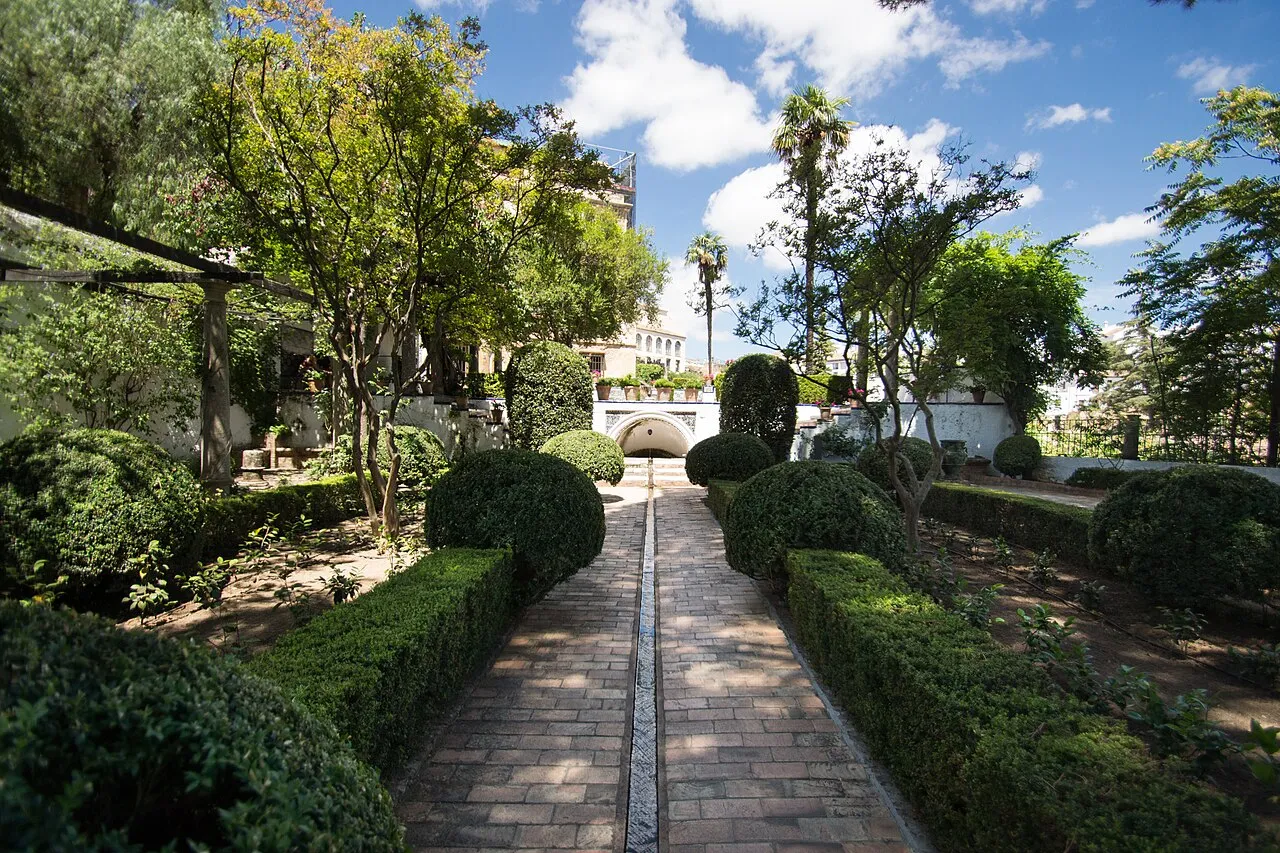
The Palacio de Mondragón is the most beautiful building and the most mixed: it was the residence of the Nasrid governor in the fourteenth century and afterwards of the Christian lords, without any layer erasing the one before. It has a Mudéjar courtyard with horseshoe arches and tiles, and twenty paces away a Castilian courtyard of classical proportions.
Do not leave without going out to its hanging gardens at the back, which are included in the ticket and give the best view of the Serranía. It also houses the Museo de Ronda, which covers the district from the prehistoric dolmens onwards.
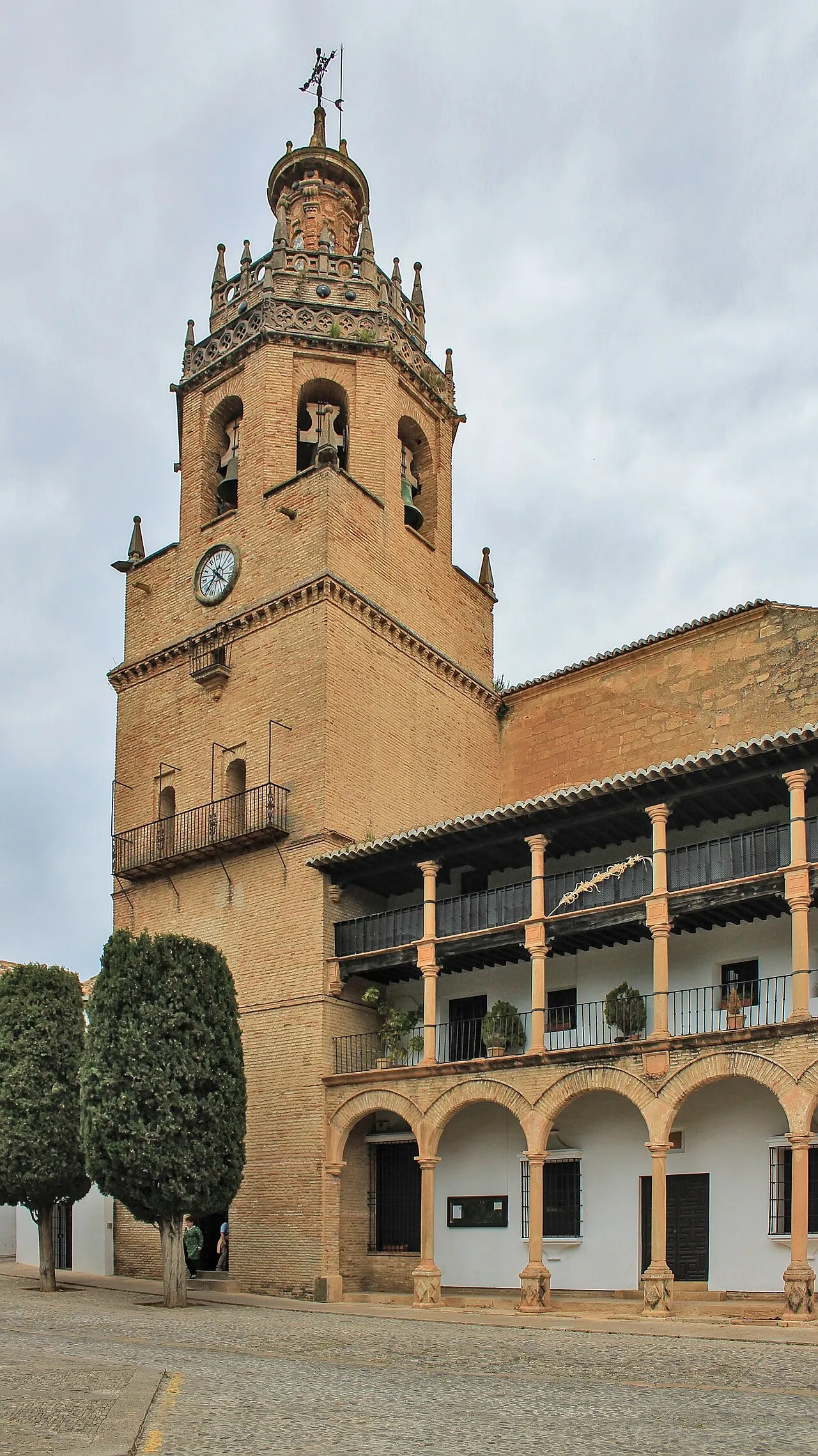
Five minutes away, Santa María la Mayor stands exactly over the main mosque, and keeps the arch of the mihrab in place, inside the church. An earthquake brought down the Gothic east end in 1580, so walking through it you go from Gothic to Renaissance to Baroque.
Tradition places among its occupants Hamet el Zegrí, the last Muslim military commander of the city. When the Catholic Monarchs took Ronda in 1485 they are said to have stayed here. It takes its name from captain Melchor de Mondragón, whose coat of arms sits above the door.
The orange-tree courtyard occupies the old sahn of the mosque and the tower was raised on the minaret. The long balcony on the façade was the city's viewing box: before the bullring existed, the festivities were held in this square and the authorities watched them from there.
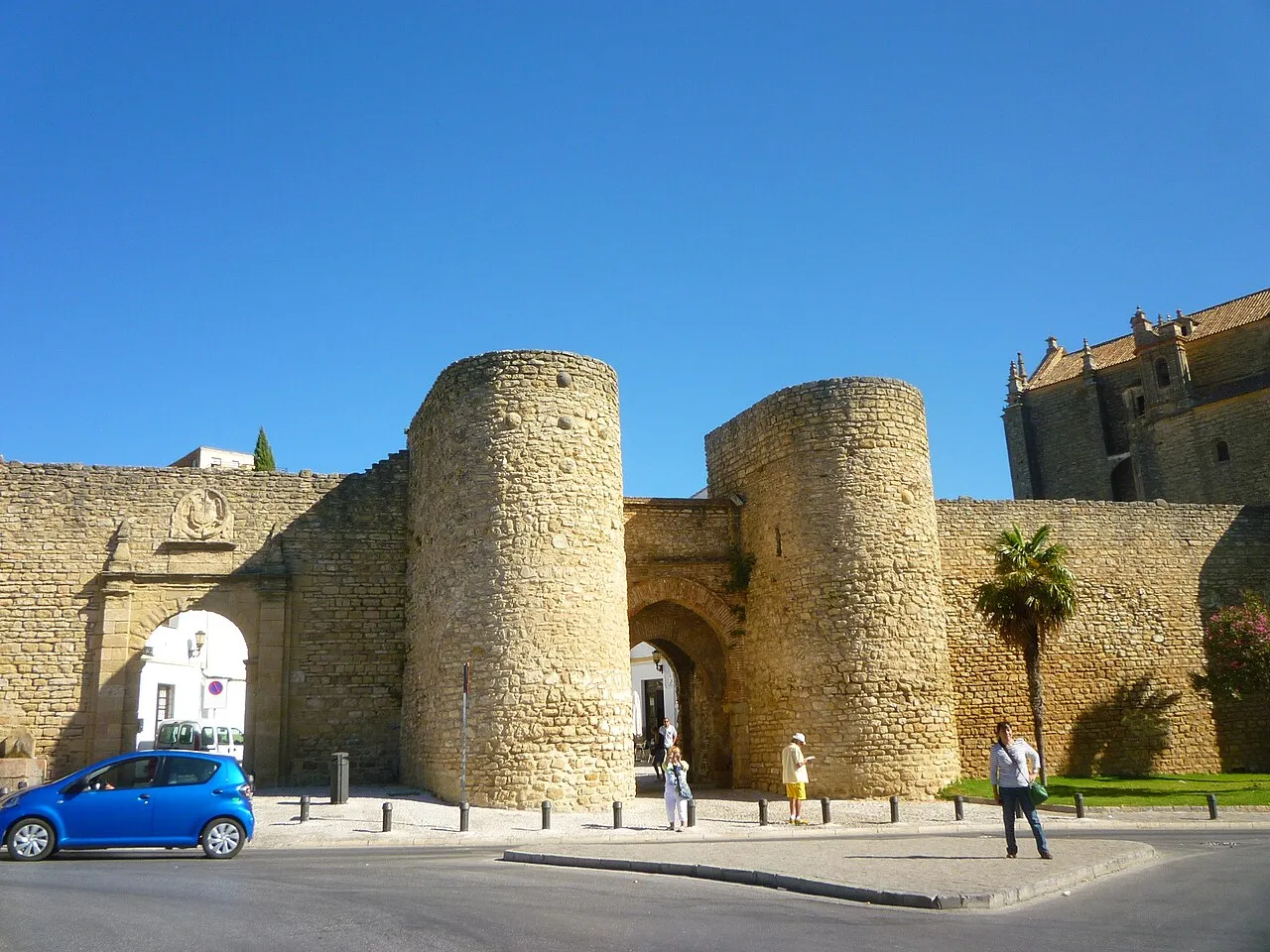
Three bent-entrance arches between two round towers, designed to make forcing your way in unsustainable. This is where the troops of the Catholic Monarchs came in in 1485, and the shackles of the freed captives have hung ever since in San Juan de los Reyes, in Toledo.
This is where an ordinary visit parts company with a good one. There are two descents and both are worth it, although each demands its effort and the way back is always uphill.
The first is the mine of the Casa del Rey Moro: more than two hundred steps cut into the living rock in the fourteenth century, running down from the house to the river. They were made to bring water up during sieges, in human chains of captives carrying skins, and when the Castilian troops cut off access in 1485, Ronda fell in days. Its gardens were designed by Forestier in 1912.
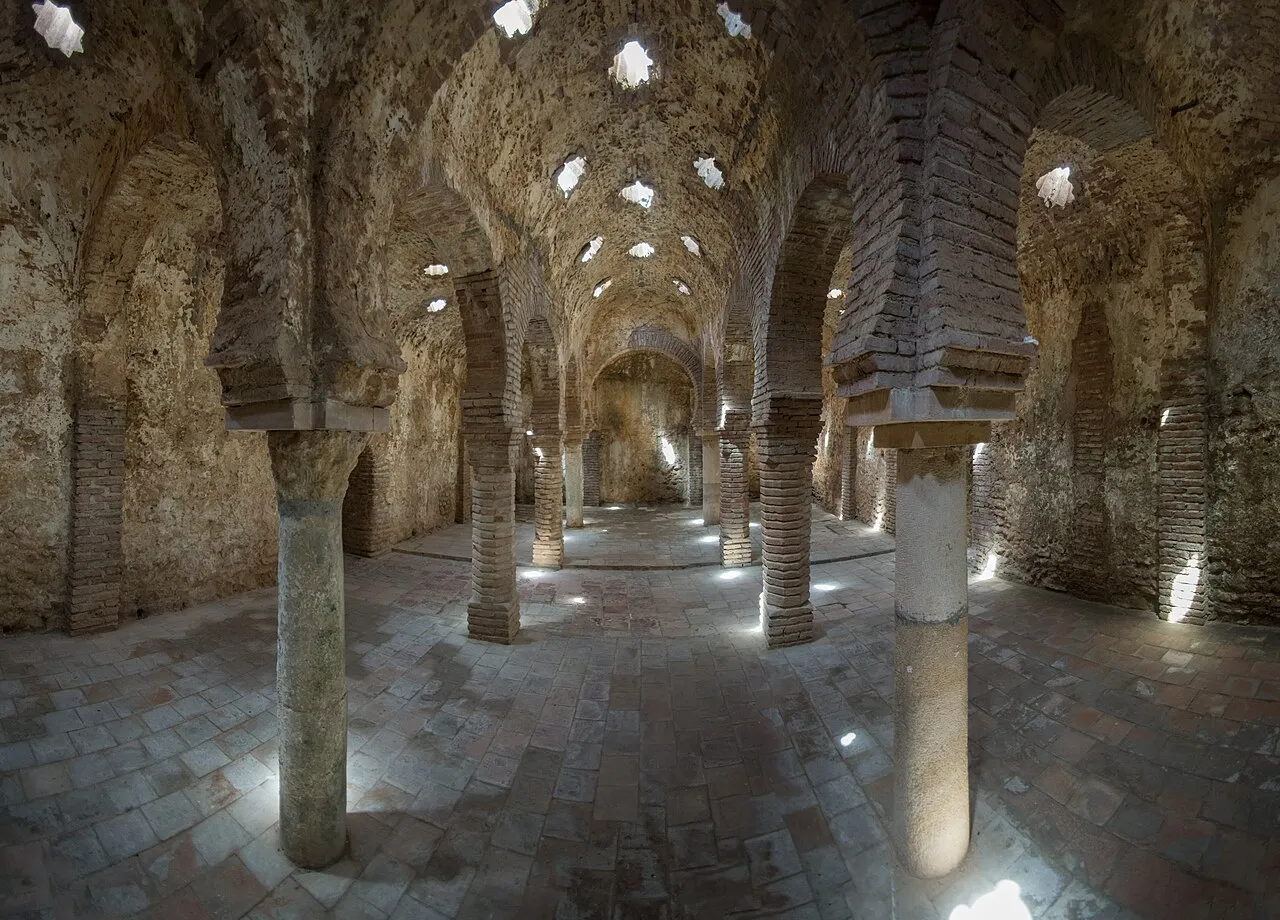
The second is the Arab Baths, in the lower part of town, next to the Puente Viejo. They pass for the best preserved in Europe, and neglect is what saved them: after the conquest they stopped being used and ended up as a tannery. They have eight-pointed star skylights in the vaults and the complete hypocaust in view.
And if there is time left, the path that goes down to the floor of the Tajo gorge from the bridge. Twenty minutes of descent and the only way to see the bridge whole from the riverbed, with a hundred metres of stone above. It is the image almost nobody takes home from Ronda.
The mine is more than two hundred irregular steps, damp and slippery, down and back up, and it is not for everyone. The terraced gardens were signed by Jean Claude Nicolas Forestier, the same landscape architect as the Parque de María Luisa in Seville.
Late thirteenth and early fourteenth century, with three rooms — cold, warm and hot — and a waterwheel that raised the water from the stream. Entry very cheap, included in the monuments combined ticket. Do not skip the film: without context they are just empty vaulted rooms.
The balcony that juts out right beside the bridge and from which you see the side arch and the full drop of the gorge. It is free, it is thirty seconds from the centre and it gives the best view of the bridge without having to go down into the canyon.
Yes, and it is what almost everyone does, because many arrive on a day trip from Málaga or the coast. A long day covers the bullring, the bridge, the old town with its palaces and the Arab Baths. What takes extra time is going down to the floor of the Tajo gorge, which is precisely what pays off most.
Where is the Puente Nuevo best seen from?
From below. There is a path that goes down to the floor of the canyon in about twenty minutes, with steps and uneven stretches, from which you see it whole from the riverbed. Without going down, the best views are at the Mirador de Aldehuela, next to the bridge, and in the gardens of the Casa del Rey Moro, which give a side perspective.
Is the mine of the Casa del Rey Moro worth it?
It is the most astonishing thing in the city, but it is worth knowing what it involves: more than two hundred irregular steps, damp and slippery, cut into the rock, down and back up, with no lift and no alternative. It is not suitable for anyone with mobility problems. Forestier's gardens on their own already justify the ticket.
Is there a monuments combined ticket in Ronda?
Yes, the city has a combined ticket covering several municipal monuments, among them the Arab Baths, the Palacio de Mondragón and the church of Santa María la Mayor, and it pays off from the third visit on. You can buy it at any of them. The bullring and the Casa del Rey Moro are private and go separately.
What is free in Ronda?
Quite a lot. The Alameda del Tajo with its cantilevered viewpoints, the Mirador de Aldehuela next to the bridge, the Puerta de Almocábar and the walls, the walk through the old town and the path that goes down to the floor of the canyon. You can make a very complete visit paying for only two or three tickets.
When is the best time to go?
Spring and autumn. Ronda sits more than seven hundred metres up, so the summer is hot but less stifling than the coast, and the winter is cold with frequent rain. The Feria and the Corrida Goyesca, in September, fill the city completely and call for booking accommodation a long way in advance.
Practical information
Getting thereTrain from Málaga, Algeciras or Granada. Bus from Málaga, Marbella and Seville.
Getting aroundAll pedestrian, with steep changes of level between the upper city and the floor of the canyon.
The combined ticketMunicipal monuments: baths, Mondragón and Santa María. It pays off from three on.
The descentPath to the floor of the Tajo gorge from the bridge: 20 minutes down, the way back all uphill.
FreeAlameda del Tajo, Mirador de Aldehuela and Puerta de Almocábar.
EatingRabo de toro, sopa de tomate rondeña, migas and wines from the Serranía.
On the map
🎧 With Viavoy
Walk Ronda and listen at your own pace
Download Viavoy and walk Ronda offline, whenever you like.