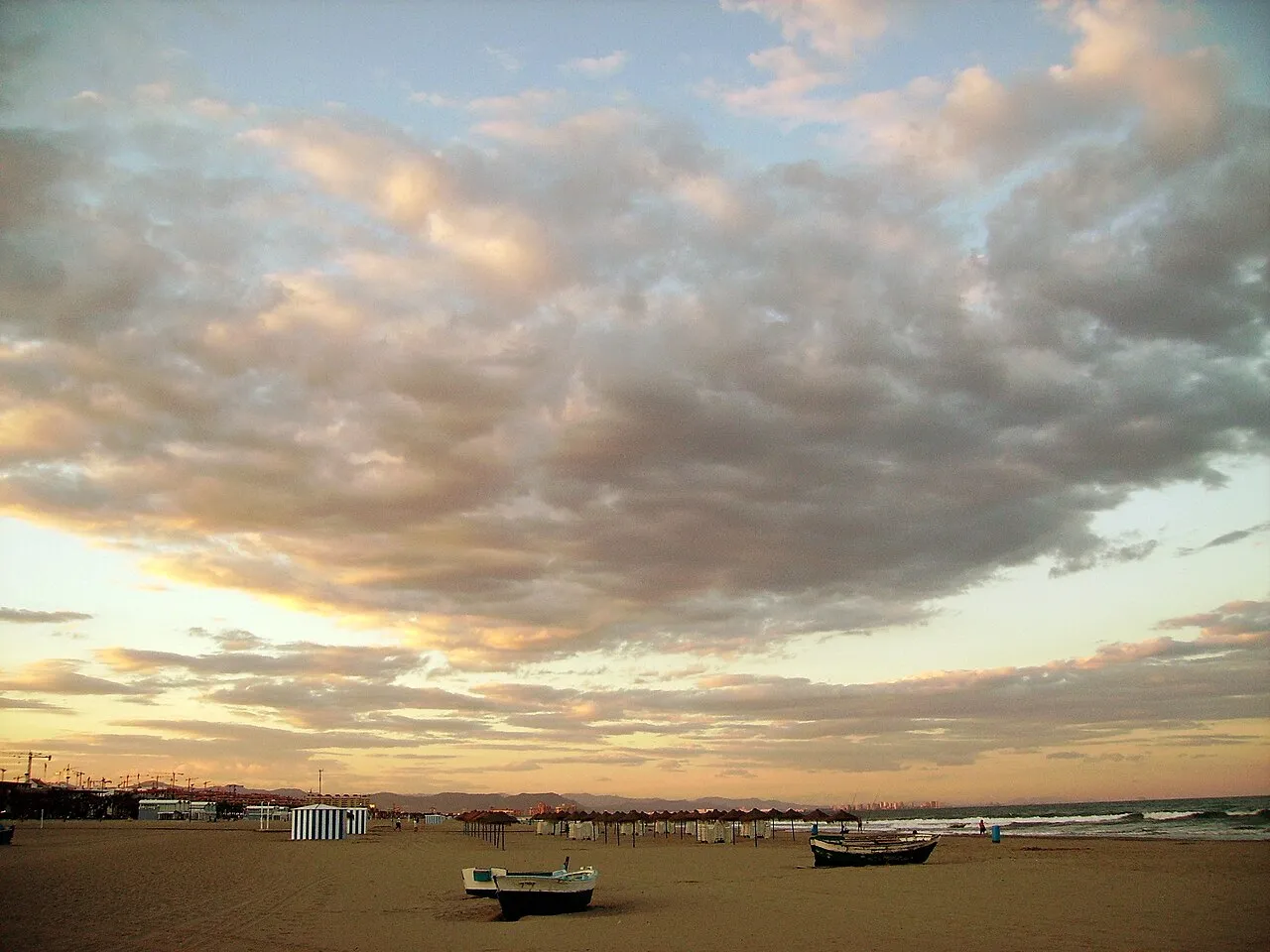
In 1957 the Turia burst its banks and devastated Valencia. The solution was to divert the river to the south and leave the old bed empty, running through the city. The State's plan was to turn it into an urban motorway. The city refused, took to the streets under the slogan “el llit del Túria és nostre i el volem verd”, and won. Today that riverbed is a continuous nine-kilometre park, car-free, linking the medieval walls to the sea. It is the best thing Valencia has and it costs nothing.
The eighteen bridges crossing the garden are the same ones that crossed the river. Today you pass beneath sixteenth-century bridges walking on grass.
The flood of 1957 and what came after
On the night of 14 October 1957, the Turia came down with a colossal flow and broke through at several points. The water reached more than two metres in many streets of the centre, carried away bridges, left dozens dead — the official figure was much disputed — and ruined entire neighbourhoods. It was the catastrophe that defines contemporary Valencia.
The response was the Plan Sur: diverting the riverbed several kilometres south of the city through an artificial channel of more than twelve kilometres. The works finished in 1969 and the old bed was left dry, crossing the city centre like an empty nine-kilometre scar.
The official project intended to fill it with asphalt: a dual carriageway into the city. Residents' opposition was massive and sustained over years, with the slogan “el llit del Túria és nostre i el volem verd” painted everywhere. In 1976 the Government gave way and the riverbed was set aside as green space. It is one of the few cases in Spain in which a citizens' mobilisation reversed a State plan of that scale.
1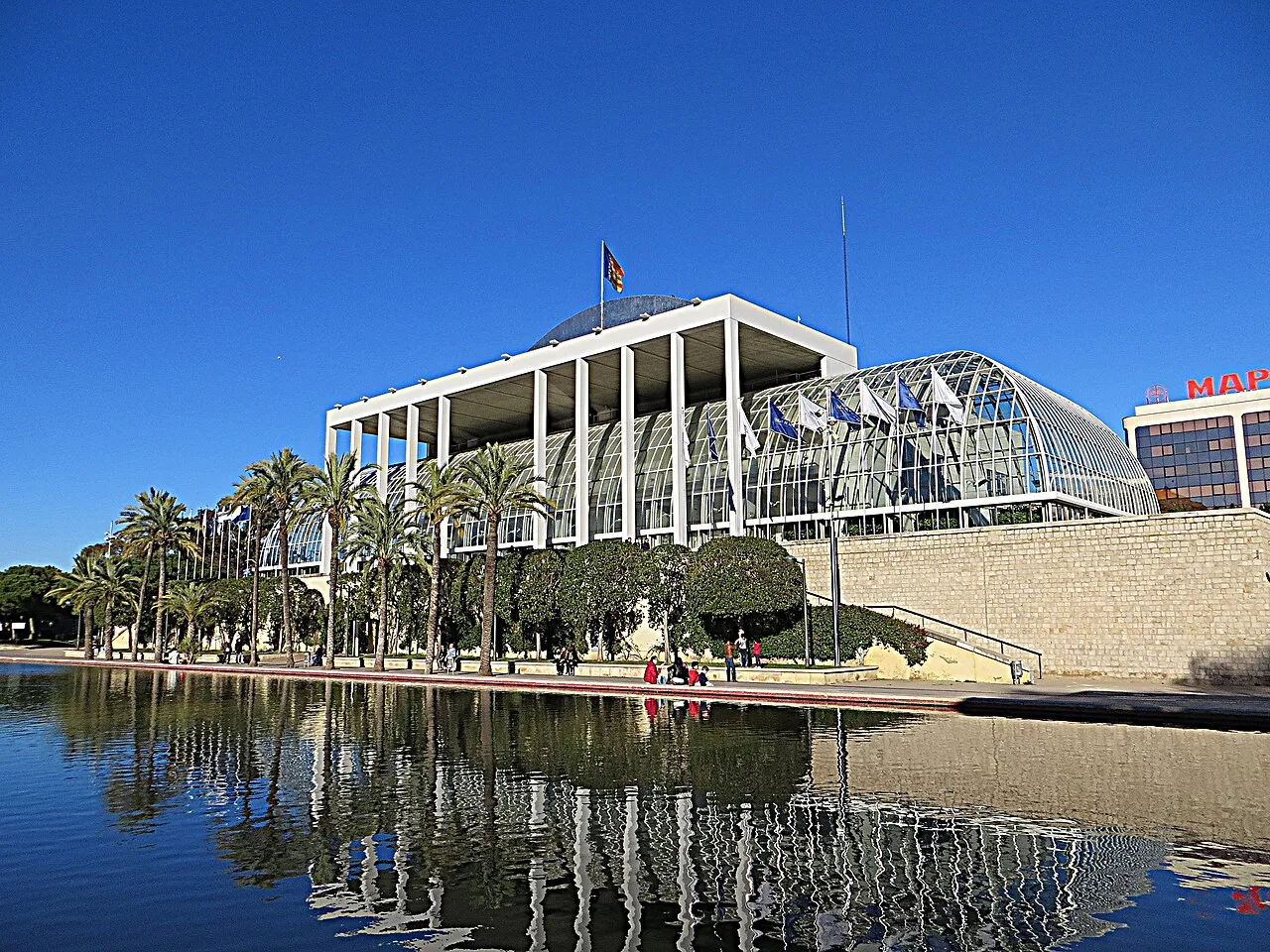
📍 Passeig de l'Albereda, 30
A glazed dome swelling over ponds and palm trees inside the park itself. It was designed by José María García de Paredes, also the author of the Auditorio Nacional in Madrid, and its glass was calculated so that light would bounce off the water and climb up to the ceiling of the foyer: inside, a watery reflection shimmers, a nod to the river that no longer passes here.
2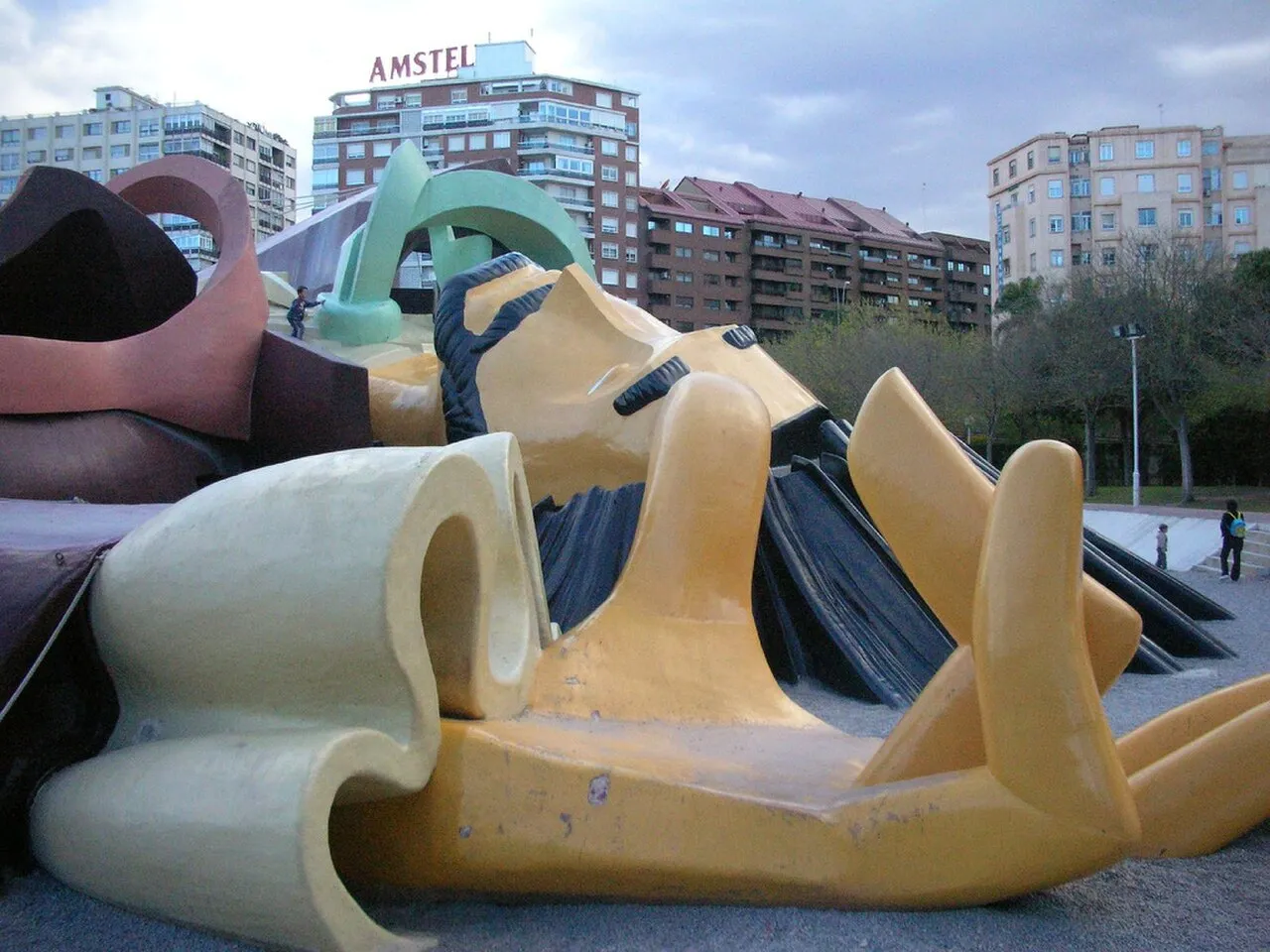
📍 Section 12 of the garden
Seventy metres of giant lying on his back, with every fold turned into a ramp or a slide. It was built by Fallas artists using the techniques of the monuments that burn in March, and the idea is that the children play the Lilliputians. It is free, no booking, and it closes at midday in summer because the surface gets hot enough to burn.
3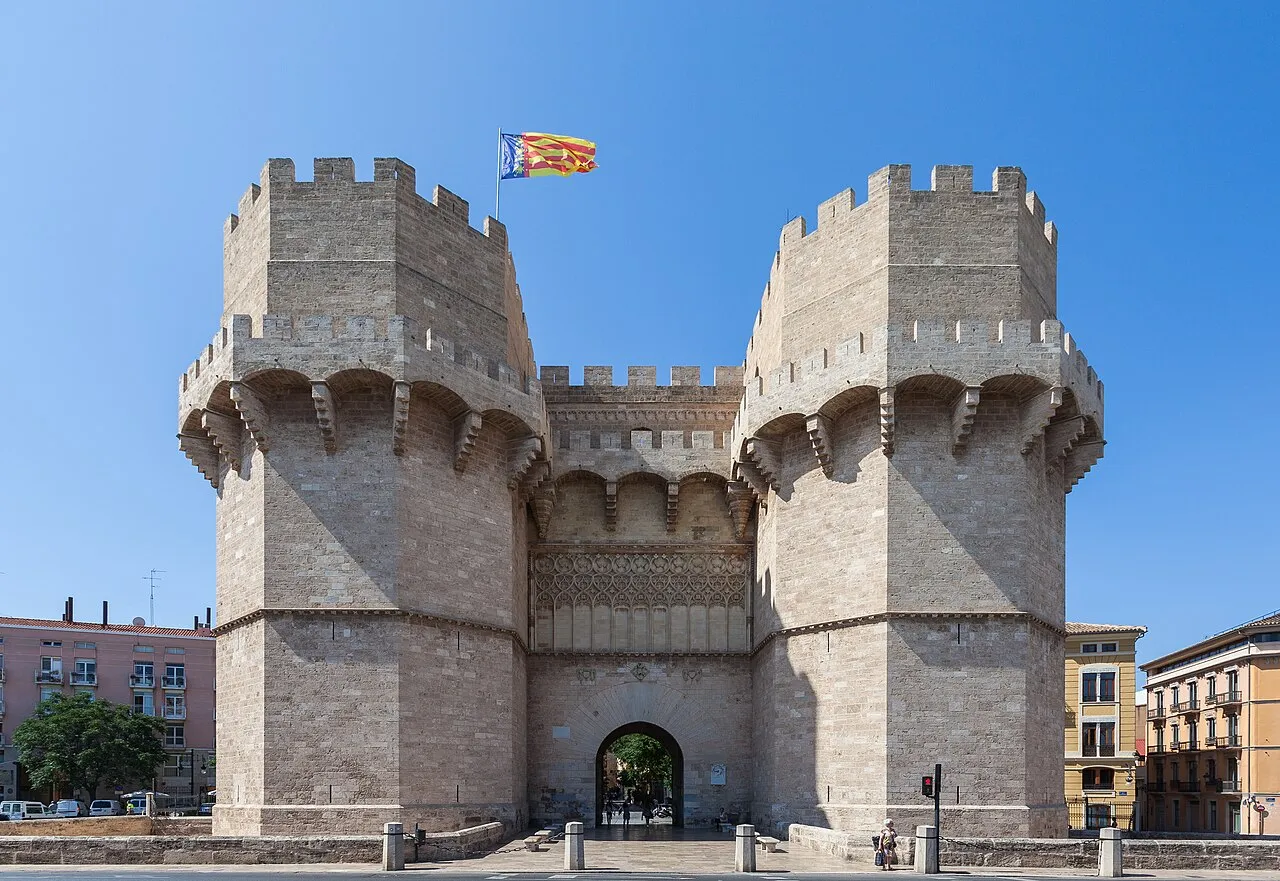
📍 Northern end of the riverbed
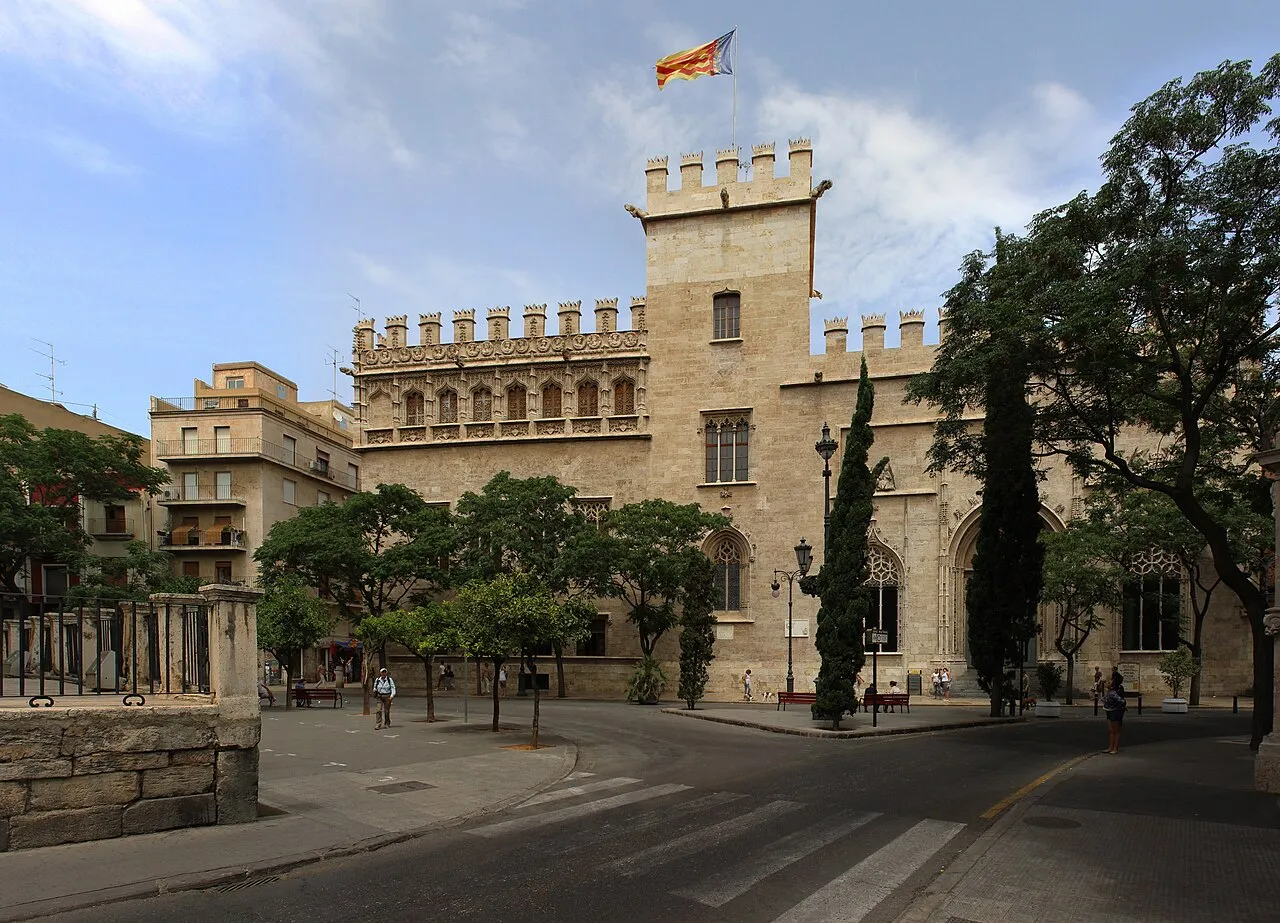
The noble gate of the medieval wall, at the point where the garden begins to wrap around the old town. Its rooms sheltered the paintings of the Prado during the Civil War. From the top you see the riverbed curving and grasp the shape of the city at once: the historic centre inside and the green ring around it.
What there is along the nine kilometres
Eighteen sections, each with its own character.
The garden is divided into numbered sections, each designed by a different team, and that gives it a variety that parks planned in one go do not have. There are pine woods, rose gardens, football pitches, athletics tracks, a pond with ducks, exercise areas and kilometres of cycle lane and running circuit.
The bridges are the most surprising part. The eighteen that cross it are the same ones that crossed the river, some from the sixteenth and seventeenth centuries, with their shrines and their sculptures: the Pont del Real, the Pont de la Trinitat, the Pont de Serrans. You walk beneath them, on grass, and the feeling of being on the bottom of a river is constant.
At the western end is the Parc de Capçalera, with a lake and an artificial hill; at the eastern end, the City of Arts occupies the final section. In between, the Palau de la Música and the Gulliver are the two stops almost everyone makes.
And there is one fact worth bearing in mind: the park sits below street level, sheltered from traffic and noise, with a lower temperature than the asphalt above. In August, that makes it the only walkable place in the centre in the middle of the afternoon.
4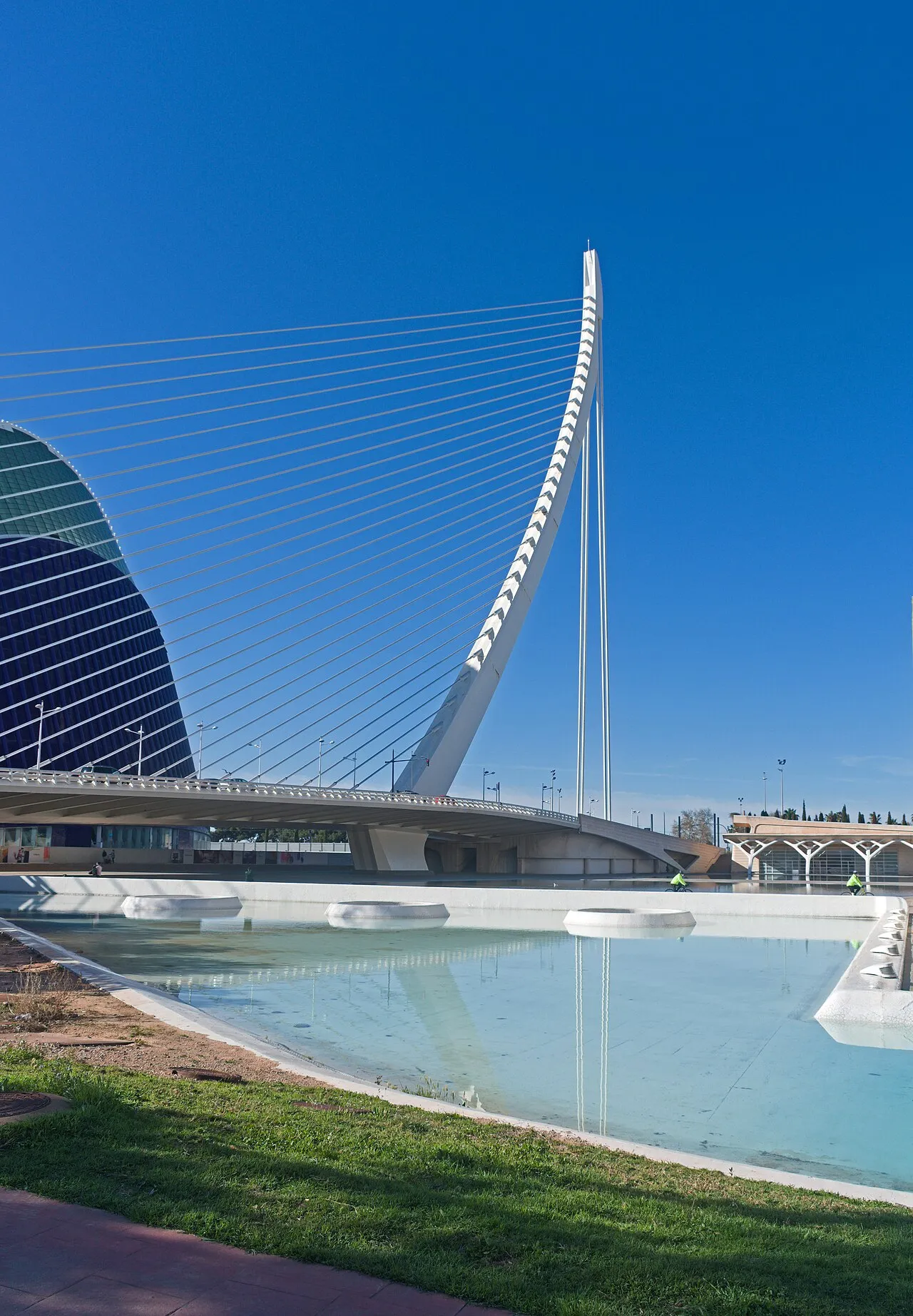
Pont de l'Assut de l'Or
📍 Final section, City of Arts
Calatrava's cable-stayed bridge, with a single leaning white mast of 125 metres that is the highest point in the city. It holds up the deck with cables from one side only, which gives it that harp-like silhouette. Crossing it on foot at sunset, with the reflections of the complex below, is one of the finest sights in Valencia.
5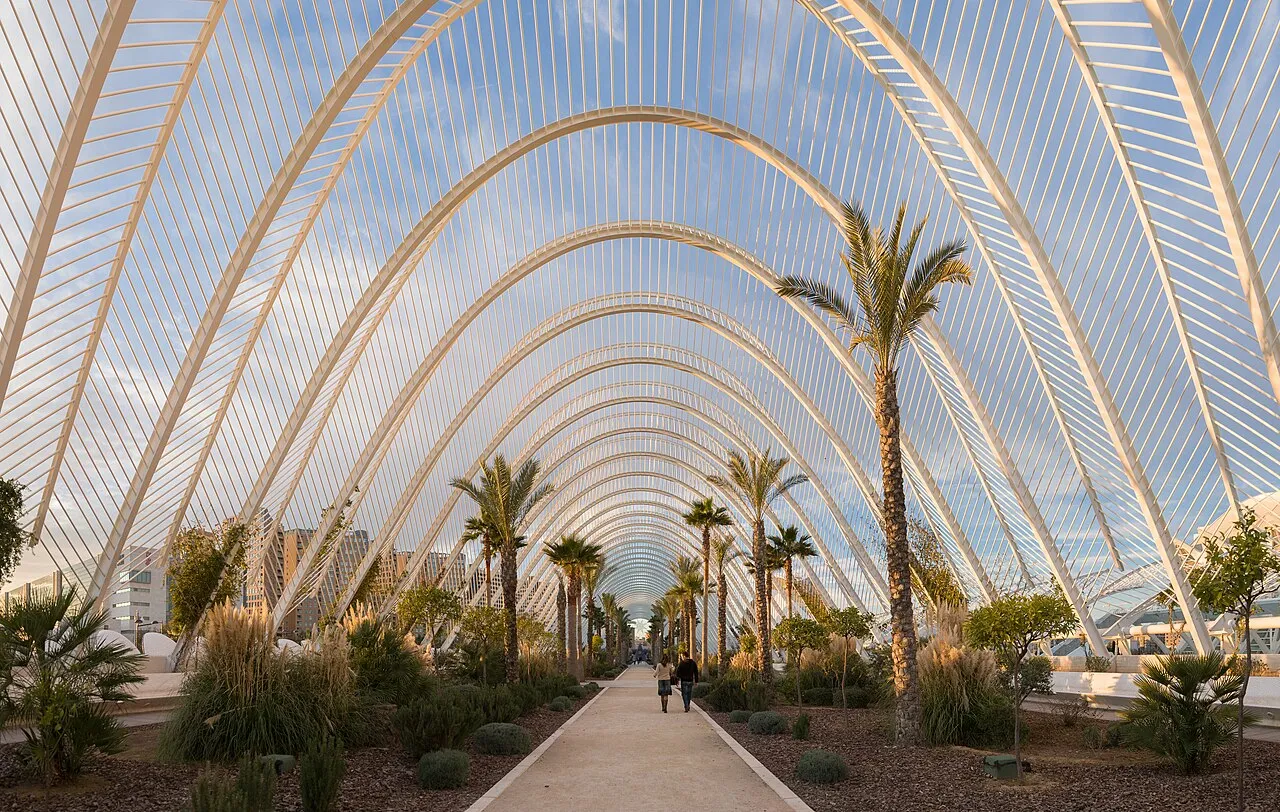
L'Umbracle
📍 City of Arts and Sciences
A landscaped viewpoint covered by white arches, with Mediterranean plants and an elevated view over the complex. It is the free and least crowded part of the City of Arts, works as a botanical promenade and at night turns into a terrace bar. A good place to grasp the scale of the complex without paying for a ticket.
6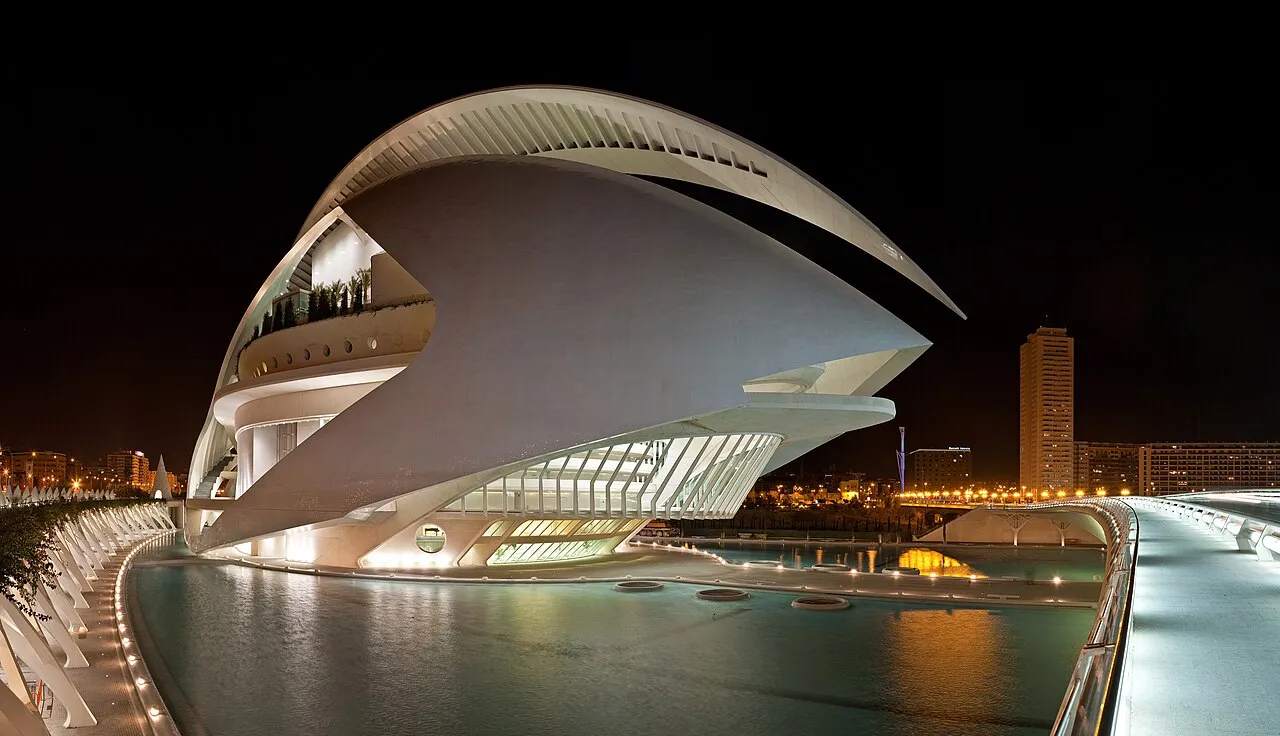
📍 End of the riverbed
Valencia's opera house and the tallest building in the complex, with its two-hundred-metre metal blade soaring over the structure. It marks the end of the route along the riverbed and the point where the garden turns into a white city. You walk around it from the outside, between sheets of water.
Frequently asked questions
Why does the river Turia no longer pass through Valencia?
Because it was diverted after the flood of 14 October 1957, which inundated the city with more than two metres of water in many streets and left dozens dead. The so-called Plan Sur built an artificial channel of more than twelve kilometres that carries the river round the south of the city, and the works finished in 1969. The original bed was left dry, crossing the city centre, and it is the one the Jardín del Turia occupies today.
Is it true the Jardín del Turia was going to be a motorway?
Yes. The official project of the sixties intended to turn the empty riverbed into a dual carriageway into the city. Residents' opposition was massive and sustained over years, with the slogan “el llit del Túria és nostre i el volem verd” — the bed of the Turia is ours and we want it green — painted all over Valencia. In 1976 the Government gave way and the riverbed was set aside as green space. It is one of the few cases in Spain in which a citizens' mobilisation reversed a State plan of that calibre.
How long does it take to cover the Jardín del Turia?
By bicycle, about forty minutes end to end at an easy pace, for its nine kilometres. On foot the full route takes about two and a half hours, so the sensible thing is to pick a section: the one from the Palau de la Música to the Parque Gulliver and from there to the City of Arts concentrates the essentials in about three kilometres and takes forty minutes on foot.
Where can you rent a bicycle in Valencia?
There is a public bike-share scheme with stations across the whole city and dozens of private rental shops, many concentrated in the historic centre and beside the entrances to the riverbed. A full-day rental usually costs less than ten euros. Valencia is flat, has an extensive network of cycle lanes and the garden itself works as a car-free cycling motorway: it is probably the most comfortable city in Spain to get around by bike.
What is there to see in the Jardín del Turia?
The Parque Gulliver, a seventy-metre reclining giant that is all slides and is free; the Palau de la Música, with its glazed dome over ponds; the eighteen historic bridges crossing it, some from the sixteenth and seventeenth centuries, which you walk beneath; the Parc de Capçalera with its lake at the western end; and the City of Arts and Sciences, which occupies the final section. All of it without leaving the riverbed or crossing a single street.
Is the Jardín del Turia safe at night?
The central sections are lit and very busy until late, with people running and strolling at almost any hour, and pose no problems. The ends, especially the western one, are lonelier at night and the usual caution of any large urban park is advisable. In summer, the best window is from seven in the evening onwards, when the sun drops and the riverbed falls into shade.
How to do it
By bicycle, no question. The nine kilometres end to end take about forty minutes at an easy pace, and there is a public bike-share scheme as well as dozens of rental shops. A full-day rental costs less than ten euros and is the best money you can spend in this city.
On foot also works if you pick one section. The most advisable for a short walk is the one from the Palau de la Música to the Gulliver and from there to the City of Arts: about three kilometres, with the most interesting stops concentrated together.
Running, it is the most used urban circuit in Valencia and the reason the city's marathon is one of the fastest in the world: it is completely flat and has no junctions. You will see people running at any hour.
A note on safety and timing: the park is lit and busy until late in the central sections, but the ends are lonelier at night. And in summer, the good window is from seven in the evening onwards, when the sun drops and the riverbed falls into shade.
Practical information
What it isNine kilometres of park in the bed of the Turia, diverted after the flood of 1957.
How to do itBy bike: 40 minutes end to end. Full-day rental for less than 10 €.
Recommended sectionFrom the Palau de la Música to the Gulliver and on to the City of Arts: about 3 km with the essentials.
CostFree and always open. You only pay for the visits inside the City of Arts.
Best timeFrom seven in the evening onwards in summer, when the riverbed falls into shade.
The bridgesEighteen, the same ones that crossed the river. Some from the sixteenth and seventeenth centuries.