1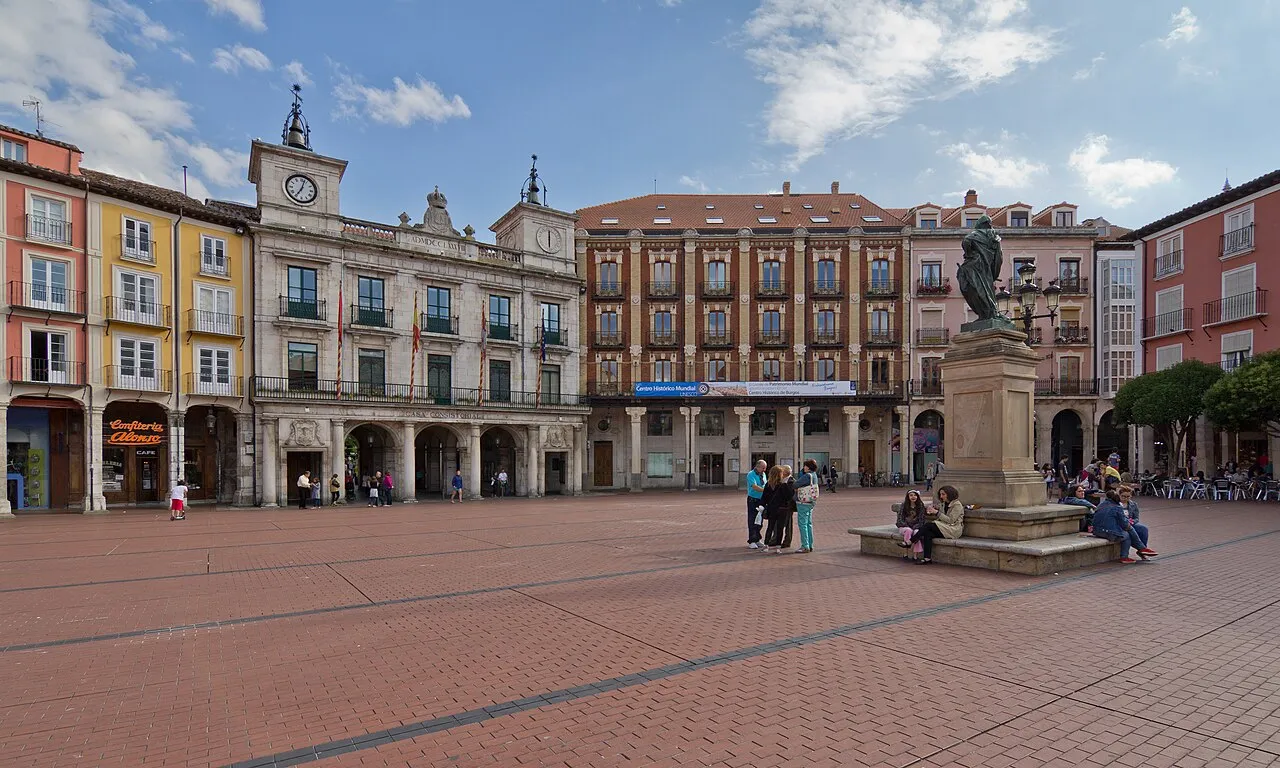
Plaza Mayor de Burgos
📍 Historic centre
The centre of the tapas run: around it are San Lorenzo, la Sombrerería and the Huerto del Rey, the three streets where Burgos eats.
A blood sausage that has become a denomination in its own right, a fresh cheese eaten with honey and a tapas city concentrated in three streets.
🎧 On the walk San Lesmes, the Sombrerería and the tapasBurgos has two products that have made a name for themselves outside the province — the morcilla and the cheese — and a meseta cuisine built for long winters at nine hundred metres of altitude. And the whole tapas run is concentrated in three streets around the Plaza Mayor.
Morcilla de Burgos is made with pig's blood, onion, lard, spices and — this is the distinctive part — rice. That ingredient separates it from almost every Spanish blood sausage and gives it a completely different texture when it is fried.
It holds a protected geographical indication and is usually served fried, in thick slices, on its own or on bread. In the bars of the centre it is the default tapa, and in many places it is the only thing you need to order.
Queso de Burgos is the opposite in every way: fresh, white, uncured and practically unsalted, traditionally made with sheep's milk. It is eaten on its own, with honey or with walnuts, as a dessert or as an appetiser.
It is a cheese that surprises anyone arriving in search of something cured, because it is nothing of the kind: its point lies in the texture and the subtlety, not in the intensity. In a province of hard winters, a fresh dairy product for immediate eating made complete sense.
The centre of the tapas run: around it are San Lorenzo, la Sombrerería and the Huerto del Rey, the three streets where Burgos eats.
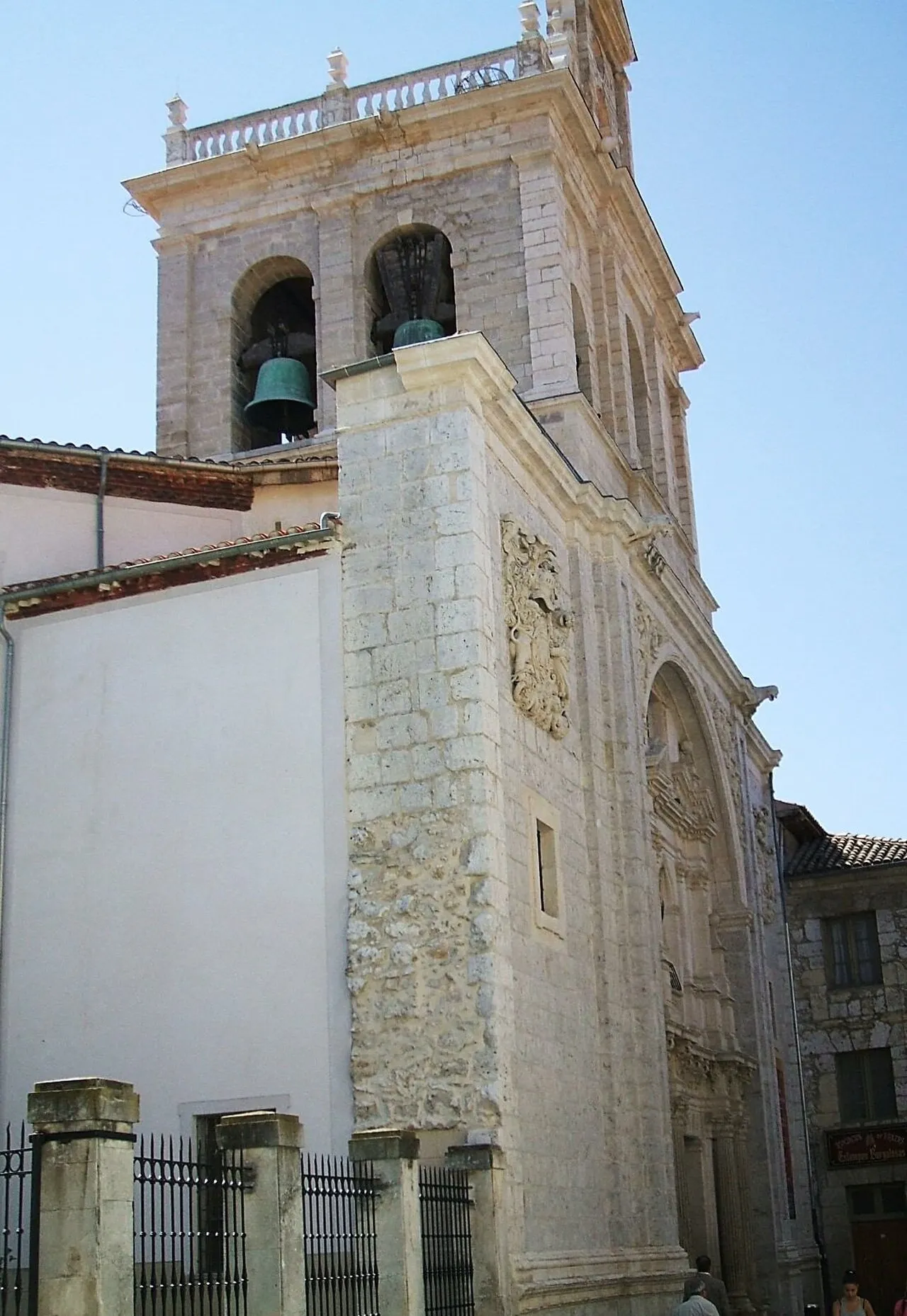
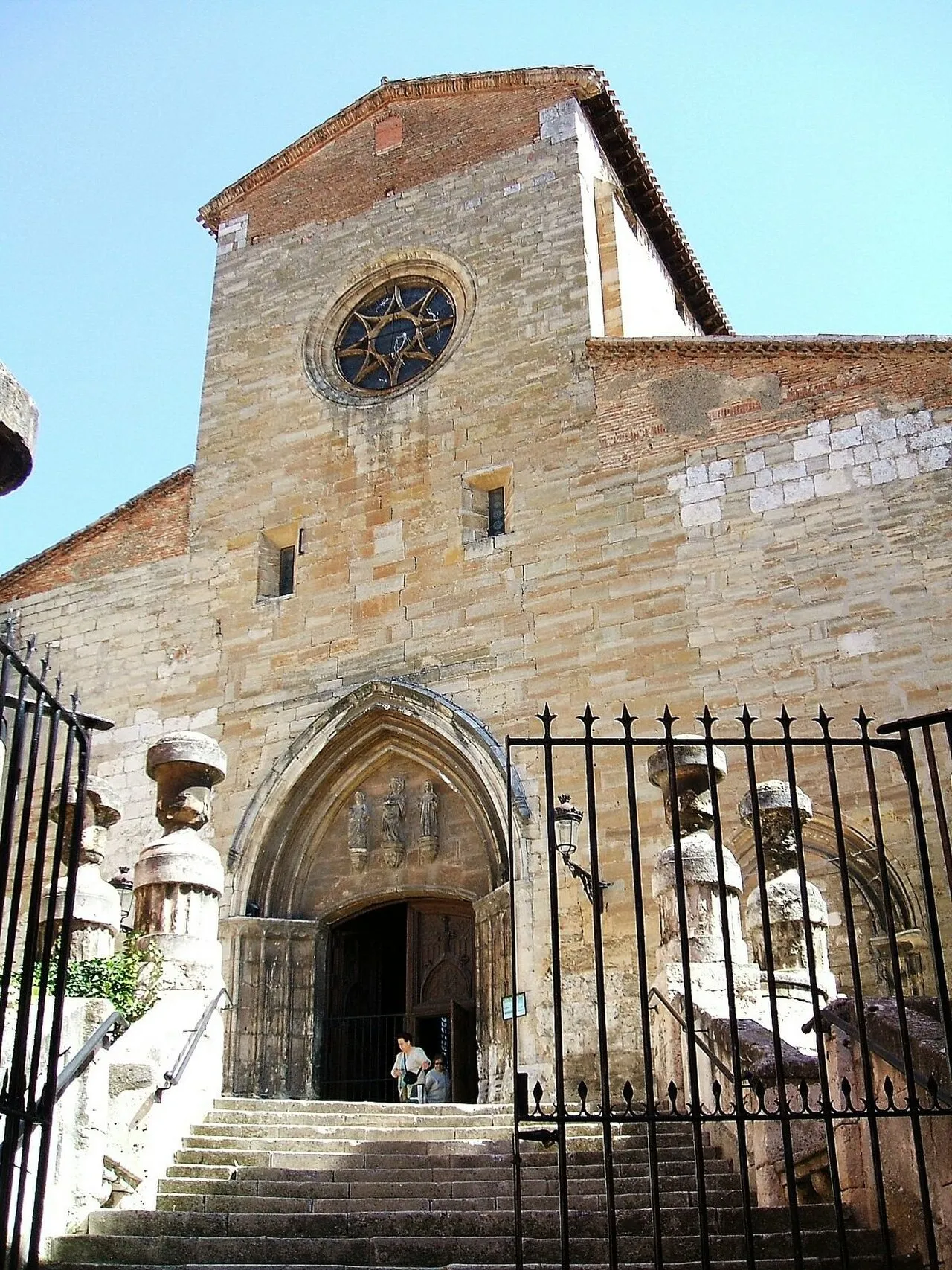
In the heart of the bar quarter, and the cultural stop between one tapa and the next: Baroque, from 1684-1694, with a very unusual octagonal dome.
Download the app and discover Burgos offline, whenever you like. Take the walking tour San Lesmes, the Sombrerería and the tapas with a local guide in your ear.
Find out more about Viavoy →The great dish is roast lechazo: milk-fed lamb of the churra breed, roasted in a wood-fired oven with little more than water and salt, in an earthenware dish. It is the great Castilian roasting tradition and in Burgos and its province it is done especially well.
Olla podrida is the emblematic stew: red beans from Ibeas, with a denomination of their own, cooked with rib, chorizo, morcilla and pig's ear. It is hearty to the extreme, and in a city at nine hundred metres with long winters that makes perfect sense.
Sopa castellana — bread, garlic, paprika, poached egg — is the other winter classic. And in season, river crayfish, game and wild mushrooms, which are abundant in the province.
For wine, Ribera del Duero, whose area begins less than an hour south of the city, around Aranda de Duero. Tempranillo — here called tinta del país — giving wines of great structure, and one of the most recognised denominations in Spain.
And for dessert, besides the cheese with honey, the egg-yolk sweets and the puff pastries of the Castilian provinces, many of them convent recipes.
The tapas run in Burgos is concentrated in three streets right by the Plaza Mayor: calle San Lorenzo, calle Sombrerería and the plaza del Huerto del Rey. Everything is five minutes' walk from the cathedral.
It is a dense area, with small specialised bars, and the custom is to change place with each round. In many cases each bar has one tapa it does better than anyone, and that is what you go in for.
On calle San Lorenzo stands the Baroque church of the same name, with its octagonal dome, which works very well as a cultural stop between one tapa and the next.
And if you would rather escape the crush of the centre, cross the river to the Plaza de Vega: it is a neighbourhood area, with arcades, good bars and no queues, and it is ten minutes from the Espolón.
A note on timing: in Burgos people eat lunch and dinner reasonably early by Spanish standards, and the midday aperitif — especially at weekends — is the city's big hour.
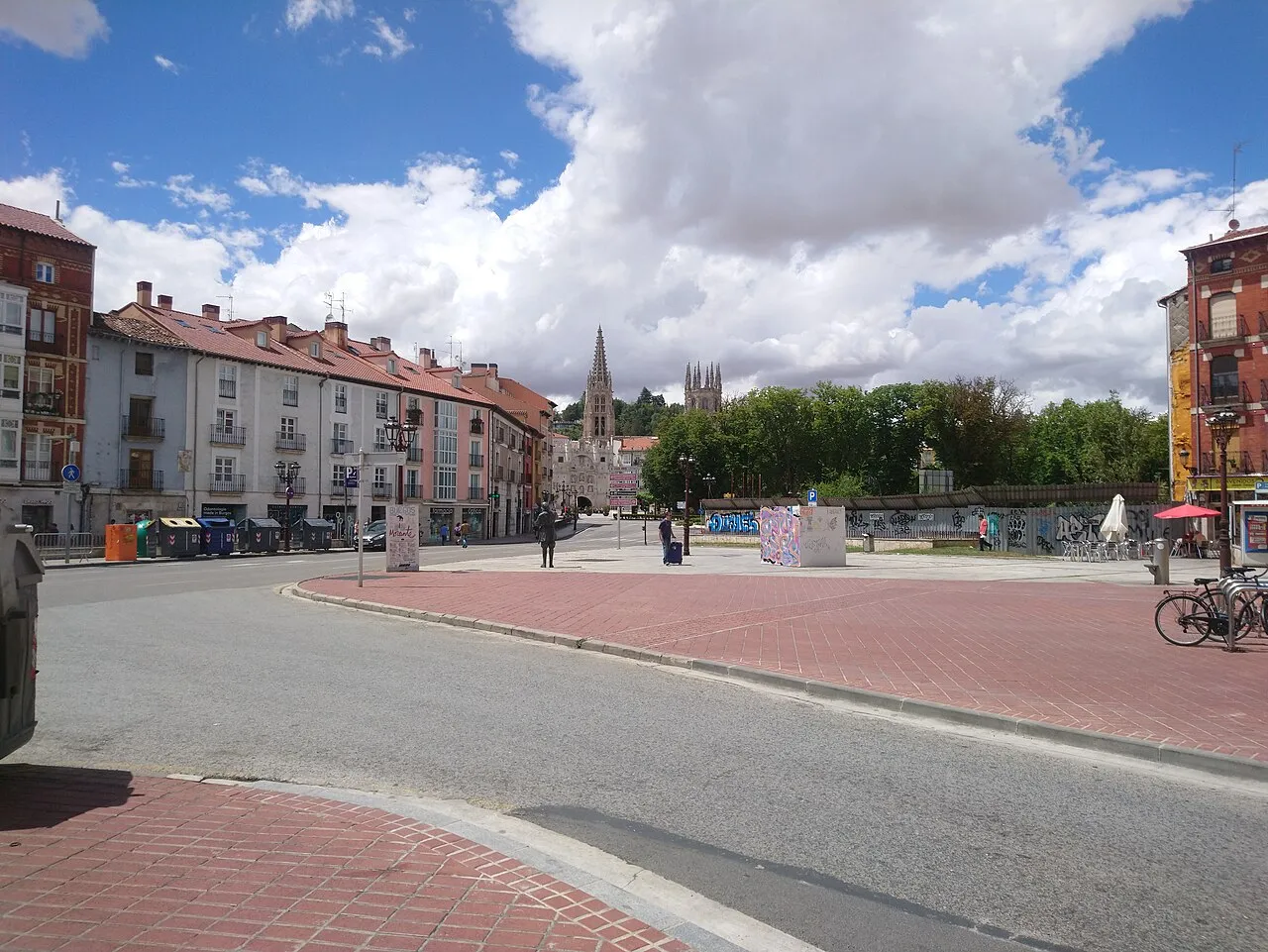
The alternative to the centre: a neighbourhood area with arcades, good bars and no queues, ten minutes from the Espolón across the river.
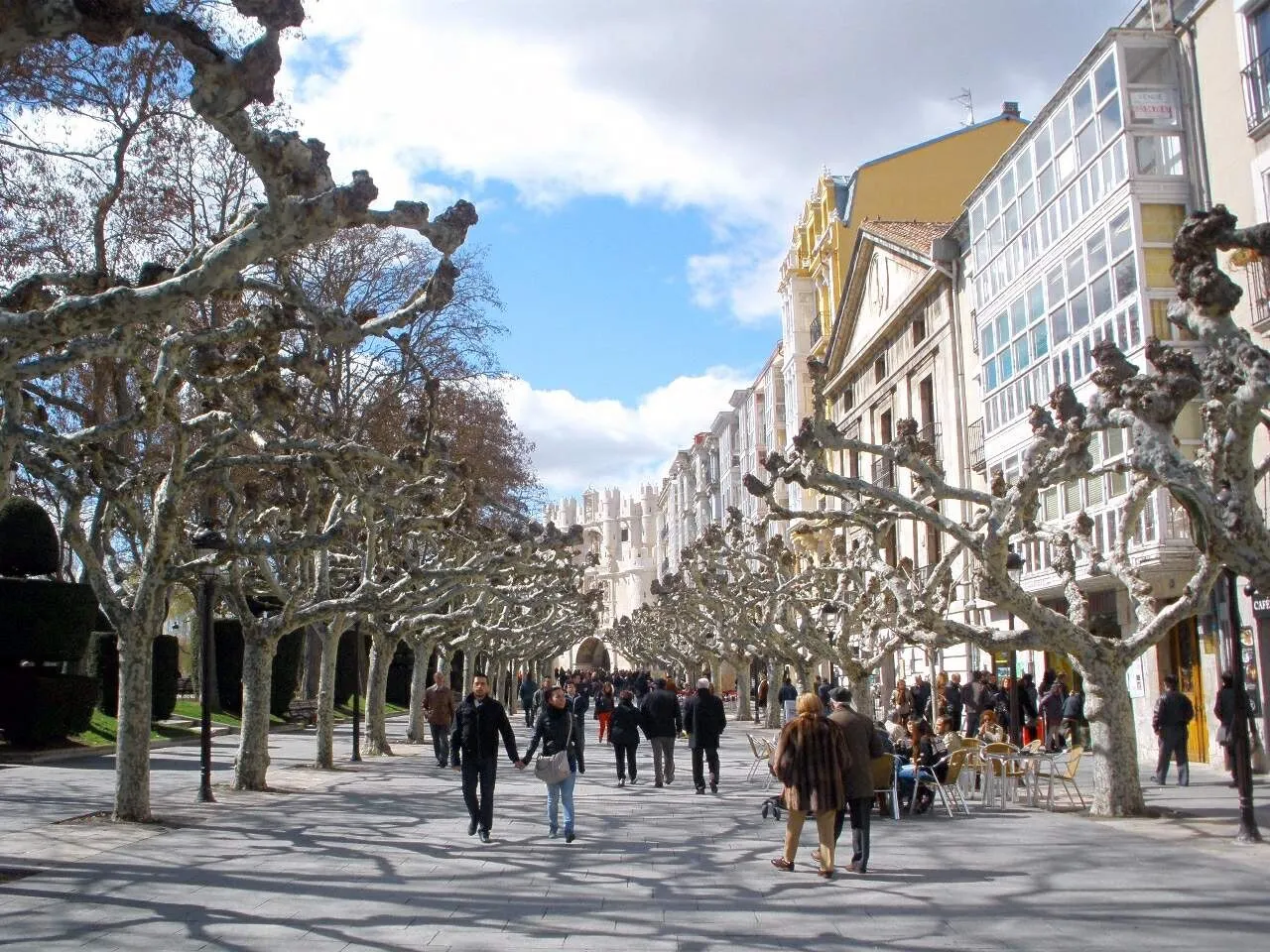
The promenade for after lunch, under a vault of interwoven plane trees. Terrace tables, stone benches and the murmur of the water alongside.
That it is made with rice, as well as pig's blood, onion, lard and spices. That ingredient separates it from almost every other Spanish blood sausage and gives it a completely different texture when it is fried. It holds a protected geographical indication and is ordered fried, in thick slices, on its own or on bread.
No, quite the opposite: it is fresh, white, uncured and practically unsalted, traditionally made with sheep's milk. It surprises anyone arriving expecting something intense, because its point lies in the texture and the subtlety. It is eaten on its own, with honey or with walnuts, as a dessert or as an appetiser.
In three streets right by the Plaza Mayor: San Lorenzo, la Sombrerería and the plaza del Huerto del Rey, all five minutes from the cathedral. It is a dense area of small specialised bars, and the custom is to change place with each round, going in for the tapa each one does best.
The emblematic stew of Burgos: red beans from Ibeas, with a denomination of their own, cooked with rib, chorizo, morcilla and pig's ear. It is hearty to the extreme, which makes complete sense in a city at nine hundred metres of altitude with long, hard winters.
Ribera del Duero, whose growing area begins less than an hour south of the city, around Aranda de Duero, which belongs to the province of Burgos. The grape is tempranillo, here called tinta del país, and it gives wines of great structure. It is one of the most recognised denominations in Spain.
Yes, and a good one: crossing the river to the Plaza de Vega, on the south bank. It is a neighbourhood area, with arcades, good bars and none of the queues of the centre, ten minutes from the Paseo del Espolón. It works especially well at weekends, when San Lorenzo fills up.
Reasonably early by Spanish standards: lunch at around two and dinner at around nine. The city's big hour is the midday aperitif, especially at weekends, when the San Lorenzo and Sombrerería area fills up completely.
Download Viavoy and walk Burgos offline, whenever you like.

Keep reading