1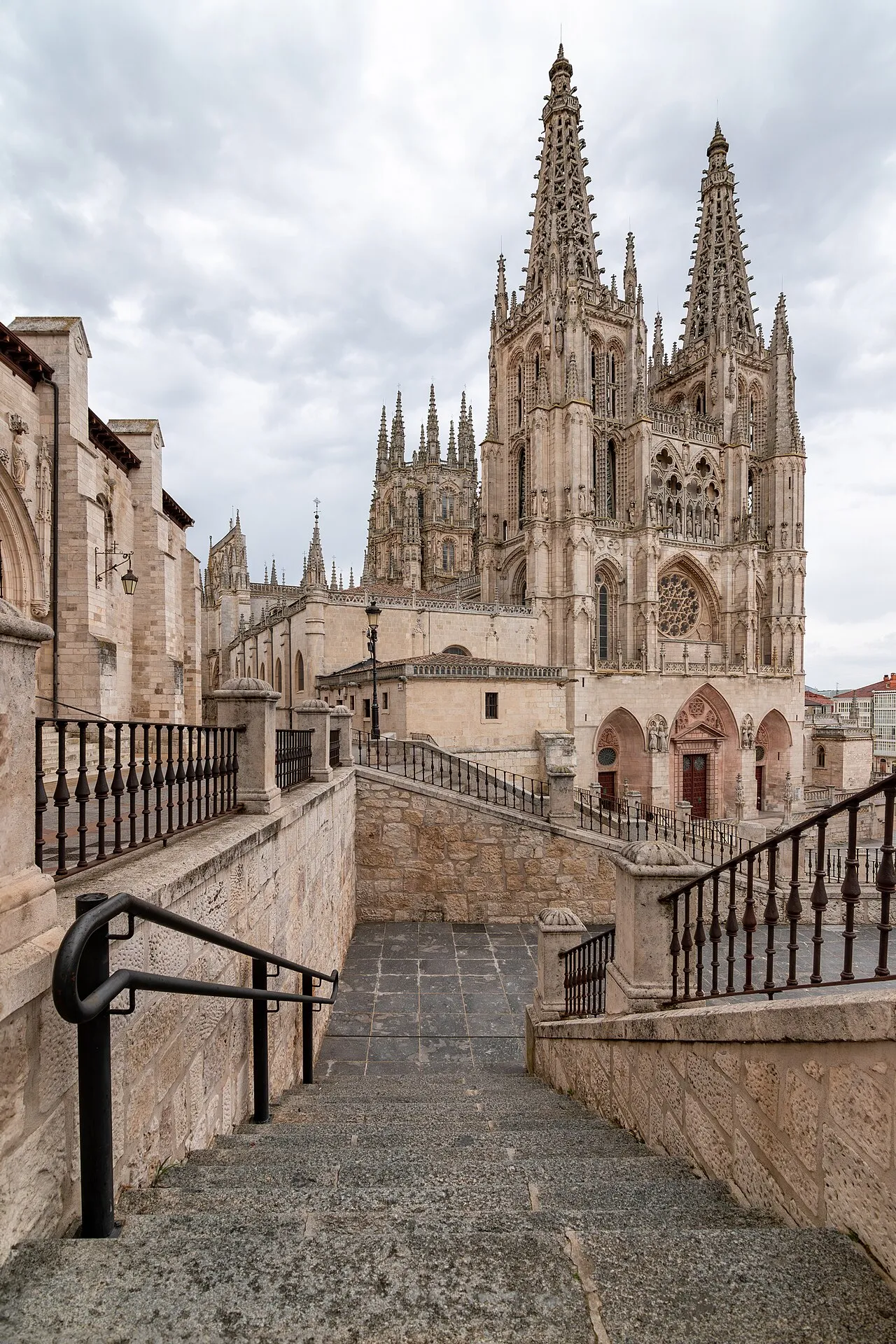
Burgos Cathedral
📍 Plaza de Santa María
The only Spanish cathedral that is a World Heritage Site on its own, since 1984. A good two hours for the visit, and walk right round it before going in.
A compact historic centre with room for the only cathedral that is a World Heritage Site in its own right, the oldest Europeans we know of and a promenade with a roof of leaves.
🎧 On the walk The Cathedral and the Gothic heart of BurgosBurgos is walked from end to end and almost everything fits into a day. The city is laid out in three strips: the river with its promenade at the bottom, the monumental centre in the middle and the castle hill at the top. Doing them in that order — from the bottom up and then back down — is what saves legs and time.
Start by walking right round the cathedral from outside before going in: this bulk only makes sense from a distance, with your head tipped back. Its foundation stone was laid on 20 July 1221 and it grew for three hundred years, chapel by chapel, each style treading on the heels of the last.
Look at the spires against the light: they are hollow, deliberately pierced so that the wind passes through and does not bring them down. They were added in the fifteenth century by a German master, Juan de Colonia, who brought from central Europe that way of working stone until it is left like glass.
Inside, set aside a specific stretch of time for the Chapel of the Constables: it is so big and so tall that it looks like a cathedral set inside another one, with a pierced star vault through which light comes in without any stained glass, and two tombs of Carrara marble.
On the way out, walk two minutes up to the church of San Nicolás de Bari. Its front announces nothing, and inside is what many consider the finest stone altarpiece in Spain: the whole end wall carved in white limestone, with hundreds of figures. Almost nobody goes in.
The only Spanish cathedral that is a World Heritage Site on its own, since 1984. A good two hours for the visit, and walk right round it before going in.
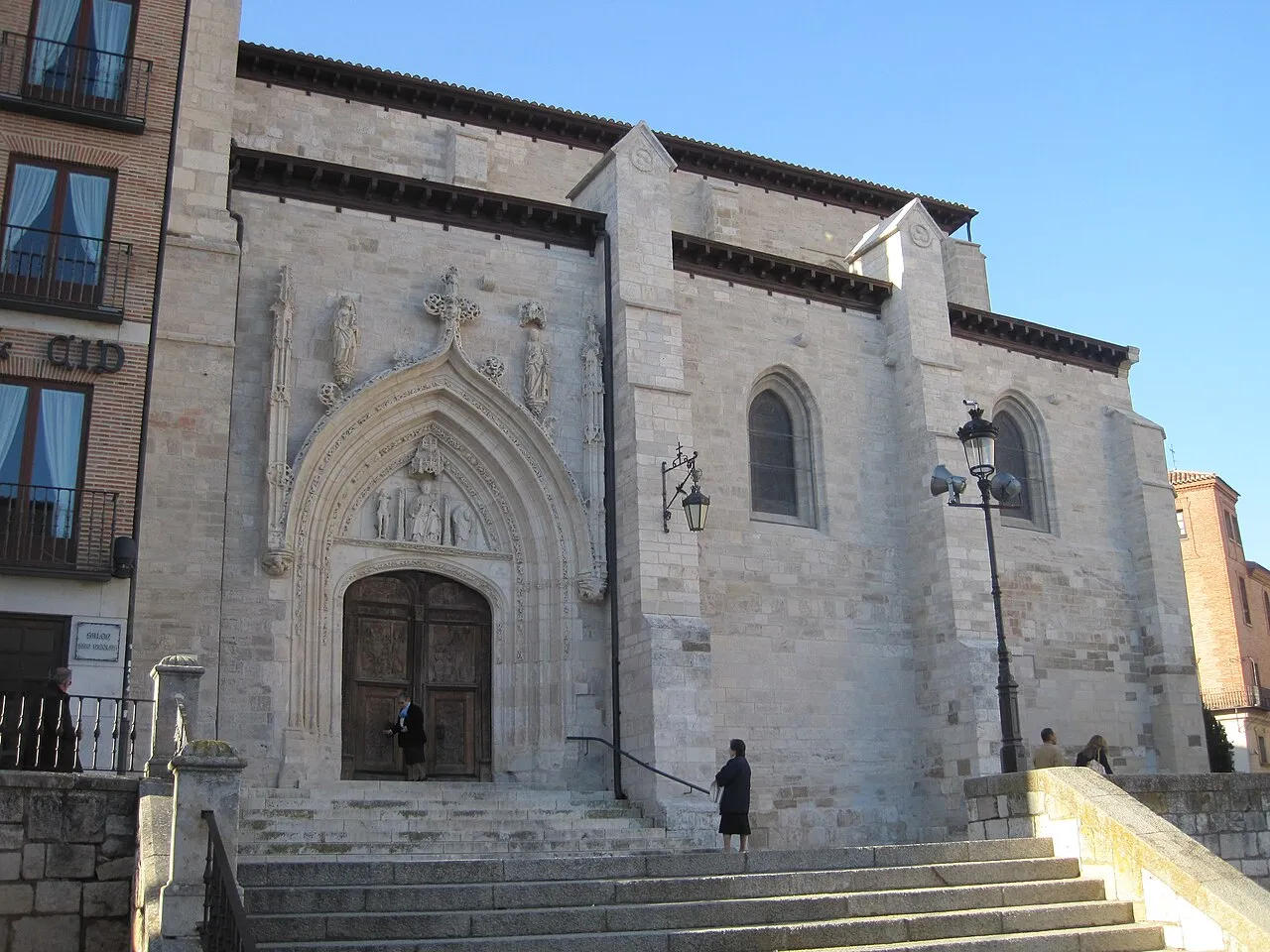
The finest stone altarpiece in Spain, carved in white limestone by the Colonia family. Two minutes from the cathedral and practically empty.
Download the app and discover Burgos offline, whenever you like. Take the walking tour The Cathedral and the Gothic heart of Burgos with a local guide in your ear.
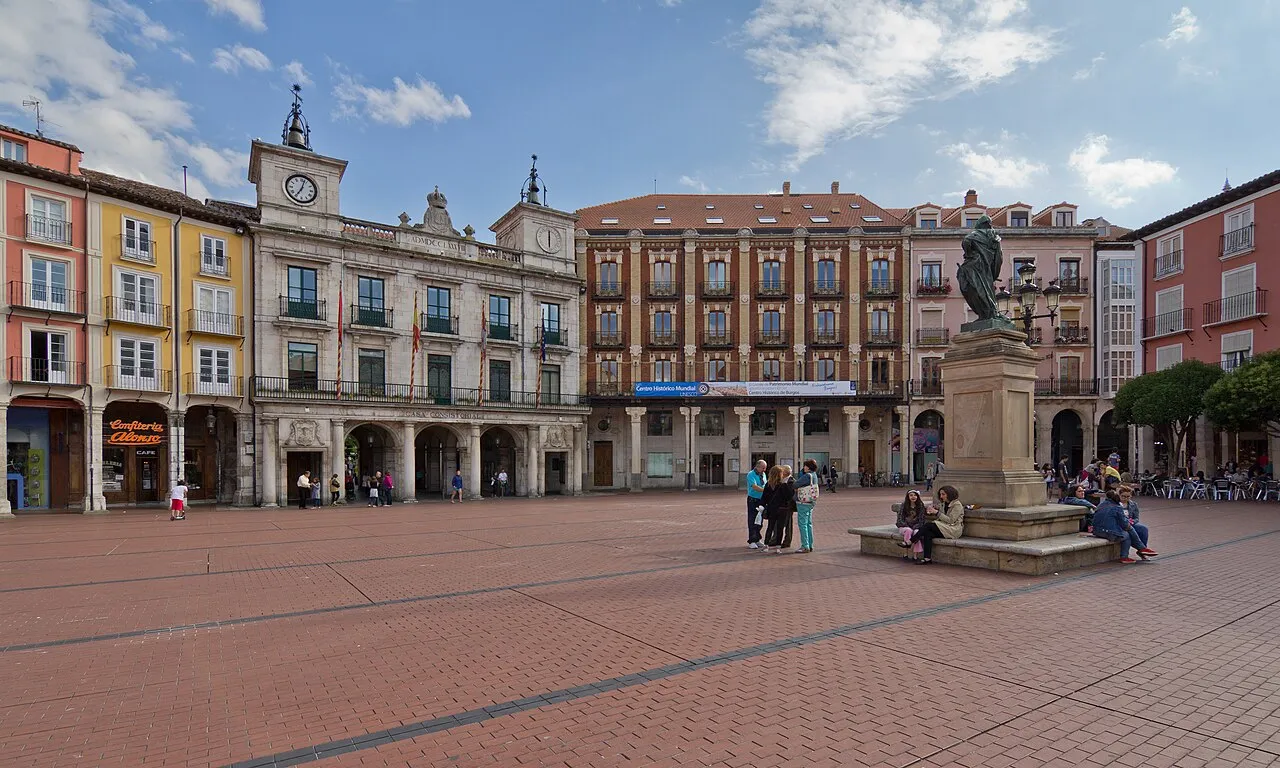
Find out more about Viavoy →Go down to the Plaza Mayor, an irregular oval of houses with red, ochre and green balconies that formed by itself over the centuries, house by house, with no plan giving orders. It is presided over by the Casa Consistorial, the town hall, of 1791, with a passage underneath that leads straight down to the river.
A few minutes away is the Casa del Cordón, where two moments happened that changed the history of Spain: here the Catholic Monarchs received Columbus on 23 April 1497, and here Philip the Handsome died in 1506 at twenty-eight, opening the way to the Habsburgs.
And this is where you eat. The tapas area of Burgos is on calle San Lorenzo, la Sombrerería and the plaza del Huerto del Rey, and what you have to order is morcilla de Burgos — the blood sausage made with rice — and queso de Burgos, a fresh unsalted cheese.
In the same area is the church of San Lorenzo el Real, Baroque, from 1684-1694, with an octagonal plan very unusual for a Jesuit church and a dome over a sea of white plasterwork.
Climb the hill to the castle, where the city was born in the year 884: the name came from those walled burgos, the fortified boroughs. Along the way you pass San Esteban with its Museum of the Altarpiece, San Gil — austere outside, dazzling inside — and Santa Águeda, where El Cid made the king swear three times.
Also the Arco de San Martín, the Mudéjar ceremonial gate through which the kings entered, and the Solar del Cid, three stone pillars marking where his house stood.
Then go down to the river through the Arco de Santa María, the gate whose front is literally an apology: the city put it up to make its peace with Charles V after the Revolt of the Comuneros. Its statues form a family tree of Castile.
And finish at the Paseo del Espolón, where the plane trees have been pruned interwoven for more than a century until they form a green vault. If you have time left, cross to the Museum of Human Evolution: the original fossils from Atapuerca, with the oldest Europeans we know of.
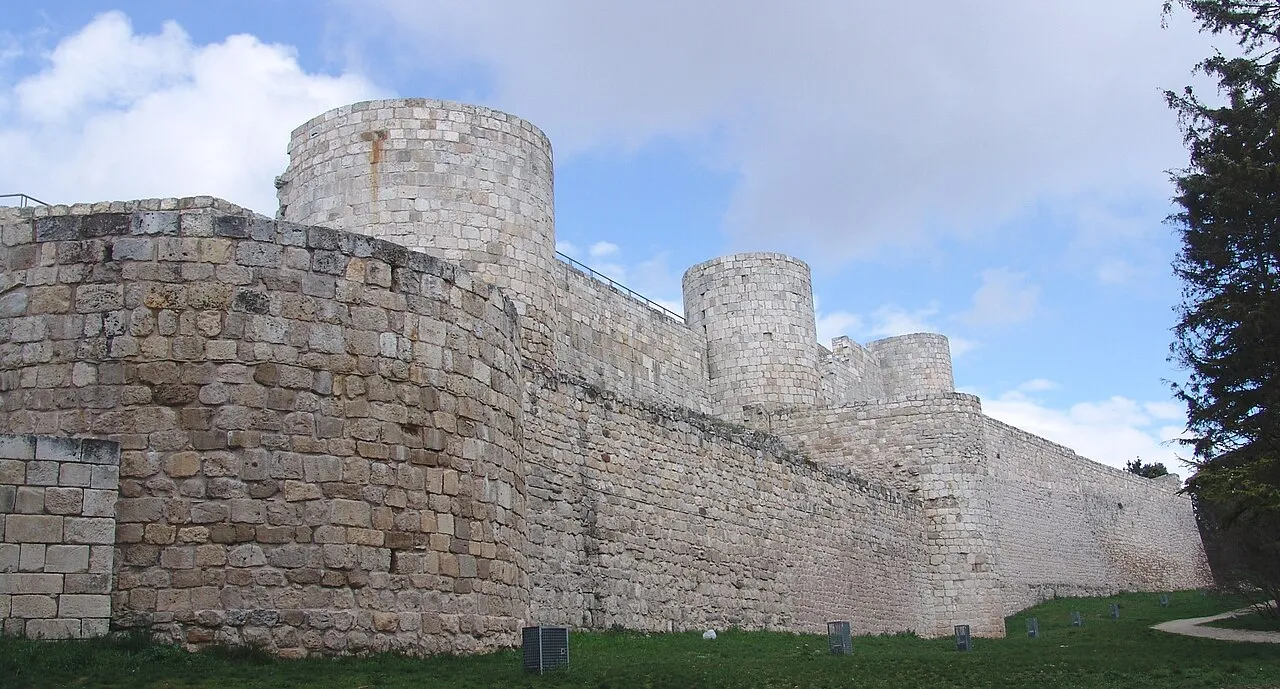
The city was born here, in the year 884. It was blown sky-high in 1813 by the retreating French. Today it is a park, a lookout and the best viewpoint in Burgos.
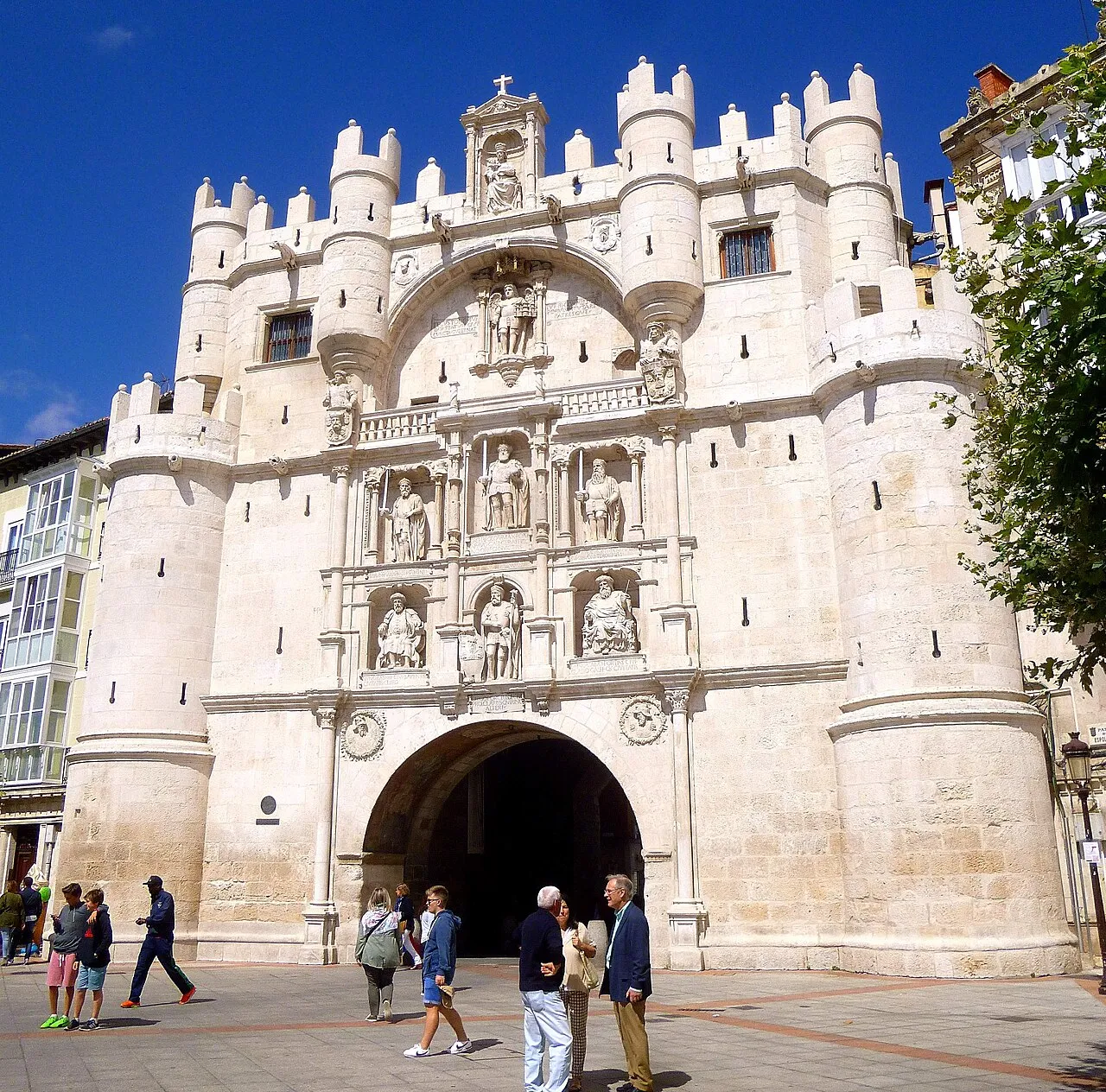
The most important of the twelve gates in the wall, and an apology in stone to Charles V. Inside, a hidden room with a bone of El Cid.
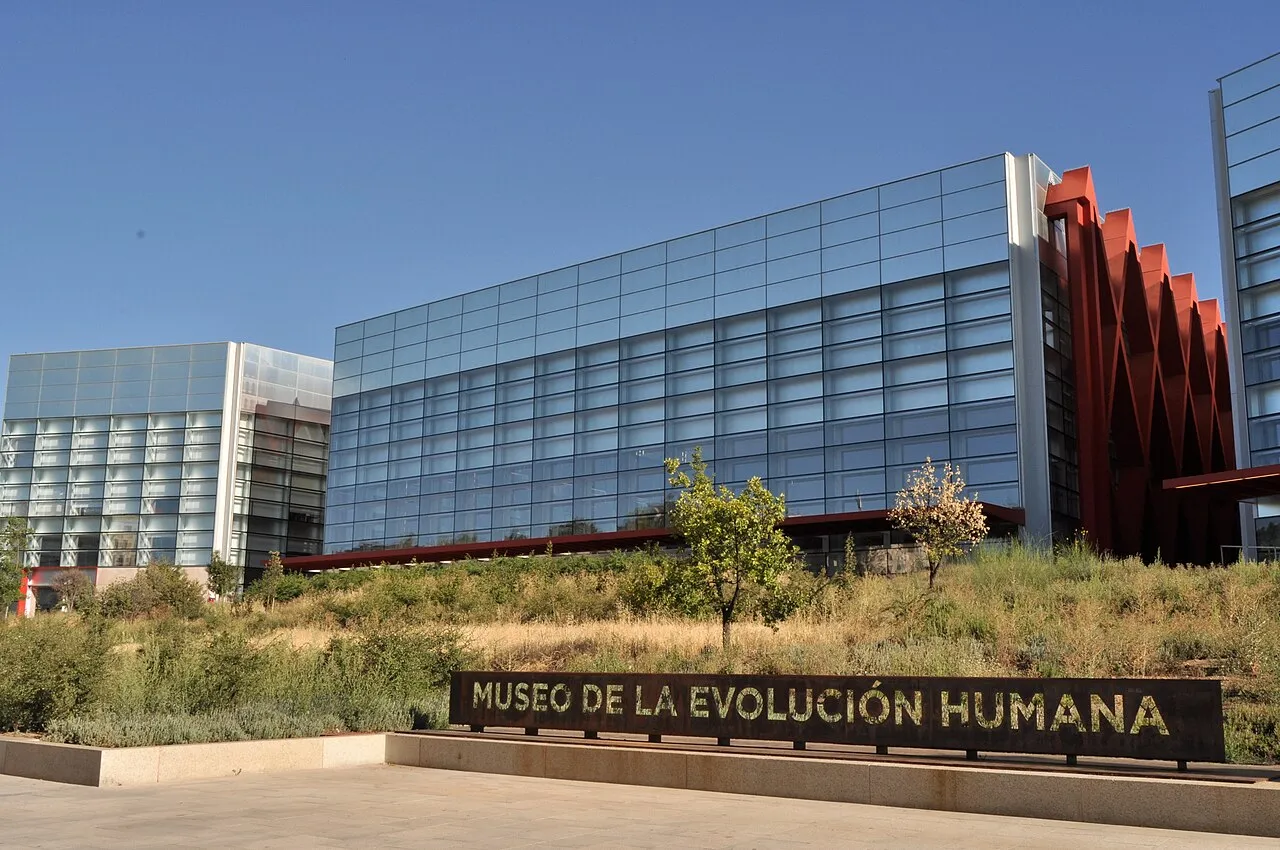
The original fossils from Atapuerca: Homo antecessor, almost a million years old, and Excalibur, perhaps the first funerary offering in history.
Yes, with room to spare. The historic centre is compact and everything essential is less than fifteen minutes on foot: the cathedral, the Plaza Mayor, the Casa del Cordón, the Arco de Santa María and the Espolón. With a second day you fit in the Museum of Human Evolution, the castle and the upper churches without rushing.
A good two hours, and it is not worth trimming them. It is the only Spanish cathedral declared a World Heritage Site in its own right, it grew for three hundred years and inside it holds the Chapel of the Constables, the lantern tower, the tomb of El Cid, the Papamoscas clock and the Escalera Dorada. Walk right round it before going in.
The church of San Nicolás de Bari, two minutes from the cathedral. Its front is plain and announces nothing, but inside is what many experts consider the finest stone altarpiece in Spain: the whole end wall carved in white limestone, with hundreds of figures, the work of the Colonia family.
Very much so, and not only for enthusiasts. It holds the original fossils from Atapuerca: Homo antecessor, almost a million years old, the oldest Europeans we know of, and seven thousand human remains from 430,000 years ago. And Excalibur, the only tool found in the Sima de los Huesos, read as a possible first funerary offering.
On calle San Lorenzo, la Sombrerería and the plaza del Huerto del Rey, all around the Plaza Mayor and a few minutes from the cathedral. What you have to order is morcilla de Burgos — the blood sausage made with rice, the most famous in Spain — and queso de Burgos, fresh and unsalted.
Quite: it is one of the coldest provincial capitals in Spain, at almost 900 metres of altitude and in the middle of the northern meseta, with long winters. The best season is May to September, and summer has one clear advantage over the rest of the country: it is cool here while half of Spain is melting.
About twenty minutes uphill from the upper streets of the old town, and you can also drive up by the access road. At the top there are excavated ruins, a well more than sixty metres deep that is visited with a guide, and the best viewpoint in the city, with the cathedral spires in the foreground.
Download Viavoy and walk Burgos offline, whenever you like.

Keep reading