1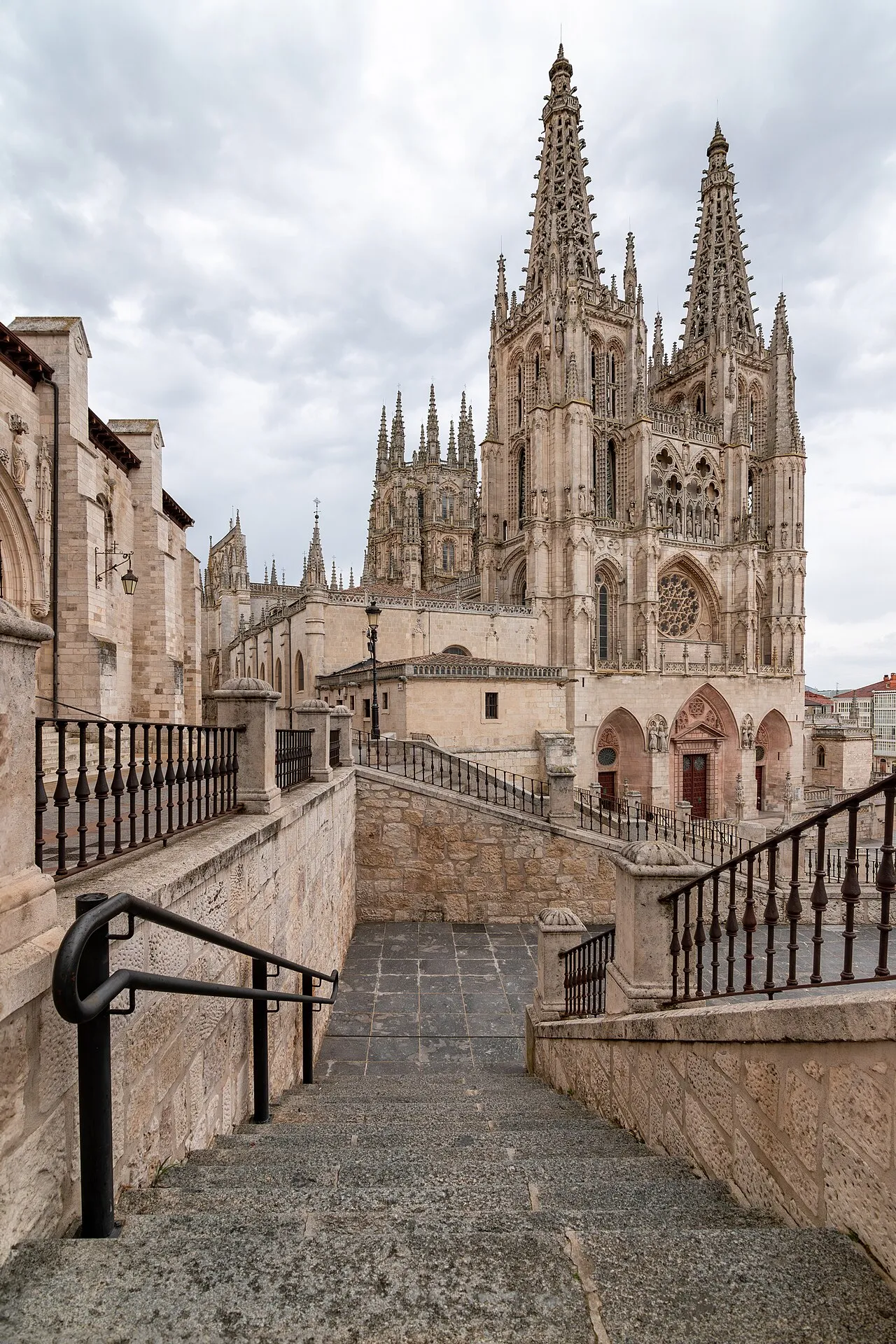
Burgos Cathedral
📍 Plaza de Santa María
Foundation stone in 1221, and three hundred years of building. A good two hours for the visit. Walk right round it outside before going in.
The only Spanish cathedral that entered the Unesco list on its own. What to look at, in what order and why its towers are pierced on purpose.
🎧 On the walk The Cathedral and the Gothic heart of BurgosIt is not the biggest or the oldest in Spain, and yet it is the only one Unesco declared a World Heritage Site in its own right, without being part of the historic ensemble of its city. The reason is in the stone: here something was done with Gothic that was done nowhere else.
The foundation stone was laid on 20 July 1221, with Ferdinand III on the throne — the one who would later be Saint Ferdinand — and a certain Mauricio as bishop, a well-travelled man who had seen the Gothic cathedrals going up in France and wanted one like that for Burgos.
The city could pay for it. It was then the head of Castile and extremely rich thanks to merino wool, which left from here on its way to Flanders through a commercial network so powerful that in 1494 the Catholic Monarchs created the Consulado here, the first great commercial court in Castile.
Bishop Mauricio is the stuff of a novel: Ferdinand III sent him to travel into the heart of Germany to fetch his future wife, Beatrice of Swabia, granddaughter of emperors, and escort her to Castile. He drove this building forward with all his energy and is buried in it.
It is the only Spanish cathedral standing alone on the Unesco list, since 1984. The others entered in company: Santiago's within its old town and the Camino, those of Toledo, Salamanca or Ávila within the historic ensembles of their cities.
Foundation stone in 1221, and three hundred years of building. A good two hours for the visit. Walk right round it outside before going in.

So big that it looks like a cathedral inside another one. A pierced star vault, tombs of Carrara marble and a panel possibly from a Leonardesque workshop.
Download the app and discover Burgos offline, whenever you like. Take the walking tour The Cathedral and the Gothic heart of Burgos with a local guide in your ear.
Find out more about Viavoy →The pierced spires were not in the original design. They were added in the middle of the fifteenth century by Juan de Colonia — Hans of Köln — a German master mason brought by a bishop, who carried in his bag the Flamboyant Gothic of northern Europe.
“Colonia” is a surname and a place at the same time: it is the Spanish name of the city of Köln. And it was not only him: his son Simón and his grandson Francisco carried on the work, and that family marked Burgos for three generations.
Theirs are the best of the cathedral, the Chapel of the Constables, the stone altarpiece of San Nicolás, the Casa del Cordón and the front of the Arch of Santa María. Half the city carries their signature.
The trick of the spires is purely structural: if they were solid, the wind off the meseta would bring them down. By piercing them, the air passes through and the load drops sharply. Look at them against the light and you understand it at once.
The Chapel of the Constables, at the far end closing the ambulatory, is the long stop: it was commissioned in 1482 by the Constable of Castile and his wife, Mencía de Mendoza, as their burial place. The vault is a pierced star through which light comes in without any stained glass.
Beneath the lantern tower is the tomb of El Cid and doña Jimena, moved here in the nineteenth century. And the lantern tower itself, star-vaulted and of extraordinary complexity, is one of the most impressive spaces in Spanish Gothic.
Look for the Papamoscas, a sixteenth-century automaton high up in the nave that opens its mouth as the hours strike, and the Escalera Dorada, the golden staircase by Diego de Siloé, a Renaissance flight that resolves an impossible change of level with an elegance that left its mark across Europe.
And do not skip what is outside: the Puerta del Sarmental, with its Romanesque-Gothic tympanum, and the Puerta de la Coronería. Walking right round the cathedral before going in is the best way not to lose the scale, because inside you do.
One fact that changes how you see it: for centuries the cathedral stood pressed against the houses, boxed in among alleys, and could not be seen as it is now. What today looks like a free-standing monument is a building that grew surrounded by city.
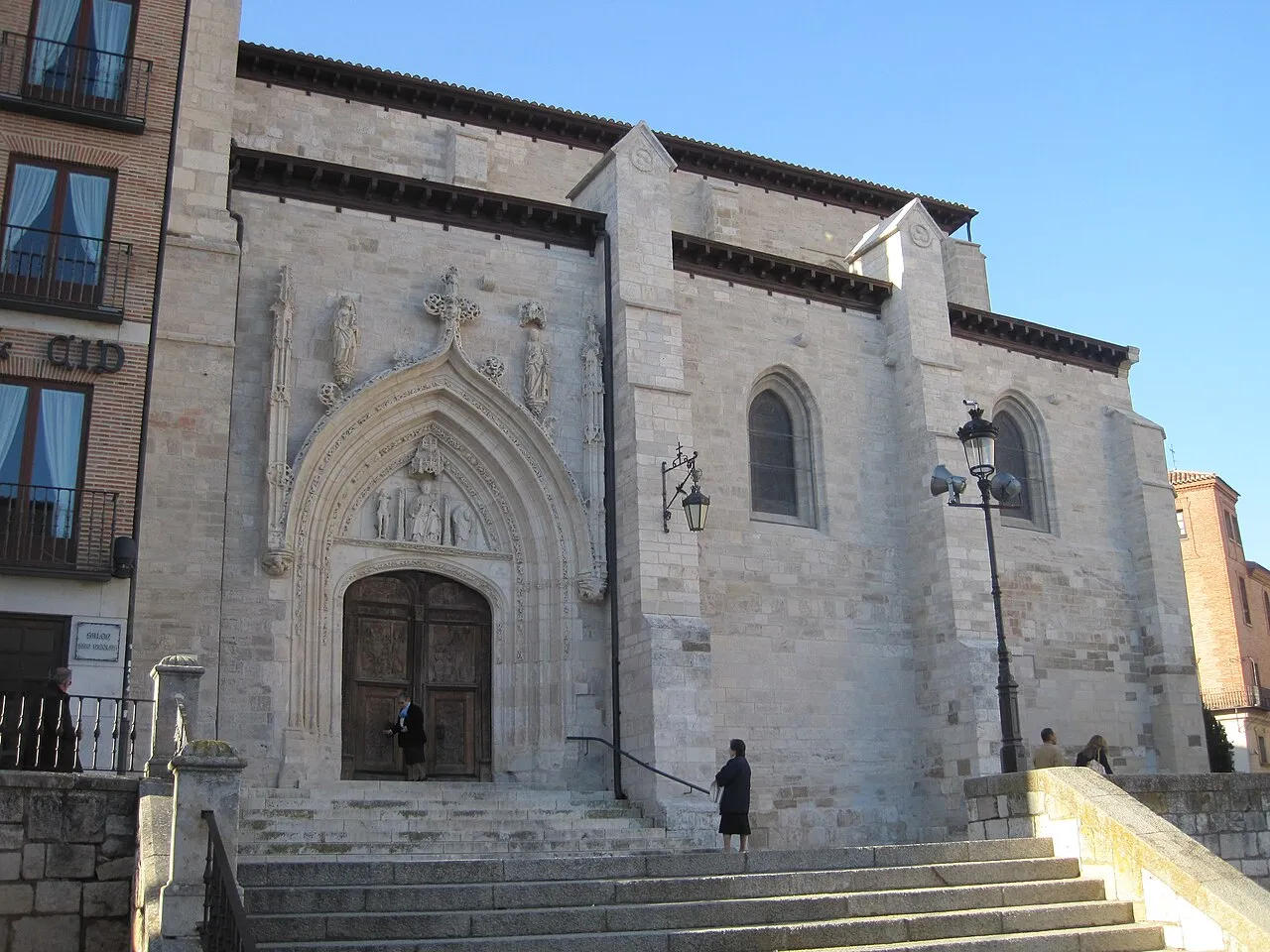
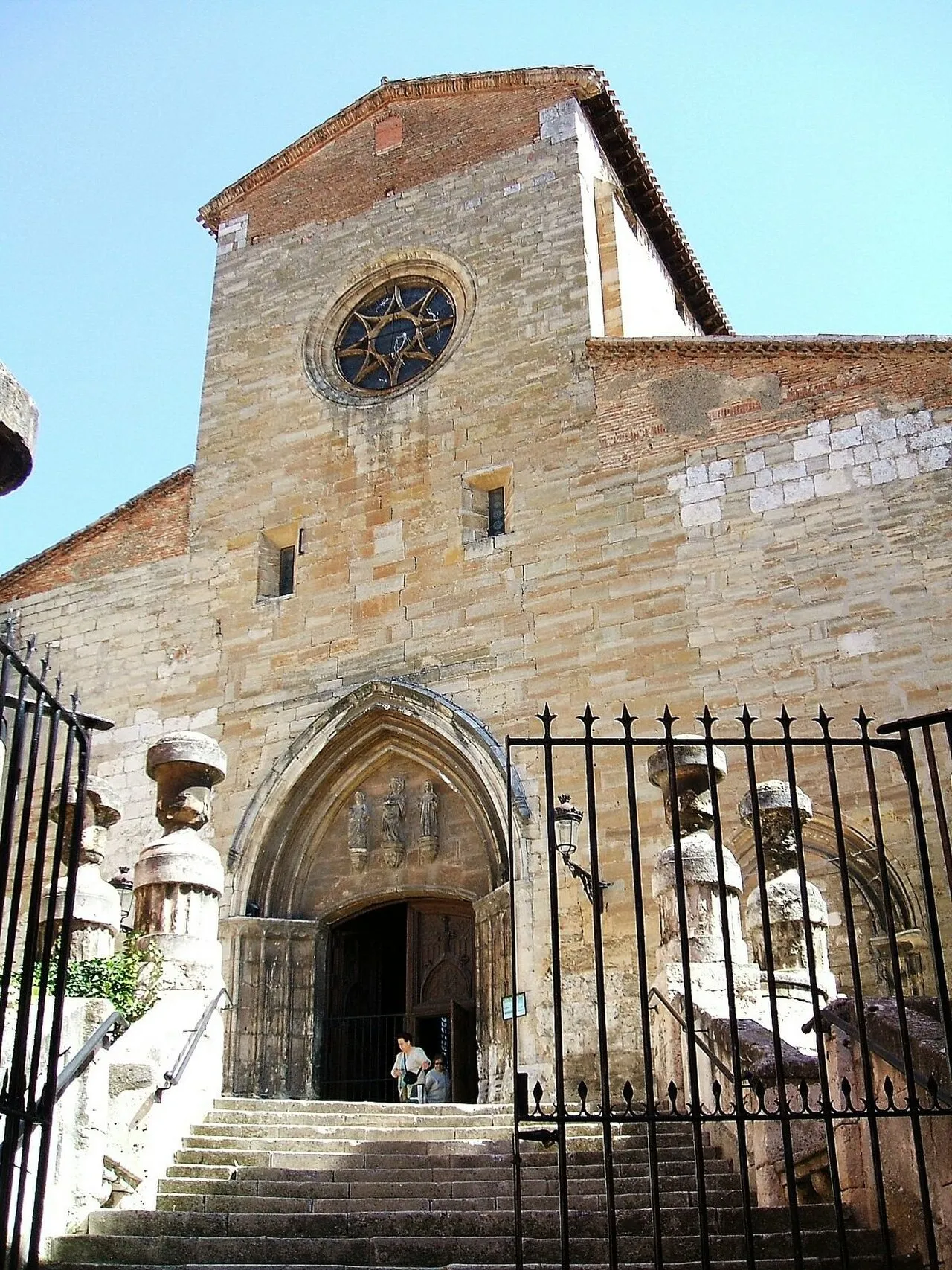
The finest stone altarpiece in Spain, also by the Colonia family. Half an hour, two minutes from the cathedral, and with the rooms almost empty.
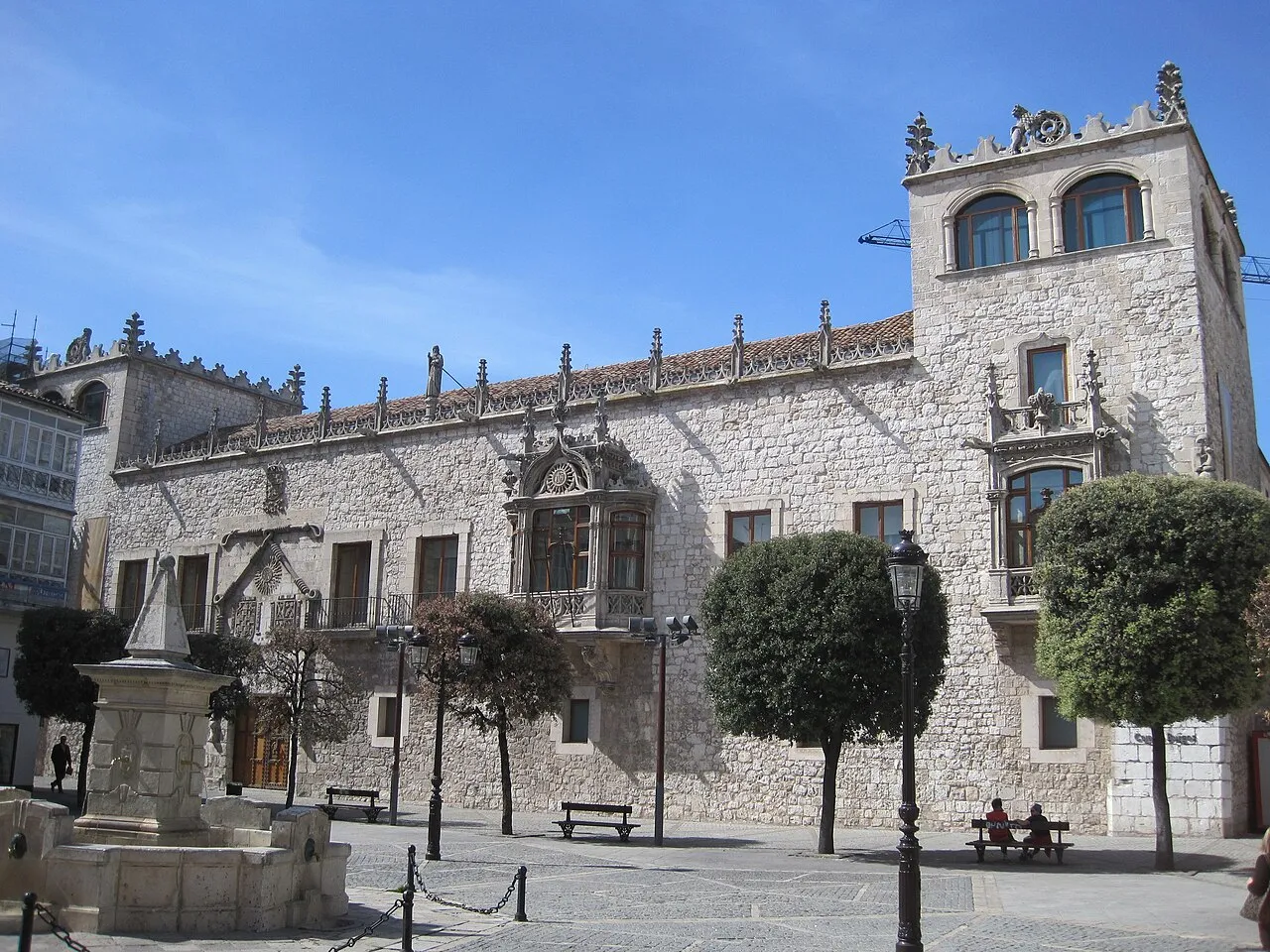
Also by the Colonia family, for the same patrons as the Chapel of the Constables. Here they received Columbus in 1497.
Because the country's other great cathedrals entered in company: Santiago's goes within its old town and the Camino, and those of Toledo, Salamanca or Ávila within the historic ensembles of their cities. Only the one in Burgos earned the title in its own right, in 1984, without being part of any larger ensemble.
Pure structure. If they were solid, the wind off the meseta would bring them down; by piercing them, the air passes through and the load drops sharply. They were added in the middle of the fifteenth century by the German master Juan de Colonia, who brought that technique from central European Flamboyant Gothic. Look at them against the light and you see it.
A family of German architects who marked Burgos for three generations. “Colonia” is the Spanish name of the city of Köln, where Juan came from in the middle of the fifteenth century. His son Simón and his grandson Francisco carried on: theirs are the best of the cathedral, the Chapel of the Constables, the altarpiece at San Nicolás and the Casa del Cordón.
Yes, he and doña Jimena rest beneath the lantern tower, over the crossing, moved there in the nineteenth century. In addition, in the Arco de Santa María an authentic bone of El Cid is kept, a piece of arm, in the so-called Sala de Poridad, where the town council met in secret.
A sixteenth-century automaton set high up in the nave that opens its mouth as the hours strike, accompanying the sound of the clock. It is one of the elements the people of Burgos are fondest of and one of the things visitors look for most inside the building. It is worth checking the time before you go in.
A Renaissance flight of stairs by Diego de Siloé that resolves the change of level between the Puerta de la Coronería and the floor of the church. Its solution was so elegant and so influential that it served as a model for other European staircases, including the one at the Paris Opera. It is one of the most admired Renaissance pieces in Spain.
A good two hours inside and half an hour walking round it outside, which matters as much as the first part: the scale of this building is only felt from the street. And if you have time left, San Nicolás de Bari is two minutes away and holds the finest stone altarpiece in Spain with almost no visitors.
Download Viavoy and walk Burgos offline, whenever you like.

Keep reading