1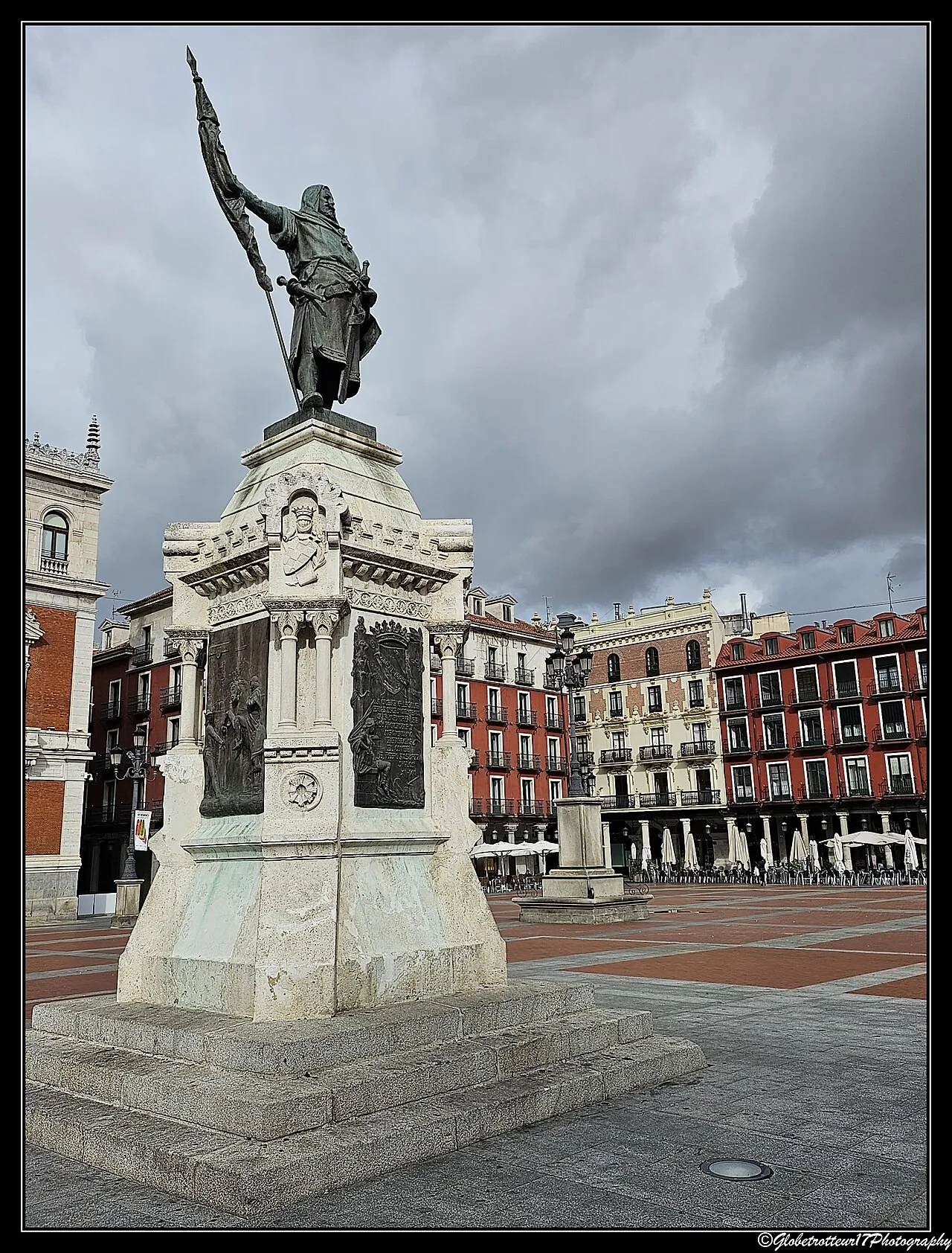
Plaza Mayor de Valladolid
📍 Centre
The first regular, arcaded main square in Spain, from around 1562. The grandmother of Madrid's and Salamanca's.
The first arcaded main square in Spain, a cathedral left half-finished, a secret wedding that founded a country and the best sculpture museum on the continent.
🎧 On the walk The Plaza Mayor, the Cathedral and the centreValladolid has the historical density of a capital and the size of a manageable city: Philip II was born here, Columbus died here, Cervantes lived here when he published Don Quixote and the Catholic Monarchs married here in secret. All of it is covered on foot, on the flat, in a day.
Start in the Plaza Mayor, and do it knowing what you are looking at: it is the first regular, arcaded main square in Spain, raised around 1562 after the fire that swept the centre on 21 September 1561, when four hundred and forty houses burned.
Carry on to the cathedral, which is the fragment of a giant that never existed: Juan de Herrera, the architect of El Escorial, designed it as the largest church in Christendom, and it was left at forty per cent when the court moved to Madrid. Go up the tower.
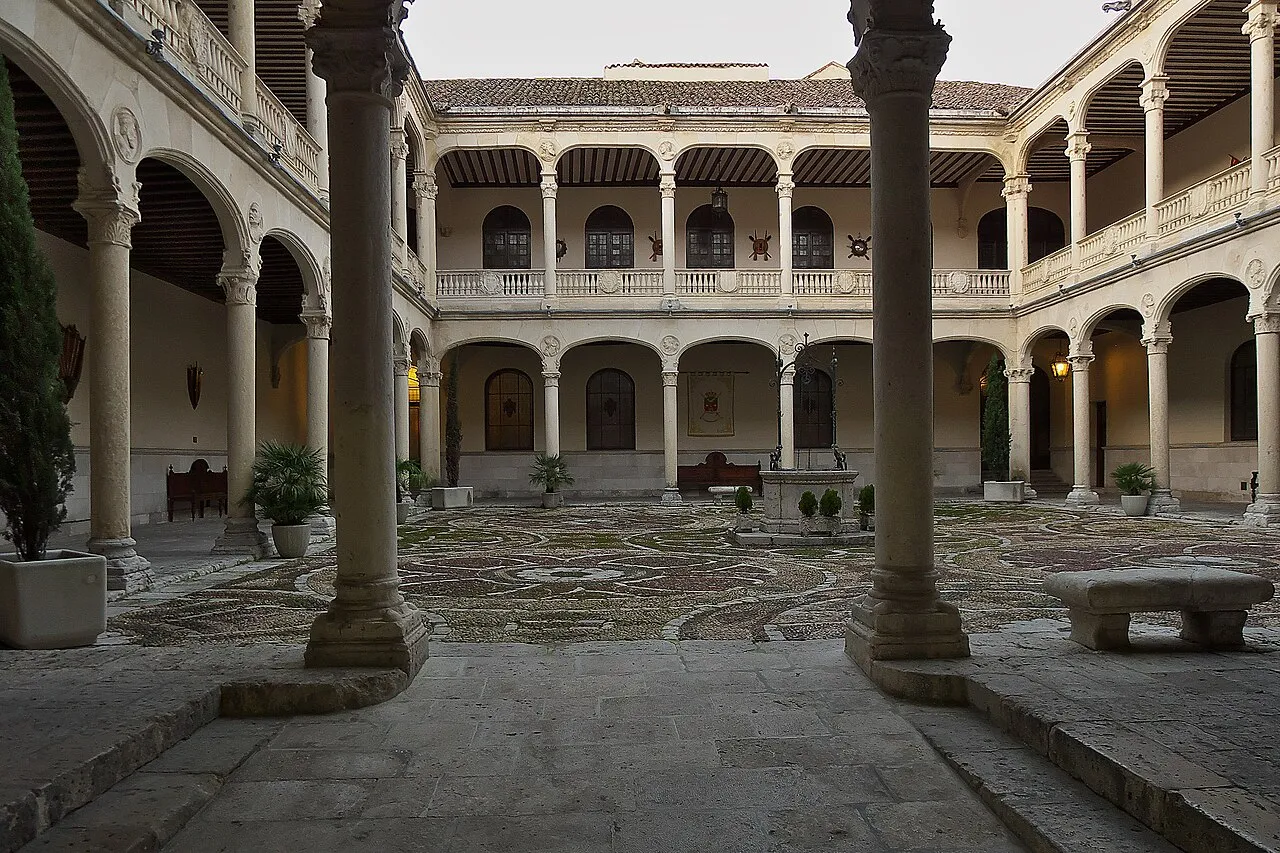
Beside it are the University, with a Baroque doorway of 1715 that is literally a book in stone, and the Palacio de Santa Cruz, considered the first Renaissance building in Spain: cardinal Mendoza ordered the Gothic works stopped in 1488 in order to continue in the new style arriving from Italy.
And a step away, Santa María la Antigua, with a Romanesque tower of almost fifty metres — one of the tallest in Spain in that style — surrounded by a neo-Gothic church from the twenties.
The first regular, arcaded main square in Spain, from around 1562. The grandmother of Madrid's and Salamanca's.
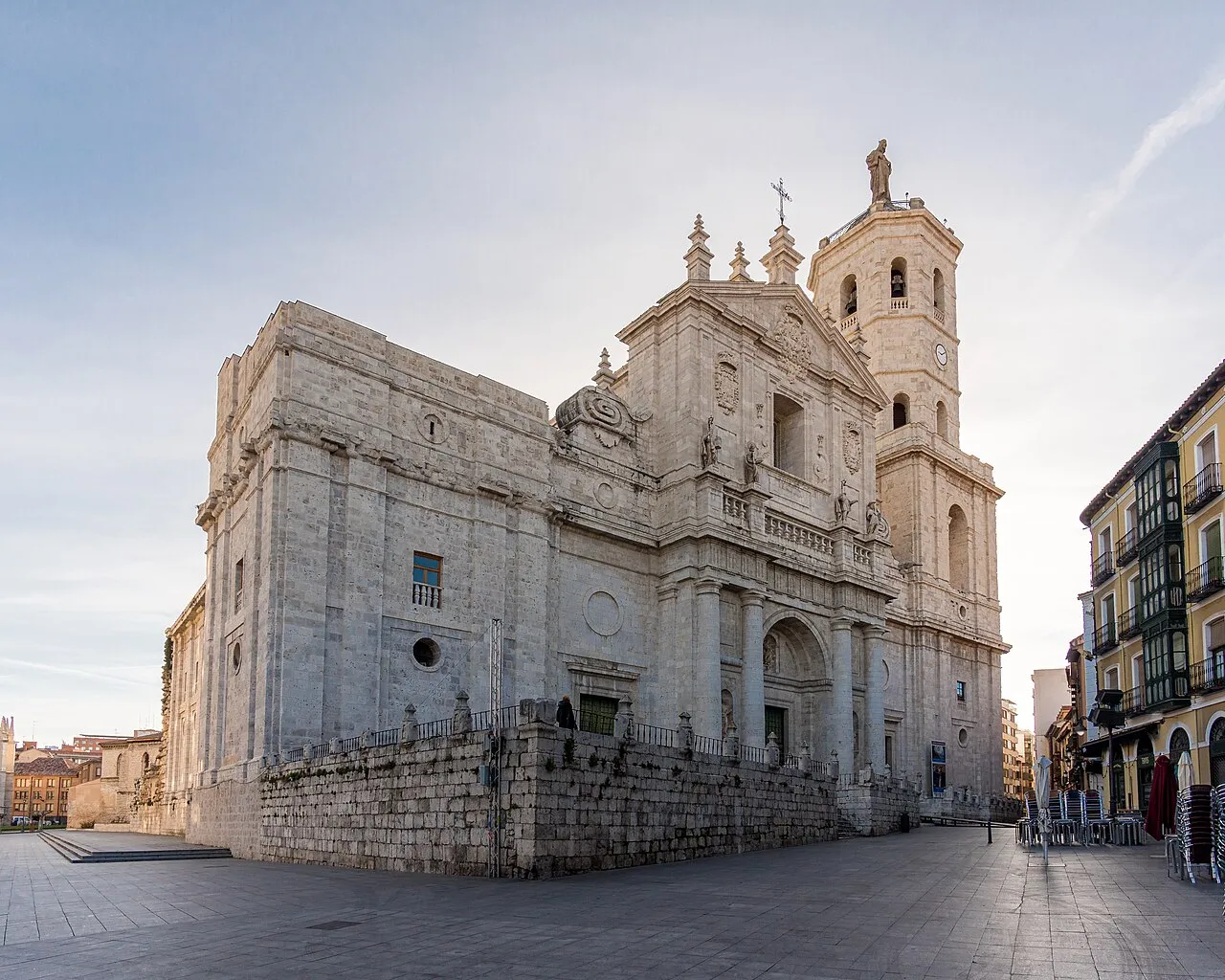
Designed by Juan de Herrera as the largest church in Christendom, and built to forty per cent. Look for the model of the original project.
Download the app and discover Valladolid offline, whenever you like. Take the walking tour The Plaza Mayor, the Cathedral and the centre with a local guide in your ear.
Find out more about Viavoy →Walk ten minutes to the plaza de San Pablo, which is not a square but a courtyard of honour: between 1601 and 1606, with Valladolid as the capital of Spain, it was the political centre of the monarchy.
Here is the church of San Pablo, a mountain of stone carved to the last centimetre where Philip II and Philip IV were baptised. And opposite, the Palacio de Pimentel, where the first of them was born, on 21 May 1527, between humble walls of mud and brick.
Also the Palacio Real, where the court was housed, Philip IV was born and Napoleon slept in 1809.
But the long stop is the Colegio de San Gregorio: its Isabelline Gothic doorway is one of the most astonishing in Spain — and nobody knows for certain who designed it — and inside is the National Sculpture Museum, with Berruguete, Juan de Juni and Gregorio Fernández.
The museum extends to the Palacio de Villena, with a Neapolitan nativity scene of more than six hundred figures, and to the Casa del Sol, with its collection of classical casts.
Go down to the Casa de Cervantes, where the writer lived between 1604 and 1606, just as the first part of Don Quixote came out. And where he ended up in jail: a gentleman was stabbed to death at his door and the law imprisoned him along with his family for being neighbours.
A few minutes away, the Casa Museo de Colón, because the navigator died in this city on 20 May 1506, poor and tangled up in lawsuits. His bones would afterwards make four more journeys.
Carry on to the Campo Grande, eleven and a half hectares of garden with peacocks running loose, and to the Monument to Columbus, a statue that was destined for Havana and ended up here when Spain lost Cuba in 1898.
And finish in the plaza del Val, with its iron market of 1878, which is the navel of one of the best tapa cultures in Spain. All around, dozens of bar counters. And for wine, four denominations less than an hour away: Ribera, Rueda, Toro and Cigales.

The National Sculpture Museum, with the three summits of Spanish carving. A good two hours, and stand back to take in the doorway.
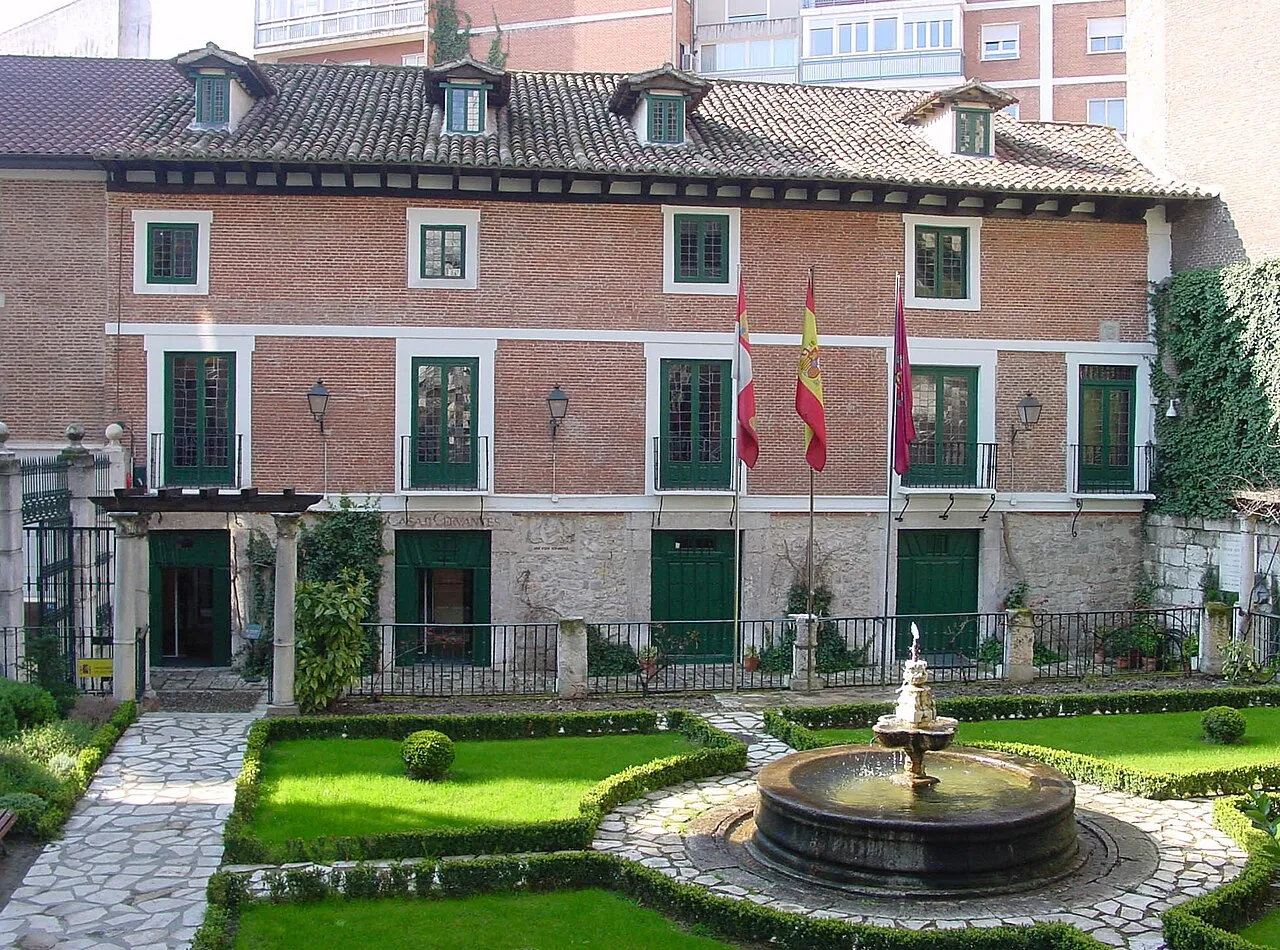
Where he lived between 1604 and 1606, when he published Don Quixote. A forty-five minute visit, with cheap entry.
An iron and glass market of 1878-1882 and the epicentre of one of the best tapa cultures in Spain. Market in the morning, bar counters in the afternoon.
Yes, with room to spare: the old town is flat and compact. One day covers the Plaza Mayor, the cathedral, the University, the San Pablo quarter with the National Sculpture Museum and the tapas area. With a second day the Casa de Cervantes, the Casa de Colón, the Campo Grande and the riverside walk fit in.
The National Sculpture Museum, in the Colegio de San Gregorio: its Isabelline Gothic doorway is one of the most astonishing in Spain and inside are Berruguete, Juan de Juni and Gregorio Fernández, the three summits of polychrome wood sculpture. Set aside a good two hours.
Because it is the first regular, enclosed and entirely arcaded main square in Spain. It was raised around 1562, after a fire that swept the centre, and Philip II commissioned its reconstruction as a single piece of town planning. Madrid's came in 1617 and Salamanca's in 1729: both looked to this one.
Because Juan de Herrera designed it around 1582 as the largest church in Christendom, when Valladolid was the capital of the monarchy. But the court moved to Madrid, the money ran out and the works stopped at forty per cent. On top of that, the original tower collapsed in 1841.
In the Palacio de los Vivero, on 19 October 1469, almost in secret: Ferdinand crossed Castile disguised as a servant, they were cousins and they used a forged papal bull because the genuine one did not arrive until 1471. From that union came the joining of the two crowns.
It is one of the best in Spain. The epicentre is the plaza del Val, with its iron market of 1878, and the surrounding streets hold dozens of bar counters. The city also has a national tapas competition of its own, which has raised the average standard considerably.
There are four denominations of origin less than an hour from the city: Ribera del Duero, Rueda, Toro and Cigales. It is probably the greatest concentration of important denominations around any Spanish capital, and you notice it on the wine list of any bar.
Download Viavoy and walk Valladolid offline, whenever you like.

Keep reading