Toledo in a day: the itinerary that avoids the worst climbs
The cathedral in mid-morning for the Transparente, the Jewish Quarter at midday and the Cristo de la Luz on the way out. With the free escalators and the exact hour the sun comes through the skylight.
Toledo can be seen in a day because everything fits on a hill a kilometre and a half across, and it can be done badly for exactly the same reason: there is not one flat street and the drop between the river and the Alcázar is more than a hundred metres. The order matters more here than in almost any other Spanish city, and there is one detail of timing that decides whether you see the cathedral or really see it.
There are free public escalators from the Safont and Recaredo car parks that climb a good part of the slope up to the old town. Very few people who arrive by car use them.
Morning: in from the east, and the cathedral
The skylight of the Transparente works in mid-morning.
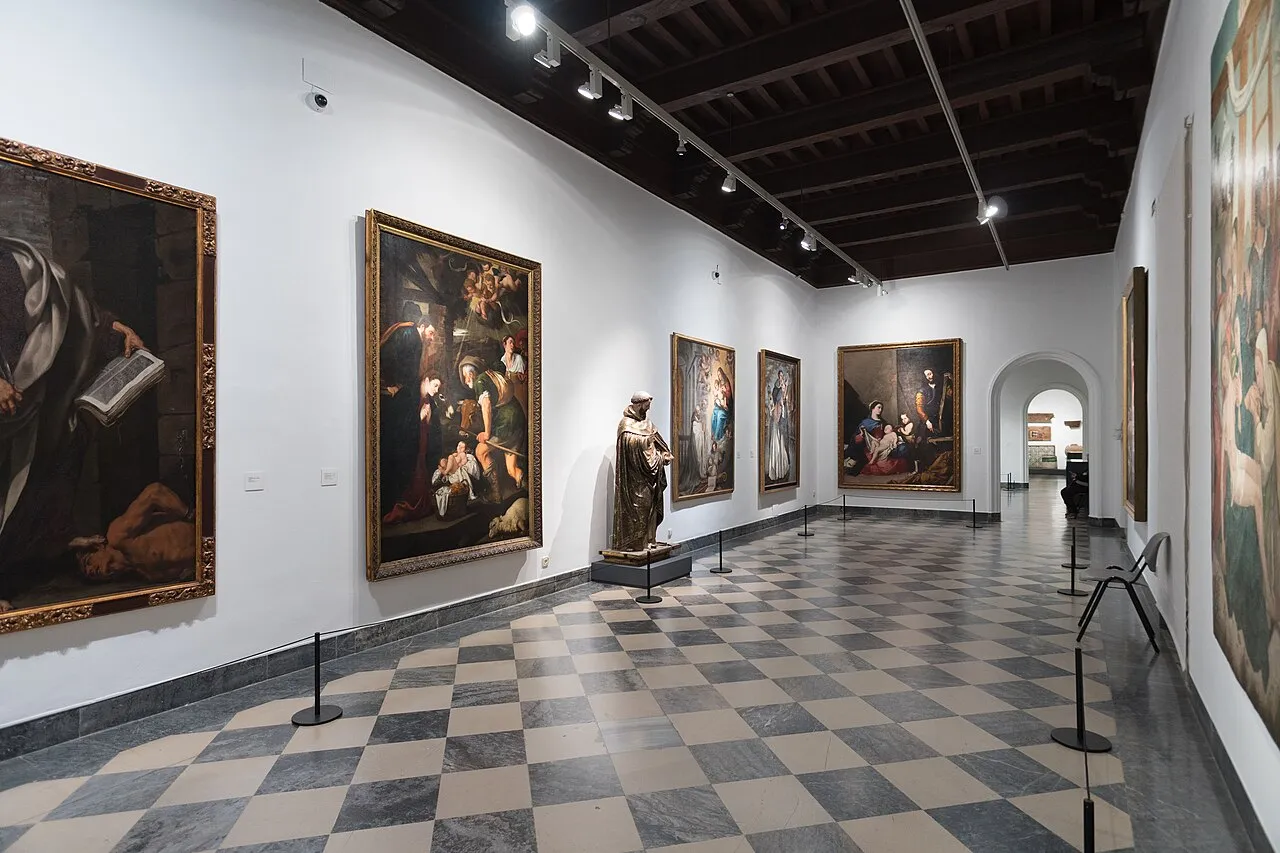
Come in through the plaza de Zocodover, which is the gate of the city if you arrive from the east and where the buses pull in. Before dropping down towards the centre, go through the Arco de la Sangre and into the Museo de Santa Cruz: Plateresque doorway, Greek-cross plan and several El Grecos from different periods. It is the most complete museum in Toledo and almost everybody walks straight past it.
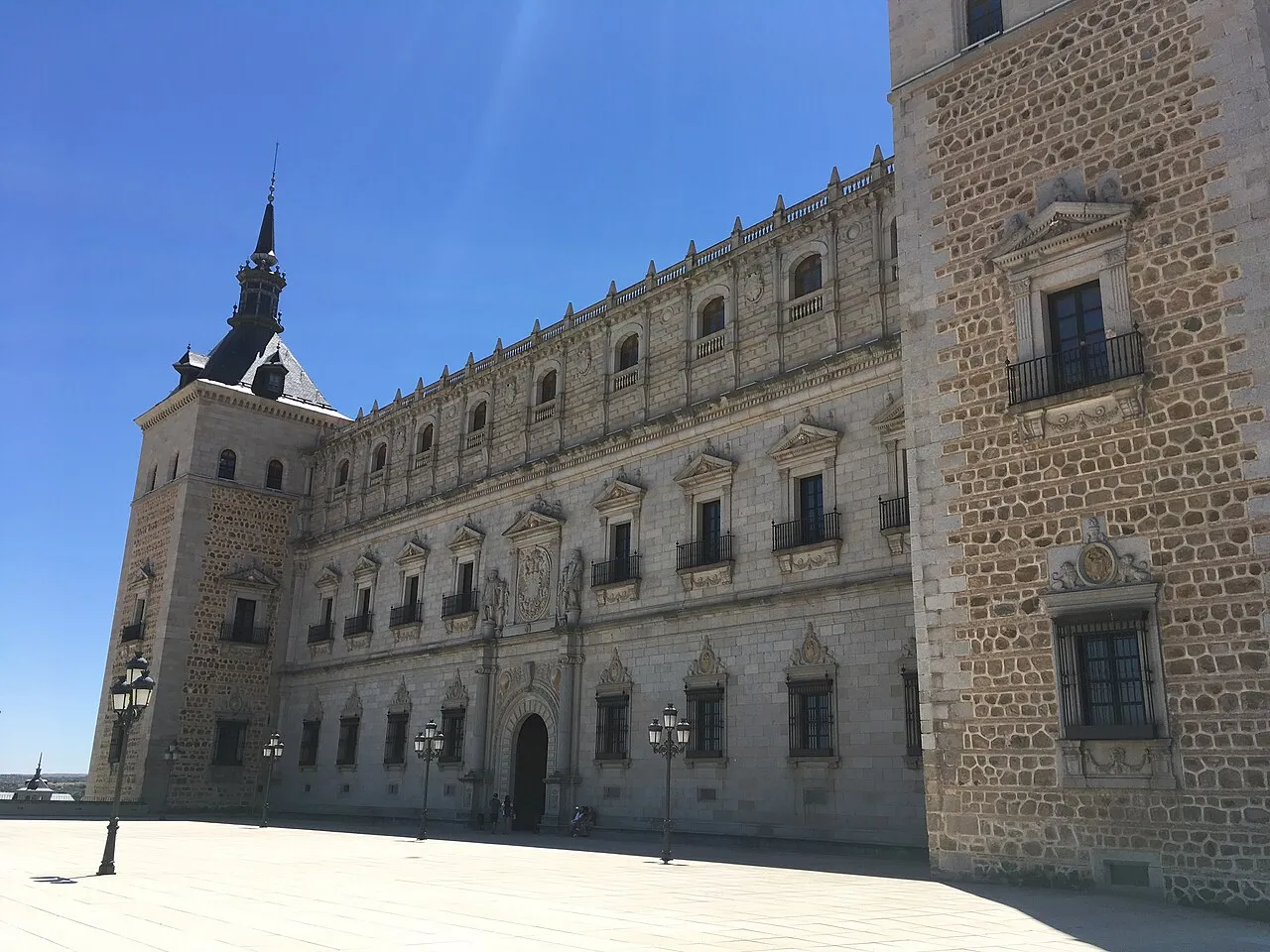
Then climb to the esplanade of the Alcázar up the cuesta de Carlos V, and stop at the viewpoint halfway: the Tagus floodplain below, the cigarrales opposite and the meander that wraps the city on three sides. There you suddenly understand why Romans, Visigoths, Muslims and Castilians all wanted it.
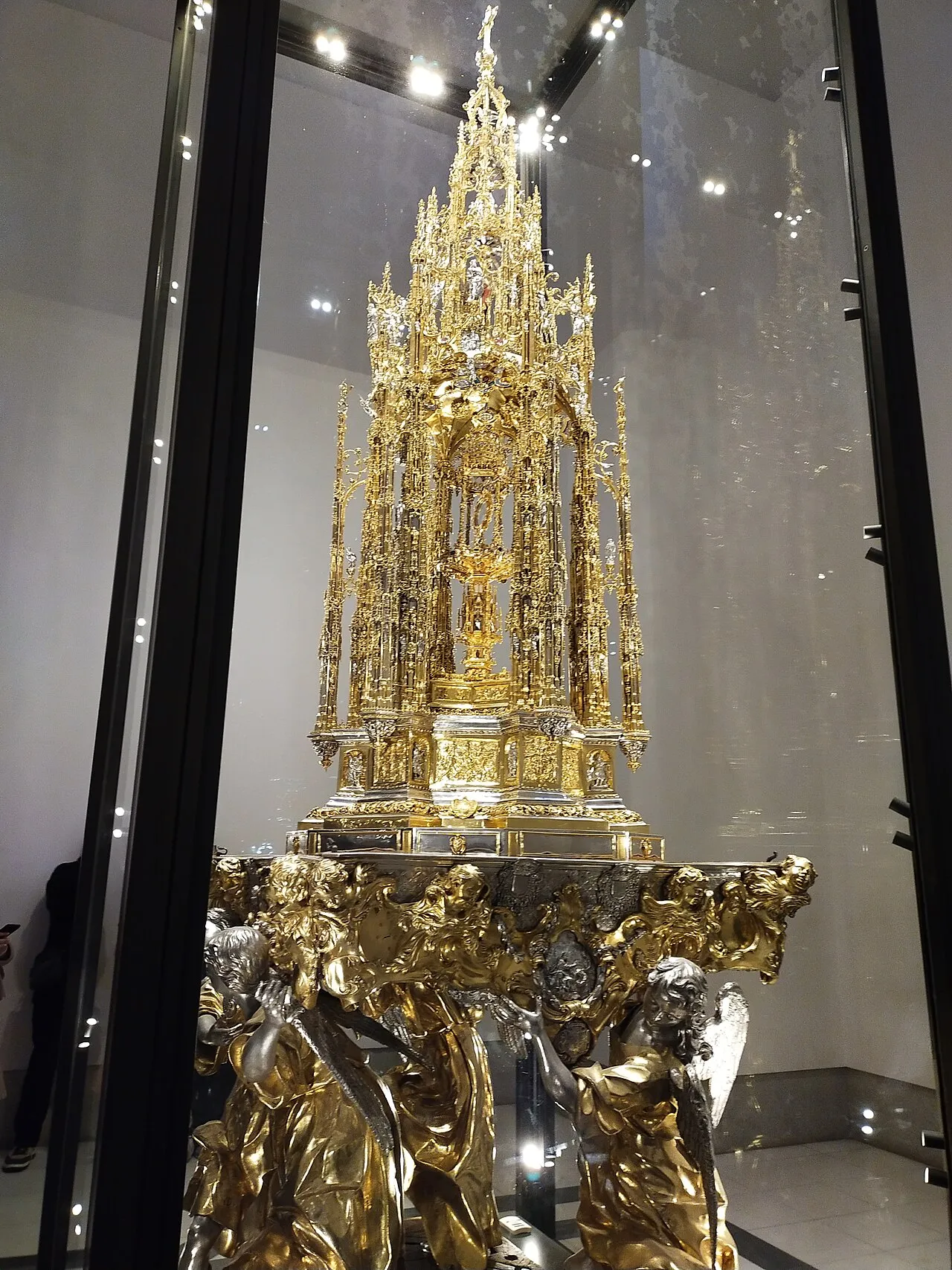
And in mid-morning, the cathedral. The timing is not a whim: behind the Capilla Mayor is the Transparente, for which Narciso Tomé pierced the fourteenth-century Gothic vault and opened a skylight. When the sun comes through it, a beam crosses the gloom and lights the marble from within. At other hours it is just a very large sculpture.
Inside, as well: five naves with eighty-eight columns, the choir stalls, and a sacristy that works as a picture gallery, with El Greco's “The Disrobing of Christ”, painted for that very space, and works by Goya, Van Dyck and Titian. A long hour and a half.
An orphans' hospital founded by Cardinal Mendoza in the early sixteenth century, with a Greek-cross plan that allowed the four halls to be watched from a single point. Today it brings together El Grecos, Flemish tapestries, Roman and Visigothic archaeology and Talavera ceramics. Run by the regional government: check the free time slots.
The viewpoint halfway up is free, has no opening hours and gives the best view of the old town above the river. Up this slope the water used to rise to the Alcázar by Juanelo Turriano's artificio, which climbed a hundred metres with towers of buckets meshing like a clock.
Begun in 1226 over the main mosque and finished in 1493. Besides the Transparente and the sacristy, look for the Mozarabic Chapel: the Hispano-Mozarabic rite is celebrated there daily, the liturgy that predates the Roman reform, which Cisneros saved by founding this chapel in 1502.
As you leave the cathedral, the plaza del Ayuntamiento is the only point in the city from which you can see its main façade whole: Toledo is so tightly packed that it gives no perspective anywhere else. Around it, the City Hall, the Archbishop's Palace and the Law Courts, sizing each other up face to face.
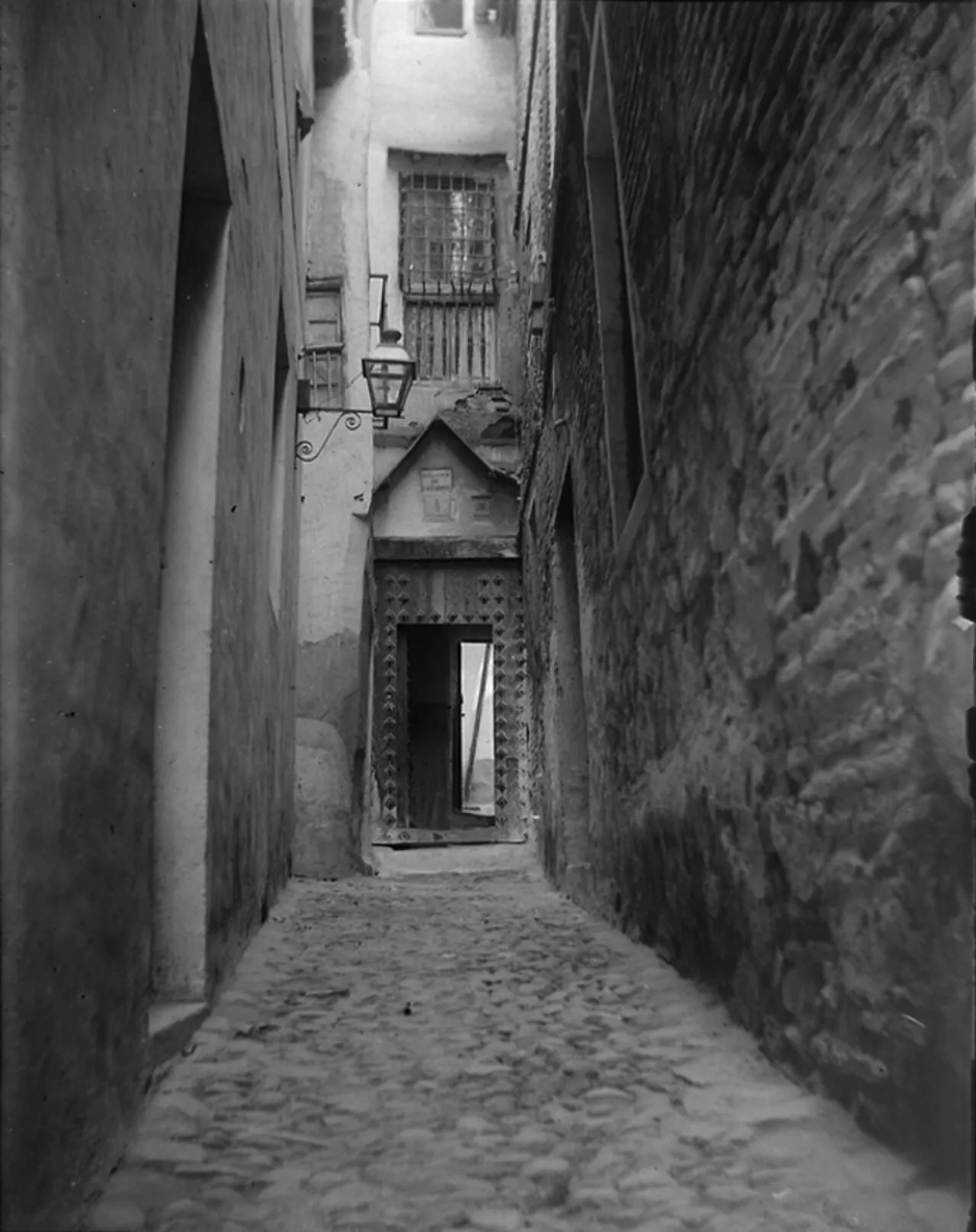
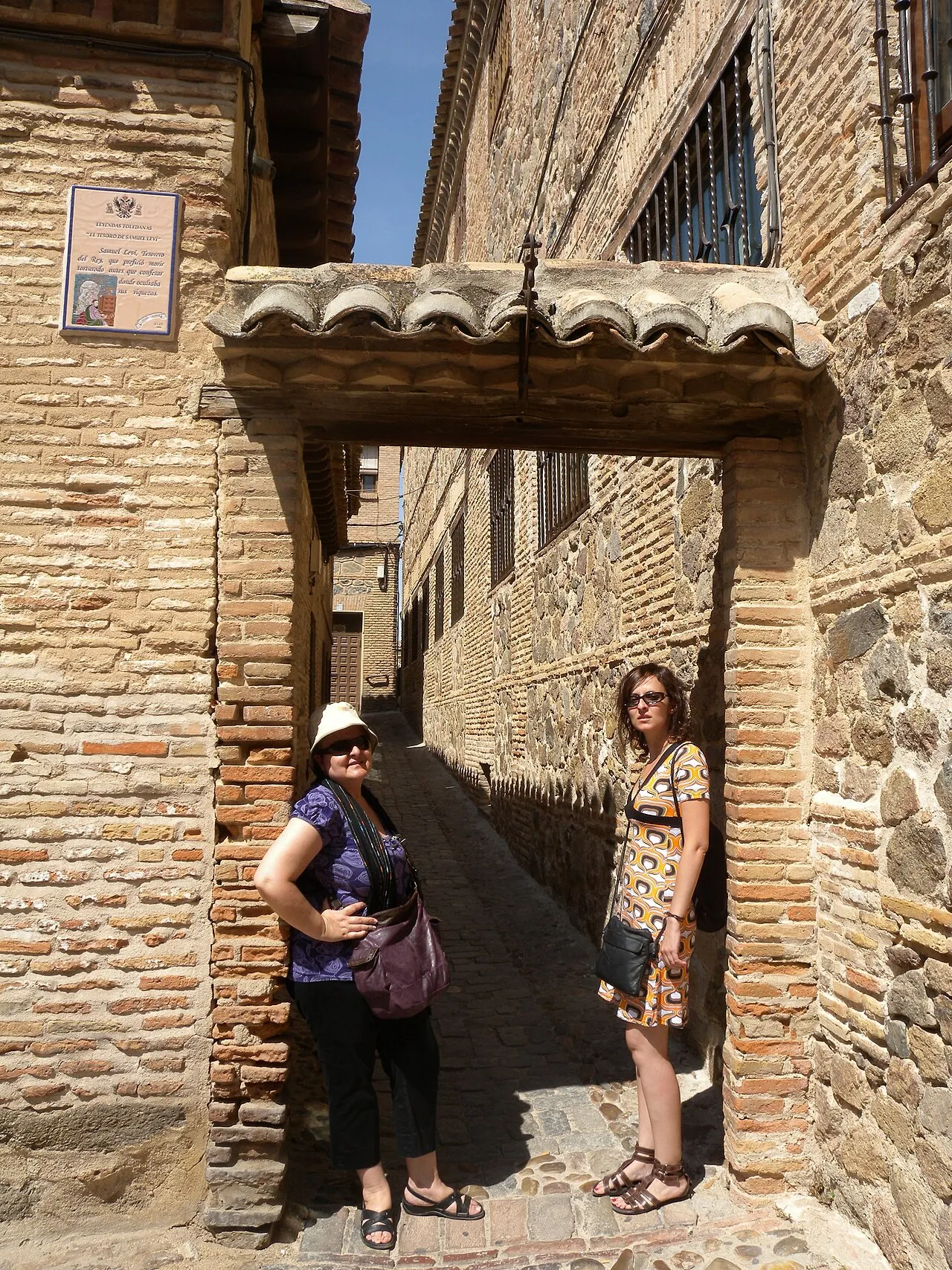
Two minutes away begins the calle de la Tripería and what was la Alcaná, the market of the Jewish merchants. The narrowness of those alleys is design, not neglect: façades that give continuous shade and face-to-face dealing. And it is here that Cervantes places the discovery of the notebooks of Cide Hamete Benengeli with the true history of Don Quixote.
Then drop down west, into the Jewish Quarter. First stop, Santo Tomé, with “The Burial of the Count of Orgaz”, which El Greco painted around 1586 for that wall and that light and which has never left. Limited capacity: in high season you queue.
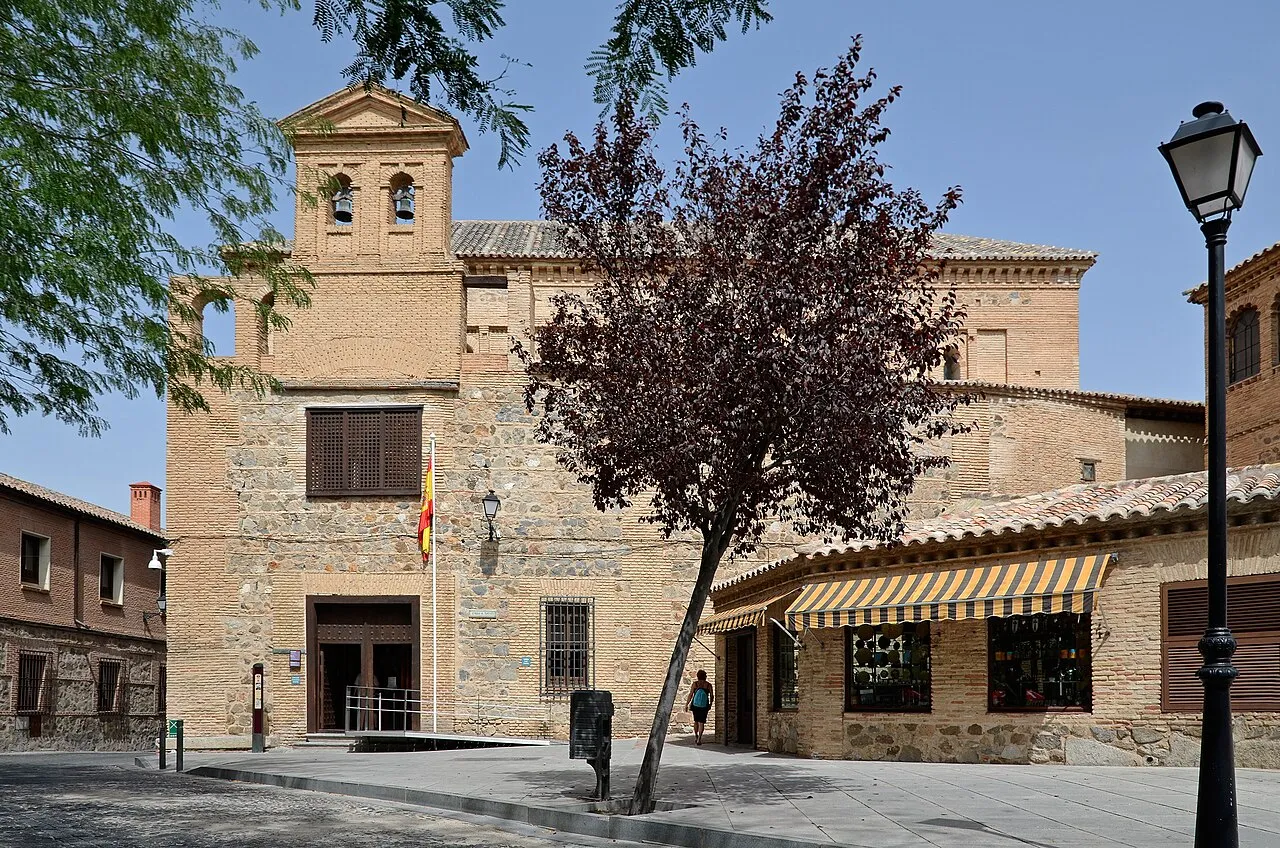
After that, the Sinagoga del Tránsito. From outside it is a brick wall you can walk straight past; inside, a clear hall of more than twenty metres without a single column, with a cedar coffered ceiling and psalms in Hebrew carved in plaster next to verses in Arabic. Muslim craftsmen made them for a Jewish temple under a Christian king.
📍 Between the cathedral and the plaza del Ayuntamiento
The street names of this area are the guild map of medieval Toledo: the offal trade here, the blacksmiths and the tanners around it. Worn door jambs, reused lintels and abrupt changes of level: this is real medieval fabric, none of it reconstructed.
A fourteenth-century Mudéjar brick tower and, inside, the painting. Look at the break between the two halves of the canvas: below, firm drawing and faces that are real portraits of Toledans; above, the forms stretch and the matter turns vaporous. El Greco painted himself among the gentlemen.
Built around 1356 on the orders of Samuel ha-Levi, treasurer to Peter I, who ended up executed by the king himself. Today it houses the Museo Sefardí. Go up to the upper gallery, which was the women's space: from there you read the coffered ceiling and the band of plaster far better.
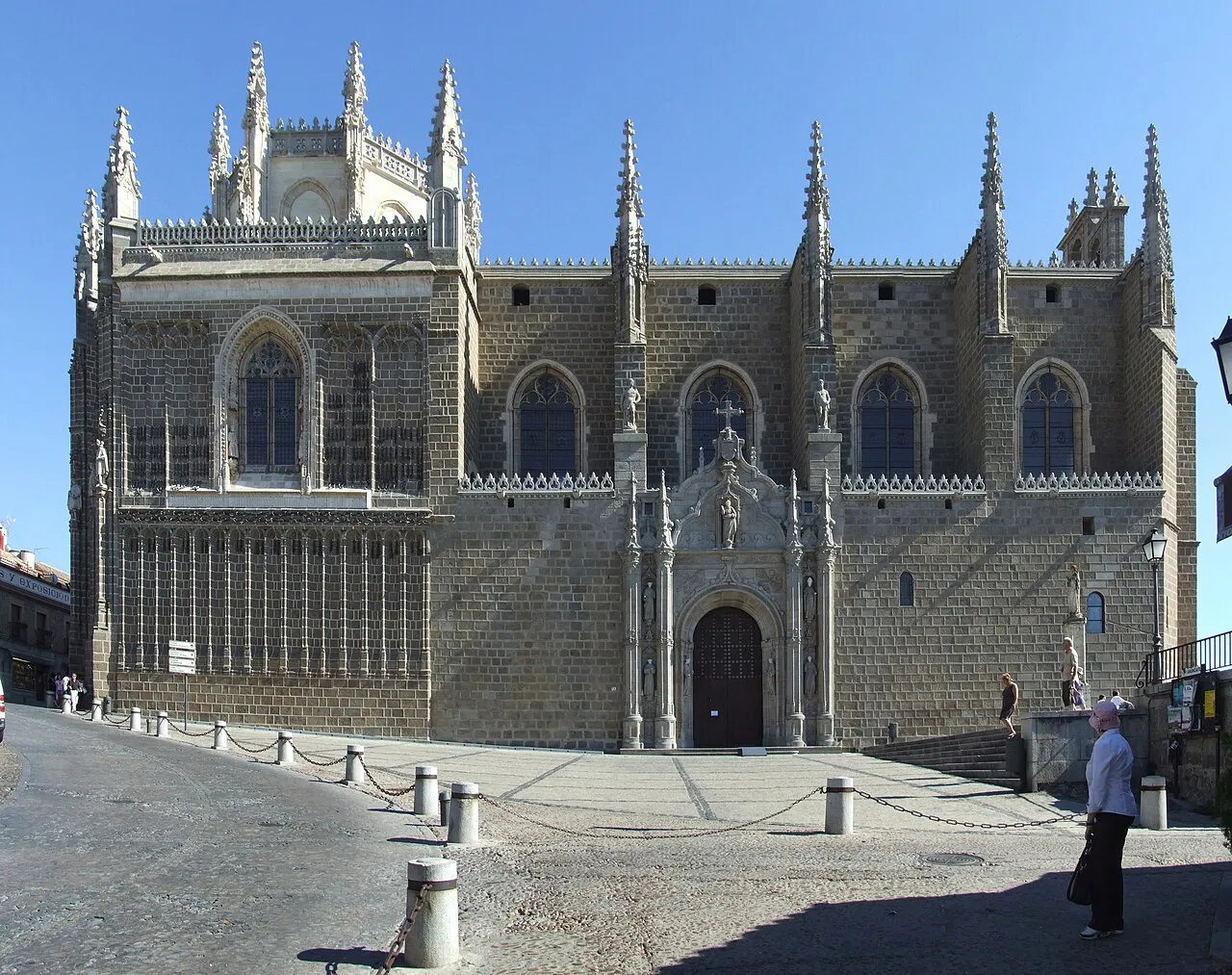
The western end of the old town is closed off by San Juan de los Reyes, and it is where the scale changes all at once. Isabella and Ferdinand ordered it built to celebrate the victory at Toro in 1476 and to serve as their burial place, and Juan Guas signed it in an Isabelline Gothic so laden that the stone looks like lace.
On the façade hang rows of iron chains which, according to tradition, belonged to Christian captives freed in the conquest of Granada and were hung here as an ex-voto. They have been out in the weather for more than five centuries. Inside, the two-storey cloister is the great piece: go up to the upper gallery for the Mudéjar coffered ceiling, which almost nobody does.
And there is an emptiness that gives the whole thing meaning: Isabella wanted to be buried here, but Granada fell in 1492 and she preferred to rest in the conquered city. This magnificent burial place was left for ever without its monarchs.
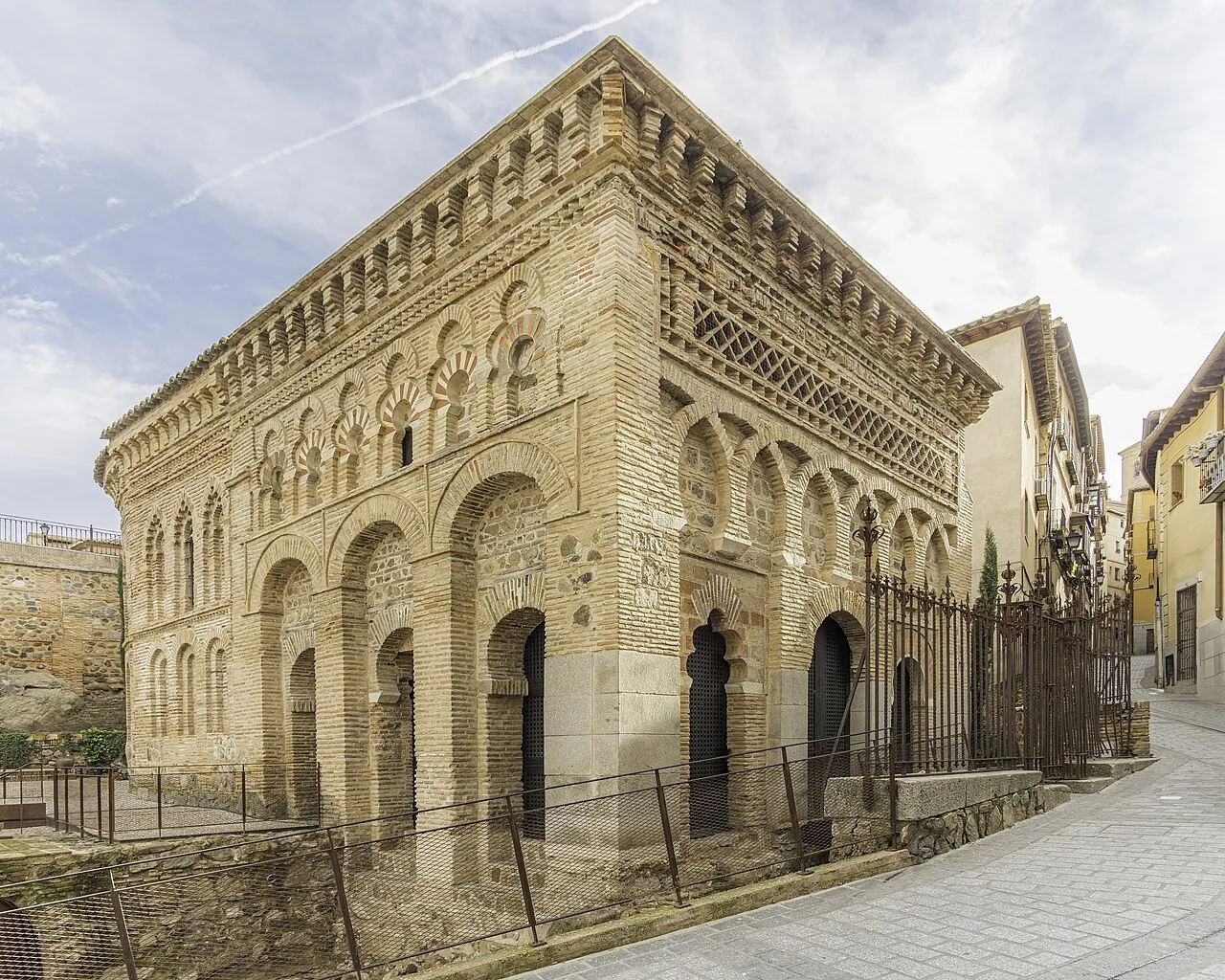
Save the mosque of Cristo de la Luz for the way out; it is in the high northern part, on the way to the Puerta de Bisagra. It is the oldest building standing in Toledo — its inscription gives the year 999 — and, per square metre, probably the most interesting. Eight metres to a side, nine bays and nine different vaults.
The yoke and the bundle of arrows repeated to saturation, and coats of arms held up by enormous eagles in the church. It was dynastic propaganda with no attempt at disguise, and at that scale it works. It is included in the tourist wristband that groups several monuments of the old town.
Dated by its own inscription to the year 999, with the names of the patron and the master builder, something extremely rare a thousand years later. After 1085 a Christian apse was added in the same Andalusi language, and excavating the garden brought up a Roman road.
The balcony looking out over the river from the western side of the old town, with the cigarrales climbing the hills opposite. It is free, has no opening hours and is the best pause on the walk through the Jewish Quarter, above all late in the afternoon.
Yes, and it is what most visitors do. A long day holds the cathedral, the Museo de Santa Cruz, the axis of the Jewish Quarter with Santo Tomé and the Tránsito, San Juan de los Reyes and the Cristo de la Luz. What it does not hold is going into everything calmly, visiting the inside of the Alcázar or going round the city along the other bank of the river.
What time should you see the Transparente in the cathedral?
Mid-morning, when the sun comes through the skylight Narciso Tomé opened in the Gothic vault and a beam of light crosses the gloom, lighting the marble from within. At other hours the work is still there, but you lose the effect it was conceived for, which is the whole reason for its fame.
How do you avoid the climbs in Toledo?
There are free public escalators from the Safont car park and from the Recaredo one that climb a good part of the slope up to the old town. Inside the city there are no shortcuts: there is not a single flat street and the drop between the river and the Alcázar is more than a hundred metres.
Is the tourist wristband worth it?
It pays off from the third visit on. It includes San Juan de los Reyes, Santa María la Blanca, the Cristo de la Luz and several more churches on the circuit. The cathedral and the Alcázar are not in it and are paid for separately, and the Sinagoga del Tránsito, being state-owned, has its own system of reductions.
What do you eat in Toledo?
Carcamusas — pork stew with tomato and peas, the city's tavern dish —, stewed partridge, Manchego cheese and venison in season. For dessert, marzipan, and there it is worth going to a workshop and not to a souvenir shop: the real thing, made only with almond and sugar, is nothing like the industrial version.
Is it worth sleeping in Toledo?
Very much so, and it is what changes the visit most. From seven in the evening the day trips leave and the old town is left practically empty, which is when the city looks like what people imagine of it. It also lets you see dawn over the Tagus before the first buses arrive.
Practical information
Getting thereAVE from Madrid-Atocha in a little over half an hour. Bus from Plaza Elíptica in an hour.
Getting aroundAll on foot and all uphill. Free escalators from Safont and Recaredo.
TicketsTourist wristband for several monuments. The cathedral and the Alcázar go their own way.
Key timingThe cathedral, mid-morning: that is when the sun comes through the skylight of the Transparente.
When to goSpring and autumn. In summer it passes 40 degrees and there is no shade on the climbs.
TipThe city empties from seven onwards, when the day trips leave. Sleeping inside changes the experience.
On the map
🎧 With Viavoy
Walk Toledo and listen at your own pace
Download Viavoy and walk Toledo offline, whenever you like.