The classic panorama is outside the old town and you have to cross the river to get it. The four viewpoints that work, what time each one is for and how to get there without a car.
Toledo has a problem of perspective: it is packed so tightly onto its hill that from inside it can barely see itself. Not even the cathedral can be taken in whole except from one particular square. To get the image everyone has in their head — the walled city on the granite with the Tagus below — you have to leave the old town and cross the river.
The classic panorama is taken from the carretera del Valle, on the other bank. You do not need a car: there is a tourist bus and you can also walk up from the puente de Alcántara in about forty minutes of climbing.
Outside the old town: the postcard view
Carretera del Valle and the Parador.
The point that appears in every photograph is the ring road of the Valle, on the opposite slope, from where you see the whole city perched on its hill with the meander of the Tagus wrapping round it on three sides. There are several laybys set up and none of them is signposted as an official viewpoint, so keep an eye out as you go.
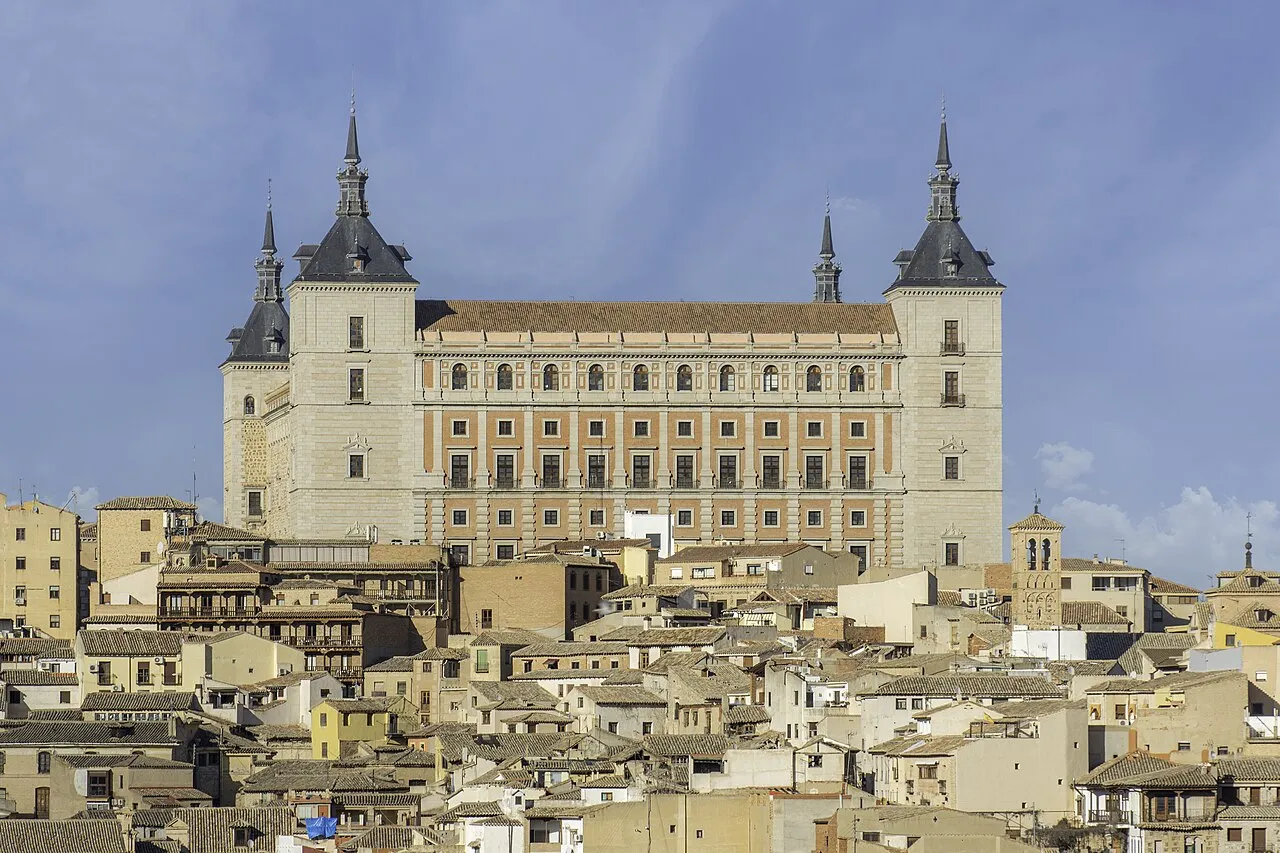
The highest and most organised is the one around the Parador, which has a terrace open to the public. From there the composition is perfect: the Alcázar on the left, the cathedral in the centre, San Juan de los Reyes closing it off on the right and the river below.
The time of day matters a great deal. In the morning the city is backlit and the photograph comes out flat; the moment is the afternoon, when the sun falls full on the south-facing front and the stone turns golden. At dusk, with the lights on, is the other good option.
Without a car there are two ways: the tourist bus that does the circuit, or walking up from the puente de Alcántara, about forty minutes of continuous climb along a road with a hard shoulder. It is a serious walk, but most people who do it do not regret it.
The best viewpoint inside the old town, halfway up the climb, free and with no opening hours. It opens onto the Tagus floodplain and the cigarrales opposite, and it is where you suddenly understand why the city is where it is: a hill surrounded by water on three sides.
The balcony looking out over the river from the western side, right on the route of the Jewish Quarter. It is the best pause on that circuit and works very well late in the afternoon, with the cigarrales behind and the Tagus below. Free and with no opening hours.
Inside the walls there are two viewpoints that really work, and both are free and open at any hour. The first is the one on the cuesta de Carlos V, halfway up the climb between Zocodover and the Alcázar, which opens onto the floodplain and the cigarrales.
The second is the Tránsito, on the western edge, next to the Jewish Quarter, with the river right below and the hills opposite in the background. It sits on the way between the Sinagoga del Tránsito and San Juan de los Reyes, so you take it in without a detour.
And there is one paid view that pays off: the climb up the cathedral tower, which runs in timed slots and separately from the general ticket. It is the only genuinely high point in the centre and it lets you see the sea of rooftops from inside, something no viewpoint outside can give you.
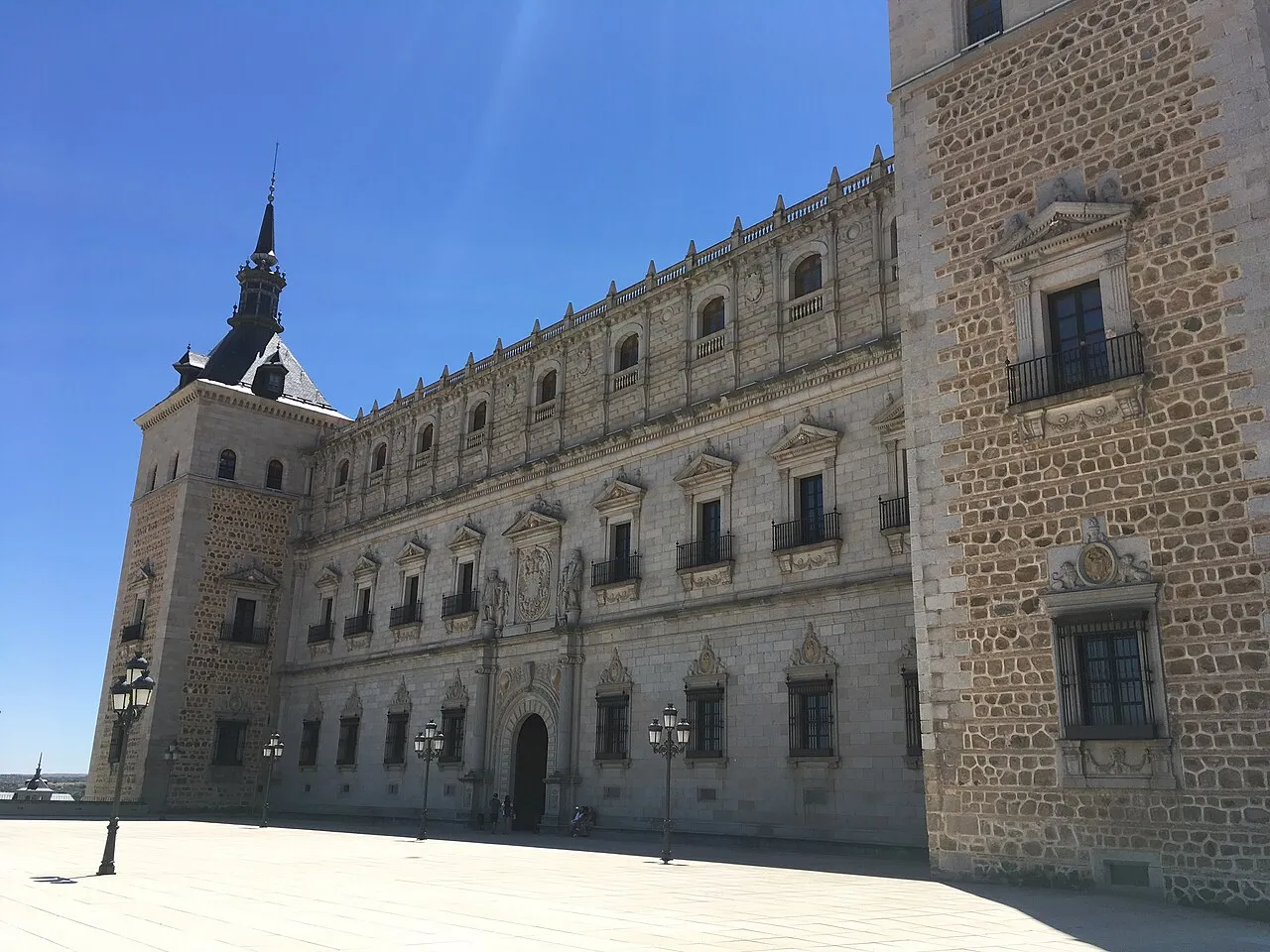
A fourth point, less well known, is the terrace of the Alcázar. The esplanade outside is free and from it you command the whole eastern side of the city and the floodplain, without needing to go into the museum.
The river, the bridges and the cigarrales
The other way to see Toledo is from below, following the senda ecológica that skirts the Tagus. It is a flat walk — the only one in the whole city — that joins the two historic bridges along the bank and gives a completely different perspective: the walls seen from their foot.
The two bridges are monuments in themselves. The Alcántara one, Roman in origin and rebuilt in the Muslim period, closes off the old town on the east; the San Martín one, from the fourteenth century, closes it on the west, next to San Juan de los Reyes. Crossing one, walking the path and coming back over the other takes an hour and a half.
The estates you see climbing the hills opposite are called cigarrales, and they were the country houses of Toledan families, with their orchards, cypresses and olive trees, where they escaped the heat and the crush of the old town. The name, so the story goes, comes from the cicadas.
And one piece of timing advice that holds for the whole city: from seven in the evening the day trips leave and the old town empties. That is when the light is best and when any of these viewpoints works with nobody in front of you.
Its outer esplanade is free and commands the whole eastern side of the city and the floodplain, without needing to go into the Army Museum. Since the building is visible from all over the city, it also works as a reference for getting your bearings when you are lost in the old town, which is the normal state of affairs.
The climb up the tower is separate from the general ticket and runs in timed slots. It is the only genuinely high point in the centre and it gives you the sea of rooftops from inside, a view no viewpoint outside can offer.
Where is the viewpoint of the classic photo of Toledo?
On the ring road of the Valle, on the slope of the other bank of the Tagus, from where you see the whole city on its hill wrapped in the meander. There are several laybys and the most organised is the one around the Parador, with a terrace open to the public. Go in the afternoon, not in the morning.
Can you get there without a car?
Yes, in two ways: on the tourist bus that does the circuit along the carretera del Valle, or walking up from the puente de Alcántara, about forty minutes of continuous climb along a road with a hard shoulder. There are also taxis, which is the fast option if time is short or the heat is fierce.
What time is Toledo best seen from outside?
In the afternoon, when the sun falls full on the southern front of the city and the stone turns golden. In the morning the old town is backlit and the image comes out flat. The other good option is dusk, with the lights on and the silhouette cut out against the sky, although it demands a tripod or a steady hand.
Are there free viewpoints inside the old town?
Two good ones: the one on the cuesta de Carlos V, halfway up between Zocodover and the Alcázar, and the Tránsito, on the western edge next to the Jewish Quarter. Both are freely accessible, open at any hour and lie on routes you would walk anyway. The esplanade of the Alcázar is free too.
Is it worth going up the cathedral tower?
If you want to see the sea of rooftops from inside the old town, yes: it is the only genuinely high point in the centre and it gives a perspective no viewpoint outside offers. It is paid for separately from the general ticket and runs in timed slots with small groups, so it is worth booking it when you buy.
What is the senda ecológica along the Tagus?
A walk that skirts the river along the bank, joining the Alcántara and San Martín bridges, and the only completely flat route in Toledo. It gives the opposite perspective to the viewpoints: the walls and the hill seen from below. Crossing one bridge, walking the path and coming back over the other takes an hour and a half.
Practical information
The classic oneCarretera del Valle, on the other bank. Better in the afternoon: in the morning the city is backlit.
Without a carTourist bus, or walk up from the puente de Alcántara, about 40 minutes along the road.
Inside the old townCuesta de Carlos V and the mirador del Tránsito, both free and open at any hour.
PaidThe cathedral tower, in timed slots and separately from the general ticket.
Down belowThe senda ecológica beside the Tagus between the Alcántara and San Martín bridges. An hour and a half.
Best timeFrom seven onwards, when the day trips leave and the light turns golden.
On the map
🎧 With Viavoy
Walk Toledo and listen at your own pace
Download Viavoy and walk Toledo offline, whenever you like.