Marbella's beaches: why the sand is dark and which one to choose for the day
Twenty-seven kilometres of coastline, sand that is ground-up mountain, a freshwater spring at the shore and the Moroccan Rif on the horizon on clear days.
Almost everyone who arrives in Marbella ends up on the beach, and almost nobody asks why the sand on this coast is dark and coarse instead of white and fine. The answer explains the whole landscape, and along the way it helps you choose: between the city beaches in the centre and those of Puerto Banús there are seven kilometres and two completely different atmospheres.
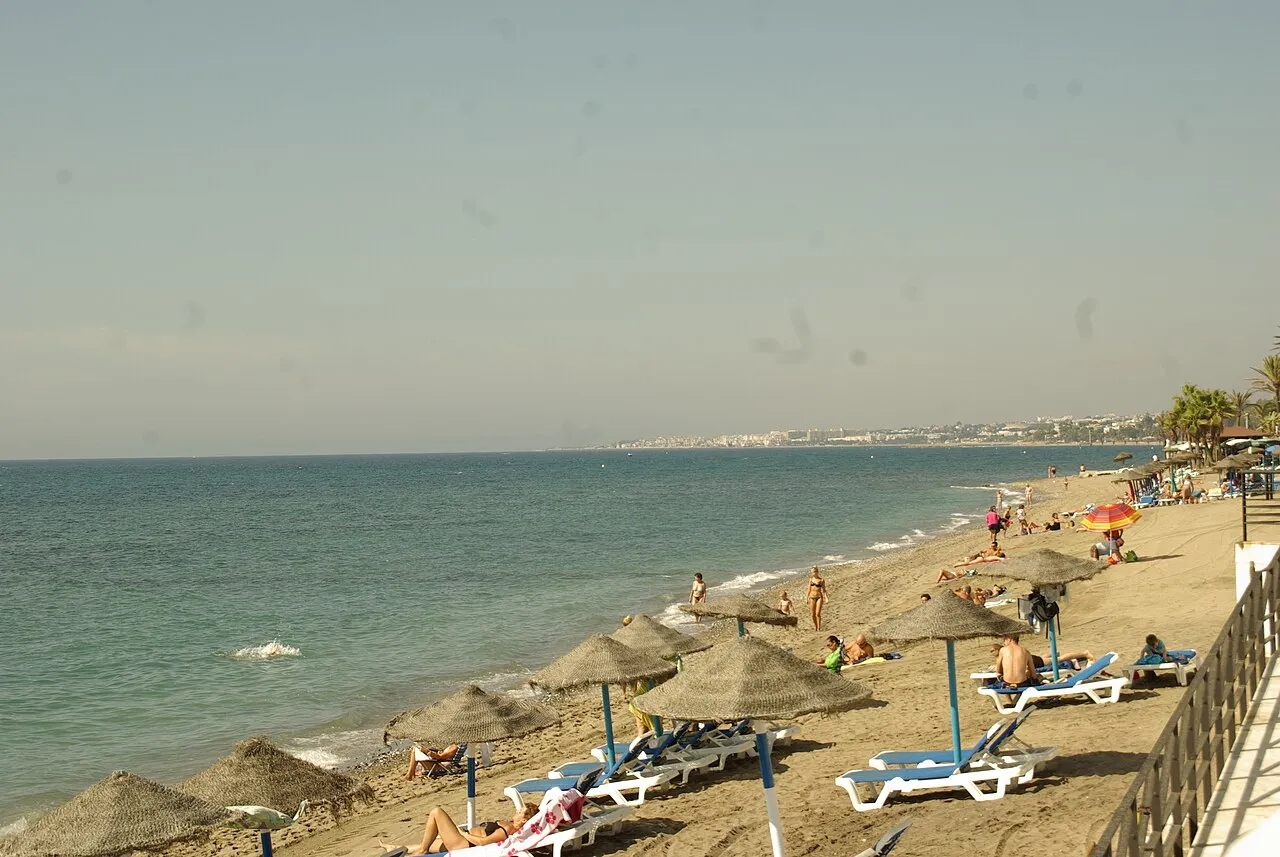
The sand of the Costa del Sol does not come from the tropics: it is rock from the mountains, broken down and carried to the sea by the rivers over centuries. Ground-up mountain, not coral or shells. Hence the coarse grain and the brown colour.
A sand that comes down from the mountain
Caribbean beaches are white because their sand comes from crushed coral and shells. Those on this coast are brown and coarse-grained because they come from something else: from the mountain ranges behind them, broken down by erosion and dragged to the sea by rivers and streams over centuries.
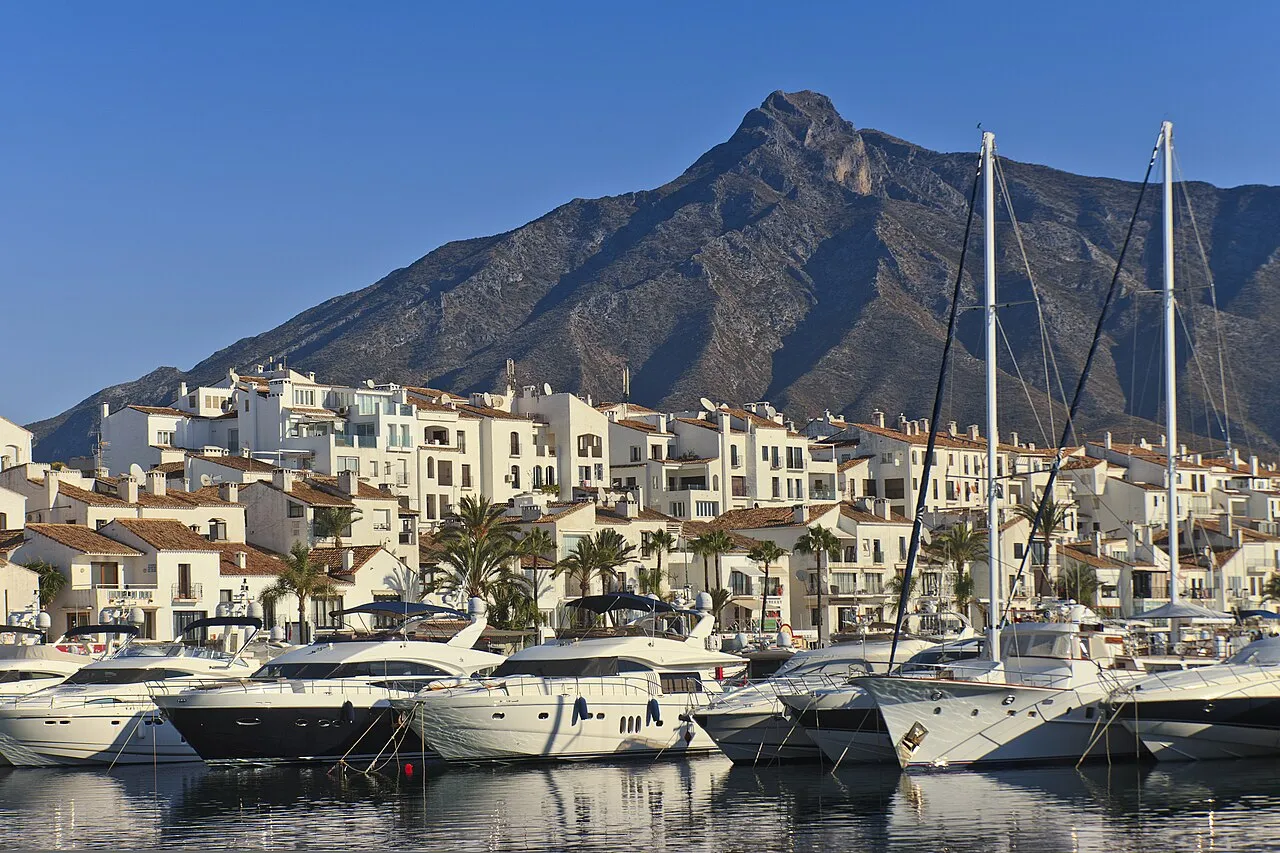
It is the geology of the coastline that determines the look of a beach, and here the geology is of mountains very close to the water. Marbella has the sierra Blanca practically on top of it, with La Concha dominating the city, and that closeness shows at the shore.
That same relief explains the microclimate. The barrier of mountains holds back the cold northern winds and creates an especially mild corner, with gentle winters, which was precisely what attracted tourism from the nineteen-fifties on.
And there is another trace of fresh water on the coast: the name of La Fontanilla beach comes from a spring that welled up among the rocks at the shore itself, documented in a chronicle of 1869. Drinking water in the middle of the beach, where generations drank before there were pipes.
More than a kilometre of toasted sand, calm water and chiringuitos lined up along it, ten minutes' walk from the old town. It is the main city beach and the most practical one if you are staying in the centre.
The beaches in the centre — La Fontanilla and the ones that follow along the seafront promenade — are the ones of the city's daily life: families, local people, espeto chiringuitos and contained prices. You reach them on foot from any point in the old town and the promenade connects them all.
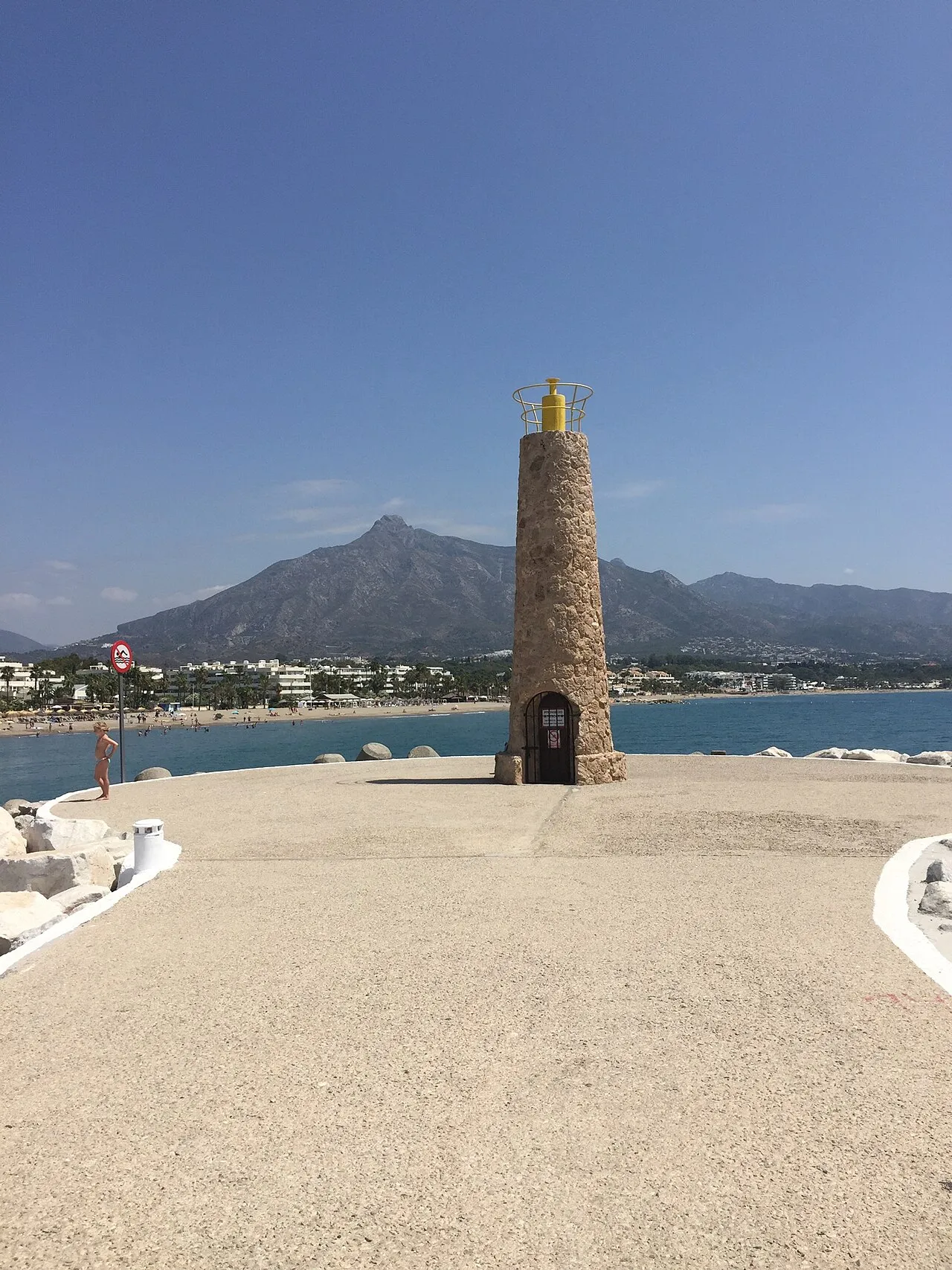
The Puerto Banús beach, officially Levante beach, is another story: it is right beside the marina, it fills up with people who were walking among yachts a moment earlier, and both the sun loungers and the chiringuitos have prices to match the area.
It is called Levante because it faces the naciente, the old term for the east, where the sun rises and where the wind of the same name comes from. It is simply the beach on the eastern side of the port.
On days of clear air, with a westerly, from either of the two you can make out on the far side of the sea the bluish silhouette of the mountains of the Moroccan Rif. Africa is much closer than almost anyone imagines: at its narrowest point, the Strait of Gibraltar is fourteen kilometres across.
And it is worth keeping in mind the fact that changes the way you look: a little over half a century ago, where Puerto Banús stands today there were only waves breaking on an empty beach of reed beds. Everything you see was built in the span of one life.
How to organise the beach day
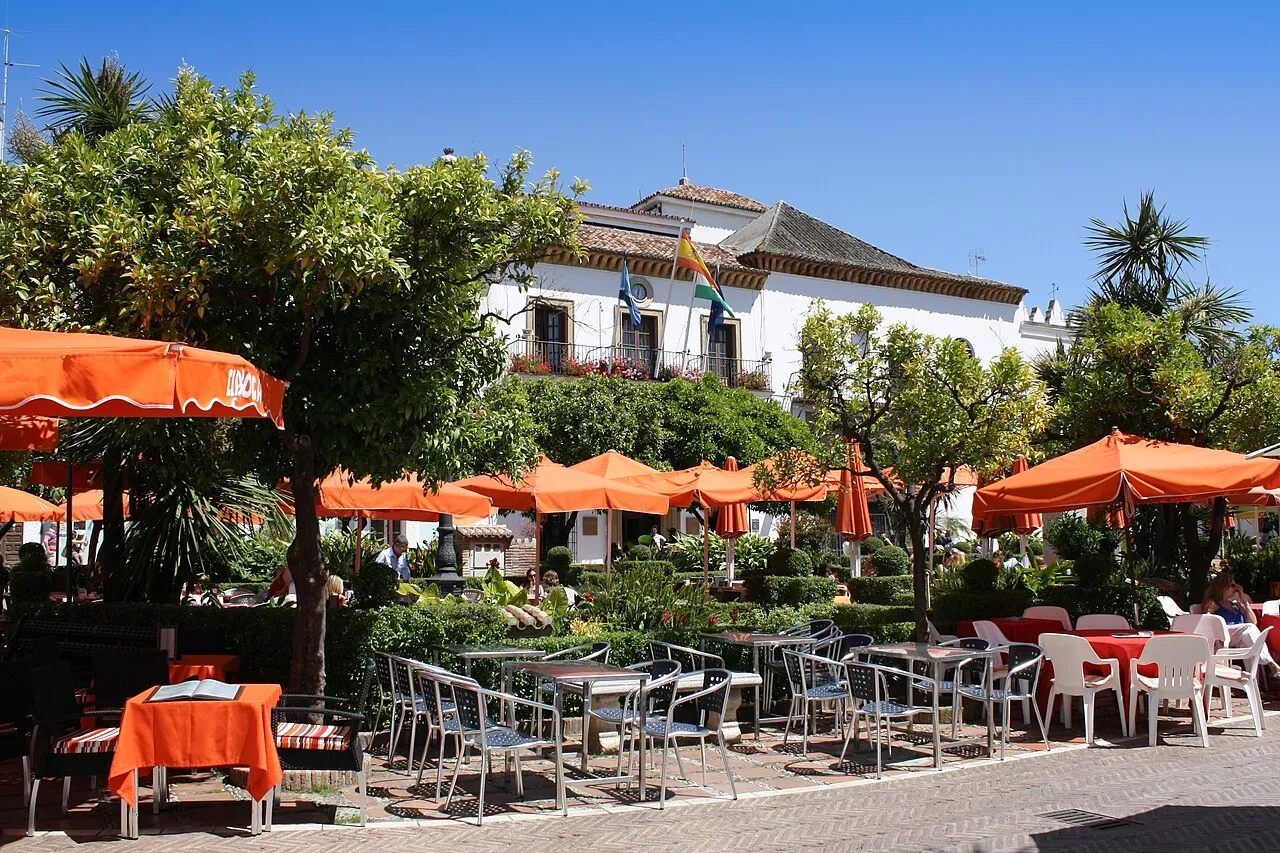
The plan that works best if you are staying in the centre is to do the old town early in the morning — Plaza de los Naranjos and the white streets —, come down the Avenida del Mar looking at the Dalí sculptures and finish at La Fontanilla at midday, with espeto.
If the plan is Puerto Banús, the city bus is frequent and takes little time; by car the real problem is parking in high season. The natural thing is to combine port and beach: a stroll along the Muelle de Honor, back through the streets of the invented village and a swim at the end.
The seafront promenade joins up a good part of the urban coastline and is flat, so you can walk or cycle the whole of it, with intermittent shade. It is the most pleasant way of hopping from beach to beach without taking the car.
As for the season: July and August are absolutely packed and expensive; June and September have the same sea with half the people. In winter the water is cold for swimming but the seafront promenade works perfectly, and that is one of the real advantages of the microclimate.
Coarse dark sand right beside the port, with sun loungers and chiringuitos at local prices. On clear days you can see the Moroccan Rif in the distance, on the far side of the sea.
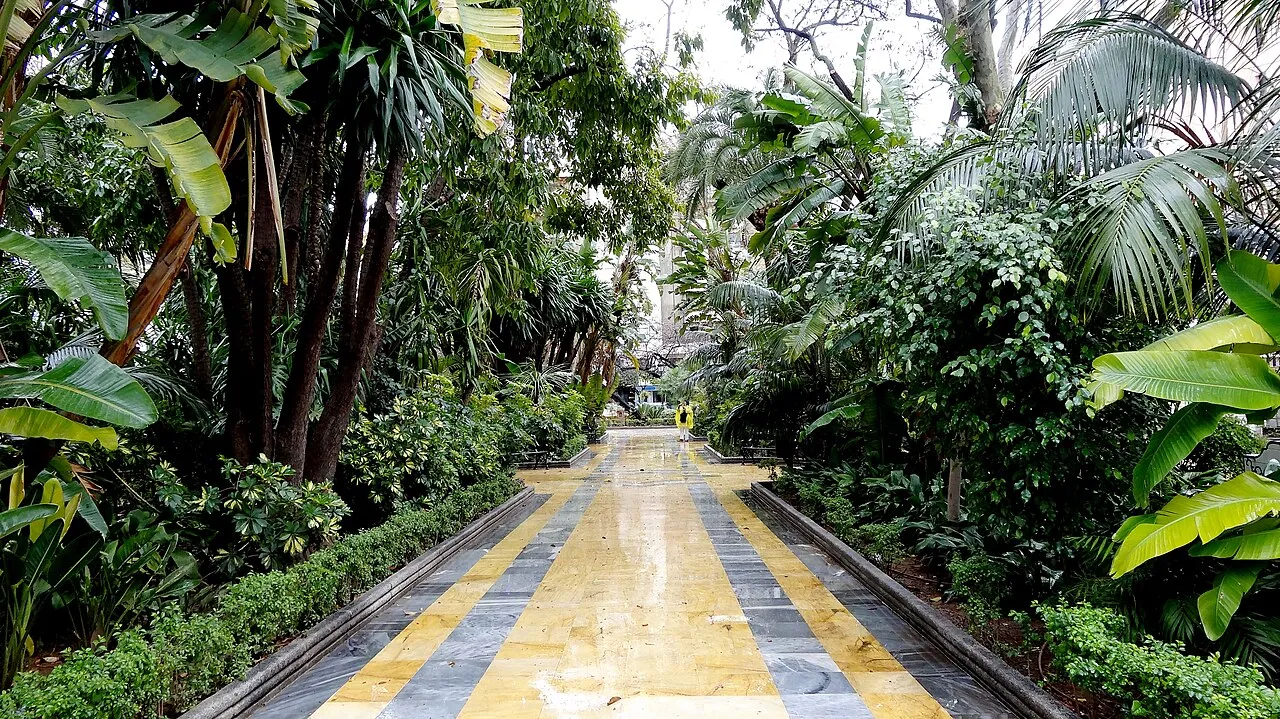
The shady pause on the way to the beach: dense ficus trees, benches of hand-painted Seville tiles and cast-iron lampposts. In summer, fifteen minutes here are worth a great deal.
Because it does not come from the tropics but from the mountains behind. The beaches of the Costa del Sol were formed with rock from the ranges broken down by erosion and carried to the sea by rivers and streams over centuries. It is ground-up mountain, not coral or shells, and that is where the coarse grain and the brown colour come from.
Which is the best beach in Marbella?
It depends on the plan. La Fontanilla is the most practical if you are staying in the centre: more than a kilometre of sand ten minutes' walk from the old town, with espeto chiringuitos and a local atmosphere. The Puerto Banús one has more of a scene and higher prices, and it is seven kilometres to the west.
Why is the Puerto Banús beach called Levante beach?
Because it faces the naciente. “Levante” is the old term for the east, the point where the sun rises and where the damp, persistent wind of the same name comes from. It is, quite simply, the beach on the eastern side of the port.
Can you see Africa from the beaches of Marbella?
Yes, on days of clear air, normally with a westerly wind. On the far side of the sea you can make out the bluish silhouette of the mountains of the Moroccan Rif. Africa is much closer than almost anyone imagines: at its narrowest point, the Strait of Gibraltar is fourteen kilometres across.
Where does the name of La Fontanilla beach come from?
From a spring of fresh water that welled up among the rocks at the shore itself, documented in a chronicle of 1869 that describes it rising from the hollow of a great slab of stone. Even though the sea covered it again and again, it went on flowing sweet and cool, and generations of Marbella people drank there before pipes existed.
When is the best time to go to the beach in Marbella?
June and September offer practically the same sea as August with half the people and more reasonable prices. July and August are absolutely packed. In winter the water is cold for swimming, but the microclimate — sheltered from the north by the mountains — means the seafront promenade works perfectly all year round.
How do you get to the Puerto Banús beach from the centre?
It is about seven kilometres west of the centre of Marbella, with a frequent city bus. By car as well, although parking in high season is a real problem. The natural thing is to combine the port with the beach: a stroll along the Muelle de Honor, back through the streets of the village and a swim at the end.
Practical information
CoastlineSome 27 km of coast within the municipality, with city beaches and others more open.
The sandBrown and coarse-grained: it is rock from the mountains carried down by the rivers, not coral.
The centreLa Fontanilla and the seafront promenade. Local atmosphere, espeto chiringuitos, contained prices.
Puerto BanúsLevante beach, right beside the marina. More of a scene and higher prices.
When to goJune and September: the same sea with half the people of August.
Getting aroundThe seafront promenade is flat, on foot or by bike. To Puerto Banús, a frequent city bus.
On the map
🎧 With Viavoy
Walk Marbella and listen at your own pace
Download Viavoy and walk Marbella offline, whenever you like.
from 2,99 €· one-off payment
City Pass · 9,99 €3 days, all the tours in Marbella