1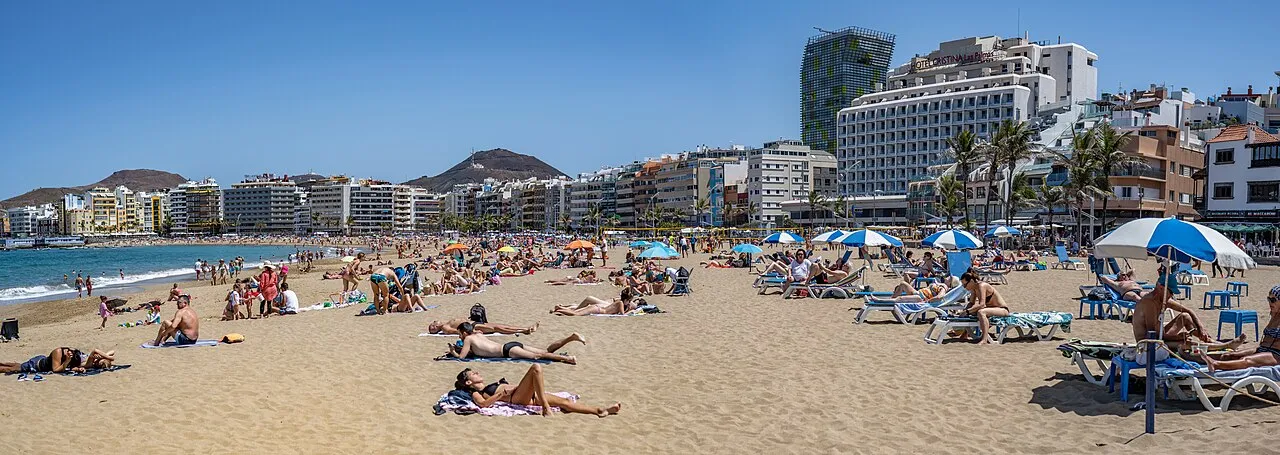
Las Canteras beach
📍 La Isleta isthmus
More than three kilometres of very fine golden sand, with a flat promenade from end to end. Blue Flag and every service.
Three kilometres inside the city, with a rock barrier that turns half the sea into a lake and leaves the other half for surfing. Which stretch to choose and when.
🎧 On the walk Las Canteras beach and El ConfitalThere are very few urban beaches of this size and this quality in the world, and none of them works in exactly the same way. Las Canteras has a submerged reef that splits it in two: swimming-pool water on one side, full waves on the other. Knowing which one you get is the difference between a good day and an average one.
The central stretch, the longest, is the one protected by La Barra: water with almost no undertow, suitable for anyone, with a Blue Flag year after year. This is the zone of families, of retired people swimming lengths and of anyone who wants a swim without thinking about it.
To the north is La Puntilla, more sheltered, and Playa Chica, a small cove much appreciated by locals and with fewer people. It is where those who know the beach go when they do not want the bustle of the centre.
And to the south, La Cícer, where the barrier no longer protects and the waves arrive whole: this is the surf zone, with schools and board hire. The sand here is darker and the atmosphere completely different.
That division is what you want to be clear about when choosing where to put your towel. The same beach offers a swimming-pool dip or a session in the waves depending on which kilometre you settle on.
More than three kilometres of very fine golden sand, with a flat promenade from end to end. Blue Flag and every service.
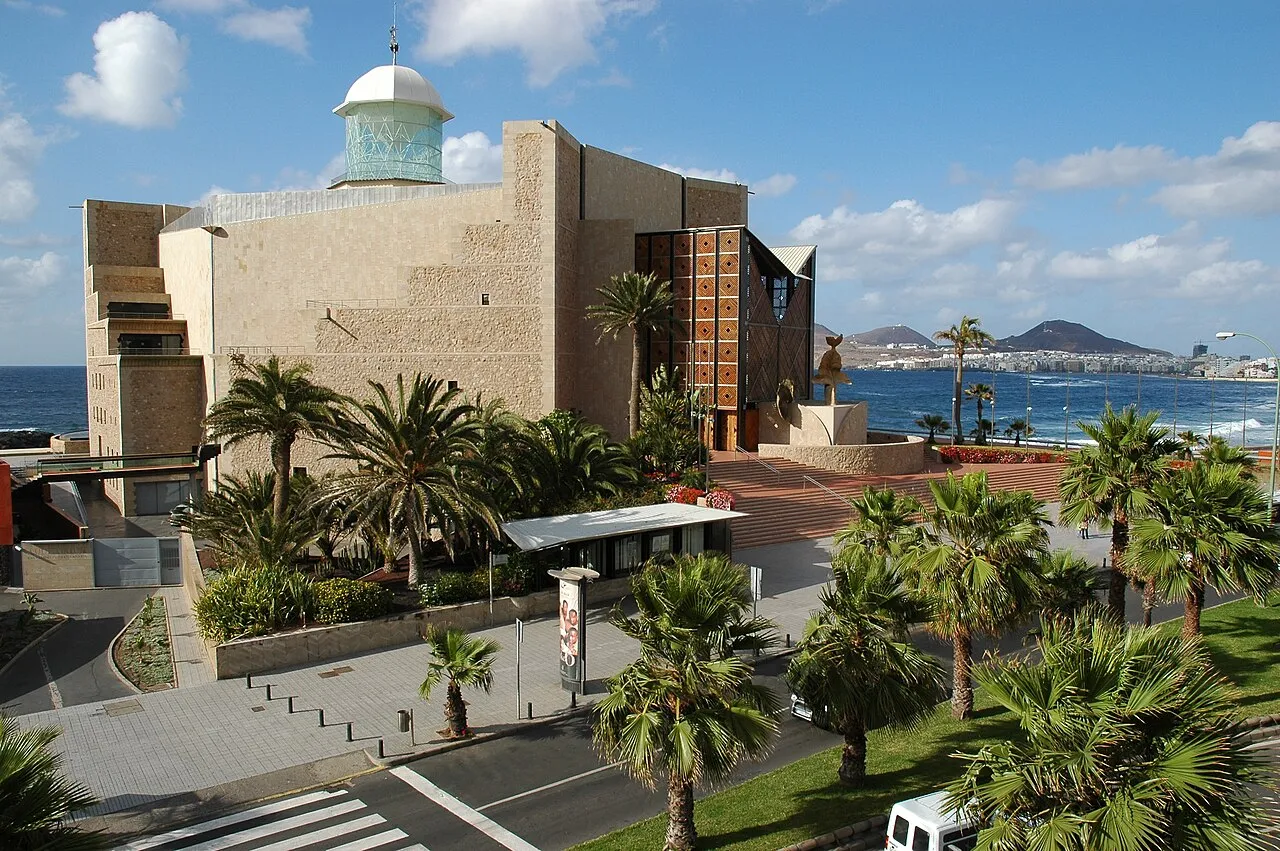
The stone lighthouse that closes the beach, with the waves bursting at its base. Inside, a hundred-square-metre window onto the Atlantic behind the orchestra.
Download the app and discover Las Palmas offline, whenever you like. Take the walking tour Las Canteras beach and El Confital with a local guide in your ear.
Find out more about Viavoy →The name is literal: there were quarries here. For generations sandstone was taken from this shore, from the sea itself, to build the city, cutting slabs and ashlars that ended up in houses and buildings. A good part of Las Palmas came, stone by stone, out of this beach.
Its use as a beach came later. In the late nineteenth and early twentieth century, when the city began to see itself as a city of the sea thanks to the Puerto de la Luz, families came here to take the waters and the whole neighbourhood grew up around it.
And ever since it has always been everyone's beach, the city's free swimming pool. That is fairly exceptional on the Canarian coast, where much of the shoreline has been developed as a segregated tourist enclave.
The promenade that borders it runs the whole length, is flat and is full of terraces, ice cream shops and restaurants. Walking it from end to end is about three kilometres and is worth doing at least once, finishing at the Alfredo Kraus Auditorium.
Past the northern end, rounding the rock of La Isleta, is the bay of El Confital: a far wilder beach, with no buildings, inside a protected natural area. It is another world and it is a walk from the centre.
The El Confital wave also breaks there, a right-hander considered one of the best in Europe and internationally recognised among surfers. It is not a zone for inexperienced swimmers, but watching it break is worth the walk.
As for the season, there is no bad time here: the climate is mild all year and the water stays at reasonable temperatures even in winter. July and August are the fullest months, but the beach is so big that it rarely feels oppressive.
The plan that works best is to do Vegueta and Triana in the morning and come here in the afternoon, finishing with the sunset from the promenade, with the Auditorio outlined at the far end. There is a direct guagua — the local word for bus — from San Telmo.
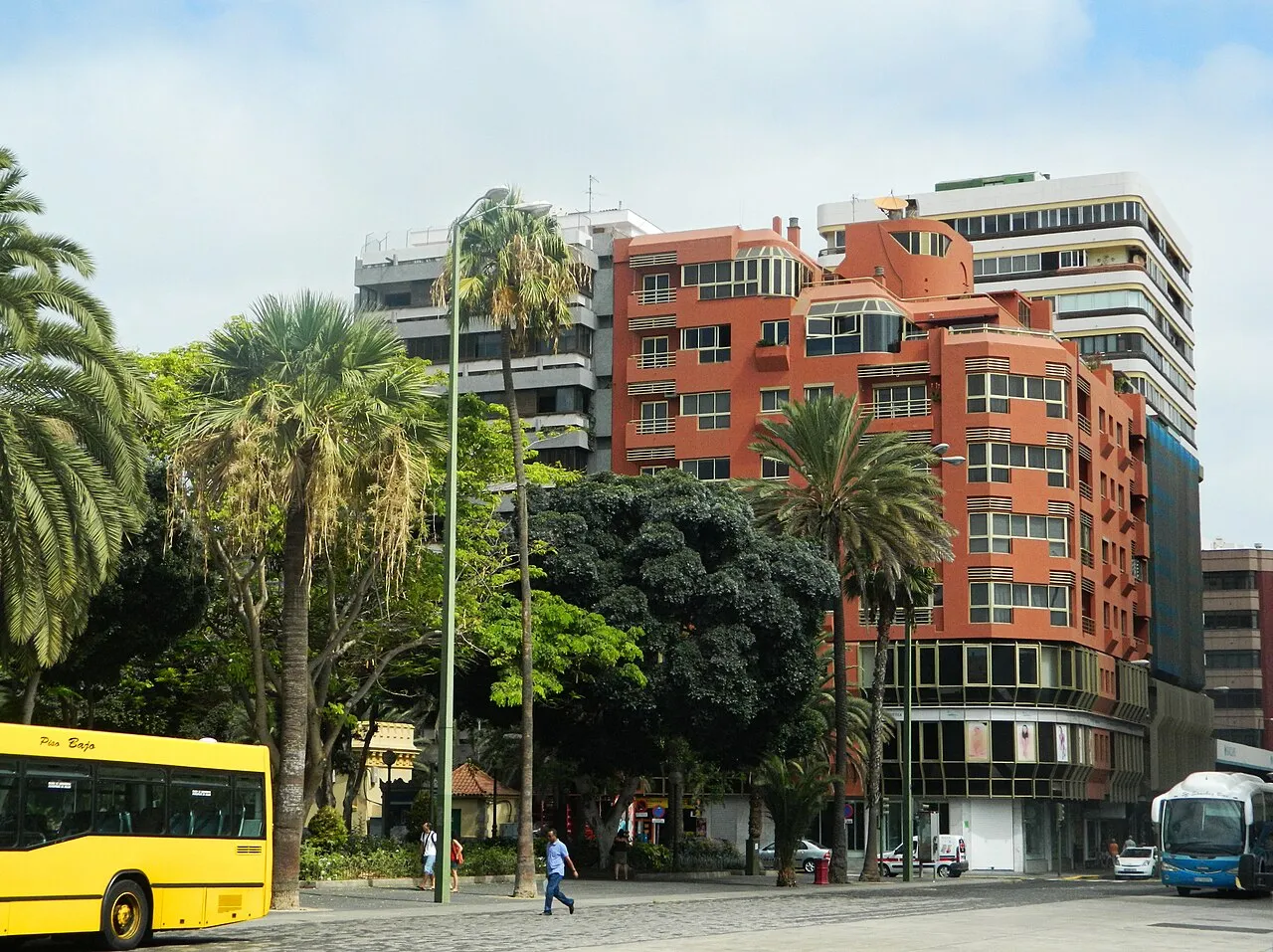
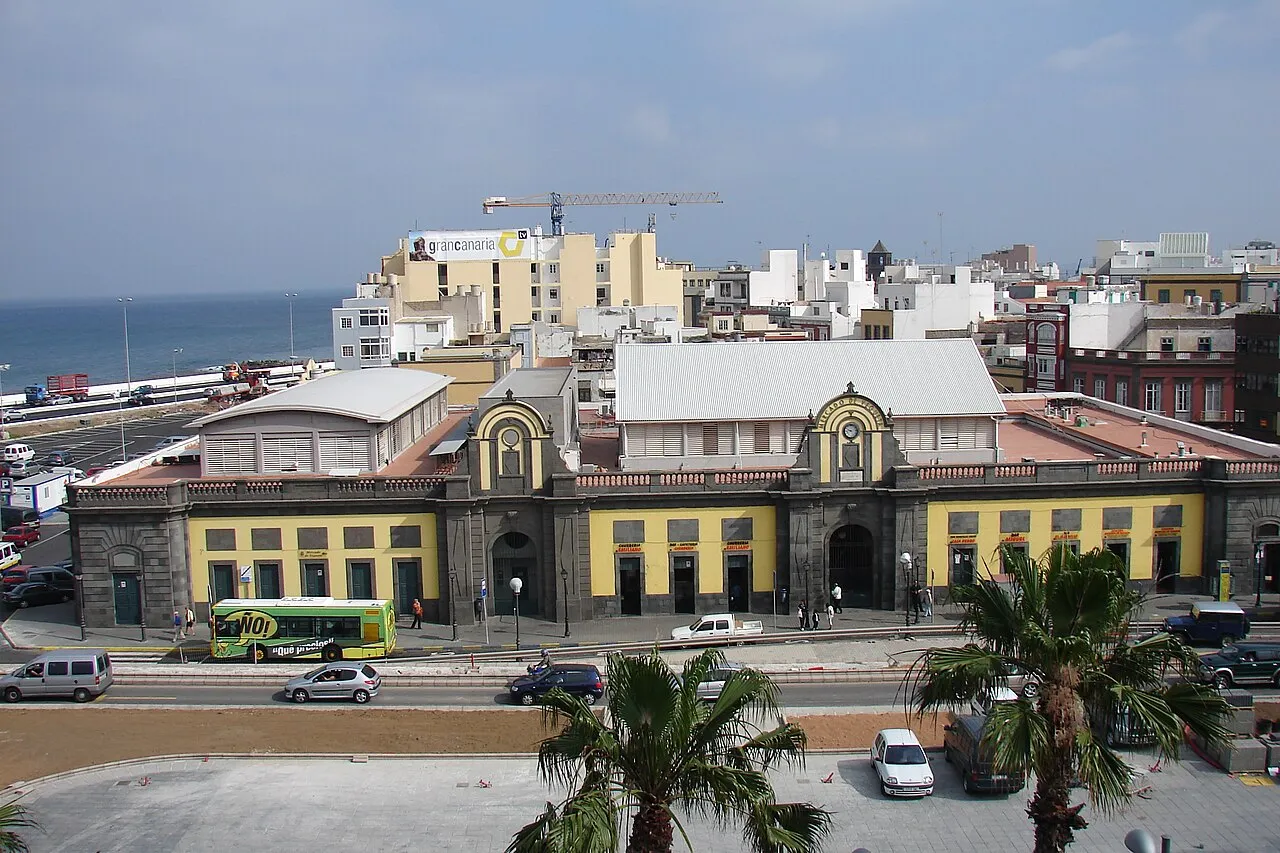
The city's guagua hub and the meeting point where everyone ends up. From here the beach is a five-minute walk.

The largest marina in the Canary Islands, with more than eleven hundred berths. Every November more than two hundred yachts set sail from here for the Caribbean.
A submerged rock reef running parallel to the shore that breaks the swell before it reaches the sand. Thanks to it, a good part of the water on the beach is left with almost no undertow and anyone can swim. At low tide it is exposed and you can walk on top of it, something almost no visitor knows.
At La Cícer, the southern end of the beach, where the barrier no longer protects and the waves arrive whole. There are schools and board hire. And for an advanced level, the El Confital wave, past the northern end rounding La Isleta, a right-hander considered one of the best in Europe.
Because there were quarries here, literally. For generations sandstone was taken from this shore, from the sea itself, to build the city: slabs and ashlars were cut and ended up in the houses and buildings of Las Palmas. A good part of the city came, stone by stone, out of this beach.
In July and August there are a fair number of people, but the beach is more than three kilometres long and that saves it: there are always stretches with space. It is also a genuinely urban and popular beach, used by the people of the city all year, not a segregated tourist enclave. That atmosphere is part of what makes it good.
Any. The climate of Gran Canaria is mild all year and the water stays at reasonable temperatures even in winter, which is precisely what drew European tourism here from the end of the nineteenth century. July and August are the fullest months, but the beach copes well.
A far wilder bay past the northern end of Las Canteras, rounding the rock of La Isleta, inside a protected natural area and with no buildings. It is a completely different landscape and it is a walk from the centre. One of the most recognised waves in Europe among surfers also breaks there.
By guagua from the San Telmo station, at the end of Triana, to the Parque de Santa Catalina, and from there five minutes on foot. It is about five kilometres and services are frequent. The plan that works best is to do Vegueta and Triana in the morning and come here in the afternoon.
Download Viavoy and walk Las Palmas offline, whenever you like.

Keep reading