What to look at inside, what exactly Gaudí did, what the chapel of cracked clay is and when it is best to go in. Everything the leaflet does not tell you.
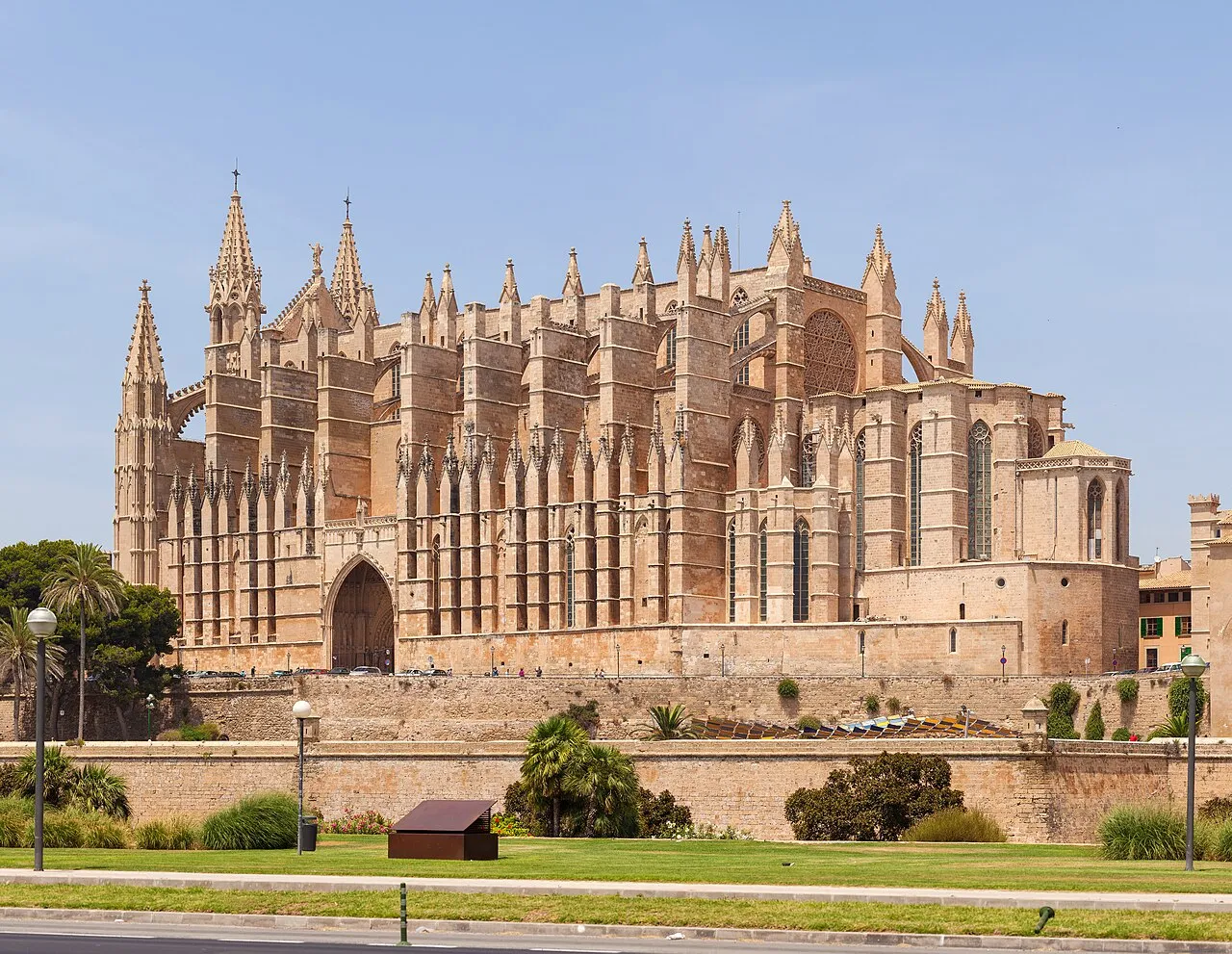
Plenty of people walk into La Seu, the cathedral, look up, take the photo and are out again in twenty minutes. It is a pity, because this building holds three superimposed layers that deserve to be told apart: the medieval Gothic that raised it, Gaudí's intervention that reorganised its interior at the start of the twentieth century, and a contemporary chapel lined with clay that still divides opinion.
Go in first thing. There is less queue, the sun comes in from the sea side and the nave looks the way it was meant to: a box of light held up by fourteen extremely slender pillars.
Layer one: the Gothic
The building starts with a promise. Tradition has it that Jaume I, caught in a storm on his way to the conquest in 1229, swore he would raise a church to the Virgin if he came out alive. He survived, took the city and began to build right on top of the main mosque of Madina Mayurqa.
It took them more than three centuries to finish it, from the Gothic to the Renaissance, with master builders such as Jaume Fabre and Guillem Sagrera — the same man who would later raise the Lonja, the old merchants' exchange. The resulting nave is one of the tallest and widest in Europe, held up by fourteen very slim octagonal pillars.
The great rose window, which in Palma they call the eye of the Gothic, is more than thirteen metres across and has around one thousand two hundred pieces of glass: it is one of the largest in the world. Twice a year, on 2 February and 11 November, at dawn, its light is projected just below the rose window opposite and the two circles form a perfect figure of eight.
The stone is marès, the golden sandstone from the south of the island, so porous that the salt air eats it away slowly. That is why the stonemasons are still replacing blocks one by one today: it is a building that is never not under works.
The terrace looking out to sea, with the Portal del Mirador carved in the fourteenth century: the Last Supper on the tympanum and two figures by Guillem Sagrera flanking the door. You reach it from inside and it is usually included in the ticket.
At the start of the twentieth century Bishop Campins called in Antoni Gaudí to give the interior back its clarity, fragmented as it was by later additions. The work ran from 1904 to 1914 and it is one of the architect's least known.
He did three big things. He removed the choir that occupied the centre of the nave and moved it to the presbytery, opening up the complete perspective from the door to the altar. He unblocked windows that had been sealed, recovering the original flow of light. And he hung over the altar an enormous wrought-iron baldachin covered in lamps, that floating crown still trembling up there.
The baldachin was installed as a temporary piece and is still temporary a century later, because Gaudí walked away from the work half done after falling out with the cathedral chapter. A good part of what he designed was never carried out.
Even so, the sense of space that any visitor gets today is largely the one he decided on. Taking the choir out of the centre of the nave was a hotly contested decision at the time — it was done in almost no Spanish cathedral — and it is the reason you see the interior here in one sweep.
Fourteen octagonal pillars that open out at the top like palm trees and leave the nave clear. There are no heavy walls bearing down: there is light that floats. That sensation is medieval in origin and Gaudían in its present form.
Layer three: Barceló's clay, and how to organise the visit
Between 2001 and 2007 the Mallorcan artist Miquel Barceló lined the walls of a side chapel, the Chapel of the Blessed Sacrament, with a skin of cracked ceramic that represents the miracle of the loaves and the fishes: fruit bursting open, waves and sea creatures coming out of the fired clay.
The figures are considerable: some three hundred tonnes of ceramic covering around three hundred square metres of wall, six years of work, and on top of that the chapel's stained glass, designed by Barceló himself, which tints the clay different colours as the day goes on.
It is contemporary, it is visceral and not everybody likes it, which tends to happen when you intervene in a building of this weight. It deserves to be seen without prejudice so you can decide for yourself: it is, by some distance, the most ambitious work of contemporary art installed in a Spanish cathedral.
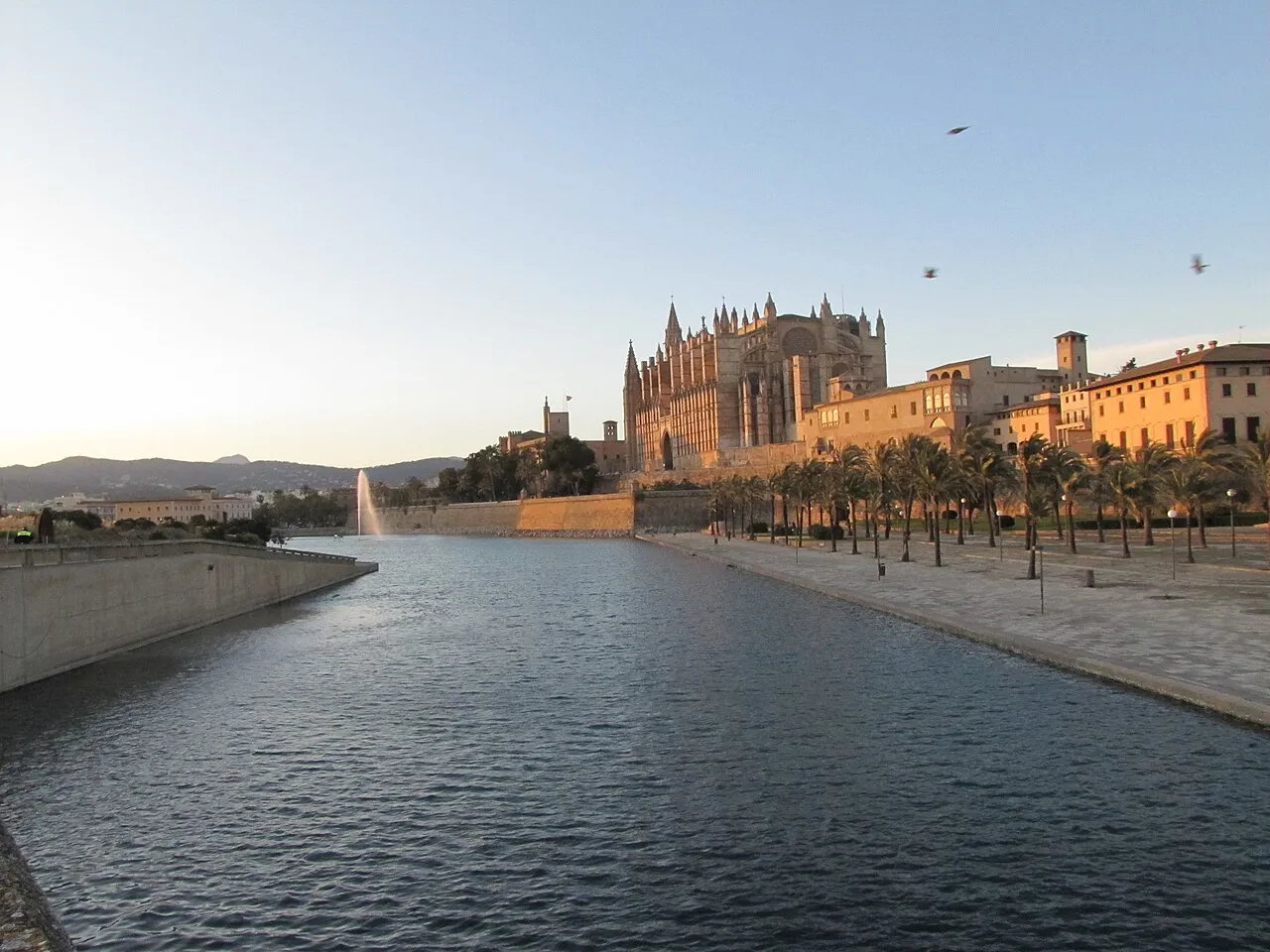
On the visit: entry around 10 € with the cloister and the Mirador, a good hour and a half, and first thing. You can combine it with the Palace of La Almudaina, which is next door and charges separately, and with the Parc de la Mar, below, which is free and is where the photo is.
The artificial salt-water lake dug in 1984 to give La Seu back the reflection a motorway had taken away. Stand on the south edge looking north, first thing or at dusk, with the water still.
Around 10 €, and that includes the church, the cloister and the Mirador, the terrace looking out to sea. The Palace of La Almudaina, right next door, has its own separate ticket. It is worth checking opening hours on the official website, because they change with the season and with services.
What exactly did Gaudí do in La Seu?
Three big things, between 1904 and 1914: he took the choir out of the centre of the nave and moved it to the presbytery, opening up the complete perspective; he unblocked windows that had been sealed to recover the original light; and he hung a wrought-iron baldachin with lamps over the altar, installed as a temporary piece and still there a century later.
What is the Miquel Barceló chapel?
The Chapel of the Blessed Sacrament, whose walls the Mallorcan artist lined between 2001 and 2007 with a skin of cracked ceramic representing the miracle of the loaves and the fishes. It is some three hundred tonnes of clay over around three hundred square metres, plus the stained glass, which he designed himself.
What is the cathedral's figure of eight of light?
A phenomenon that happens twice a year, on 2 February and 11 November, at dawn: the light coming through the great rose window is projected just below the rose window on the opposite front, and the two circles form a perfect figure of eight on the wall. The cathedral opens on a special timetable on those days.
What time is best to visit?
First thing in the morning. There is less queue, and above all the sun comes in from the sea side, which is when the nave looks the way it was meant to: a box of light held up by fourteen extremely slender pillars. By mid-afternoon the light comes from the other side and the effect changes quite a lot.
Why is it always under works?
Because of the material. The stone is marès, a golden sandstone from the south of Mallorca, soft to cut and very porous, and the salt air off the sea eats it away slowly. Stonemasons have spent centuries replacing blocks one by one, and they still are: it is a building that never quite finishes being finished.
Practical information
TicketsAround 10 €, includes the cloister and the Mirador. The Palace of La Almudaina is separate.
DurationA good hour and a half if you stop at the three layers.
Best timeFirst thing in the morning: less queue and the sun comes in from the sea side.
Don't missThe great rose window, Gaudí's baldachin and Barceló's chapel.
The figure of eight of light2 February and 11 November at dawn: the two rose windows line up.
The photoFrom the Parc de la Mar, south edge looking north, with the water calm.
On the map
🎧 With Viavoy
Walk Palma and listen at your own pace
Download Viavoy and walk Palma offline, whenever you like.